The storyBasque fishermen reached Newfoundland a century before Columbus and kept the fishing grounds secret.No record
What the sources showNo record from the time puts a Basque ship in America before 1492. Peter Pope, reviewing the evidence for Canada’s Museum of History, finds no contemporary evidence of Basques on these coasts before Columbus and Cabot.
The story is old. In 1647 Étienne Cleirac, a lawyer in Bordeaux, wrote that French Basques had reached Newfoundland a hundred years before Columbus: around 1392, two and a half centuries before he wrote. The earliest real documents come after Columbus and after Cabot: in 1512 a Basque captain of Capbreton was given permission to sail to the new lands; from 1517 French Basques took part in the Newfoundland cod fishery; the first Spanish Basque voyages followed in the early 1530s.
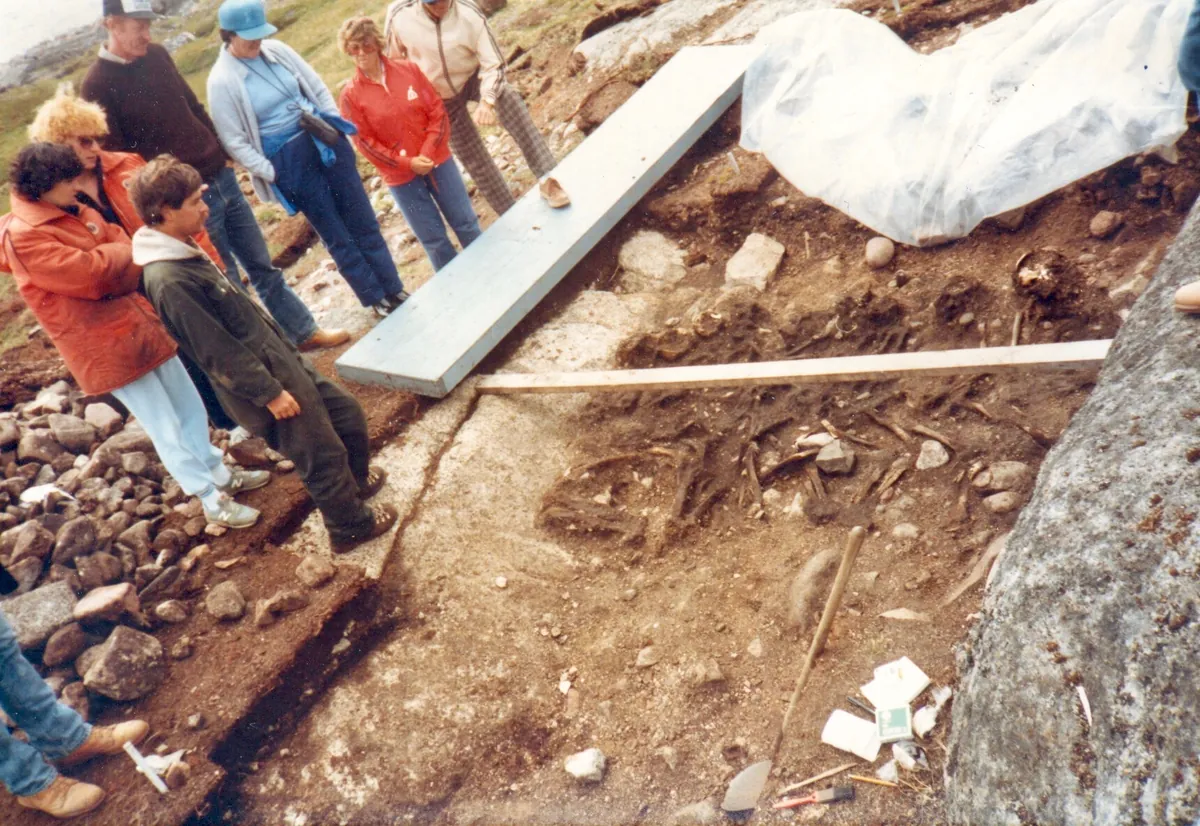
Secrecy can explain why a record is missing; it cannot stand in for one. For comparison, the Norse presence at L’Anse aux Meadows in Newfoundland is dated to the year: three pieces of wood from three trees, cut with metal tools, were felled in 1021.
The storyThe Mi’kmaw word for king proves the Basques arrived early.Cannot date it
What the sources showIt proves a borrowing, if Bakker is right, and he says the word is missing from the 17th-century records. The first time it is written down is 1888. A loan can be made at any point between the first contact and the first record.
The story“Iroquois” is Basque for “killer people”. Or: it means “Irish”.Two rival guesses
What the sources showBoth are published proposals, and they contradict each other. The name Iroquois is recorded around 1600; where it came from is unknown.
Peter Bakker, 1991*hilokoa
A Basque jargon word, “the kill(er) people”, from hil, kill, plus -ko-a. He points to hilu, “dead”, in a Basque–Icelandic glossary, and leaves open which Indigenous language passed it on.
William Sayers, 2006*eruko, *irukoak
A reconstructed Basque word for an Irishman. Basque sailors who knew the Norse legend of “Greater Ireland” (Irland it mikla) across the ocean “found what they were prepared to find” in the St Lawrence Iroquoians. He rejects Bakker’s reading.
The asterisk marks a reconstructed form: a word no one has found written down. Neither form has been found in any document.
The storyThe Basques followed the whales across the Atlantic until they bumped into America.Not what the archives show
What the sources showSelma Barkham, who read the archives, rejected this in so many words: the Basques “never, at any point, chased whales further and further out into the Atlantic until they collided with North America”. Bretons sent the earliest voyages into the Strait; Basques came for cod, and brought their own coastal whaling methods to a coast they already fished.
The storyPort aux Basques is a Basque place name.French, not Basque
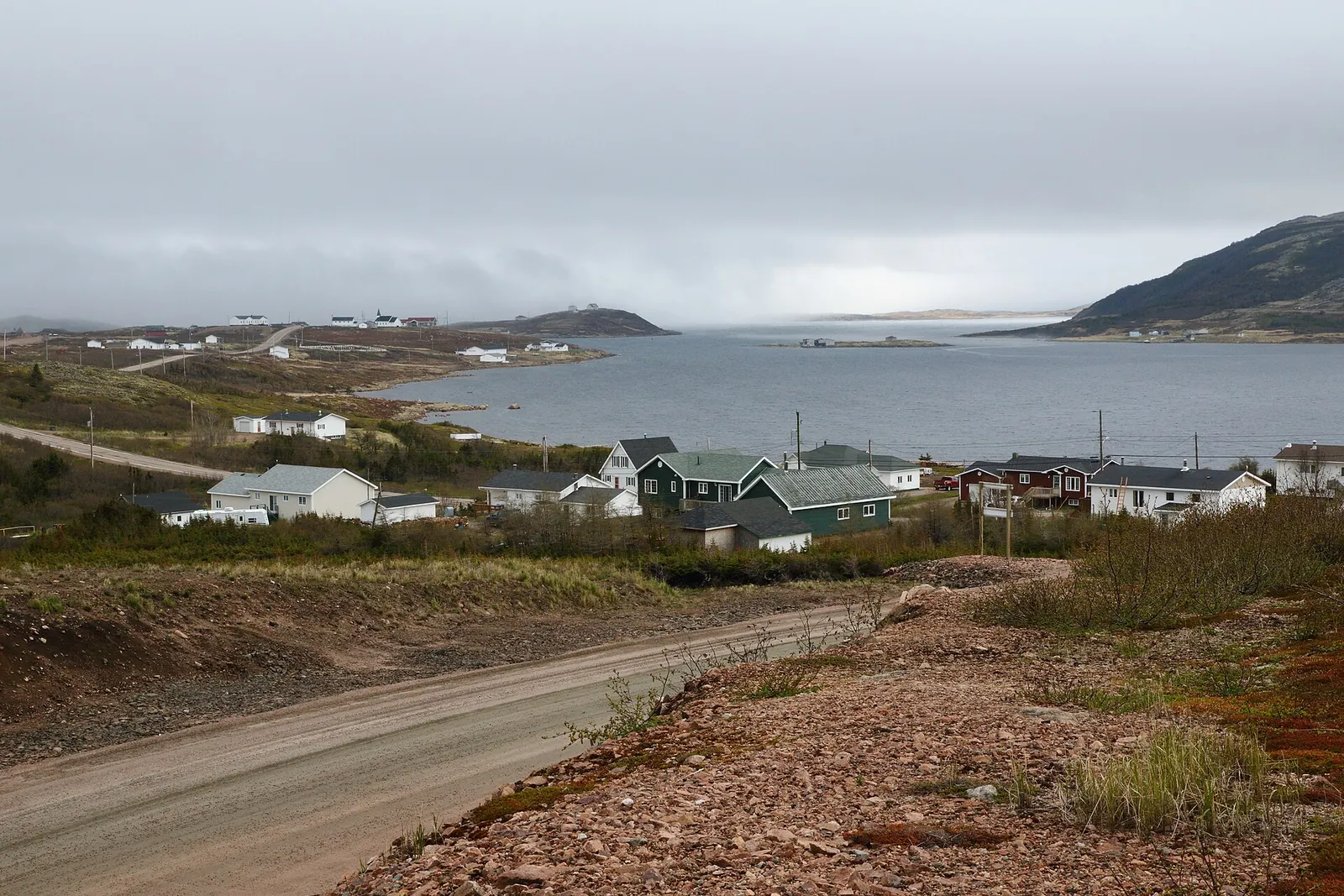
What the sources showIt is a French name about the Basques: “port of the Basques”. The Basque-language names are less obvious. On later maps Portuchoa, “little harbour”, turns into Port au Choix, and Aingurachar, “bad anchorage”, into Ingornachoix.
The storyA 1546 map shows Inuit (or Beothuk, or Innu) whaling off Labrador.The copy changed it
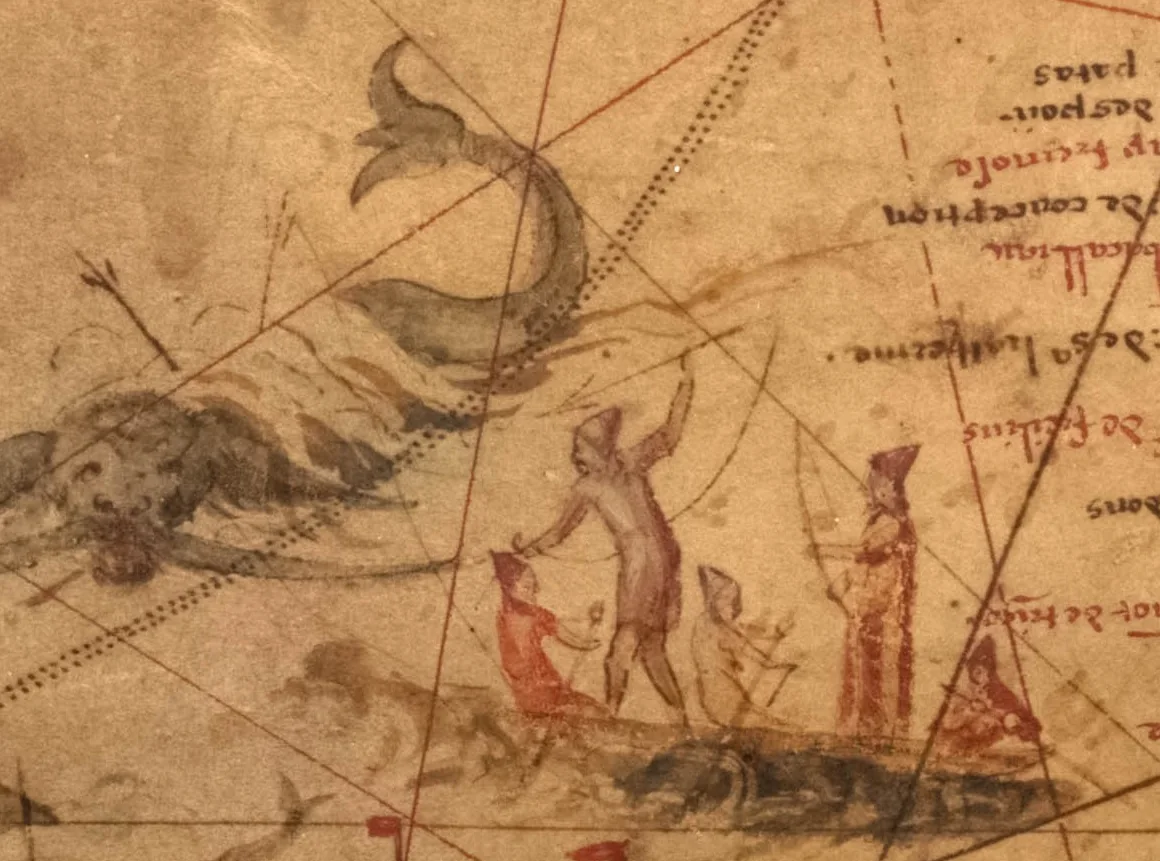
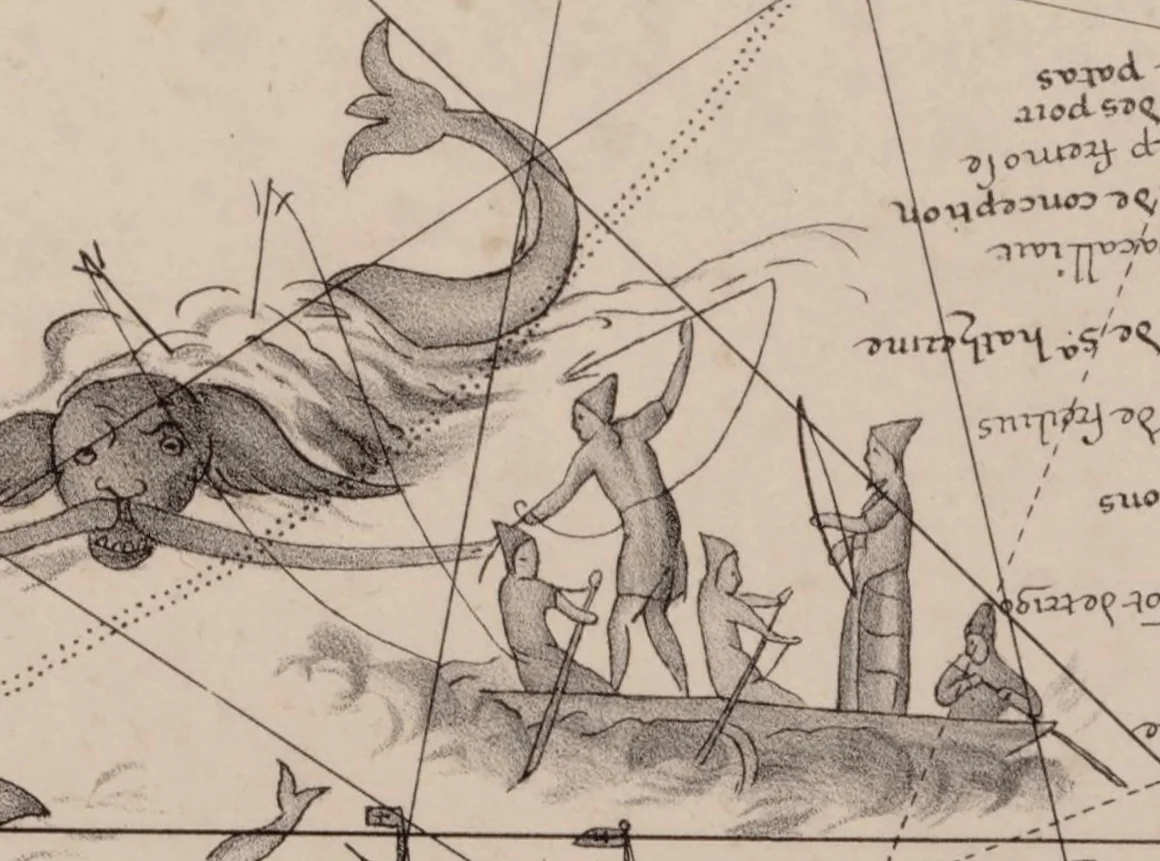
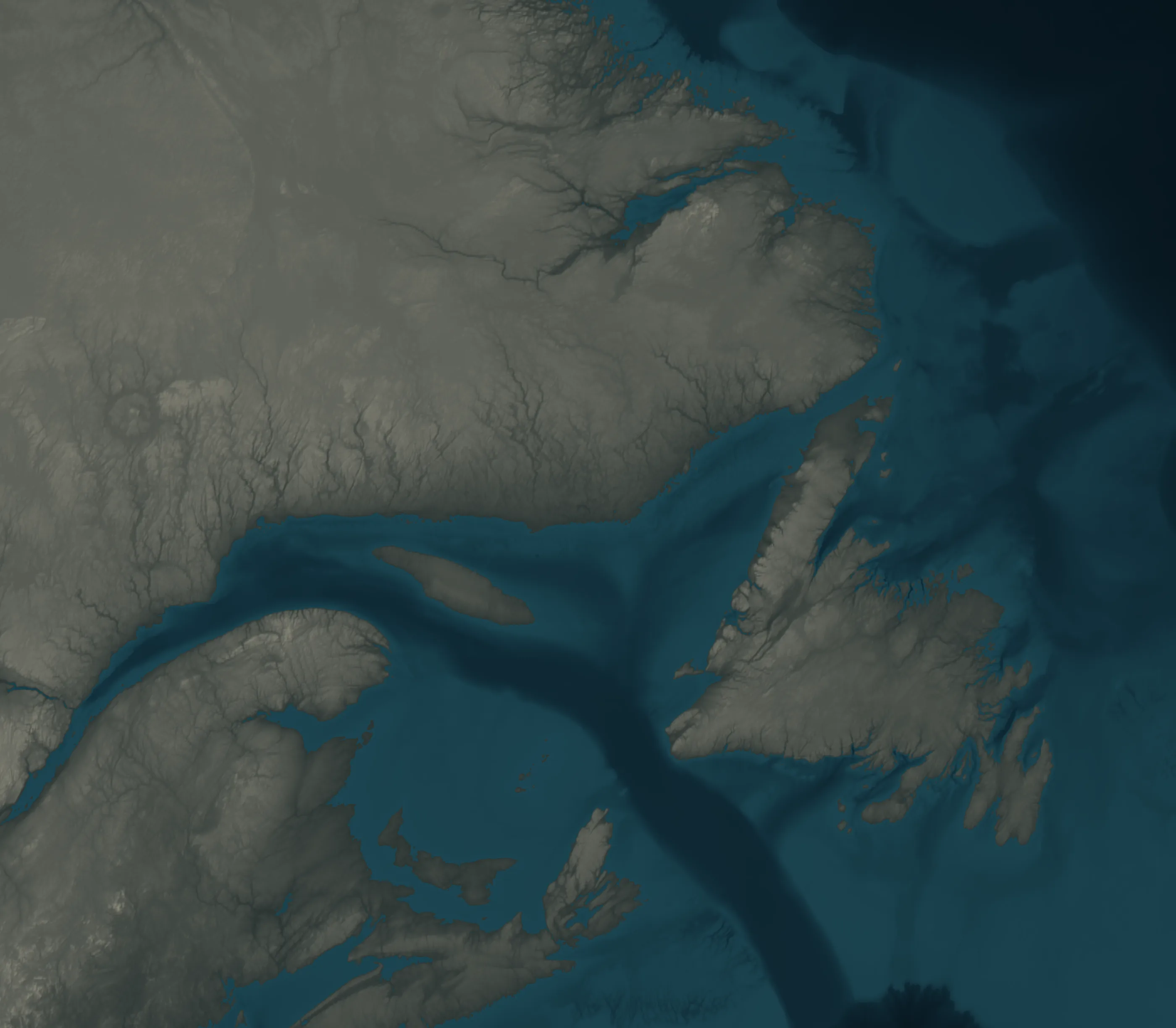
What the sources showThe map is the world map attributed to Pierre Desceliers, a priest at Arques near Dieppe, made in 1546 for the future Henri II of France. Off the Strait of Belle Isle, a small scene shows five men in a boat harpooning a whale. Readers have seen Beothuk in it, or St Lawrence Iroquoians, or Inuit.
In 2003 the archaeologist Charles Martijn, who had once argued for Inuit himself, and Selma and Michael Barkham compared the original with the 19th-century lithograph that several earlier readers had used. The copyist had removed the moustaches of the harpooner and the steersman, turned three pointed caps into hooded parkas and added an upright object lashed with rope beside the man with the bow. The changes, they wrote, introduced “a misleading Native American aspect”. Their verdict on the original: “strong evidence for identifying Desceliers’ whalers as Basques”. The man with the bow is still unexplained.
The storyThe Basque jargon died out in 1711.No source
What the sources showNo source for that date has been traced, and no one knows when the jargon stopped being spoken. The memorial of March 1710 says the jargon was still in use. A language leaves the record before it leaves people’s mouths, so the last written mention would give only the latest date it is known to have been spoken.