ProjectsRomână

Tescani · Bacău county

The final bars at Tescani

In an account preserved by the George Enescu Museum, the final bars of Oedipe were written at Tescani. The route there crosses six scenes and nearly the whole life of Oedipus.

Scroll to follow the story

Birth

A prophecy at birth

The opera opens at the court of Thebes. King Laius and Queen Jocasta celebrate the birth of their son. The prophet Tiresias reminds the king of Apollo's warning: the child will kill his father and marry his mother.

Laius orders a shepherd to leave the infant in the mountains. In minutes, the future Oedipus's world is shaped by a decision made before he can speak.

Corinth

The son who leaves home

Twenty years later, Oedipus lives in Corinth with King Polybus and Queen Merope, whom he believes to be his parents. The oracle at Delphi gives him the same prophecy. Troubled, he decides to leave the people he thinks of as mother and father.

The tragedy changes its question here: Oedipus tries to escape a fate he does not yet understand.

Crossroads

A meeting at the crossroads

On the road, an old man orders him aside and strikes him with a sceptre. Oedipus defends himself and kills him, without knowing the man is Laius, his father.

The second of the opera's six scenes fixes a fact the hero cannot see. The music carries the story forward; the truth remains hidden for a long time.

The Sphinx

The Sphinx guards the road to Thebes

When Oedipus reaches Thebes, he finds the city held by the Sphinx. Travellers who cannot answer its question are killed. He accepts the challenge and solves the riddle.

The city welcomes him as its saviour, and Oedipus becomes its king and Jocasta's husband. The victory ends Thebes's crisis while fulfilling the first prophecy without his knowledge.

Thebes

Twenty years later, the case leads back to the king

A plague strikes Thebes. Oedipus searches for Laius's killer, and the accounts of Jocasta, the shepherd and Tiresias lead him into his own past.

Jocasta learns the truth and kills herself. Oedipus blinds himself and leaves the city with his daughter, Antigone. In the third act, the man who saved his city must answer for what he has done.

Colonus

At the end of the road, near Athens

In the final act, Oedipus and Antigone arrive near Athens, ruled by Theseus. Creon offers to take Oedipus back to Thebes; Oedipus refuses. When Antigone is threatened, Theseus intervenes.

Oedipus declares his innocence and victory over fate. Four acts and six scenes have carried the audience from a child's birth to an old man's last moments.

Tescani

The final bars were written here

In an account quoted by the George Enescu National Museum, the composer says he wrote the first notes in Switzerland, near Lausanne, and the final bars at Tescani. He worked on the opera for ten years and had thought about it for a quarter of a century.

The Museum quotes 1932 for the final bars; another page from the same institution says the opera was completed in 1931. Both accounts place the ending at Tescani and give different years.

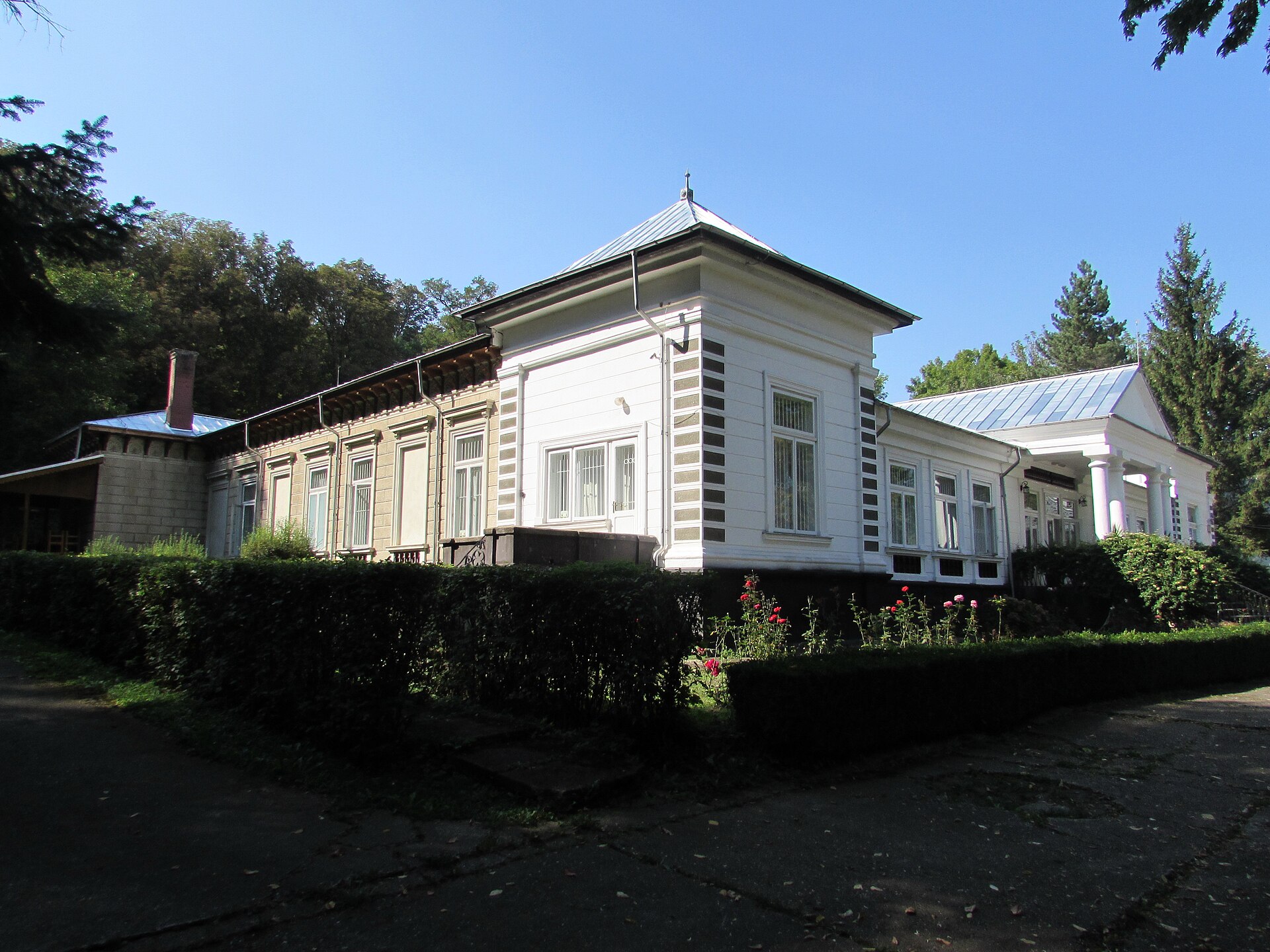
The manor was built in 1880, 37 km from Bacău. After Maria Cantacuzino-Enescu donated it to the state in 1947, the Rosetti–Enescu Memorial House opened here. Oedipe premiered at the Paris Opera on 13 March 1936.

The white façade of the Rosetti-Tescanu manor, surrounded by trees and seen from the garden.
Photographed in 2016 by Cezar Suceveanu; contrast adjusted. Licence: CC BY-SA 4.0

Share the opera's path

First notes in Switzerland, final bars at Tescani, premiere in Paris.

Back to projects

Sources and image

The National Opera Bucharest synopsis supports the scene summaries. The George Enescu National Museum supplies the account of composition and the manor's history.

  1. George Enescu National Museum, Enescu on Oedipe

    Account of the first notes, final bars, years of work and the time Enescu spent thinking about the opera.

  2. George Enescu National Museum, Tescani department

    Manor history, the 1947 donation and the museum's present status.

  3. George Enescu National Museum, the opera score

    The date 1931, the 1906 idea, four-act and six-scene structure, and the 1936 premiere.

  4. National Opera Bucharest, Oedipe synopsis

    Synopsis of the four acts and six scenes.

  5. Cezar Suceveanu, photograph of the manor

    Own photograph, 2016; Creative Commons Attribution-ShareAlike 4.0 International. Contrast adjusted; the photograph and its adaptation are released under the same licence.