England · c. 893–939
Æthelstan,
the first king
of England
A kingdom made in fifteen years by a child fostered among the Mercians — and a grave nobody has found for a thousand years.
Begin the story01 Birth and inheritance
He was raised among the Mercians, so he would not feel a stranger in his own country
The story begins with a child his father deliberately sent to be raised in a neighbouring kingdom — one that not long before had been the open enemy of Wessex. Not because they were enemies — but because, in his father’s eyes, they were necessary allies.
Æthelstan was born around the year 893, a grandson of King Alfred and a son of King Edward the Elder. His mother, Ecgwynn, was the king’s first wife; historians still argue whether their marriage counted as legitimate in the eyes of the law at the time, and some contemporaries preferred not to count him as the natural heir.1 His father’s plan was clear: Edward had the boy fostered at the Mercian court at Tamworth, by King Æthelred and his wife Æthelflæd — one of the strongest couples of rulers of that age — to be raised as a Mercian among the Mercians.1
This was not courtesy. It was policy. If he was ever to rule over both kingdoms, he had to be accepted in the north.
- c. 893Æthelstan is born, grandson of Alfred the Great.
- 899Alfred dies; Edward the Elder, his son, takes the throne. Æthelstan is about six.
- 918Æthelflæd dies; Edward takes Mercia and holds it through ealdormen.
- 17 July 924Edward dies at Farndon, in Mercia. Within a fortnight his son Ælfweard dies at Oxford.
- July 924The Mercians choose Æthelstan king; the chronicle does not say where.
- 04 September 925Anointed king at Kingston upon Thames by Archbishop Athelm of Canterbury.
The Anglo-Saxon Chronicle puts it dryly: “And Athelstan was chosen king in Mercia, and consecrated at Kingston.” (The Anglo-Saxon Chronicle, annal for 924/925, after Ingram 1823.)
02 Kingston · 4 September 925
The Kingston stone — a certain object with an uncertain story
(The date of 4 September 925 rests on a single copy of a charter (S 394), debated by some historians — but corroborated by regnal lists. It is kept here with that caveat.)
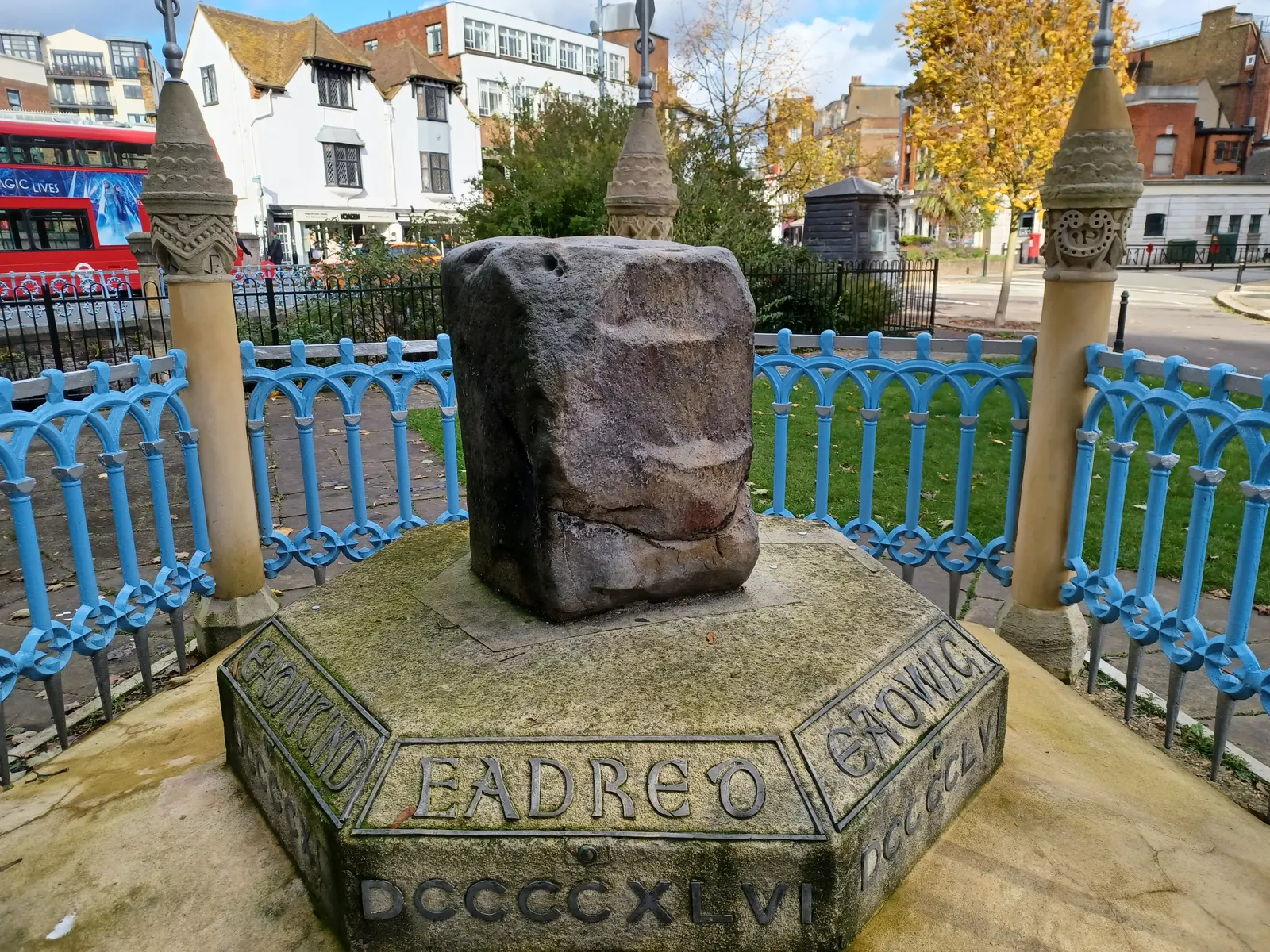
The stone exists, and it is probably ancient. The story of it is young. A tradition, probably dating from the late eighteenth century, holds that the king was anointed on this stone, by the Guildhall; no document from his own lifetime confirms it, and Historic England lists it with caution:
“An ancient sarsen stone, traditionally associated with a legend, probably dating from the late C18, that Saxon kings were seated on a stone to be crowned in Kingston in the C10.”Historic England, list entry 1080066, Coronation Stone (2023)
The stone stands today beside the Guildhall at Kingston upon Thames: an unhewn block about a metre high, set on a heptagonal plinth raised in 1850, with the names of seven kings and dates in lead lettering. Historic England notes that earlier antiquaries such as John Leland and John Aubrey do not mention any stone, or any tradition of a coronation stone, at Kingston; the earliest known record is in 1703, in a Court assize book; the tradition was revived by public fervour in the years 1849–1850. The legend asks for faith; the stone asks only to be stood beside.
One thing is certain: at least Æthelstan (925) and Æthelred II (979) were crowned at Kingston. The place, not the stone. The stone bears no carving, no inscription, and has never been dated.2
03 Eamont · 12 July 927
Every king in Britain, in one afternoon
In January 926, at Tamworth, Æthelstan’s sister — her name was not kept — married Sihtric, the Norse king of York. It was alliance, not friendship. Sihtric died a year later, and his kinsman Guthfrith succeeded him at York. The Anglo-Saxon Chronicle puts it dryly:
“This year King Athelstan expelled King Guthfrith; and Archbishop Wulfhelm went to Rome.”The Anglo-Saxon Chronicle, annal for 927, after Ingram 1823.
York, a coveted trading city of the north, now belonged to his realm. And then something happened that had never happened before: the other kings of the island gathered at Eamont, near Penrith, and submitted to him.
Named in the chronicle, on 12 July 927: Hywel Dda, king of Deheubarth, ruler over much of Wales; Constantine II, king of Alba — what we now call Scotland; Ealdred, lord of Bamburgh, the shield of English Northumbria; and an Owain — identified by some historians as the king of Strathclyde, by others as the king of Gwent. The chronicle does not say.3
An English king now presided over Britain. It was not a unitary state: there was no single flag, no single law, no single memory. But for the first time in the history of the island, there was a single man before them all.
Ego Æthelstanus rex Anglorum,
per omnipatrantis dexteram
totius Bryttaniae regni solio sublimatus…“I, Æthelstan, king of the English, raised by the right hand of the Almighty onto the throne of the whole kingdom of Britain…” — charter S 416, Lifton, 12 November 931.
Between 927 (on coins) and 931 (in charters), the royal style became rex totius Britanniae — king of all Britain. The style appears on coins from the Circumscription Cross of c. 927; in charters, only from 931. Historians are still arguing about whether that Britain was a state or a mirage:4
- David Woodman (2025) names 927, not 1066, as the birth year of England.
- George Molyneaux (2015) and Alex Woolf argue that the claims were real but loose: a hegemony, not a unitary state; genuine unity only arrives under Edgar (959–975) and Æthelred II.
- Sarah Foot (ODNB): “Æthelstan’s importance as the first king of all England cannot be doubted.”
04 One coin for the whole island
One coin — and the kingdom’s name on its face
Æthelstan issued no decree to fix the weight of the coin. He did something subtler: he set in circulation a single type of coin, a single law, a single list of moneyers.
Around 927, after the capture of York, the English silver penny began to carry the legend +EÐEL·:STΛN REX To BRIT — the abbreviation of Æthelstan Rex Totius Britanniae, king of all Britain. No English coin had ever carried the name of a whole realm or island before. C. E. Blunt, who weighed hundreds of his pennies and rebuilt the catalogue, puts it plainly: the change was “the result of deliberate policy”, and with it came the regular appearance of mint-names on English coinage for the first time.5
“Thirdly: that there be one money over all the king’s dominion, and that no man mint except within port. And if the moneyer be guilty, let the hand be struck off with which he wrought that offence, and be set up on the money-smithy.”II Æthelstan (Grateley code, c. 926–930), article 14, as printed by Thorpe, Ancient Laws and Institutes of England, vol. 1, p. 207.
This is not a weight decree: it is a procedural decree. Every moneyer named is southern. York, which entered the system only after its conquest in 927, appears nowhere on it. London had eight moneyers, Winchester six, Canterbury seven, Exeter two. The same coin or no coin at all.
The surviving pieces tell a similar story. On the scales, the coins of this reign cluster around 22–26 grains (about 1.4–1.7 g); Norwich pieces sometimes pass 24. The weight had not been fixed by any decree — that came around 973, under Edgar. Æthelstan had unified the type, the legend, the place of production. And, more deeply, the trust: from how the coin looked, anyone could tell whose it was.6
Grateley also carried a severity that is hard to defend: death for goods stolen above the value of eight pence, for thieves caught in the act aged over twelve. A few years later, at Faversham, the council pardoned everyone who had stolen before that assembly — on condition they confessed and repented by August; at Exeter, the king openly admits Grateley had failed: “I have learned that our peace is worse kept than is pleasing to me, or was ordained at Greatanlea.”7 And at an unidentified Witlanburh — perhaps Whittlebury in Northamptonshire — the minimum age for a death sentence was raised to fifteen, and the minimum value of stolen goods to twelve pence.
The first tithings — sworn groups of ten men, each liable for the others — are attested in this reign and only in this reign; the word “hundred” appears nowhere in his code. Even shield-makers were not forgotten: a shield-maker who covered shields with sheepskin was fined thirty shillings.
Two pennies, alive in museums
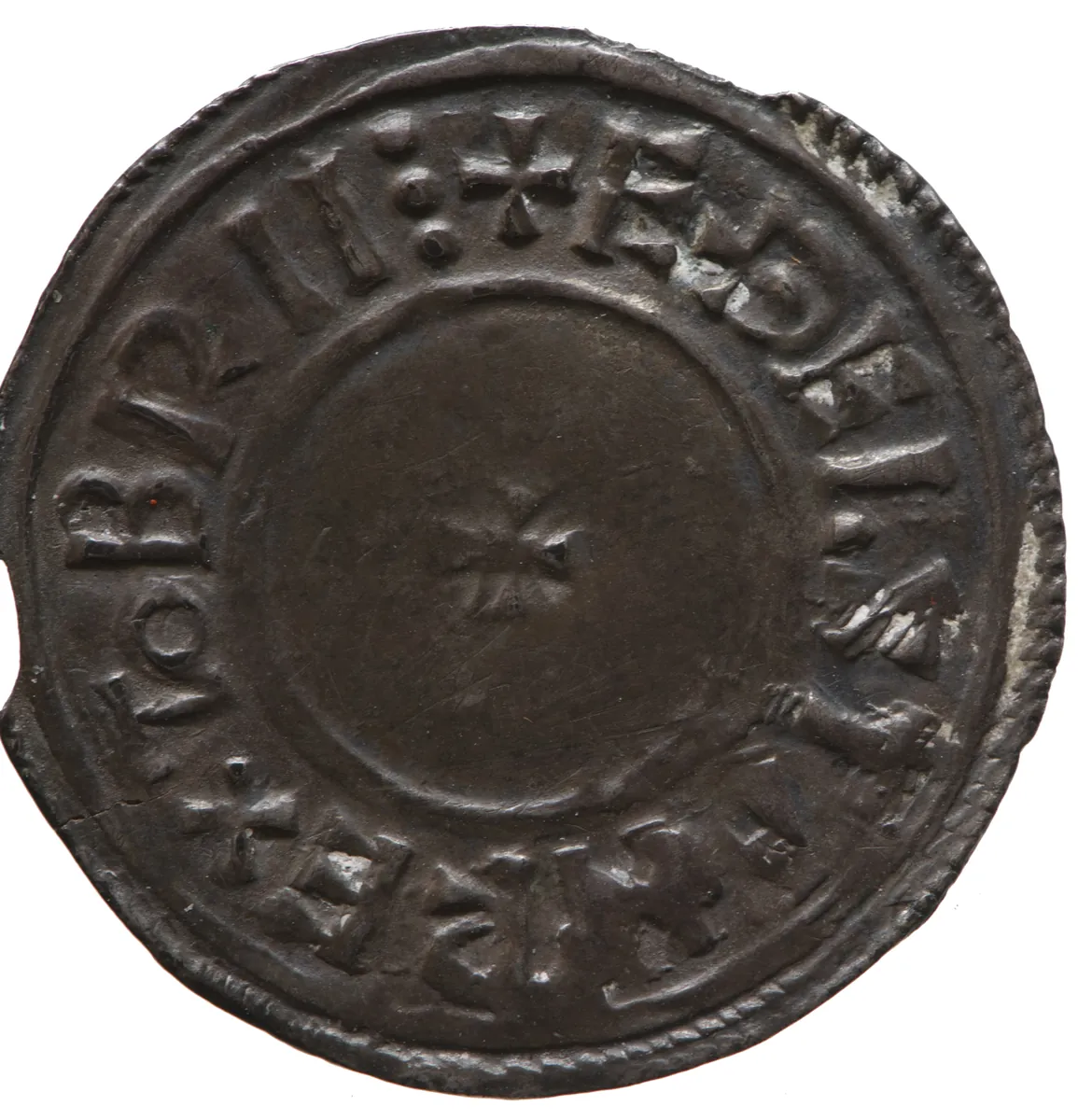
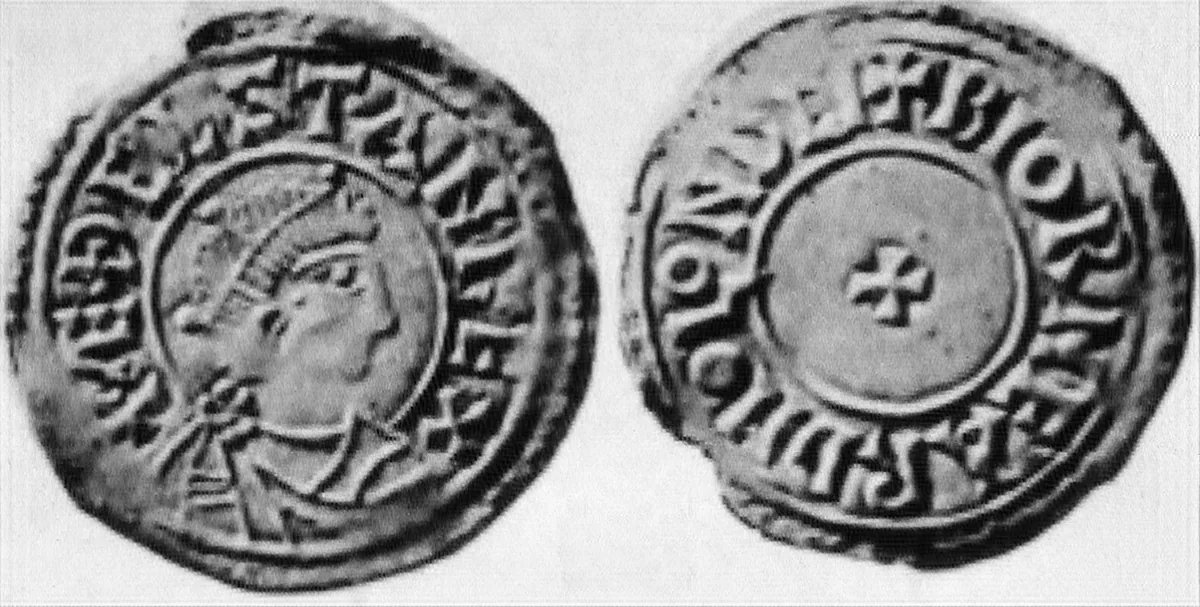
A Circumscription Cross penny weighs between about 1.2 and 1.6 grams today. The legend +EÐEL·:STΛN REX To BRIT is the abbreviated rex totius Britanniae — king of all Britain.
05 Brunanburh · 937
A poem written by the victors, about a battlefield nobody has ever found
In 937, a Norse–Irish fleet from Dublin, backed by a Scottish army, moved to break Æthelstan. He met them with a West-Saxon and Mercian army, and survived. A single English document describes what happened: an Old English poem, entered in the Anglo-Saxon Chronicle under the year 937. It is, to this day, the oldest English poem about a contemporary battle.
The poem names “five young kings, put to sleep by swords” and “seven of Anlaf’s earls”; no total figure is given. The Annals of Ulster record: “A great, lamentable and horrible battle was cruelly fought between the Saxons and the Norsemen, in which several thousands of Norsemen, who are uncounted, fell” — and add that Amlaíb escaped with a small remnant. No source says how many fell. You will not find that number here, because it does not exist.8
The story, plainly — the same poem in prose
Æthelstan and his brother Edmund won the battle at Brunanburh. From morning to dusk they clove the shield-wall and hacked the battle-lindens. The enemy was put to flight — the men of Scotland and the ship’s-folk — and doomed, they fell; the field grew dark with blood. The West Saxons tracked the hostile people all day; the Mercians did not hold back. Five young kings lay on the field, put to sleep by swords; seven of Anlaf’s earls, without number, were dead. Anlaf himself, driven by need, saved his life with a small company; Constantine, the grey-haired old man, fleeing for home to the north, had left his son on the field of slaughter. The brothers returned to Wessex, proud. The eagle and the wolf were left to feed. Never had the island seen a greater slaughter — at least according to the old books, since the Angles and Saxons came over the broad sea to seek Britain.
That is all the poem holds: no place, no date, no total number of dead. A victory and a memory. The original text, in Old English, follows — with glosses under each stanza, in Romanian or English.
The Brunanburh poem — 73 lines, Old English
- 1–2Hēr Æðelstān cyning, eorla drihten,
beorna bēahgifa, and his brōðor eac,„Aici regele Æthelstan, domnul eroilor, dătătorul de inele ale vitejilor; și fratele său de asemenea,Here King Æthelstan, lord of heroes, ring-giver to warriors, and his brother also, - 3–6Ēadmund æðeling, ealdorlangne tīr
geslōgon æt sæcce sweorda ecgum
ymbe Brunanburh: bordweall clufon,
hēowon heaðolinde hamora lāfum,Edmund prințul — o slavă fără de vârstă au dobândit în bătălie cu tăișul săbiilor în jurul Brunanburh-ului: au sfărâmat zidul de scuturi, au tăit scuturile de război cu făurături de ciocan.the ætheling Edmund — won everlasting fame in battle with the edges of their swords around Brunanburh: they clove the shield-wall, they hacked the battle-lindens with the leavings of hammers. - 18–22gārum āgēted, guma Norðerna
ofer scyld scoten, swylce Scyttisc ēac
wērig wīges-sæd. Wesseaxe forð
andlangne dæg ēoredcystum
on lāst lęgdon lāðum ðēodum;uciși de sulițe, oameni nordici, străpunși peste scut — și scoțienii de asemenea istoviți, plini de război. Cei din Wessex au mers, toată ziua, cu trupele de război, pe urmele neamurilor dușmane;brought low by spears, men of the North, shot over their shields, and the Scots likewise, wearied with war. The men of Wessex went forth, the whole day long, with their mounted troops, tracking down hostile peoples; - 28–32fǣge tō gefeohte. Fīfe lāgon
on ðām campstęde cyningas geonge
sweordum āswęfede, swylce seofone ēac
eorlas Anlāfes, unrīm hęrges,
flotena and Scotta.sortite luptei. Cinci regi tineri zăceau pe câmpul bătăliei, răpuși de săbii; și tot șapte dintre eorlii lui Anlaf, o mulțime fără număr de războinici ai flotei și ai Scoției.doomed to the fight. Five young kings lay on the field, put to sleep by swords, and likewise seven earls of Anlaf’s company, a countless host of the fleet and the Scots. - 53–56Gewiton him þā Norðmęnn nægledcnearrum,
drēorig daroða lāf, on Dinges mere
ofer dēop wæter Dyflin sēcan,
and eft Īraland, ǣwiscmōde.Plecară atunci nordicii cu corăbiile cu cuie, o rămășiță tristă a sulițelor, spre Dingesmere, peste ape adânci, să caute Dublinul — și apoi Irlanda, rușinați.Then the Northmen left in their nail-studded ships, a bloody remnant of spears, bound for Dingesmere, across the deep water, to seek Dublin, and then Ireland — ashamed. - 65–67wulf on wealda. Ne wearð wæl māre
on ðȳs īglande ǣfre gȳta
folces gefylled beforan ðyssumlup sălbatic. N-a mai fost un măcel mai mare pe această insulă, niciodată până acum, nici atâția oameni uciși înainte de acestea,the wolf in the weald. Never was there a greater slaughter on this island, ever yet, of people slain before this with the edge of the sword, - 7–9eaforan Ēadweardes; swā him geæðele wæs
fram cnēomāgum, ðæt hī æt campe oft
wið lāðra gehwæne land ealgodon,fiii lui Edward; astfel li s-a cuvenit dinspre rude, că în bătălie adesea împotriva oricărui dușman au apărat țara,the sons of Edward; so it befitted them from their kinsmen, that in battle they had often defended the land against every foe, - 10–13hord and hāmas. Hęttend crungon,
Scotta leode and scipflotan,
fǣge feollon: feld dennode
sęcga swāte, siþþan sunne ūppcomoara și casele. Dușmanii au căzut, oamenii din Scoția și echipajul navelor, sortite morții au căzut: câmpul s-a înnegrit de sângele războinicilor, după ce soarelethe hoard and the homes. The foes perished, men of Scotland and the ship’s-folk, doomed they fell: the field grew dark with the blood of men, after the sun - 14–17on morgentīd, mǣre tungol,
glād ofer grundas, Godes candel beorht,
ēces Drihtnes, oð sīo æðele gesceaft
sāh tō setle. Ðǣr læg sęcg mǫnigîn timpul dimineții, strălucita stea, a glisat peste câmpii — lumânarea luminoasă a lui Dumnezeu, a Domnului celui veșnic — până când strălucita creație s-a pogorât spre culcare. Acolo zăcuseră mulți oameniin morning-tide, glorious star, glided across the grounds, God’s bright candle, the eternal Lord’s, until the noble creation sank to its seat. There lay many a man - 23–25hēowon hęreflȳman hindan ðearle
mēcum mylenscearpum. Myrce ne wyrndon
heardes handplegan hæleða nānum,au tăiat pe fugari din spate, cu asprime, cu săbii ascuțite de moară. Merciienii nu s-au dat înapoi dintr-o luptă cu mâna cu niciun viteaz;they cut down the fleeing rear-guard, cruelly, with mill-sharp swords. And the Mercians did not refuse to any warrior the hard hand-play, - 26–27ðāra ðe mid Anlāfe ofer ēargebland
on lides bōsme land gesōhtona acelora care împreună cu Anlaf, peste o mare îndârjită, în pântec de corabie au venit să caute țara,of those who with Anlaf, over the troubled sea, sought the land in a ship’s belly, - 32–36Ðǣr geflȳmed wearð
Norðmanna brego, nēade gebǣded
tō lides stefne lȳtle weorode:
crēad cnear on flot; cyning ūt gewāt
on fealone flōd, feorh genęrede.Acolo a fost pus pe fugă stăpânul nordicilor, silit cu forța spre prova corăbiei, cu o ceată mică. Corabia iute a fugit în apă; regele s-a retras pe marea palidă și și-a salvat viața.There the prince of the Northmen was put to flight, compelled by need, to the ship’s prow with a small company: the swift ship sprang into the water; the king departed out onto the pale flood, and saved his life. - 37–44Swylce ðǣr ēac sē frōda mid flēame cōm
on his cȳððe norð, Constantīnus,
hār hilderinc; hrēman ne ðorfte
mēca gemānon: he wæs his māga sceard,
frēonda gefylled on folcstęde,
beslægen æt sæcce, and his sunu forlēt
on wælstōwe wundum forgrunden,
geongne æt gūðe.Și acolo, cel bătrân a venit cu fuga spre țara lui la nord, Constantine, războinicul cu păr sur — n-avea de ce să se bucure de tovarășia săbiilor: fusese rupt de rude, coborât de prieteni pe câmpul public, ucis în luptă — și și-a lăsat fiul pe câmpul măcelului, zdrobit de răni, tânăr în război.Likewise there, that old man came fleeing to his own country in the north, Constantine, the grey-haired warrior; he had no cause to glory in the clashing of swords: he was bereft of kinsmen, felled of friends in the public place, slain in the fight — and he left his son on the slaughter-field, ground down by wounds, young in war. - 44–52Gylpan ne ðorfte
beorn blandenfeax billgeslihtes,
eald inwitta, nē Anlāf ðȳ mā
mid heora hęrelāfum; hlihhan ne ðorfton,
ðæt hī beaduweorca bęteran wurdon
on campstęde cumbolgehnāstes;
gārmittinge, gumena gemōtes,
wǣpengewrīxles, ðæs hī on wælfelda
wið Ēadweardes eaforan plegodon.N-avea de ce să se laude bătrânul cu părul amestecat, de tăișul sabiei, bătrânul intrigant — și nici Anlaf mai puțin. Cu rămășițele lor de oaste, nu aveau de ce să râdă, că ar fi fost mai buni în lucrările războiului pe câmpul bătăliei, la ciocnirea steagurilor, la încrucișarea sulițelor, la întâlnirea bărbaților, la schimbarea armelor — acel lucru de pe câmpul măcelului în care au jucat împotriva fiilor lui Edward.The grey-streaked warrior had no cause to boast of sword-slaying, the old schemer — nor Anlaf any the more, with their remnant of an army; they had no cause to laugh that they had proved better at the works of war on the field of the clash of standards, in the meeting of spears, the gathering of men, the exchange of weapons — the thing in which, on the field of slaughter, they had played against the sons of Edward. - 57–59Swylce ðā gebrōðor bēgen aetsǫmne,
cyning and æðeling, cȳððe sōhton
Wesseaxna land, wīges hrēmge.Și cei doi frați împreună, regele și prințul, s-au întors spre țara lor, spre regatul Wessex, mândri de victorie.And the two brothers together, king and ætheling, sought their native land, the land of the West Saxons, proud of war. - 60–64Lēton him behindan hrā bryttigan
salowigpādan, ðone sweartan hræfn,
hyrnednębban, and ðone hasopādan
earn æftan hwīt, ǣses brūcan,
grǣdigne gūðhafoc, and ðæt grǣge dēor,Au lăsat în urmă trupuri frânte pentru corbul cu penele arămii, corbul negru cu ciocul conic, și vulturul cu spatele alb, să-și pască foamea, șoimul de luptă, lupul cenușiu,They left behind, to feast on the corpses, the dark-beaked raven with his rust-brown feathers, the black raven with the horned beak, and the eagle white from behind, the ravening war-hawk, - 68–73sweordes ęcgum, ðæs ðe ūs sęcgað bēc,
ealde ūðwitan, siþþan ēastan hider
Ęngle and Seaxe ūpp becōmon
ofer brāde brimu, Brytene sōhton,
wlance wīgsmiðas Wēalas ofercōmon,
eorlas ārhwate eard begēaton.cu tăișul sabiei, după cum ne spun cărțile, învățații cei vechi, de când odinioară de la răsărit aici au venit unghi și sași peste mări largi să caute Britania, mândrii făuritori de război, şi au biruit pe walesi, vitejii nobili, și au căpătat pământul.with the edge of the sword, as the books tell us, the old sages — since from the east to here Angles and Saxons came, over the broad sea, seeking Britain, proud war-smiths who overcame the Welsh, the ready earls who won the land.
Text: The Battle of Brunanburh, ed. J. W. Bright (Bright’s Anglo-Saxon Reader, 1913), pp. 146–148 — public domain. Romanian translation: the first ever, published on this page (2026). English rendering into plain prose: this project, 2026, consulting Ingram’s public-domain Chronicle translation (1823); not metrical. The poem survives only in manuscripts A, B, C and D of the Anglo-Saxon Chronicle; a copy in Otho B.xi burned in the 1731 Ashburnham House fire.
The place is unknown
The poem does not say where. Historic England’s Register of Historic Battlefields holds 47 records — Brunanburh is not one of them. More than forty candidates have been proposed. The strongest, Bromborough on the Wirral, rests on the name itself: it is the only surviving English place-name descending directly from Old English Brunanburh, and the Wirral was the natural landing route for a fleet sailing from Dublin toward the mouth of the Mersey. Sarah Foot calls it “the most likely identification”. Several younger historians dispute it fiercely; nobody has proved anything. The place remains unknown.9
What comes of a battle that nobody can locate? One certain consequence: York remained English through the rest of Æthelstan’s reign. Then, in 940, Anlaf retook it without fighting. What would England have lost had the battle been lost? One position (Sarah Foot) holds that England would have lost its West-Saxon hegemony over the whole island. The contrary position (Alex Woolf) holds that Brunanburh changed nothing permanent: a battle won that settled nothing. Both positions have scholarly support; no source from his lifetime decides between them.
“The fields of Britain were consolidated into one, there was peace everywhere, and abundance of all things; and since then no fleet has remained here, having advanced against these shores, except under treaty with the English.”Æthelweard, Chronicon, c. 980; English rendering of the Latin.
06 Autumn at Gloucester · 939
The tomb that was never found
On 27 October 939, Æthelstan died at Gloucester — his city, not his capital. He had no children; only one man could take over: Edmund, his half-brother, was eighteen.
Æthelstan asked to be carried to Malmesbury — a place to which he attributed his own deliverance through the intercession of St Aldhelm, according to his own testimony — and where he had lost, at Brunanburh, his two beloved cousins: Ælfwine and Æthelwine, sons of his uncle Æthelweard. In the years that followed, he loaded the monastery with estates, silken cloaks, a golden cross, and relics bought from Brittany — and, sent by Hugh, king of the Franks, a portion of the True Cross; Malmesbury tradition also credits him with a portion of the Crown of Thorns.10
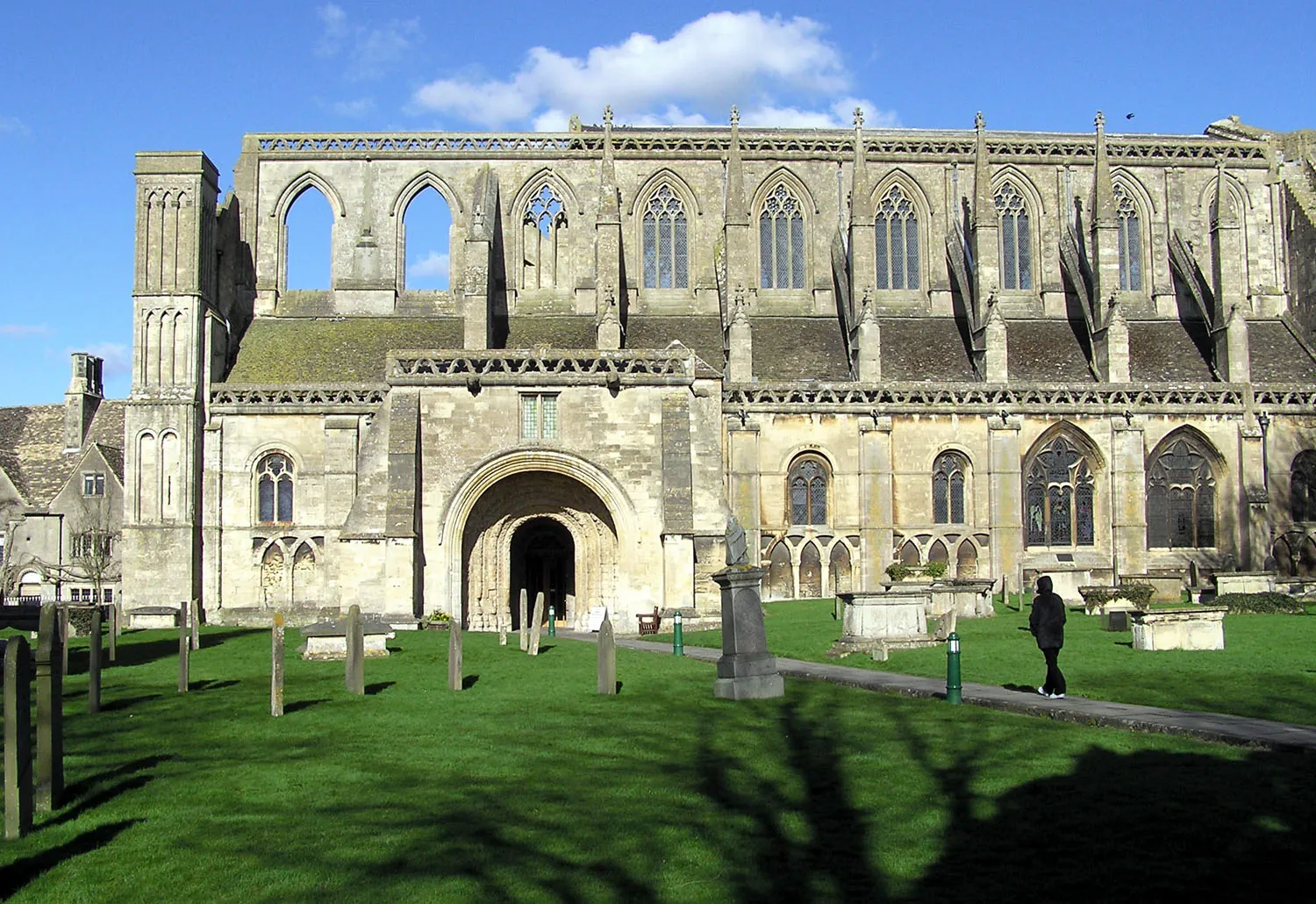
William of Malmesbury, writing there in the twelfth century, records that the body was laid under the altar, on either side of his two dead at Brunanburh — Ælfwine and Æthelwine — and that in the eleventh century the monks moved the body to the abbot’s garden to shield it from the Normans, according to his own account. It has not been found since. What remains today, in the north aisle, is a fourteenth- or fifteenth-century altar tomb with a crowned effigy — empty; the head was replaced after the English Civil War (1642–1651); the tomb itself was never his grave and is not one now.11
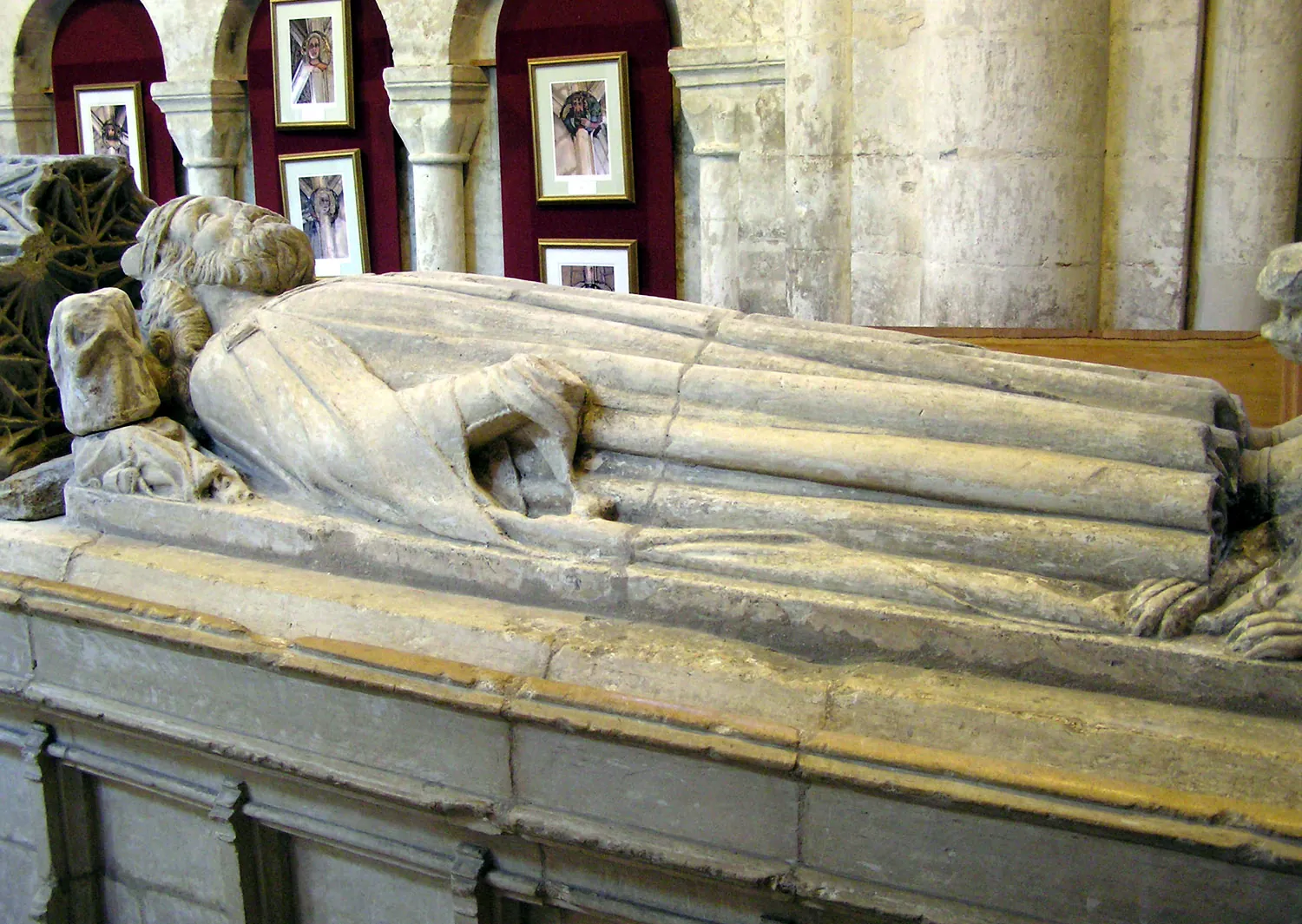
And yet at Malmesbury the words “Turf and twig I give to thee, as King Athelstan gave to me, a good brother thou shalt be” are still spoken today when the town’s freemen are admitted — a formula surviving from a lost charter of c. 934.
07 The sister in Magdeburg · 929/930–946
The queen who never lived to be an empress
Around 929, King Henry I of Saxony sent matchmakers to England for his son: Otto. Two sisters were sent to Saxony, and Otto chose Eadgyth, daughter of King Edward and Queen Ælfflæd. Æthelstan was therefore her elder half-brother: his mother Ecgwynn had been the king’s first wife; Ælfflæd, the second.12
Eadgyth married Otto at the end of 929 or the beginning of 930. Magdeburg, with everything it meant, was given her as a morning gift — which is why Magdeburg became the funerary capital of the Ottonian dynasty. She died there, on 26 January 946, at about thirty-six. Otto was crowned emperor at Rome in 962 — sixteen years after losing her.
An altar from 1510, gap by gap
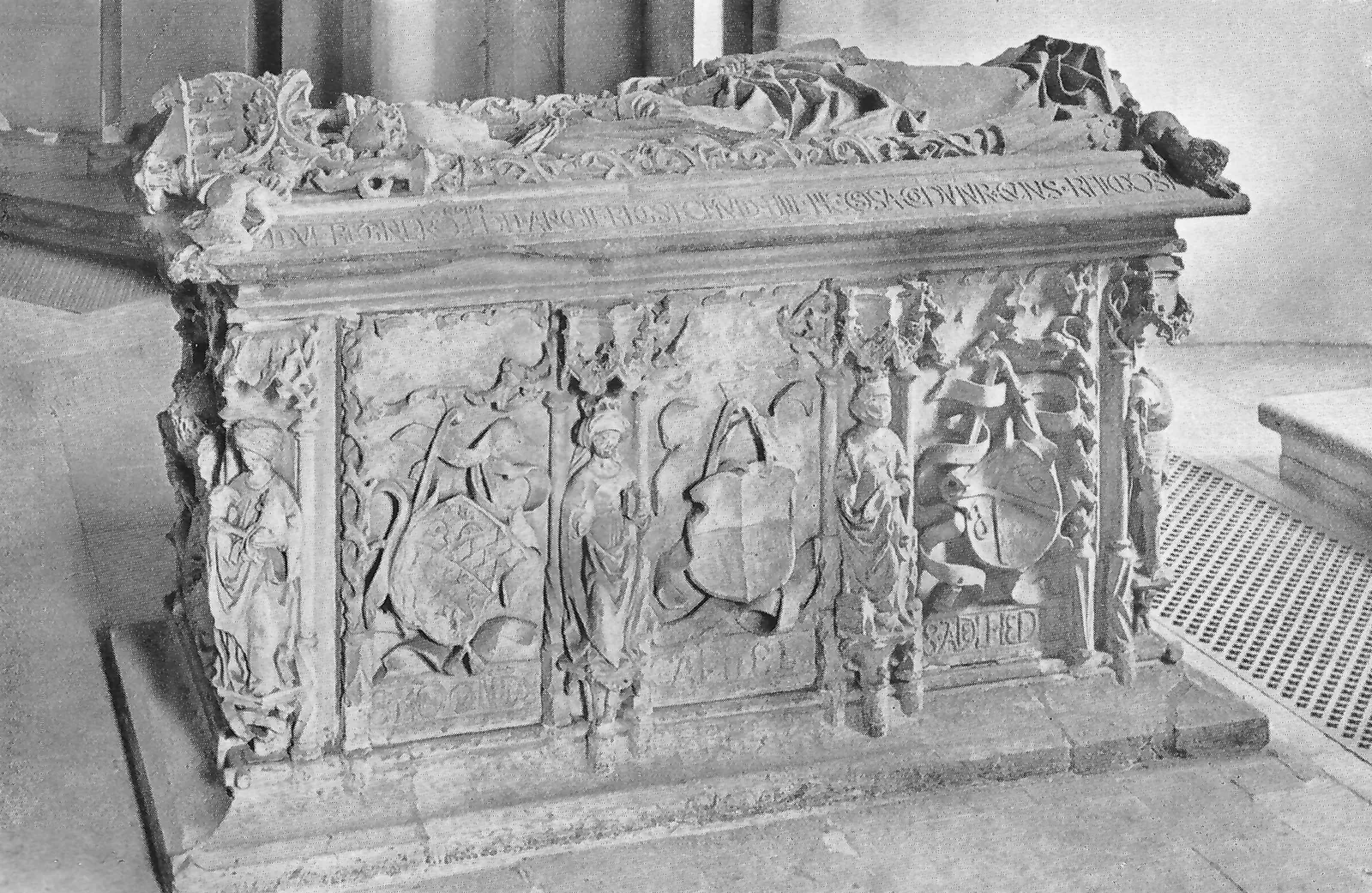
Her tomb of 1510, a sandstone altar in Magdeburg Cathedral, had been considered for centuries a cenotaph — an empty grave. In November 2008, the team led by Rainer Kuhn (Stiftung Dome und Schlösser Sachsen-Anhalt) opened the cenotaph in the choir ambulatory (Chorumgang) of the cathedral and found inside it a lead coffin inscribed to state that it contained the remains of Eadgyth.13
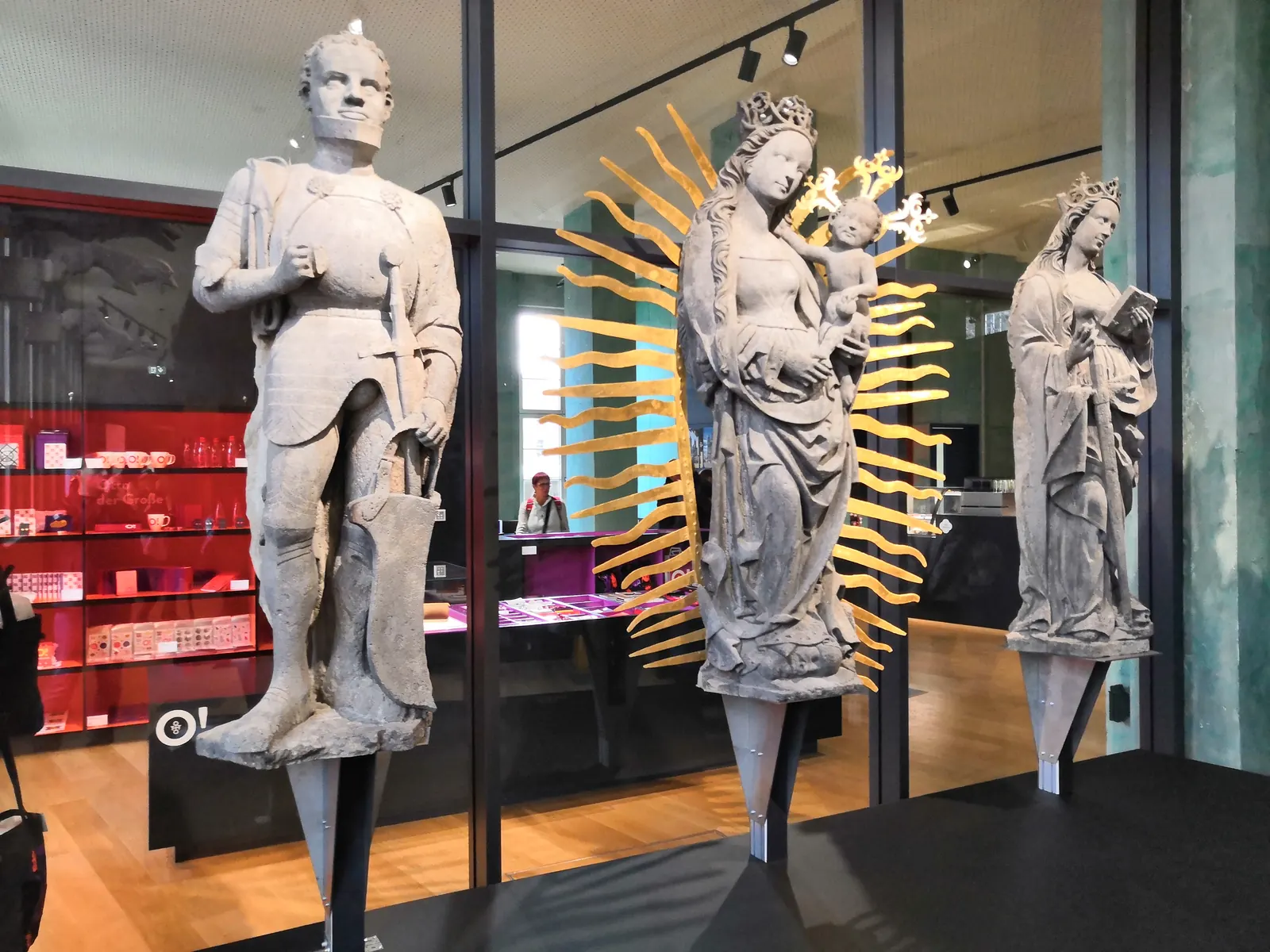
Isotope analysis of tooth enamel — strontium and oxygen, from Mainz (the group led by Kurt W. Alt) and from Bristol (Alistair Pike) — shows that she grew up in the chalk regions of southern Britain (values consistent with the Winchester area, though not exclusive to it). Estimated height: about 1.57 m; age at death: thirty to forty — so around thirty-six. She showed a femoral joint facet characteristic of riders. Mitochondrial DNA could not be recovered. The identification remains circumstantial — “with a probability approaching certainty” — and her tomb is on view today in Magdeburg Cathedral, while the lead coffin rests in the Cathedral Museum (Dommuseum Ottonianum, opened 2018).
She was never crowned empress, though German documents conventionally call her “Kaiserin”. She was queen of East Francia — the future Germany — the wife of Otto, and the daughter of a king who ruled the English and the Mercians, not every corner of England.
08 What remains
What is left of the first king of England
His grave has never been found; his poem survives. Here are six objects and one word that carry his name.
01 · The coin
Between 927 and 939, 13 types of silver penny. The Circumscription Cross legend: +EÐEL·:STΛN REX To BRIT — king of all Britain. Mint names appear en masse for the first time on English money. Fitzwilliam examples: 1.24–1.55 g.
02 · The poem
73 lines of Old English, entered in the Anglo-Saxon Chronicle under 937 only (manuscripts A, B, C and D; a copy in Otho B.xi destroyed in 1731). The oldest surviving English poem about a contemporary battle. The first Romanian rendering is being published on this site today.
03 · The stole
An embroidered stole worked in gold thread between c. 909 and c. 919, commissioned by Queen Ælfflæd, Edward the Elder’s second wife. The inscription says precisely this: «ÆLFFLÆD FIERI PRÆCEPIT / PIO EPISCOPO FRIDESTANO» — “Ælfflæd ordered this to be made for the pious Bishop Frithestan.” In 934, marching to Scotland, Æthelstan gave it to St Cuthbert’s shrine at Chester-le-Street. Today it is at Durham Cathedral (museum collection, open intermittently). Not one word of the inscription bears Æthelstan’s name.
04 · The stone
The sarsen block in front of Kingston Guildhall: an authentic object and a young legend. No scientific link between this stone and the 925 anointing exists (the names and dates on the heptagonal plinth are from 1850). The place, not the stone — that is all we know.
05 · The tomb
An empty fourteenth- or fifteenth-century stone altar with a crowned effigy (head replaced after the English Civil War (1642–1651)), in the north aisle of Malmesbury Abbey. It is not his grave — it is the memory of his chosen place.
06 · “Imperator”
In his own church at Malmesbury, a reliquary for St Paternus bore, according to William of Malmesbury’s own notes from c. 1125: «Hoc opus rex Ethelstanus, totius Britannise multarumque gentium in circuitu positarum imperator, in honorem sancti Paterni fieri jussit» — “this work, King Æthelstan, emperor of all Britain and of the many nations placed around it, ordered to be made in honour of St Paternus.” The reliquary is lost; the inscription survives only in his transcription.
Stenton (1971), on his place in European history: “Between Offa and Cnut there is no English king who played so prominent or so sustained a part in the general affairs of Europe.”
09 Epilogue · where to go if you want to see it
You do not have to take our word for it
If you want to find Æthelstan, you can go to his addresses. Five of them welcome visitors.
- KingstonThe Coronation Stone, in front of Kingston upon Thames Guildhall, and All Saints Church — where you can also see the 2025 embroidered panels of Æthelstan, Edmund, Eadred and Eadwig.
- MalmesburyThe Abbey — the empty tomb, the crowned effigy — and the Athelstan Museum, in the Town Hall.
- DurhamDurham Cathedral — the stole Æthelstan gave to Chester-le-Street, displayed intermittently among the treasures of St Cuthbert. Check the museum’s opening arrangements before you travel.
- RiponRipon Cathedral — the fifteenth-century pulpitum with the painted figure of King Æthelstan.
- MagdeburgMagdeburg Cathedral and the Ottonianum Museum — Eadgyth’s tomb, found in 2008, reburied in 2010; the lead coffin is at the Cathedral Museum, opened 2018.
If nothing else from his reign strikes you, hold on to this one window: a kingdom built physically, in a single lifetime, and dismantled just as fast by its survivors. The poem closes on the feeding — the grey wolf, the white eagle, the black raven. And then it returns us to the beginning: your pocket, and your own money, and the question of who gave it a name.
Notes and sources
- Birth and childhood: Sarah Foot, ODNB, “Æthelstan [Athelstan] (893/4–939)”; idem, Æthelstan: The First King of England (Yale UP, 2011). Mother: Ecgwynn; the legitimacy of the marriage — disputed.
- Historic England, “Coronation Stone”, list entry 1080066 (Grade I; consulted 2026-11-11): “an ancient sarsen stone, traditionally associated with a legend, probably dating from the late C18”; its link with the coronation is “disputed by modern historians (e.g. Butters, 2013)”. At minimum Æthelstan (925) and Æthelred II (979) were crowned at Kingston.
- The Anglo-Saxon Chronicle, annal for 927 (Ingram/Giles): Guthfrith expelled; annal for 926 (MS D): “brought under his rule all the kings who were in this island”; 12 July 927 — Eamont (date based on MS D s.a. 926).
- Woodman, The First King of England (Princeton UP, 2025); Molyneaux, The Formation of the English Kingdom in the Tenth Century (OUP, 2015); Woolf, “A Dark Age Life?” (ASNC blog, 2012). Foot (ODNB): “importance … cannot be doubted.”
- C. E. Blunt, “The Coinage of Æthelstan, King of England 924–939: A Survey”, British Numismatic Journal 42 (1974), pp. 47–49, 55. Introduction of the Circumscription Cross type and of mint-names after the capture of York in 927, “the result of deliberate policy”.
- Weights: Blunt 1974 (568 coins); “at any rate 25 gr.” (Blunt, p. 59, summarizing Brooke’s Vatican-hoard data); Fitzwilliam examples (CM.1.460-1990, 1.24 g; CM.1.389-1990, 1.55 g). No decree fixing a weight survives.
- II Æthelstan (Grateley), article 14 (Thorpe, vol. 1, p. 207; Latin text, vol. 2, p. 489–90); V Æthelstan (Exeter), after Thorpe vol. 1, p. 220; Faversham (III), c. 929/930 (Thorpe vol. 1, pp. 216–17); Witlanburh amendments (assigned by Foot to Thunderfield); first tithings attested in VI Æthelstan (Judicia Civitatis Lundoniae).
- Annals of Ulster, s.a. 937, in Cavill, “The Battle of Brunanburh in 937: Battlefield Despatches”, In Search of Vikings (2014), pp. 97–98; poem: MS A (Parker CCCC 173, f. 26r); MSS B, C, D; ed. J. W. Bright (1913), pp. 146–148 (public domain); Otho B.xi destroyed in 1731. No casualty total exists in any source; the Annals of Clonmacnoise (trans. 1627) record a figure treated as unreliable — not printed here.
- Historiography: Foot 2011, p. 179 (“the most likely identification”); Woolf 2012 (“he did not rule a unified kingdom of England”); Deakin, The East Yorkshire Historian 21 (2020); Notes and Queries 69 (2022); Downham, Trans. Hist. Soc. Lancs. Ches. 170 (2021); Cavill & Harding, Finding the Battle of Brunanburh (Chester Univ. Press, 2025); Historic England, Register of Historic Battlefields (consulted 2026-11-11; Brunanburh absent).
- William of Malmesbury, Gesta Pontificum Anglorum, V.246 (ed. Hamilton, Rolls Series, 1870): Ælfwine and Æthelwine buried on either side of the altar at Malmesbury.
- William of Malmesbury, V.246–49; GRA II.6; the present tomb: 14th/15th century; the head reworked after the English Civil War (1642–1651); the body, by his own account, moved in the 11th century to the abbot’s garden.
- Widukind of Corvey, Res gestae Saxonicae, I.37; Eadgyth: daughter of King Edward and Queen Ælfflæd; Æthelstan her elder half-brother; marriage at the end of 929 or beginning of 930; death 26 January 946.
- The November 2008 opening of Eadgyth’s presumed tomb (Rainer Kuhn, Stiftung Dome und Schlösser Sachsen-Anhalt; analysis: Kurt W. Alt and the team at Johannes Gutenberg University Mainz — anthropology and strontium/oxygen isotopes; Alistair Pike, Bristol); JGU Mainz press release, 20 January 2010; reburial, 22 October 2010; Harald Meller, 20 January 2010 (“We still are not completely certain…”).