A page that measures you
Are you wider than a stork?
Stretch your arms sideways: that is about how wide you are. A Dalmatian pelican reaches 320 centimetres, and the country's heaviest flying bird is not the swan. Enter your height and see where you stand among 11 birds.
Measure meMeasure me
You, arms out, next to each bird
Set your height, then your arm span. The drawing shows you at the same scale as the chosen bird.
Dalmatian pelican
Pelecanus crispus · the widest bird in Romania, usually
A middle bird (295 cm) is 2.2 times as wide as a 135 cm child.
- Wingspan270–320 cm
- Weight10–12 kg
- In Romaniabreeds in the Danube Delta
Arm span is usually a few centimetres under or over height. If you measured yourself with a tape, put your number in.
No bird on this page has a single wingspan: each comes with a range, from the smallest to the largest measured bird. The drawing shows the middle of the range, and the list below shows the whole range.
The sparrow and the swallow barely show next to you. A middle Dalmatian pelican is more than twice as wide as a 135 cm child. Where you stand is in the ranking.
The ranking
11 birds, two rankings
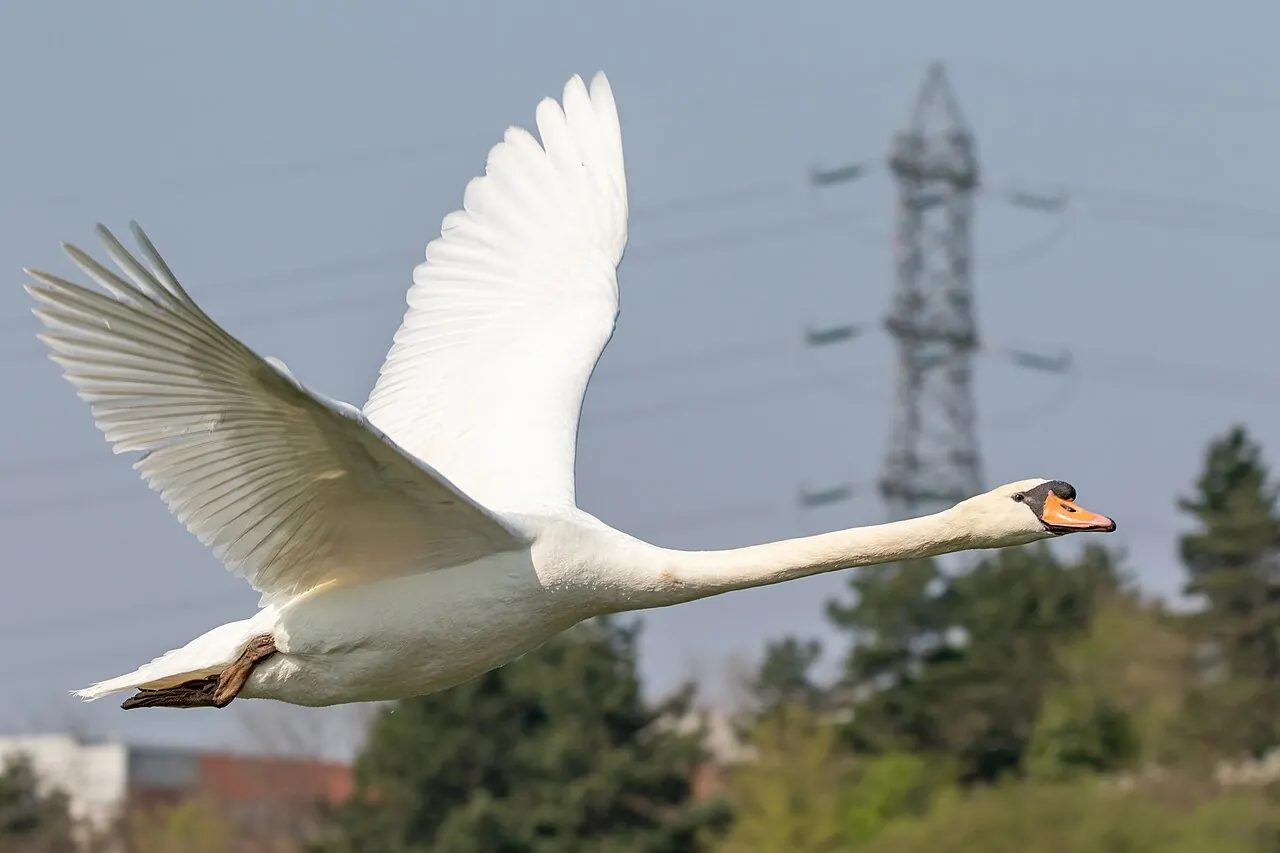
By width the Dalmatian pelican wins. By weight, the bustard. The two buttons below re-sort them all.
- Dalmatian pelican270–320 cm
- Great white pelican245–295 cm
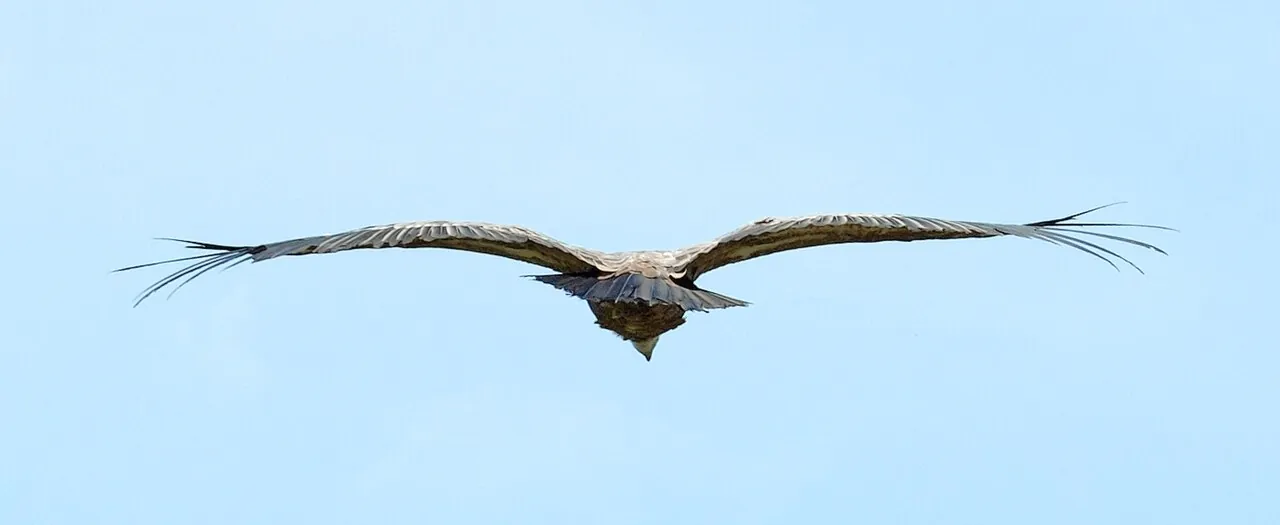
- Griffon vulture230–280 cm
- Great bustard210–270 cm
- White-tailed eagle178–245 cm
- Mute swan200–240 cm
- Golden eagle204–220 cm
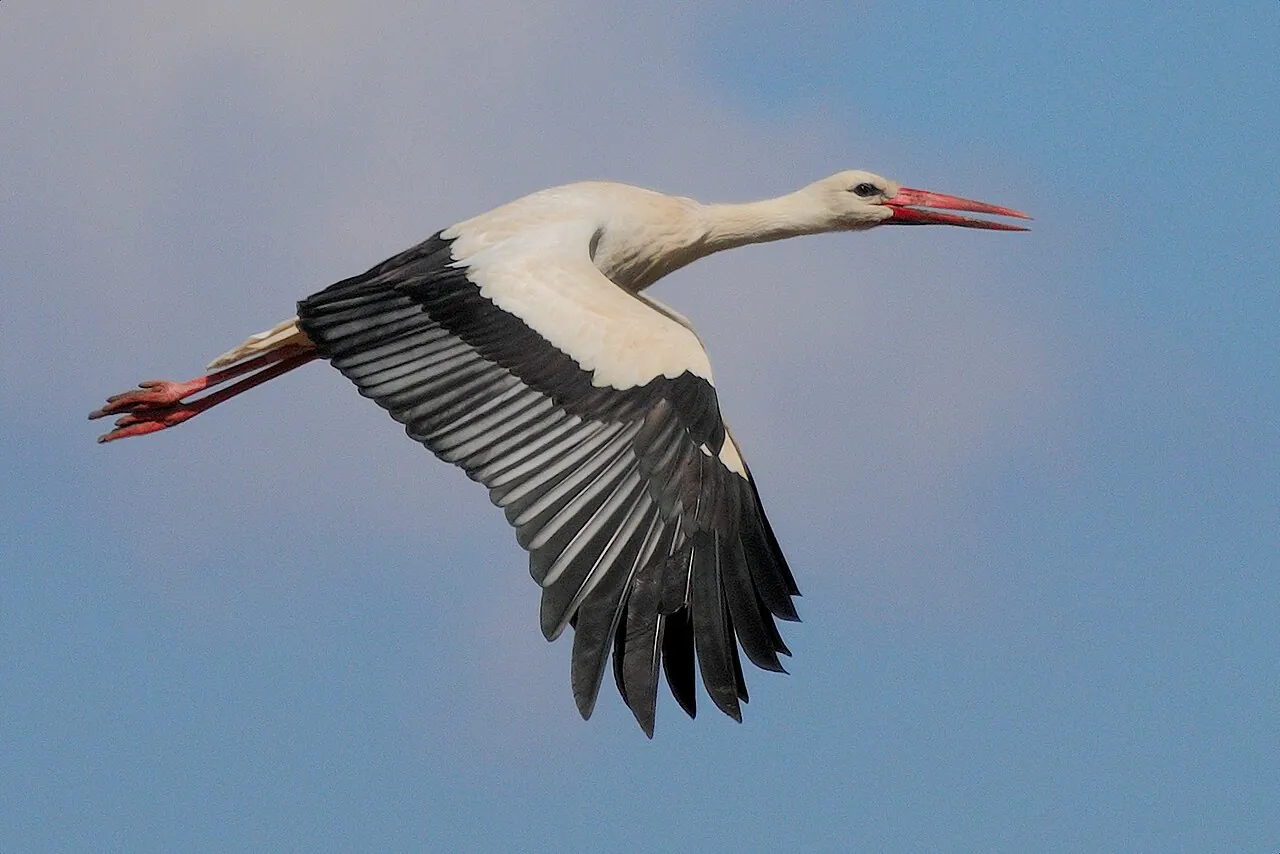
- White stork155–215 cm
- You (135 cm)135 cm
- Common buzzard113–128 cm
- Barn swallow32–35 cm
- House sparrow19–25 cm
Weights sit on a scale where each step means ten times more. Otherwise the swallow's bar would be thin as a hair.
- Great bustard5.8–18 kg
- Great white pelican9–15 kg
- Mute swan9.2–14.3 kg
- Dalmatian pelican10–12 kg
- Griffon vulture6.2–10.5 kg
- White-tailed eagle3.1–6.9 kg
- Golden eagle2.8–6.7 kg
- White stork2.3–4.5 kg
- Common buzzard550 g – 1.3 kg
- House sparrow24–39.5 g
- Barn swallow16–25 g
Guess first
Two duels, before you see the numbers
Choose before you read on. The page does not show the answer until you decide.
Which pelican is wider?
The Dalmatian, usually: 270–320 cm against 245–295 cm. The great white's 360 cm figure is an extreme from a single source.
Which bird is heavier?
The bustard: males reach 18 kilos, and the verified record is 21. Male swans stop at 14.3.
The stories behind the numbers
The vulture that is coming back, and the heaviest bird, which you have never seen
Three things the ranking does not say on its own.
The vultures vanished from Romania and are coming back now
Early last century the country held four vulture species: griffon, cinereous, Egyptian and bearded. Hunting, fewer carcasses and poison wiped them out one by one. Today the griffon vulture stands on Romania's bird list as accidental: a rare guest.
In February 2026 Foundation Conservation Carpathia finished the aviary in Făgăraș where the first vultures brought for reintroduction spend six months before release.
The heaviest flier lives at Salonta, a few dozen birds
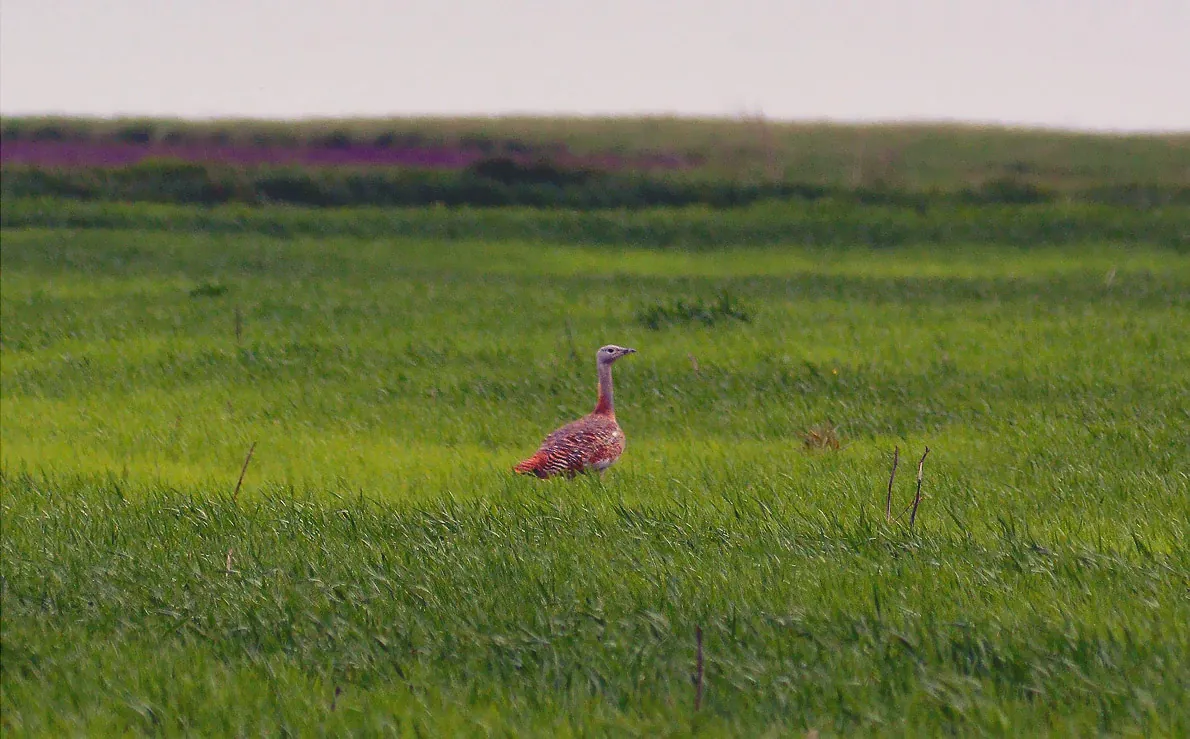
The bustard was thought extinct in Romania after 1980. At Salonta, though, between one and 40 birds can be seen in any season, and in spring the males perform their courtship dance on the old grounds. A large male reaches 18 kilos.
It is the only bird in the country that beats the swan on the scales beyond dispute. The great white pelican sometimes passes it but rarely crosses 13 kilos.
The pelicans belong to the Delta
Most great white pelicans of south-eastern Europe nest in the Danube Delta, and Dalmatian pelicans nest beside them in small colonies of a few dozen pairs. The Dalmatian is only just larger than its cousin but reaches 320 centimetres of wingspan.

The giant
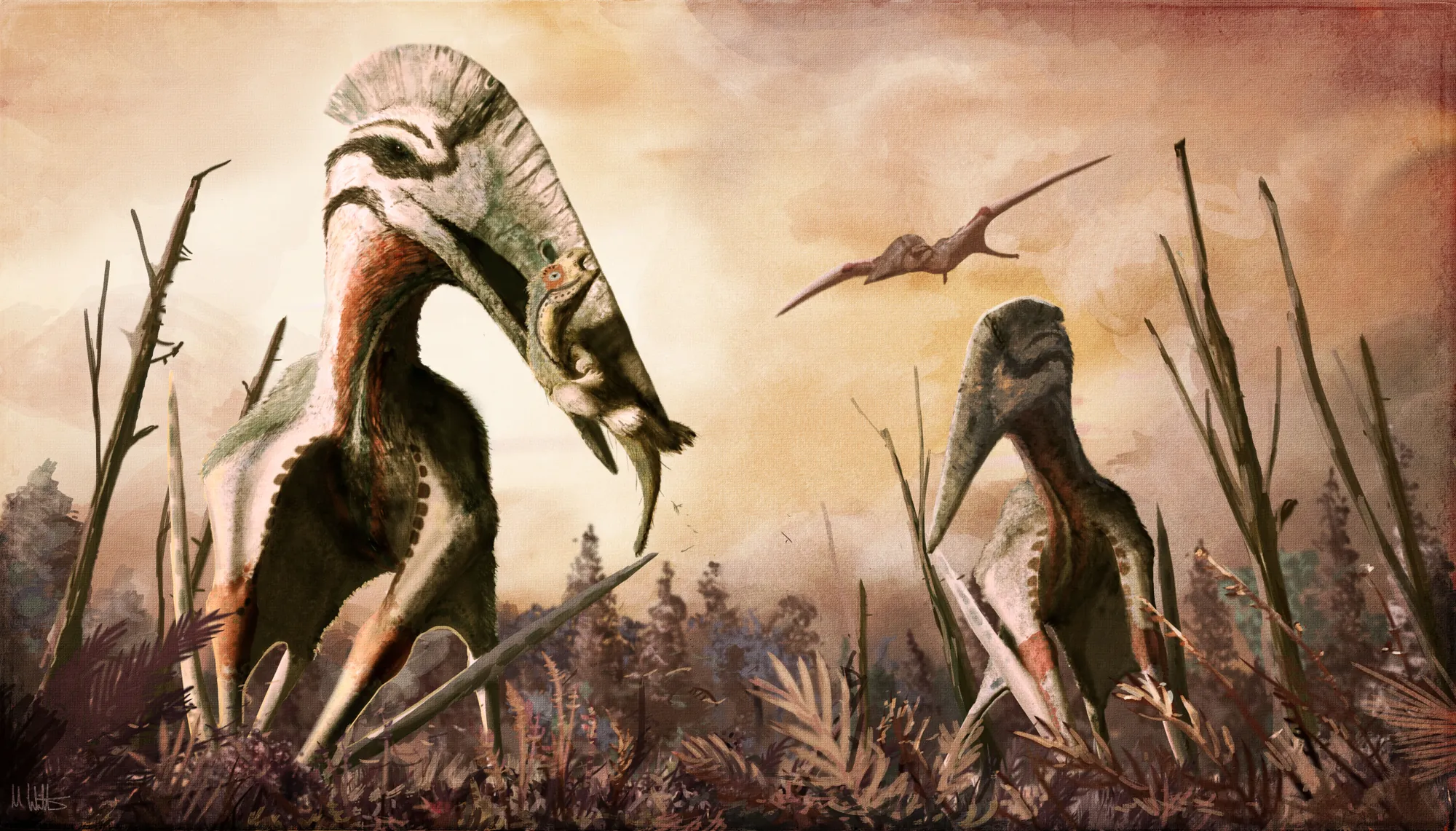
A reptile with 10-metre wings once flew above Hațeg
Not a bird and not a dinosaur: a pterosaur of the azhdarchid family. Scroll and let its wings open.
10 m
of a wingspan of 10–12 metres
It takes eight children 135 cm tall, lying head to toe, to cover 10 metres.
The wingspan is estimated at 10–12 metres from an arm bone, a humerus. For a giant neck vertebra the same team refused to give a number: the link between vertebrae and wingspan cannot be safely predicted with today's data.
The wings in the drawing belong to a well-known relative, Quetzalcoatlus: no complete Hatzegopteryx skeleton has been found.
Game
True or false?
Eight statements about birds and about you. Some sound like fairy tales and are true.
The eight statements and their answers:
- True. The widest bird in Romania is the Dalmatian pelican. Usually, yes: 270–320 cm. The great white pelican usually reaches 295 cm, and the 360 cm figure is an extreme from a single source. Dalmatian pelican: 270–320 cm
- False. The swan is the heaviest flying bird in Romania. No: the bustard. A male bustard reaches 18 kilos, and the verified record is 21. Male swans stop at 14.3. Bustard: males up to 18–21 kg
- False. The griffon vulture breeds in Romania today. No. The vultures vanished early last century, and today the species is a rare guest. The reintroduction aviary was finished in February 2026, and the release comes next. Rewilding Europe; Conservation Carpathia Foundation
- True. Your arm span is about the same as your height. In the measured schoolchildren it averaged a few centimetres under height. For your true number, measure yourself with a tape and put it in the drawing above. JPMA 2023: schoolchildren of Lahore
- True. A white-tailed eagle can be wider than a two-metre person. Yes: its wingspan reaches 245 cm. The white-tailed eagle: up to 245 cm
- True. The great bustard still lives in Romania. Yes, at Salonta: between one and 40 birds, all year round, breed there. The bustard report (dropia.eu)
- True. More than ten sparrows, head to tail, fit inside one Dalmatian pelican wingspan. 295 divided by 25 is almost 12. The sum uses the middle of the pelican's range and the largest sparrow. Dalmatian pelican 270–320 cm; sparrow 19–25 cm
- True. A reptile with 10–12 metre wings once flew above Hațeg. The estimate comes from an arm bone. For a giant neck vertebra, the same team refused to give a number. Naish & Witton 2017, PeerJ
Method
Where the numbers come from, and what they do not say
Every range on this page comes from guides and articles that cite ornithological handbooks. Where two sources give different values, the widest documented range was kept and the difference is noted under sources.
Comparisons set usual values against usual values, not maxima against averages. The Dalmatian pelican wins on width with a usual 320 cm; the great white's 360 cm is an extreme from a single source and stays out of the ranking.
Three things are missing because the sources do not give them: the mass of Hatzegopteryx, a griffon vulture wingspan in a Romanian source, and the ornithological handbooks themselves, in print or behind payment, which could not be read directly. Their numbers reach here through the guides that cite them.
Your arm span starts out equal to your height. In reality it differs by a few centimetres, with age and from person to person. For the true number, measure yourself with a tape, arms out, and put it in the drawing.
Sources
How we know all this
The birds' measurements
- The Dalmatian and great white pelicans: the species articles, the genus table and the Romanian articles, citing ornithological handbooks. Dalmatian pelican article · pelican genus table · great white pelican — 270–320 cm and 245–295 cm; the 360 cm extreme
- The mute swan: the species article, the RSPB page and the Animal Diversity Web. species article · RSPB · Animal Diversity Web — 200–240 cm; males 9.2–14.3 kg
- The white-tailed eagle: the species article, the RSPB page and the Romanian article. species article · RSPB — 178–245 cm; females 4–6.9 kg
- The golden eagle: the species article and the RSPB page. species article · RSPB — 204–220 cm; males 2.8–4.6 kg, females 3.8–6.7 kg
- The griffon vulture: the species article and the Andalucia Bird Society sheet. species article · Andalucia Bird Society — 230–280 cm; 6.2–10.5 kg
- The white stork: the species article, the Almodóvar del Río town page and the Romanian article. species article · Almodóvar del Río — 155–215 cm; 2.3–4.5 kg
- The common buzzard: the species article and the RSPB page. species article · RSPB — 113–128 cm; 550–1,300 g
- The barn swallow: the species article, the RSPB page and the Romanian article. species article · RSPB — 32–35 cm; 16–25 g
- The house sparrow: the species article, the RSPB page and the Romanian article. species article · RSPB — 19–25 cm; 24–39.5 g
- The great bustard: the species article. species article — 210–270 cm; males 5.8–18 kg, record 21
Presence in Romania
- The list of the birds of Romania, after Avibase and the Clements Checklist. the list — 412 confirmed species; the griffon vulture, accidental
- Motkó Béla, The bustard situation – past and present (dropia.eu), in Romanian. PDF — thought extinct after 1980; at Salonta, between one and 40 birds breed
- Rewilding Europe, on the vultures' return to the Southern Carpathians. the article — the vultures vanished early last century
- Foundation Conservation Carpathia, NewStories January 2026. PDF — the aviary for the reintroduced vultures, finished February 2026
- The Delta's pelicans: the Romanian articles on the great white and Dalmatian pelicans. great white pelican · Dalmatian pelican — they breed in the Danube Delta, side by side
The human body
- Quanjer et al. (2014). All-age relationship between arm span and height in different ethnic groups. European Respiratory Journal 44. the abstract — the arm span–height ratio in 13,947 subjects (abstract only)
- Baig, Mehdi, Iftikhar (2023). Assessment of upper to lower body segment ratio and arm span to height difference in school children of Lahore. JPMA 73. the article — arm span under height by 1.8 cm in boys and 4.1 cm in girls, on average
The flying reptile
- Naish, Witton (2017). Neck biomechanics indicate that giant Transylvanian azhdarchid pterosaurs were short-necked arch predators. PeerJ 5: e2908. the article — Hatzegopteryx: 10–12 metres from the humerus; no estimate for EME 315
The silhouettes
- Giant azhdarchid in flight (Quetzalcoatlus), used for Hatzegopteryx: Mark P. Witton & Darren Naish, PhyloPic, CC BY 3.0
- The bird silhouettes and the reader are drawn for this page.