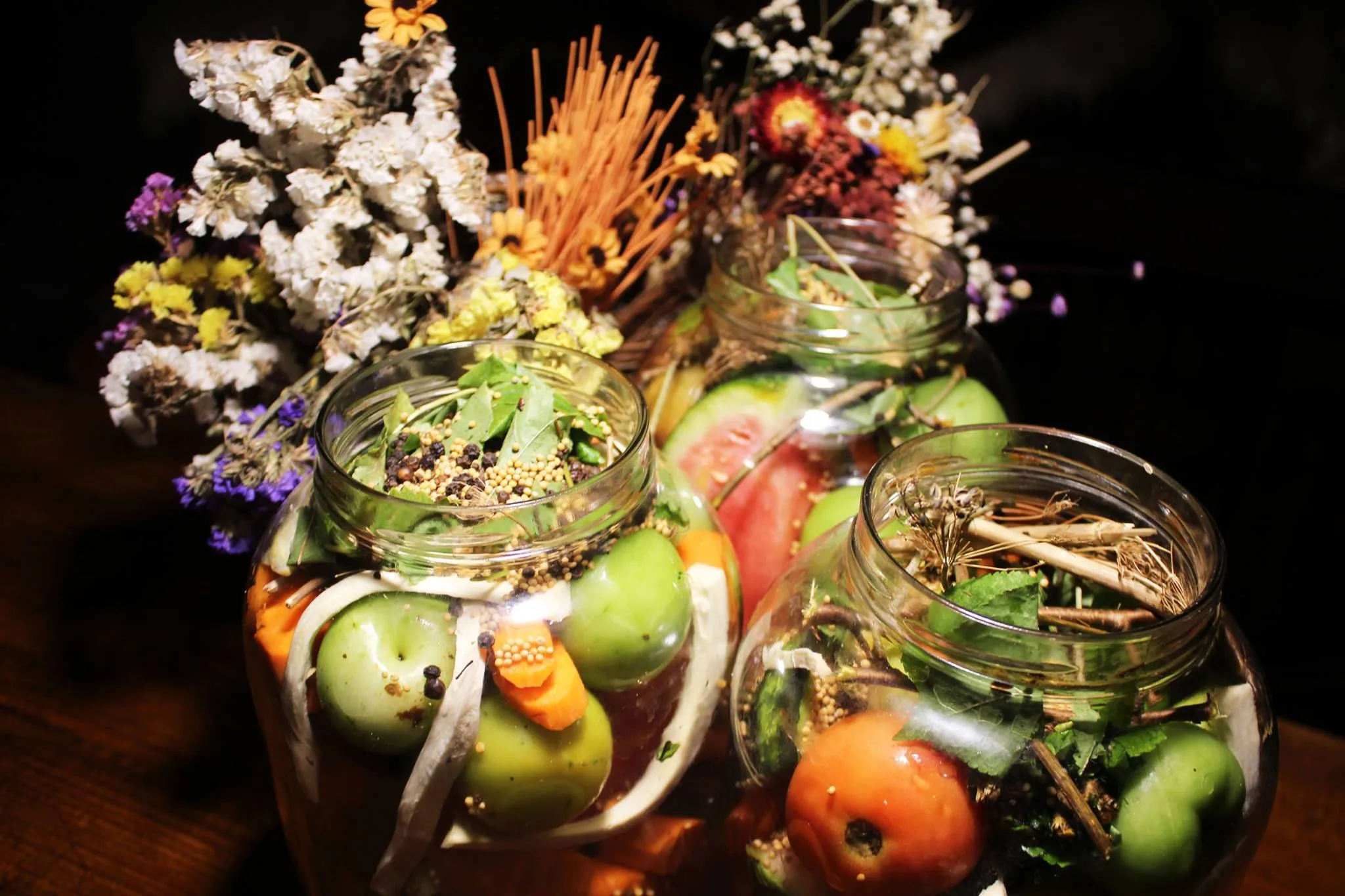
I · The map that isn't one map
Why your village pickles differently from the one next door
Historical provinces are the answer everyone reaches for — Transylvania with its brine, the south with its vinegar — and it's too simple. Older maps need others laid over them: where the land produced a surplus of vegetables, where salt comes straight out of the soil, what vessel a household owned, what language a village spoke, who had access to vinegar and jars in a year of shortage. The sources show coexistence and local change between "traditional brine" and "modern vinegar."
One rule governs everything below: a local data point stays local. A recipe documented in one Oltenian village doesn't automatically become "the county's tradition," and a practice of one Ukrainian community in Bucovina doesn't automatically become "Bucovina's tradition." Where sources are thin, the map shows the gap — it doesn't fill it with a plausible guess.
Oltenia
Dolj, Olt, Gorj, Vâlcea, Mehedinți
The best-documented corner of the country in the sources gathered here. The density reflects the volume of published research; other, thinner-sourced regions can be just as diverse on the ground. The "Alimentația" volume of the Romanian Ethnographic Atlas, from 1972–1983 fieldwork published only in 2018, records village by village peppers stuffed with red cabbage, leeks, mushrooms and pickled bell peppers.
What the field records show
- Some localities explicitly distinguish "before" from "now": brine gives way to vinegar within one generation's memory.
- Vessels include the cask, the wooden barrel and two local terms for smaller wooden tubs — a vocabulary of containers the field notes preserve.
- Romanian Ethnographic Atlas, Alimentația (Oltenia, 2018)
Bucharest
urban, 1865 – today
The city belongs to the same tradition. Cookbooks printed between 1865 and 1908 already show sophisticated technique; late socialism's shortages turned a shelf of jars into supplies for lean periods, and after 1989, for some middle-class groups, the same skill became a hobby.
From Iónnin to the 1989 shortage
- 1865 and 1870: cucumbers, peppers and green tomatoes in wine vinegar, with tarragon and celery leaf.
- 1989: pickling meant finding vinegar, oil, jars and lids — word of new stock travelled between neighbours.
- Christ Iónnin (1865); Maria Maurer (1870); oral testimony about autumn 1989
Transylvania
Sibiu, Brașov, Harghita, Covasna, Mureș
In salt-bearing areas of eastern Transylvania, naturally salty water — called murătoare, brine or slatină — goes straight into preservation, and some wells are locked and tended as a shared resource.
The well, not just the recipe
- At Lueta, the salt well was carefully maintained and blessed at Epiphany — see the case study below.
- In Târnava Mare, household skill has entered Slow Food networks and the rural-heritage market.
- National Museum of the Eastern Carpathians, fieldwork 2003–2005
Wallachia (Muntenia)
Giurgiu, Prahova, Teleorman, Ialomița
The south uses brine and vinegar alike. Around 1800, historical research on the Giurgiu area mentions peppers soured in vinegar and cucumbers kept in salt water or rosehip vinegar — proof both technologies already coexisted.
The forgotten rosehip vinegar
- The area belongs to the country's main southern vegetable-growing zone: preserving a surplus of peppers and tomatoes was seasonal economics.
- "Vinegar" didn't yet mean the standardized bottled product it means today.
- Historical research on Giurgiu citing Constanța Vintilă-Ghițulescu, c. 1800
Banat
Timiș, Caraș-Severin
Banat's cuisine mixes Romanian, Swabian-German, Hungarian, Serbian and Slovak influences; it shows through which households and languages a technique circulates.
Living heritage, not just archive
- In Jimbolia, the "Pickle Shelf" event treats preserving as an ongoing competition and community heritage.
- The Banat plain is itself a major vegetable-growing zone, so the material base exists independent of ethnicity.
Crișana / Bihor
Bihor
Research on Bihor's traditional diet shows sauerkraut as cheap, institutional food as early as the 18th century.
Repetitive food, not just heritage
- Pickles were also stockable, predictable, cheap food supplied to institutions.
- The region belongs to the Western Plain, a favourable vegetable-growing subzone.
Bucovina
Suceava
Here "regional" and "ethnic" clearly split apart. Sources on Ukrainian communities in Bucovina describe pickled cucumbers and cabbage folded into holubtsi, soups and fasting meals — a community layer distinct within the region.
Why we don't say "that's how it's done in Bucovina"
- A practice documented for one Ukrainian community does not automatically become the whole historical province's tradition.
- Sources on Ukrainian communities in Bucovina
Maramureș
Maramureș
The linguistic-geological layer is stronger than the actual culinary repertoire. Regional lexicography keeps "murătoare" or "morătoare" meaning naturally salty water — but the current corpus doesn't yet have enough local records of ingredients and technique.
A well-documented word, a still-uncharted kitchen
- It's tempting to build a "cuisine of the salt spring" right away — the evidence doesn't yet support it.
Moldavia
Iași, Vaslui, Bacău, Neamț
This corpus has a real documentation gap here. Museum leads exist for cucumbers regionally called "pepeni" (melons), but they need systematic extraction from ethnographic yearbooks before becoming a map. Practice from the Republic of Moldova is not borrowed as a substitute source.
What's missing, exactly
- The Yearbook of the Ethnographic Museum of Moldavia and rural food monographs remain systematically untapped.
Dobruja
Constanța, Tulcea
Dobruja's multi-ethnic history makes Ottoman-Tatar, Lipovan or Balkan influence plausible — and that's exactly where the risk of inventing an attractive genealogy is highest. The region belongs to the major southeastern vegetable zone, but lacks enough local records for its own signature yet.
"We don't know yet" is a correct answer
- The absence of data shows the current state of research.
Diaspora
Romanians abroad
Mostly a research direction here. Working hypothesis: "the taste of home" isn't an ingredient, it's a technological ratio — water type, salt concentration, acidity, vessel, time. No dedicated survey measures it yet.
What should be asked
- The recipe's place of origin, the current country, what had to change by force in ingredients and vessel.
II · Not every pickle is the same chemistry
Vinegar or brine: what's the difference
Everyday language groups products under "pickles" that look alike but are microbiologically different. Romanian law 312/2003 splits them explicitly: vinegar-acidified vegetables, lacto-fermented vegetables and salted vegetables are three distinct technological categories.
Spontaneous brine fermentation
Salt doesn't just add flavour — it changes the environment and selects a succession of lactic-acid bacteria. In Chiojdu, researchers tracked exactly this succession on cauliflower and a green-tomato-carrot-cauliflower mix, across three distinct phases.
Not every brined product still holds live cultures by the time it's eaten — it depends on processing and storage.
Direct vinegar acidification
Acidity comes straight from vinegar, no lactic fermentation required. Documented in Bucharest from 1865, and by 1908 combined with spirits, mustard, sugar and spices.
In vinegar doesn't mean fermented, and fermented doesn't mean probiotic.
Murătoare — natural salt water
In eastern Transylvania, brine comes straight out of the ground, through springs and wells. Some communities treat the source as a shared resource, tended and sometimes blessed.
We don't recommend drinking from a natural source without current data on its composition and potability.
Hybrid techniques
A 1908 cookbook combines brine, vinegar, spirits, sugar and spices across different variants of the same book. An Oltenian sealing technique layering corn-husk leaves and a bran cake shows a piece of domestic engineering documented locally, still to be verified against the source. Contemporary mixed-pickle repertoires also include fruit — small watermelon, apples, quince, grapes — alongside vegetables.
Traditional doesn't mean simple, just as vinegar doesn't mean modern.
III · Case study
The locked well of Lueta
At Lueta, in eastern Transylvania, a salt-water well functions as a local institution, with its own rules. It's carefully maintained, kept locked, and blessed at Epiphany. Fieldwork by the National Museum of the Eastern Carpathians, carried out between 2003 and 2005, describes exactly this kind of institution: the resource is shared, access can be controlled, and its upkeep falls to the community.
The well opens a precise question: who owns the brine when it comes out of the ground. One possible reading, at Lueta: the community — through an access rule and a ritual that ties geology to the Christian calendar. The well supplies households with salty water for preserving, year after year, and its taste becomes a mark of the place's identity.
At Lueta, the salty water that comes straight out of the ground can supply the salt a pickle needs.
IV · History
Pickling history: vinegar has been used for over two hundred years
The timeline below corrects a widespread cliché: that vinegar pickling is a modern shortcut, and brine the only "truly traditional" option. The sources show coexistence from the earliest records.
1782
Historical lead from Bihor: sauerkraut appears as cheap, everyday food in institutional diets.
Bihor
1800
Around Giurgiu, sources retrospectively record peppers soured in vinegar and cucumbers in salt water or rosehip vinegar.
Wallachia
1865
Christ Iónnin publishes recipes in Bucharest for cucumbers, peppers and green tomatoes in wine vinegar, with aromatic herbs.
Bucharest
1870
Maria Maurer describes cucumbers in a cask with boiled salted vinegar and peppers in cold vinegar, with tarragon and celery — and already mentions the jar.
Bucharest
1908
A cookbook shows an unexpectedly experimental repertoire: brine, vinegar, spirits, mustard, sugar and spices, in different variants.
urban Romania
1972–1983
The Romanian Ethnographic Atlas conducts the fieldwork that will become, decades later, the richest published source on Oltenian pickling.
Oltenia
1989
In the city, pickling means also finding vinegar, oil, jars and lids — word of new stock travels between neighbours.
urban
2003
Law 312 and vegetable-growing regulations codify production zoning and legally separate preservation technology categories.
Romania
2004
Research by the National Museum of the Eastern Carpathians documents murătoare as a shared food resource in eastern Transylvania.
Transylvania
2005
The Slow Food Târnava Mare network forms: household preserving explicitly enters heritage, market and rural development.
Târnava Mare
2013
A microbiology study describes, phase by phase, the bacterial succession of home ferments from Chiojdu.
Chiojdu
2018
The Oltenia volume of the "Alimentația" series appears — decades after the original 1972–1983 fieldwork.
Oltenia
2022
Romanian research tests replacing table salt with potassium and magnesium chloride in fermented green tomatoes.
Romania
2026
Jimbolia's "Pickle Shelf" shows preserving as living community heritage, with categories and local competition.
Banat
V · The vocabulary
What "moare," "murătoare" and "slatină" mean
A word can preserve a technology even after the vessel or storage place has changed. "Murătoare" is the densest of them: it compresses into one term the salty landscape, the preserving liquid, and sometimes the finished product itself.
moare
Pickle brine, especially cabbage brine.
Base for fasting dishes, like Rășinari's "ox milk."
murătoare / morătoare
Regionally: naturally salty water, brine, or pickle liquid.
Ties geology to the kitchen in a single word.
slatină
Salty water or spring.
Term used for Transylvania's salt springs.
a pritoci
To draw off and pour the liquid back, a repeated technical operation.
A verb for a household gesture otherwise hard to describe.
putină
A wooden stave cask, for larger batches.
Implies a cellar and a different household than ten jars on a balcony.
hârdău
A large wooden vessel, recorded in Oltenian field notes.
Alongside brădoi, shows the local variety of wooden vessels.
brădoi / brădoaie
A small wooden vessel in some Oltenian responses.
A lexical lead still to be mapped.
curechi
Cabbage, a regional term.
Useful for tracing Transylvanian and Banat sources.
gogonea / pătlăgea verde
Green tomato used for pickling.
A visible lexical shift between historical sources and today's usage.
pepeni
In some Moldavian dialects, may denote cucumbers.
A research lead, to be reverified in the museum corpus.
turșu
A Balkan/Ottoman term for pickles.
Useful for comparison, but doesn't prove a Romanian recipe's origin.
VI · Case study
What happened, day by day, in a jar from Chiojdu
In 2013, a team led by Wouters tracked two home batches from Chiojdu to full stabilization: cauliflower, and a green-tomato-carrot-cauliflower mix. They didn't just record the final result — they sampled the liquid in stages and sequenced the bacteria in each sample.
Vegetable, water, salt and the microbes carried in from the vegetables' surface and the environment — a highly mixed initial community.
The environment acidifies; the initial community gives way to a smaller group of lactic-acid bacteria, including Leuconostoc mesenteroides and L. citreum.
Lactobacillus/Lactiplantibacillus plantarum and L. brevis become dominant. Products include lactic acid, acetic acid, ethanol and a little mannitol.
"Probiotic" lumps together three different things: a fermented food, a food with live microorganisms at the time it's eaten, and a probiotic with a clinically demonstrated effect for a specific strain and dose. A vinegar-pickled product may not be a lactic fermentation at all; a fermented product can be pasteurized.
Salt remains, at once, a preservation mechanism and a nutritional risk. A 2022 Romanian study tested partially replacing table salt with potassium and magnesium chloride in fermented green tomatoes.
VII · From necessity to authenticity
The same work, a different social meaning
Communism didn't invent the pantry of preserves — cookbooks from 1865, 1870 and 1908 prove that. What late socialism changed was the practice's social value: when the market didn't deliver reliably, a shelf of jars meant calories for winter, control over supply, and a transfer of resources between rural and urban relatives.
In autumn 1989, in the city, the recipe was the easy part. Oral testimony shows what still had to be found before a single cucumber went into the brine:
The real value lay elsewhere: reused jars, storage space, access to rural relatives, and above all, word of where new stock had appeared — which travelled from one neighbour to the next faster than anything else.
The work behind the shelf stays mostly invisible in written recipes: choosing the moment, harvesting, cutting, calculating the salt, pressing, checking daily, drawing off and pouring back the liquid. Historically, women did this work; Monica Stroe's anthropology asks for more than that: who decided, who inherited the recipe, who kept the jars, and who can turn this skill into a commercial product today.
After 1989, the same skill takes on an almost opposite meaning. Monica Stroe's anthropology follows middle-class women in Bucharest and Brașov for whom preserving becomes control over ingredients and a personal preference for homemade food. In parallel, in Târnava Mare, the exact same household skill enters Slow Food networks and becomes merchandise sold for its tie to local tradition, through projects like Saxon Village Preserves.
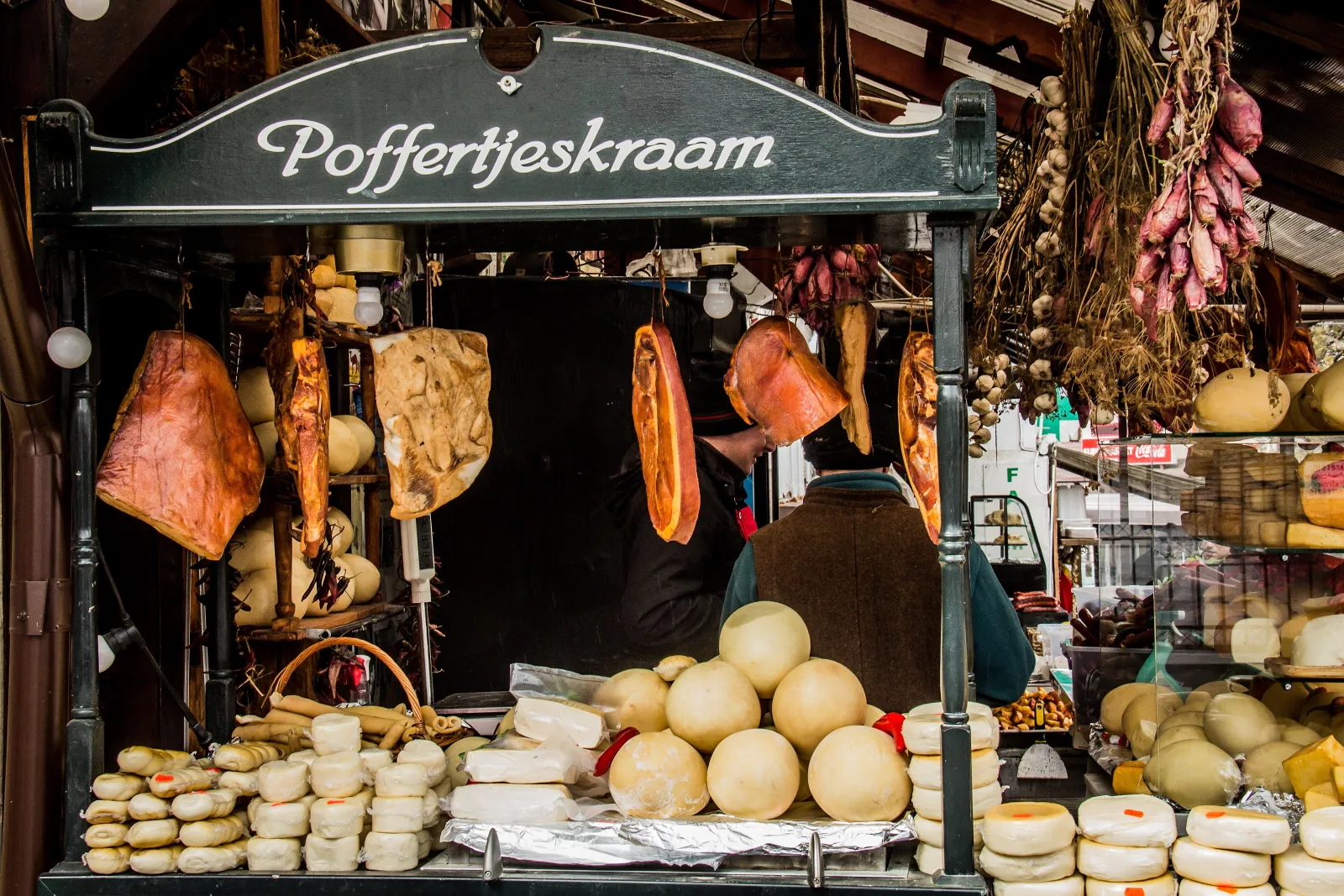
VIII · What this page doesn't say
Data gaps are a finding, not a failure
An honest atlas also shows where it doesn't know. The list below is explicit precisely so it isn't quietly filled in with plausible guesses.
Dobruja
Not enough primary local records for its own regional signature; we don't fill the gap with Ottoman stereotypes.
top priority
Moldavia
The Ethnographic Museum of Moldavia's corpus and regional yearbooks haven't been systematically extracted yet.
top priority
Maramureș
The vocabulary and geology are better documented than the actual culinary repertoire.
high
Banat
Communities need to be separated in the sources, without speculative genealogies for each recipe.
high
Vessels
Missing a quantitative timeline from cask and clay pot to jar, and the effect of moving into apartment blocks.
high
Diaspora
Excellent ground for a dedicated survey or interviews — currently unexplored systematically.
high
Industry
Missing a clean, long-term national series on pickle and preserve production.
high
Health
We don't extrapolate "probiotic" clinical benefits merely from the presence of lactic-acid bacteria in a product.
high
Ten things we deliberately avoid saying: "Transylvania is only brine, the south is only vinegar"; "vinegar pickling is modern"; "pickles are probiotic"; an ethnic origin without a documented genealogy; generalizing one source to a whole region; "grandmothers instinctively knew microbiology"; "natural means safe"; "traditional means unchanged"; and confusing a lack of data with a lack of tradition.
IX · Sources and method
How to read the confidence level
Every claim above is classified by the quality of its source. A — a primary source, peer-reviewed or a major ethnographic corpus. B — a solid institutional or museum source, or well-grounded local history. C — local testimony or a commercial source, useful but hard to generalize. D — a research lead still to be verified. The jar icon beside each claim shows this level: full and clear for A, progressively less full and cloudier toward D, empty and dashed for a confirmed data gap.
| Claim | Primary source | Level | Limit |
|---|---|---|---|
| Cucumbers, peppers and green tomatoes pickled in vinegar, documented in Bucharest in 1865 and 1870. | Christ Iónnin (1865); Maria Maurer (1870) | A | The books show the technique circulating among an urban reading public. |
| Around 1800, in Wallachia: peppers in vinegar, cucumbers in salt water or rosehip vinegar. | Local historical research (Giurgiu), citing C. Vintilă-Ghițulescu | B | A single regional lead, at the scale of one piece of research. |
| A 1908 repertoire combines brine, vinegar, spirits, mustard, sugar and spices. | Cookbook, 1908 | A | Shows the technique's availability to a reading public. |
| Naturally salty water ("murătoare", "slatină") is used directly in preservation in eastern Transylvania; some wells, like Lueta's, are tended and blessed. | National Museum of the Eastern Carpathians, 2003–2005 | A / documented locally (Lueta) | Documented for the salt-bearing localities studied in the field. |
| Oltenia has the richest published ethnographic corpus on pickling ingredients, vessels and technique. | Romanian Ethnographic Atlas, Alimentația, Oltenia (2018), 1972–1983 fieldwork | A | The density reflects the volume of published research for this region. |
| Home ferments from Chiojdu go through a three-phase bacterial succession, later dominated by L. plantarum and L. brevis. | Wouters, Grosu-Tudor, Zamfir & De Vuyst, 2013 | A | Valid for one region and the vegetables studied there. |
| "Probiotic," "fermented," and "with live microorganisms at consumption" are three distinct, often-conflated claims. | Synthesis of the study above and Law 312/2003 | A | Editorial synthesis of the scientific evidence cited above. |
| A 2022 study tests replacing table salt with KCl/MgCl₂ in fermented green tomatoes. | Romanian research, 2022 | A | A single study, with preliminary results. |
| Law 312/2003 legally separates vinegar-acidified, lacto-fermented and salted vegetables. | Law 312/2003 | A | A legal/industrial classification; household practice remains more fluid. |
| The south and west are officially zoned as Romania's main heat-loving vegetable regions. | Government Decision 1614/2003 | A | Explains only the agricultural surplus available for preserving. |
| In late-socialist shortage, urban preserving depended on access to vinegar, oil, jars and social information. | Oral testimony about autumn 1989 | B | Testimony-based; illustrative of a local pattern. |
| After 1989, home preserving became, for some groups, a hobby and a marker of authenticity — and, in Târnava Mare, merchandise sold for its tie to local tradition. | Monica Stroe's anthropology; Slow Food Târnava Mare network | A / B | Specific to the class groups and region studied. |
| Dobruja, Moldavia, Maramureș and the diaspora don't yet have enough primary documentation for a distinct regional signature. | Research-corpus gap register | data gap | Recorded as such, with no speculative filling. |
Research corpus compiled on 13 September 2026, from the ethnographic, microbiological, legal and agricultural sources cited above. Photographs by Flavius Frantz and Dieglop, Wikimedia Commons, CC BY-SA 4.0 license.