Twenty-three vessels in the ground
In 1799, when the vessels were discovered, modern Sânnicolau Mare was called Nagyszentmiklós and lay within the Habsburg Empire. Twenty-three complete vessels entered the imperial collection in Vienna, where they survive today.
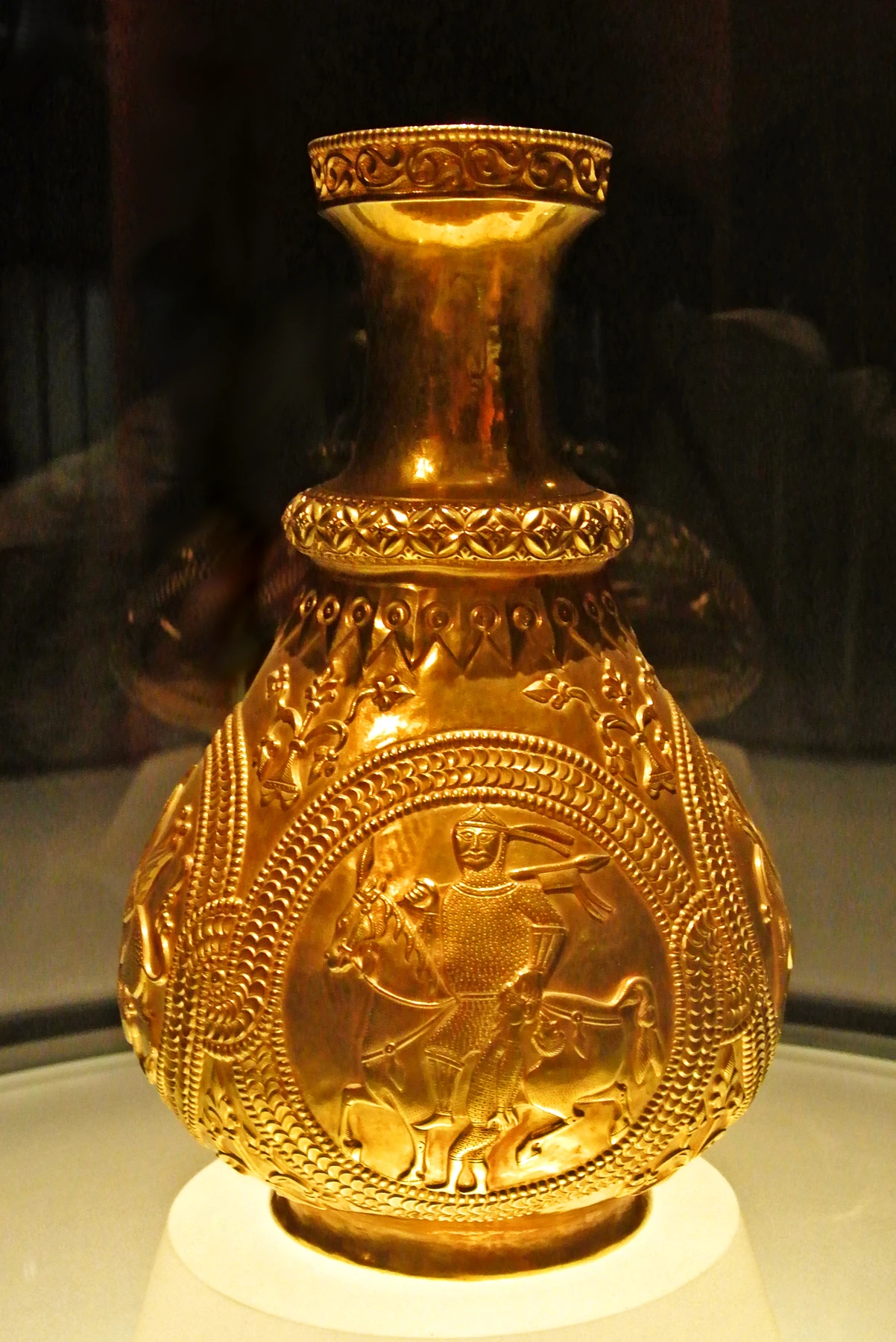
One of them is about the height of an open hand. It has a narrow mouth, a broad body and four scenes in relief. What can the making of this vessel tell us?
The sheetOne sheet for the body
The medallion jug in Vienna is 22 cm tall and weighs 608 g. The museum records 18-carat gold. The body was raised from a single sheet of metal, shaped gradually into its curved form.
Look at the neck and the curve of the shoulder in the model. The section exposes the thin shell around a much larger volume of air. The wall thickness is exaggerated for visibility.
Follow the curve from the neck through the shoulder to the belly.
The model removes one half. The gold edge traces the thin vessel wall.
ReliefFour scenes rise out of the metal
Interwoven bands frame the four medallions. The maker raised the relief by displacing the metal and worked fine lines from the surface to separate the shapes. The museum describes the combination as repoussé and chasing.
Move the lighting from the front to the edge. A grazing light makes the toolwork easier to follow: raised ridges catch the light and the grooves fall into shadow.
The main outlines are visible. Short shadows conceal the finest detail.
The light comes from the side. Longer shadows separate raised lines from the background.
The attachmentTraces of a handle
The object record identifies traces of attachment in two places, at the mouth and on the body. The curators read them as traces of a handle added to a vessel first made without one.
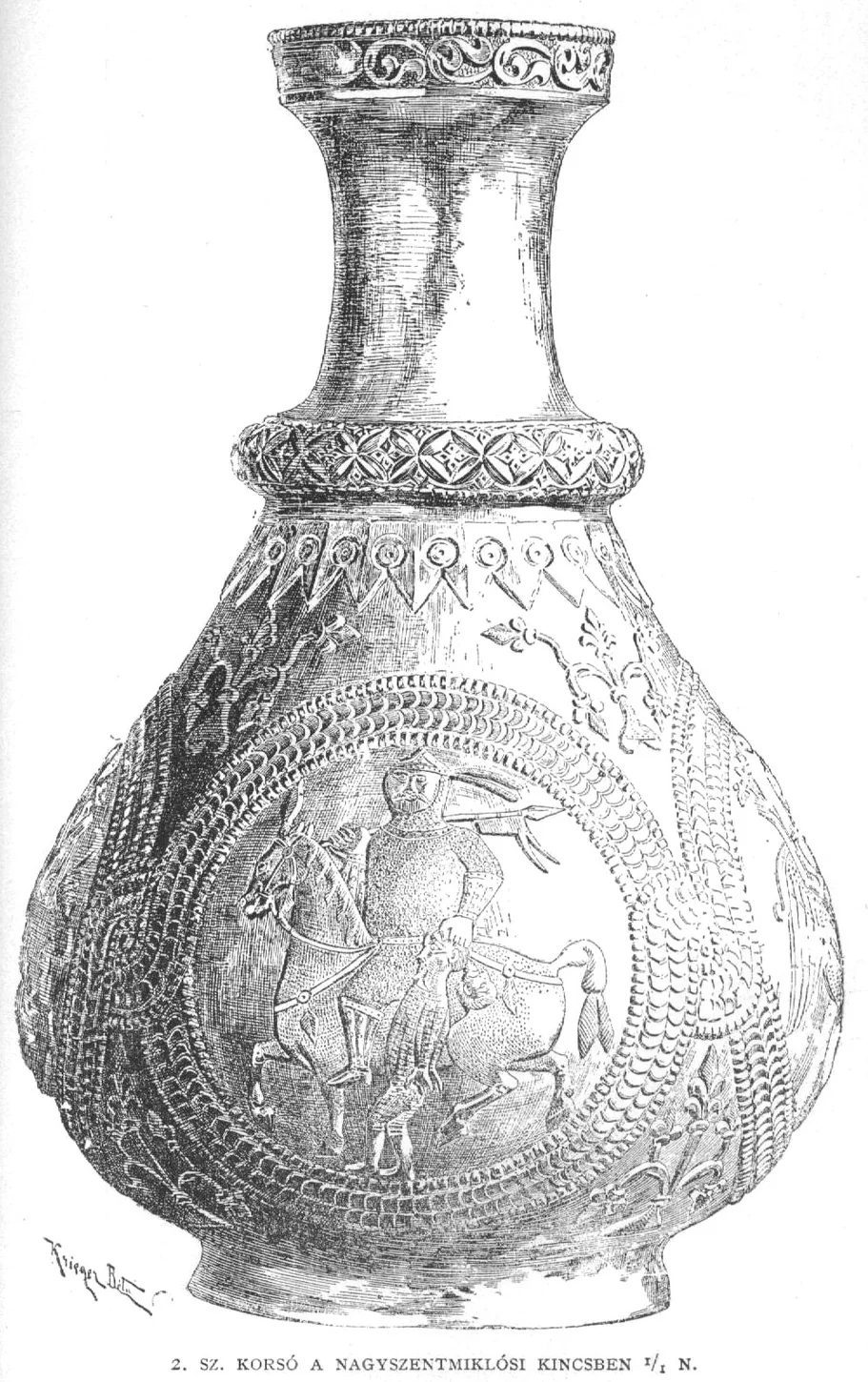
Set Hampel’s 1894 engraving beside the object photograph. The drawing separates lines of ornament from the changing reflections in the photograph. The traces at the neck matter because they can be read alongside those on the body.

A piece reattached after discovery
For a second vessel from the hoard, VIIb 2, the museum records a handle that was broken when found and reattached with modern additions. The same detail, a handle, calls for different explanations in the two records.
Looking at a complete object in a gallery, ask which parts belong to the same stage. The two records distinguish original manufacture, later alterations and work done after discovery.
DatingThe vessel survives. Its exact date remains open.
The museum dates the medallion jug to the seventh to ninth centuries, with the first half of the eighth century suggested as a possibility. The discovery year is known. The year when the maker raised the sheet of gold over a form remains unknown.
Return to the edge where raking light picks out a medallion. A small, visible trace can answer a precise question about making even while questions about the commission and date stay open.