mariuscomper.ukRomână
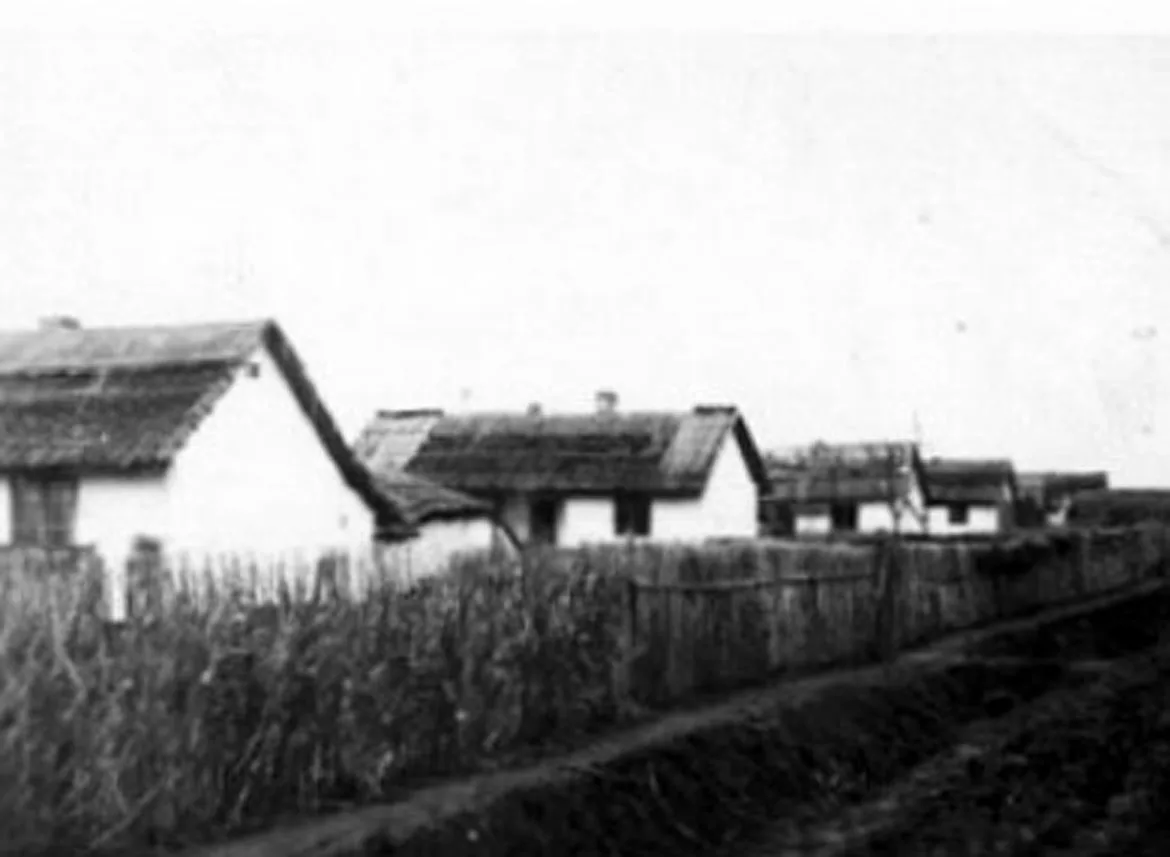
Archival photograph: a street of adobe houses and reed fences at Giurgenii Noi (original date unverified)

Public file · checked in October 2026

Nine roads to the numbered stake

In June 1951, 40,320 people by the authorities' count (about 44,000 by the Sighet Memorial's count) were taken from the Banat border strip and southwestern Oltenia in western Romania and left in the fields of the Bărăgan, the plain of the southeast, at numbered stakes, where they founded 18 villages. Nine origin–destination associations from the sources consulted are drawn to approximate map endpoints; eight fade out in the fields, because the villages at their ends were unlocated as present-day villages, and the ninth aims at old Dâlga, the new village staying unresolved.

18 villages · 15 unlocated todayChecked up to 6 October 2026
The nine roads

Archival photograph (original date unverified): the hamlet of Giurgenii Noi, later called Răchitoasa, Ialomița. Walter Wolf, CC BY-SA 4.0, Wikimedia Commons.

The nine roads

Nine pairs of villages, each printed in a source: one documented place of origin, one stake in the Bărăgan. Eight roads fade out at the end, because the village at the end no longer exists.

FundataBumbăcari
FundataBumbăcari
Schematic map. Distances are as the crow flies, to the last point on the map.

Departure: 19 June 1951, 19:30

144 people left Lenauheim (Timiș) for Dâlga: 40 numbered roster entries, house by house, in the 1982 monograph. S09

SourceS09

The journey: four days

Arrival 23 June 1951. As the crow flies, 516.6 km; departure and arrival fall four calendar days apart. S09

SourceS09

The stake: Dâlga

144 Lenauheim people reached Dâlga; 8 children were born there, 2 of whom died. The 2 deaths in this count are among the 8 children born there to the Lenauheim group, not the village toll. Old Dâlga still exists (Dor Mărunt, Călărași county); how it relates to the deportees' Dâlga Nouă is not settled in the sources read. S10

SourceS10

The full departure list by village exists only on scanned paper, in the CNSAS reports; the nine roads are the pairs in the sources consulted that can be drawn end to end. A tenth published road, Gârnic–Ezeru, is not drawn, because Ezeru has no anchor point on today's map. S08

Any town and the strip

The strip ran about 25 km deep, from Beba Veche to Gruia. Look up a locality: the approximate distance to today's border with Serbia and to Fundata, the village with the monument, is computed from coordinates.

The locality list loads on first search.

The distance to the border is measured against today's Romania–Serbia border, on the Beba Veche–Gruia stretch; the 1951 border with Yugoslavia ran there. Being inside the strip does not mean anyone was taken from there: it only means the village falls inside the 25 km band. S01

The Whitsun night

The plan was approved in October 1950 (by Historia's account); the legal basis invoked from March 1951 (a date disputed between sources) – and testimonies put the start of the round-up on the night of 17–18 June. The hours below come from testimonies, village by village.

6 entries shown

  1. The deportation plan is approvedDocumented

    The Council of Ministers' Decision 1154/1950 approves the deportation plan; a central commission (Drăghici, Jianu, Burcă, Cristescu, Mazuru) prepares the “dislocation”. S04

    SourceS04

  2. Article 6 is changedDocumented

    IICCMER dates HCM 344 to 15 March 1951. The quoted provision authorised compulsory residence for people the regime deemed to meet specified criteria; sources differ on the date and the legal sequence (Rusnac dates HCM 344 to March 1952). Interior Ministry Decision 200 was used in the June operation. S04 S01

    SourceS04 S01

  3. Whitsunday; troops quarteredDocumented

    Orthodox Christians celebrate Whitsunday. At Lenauheim, units of the Securitate security service are quartered in the village. S01 S10

    SourceS01 S10

  4. Midnight strikes at ZlatițaReported

    “It was midnight between 17 and 18 June,” recalls Rada Jigum of Zlatița (Caraș-Severin). At Variaș, Catița Marin is woken at 1; at Lenauheim the action starts “at 2 in the morning”. S06 S10

    SourceS06 S10

  5. Two hours to pack, then the stationReported

    At Variaș, Catița Marin recalled her family being told: “You may take two horses and a cart, a cow, two piglets, clothes, food…” At Zlatița, carts take people to Belobreșca station. Historia reports 2,656 rail wagons and 6,211 lorries; other records give different wagon counts and scopes. S06 S04

    SourceS06 S04

  6. Transports continue for daysDocumented

    Testimonies put the start on the night of 17–18 June; some printed accounts give 18–19 June. Rail transports continued over the following days – the Dâlga transport leaves only on 19 June, at 19:30 – without the train's departure proving seizures from homes that night. S03 S04 S09

    SourceS03 S04 S09

The 18 villages

18 new settlements were established in summer and autumn 1951, according to Lumina. Two matched present-day villages; one is unresolved; fifteen were unlocated as present-day villages in the sources checked. The paired names are the names and locality associations used by the Memory Library archive. The bars show household heads by category in the historical table reproduced by Mircea Rusnac; the table's date and coverage are unknown.

  • Banat Romanians
  • Bessarabians and Bukovinians
  • Aromanians, listed as 'Macedonians'
  • Germans
  • Yugoslavs
  • others

Brateș Frumușița

Unlocated today

621 household heads

Then / Today
Then
com. Brateș, reg. Galați
Today
unlocated today (the mother commune Frumușița, Galați, exists) (last point on the map: Frumușița)
household heads
Banat Romanians: 172; Bessarabians and Bukovinians: 116; Aromanians, listed as 'Macedonians': 194; Germans: 119; Yugoslavs: 20; others: 0

Road 3: Beba Veche → Brateș

Bumbăcari Tătarul Nou

Exists

437 household heads

Then / Today
Then
com. Bumbăcari, reg. Galați
Today
village in Dudești commune, Brăila (SIRUTA 43091)
household heads
Banat Romanians: 184; Bessarabians and Bukovinians: 55; Aromanians, listed as 'Macedonians': 27; Germans: 123; Yugoslavs: 48; others: 0

Dâlga Dâlga Nouă

Unresolved

566 household heads

Then / Today
Then
com. Dâlga, reg. București
Today
old Dâlga village exists (Dor Mărunt, Călărași); fate of the new village unresolved
household heads
Banat Romanians: 191; Bessarabians and Bukovinians: 149; Aromanians, listed as 'Macedonians': 47; Germans: 134; Yugoslavs: 45; others: 0

Road 1: Lenauheim → Dâlga

Dropia Dragalina Nouă

Unlocated today

427 household heads

Then / Today
Then
com. Dropia, raionul Călărași, reg. București
Today
unlocated today
household heads
Banat Romanians: 211; Bessarabians and Bukovinians: 120; Aromanians, listed as 'Macedonians': 0; Germans: 76; Yugoslavs: 0; others: 20

Ezerul Cacomeanca Nouă

Unlocated today

414 household heads

Then / Today
Then
com. Ezeru, raionul Călărași
Today
unlocated today
household heads
Banat Romanians: 126; Bessarabians and Bukovinians: 163; Aromanians, listed as 'Macedonians': 30; Germans: 69; Yugoslavs: 26; others: 0

Fundata Perieți

Exists

421 household heads

Then / Today
Then
comuna Fundata, raionul Slobozia (raport CNSAS)
Today
village in Perieți commune, Ialomița (SIRUTA 94189)
household heads
Banat Romanians: 72; Bessarabians and Bukovinians: 183; Aromanians, listed as 'Macedonians': 49; Germans: 79; Yugoslavs: 38; others: 0

Lătești Bordușanii Noi

Unlocated today

542 household heads

Then / Today
Then
com. Lătești, raionul Fetești, regiunea Constanța
Today
unlocated today (last point on the map: Bordușani)
household heads
Banat Romanians: 40; Bessarabians and Bukovinians: 190; Aromanians, listed as 'Macedonians': 0; Germans: 120; Yugoslavs: 119; others: 73

Road 9: Iecea Mare → Lătești

Măzăreni Urleasca

Unlocated today

515 household heads

Then / Today
Then
com. Măzăreni, raionul Brăila, reg. Galați
Today
unlocated today (last point on the map: Urleasca)
household heads
Banat Romanians: 288; Bessarabians and Bukovinians: 78; Aromanians, listed as 'Macedonians': 72; Germans: 69; Yugoslavs: 8; others: 0

Road 5: Comloșu Mare → Măzăreni

Movila Gâldăului Petroiu

Unlocated today

351 household heads

Then / Today
Then
com. Movila Gâldăului, reg. Constanța
Today
unlocated today
household heads
Banat Romanians: 70; Bessarabians and Bukovinians: 70; Aromanians, listed as 'Macedonians': 0; Germans: 110; Yugoslavs: 0; others: 101

Olaru Roseții Noi

Unlocated today

689 household heads

Then / Today
Then
comuna Olaru, regiunea București (raport CNSAS)
Today
unlocated today
household heads
Banat Romanians: 272; Bessarabians and Bukovinians: 163; Aromanians, listed as 'Macedonians': 0; Germans: 169; Yugoslavs: 74; others: 11

Pelican Borcea Nouă

Unlocated today

353 household heads

Then / Today
Then
com. Pelikan [sic], raionul Călărași, reg. București
Today
unlocated today
household heads
Banat Romanians: 222; Bessarabians and Bukovinians: 105; Aromanians, listed as 'Macedonians': 0; Germans: 0; Yugoslavs: 0; others: 26

Răchitoasa Giurgenii Noi

Unlocated today

700 household heads

Then / Today
Then
com. Răchitoasa, reg. Constanța
Today
unlocated today ("former locality", Fetești district) (last point on the map: Giurgeni)
household heads
Banat Romanians: 126; Bessarabians and Bukovinians: 142; Aromanians, listed as 'Macedonians': 44; Germans: 309; Yugoslavs: 48; others: 31

Road 2: Lenauheim → Răchitoasa

Rubla Valea Călmățui

Unlocated today

451 household heads

Then / Today
Then
com. Rubla, raion Însurăței, reg. Galați
Today
unlocated today (distinct from old Rubla village, Buzău) (last point on the map: Ion Sion station)
household heads
Banat Romanians: 147; Bessarabians and Bukovinians: 39; Aromanians, listed as 'Macedonians': 11; Germans: 246; Yugoslavs: 8; others: 0

Road 6: Florești → Rubla

Salcâmi Jăgălia Nouă

Unlocated today

567 household heads

Then / Today
Then
com. Salcâmi, raionul Fetești, reg. Constanța
Today
unlocated today
household heads
Banat Romanians: 290; Bessarabians and Bukovinians: 112; Aromanians, listed as 'Macedonians': 0; Germans: 108; Yugoslavs: 0; others: 57

Schei Stăncuța Nouă

Unlocated today

406 household heads

Then / Today
Then
com. Schei, reg. Galați
Today
unlocated today
household heads
Banat Romanians: 170; Bessarabians and Bukovinians: 32; Aromanians, listed as 'Macedonians': 0; Germans: 147; Yugoslavs: 57; others: 0

Valea Viilor Feteștii Noi

Unlocated today

697 household heads

Then / Today
Then
com. Valea Viilor, reg. Constanța
Today
unlocated today (last point on the map: Fetești)
household heads
Banat Romanians: 147; Bessarabians and Bukovinians: 103; Aromanians, listed as 'Macedonians': 0; Germans: 148; Yugoslavs: 225; others: 74

Road 7: Sânnicolau Mare → Valea Viilor

Viișoara Mărculeștii Noi

Unlocated today

593 household heads

Then / Today
Then
MAI Decisions 6110/6200/1955 (second dispatch: 6100), Report Ord. 161/29.06.1954 (CNSAS)
Today
unlocated today
household heads
Banat Romanians: 161; Bessarabians and Bukovinians: 178; Aromanians, listed as 'Macedonians': 20; Germans: 186; Yugoslavs: 32; others: 16

Zagna Vădenii Noi

Unlocated today

613 household heads

Then / Today
Then
com. Zagna, raionul Brăila, reg. Galați
Today
unlocated today (only the "Zagna Vădeni" railway halt keeps the name)
household heads
Banat Romanians: 180; Bessarabians and Bukovinians: 155; Aromanians, listed as 'Macedonians': 58; Germans: 193; Yugoslavs: 27; others: 0

The “then” administration is the one in the CNSAS report titles (1954–1955): București, Galați, Constanța (com. = commune, reg. = region, jud. = county). The “unlocated today” verdict means: no village by that name in the SIRUTA register, on Nominatim or in OpenStreetMap, checked on 6 October 2026; the mother communes list only their old villages. It is a lookup verdict, not an official act of abolition seen here. S08

The numbers that will not settle

How many people, families, villages, dead: each question has two or three printed answers, all sourced.

How many people: 40,320, 40,230 or about 44,000

40,320, from the authorities' data: “12,791 families, i.e. 40,320 people, from over 200 localities” (Lumina, 2017) and “12,791 families numbering 40,320 individuals” (DVHH). The 16 categories – categories assigned by the communist authorities, as reproduced by Mircea Rusnac – add up to exactly 40,320. S05 S07 S06

people classified as 'kulaks' and innkeepers19,034
Bessarabians8,477
Aromanians, listed as 'Macedonians'3,557
'former SS members'2,344
foreign citizens1,330
relatives of those who fled across the border1,218
'Titoists'1,054
'purged persons'731
'smugglers'657
'purged persons' from elsewhere590
'helped the anti-communist resistance'367
'convicts'341
German Ethnic Group leadership257
former landowners and industrialists162
former merchants21
other categories180
Total40,320

40,230, in one source, in Historia (2011): “12,791 families, 40,230 people”. 90 fewer than the authorities' tally reproduced by Rusnac; the reason for the difference is unverified. S04

About 44,000, the Memorial's and IICCMER's figure: “Around 44,000 people were taken from their homes” (Room 47), “more than 44,000 people” (Black Whitsuntide), nearly 44,000 people (IICCMER, printing the figure as “44.000 mii”). S02 S03 S01

How many families: 12,791 or 12,798

12,791, in the authorities' data (Lumina, DVHH). 12,798, in the reported wording of the Fundata monument's inscription: “in memory of the 12,798 families totalling 40,320 people”. The stone was not read here; the figure comes via the relay on the village's Wikipedia page, pointing to a România liberă report (not accessible here). Seven families separate the records from the relay. S05 S07 S16

How many localities: 203, 258 or 297

IICCMER counts 203 localities in the strip. Historia reports 258 affected localities near the border. DVHH gives 297 villages for its Banat and southwestern Oltenia account. S01 S04 S07

9,363 household heads versus 12,791 families

The village table counts 9,363 household heads (3,069 Banat Romanians, 2,153 Bessarabians and Bukovinians, 552 Aromanians (listed as “Macedonians”), 2,405 Germans, 775 Yugoslavs, 409 others); the columns add up exactly to the printed totals. Why not 12,791, no source read says: the table's date and coverage are missing. S06

How many dead: 1,600, 1,700 or 1,731

“More than 1,600 deaths, over 10% of them children” (IICCMER, 2015). “One thousand six hundred …, including one hundred and seventy-five children” (Black Whitsuntide). “As high as 1,700” (Room 47). “The names of the 1,731 deportees who died in the Bărăgan (175 of them children) in 1951–1956” (Historia reported in 2011 that the panels listed the names). The published totals and their bounds differ; no reconciled register is cited here. S01 S03 S02 S04

How many troops: 20,000 or over 10,000

20,000 Interior Ministry troops (IICCMER). “Over 10,000 troops led by generals Mihail Burcă and Eremia Popescu” (Historia); “more than ten thousand armed men …, co-ordinated and supervised by two thousand five hundred Party activists” (the Memorial). S01 S04 S03

Which night: 17–18, 18 or 18–19 June

“In the night and the dawn of 18 June” (IICCMER); “on the night of 17–18 June 1951” (Rusnac); “On the night of 18 June 1951” (Room 47); “during the night of 18–19 June 1951” (Black Whitsuntide, Historia). Rail transports continued over the following days; train departures do not prove seizures from homes on those nights. S01 S06 S02 S03 S04 S09

Life, return, demolition

First came dugouts below ground, then rammed-earth houses roofed with straw or reeds; Bräuner describes authorities issuing building timber and joinery and deportees assigned, “for a wage of nothing”, to work on state farms; teachers held school in earth houses, doctors worked “in the most primitive conditions”. S10 S01

Beyond the village, people were allowed only within a 15 km radius, with the Militia's approval. S01

The land had been parcelled out, the lots having a numbered stake for each family.

IICCMER, 2015 S01

In December 1955 the Council of Ministers decided to lift compulsory residence for most western-border deportees. Most returned in 1956, and most did not recover their property rights. Bräuner describes return by rail at the deportees' own expense. S01 S10

Some villages continued as compulsory-residence centres for released political prisoners. IICCMER describes the authorised supplementary-sentence range as six months to five years; the Memorial reports terms of 12–60 months. Ghiță Popp (five years, after ten in prison), Paul Goma (from 1958) and a General Praporgescu stayed at Lătești; Corneliu Coposu at Rubla. IICCMER describes demolition and ploughing after the 1964 general pardon. S03 S12 S13 S17 S04

Only in 1972 did Nicolae Ceaușescu call the deportations “wrong measures”. S05

What remains

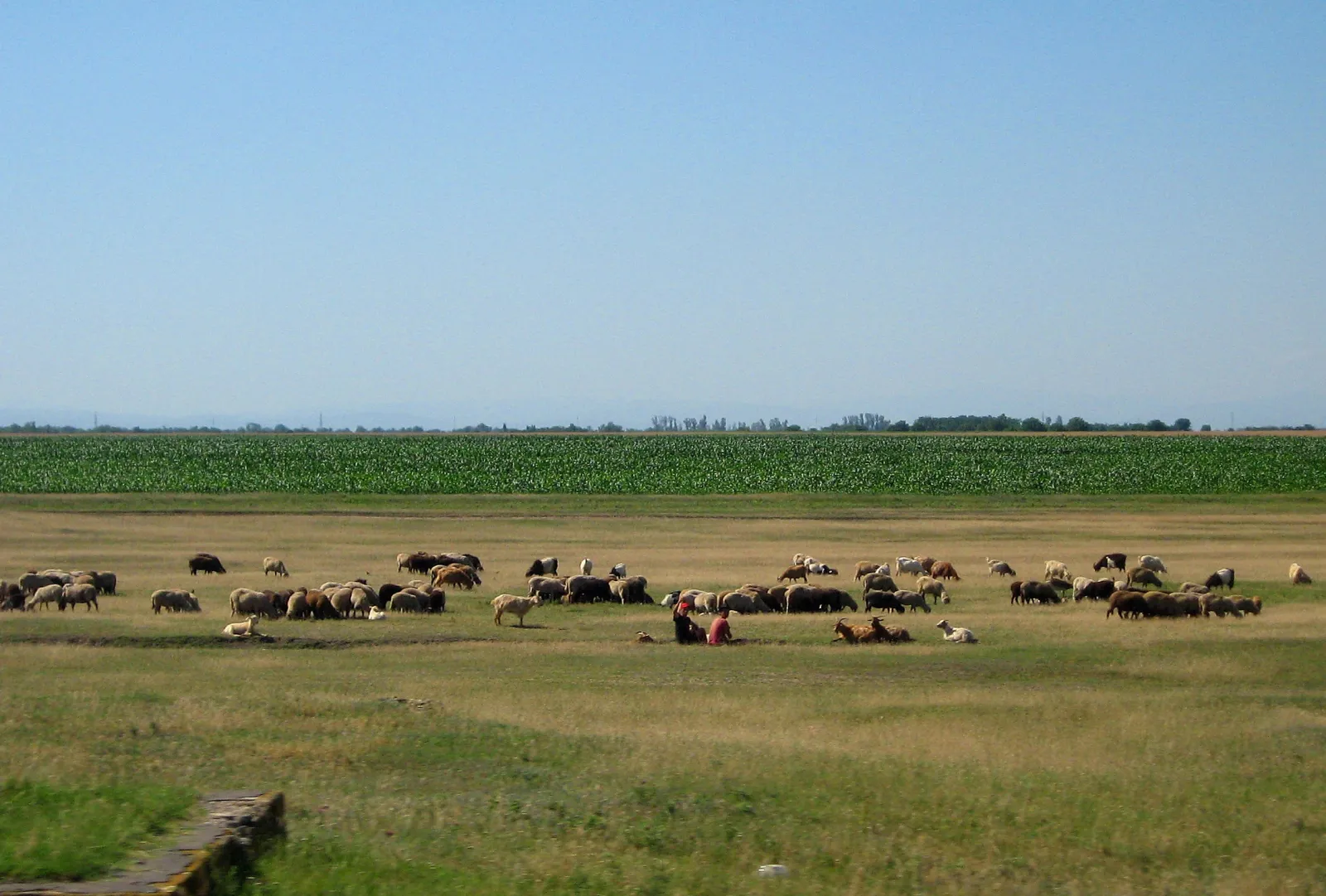
The Bărăgan Plain with grazing sheep, under a wide sky
The Bărăgan Plain, 2009. Where 15 of the villages stood, no present-day village marks the spot on the map. The Bărăgan Plain (2009 photograph, resized), grazing livestock. Gabriel (cod_gabriel), CC BY 2.0, Wikimedia Commons.

At Fundata (Perieți, Ialomița) stands the entrance monument, raised by the sculptor Gabi Manole; Adevărul reported annual reunions of deportees and their descendants there in 2011; the village then had under 300 families. S11 S14

In Timișoara, in Justice Park, stands the Bărăgan Deportees Monument; at the Banat Village Museum stood, by Lumina's 2017 reporting, a replica of a straw-thatched rammed-earth house, the way the deportees built their houses. Room 47 of the Sighet Memorial keeps photographs and objects from the Bărăgan. S15 S05 S02

The Bărăgan deportation is one of the regime's great displacements, alongside political detention and the forced-labour sites. Political detention in figures, Ada-Kaleh island (people were taken from there too) and the 44.5 °C day at Ion Sion continue the file.

Sources and what is not known

The figures come from data computed in Python from the sources below; distances are as the crow flies (haversine), and the strip test measures the approximate distance to today's Romania–Serbia border (its ways only, the Beba Veche–Gruia stretch, densified). Documented places of origin can fall just outside today's measured line. The present-day village register is Wikidata/SIRUTA (CC0), checked against Nominatim and OpenStreetMap on 6 October 2026.

  • Why the village table counts 9,363 household heads while the ministry counts 12,791 families: no source read says.
  • The full assignment of departure villages to the 18 villages: it exists only on scanned paper.
  • The exact sites of the 15 villages unlocated today and the link between Dâlga Nouă and old Dâlga: unpublished.
  • The abolition dates of each village: only the general 1964 demolition is documented.
  • S01Memory institution · IICCMER, 18 June 2015
    The deportation to the Bărăgan – 18 June 1951

    By Constantin Petre: the 25 km strip with 203 localities, Council-of-Ministers Decision 344/1951, the night of 17–18 June, the 18 villages, the 15 km restriction, over 1,600 dead, restrictions lifted in December 1955.

  • S02Memory institution · The Sighet Memorial, undated (accessed 2026)
    Room 47: the deportations to the Bărăgan

    About 44,000 deportees, 10–14 days of travel, adobe houses, 18 new settlements, up to 1,700 dead; among those who died: a deportee taken at 95 who died at 100.

  • S03Memory institution · The Sighet Memorial, the “Black Whitsuntide” exhibition
    Black Whitsuntide: the Bărăgan deportations

    Over 44,000 people on the night of 18–19 June 1951, over 10,000 armed men and 2,500 activists, 1,600 dead (175 children), villages kept as forced-residence centres.

  • S04Press · Historia, 17 June 2011
    The dreadful Whitsun night – the Bărăgan deportation

    Signed Laurențiu Ungureanu; the body text is credited to Florentina Țone: 12,791 families, 258 localities, 2,656 wagons, 6,211 lorries, 1,731 dead with names on panels; the Mateescu (Florești–Rubla) and Sarafolean (Comloșu Mare–Măzăreni) testimonies.

  • S05Press · Ziarul Lumina, 10 June 2017
    The Romanians deported to the Bărăgan

    By Dan Cârlea, after the Sarafolean (2001) study: 12,791 families, i.e. 40,320 people, from over 200 localities; the 18 villages; the 1964 demolition; the AFDB since 1990.

  • S06Scholarship · Istoria Banatului, 17 June 2009
    The deportation of Banat people to the Bărăgan (1951) in historical perspective

    By Mircea Rusnac: 40,320 people in 16 categories and the table of household heads by village and nationality (after Aioanei–Troncotă, Magazin istoric 1994), testimonies from the night of the round-up.

  • S07Period text · Donauschwaben Villages Helping Hands, translated from Konschitzky–Leber–Wolf, 2001
    Deported to the Bărăgan, 1951–1956

    By Wilhelm Weber (transl.): 297 villages in the zone, 12,791 families, 40,320 people; the visit to the Lătești site (“where the village of Lătești – Bordușanii Noi once lay”) and the story of Hedwig Gilde, brought from Iecea Mare at thirteen.

  • S08Period text · The Memory Library – the Bărăgan deportees, accessed 2026
    The locality index: the 18 villages

    The 18 village pages, with the names and associations used by the archive, the per-village CNSAS reports (scanned, no text layer), photos and captions: Beba Veche–Frumușița, Checea–Frumușița, Sânnicolau Mare–Valea Viilor, Dudeștii Vechi–Valea Viilor, Gârnic–Ezeru.

  • S09Period text · Hans Bräuner, the Lenauheim Swabian Association, 1982, p. 76
    Lenauheim/Tschatad: the list of those taken to Dâlga

    40 Lenauheim household heads taken to Dâlga; departure 19 June 1951, 19:30; arrival 23 June 1951. Scanned monograph, read as images.

  • S10Period text · Hans Bräuner, the Lenauheim Swabian Association, 1982, pp. 77–81
    Lenauheim/Tschatad: the Giurgeni transport and the conclusion

    Transport 1 to Giurgeni (departure Monday 18 June evening, arrival Tuesday 19 June morning); conclusion: 496 deportees (144 to Dâlga, 343 to Giurgeni, 9 to Transylvania), 477 returned, 36 died, 20 born in the summary, but the list gives 8+15=23 (p. 81).

  • S11Press · Adevărul, 16 June 2011
    The Banat deportees return to the little Siberia in the Bărăgan

    Fundata, “kneaded” by deportees: over 400 families then, under 300 in 2011; the yearly return; Gabi Manole's monument at the entrance.

  • S12Memory institution · The Sighet Memorial, undated (accessed 2026)
    Ghiță Popp: five years of forced residence at Lătești

    After 10 years in prison (1948, “armed insurrection”), five more years of forced residence in Lătești, Bărăgan.

  • S13Scholarship · Arhivele Totalitarismului (INSTAR), abstracts 2001–2019
    Paul Goma: house arrest at Lătești, from 1958

    Arrested in 1956 as a student, 2 years for “public agitation”; from 1958, house arrest in Lătești village, the Bărăgan Plain.

  • S14Open data · OpenStreetMap, accessed 2026
    The Bărăgan Deportees Monument, Fundata (node 11029743073)

    Monument mapped at Fundata (44.5848, 27.2558), about 65 m from the village pin. Data © OpenStreetMap contributors (ODbL).

  • S15Memory institution · Association of Former Bărăgan Deportees, accessed 2026
    The Bărăgan deportees monument, Timișoara

    The association recounts the inauguration of the Deportation Monument in Timișoara's Justice Park, raised through its efforts with local-authority support.

  • S16Press · Wikipedia (relay), accessed 2026
    Fundata, Ialomița – Monument

    The reported inscription wording (12,798 families), pointing to a România liberă report not accessible here; the stone was not read directly.

  • S17Period text · Memory Library – The Bărăgan Deportees, accessed 2026
    Family letter (person page): Praporgescu at Lătești

    “Praporgescu held as a political detainee under compulsory residence in the Bărăgan” – a family letter published in the archive.