The Arithmetic of Survival: How Romania’s Parallel Economy Worked in the 1990s
As the leu rapidly lost purchasing power, imported objects and the promise of easy returns changed how people used their savings. Four objects show Romania’s parallel economy in the early 1990s.
In the spring of 1990, the asphalt surrounding Romania's major urban markets was blanketed by a continuous carpet of discarded newspapers. Spread out across pages of newly liberated dailies lay heavy, grease-coated fragments of the disintegrating Soviet military-industrial apparatus: artillery binoculars, pipe-threading die sets, tank chronometers, bulky cameras, and nichrome space-heater coils. Just paces away, at the base of grey prefabricated apartment blocks, newly legalized consignment shops and pavement kiosks displayed empty Western beer cans and foreign cigarette packs behind glass cabinets like sacred museum relics.
The Romanian transition was an immediate semiotic shock. Two decades of acute shortages, strict state rationing, and informational blackout had left society without commercial market instincts. While households understood the basic use-value of rationed bread or the underground currency of American Kent cigarettes used for clinic favors, they possessed no cognitive tools to decode the sudden flood of imported commodities. In this vacuum, physical objects became surrogate currencies, social status was recalibrated through glossy packaging, and the terror of currency erosion fueled unprecedented collective gambles on rapid cash multiplication.
What You Could Do with a Salary in 1993: The 90-Day Cash Meltdown Clock
Under 295.5% annual inflation, holding paper cash meant a visible erosion from week to week. Drag the slider between payday and the 90-day Caritas maturity date to observe how 100,000 ROL (about 1.5 months of average net wages) melted away, and how three parallel survival strategies protected value:
Invest 45,000 ROL in Baigish binoculars or a GOST tap-and-die set. Value is anchored in heavy engineering metal and floats with the street dollar rate.
Invest 85,000 ROL in a 1.5-meter reflector dish. Direct unmediated feed from Astra 1A, quickly amortized by selling cable links to floor neighbors.
Hand over 100,000 ROL in Cluj for a promise of 800,000 ROL at day 90. Extreme nominal gain coupled with total structural liquidity risk.
1. The Russian Market: Heavy Metal and the Military Optics of Soviet Collapse
At railway stations in Iași, Galați, Ploiești, and Bucharest North, overnight trains arriving from Chișinău and Ungheni disgorged hundreds of travelers weighed down by massive plaid vinyl bags every morning. These so-called "Russians" – who were in fact Moldovans, Ukrainians, Russians, and Belarusians – were rarely professional merchants. They were factory engineers, mechanical foremen, high-school mathematics teachers, or demobilized Red Army officers, driven by hyperinflation and unpaid salaries into becoming traveling hawkers for their own survival.
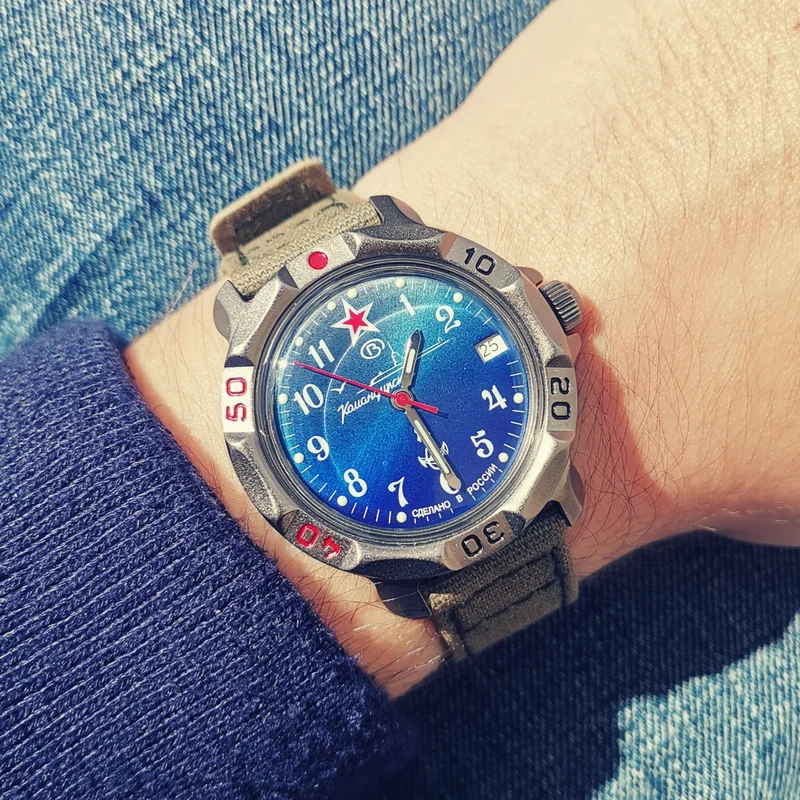
The wares they carried bore no resemblance to Western retail items. This was harsh, heavy inventory dominated by cast aluminum alloys, tempered steel, and dense optical glass. Crown among them were Baigish BPC prismatic binoculars (notably the 8×30 and 12×45 configurations), manufactured at the KOMZ optical-mechanical plant in Kazan and housed in rigid brown leather cases lined with purple velvet. Beside them lay Komandirskie mechanical wristwatches from the Vostok plant in Chistopol (with dials naively illustrating submarines, T-72 tanks, or paratrooper wings), Pobeda watches from the Maslennikov factory, and Zenit-E or rangefinder FED-5 cameras.
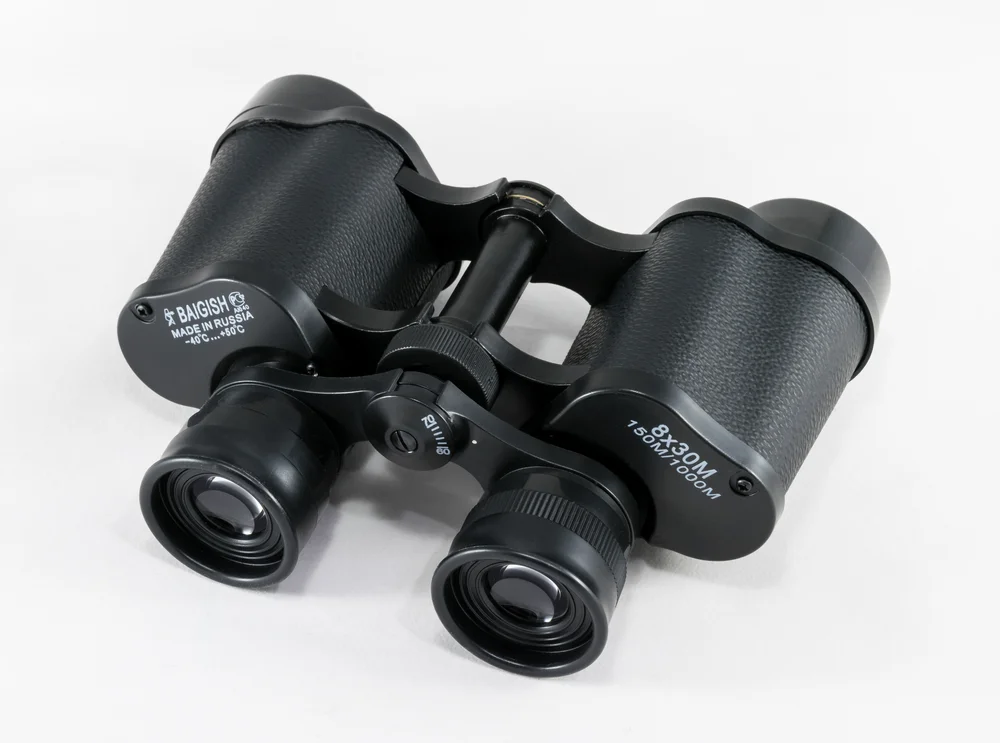
The early-1990s Romanian apartment dweller was accustomed to flimsy hardware: socialist door handles snapped on first pressure, screws were molded from malleable low-grade iron, and plumbing tap sets were virtually unobtainable through state retail channels. Soviet metal, engineered under strict GOST standards to withstand Siberian cold and artillery recoil, provided a palpable sense of indestructibility. At a time when paper Romanian banknotes were evaporating in purchasing power by the week, acquiring a heavy cast-iron bench vice or a pair of aluminum binoculars served as an anchor in physical reality: a mechanical store of value immune to government decree.
On the sidewalk, the cultural decoding of these products instantly spawned a strange technological folklore. While the optical quality of the BaK-4 Porro prisms and the multi-layer antireflective coatings with ruby or bluish sheens was industrially certified, buyers invented urban legends claiming the reddish lens hue was designed for "infrared night vision through clothes" or thermal NATO detection. Komandirskie watches with luminescent dial dots were inspected with awe and mild trepidation, accompanied by rumors that they had been "irradiated at Chernobyl" and could act as miniature Geiger counters.
2. Caritas in Cluj and the Octuple Multiplier: The Queue as Moral Theater and Inflation Anesthetic
By the autumn of 1993, the Transylvanian city of Cluj-Napoca had become the clandestine financial capital of an unmoored nation. Along Strada Moților, around the Municipal Sports Hall, and through the walkways circling the Ion Moina stadium, hundreds of thousands of people stood in line day and night, leaning against iron railings, sleeping on flattened cardboard boxes, and holding their positions with numbers penciled onto the backs of their hands. The scene bore no resemblance to a Monte Carlo casino or a Wall Street trading floor. It looked unmistakably like a religious pilgrimage or the desperate food queues of the late Ceaușescu era.
The Caritas scheme, founded in April 1992 in Brașov by Ioan Stoica (a former accountant) as a limited liability company with 100,000 ROL in capital and subsequently relocated to Cluj, promised a formula breathtaking in its simplicity: deposit a sum of money, and in exactly 90 days withdraw eight times the initial deposit.
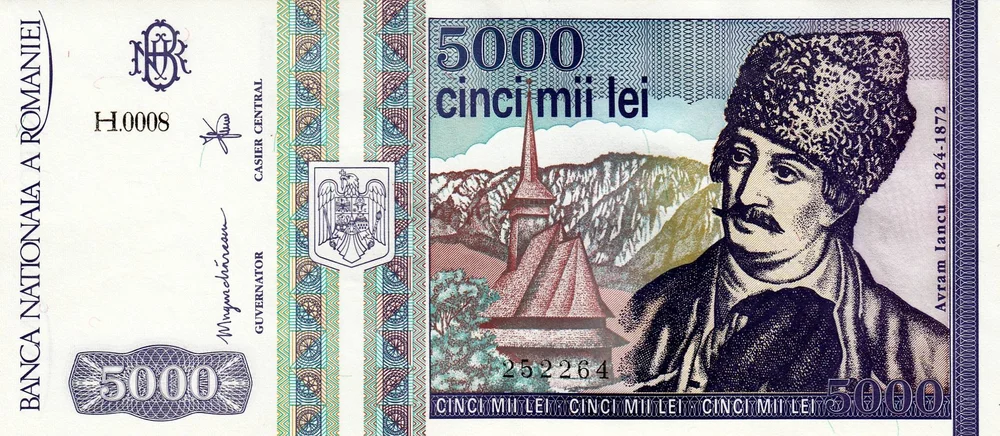
Inflation helps explain the appeal of the Caritas promise. In 1993, annual average inflation was 256.1%, while prices in December were 295.5% higher than in December 1992. These figures compare different periods. They describe the loss of purchasing power of savings held in lei; they do not establish how many people joined the scheme or each participant’s motives.
A decisive role in legitimizing the scheme was played by the local newspaper Mesagerul Transilvan. The Cluj publication became the de facto gazette of the enterprise, printing daily supplements of dozens of broadsheet pages filled entirely with endless tables of receipt series and winner names. In the face of print set in lead type at an official press, any abstract mathematical rebuttal disintegrated. For ordinary citizens, if a neighbor's receipt number appeared in the morning paper, the payment was certified as state truth.
Anthropologically, the Caritas line operated as a theodicy of socialist desert. In a society where goods had been allocated through physical queuing for 45 years, the line was perceived as a moral purifier. The citizen reasoned: "If I endured the freezing rain, if I stood on this asphalt for three days and two nights, this payout is neither charity nor fraud; it has been earned through bodily hardship." Furthermore, the deliberate name – "Caritas", borrowed from Christian charity – combined with vocal support from nationalist mayor Gheorghe Funar and total passivity from the central government, provided an impenetrable symbolic shield against warnings from the central bank.
The model below assumes equal deposits, new participants in each round and full payment of the promised amount from new deposits. Under these assumptions, multiplying by eight requires 16,777,216 new deposits in round eight. This is an illustration, not a reconstruction of the historical participant count. A Ponzi scheme stops paying when inflows no longer cover its obligations; this calculation does not establish a historical threshold of cash or broad money M2 for Caritas.
3. The Balcony Satellite Dish: The Orbital Reflector and the Escape from the Two-Hour Specter
Between January 1985 and December 1989, Romanian public broadcasting adhered to the harshest media blackout regime in the Eastern Bloc. Channel 2 was permanently shuttered by presidential energy-saving decree, while Channel 1 broadcast exclusively from 20:00 to 22:00. Those 120 nightly minutes were consumed by tributes to Nicolae and Elena Ceaușescu, official field visits, and inflated industrial output statistics. For half a decade, the domestic television tube was an instrument of visual deprivation.
Immediately following the 1989 revolution, a striking architectural mutation colonized the concrete facades of massive working-class housing estates (Mănăștur in Cluj, Drumul Taberei and Balta Albă in Bucharest, Micro 19 in Galați): satellite dish antennas. These were not the modest 60-centimeter dishes common in Western European suburban gardens. They were enormous dishes hammered from sheet aluminum or riveted from wire mesh, spanning 1.5 to 1.8 meters across, anchored into the balcony concrete with heavy construction rebar.
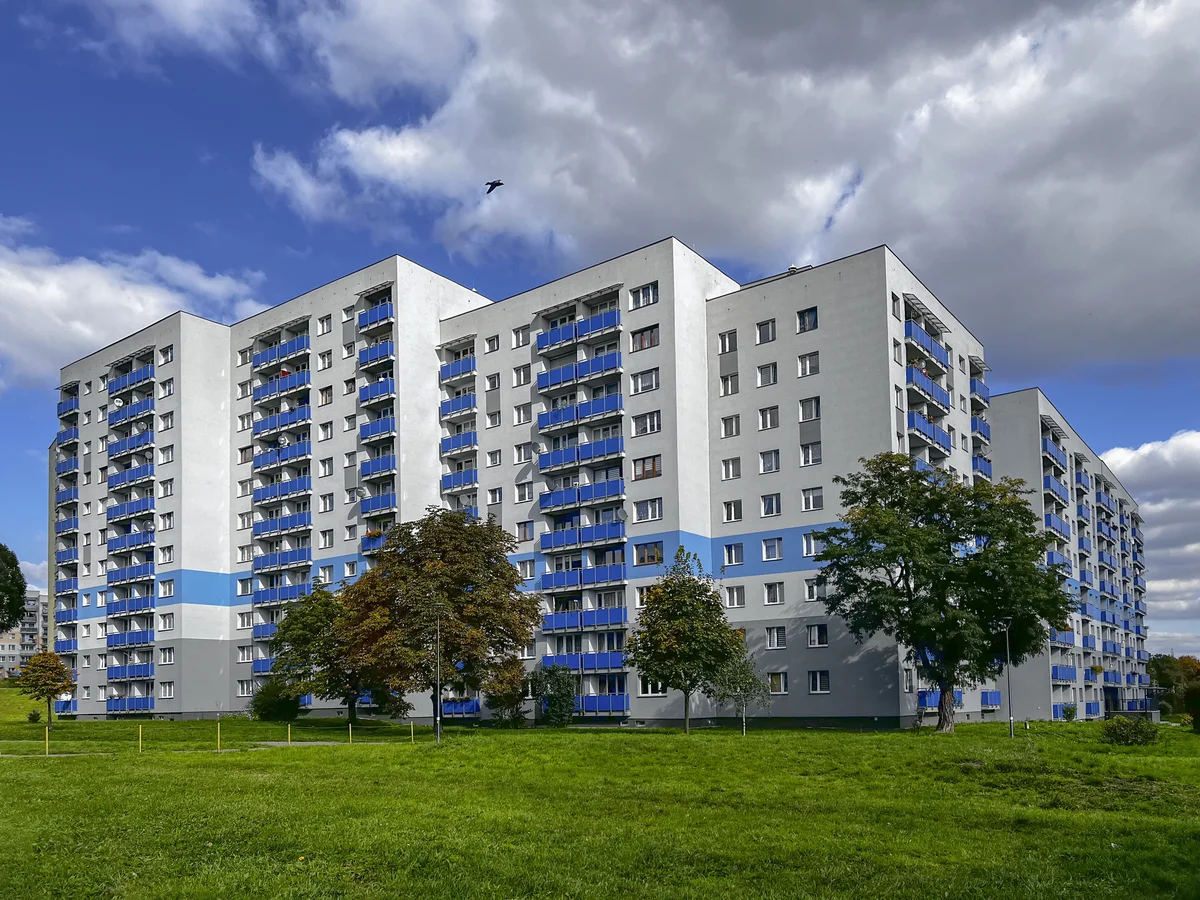
The ubiquity of these oversized dishes was a strict engineering necessity. The Astra 1A satellite, launched by SES in December 1988 at orbital position 19.2° East, focused its primary downlink beam on Western Europe (where EIRP reached 46–48 dBW, allowing compact 60-centimeter dishes). On the eastern deep-fringe contour over Romania, signal intensity dropped below 40 dBW. To pull an intelligible, noise-free analog PAL video signal out of cosmic microwave background noise, Romanian households required large 1.5–1.8 meter aperture reflectors and ultra-low-noise LNB converters.
The satellite dish boom gave rise to a key social figure in housing estates: the neighborhood "stairwell cable guy". Frequently an engineer or electronics technician laid off from heavy industry, he mounted a large dish on the flat rooftop, purchased an analog receiver, and dropped black coaxial cables across the building's facade, drilling through window frames into neighboring apartments in exchange for a modest monthly fee of a few dollars.
The cultural consequences were seismic. An entire cohort of children raised in grey precast concrete estates acquired working German comprehension by watching Saturday morning cartoons on RTL or music videos on MTV Europe. Without formal vocabulary study, they decoded narratives through visual sequence and foreign confectionery advertisements. The proletarian balcony had transformed into an engine of enthusiastic cultural colonization.
4. The Consignment Shop and the Fetishism of the Empty Container
Shortly after the overthrow of the dictatorship, the provisional government issued Decree-Law No. 54 of 5 February 1990 on private economic initiative. This brief piece of legislation opened the floodgates through which tens of thousands of citizens launched Romania's first private retail outlets, known universally as consignații (consignment shops) or buticuri.
The consignment shop occupied the most improvised spaces imaginable: converted communal drying rooms, emptied car garages, corrugated tin shanties, or ground-floor apartment flats abruptly opened onto the sidewalk. Commodities hauled by coach from Istanbul's Grand Bazaar, the Polish market in Nowy Targ, or Subotica were jumbled together without retail coherence: acid-wash "Piramid" denim jackets, twin-deck boomboxes with fake visual equalizers, Impulse aerosol sprays, multi-melody Montana digital watches, and synthetic powder drink sachets (Tang, Step).
In this hybrid shopwindow, what French semiotician Jean Baudrillard termed the triumph of sign-value over use-value took tangible form. For a population starved of consumer goods, the packaging took precedence over the product:
- The plastic carrier bag as high fashion: Glossy plastic shopping bags printed with foreign logos (Marlboro, Kent, or cast portraits from Beverly Hills 90210) were never discarded. They were hand-washed in lukewarm water, hung on balcony clotheslines with wooden pegs, and carried through town as premier symbols of cosmopolitan status.
- The empty beer can as living-room bibelot: An aluminum Heineken or Coca-Cola can hauled from abroad was never recycled. Once consumed, the empty cylinder was rinsed, polished, and displayed on the parlor shelf or atop the black-and-white television set, resting upon a hand-crocheted macramé doily alongside the traditional Soviet glass fish ornament.
- Empty foreign cigarette cartons: Assembling empty flip-top boxes of Kent, Winston, or Camel into architectural pyramids on study bookshelves became an adolescent passion. The English brand name alone certified belonging to a glamorous free world, even as the room's occupant smoked harsh unfiltered domestic Carpați cigarettes.
Documentary Register and Claim Checks
To uphold rigorous epistemic boundaries between documented archival facts, urban legends, and critical interpretation, the table below provides the primary sources and parameters underpinning this investigation:
| ID | Factual Claim | Primary Source & Reference | Formula & Parameters | Limit or Caveat |
|---|---|---|---|---|
| C01 | 1993 average inflation was 256.1%, with cumulative December 1993 annual inflation reaching 295.5%. | National Institute of Statistics (INS), Consumer Price Index (CPI) Series 1990–2020; NBR 1993 Annual Report. | Official monthly CPI series (Dec 1993 versus Dec 1992 baseline). | Contemporary press reports cite either the 256.1% average or the 317% annualized November peak. |
| C02 | Official exchange rate weakened from 22.43 ROL/USD (1990) to 1,276 ROL/USD (Dec 1993) and 1,767 ROL/USD (1994). | National Bank of Romania (BNR), Historical Exchange Rate Bulletins 1990–1995. | Official monthly and year-end exchange rate determinations. | Street black-market ("bișnițari") rates ran 10–25% higher than official central bank quotes. |
| C03 | Caritas SRL was established in April 1992 with 100,000 ROL capital, offering an 8x payout after 90 days. | Cluj County Court, Bankruptcy File No. 128/1994; Official Gazette of Romania. | Articles of incorporation, published house rules; official bankruptcy declared 14 August 1994. | Initial Brașov deposit caps were strictly limited before nationwide expansion in Cluj. |
| C04 | This page does not establish Caritas’s share of Romania’s cash or money supply. | The original estimates of 20–30% and “a third” lacked a precise, verifiable primary-source reference. | Estimates withdrawn; physical cash and the M2 monetary aggregate are different measures. | The share of the adult population participating is also not treated as verified. |
| C05 | The newspaper Mesagerul Transilvan printed daily supplements spanning dozens of pages listing winners. | Collection of Mesagerul Transilvan (1992–1994), "Lucian Blaga" Central University Library Cluj-Napoca. | July–November 1993 editions, daily circulation surpassing 100,000 copies. | Standard news and investigative reporting were almost completely displaced by list tables. |
| C06 | With equal deposits and new participants each round, the ×8 model requires 16,777,216 deposits in round eight. | Illustrative calculation: 8 to the power of 8 = 16,777,216. | No reinvestment or external revenue; payments come entirely from new deposits. | The model does not establish the actual participant count or the exact cause and timing of the historical breakdown. |
| C07 | Baigish BPC field glasses originated from the KOMZ factory in Kazan with aluminum frames and BaK-4 Porro prisms. | KOMZ Kazan Technical Catalogs (1985–1992); GOST state industrial standards for Soviet optics. | Models BPC 8×30 and BPC 12×45, 600–900 g mass, multi-coated optical glass elements. | After 1994, low-grade plastic counterfeit replicas using Russian brand names also surfaced. |
| C08 | Receiving Astra 1A (19.2°E) in Romania required 1.5–1.8 m reflector dishes due to signal roll-off at the deep fringe. | SES Astra Technical Documentation 1988–1992; RF downlink footprint contour maps. | EIRP reached 46–48 dBW in Western Europe (allowing 60 cm dishes), but dropped below 40 dBW over Romania. | Reliable PAL reception in heavy overcast or rain demanded low-noise LNBs (< 1.0 dB noise figure). |
| C09 | Between 1985 and 1989, TVR broadcast was curtailed to two nightly hours on weekdays (20:00–22:00). | January 1985 state conservation decree; schedules published in Radio-TV magazine. | 120-minute daily schedule, over 60% devoted to Ceaușescu's personal leadership cult. | Sundays included a midday variety segment ("Album duminical") extending airtime slightly. |