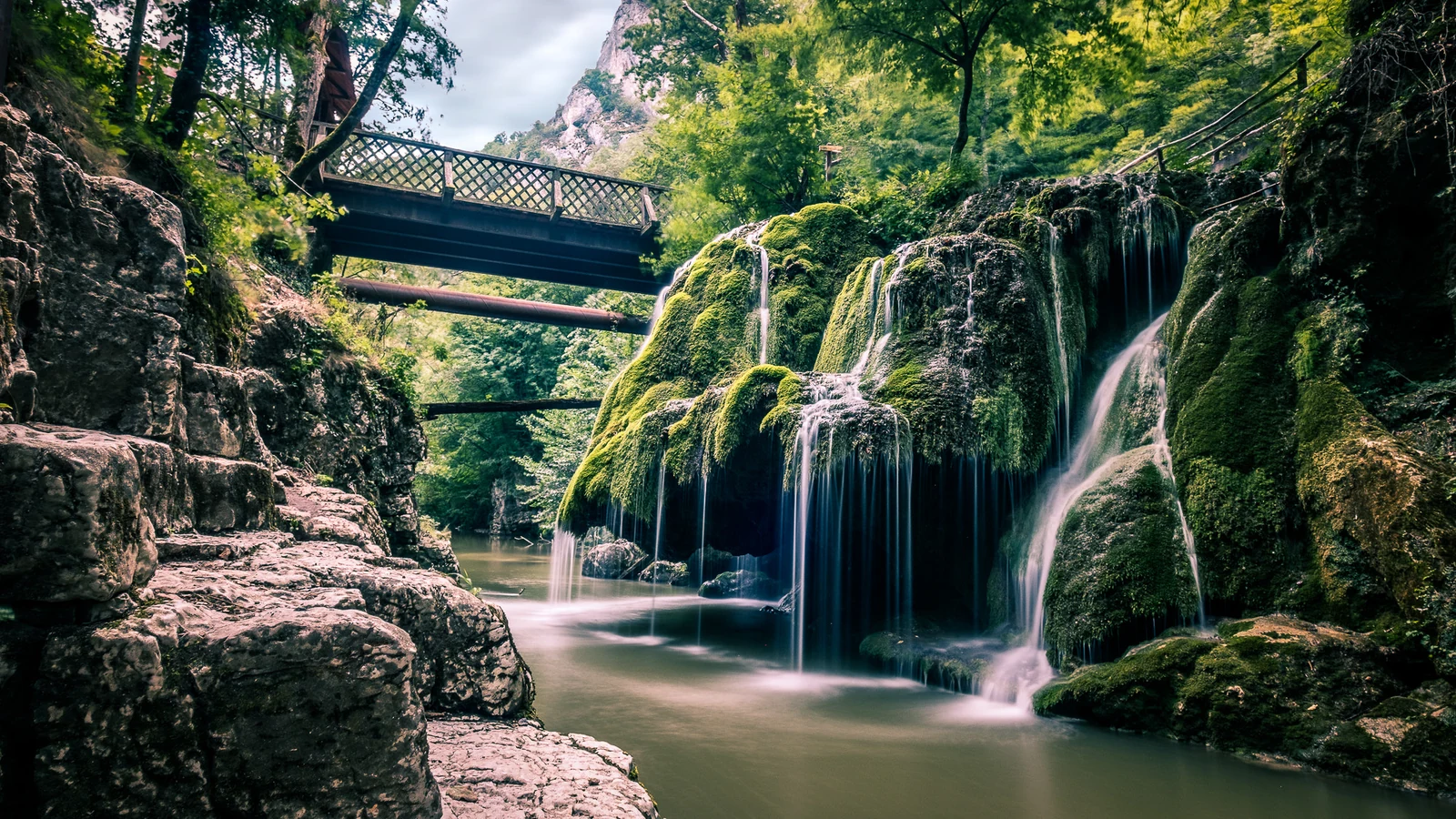
The photograph shows water and rock together
In the August 2017 photograph, the water spreads over a rounded lip and falls into the Miniș. The white strands show the outline of the stone they touch.
Start with that shape. Follow a strand from the lip to the river, then look at the section to see how far the ledge projects.
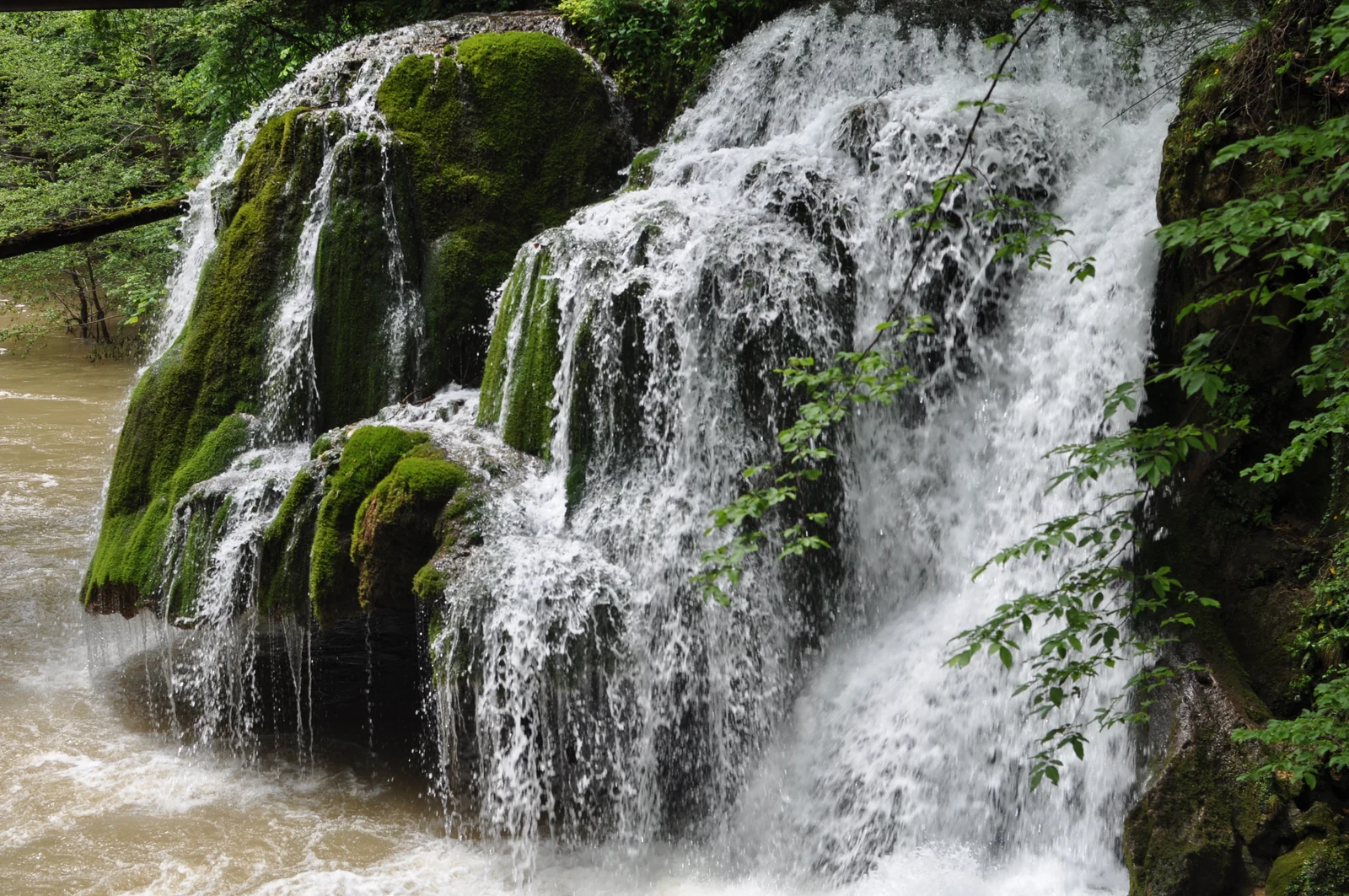

Water carries dissolved minerals
At Bigăr, water emerges from limestone in the Anina Mountains and enters a surface stream. Water from a spring like this can carry dissolved calcium and bicarbonate.
Turbulent water can lose carbon dioxide. Under suitable conditions, some of its dissolved material is deposited as calcite.
DepositionDeposits change the lip that carries the flow
Porous limestone deposited from fresh water is called tufa. Microbial films and plants growing on the ledge provide surfaces where calcite can accumulate.
Add a deposit at the lip of the model. The rock grows along the path of the water, and the water follows the new surface.
The first strands fall close to the rock face.
The wider lip shifts the fall towards the river.
7 June 2021Part of the ledge broke away
On 7 June 2021, part of the Bigăr ledge broke away. Romsilva attributed the collapse to the accumulated weight of tufa and moss.
The footage documents the collapse. It supplies no measurements of discharge, seepage or stone strength just before the break, so it cannot establish a precise cause.
The water follows the projecting lip.
A gap appears where the model removes the projecting part.
The comparisonSame flow, different drop
Keep the model’s flow and change only the shape of its lip. Water that ran over the rounded edge now falls closer to the remaining face.
The comparison shows what the shape of stone can do. The width of a waterfall in a photograph cannot tell you how much water the spring carried that day.
The strands spread around the curve of the ledge.
The strands gather where the water still finds an edge.
Two momentsOne waterfall, photographs from another time
When you recognise the rounded silhouette in a photograph, check its date. The photographs in this project were taken before the collapse.
Stone at the lip changed how water looked at Bigăr. That shape changed again when part of the ledge fell away.
