
The same city has been written on maps and postcards as Corona, Kronstadt, Brassó, Brașov and, for ten years, Orașul Stalin (Stalin City).
The fortified centre grew around the Saxon community, while merchants from the Șchei quarter kept up ties with Wallachia. The palaces of the early twentieth century and the workers’ districts built after the war show how the city spread beyond its walls. Each era left a different kind of image: photochroms printed in colour, postcards with the name printed in three languages, illustrated cards of new factories and hotels, and contemporary photographs.
The chapters follow time; within a chapter, the images are grouped by subject and may be older or newer than the chapter’s year. Click any of them to see it large, with the full caption. The year a postcard was posted can differ from the year the photograph was taken; many records give only the twentieth century. The Romanian, German and Hungarian names were also used side by side.
Which name the city bears on postcards
The Lucian Blaga Central University Library in Cluj has put 568 illustrated postcards of the city of Brașov on Europeana. The title in each record usually reproduces what is printed on the card, and contains one or more names: Brașov, Brassó, Kronstadt or Orașul Stalin. Below, the names are counted first overall, then by year for the 217 records that carry a year.
- until 1918
- 6 cards with a year given by the record. All of them put the Hungarian name, Brassó, first.
- 1919–1940
- 77 cards with a year given by the record: 72 carry the Romanian name alone, 3 are trilingual (all from 1933, with Brașov first), 2 have no name in the title.
- 1941–1954
- No card with a year. The name Orașul Stalin was in use from 1950, but the oldest dated card with it is from 1955 (an estimated year).
- 1955–1960
- 63 cards with a year, 62 of them estimated: 61 say Orașul Stalin, none says Brașov, 2 Brassó or Kronstadt first. Estimated years cannot confirm the order (see below).
- 1961–1962
- 71 cards with a year, all estimated: 68 say Brașov, 3 Orașul Stalin.
Postcards with a year in the BCU Cluj catalogue, by year and by name
- Brassó first
- Kronstadt first
- Brașov first (alone or with other names)
- Orașul Stalin
- no name in the title
- estimated year
Pick a year from the chart or from the list above to see its cards, each with a link to its record.
What it shows and what it does not
The years are of two kinds. Of the 84 cards whose year the record gives, 83 are from 1911–1940; of the 133 with a year estimated by the library, all are from 1955–1962. What follows for 1911–1940 therefore rests on years given by the records, and what follows for 1955–1962 on estimates.
The difference between the periods is plain. All 6 cards with a year before the Union put the Hungarian name first, and the three trilingual cards from 1933 put the Romanian one first. Between 1919 and 1940, 72 of 77 cards with a year carry the Romanian name alone. Six is a small number, and it does not show when or why the order changed; one card from outside the set, sent in 1915 and held by the Casa Mureșenilor museum, prints “Brassó – Kronstadt – Brașov”, in the same order.
The Orașul Stalin series needs a different reading. Of the 63 cards with a year between 1955 and 1960, 61 say Orașul Stalin, and 60 of them have an estimated year. A cataloguer who sees the name will naturally place the card in the 1950s, so the fit is partly circular and proves nothing alone. The same holds in reverse for “none says Brașov” between 1955 and 1960: a card with the name Brașov would be hard to place in those years without another clue. The count stands: 92 records out of 568, about one in six, carry the name of a city that bore it for ten years.
From 1961 the records say Brașov again: 68 of 71, but all 71 years are estimated, so the fit with the renaming of December 1960 is partly a product of the dating. The three with Orașul Stalin and the year [1961] share one title, “hotelul Carpați”, and an estimated year; the renaming was on 24 December 1960, so they may be older, or reprints. Two records with Brassó or Kronstadt first have the year [1960] (one titled only “Kronstadt”, one with “Rudolfs-Ring”, again in Hungarian and German): they may be older cards with a wrongly estimated year. All five are in the count, but no conclusion rests on them.
The 351 records without a year (“[19-]”, the 20th century) could be from any period: 178 carry Brassó or Kronstadt as well, 140 Brașov alone, 28 Orașul Stalin. Of the 178 with Brassó or Kronstadt, 122 put Brassó or Kronstadt first and 56 put Brașov first. Among the cards with a year and several names, the order splits the years the same way: Hungarian first until 1918, Romanian first in 1933; the one exception is a [1960] record whose year looks wrong. On a single card without a year, though, the order is not proof.
One name, one page
Each name has its own shareable page, with the chart and its count.
How it was counted
- The set: every record in the BCU Cluj collection on Europeana (dataset 9200454) with the subject “Braşov, Oraşul (România)”, read through the API on 23 October 2026. There are 568.
- Names: searched in the record title, ignoring text the cataloguer put in square brackets. “Brașov” and “Braşov” are the same name; “Poiana Brașov” is not counted. A card with several names counts for each, and for order the one that comes first in the title counts.
- Year: the last year in the record's imprint line. In square brackets, the year is estimated by the cataloguer (133 of 217); without brackets, the record gives it (84). “[19-]” means no year and is left out of the chart by year. A leaflet of 10 illustrations dated [1957] is counted as one record.
- Limits: one library. A record is not one card printed once: several records can be copies of the same view. Records from the National Heritage Institute (6 with Orașul Stalin in the title) have no year and are not in the chart.
- The raw records read from Europeana and the counting program are kept with the page; the count can be repeated with Europeana's public key.
The 217 cards with a year, with each record
| Year | Name in the title | Title |
|---|---|---|
| 1911 | Brassó first | Brassó : Katalin-torony = Kronstadt : Katharinen-Turm = Brașov : Turnul-Caterinei |
| 1913 | Brassó first | Brassó : Graft-részlet = Kronstadt : Graft-Partie = Brașov : Dupá zidurile de jos |
| 1917 | Brassó first | Brassó : [Gimnázium] = Kronstadt : Honterus-Schule |
| 1917 | Brassó first | Brassó : M. kir. igazságügyi palota = Kronstadt : Kon. ung. Justiz-Palais |
| 1918 | Brassó first | Brassó : Fellegvársor = [Kronstadt] : Schloßbergzeile |
| 1918 | Brassó first | Brassó : Pénzügyi palota = Kronstadt : Finanzpalast |
| 1925 | no name in the title | Biserica neagră ev. luth. : [Brașov] |
| 1925 | Brașov first (alone or with other names) | Brașov : Biserica Sft. Nicolae : Piața Prundului |
| 1925 | Brașov first (alone or with other names) | Brașov : Biserica Sftei Treimi Tocile și cimiterul eroilor |
| 1925 | Brașov first (alone or with other names) | Brașov : cimiterul eroilor lângă gara Bartolomei |
| 1925 | Brașov first (alone or with other names) | Brașov : liceul de fete de stat |
| 1925 | Brașov first (alone or with other names) | Brașov : liceul de fete de stat |
| 1925 | Brașov first (alone or with other names) | Brașov : liceul evangelic lutheran |
| 1925 | Brașov first (alone or with other names) | Brașov : liceul evangelic lutheran |
| 1925 | Brașov first (alone or with other names) | Brașov : liceul ort. rom. Andrei Șaguna |
| 1925 | Brașov first (alone or with other names) | Brașov : liceul ort. rom. Andrei Șaguna |
| 1925 | Brașov first (alone or with other names) | Brașov : livada poștei |
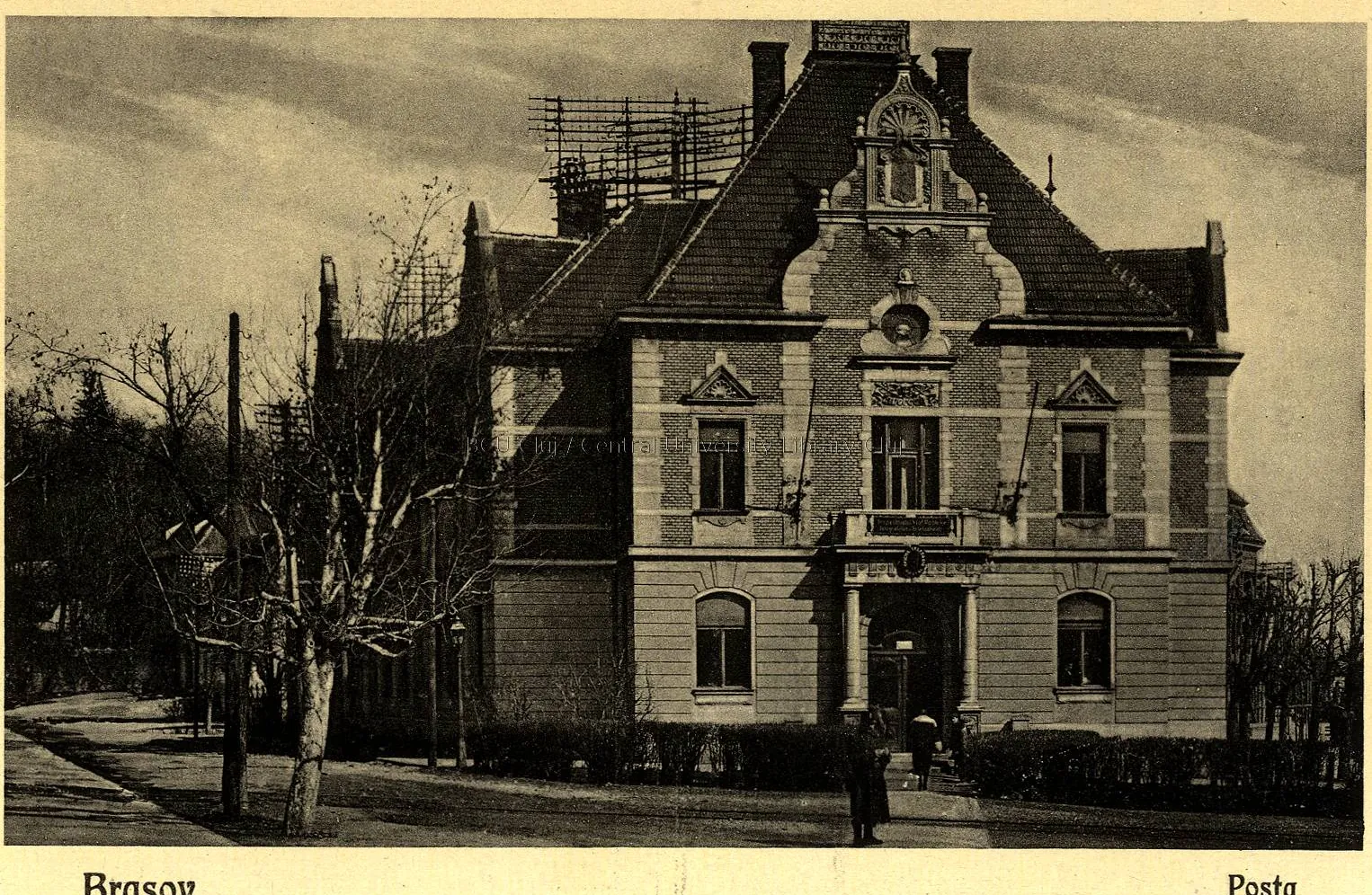
| 1925 | Brașov first (alone or with other names) | Brașov : palatul poștei și al finanțelor |
| 1925 | Brașov first (alone or with other names) | Brașov : Palatul Tribunalului |
| 1925 | Brașov first (alone or with other names) | Brașov : Palatul Tribunalului |
| 1925 | Brașov first (alone or with other names) | Brașov : pavilionul pomperilor Statua Dorobanțului |
| 1925 | Brașov first (alone or with other names) | Brașov : pavilionul pomperilor Statua Dorobanțului |
| 1925 | Brașov first (alone or with other names) | Brașov : statua Dorobanților |
| 1925 | Brașov first (alone or with other names) | Brașov : Școala superioară de comerț de stat |
| 1925 | Brașov first (alone or with other names) | Brașov : [librăria Cooperativă, Str. Vamii 7] |
| 1925 | Brașov first (alone or with other names) | Brașov : vedere generală a orașului |
| 1925 | Brașov first (alone or with other names) | Brașov : vedere generală a orașului |
| 1925 | Brașov first (alone or with other names) | Brașov : villa Kertsch |
| 1925 | Brașov first (alone or with other names) | Brașov : locul de tenis și patinat |
| 1927 | Brașov first (alone or with other names) | Brașov : [Turnul Negru și Biserica Neagră] |
| 1927 | Brașov first (alone or with other names) | Brașov : vedere generală = [Brassó] : Látkép |
| 1928 | Brașov first (alone or with other names) | Brașov : hotel Coroana |
| 1928 | Brașov first (alone or with other names) | Brașov : o parte de "După Ziduri" |
| 1930 | Brașov first (alone or with other names) | Brașov : Biserica Neagră |
| 1930 | Brașov first (alone or with other names) | Brașov : [Biserica Neagră] |
| 1930 | Brașov first (alone or with other names) | Brașov : muntele Tâmpa |
| 1930 | Brașov first (alone or with other names) | Brașov : Palatul Justiției |
| 1930 | Brașov first (alone or with other names) | Brașov : poșta |
| 1930 | Brașov first (alone or with other names) | Brașov : Sfatul |
| 1930 | Brașov first (alone or with other names) | Brașov : turnul Alb |
| 1930 | Brașov first (alone or with other names) | Brașov : vedere generală |
| 1930 | Brașov first (alone or with other names) | Brașov : [vedere] |
| 1930 | Brașov first (alone or with other names) | Brașov : [vedere] |
| 1930 | Brașov first (alone or with other names) | Brașov : [vedere parțială] |
| 1930 | Brașov first (alone or with other names) | Brașov |
| 1930 | Brașov first (alone or with other names) | Brașov |
| 1930 | Brașov first (alone or with other names) | Brașov |
| 1930 | Brașov first (alone or with other names) | Brașov |
| 1930 | Brașov first (alone or with other names) | Brașov : [Turnul Alb] |
| 1931 | Brașov first (alone or with other names) | Brașov : cetățuia |
| 1933 | Brașov first (alone or with other names) | Brașov : Cetatea veche = Kronstadt : Alter-Schloss = Brassó : Régi vár |
| 1933 | Brașov first (alone or with other names) | Brașov : Poșta și Administrația Financiară = Kronstadt : Finanzdirection und Post = Brassó : Pénzügyigazgatóság és Postahivatal |
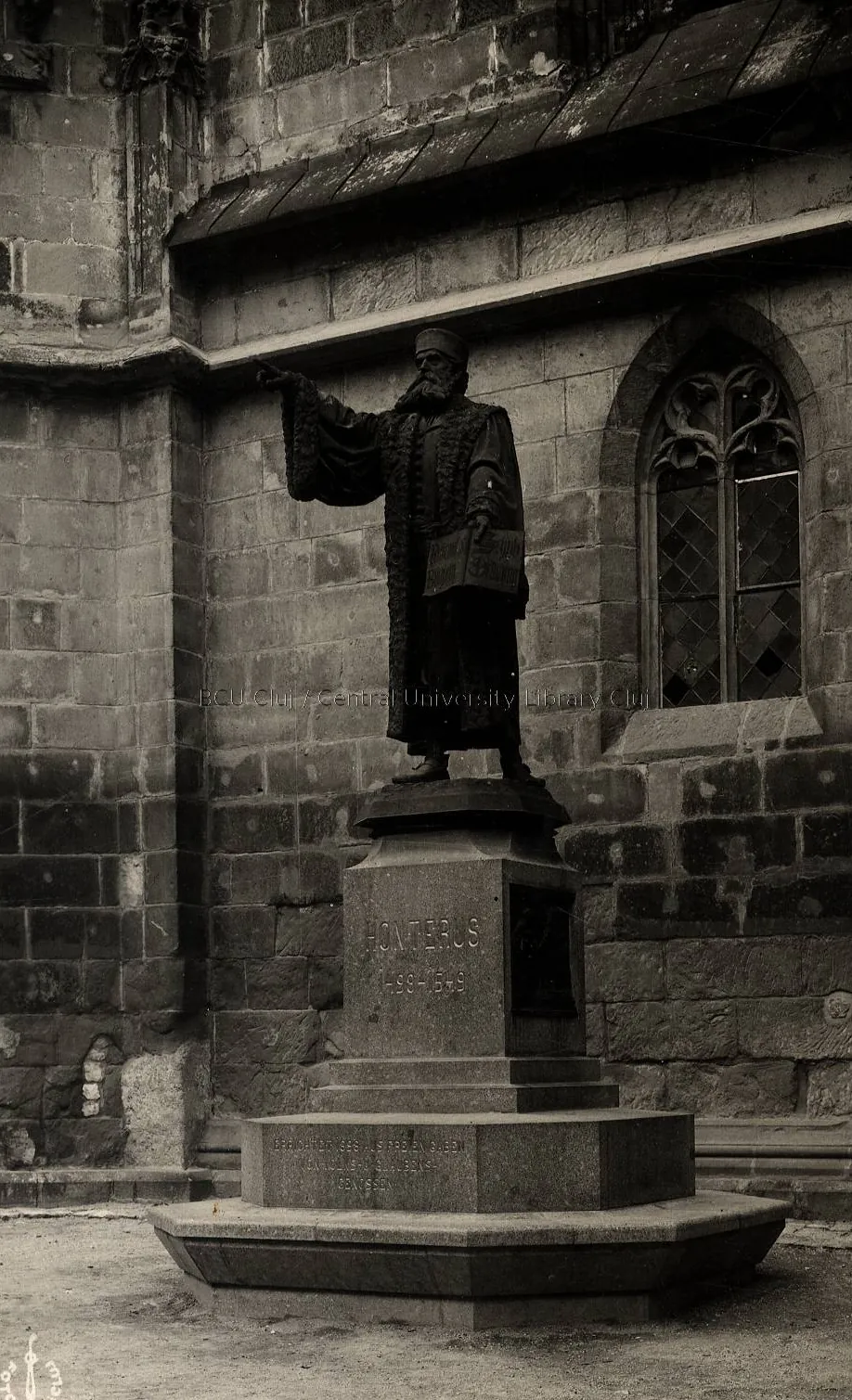
| 1933 | Brașov first (alone or with other names) | Brașov : statuia "Honterus" = Kronstadt : [Honterus] Denkmal = Brassó : [Honterus] Szobor |
| 1934 | Brașov first (alone or with other names) | Brașov : [Cetatea veche] |
| 1934 | Brașov first (alone or with other names) | Brașov : [cetățuia] |
| 1934 | Brașov first (alone or with other names) | Brașov : [liceul evangelic lutheran] |
| 1934 | Brașov first (alone or with other names) | Brașov |
| 1934 | Brașov first (alone or with other names) | Brașov : [Tâmpa] |
| 1935 | no name in the title | Promenada și cafeneaua Transilvania |
| 1936 | Brașov first (alone or with other names) | Brașov : cu muntele Cristian |
| 1936 | Brașov first (alone or with other names) | Brașov : [Parcul Cuteanu și Șirul N. Iorga] |
| 1936 | Brașov first (alone or with other names) | Brașov : turnul Catalina |
| 1938 | Brașov first (alone or with other names) | Brașov : [Alee parc] |
| 1938 | Brașov first (alone or with other names) | Brașov : Biserica Neagră și Tâmpa |
| 1938 | Brașov first (alone or with other names) | Brașov : Biserica Neagră și Turnul Negru |
| 1938 | Brașov first (alone or with other names) | Brașov |
| 1938 | Brașov first (alone or with other names) | Brașov |
| 1938 | Brașov first (alone or with other names) | Brașov |
| 1938 | Brașov first (alone or with other names) | Brașov : vedere Generală dela Tâmpa |
| 1938 | Brașov first (alone or with other names) | Brașov : vedere generală |
| 1938 | Brașov first (alone or with other names) | Brașov : vedere generală |
| 1938 | Brașov first (alone or with other names) | Brașov : vedere generală |
| 1938 | Brașov first (alone or with other names) | Brașov : vedere generală |
| 1938 | Brașov first (alone or with other names) | Brașov : vedere generală |
| 1938 | Brașov first (alone or with other names) | Brașov : Palatul financiar și Poșta cu Promenada |
| 1938 | Brașov first (alone or with other names) | Brașov : [Palatul Justiției] |
| 1938 | Brașov first (alone or with other names) | Brașov : Parcul Nou |
| 1938 | Brașov first (alone or with other names) | Brașov : [Parcul Cuteanu și Șirul N. Iorga] |
| 1938 | Brașov first (alone or with other names) | Brașov : vedere generală |
| 1938 | Brașov first (alone or with other names) | Brașov |
| 1938 | Brașov first (alone or with other names) | Brașov : vedere generală |
| 1938 | Brașov first (alone or with other names) | Brașov |
| 1940 | Brașov first (alone or with other names) | Brașov : ved. gen. |
| 1955 estimated | Orașul Stalin | Orașul Stalin : Palatul Pionierilor |
| 1955 estimated | Orașul Stalin | Orașul Stalin : vedere |
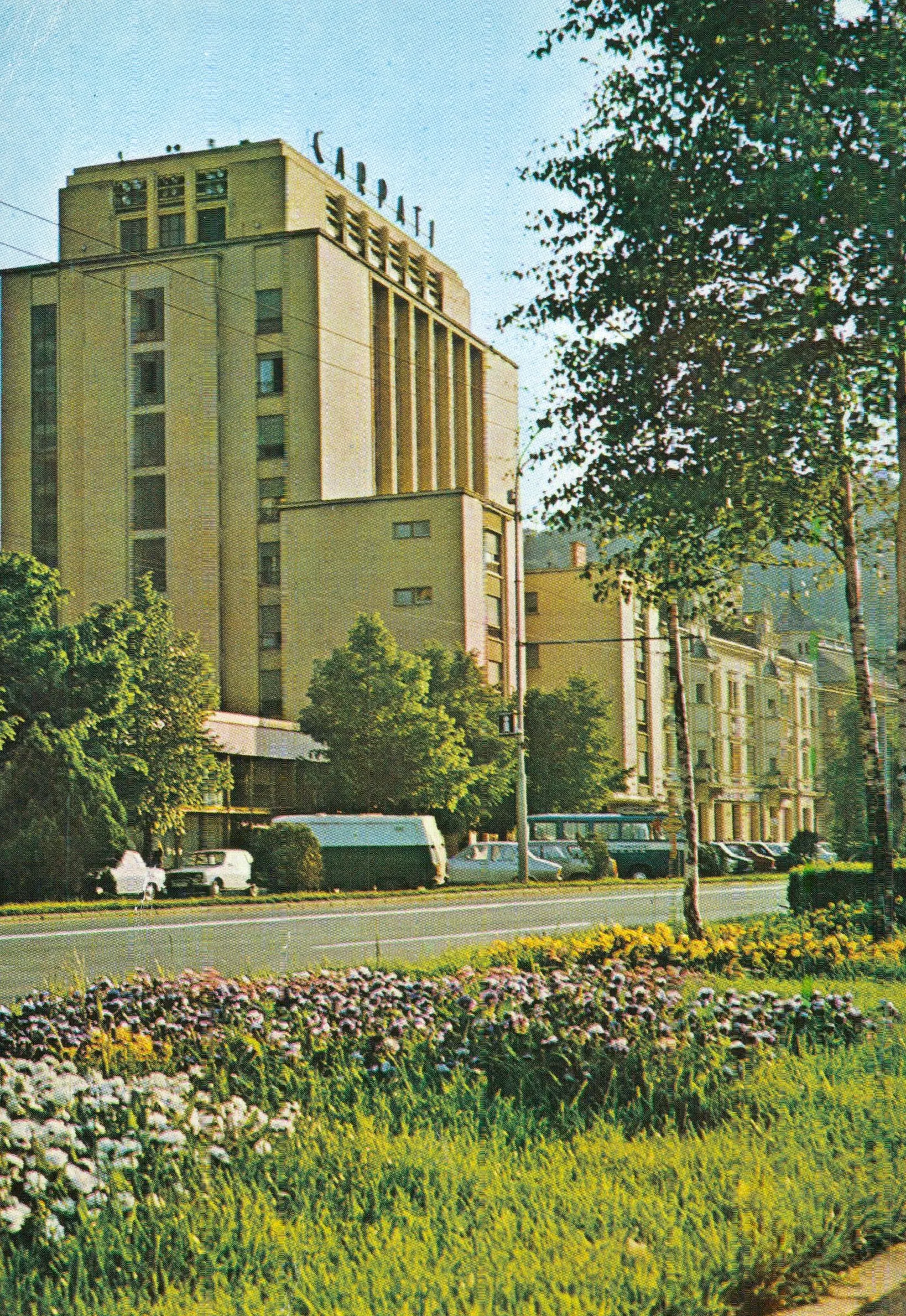
| 1957 estimated | Orașul Stalin | Orașul Stalin : hotel "Carpați" |
| 1957 estimated | Orașul Stalin | Orașul Stalin : vedere |
| 1957 estimated | Orașul Stalin | Orașul Stalin |
| 1957 estimated | Orașul Stalin | Orașul Stalin : str. Gh. Barițiu |
| 1957 estimated | Orașul Stalin | Orașul Stalin : vedere |
| 1957 | Orașul Stalin | Orașul Stalin : vedere = View from Orașul Stalin |
| 1957 estimated | Orașul Stalin | Orașul Stalin : vedere = Vue d`Orașul Stalin |
| 1959 estimated | Orașul Stalin | Orașul Stalin : Biserica Neagră |
| 1959 estimated | Orașul Stalin | Orașul Stalin : Biserica Neagră |
| 1959 estimated | Orașul Stalin | Orașul Stalin : Biserica Neagră |
| 1959 estimated | Orașul Stalin | Orașul Stalin : cartier muncitoresc |
| 1959 estimated | Orașul Stalin | Orașul Stalin : Casa Armatei |
| 1959 estimated | Orașul Stalin | Orașul Stalin : Casa Armatei |
| 1959 estimated | Orașul Stalin | Orașul Stalin : Casa Armatei |
| 1959 estimated | Orașul Stalin | Orașul Stalin : Casa Armatei |
| 1959 estimated | Orașul Stalin | Orașul Stalin : Casa centrală A.R.L.U.S. |
| 1959 estimated | Orașul Stalin | Orașul Stalin : Casa centrală A.R.L.U.S. |
| 1959 estimated | Orașul Stalin | Orașul Stalin : Cetățuia |
| 1959 estimated | Orașul Stalin | Orașul Stalin : hotel "Carpați" |
| 1959 estimated | Orașul Stalin | Orașul Stalin : hotel "Carpați" |
| 1959 estimated | Orașul Stalin | Orașul Stalin : hotel "Carpați" |
| 1959 estimated | Orașul Stalin | Orașul Stalin : hotelul "Carpați" |
| 1959 estimated | Orașul Stalin | Orașul Stalin : Institutul de Mecanică |
| 1959 estimated | Orașul Stalin | Orașul Stalin : locuințe muncitorești |
| 1959 estimated | Orașul Stalin | Orașul Stalin : Palatul Justiției |
| 1959 estimated | Orașul Stalin | Orașul Stalin : Palatul Pionierilor |
| 1959 estimated | Orașul Stalin | Orașul Stalin : poarta Sf. Ecaterina |
| 1959 estimated | Orașul Stalin | Orașul Stalin : Spitalul de Stat nr. 2 |
| 1959 estimated | Orașul Stalin | Orașul Stalin : statuia lui Honterus |
| 1959 estimated | Orașul Stalin | Orașul Stalin : str. Maxim Gorki |
| 1959 estimated | Orașul Stalin | Orașul Stalin : Turnul Alb |
| 1959 estimated | Orașul Stalin | Orașul Stalin : Turnul Negru |
| 1959 estimated | Orașul Stalin | Orașul Stalin : uzinele de tractoare "Ernst Thälmann" |
| 1959 estimated | Orașul Stalin | Orașul Stalin : vechea casă a Sfatului (Muzeu) |
| 1959 estimated | Orașul Stalin | Orașul Stalin : vechea casă a Sfatului (Muzeul de istorie) |
| 1959 estimated | Orașul Stalin | Orașul Stalin : vedere |
| 1959 estimated | Orașul Stalin | Orașul Stalin : vedere |
| 1959 estimated | Orașul Stalin | Orașul Stalin |
| 1959 estimated | Orașul Stalin | Orașul Stalin |
| 1959 estimated | Orașul Stalin | Orașul Stalin : vedere spre Cetățuia |
| 1959 estimated | Orașul Stalin | Orașul Stalin : vedere spre Cetățuia |
| 1959 estimated | Orașul Stalin | Orașul Stalin : locuințe muncitorești |
| 1960 estimated | Orașul Stalin | Orașul Stalin : Biserica Neagră |
| 1960 estimated | Orașul Stalin | Orașul Stalin : Biserica Sf. Nicolae din Schei |
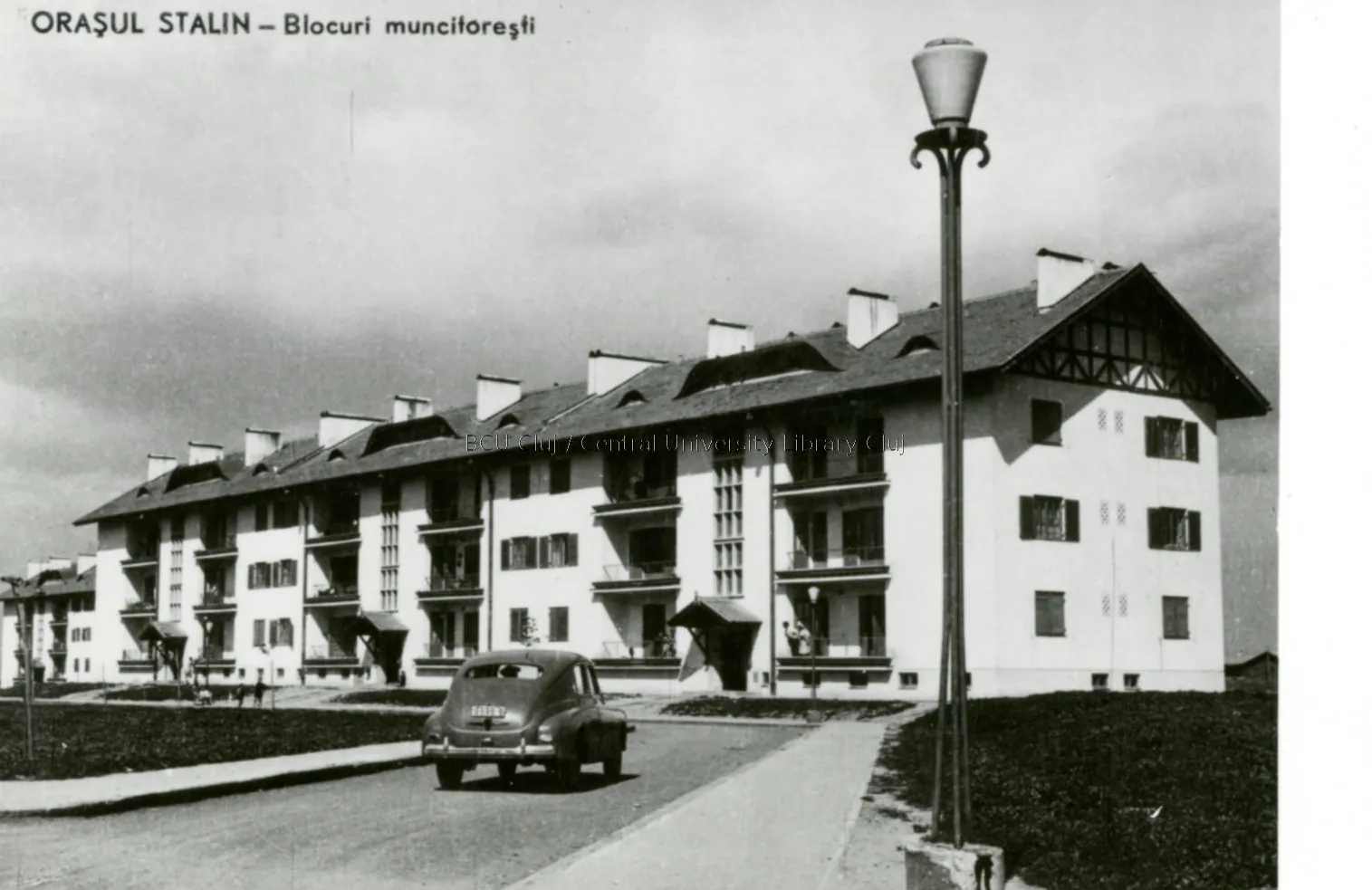
| 1960 estimated | Orașul Stalin | Orașul Stalin : Blocuri muncitorești |
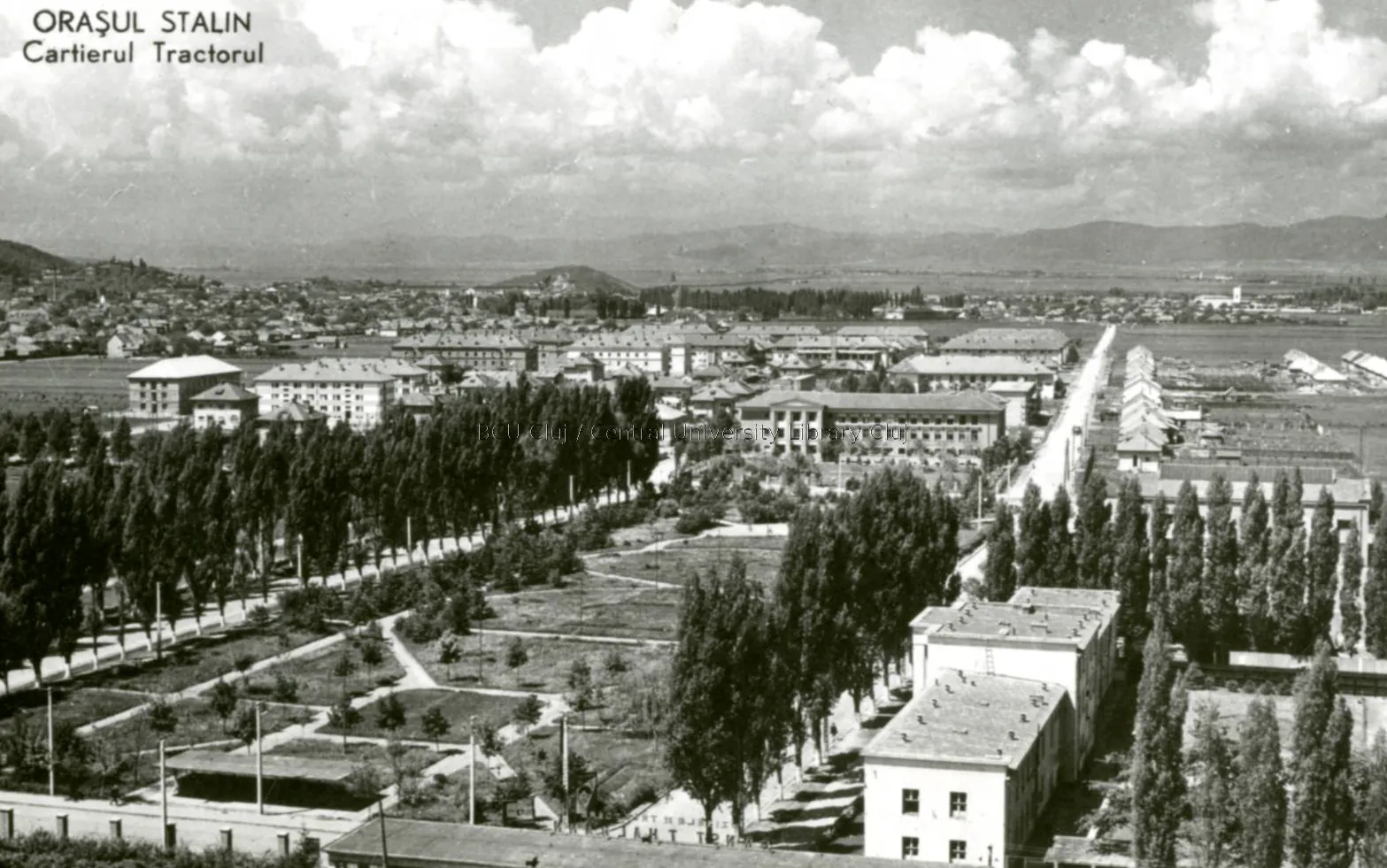
| 1960 estimated | Orașul Stalin | Orașul Stalin : cartierul Tractorul |
| 1960 estimated | Kronstadt first | Kronstadt |
| 1960 estimated | Orașul Stalin | Orașul Stalin : hotelul "Carpați" |
| 1960 estimated | Brassó first | Brassó : Rezső-körút = Kronstadt : Rudolfs-Ring |
| 1960 estimated | Orașul Stalin | Orașul Stalin : Spitalul Tractorul |
| 1960 estimated | Orașul Stalin | Orașul Stalin : str. Republicii |
| 1960 estimated | Orașul Stalin | Orașul Stalin : str. Republicii |
| 1960 estimated | Orașul Stalin | Orașul Stalin : str. Republicii |
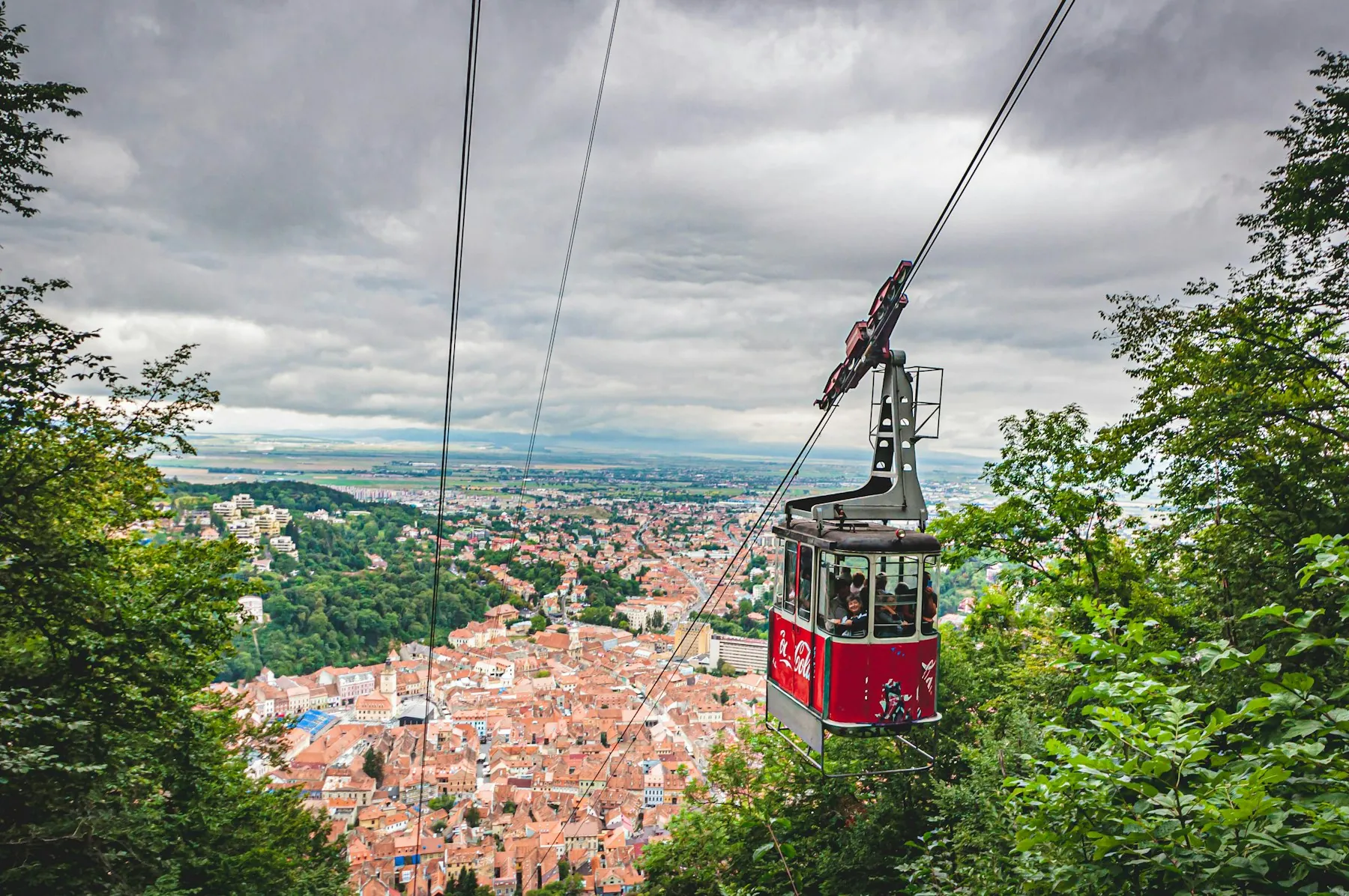
| 1960 estimated | Orașul Stalin | Orașul Stalin : telefericul |
| 1960 estimated | Orașul Stalin | Orașul Stalin : Turnul Negru și Biserica Neagră |
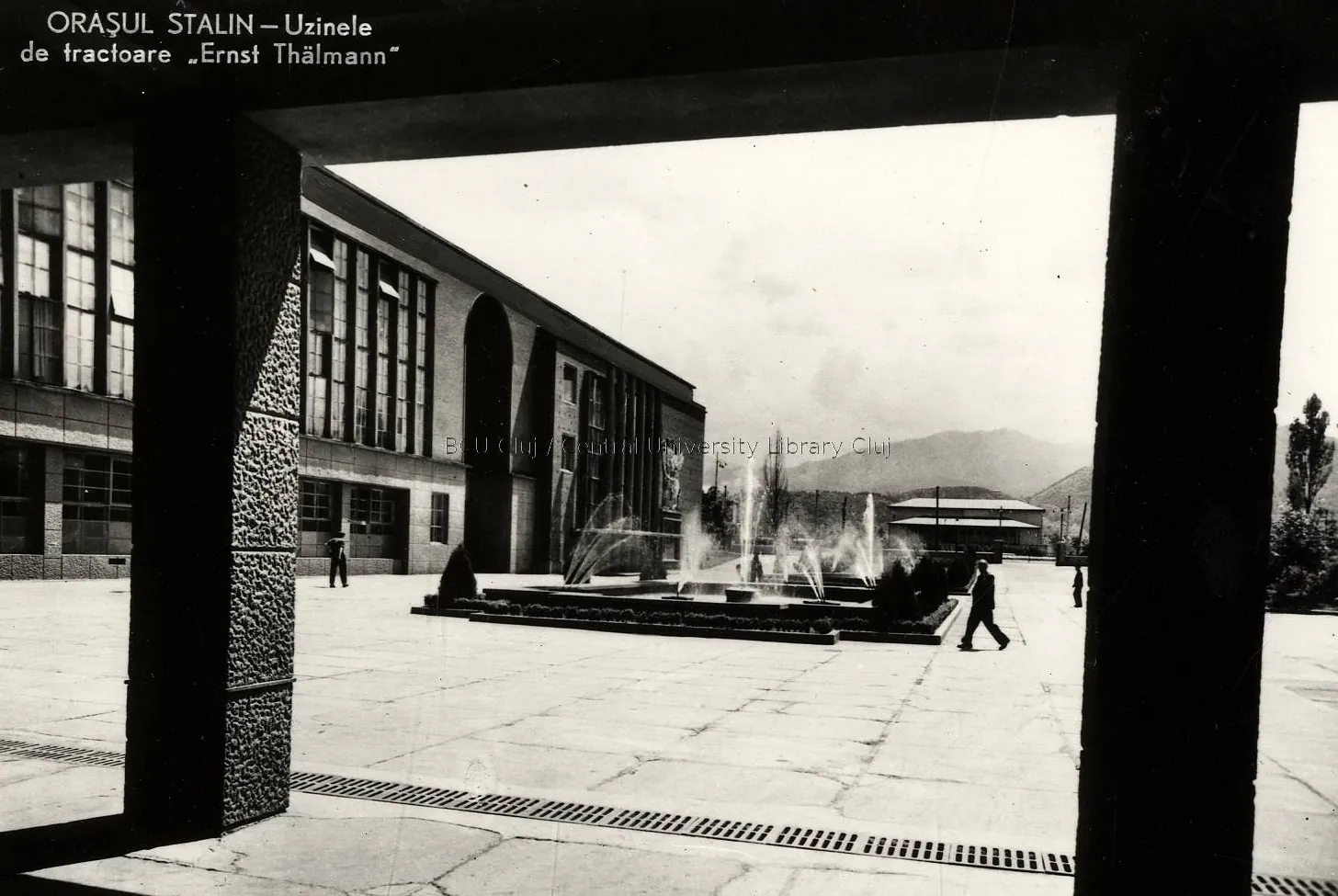
| 1960 estimated | Orașul Stalin | Orașul Stalin : uzinele de tractoare "Ernst Thälmann" |
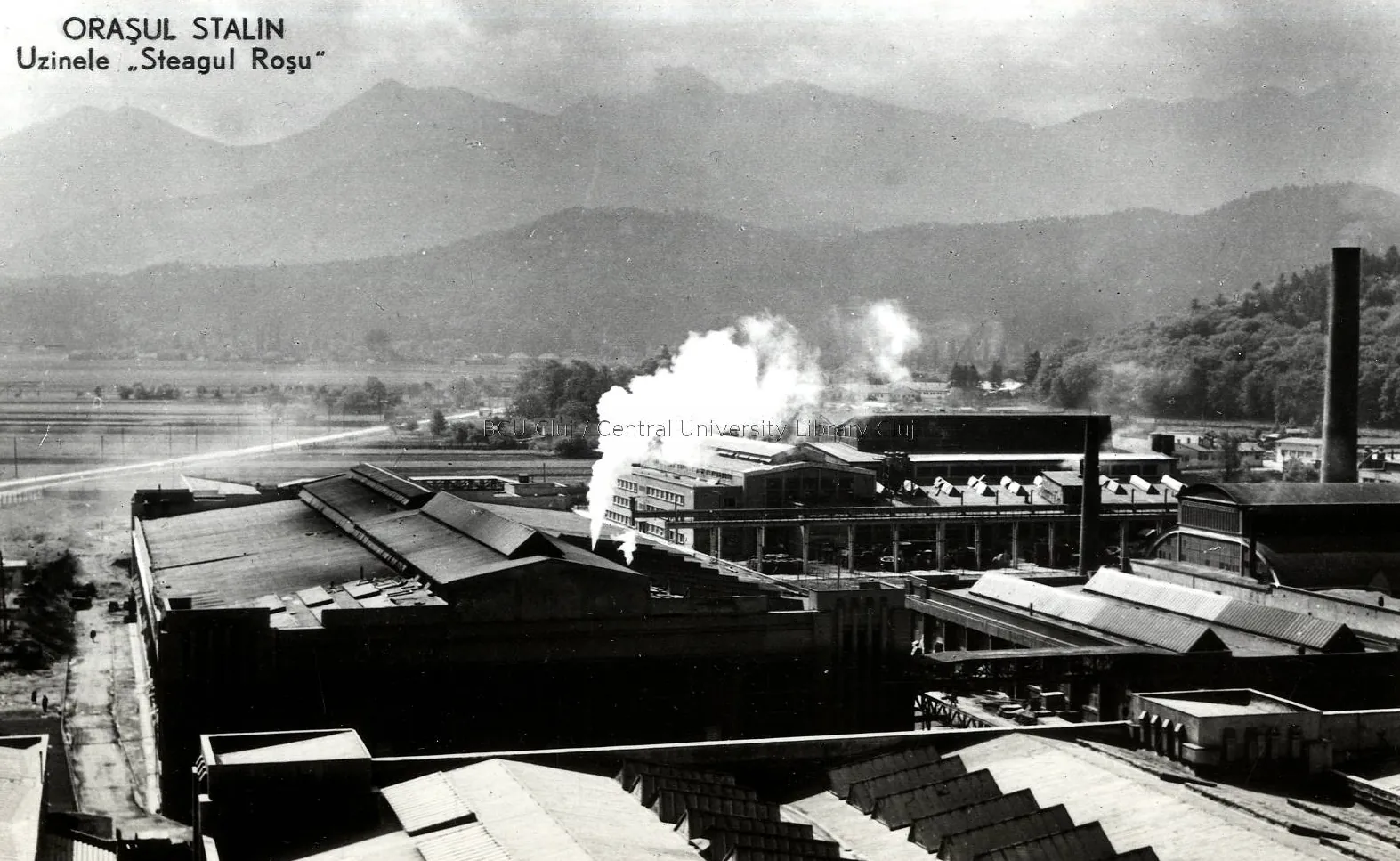
| 1960 estimated | Orașul Stalin | Orașul Stalin : uzinele "Steagul Roșu" |
| 1960 estimated | Orașul Stalin | Orasul Stalin : vedere |
| 1960 estimated | Orașul Stalin | Orașul Stalin : vedere din Scheiu spre Tîmpa |
| 1960 estimated | Orașul Stalin | Orașul Stalin : vedere generală |
| 1960 estimated | Orașul Stalin | Orașul Stalin : vedere spre Tîmpa |
| 1961 estimated | Brașov first (alone or with other names) | Brașov : Biserica Neagră |
| 1961 estimated | Brașov first (alone or with other names) | Brașov : Biserica Neagră |
| 1961 estimated | Brașov first (alone or with other names) | Brașov : Biserica Neagră |
| 1961 estimated | Brașov first (alone or with other names) | Brașov : cetățuia |
| 1961 estimated | Orașul Stalin | Orașul Stalin : hotelul "Carpați" |
| 1961 estimated | Orașul Stalin | Orașul Stalin : hotelul "Carpați" |
| 1961 estimated | Orașul Stalin | Orașul Stalin : hotelul "Carpați" |
| 1961 estimated | Brașov first (alone or with other names) | Brașov : hotelul "Carpați" |
| 1961 estimated | Brașov first (alone or with other names) | Brașov : muzeul de istorie (Vechea casă a sfatului) |
| 1961 estimated | Brașov first (alone or with other names) | Brașov : Palatul Justiției |
| 1961 estimated | Brașov first (alone or with other names) | Brașov : str. Porți |
| 1961 estimated | Brașov first (alone or with other names) | Brașov : str. Republicii |
| 1961 estimated | Brașov first (alone or with other names) | Brașov : Turnul Negru și Biserica Neagră |
| 1961 estimated | Brașov first (alone or with other names) | Brașov : uzinele de tractoare "Ernst Thälmann" |
| 1961 estimated | Brașov first (alone or with other names) | Vedere din Brașov |
| 1961 estimated | Brașov first (alone or with other names) | Vedere din împrejurimile Brașovului |
| 1961 estimated | Brașov first (alone or with other names) | Brașov : vedere generală |
| 1961 estimated | Brașov first (alone or with other names) | Brașov : vedere generală |
| 1961 estimated | Brașov first (alone or with other names) | Brașov : vedere generală |
| 1961 estimated | Brașov first (alone or with other names) | Brașov : vedere panoramică |
| 1961 estimated | Brașov first (alone or with other names) | Brașov : vedere spre Cetățuia |
| 1961 estimated | Brașov first (alone or with other names) | Brașov : vedere spre Cetățuia |
| 1961 estimated | Brașov first (alone or with other names) | Brașov : vedere spre Tîmpa |
| 1962 estimated | Brașov first (alone or with other names) | Brașov : Biserica Neagră |
| 1962 estimated | Brașov first (alone or with other names) | Brașov : Biserica Neagră |
| 1962 estimated | Brașov first (alone or with other names) | Brașov : Biserica Neagră (Sec. XIV-XV) |
| 1962 estimated | Brașov first (alone or with other names) | Brașov : Biserica Neagră (Sec. XIV-XV) |
| 1962 estimated | Brașov first (alone or with other names) | Brașov : Biserica Neagră (Sec. XIV-XV) |
| 1962 estimated | Brașov first (alone or with other names) | Brașov : b-dul "V.I.Lenin" |
| 1962 estimated | Brașov first (alone or with other names) | Brașov : cartierul fabricii "Temelia" |
| 1962 estimated | Brașov first (alone or with other names) | Brașov : cartierul "Steagul Roșu" |
| 1962 estimated | Brașov first (alone or with other names) | Brașov : cartierul "Steagul Roșu" |
| 1962 estimated | Brașov first (alone or with other names) | Brașov : Casa Armatei |
| 1962 estimated | Brașov first (alone or with other names) | Brașov : hotelul Carpați |
| 1962 estimated | Brașov first (alone or with other names) | Brașov : hotelul "Carpați" |
| 1962 estimated | Brașov first (alone or with other names) | Brașov : hotelul "Carpați" |
| 1962 estimated | Brașov first (alone or with other names) | Brașov : hotelul "Carpați" |
| 1962 estimated | Brașov first (alone or with other names) | Brașov : hotelul Carpați |
| 1962 estimated | Brașov first (alone or with other names) | Brașov : hotelul "Carpați" |
| 1962 estimated | Brașov first (alone or with other names) | Brașov : hotelul "Carpați" |
| 1962 estimated | Brașov first (alone or with other names) | Brașov : Institutul Politehnic |
| 1962 estimated | Brașov first (alone or with other names) | Brașov : monumentul eroilor sovietici |
| 1962 estimated | Brașov first (alone or with other names) | Brașov : parcul Prieteniei |
| 1962 estimated | Brașov first (alone or with other names) | Brașov : palatul justiției |
| 1962 estimated | Brașov first (alone or with other names) | Brașov : Palatul Pionierilor |
| 1962 estimated | Brașov first (alone or with other names) | Brașov : poarta "Ecaterina" |
| 1962 estimated | Brașov first (alone or with other names) | Brașov : Sfatul popular regional |
| 1962 estimated | Brașov first (alone or with other names) | Brașov : str. Maxim Gorki |
| 1962 estimated | Brașov first (alone or with other names) | Brașov : Șoseaua Dîrste |
| 1962 estimated | Brașov first (alone or with other names) | Brașov : Ștrandul "Noa" |
| 1962 estimated | Brașov first (alone or with other names) | Brașov : Ștrandul "Noua" |
| 1962 estimated | Brașov first (alone or with other names) | Brașov : turnul "Negru" |
| 1962 estimated | Brașov first (alone or with other names) | Brașov : uzinele de tractoare |
| 1962 estimated | Brașov first (alone or with other names) | Brașov : uzinele de tractoare |
| 1962 estimated | Brașov first (alone or with other names) | Brașov : uzinele "Steagul Roșu" |
| 1962 estimated | Brașov first (alone or with other names) | Brașov : vechea casă a Sfatului. Muzeul de istorie |
| 1962 estimated | Brașov first (alone or with other names) | Vedere din Brașov |
| 1962 estimated | Brașov first (alone or with other names) | Vedere din Brașov |
| 1962 estimated | Brașov first (alone or with other names) | Vedere din Brașov |
| 1962 estimated | Brașov first (alone or with other names) | Vedere din Brașov |
| 1962 estimated | Brașov first (alone or with other names) | Vedere din Brașov |
| 1962 estimated | Brașov first (alone or with other names) | Brașov : vedere generală |
| 1962 estimated | Brașov first (alone or with other names) | Brașov |
| 1962 estimated | Brașov first (alone or with other names) | Brașov |
| 1962 estimated | Brașov first (alone or with other names) | Brașov : vedere panoramică |
| 1962 estimated | Brașov first (alone or with other names) | Brașov : vedere panoramică |
| 1962 estimated | Brașov first (alone or with other names) | Brașov : vedere panoramică |
| 1962 estimated | Brașov first (alone or with other names) | Brașov : vedere panoramică |
| 1962 estimated | Brașov first (alone or with other names) | Brașov : vedere panoramică |
| 1962 estimated | Brașov first (alone or with other names) | Brașov : vedere panoramică |
| 1962 estimated | Brașov first (alone or with other names) | Brașov : vedere spre Tîmpa |
A city with a crown on its coat of arms and a burnt church#
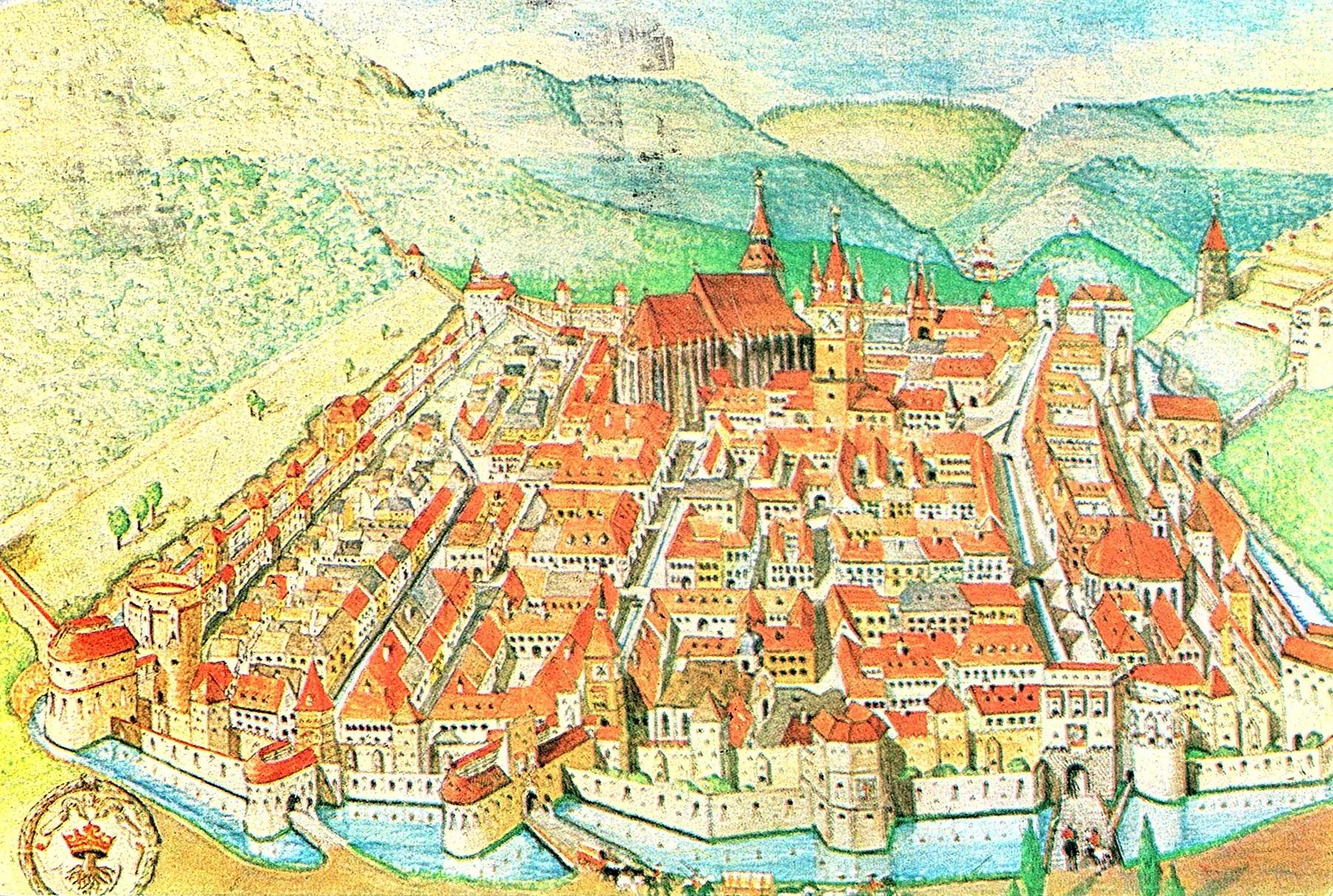
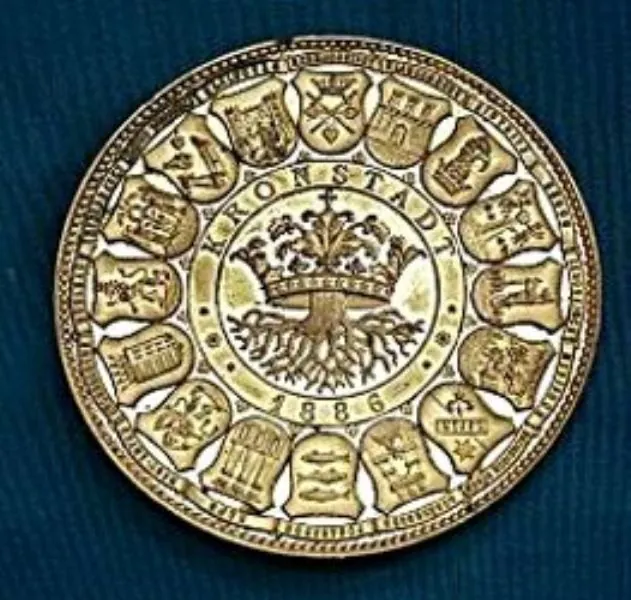
The name Corona appears in a catalogue of Premonstratensian monasteries from the 1230s, considered the first written mention of the city. Saxon settlers brought in by the kings of Hungary built a citadel of merchants and craftsmen here, with walls, bastions guarded by guilds and a large church in the middle. The city’s coat of arms shows a crown on a rooted trunk.
No photographs survive from these centuries, only what was preserved in stone, in books and in reconstructions.
Walls guarded by guilds
The city’s guilds (weavers, blacksmiths, furriers, ropemakers and others) were each responsible for a bastion or a tower. Outside the walls lay the suburbs: the Șcheii, inhabited by Romanians, to the south-west, and Brașovechi to the north.
Schuller’s reconstruction shows the city around 1500, before the fire.
The old city in miniature
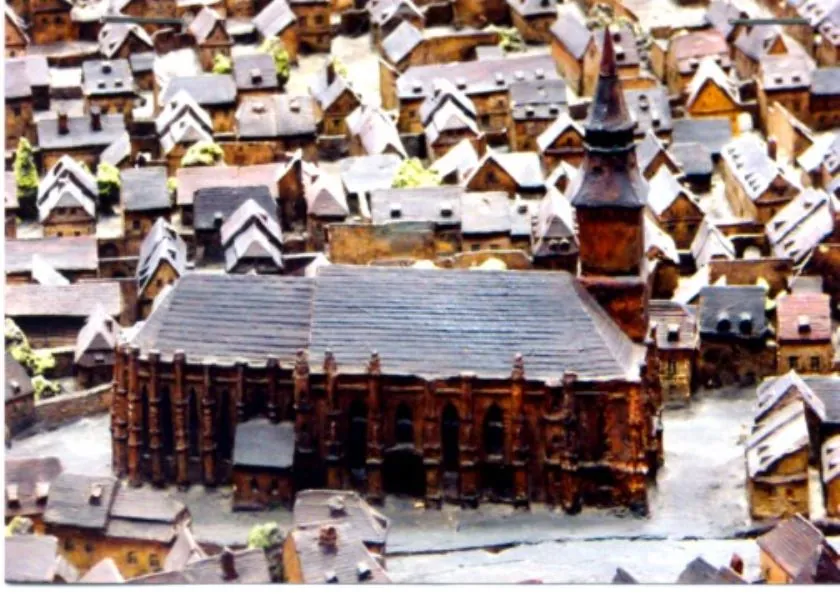
For the Hungarian Millennium exhibition, the drawing teacher Friedrich Hermann rebuilt the citadel in coloured plaster, with its walls, bastions, towers and defensive moats. The model is kept at the Brașov County History Museum.
Kronstadt, printed in colour#
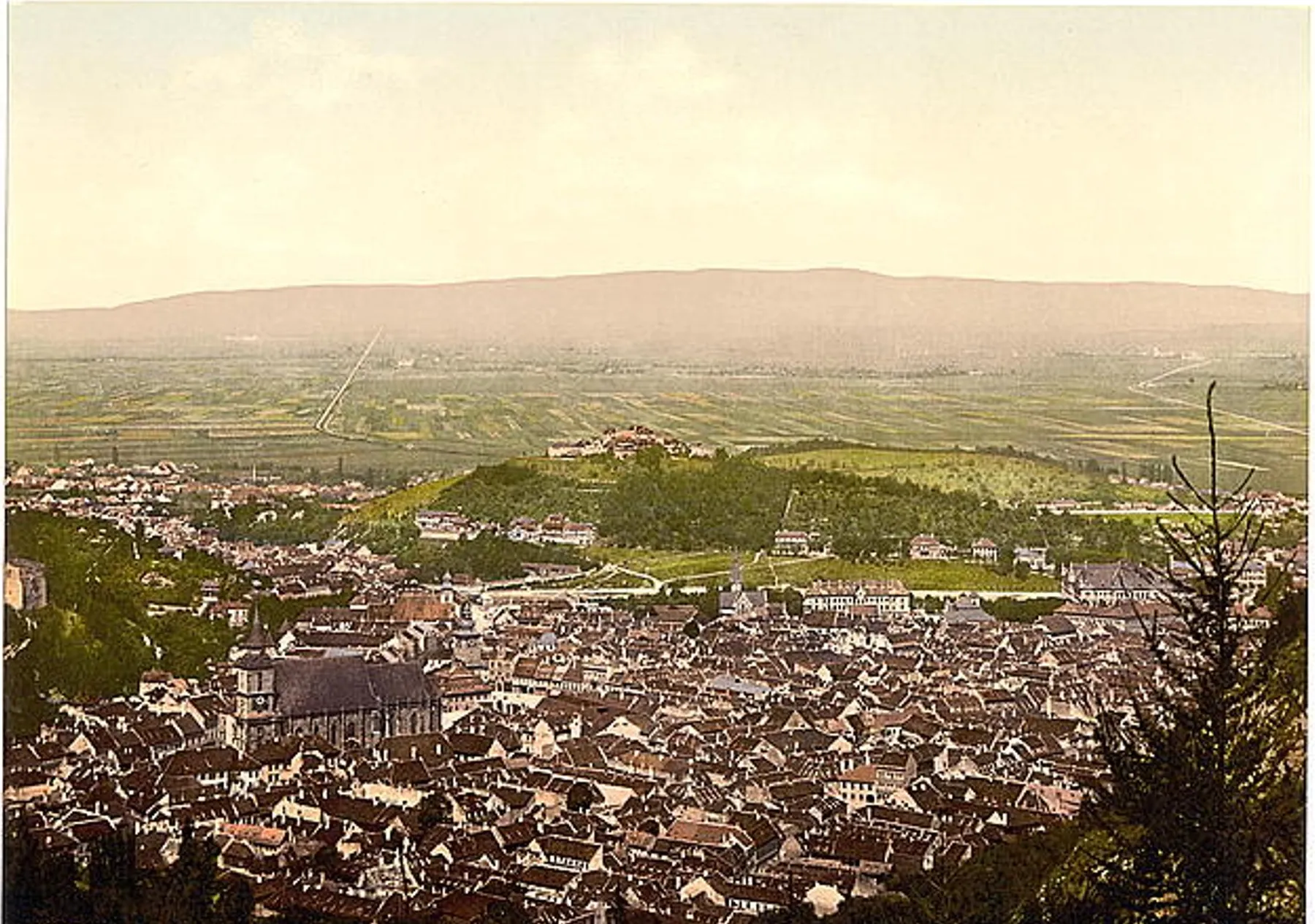
Photochrom is a colour printing process that appeared in Switzerland in the 1880s: a black-and-white negative transferred to several lithographic stones, one for each colour. Views of Austria-Hungary, including Brașov, called Brassó in Hungarian documents and Kronstadt by the Saxons, entered the 1905 catalogue of the American firm Detroit Publishing Company.
The Library of Congress holds three such images of the city, in the public domain. The record for the Council House (Casa Sfatului) gives, in square brackets, the publisher Photoglob of Zürich and the years c. 1890–1906; the records for the other two give “between ca. 1890 and ca. 1900” and do not name the publisher.
The crown on a root
The crown on a tree root has appeared on the city’s seals since the Middle Ages and is still on its coat of arms today. On the 1886 medal it is surrounded by the coats of arms of 16 other towns.
A monument about 20 metres high on the summit of Tâmpa#
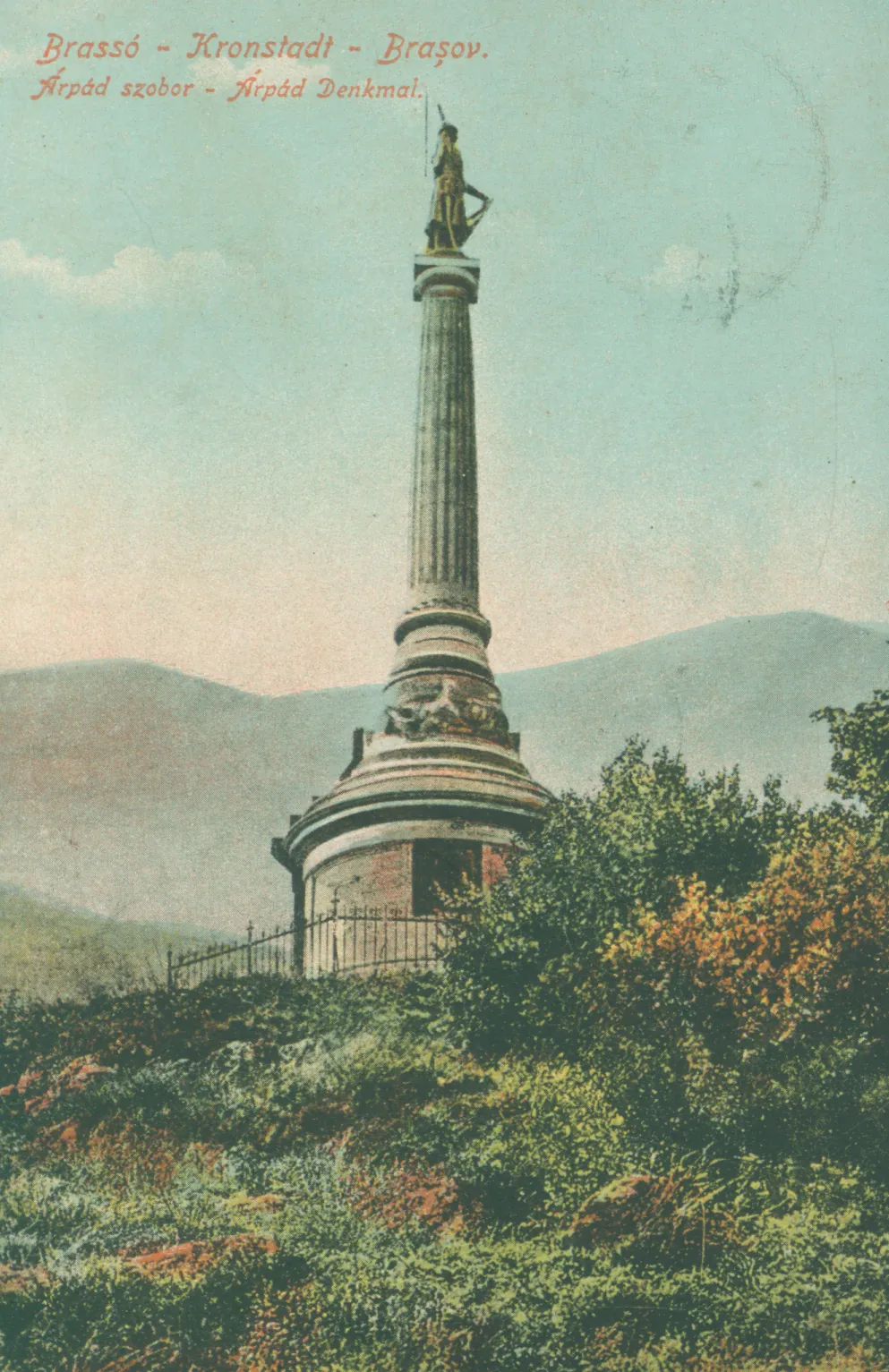
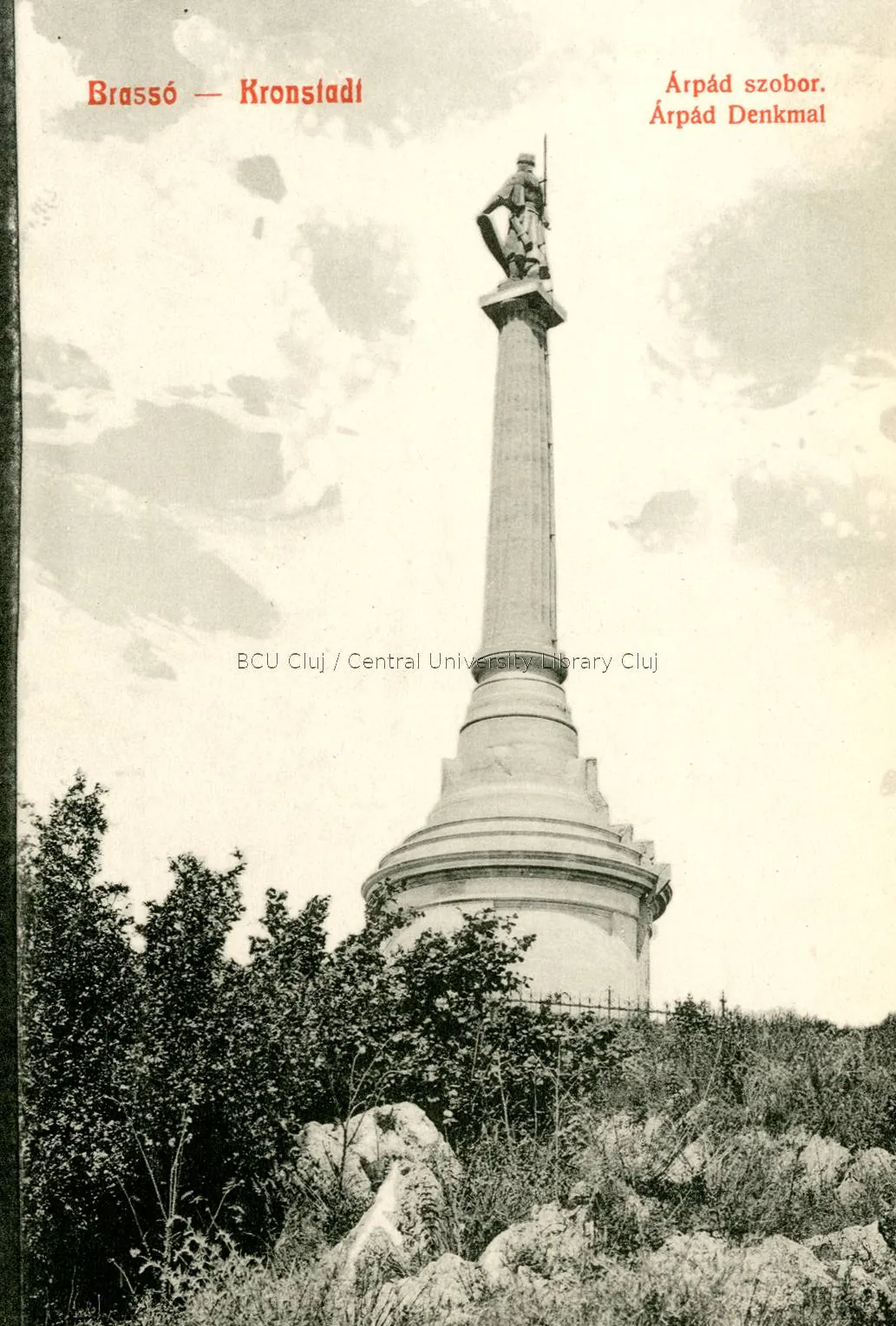
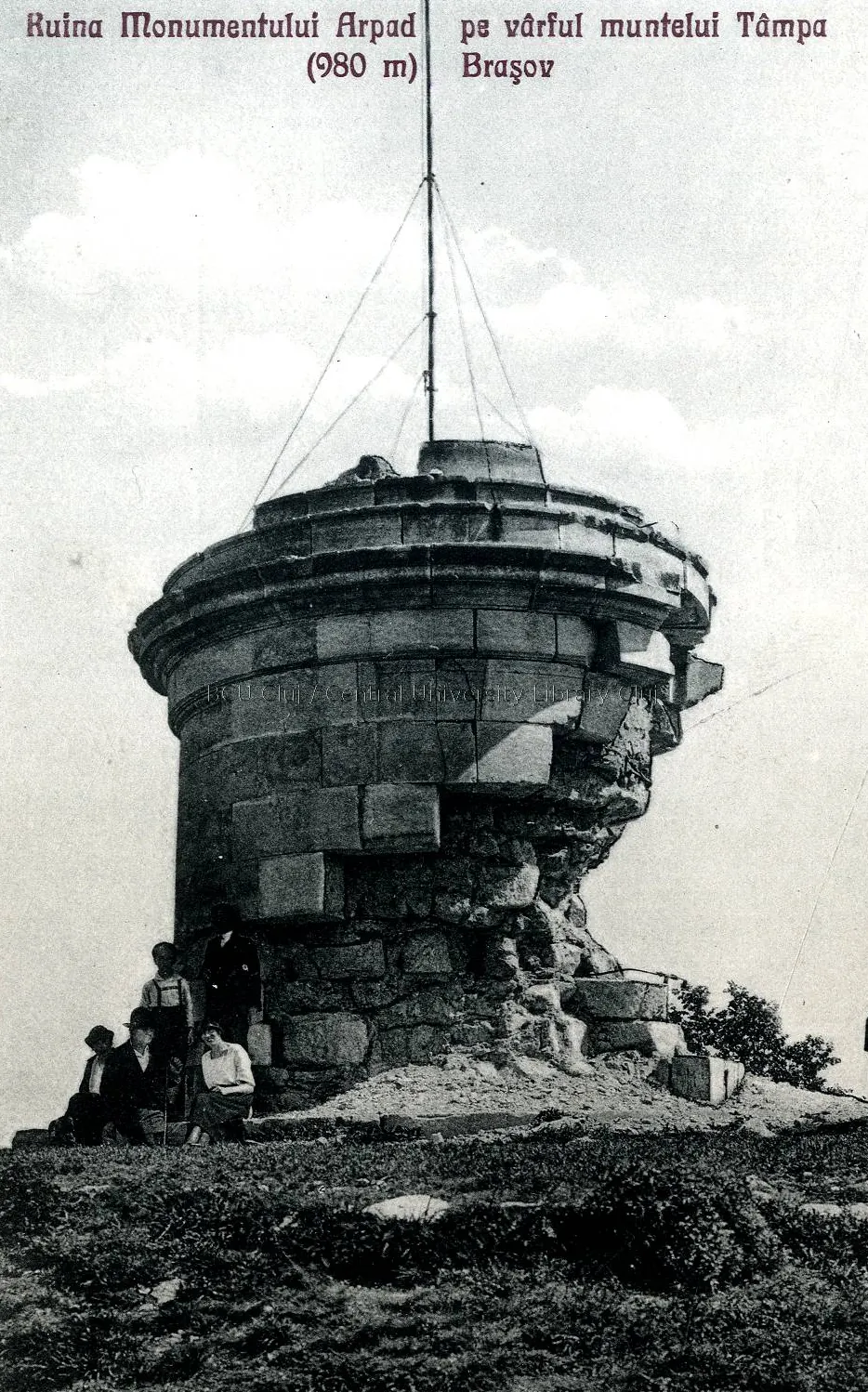
In 1896, for the celebration of the Hungarian Millennium, the Hungarian administration put up the Millennium Monument on the summit of Tâmpa. It stood about 20 metres high, with a warrior on top, and was visible from all over the city. The people of Brașov called it “Árpád’s statue”.
A dynamite attack damaged the monument in September 1913. The statue collapsed in December, in a storm; parts of the plinth were dynamited in 1916. The ruins stayed on the mountain until 1960, when they were removed, according to the Lucian Blaga Central University Library (Cluj) record and the Casa Mureșenilor Museum record. A booklet of the Brașov Metropolitan Agency says “until the years 1966”, without a note, so 1960 stands here.
Three printed names on the same postcard#
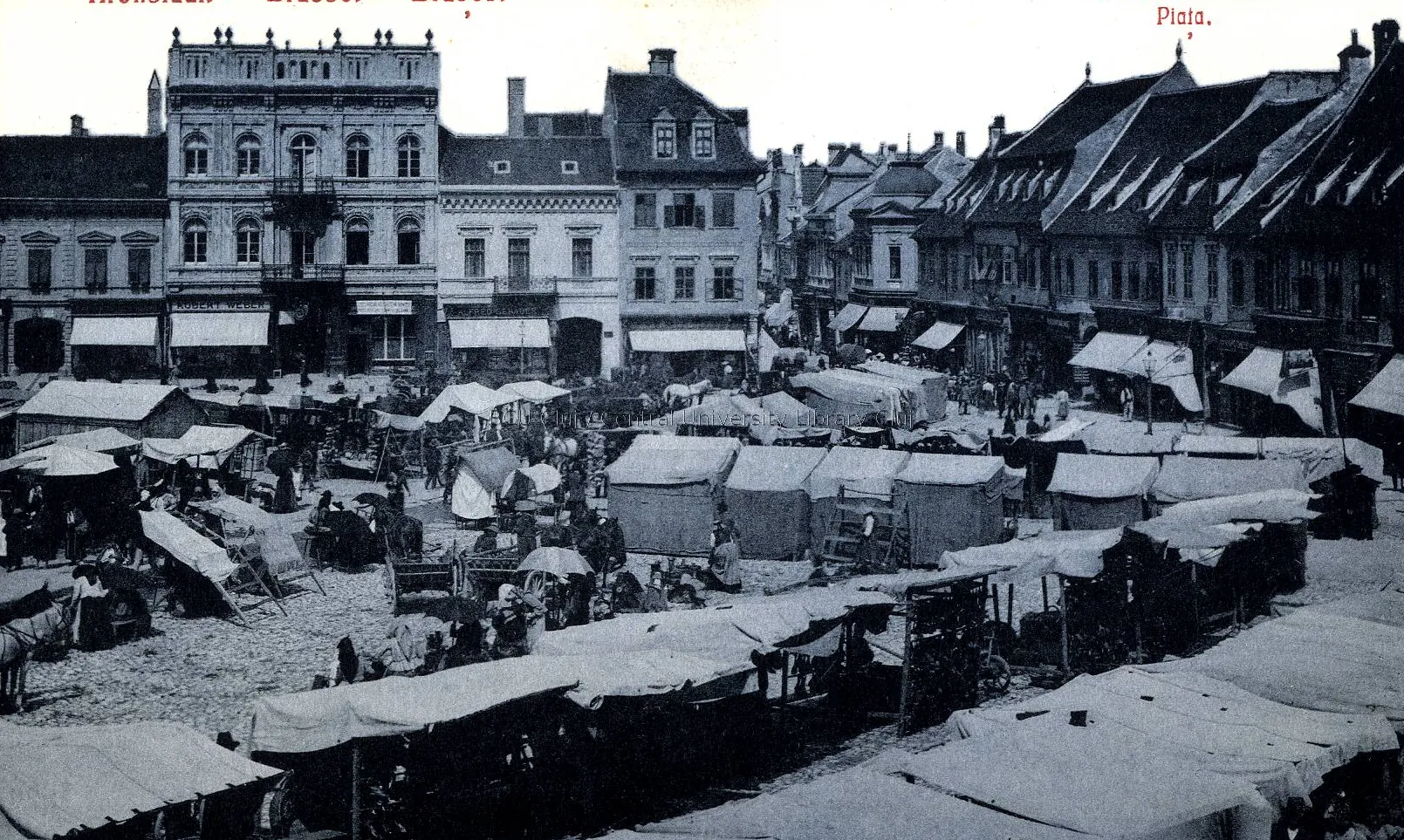
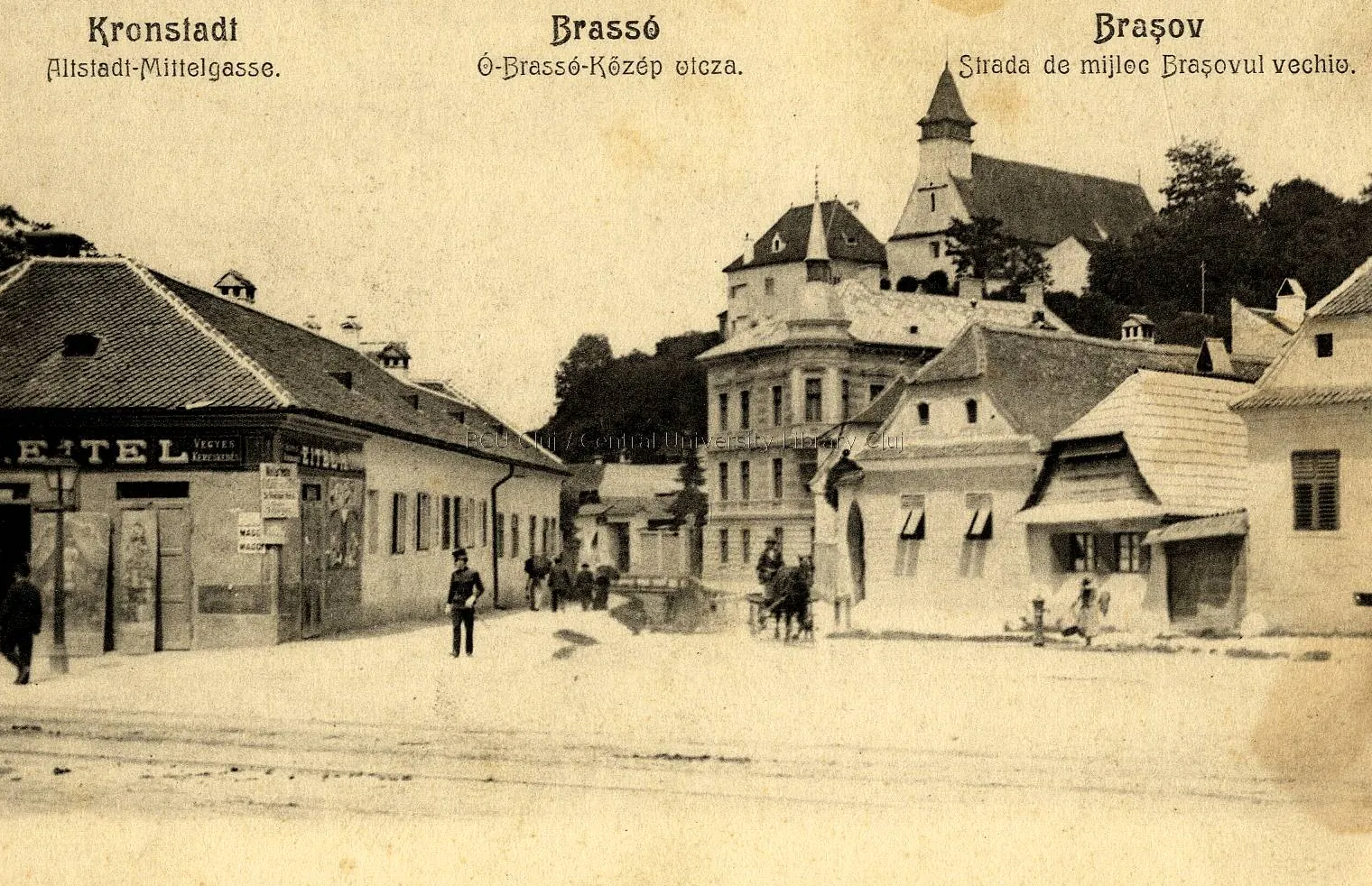
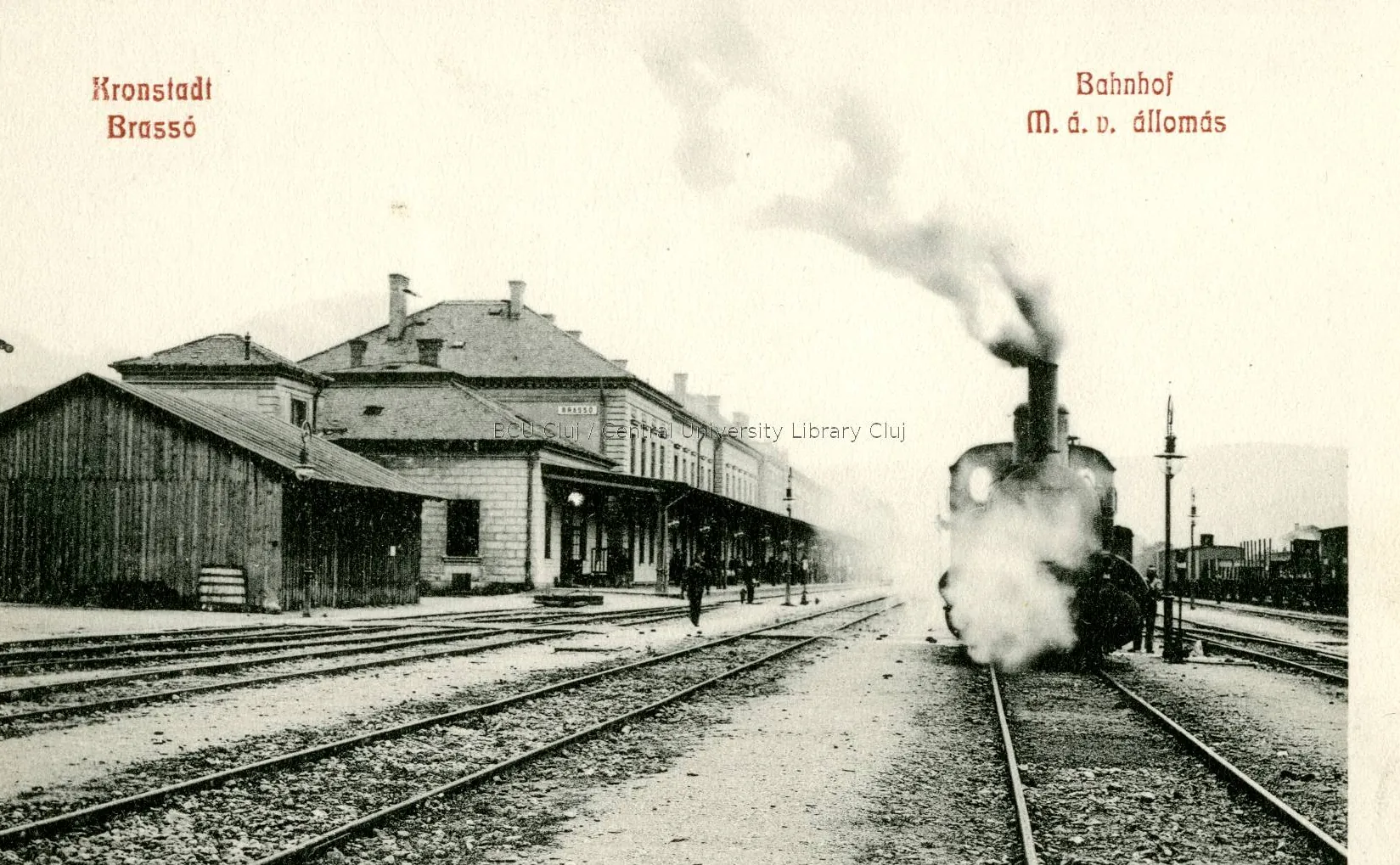
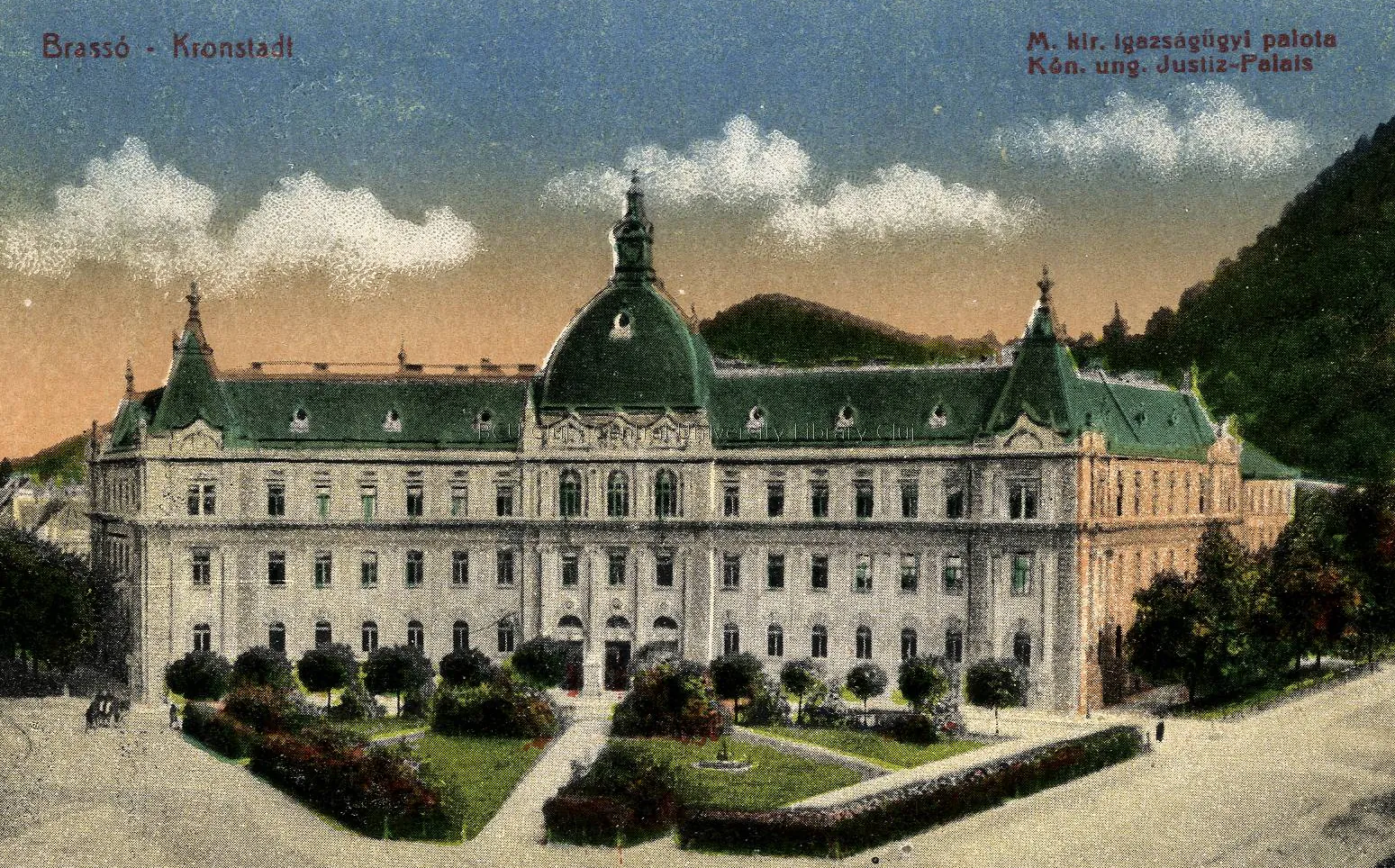
Around 1900, the city’s postcard publishers wrote the name in all their customers’ languages: Brassó for Hungarians, Kronstadt for Saxons, Brașov for Romanians. In the catalogue of the Lucian Blaga Central University Library, Cluj, all 6 cards dated before 1919 put the Hungarian name first.
The illustrated cards show a city spreading beyond its walls: a new railway station, a post office palace, a palace of justice, a park with a fountain.
A palace on the site of the moats
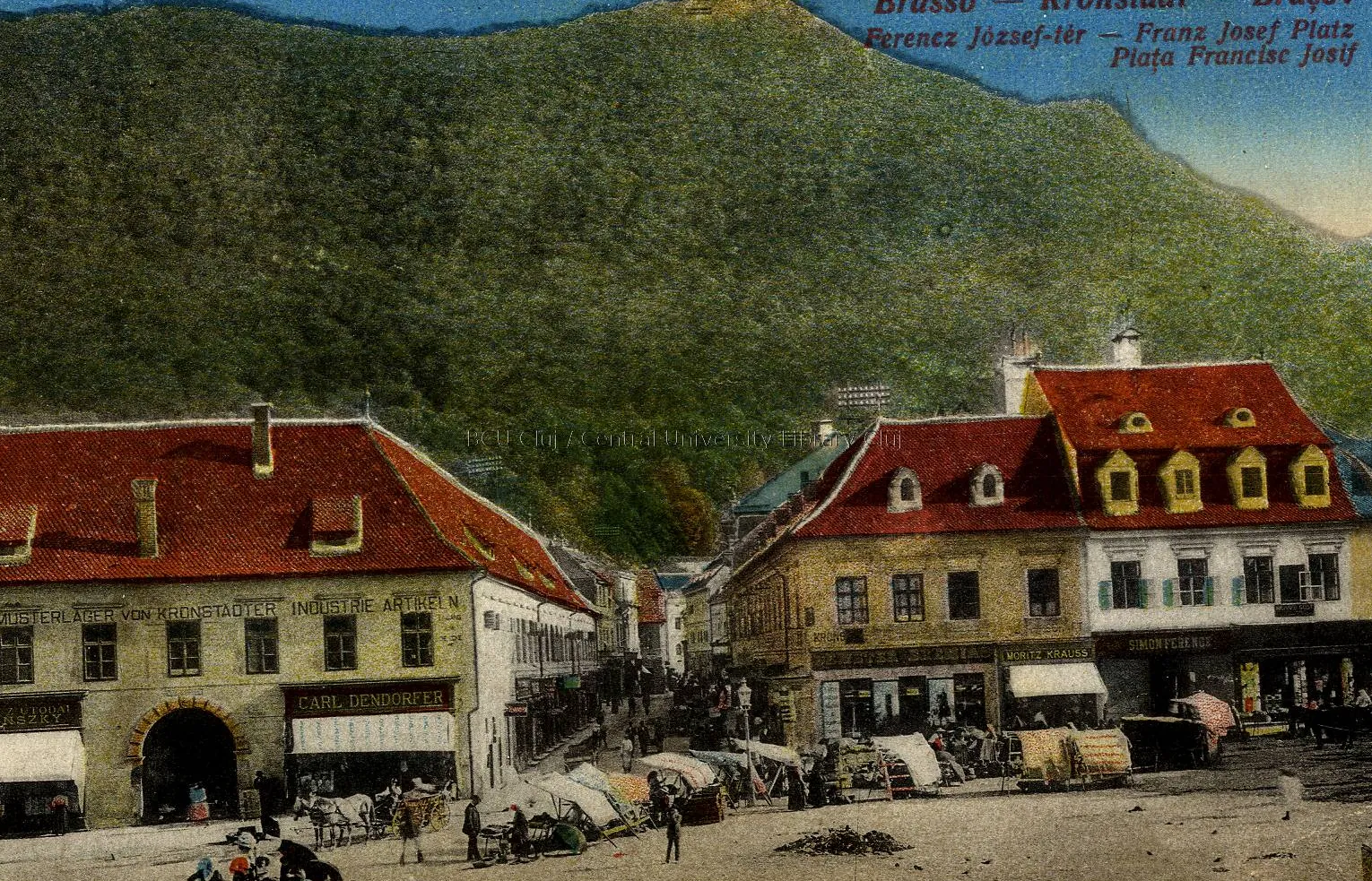
The Palace of Justice was built between 1900 and 1902. Today it houses the Prefecture and the County Council.
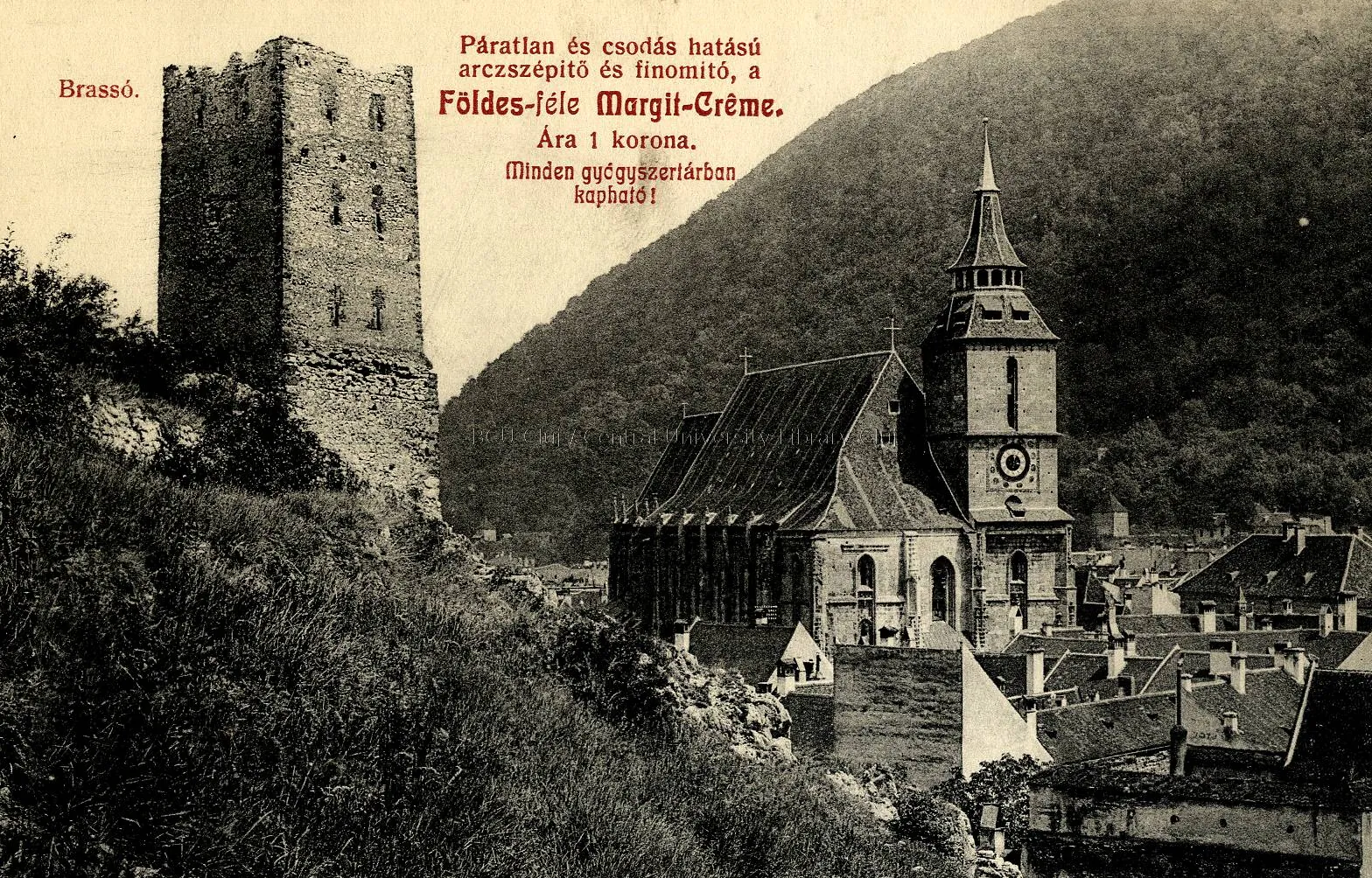
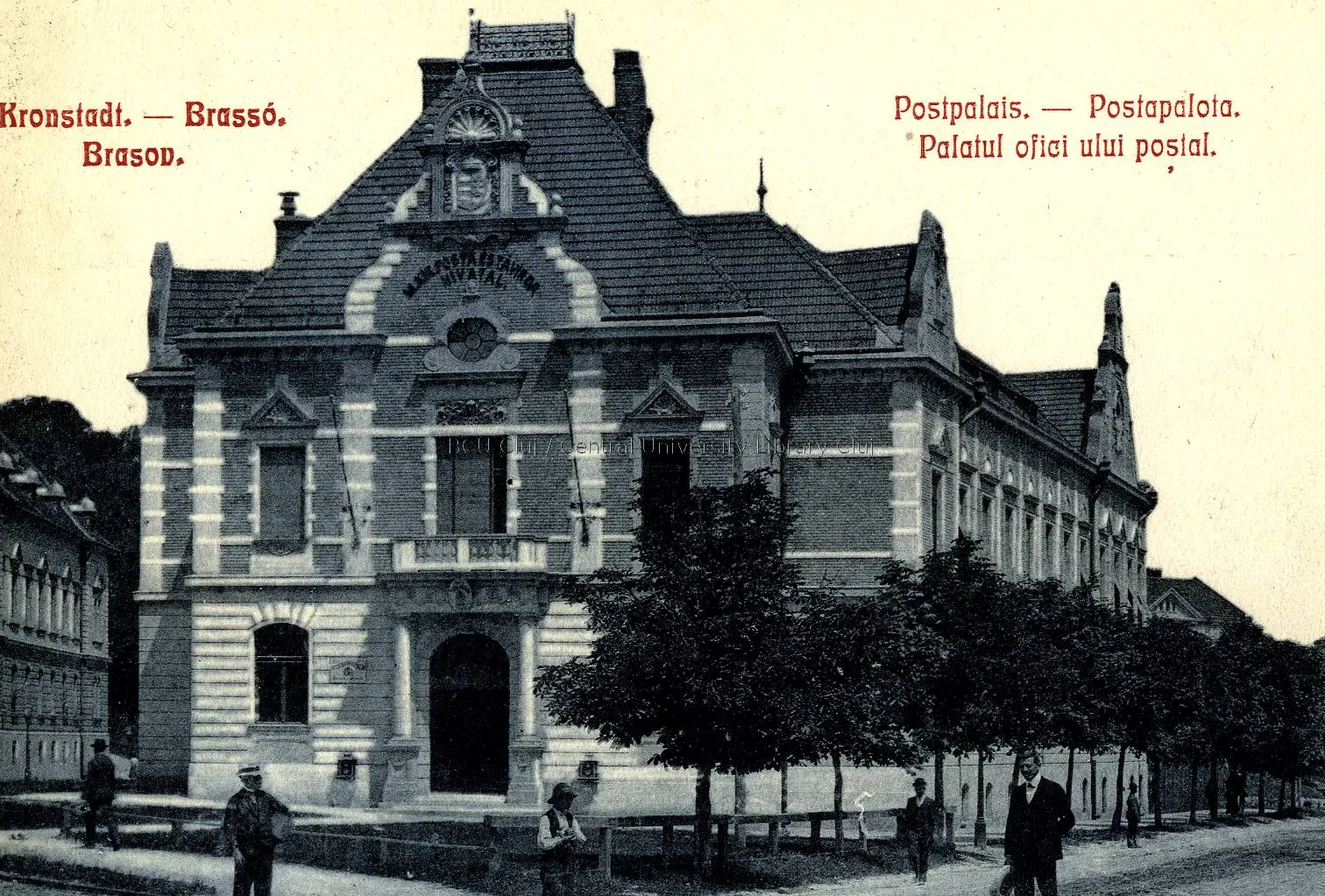
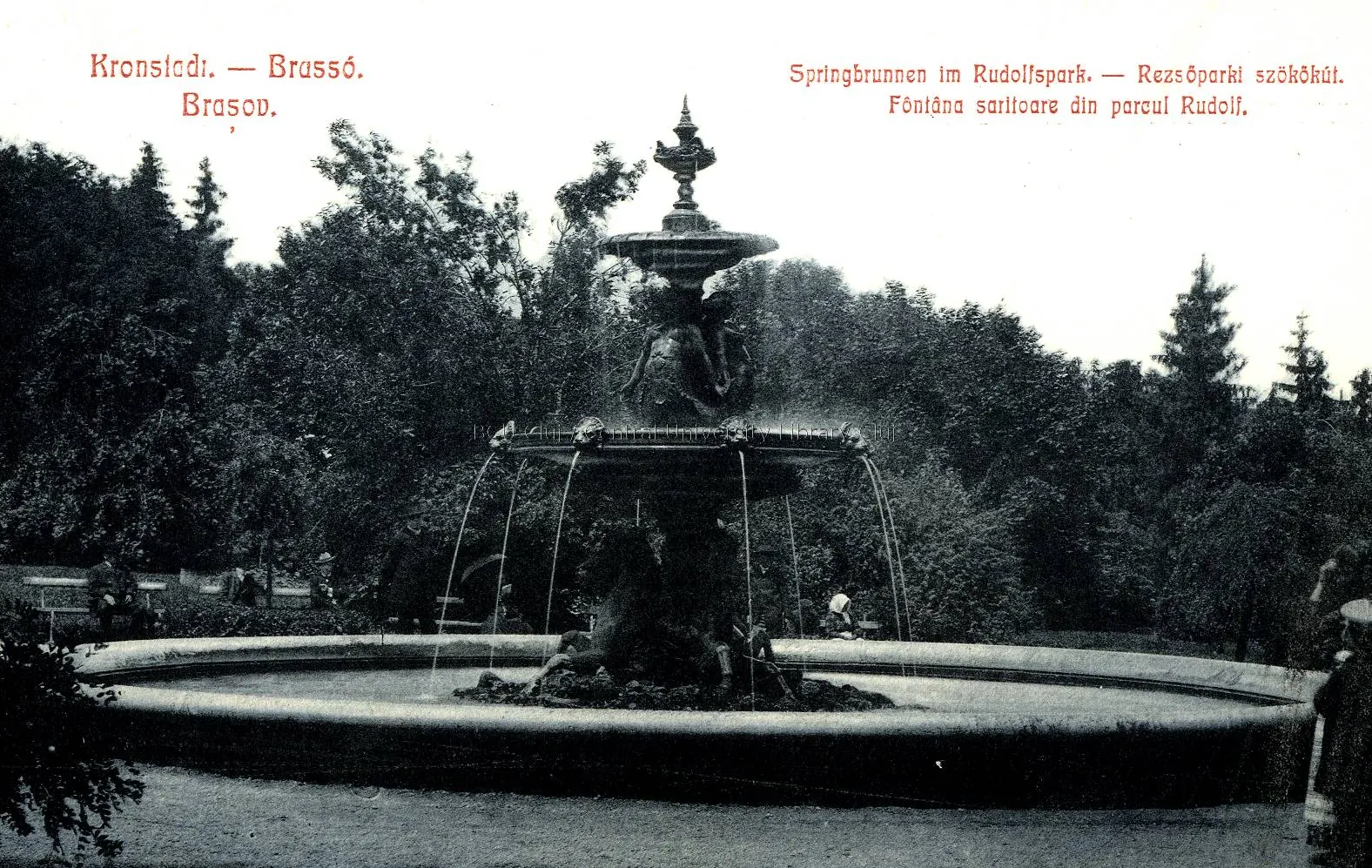
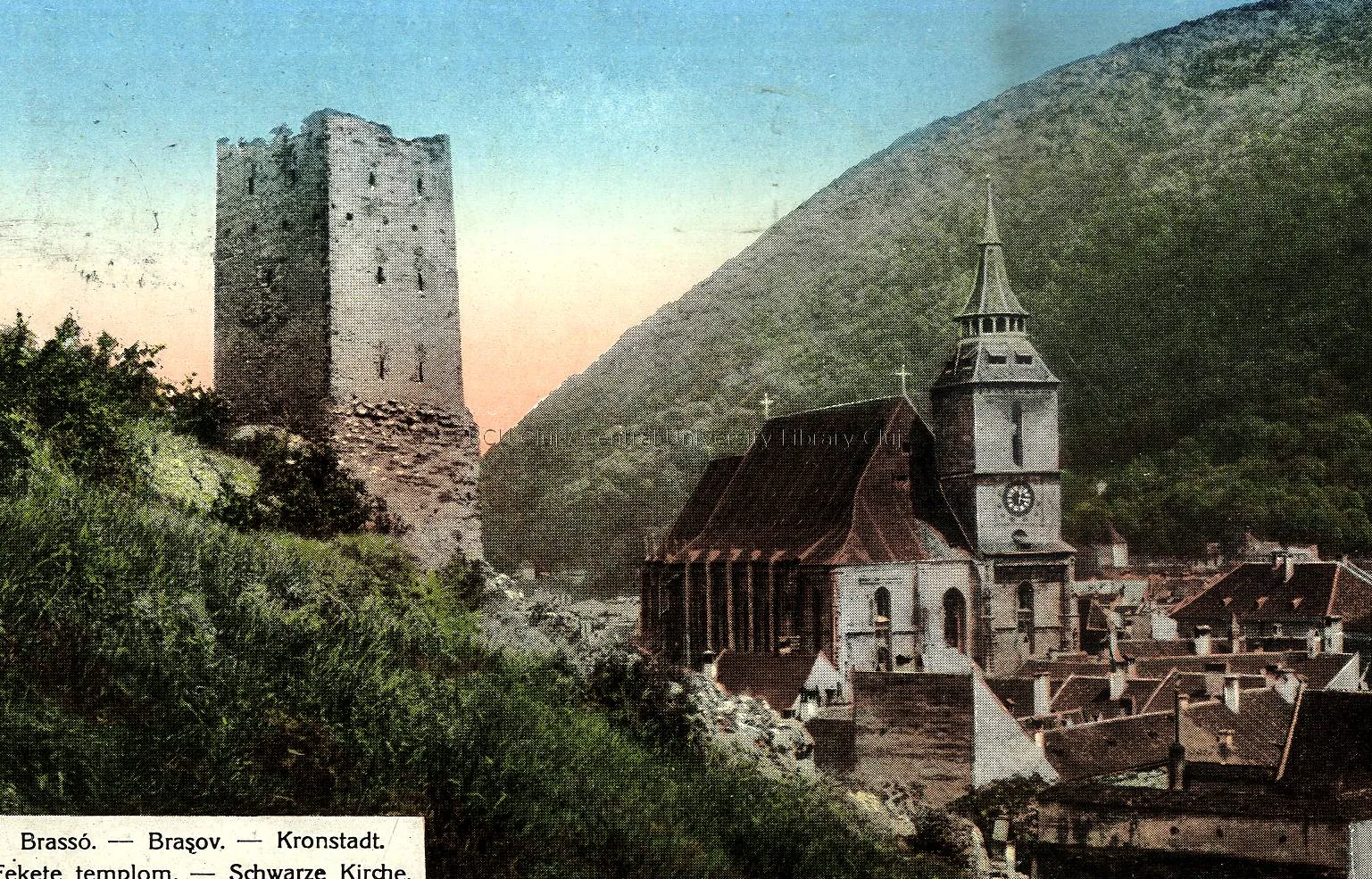
Postcards from the early twentieth century · Lucian Blaga Central University Library, Cluj, via Europeana · public domain
Interwar Brașov, between the post office and the Aro hotel#
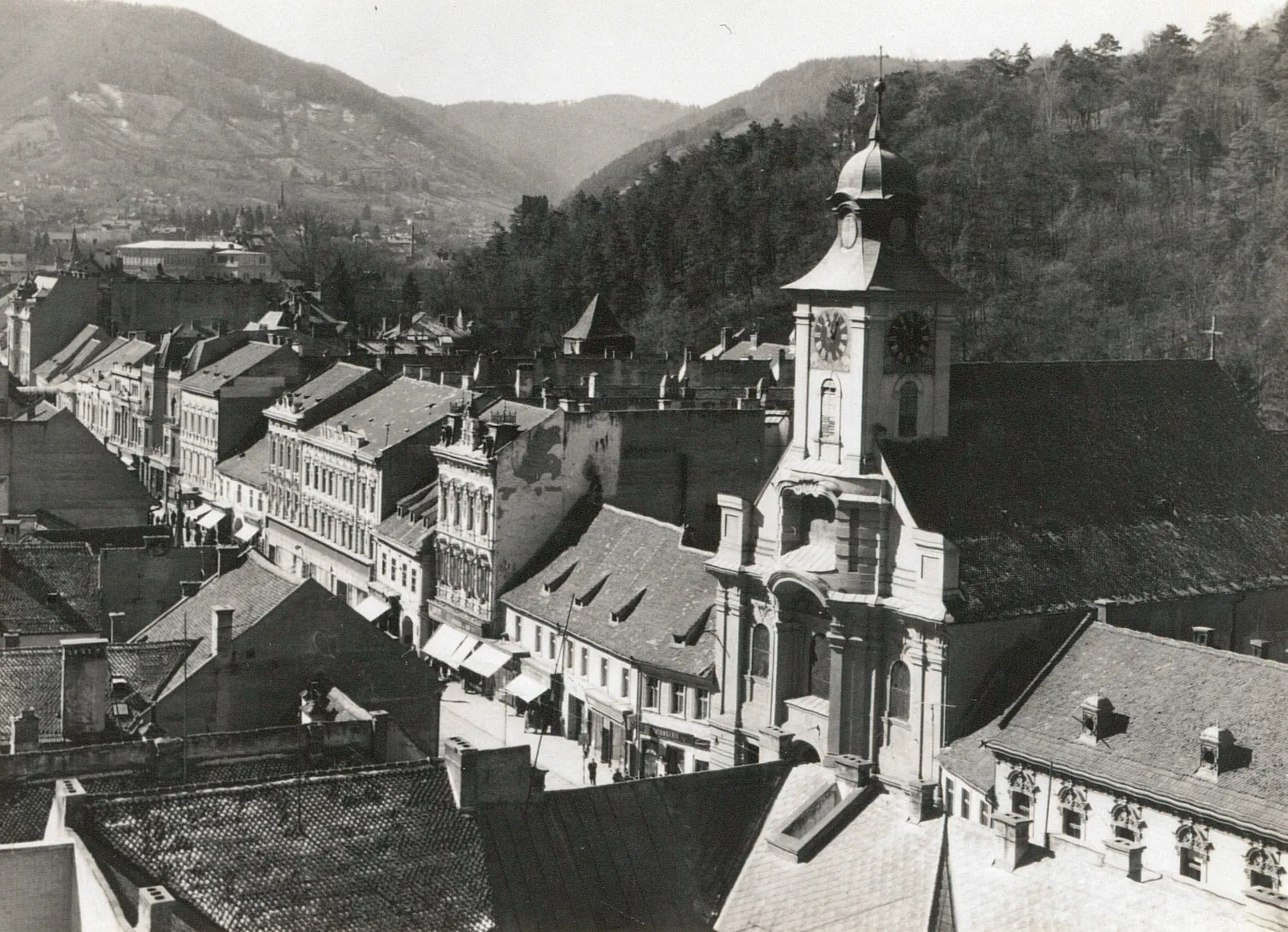
After the Union of 1918, the city became part of Romania. Of the 77 postcards dated between 1919 and 1940 in the Cluj library catalogue, 72 carry only the name Brașov; three, all Fotofilm Cluj, 1933, keep the titles in three languages, with Brașov first. The city grew industrially: in 1925 the IAR aircraft factory was founded here.
Architecture changed too. The Army House (Casa Armatei) went up between 1929 and 1932, and in 1939, just before the war, the Aro hotel opened, designed by Horia Creangă, nephew of the writer Ion Creangă.
An insurance company’s money
The name Aro comes from Asigurarea Românească (“Romanian Insurance”), a company founded in 1923, which financed the building. Horia Creangă was one of the promoters of modern architecture in Romania.
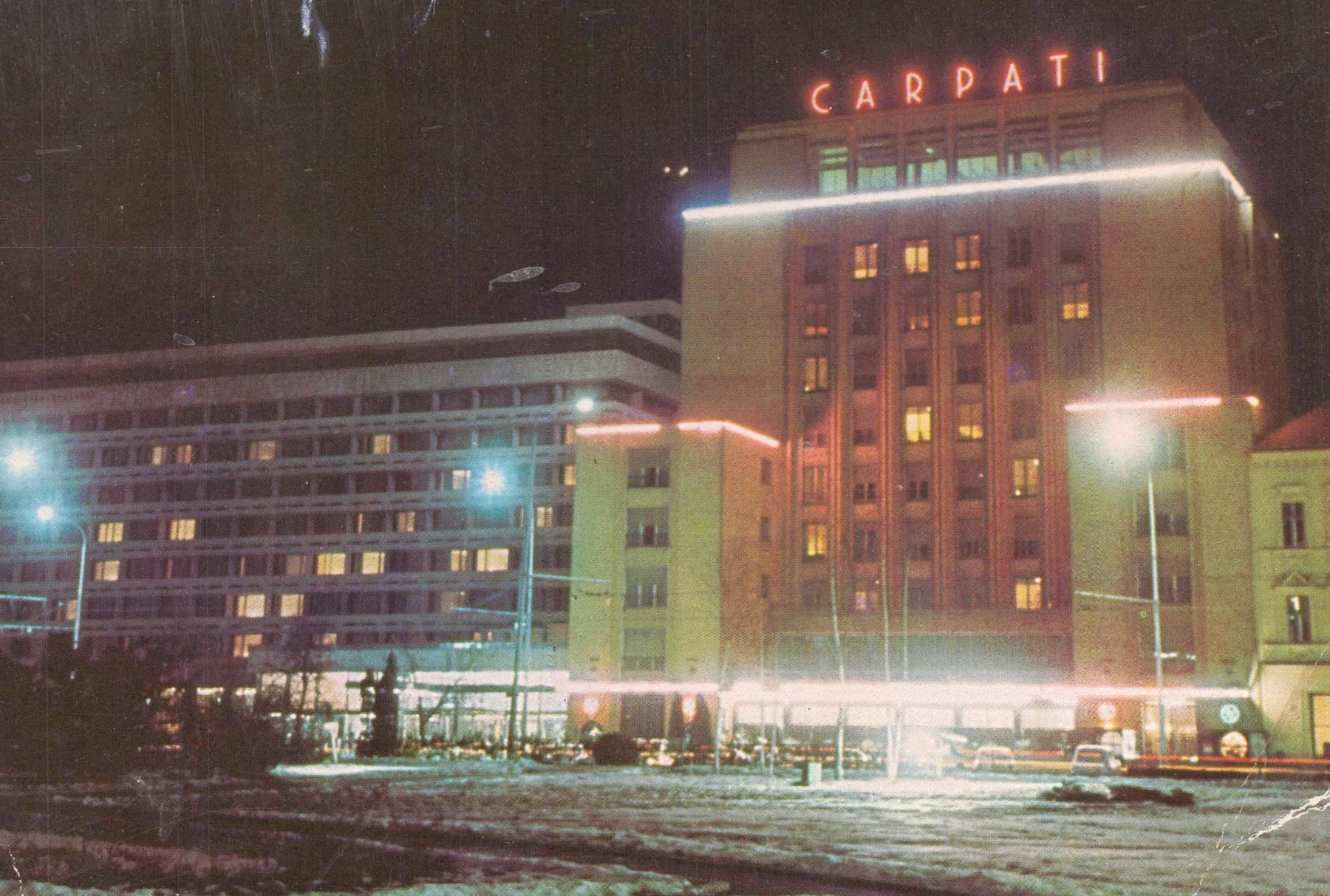
After 1950 the hotel was renamed Carpați; today it again bears the name Aro Palace.
Ten years in which Brașov was called Orașul Stalin (Stalin City)#
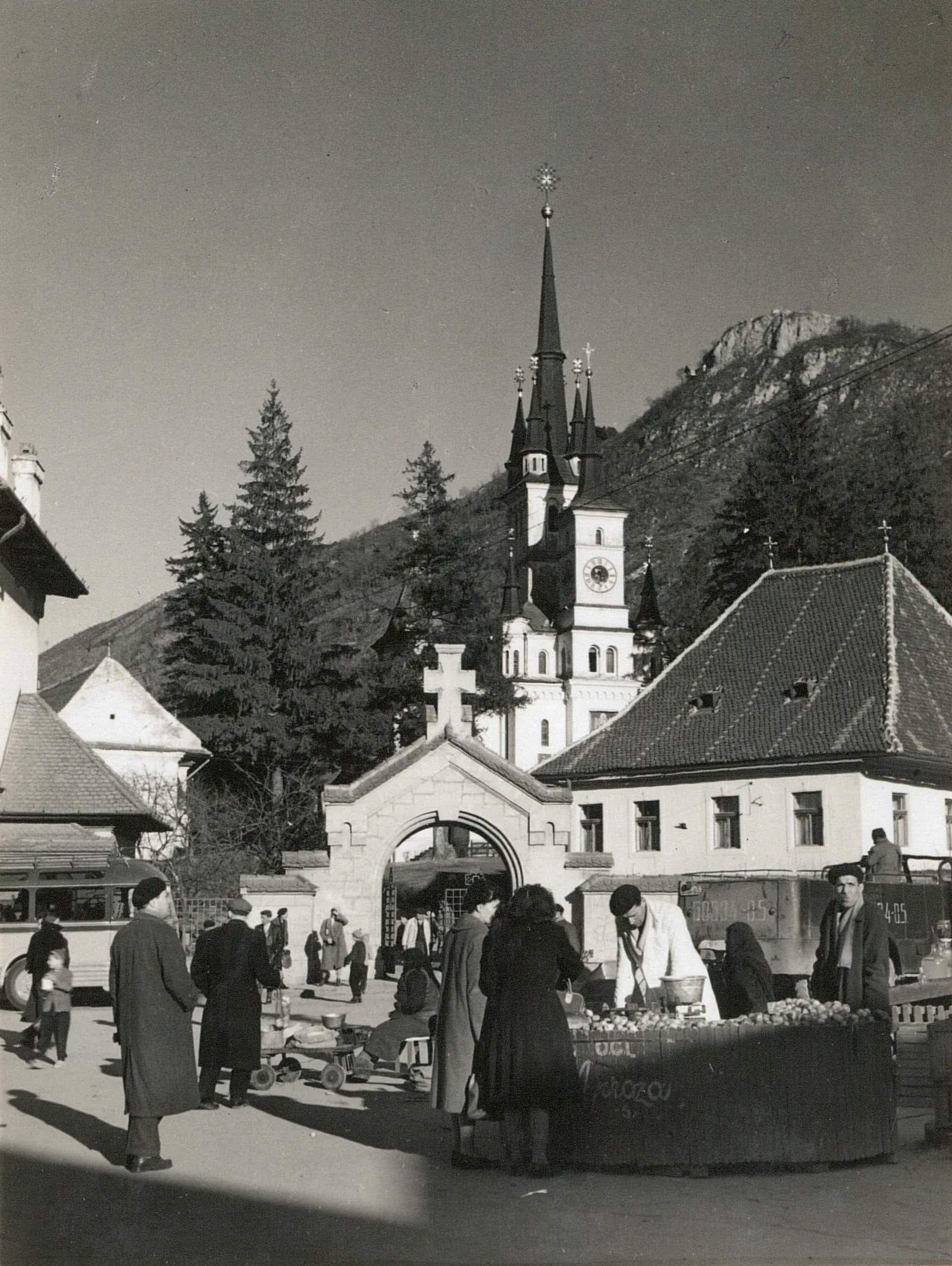
Between 22 August 1950 and 24 December 1960, Brașov was officially called Orașul Stalin. The regime chose it as a showcase of industrialisation: the IAR aircraft factory had become the Tractorul plant in 1948, and the Steagul Roșu works made lorries. New districts of blocks of flats were built for workers brought in from all over the country.
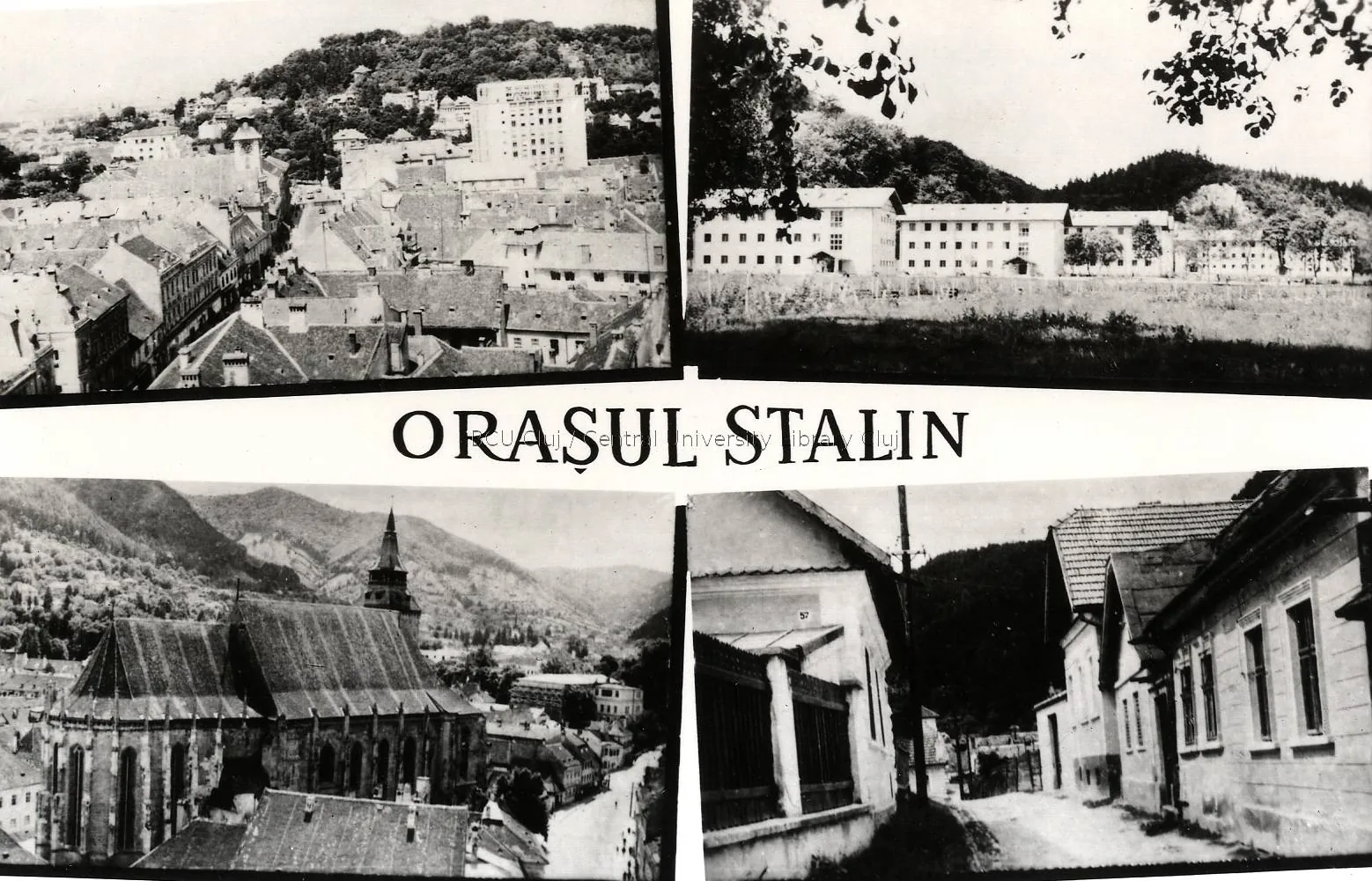
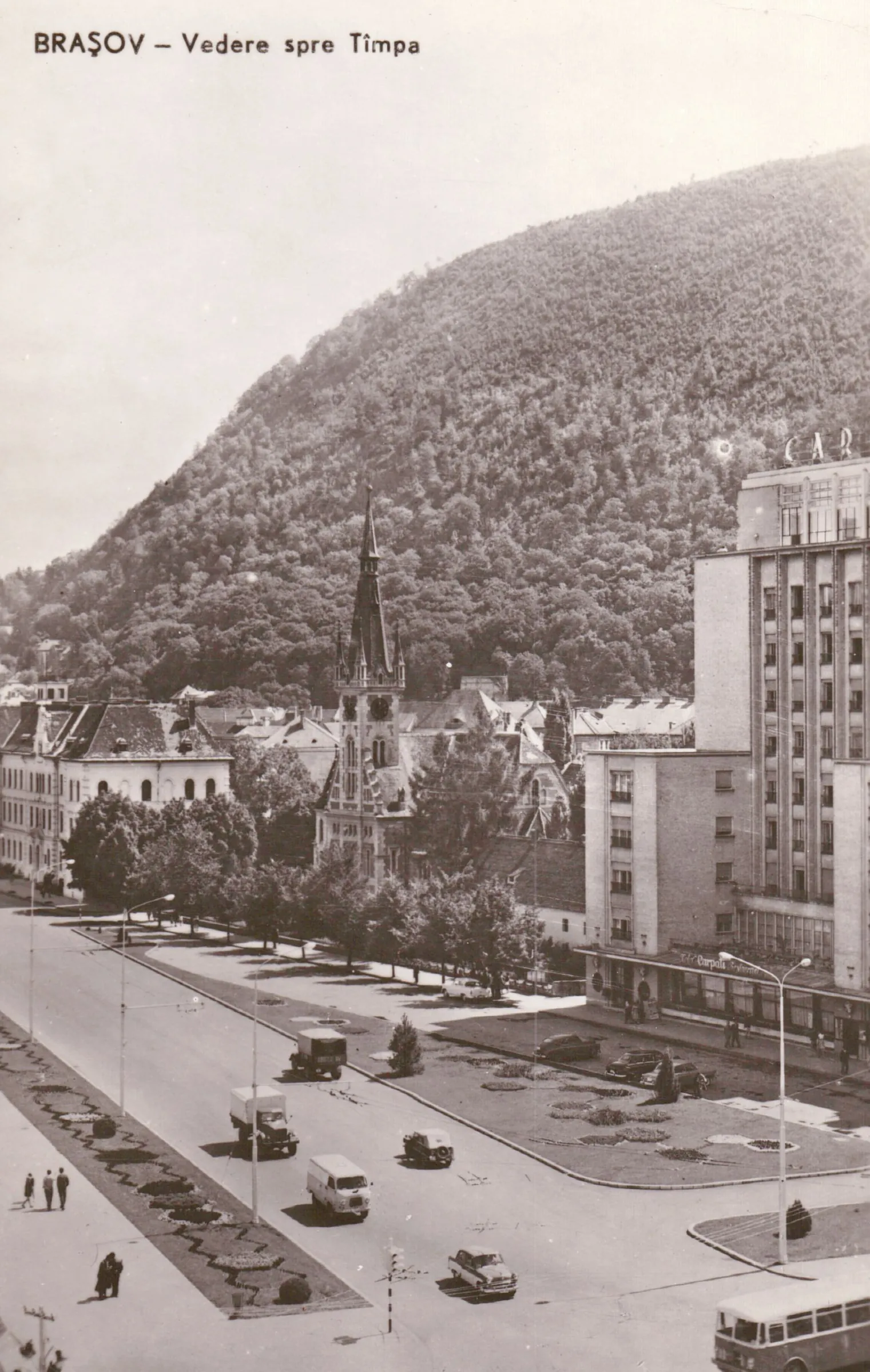
The selection below shows factories, blocks of flats and the cable car, but also the old centre. The name Orașul Stalin is printed on the postcards themselves: 92 records in the Cluj library catalogue carry it in the title.
The name stayed on the map after Stalin’s death
Stalin died in March 1953. The name given to the city in his honour lasted until December 1960, when Brașov got its name back. The decree of 22 August 1950 changed the name “with effect from the date of publication”. In the same years, Poiana Brașov was called Poiana Stalin.
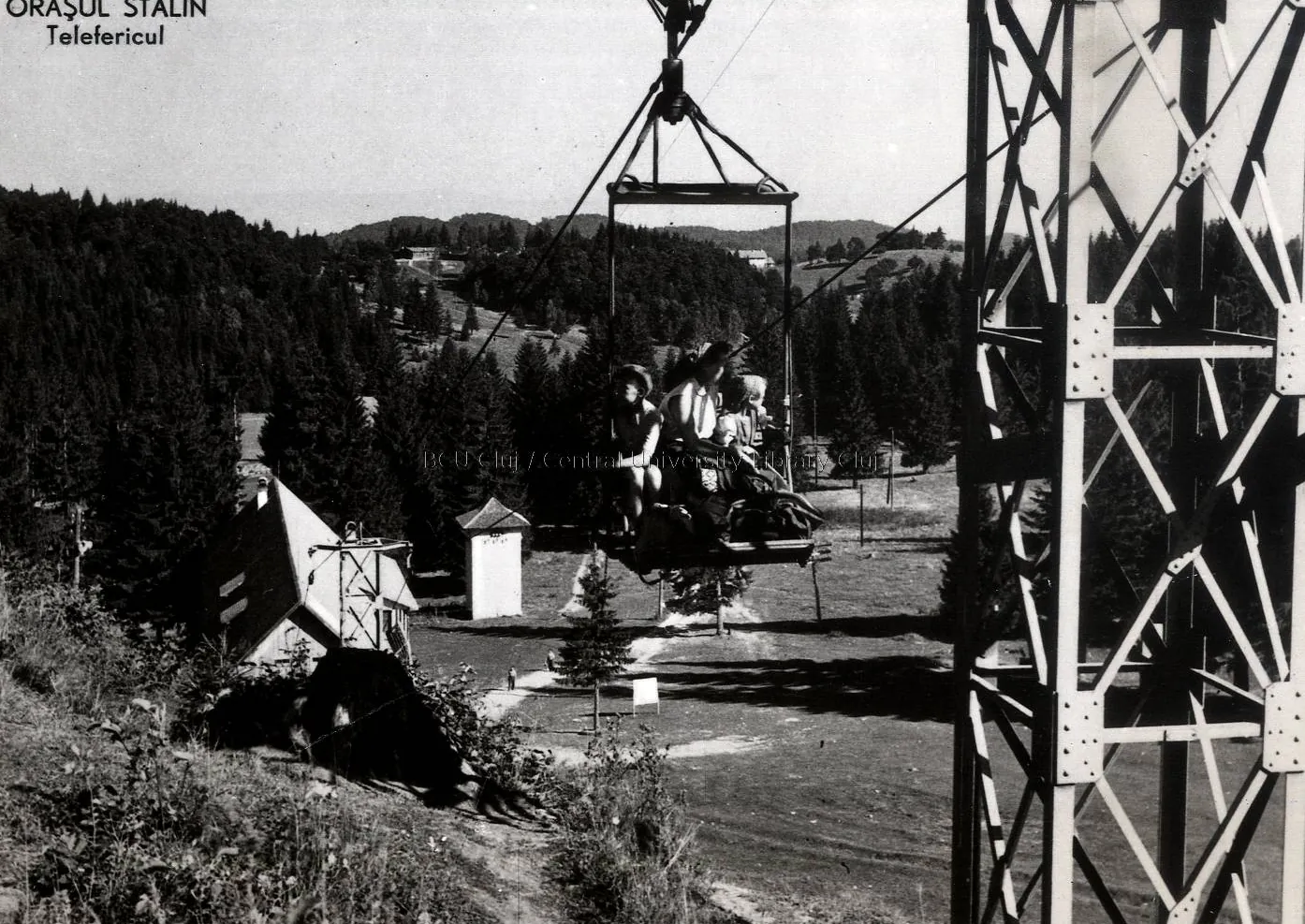
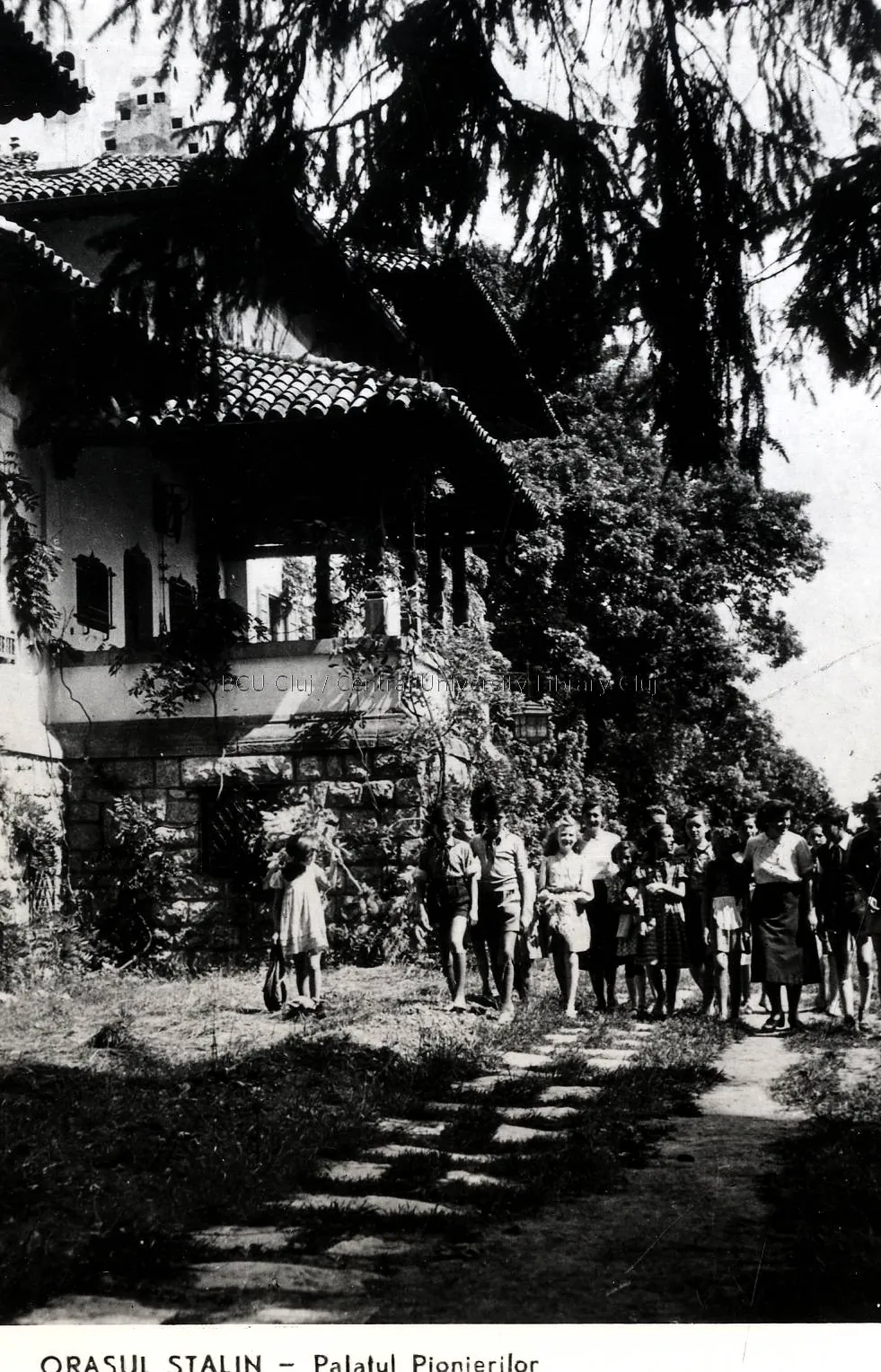
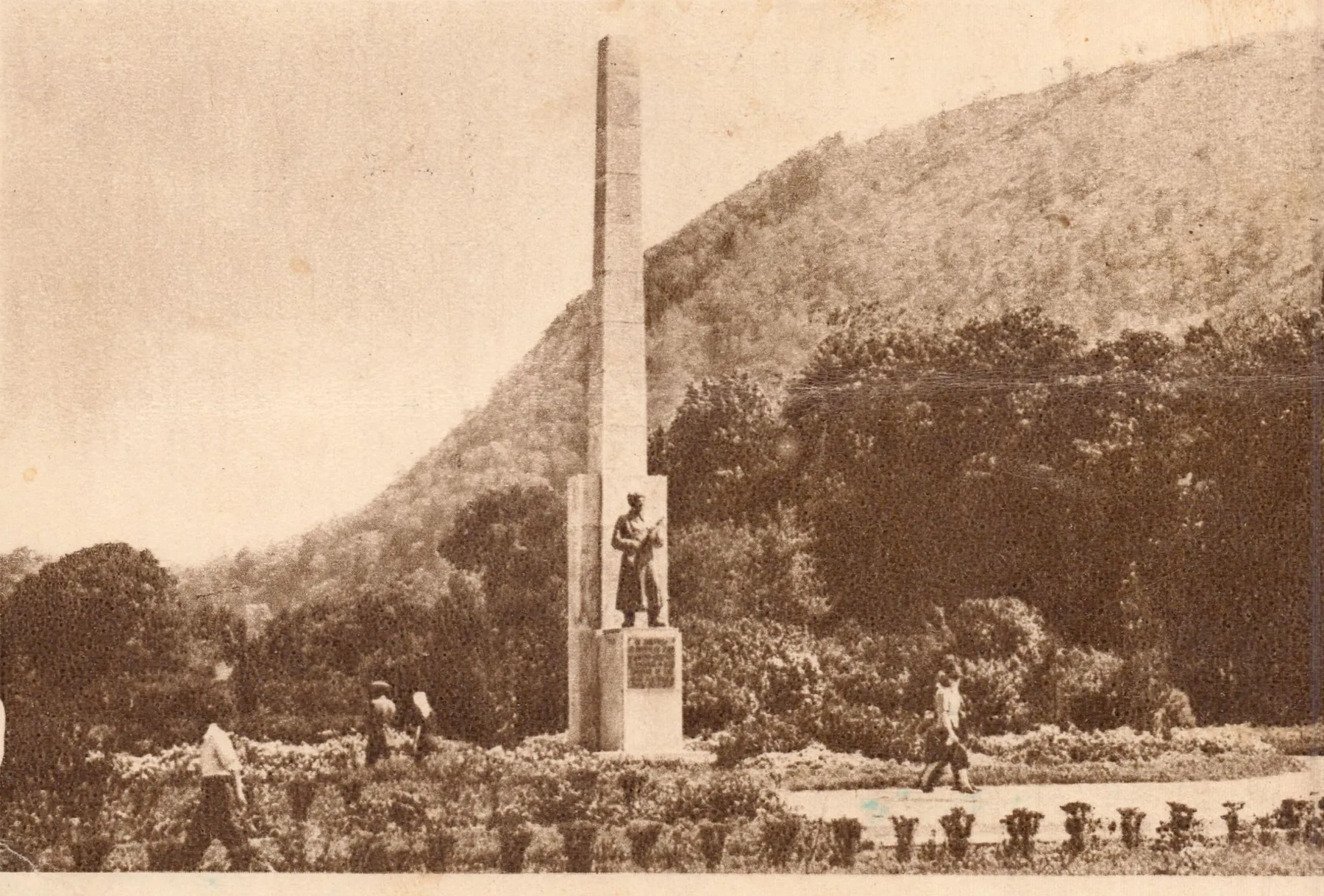
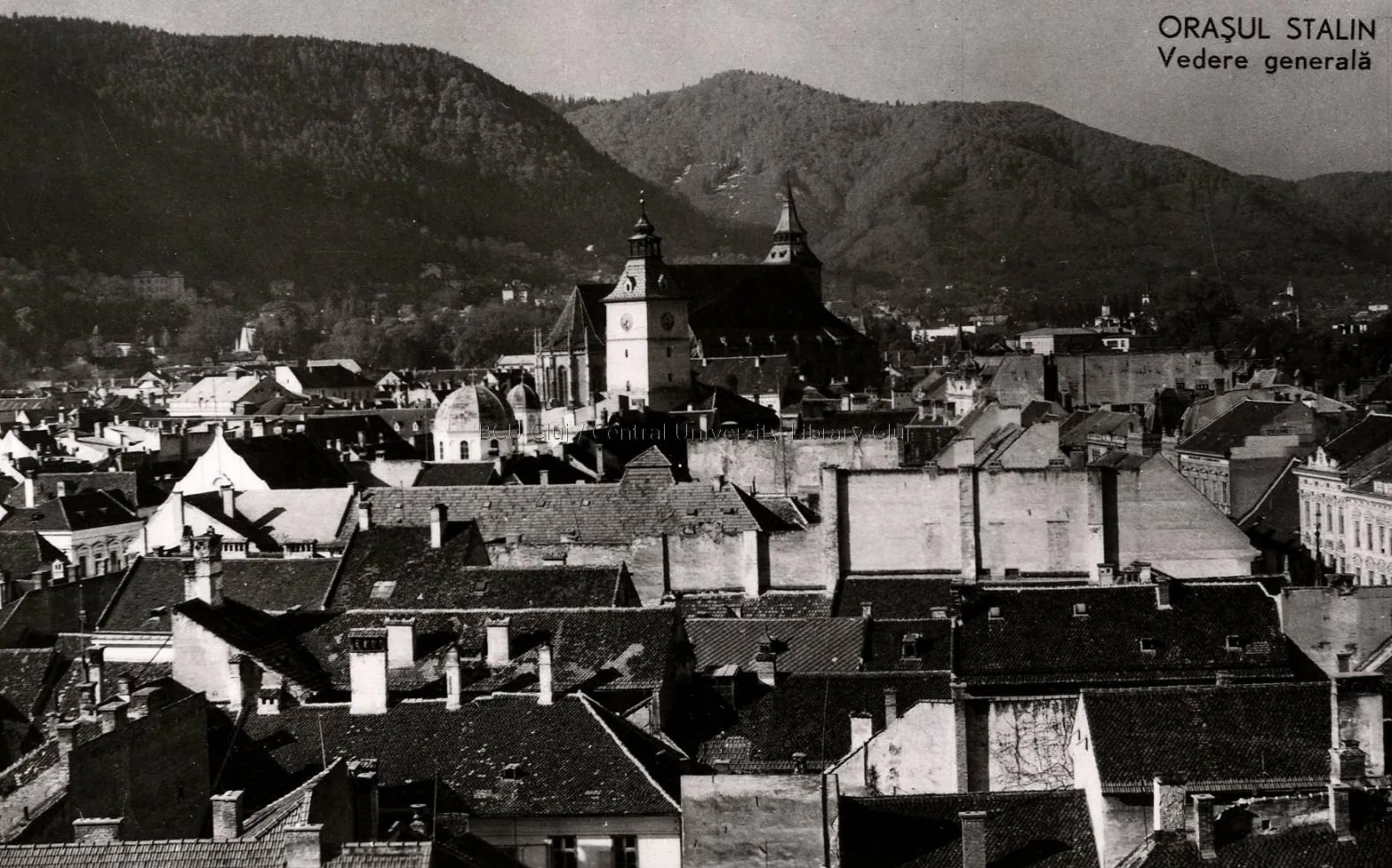
The city of factories becomes a holiday city too#
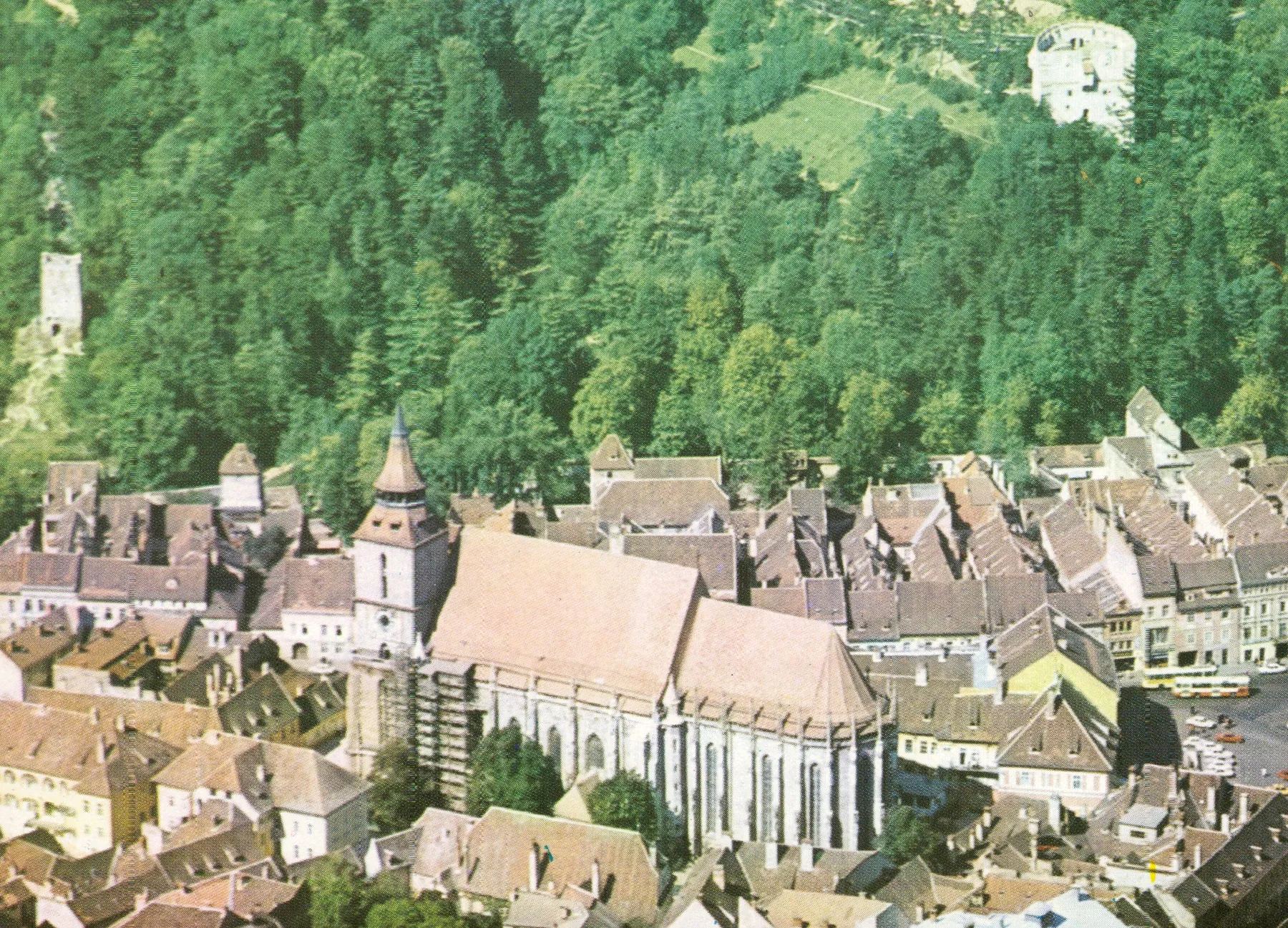
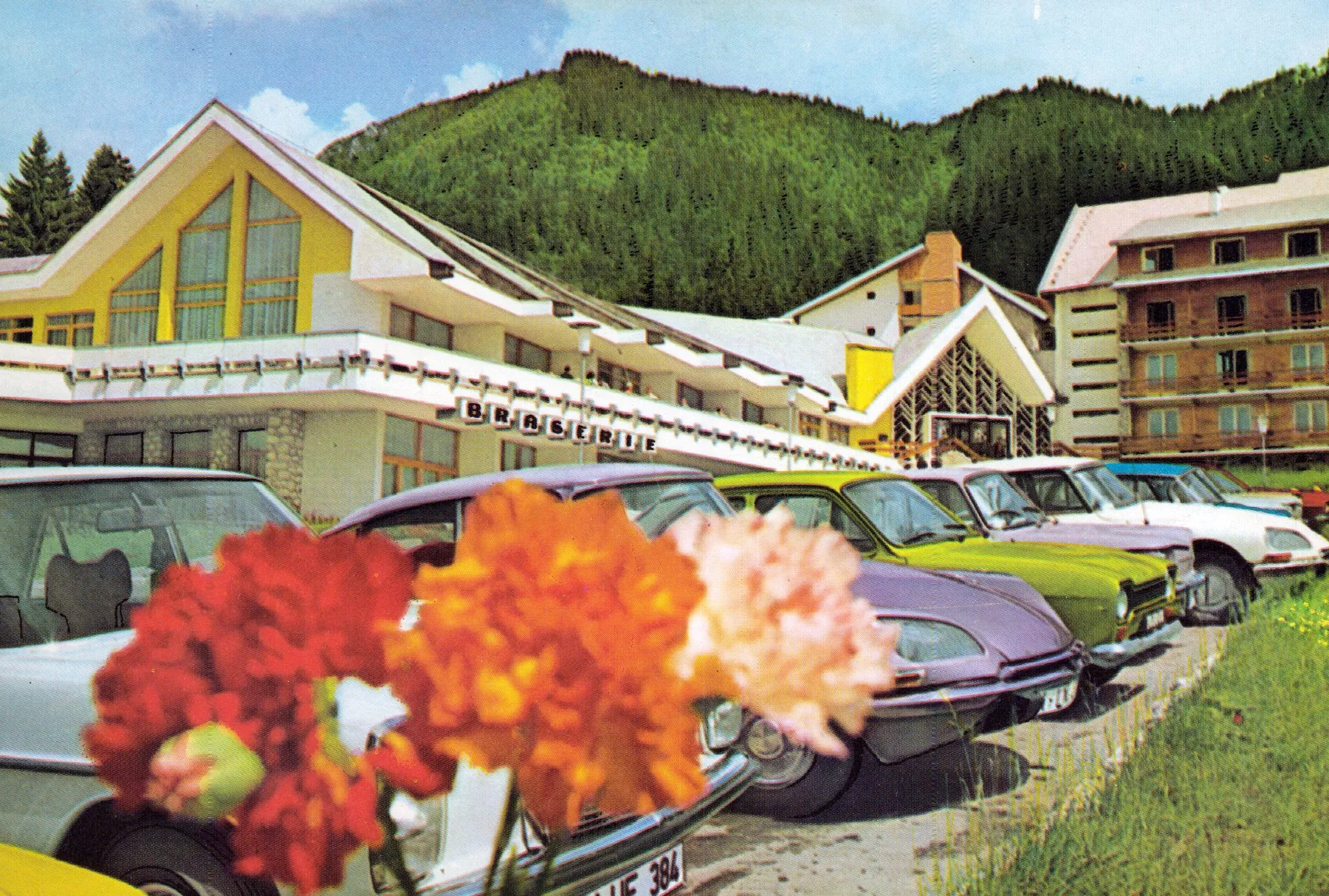
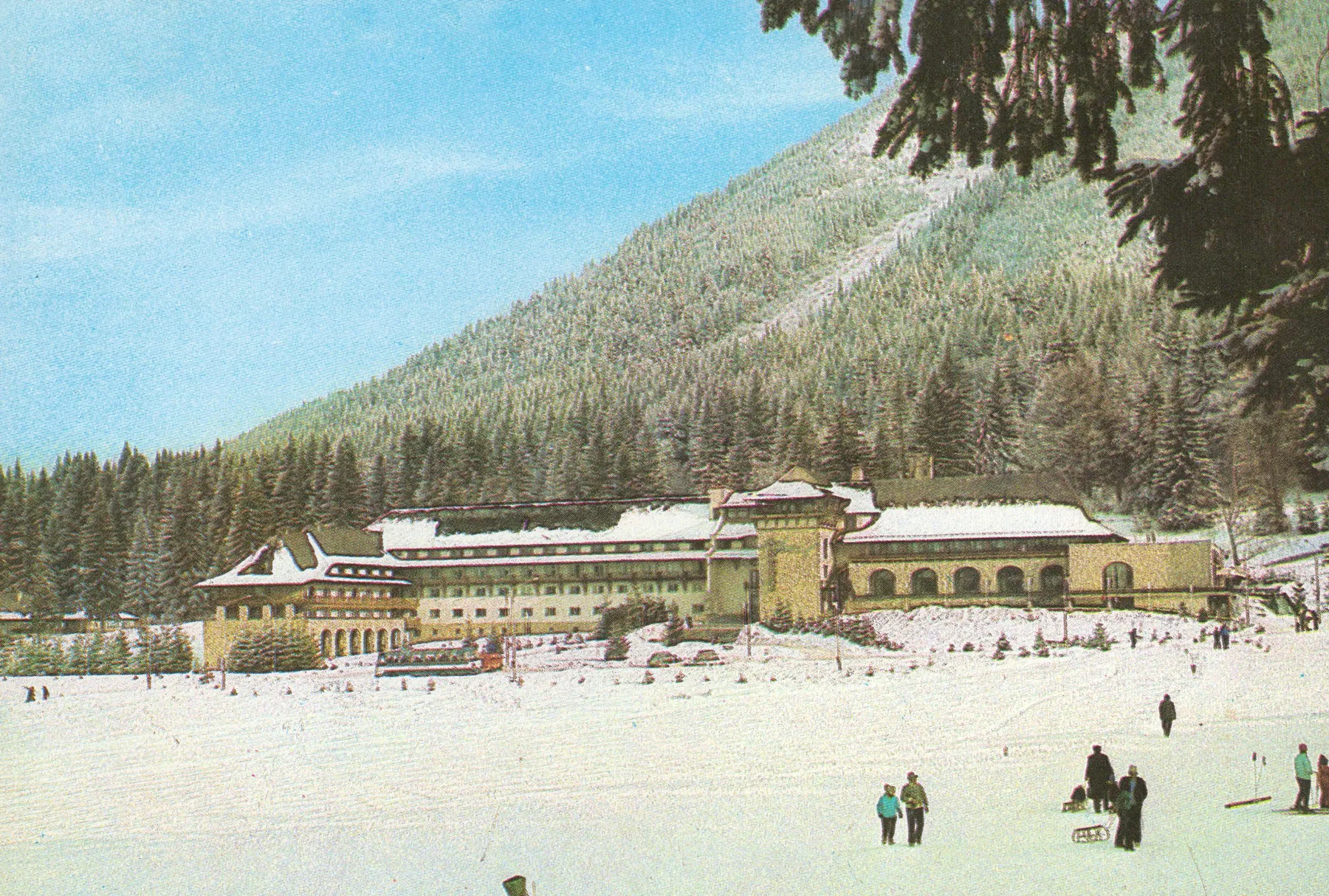
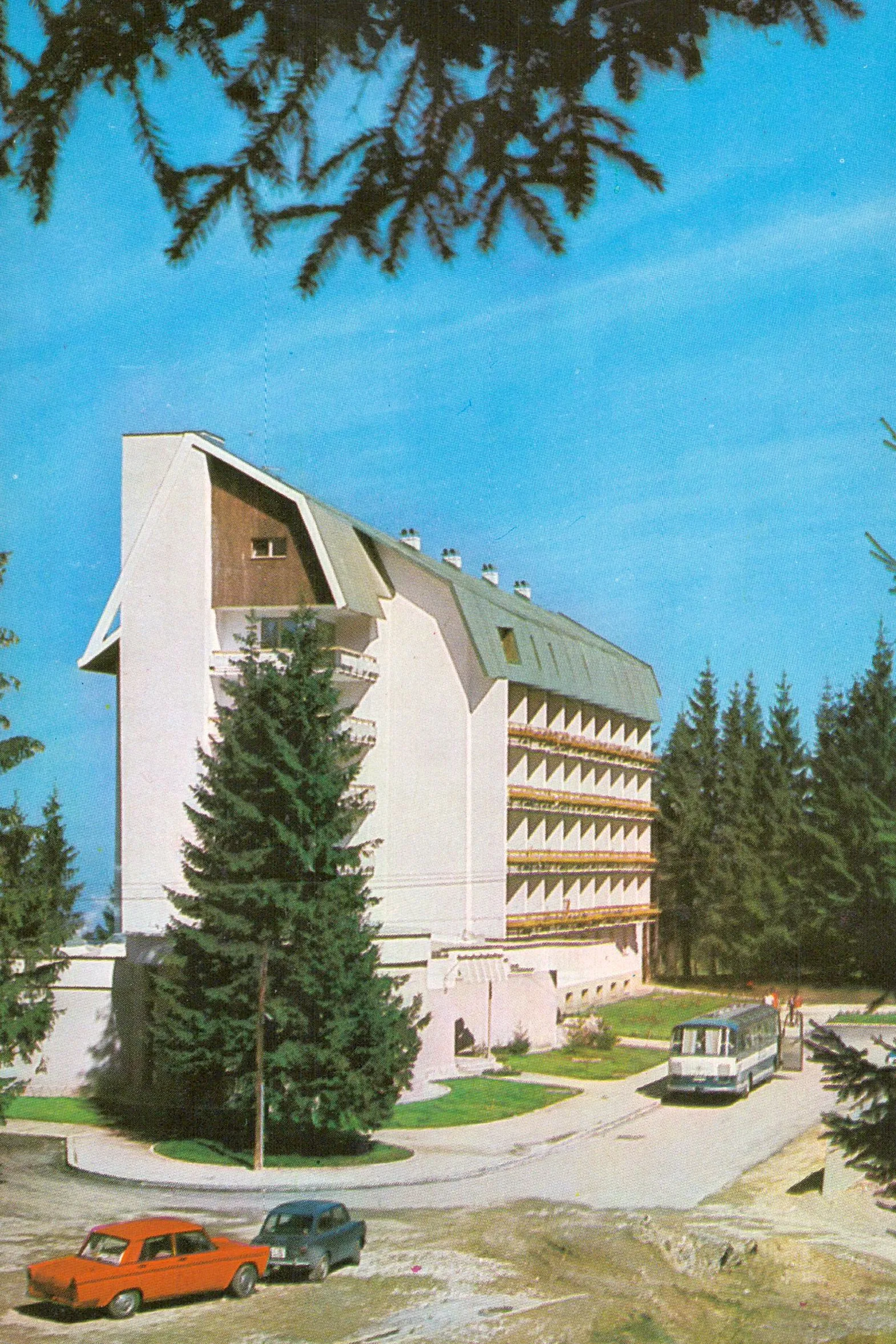
In the 1960s–1980s, Poiana Brașov developed as a winter-sports resort. Skiers had been climbing Postăvarul since 1895, and the socialist state turned the clearing into a resort with hotels, cable cars and restaurants for tourists from Romania and abroad.
The colour postcards of the period show everything in intense colours: orange and red flowers, blue sky, cars in the car park.
The old city, drawn in pencil
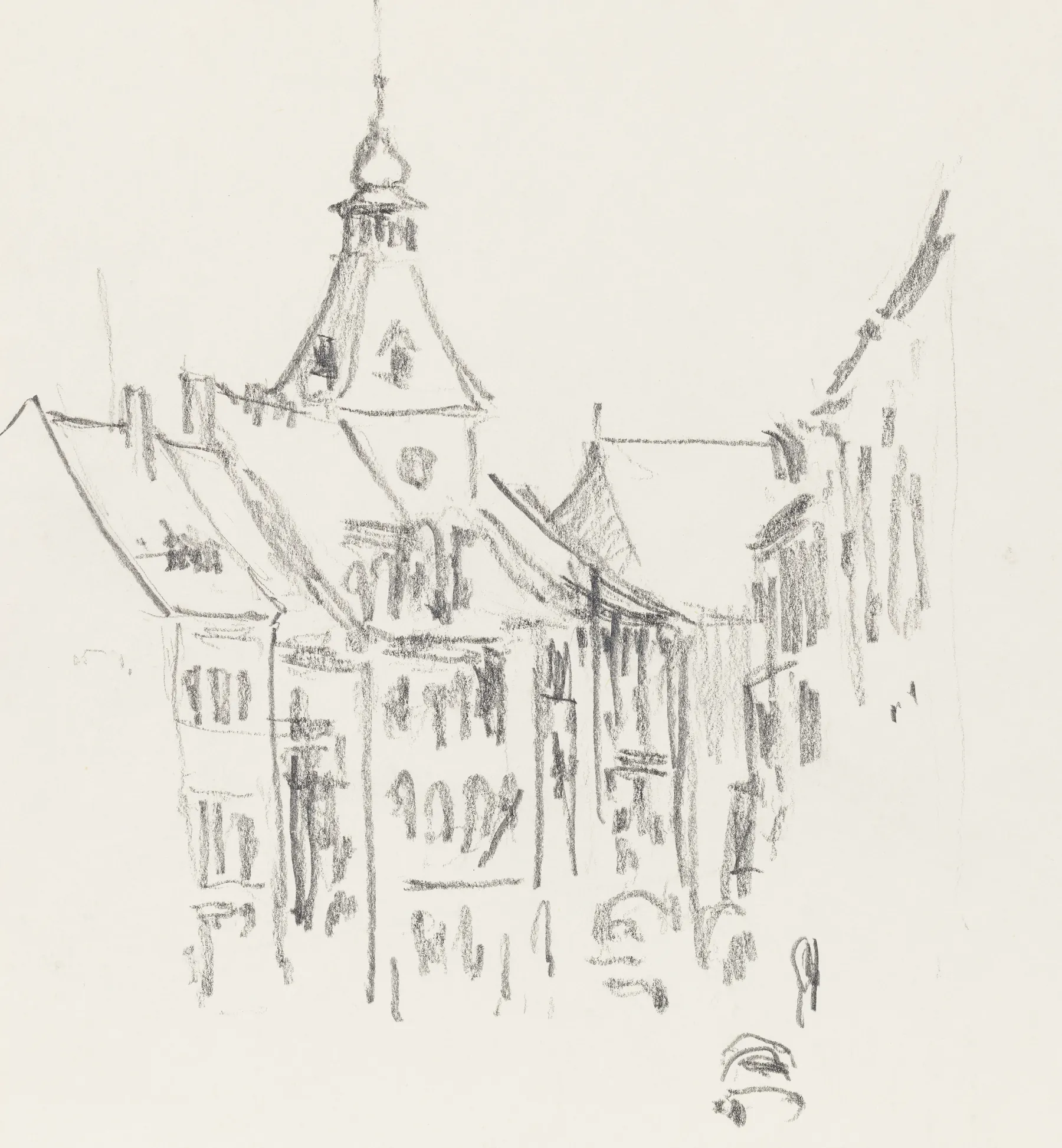
In 1969, Gheorghe Ștefănescu drew the buildings of the old centre: a clock tower, roofs and façades. The sketch is kept at the National Museum of Art of Romania.
Workers take to the streets against Ceaușescu, two years before 1989#
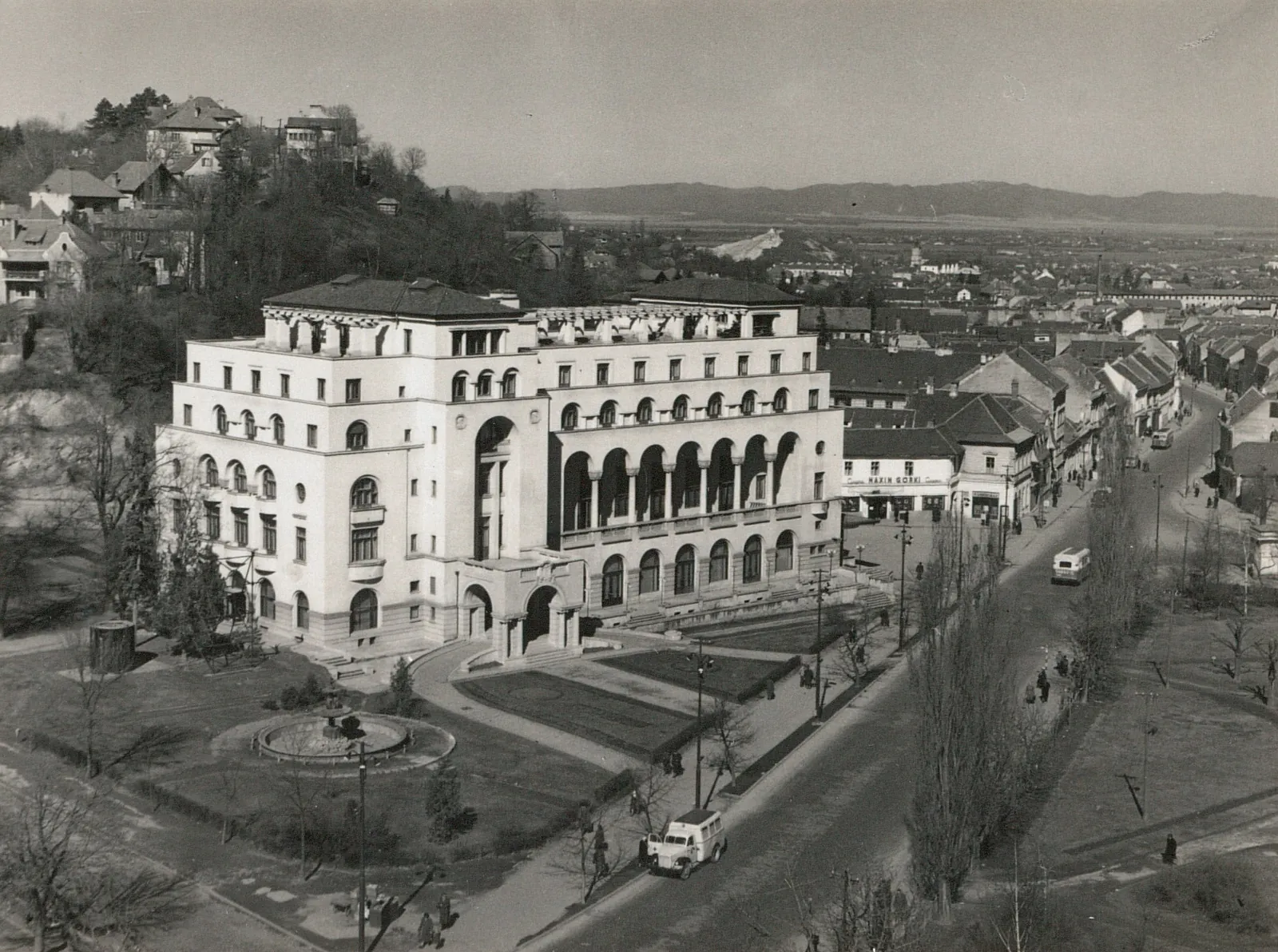
On 15 November 1987, workers at Steagul Roșu took to the streets, angry at wage cuts and shortages. Other people of Brașov joined them, and the crowd reached the headquarters of the county Party committee. Testimonies from participants and the chronology published by the Sighet Memorial document the protest and the repression that followed.
The city of Steagul Roșu tractors and lorries lives today from other industries, from services and from tourists who come to see the old town.From Corona to Brașov: almost eight hundred years
Brașov from above, more than a hundred and twenty years apart
Drag the golden line. On the left, the photochrom taken from the Cetățuie hill in the 1890s; on the right, the city today with the Black Church (Biserica Neagră) and Tâmpa. The angles differ, but the mountain, the church and the red roofs are the same.

 c. 1890Today
Left: photochrom, between ca. 1890 and ca. 1900 · Library of Congress. Right: Daniela Turcanu · Unsplash.
The Saxon citadel, beneath the letters on Tâmpa#
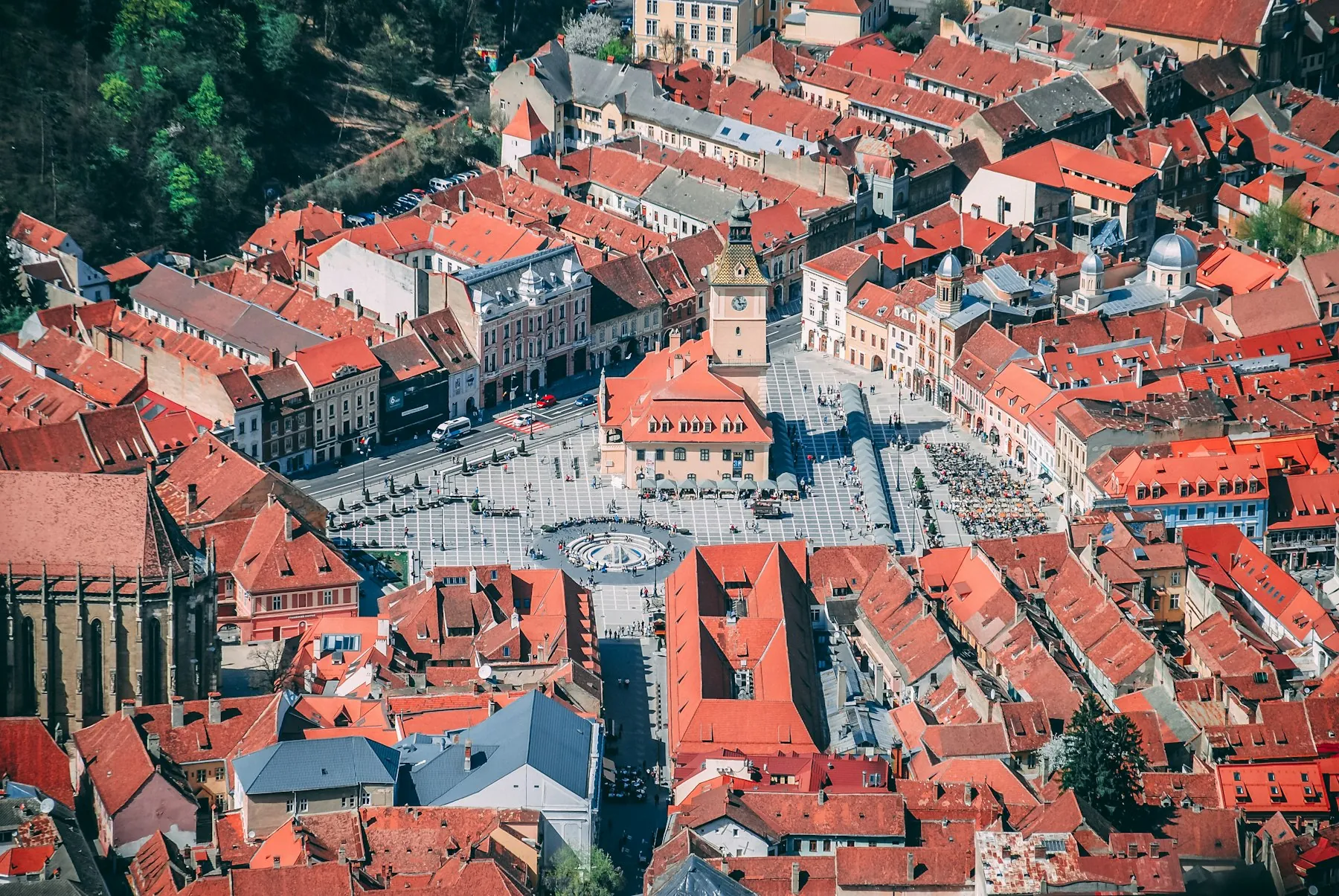
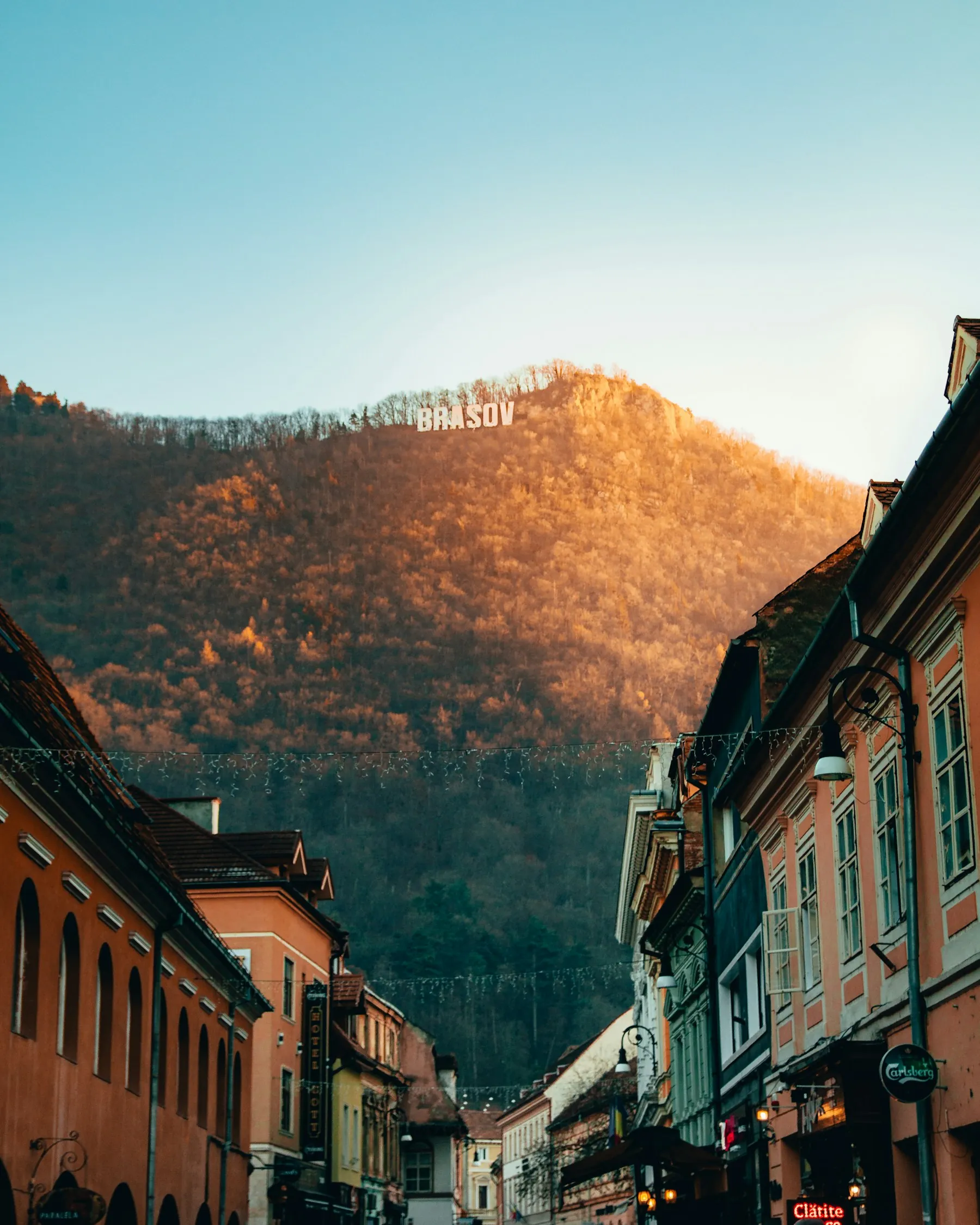
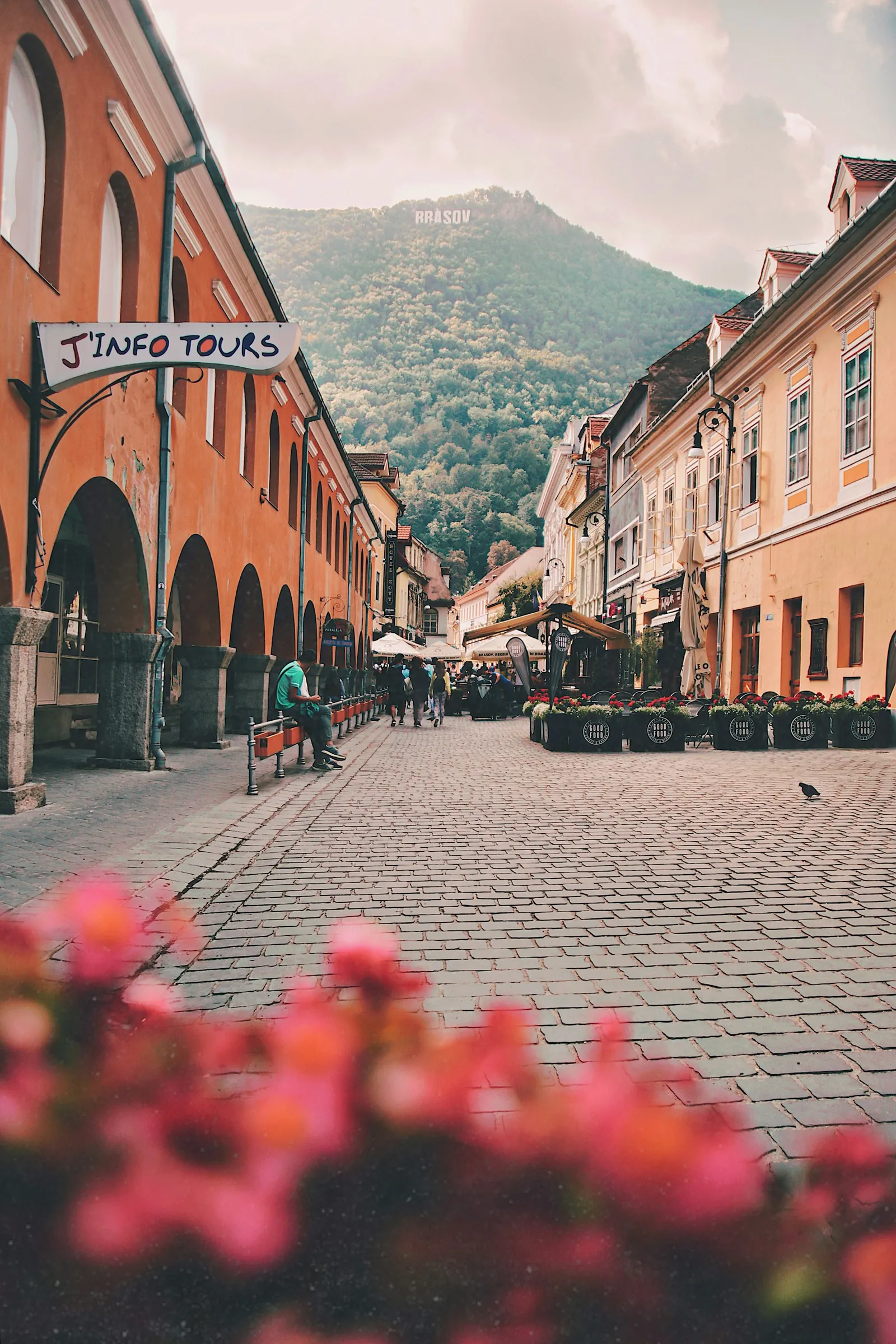
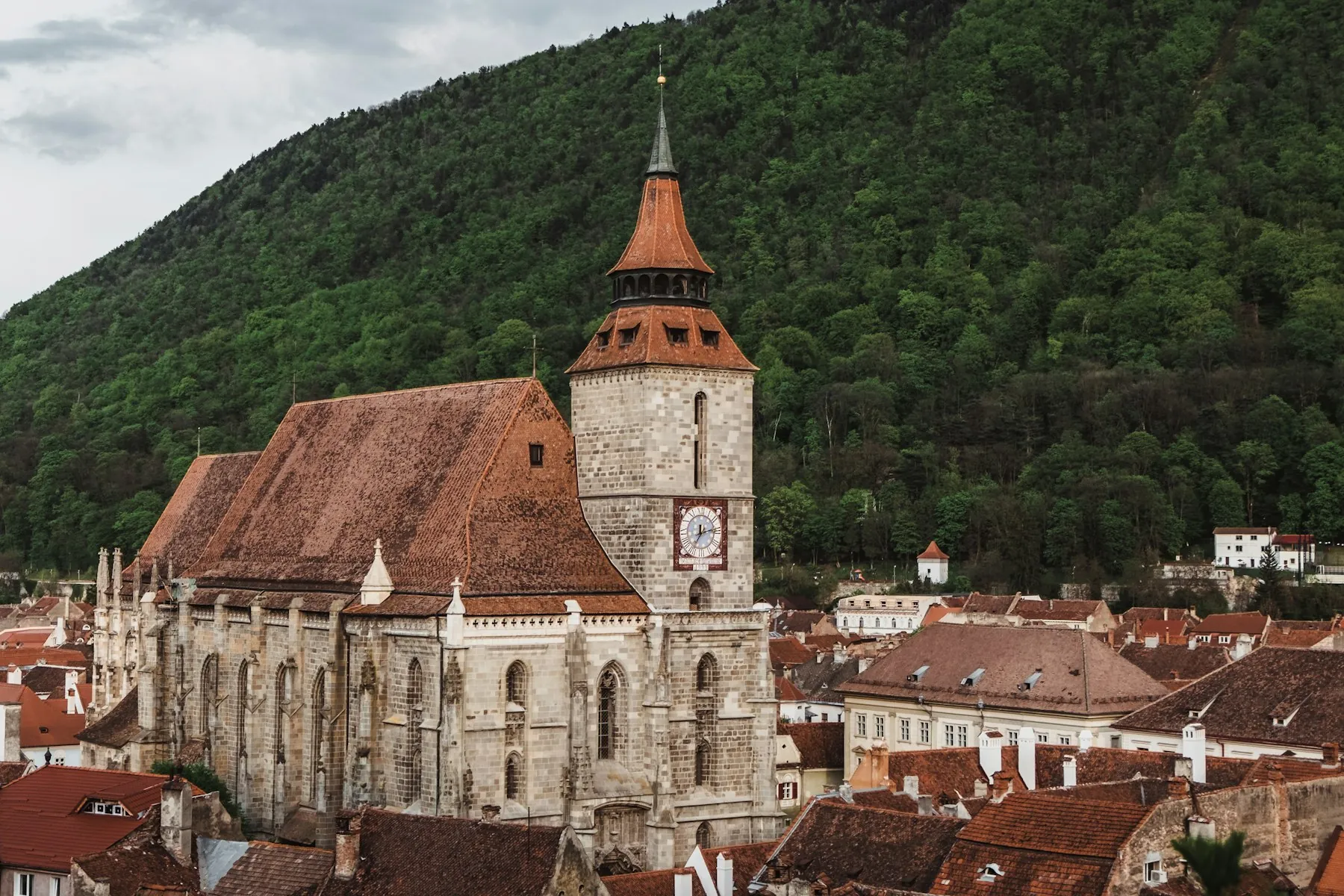
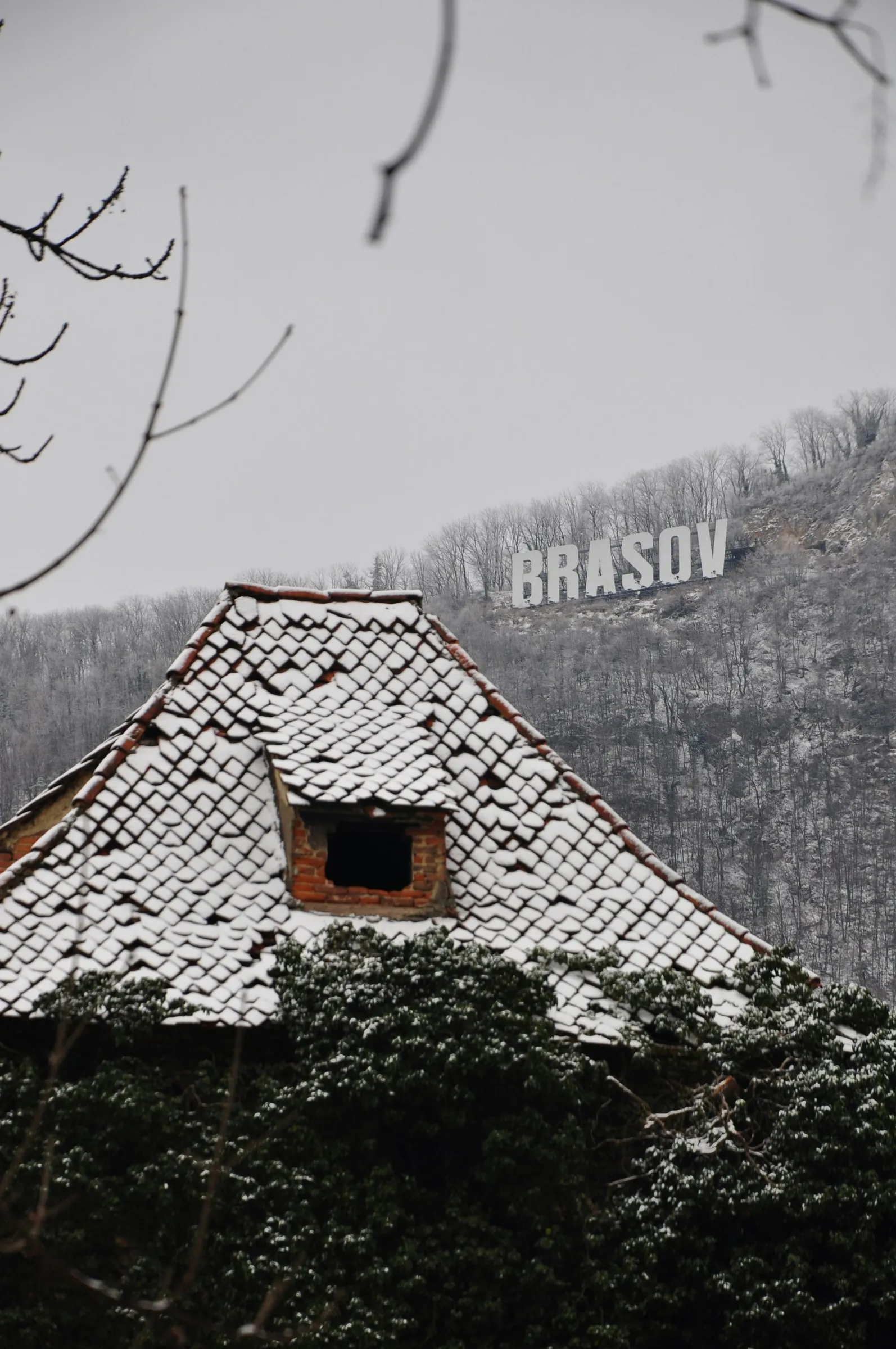
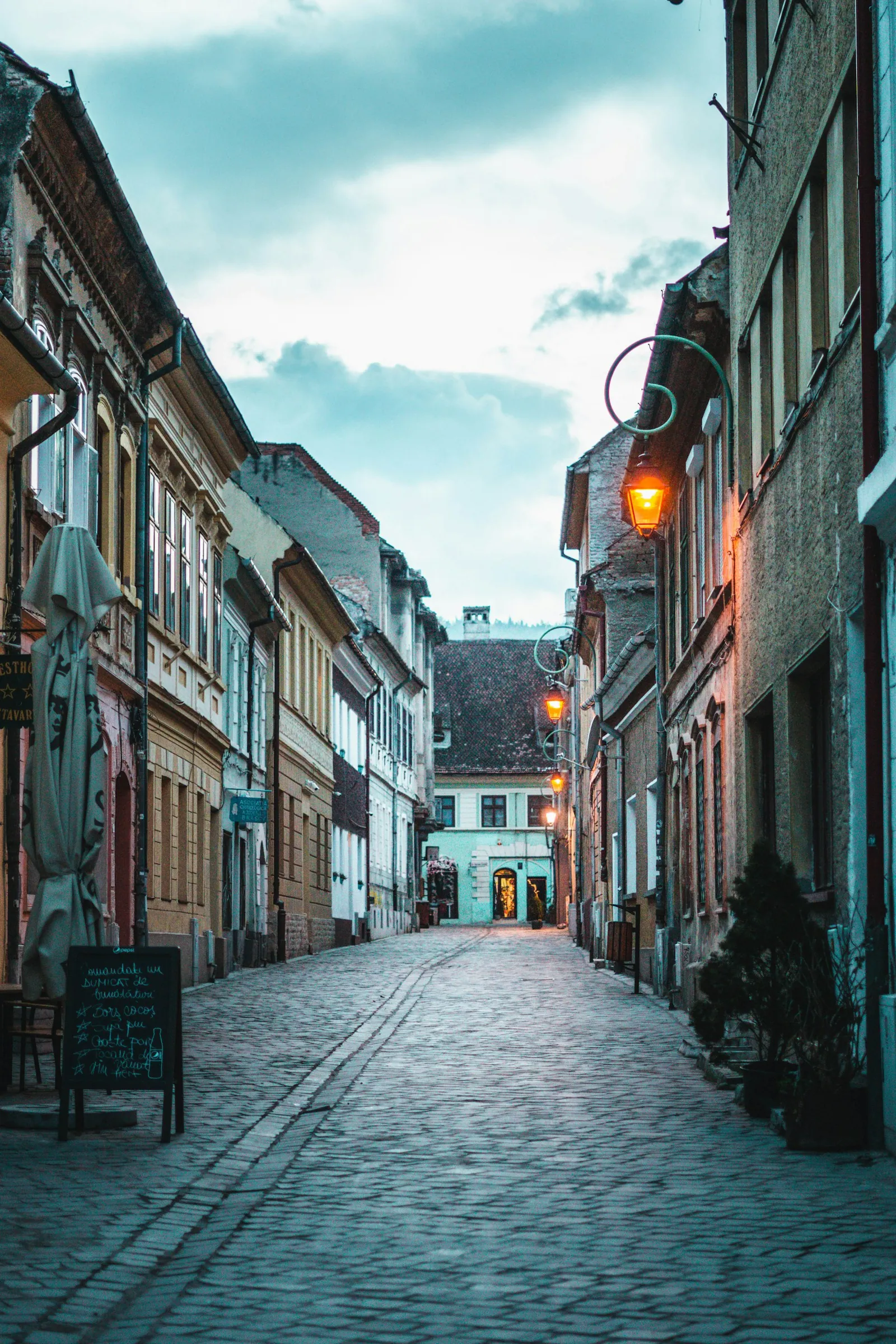
Council Square (Piața Sfatului) and the Black Church can be recognised in contemporary photographs, although the traffic, the buildings and the use of the square have changed. The white letters BRAȘOV can now be seen on the slope of Tâmpa; the 1896 monument stood high up, on the ridge.
The same silhouette on every postcard
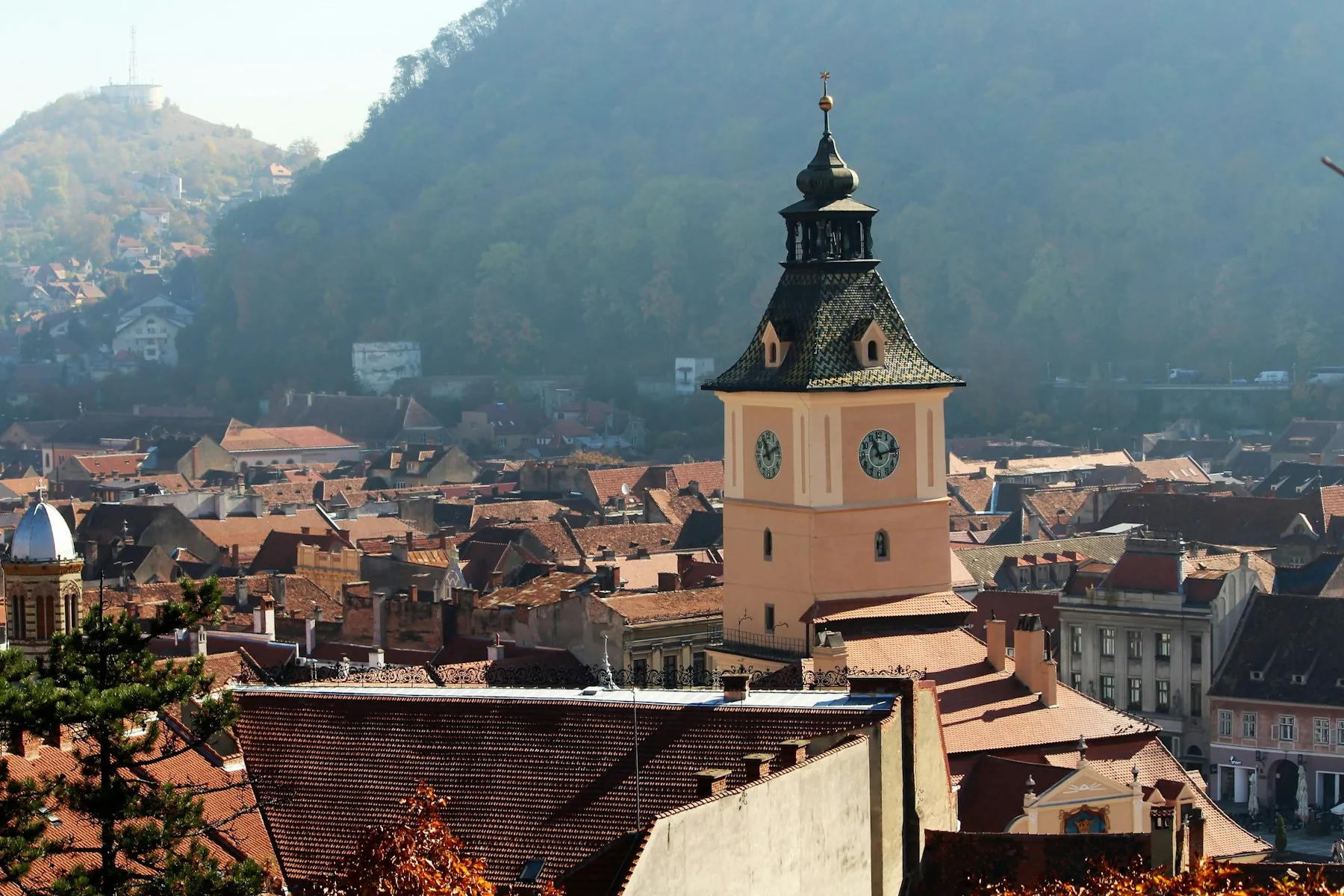
The church can be seen in the reconstruction of the citadel, in the photochroms, in the trilingual illustrated cards, in those with Orașul Stalin and in today’s photographs.
The names change.
The city transforms.
Corona, Kronstadt, Brassó, Orașul Stalin, Brașov. The monument on Tâmpa has gone, the city has regained its name, and the Tractorul plant closed in 2007. The images preserve both the vanished buildings and the landmarks that can still be recognised today.
Sources and images
- Photochroms, Library of Congress, public domain: the Council House (LoC 2017660305; according to the record, “[Photoglob Company], [ca. 1890–1906]”, in square brackets), Kronstadt from the Schlossberg/Cetățuie (LoC 2002710883) and Kronstadt from the “Rattenberg” (LoC 2002710882), both “between ca. 1890 and ca. 1900”, with the title from the Detroit Publishing Co. catalogue, 1905.
- Postcards from the early twentieth century, illustrated cards from the 1930s and the “Orașul Stalin” series (in the records, the years [1957]–[1961], estimated): Lucian Blaga Central University Library, Cluj, via Europeana. The record of each image is linked next to its caption; the collection declares them public domain.
- Árpád’s statue on Tâmpa, colour postcard, publisher Benkö Ignácz, 1915. Casa Mureșenilor Museum, Brașov, via Europeana, CC BY-SA 4.0. The museum’s record gives 1896 and about 20 m for the monument; the museum’s record and the Cluj library records give 1960 for the removal of the ruins. The booklet of the Brașov Metropolitan Agency (the statue falls in 1913, parts of the plinth are dynamited in 1916) gives 1966 for the demolition of the plinth, in two words without a note; here 1960 stands. The sources do not say the same thing about the 20 metres: the Cluj library gives it for the column, the museum for the whole monument, hence “about”.
- Model of the Brașov citadel, Friedrich Hermann, 1896. Brașov County History Museum, via Europeana, CC BY-SA 4.0.
- “Kronstadt” medal, 1886. Neamț National Museum Complex, via Europeana, CC BY-SA 4.0.
- Postcards from the collection of the National Heritage Institute (cimec), CC BY-SA 4.0: the citadel in the sixteenth century, G. A. Schuller, Hotel Carpați, Corneliu Vladu, Monument to the Soviet Heroes, view, Sandu Mendrea, Hotel Carpați at night, view towards Tâmpa, Hotel Teleferic, Hotel Sport, Hotel Șoimul, Corneliu Vladu.
- Photographs by Werner Teichmann: Army House, view from Hotel Carpați, the square and the Church of St Nicholas. Deutsche Fotothek, via Europeana, CC BY-SA 4.0.
- Gheorghe Ștefănescu, “View of Brașov”, 1969. National Museum of Art of Romania, via Europeana, CC BY-SA 4.0.
- Contemporary photographs, Unsplash, Unsplash licence: Daniela Turcanu (Brașov in autumn; the Council House tower), Dan Novac, Adrian Dascal, Gloria Cretu, Maria Teneva, Zoltan Rakottyai, Andrei Caraman, Cristian Vieriu.
- The name Orașul Stalin: the decree of 22 August 1950 (collection of laws and regulations, August 1950); the return to the name Brașov on 24 December 1960, according to the curator of the Casa Mureșenilor Museum in BizBrașov. For population: the 1992 census, the 2011 census, table 8 (stable population, Brașov municipality: 253,200, an INS file recovered from the web archive) and RPL 2021, table 1.22. History of the Palace of Justice and the Aro hotel: the catalogue records of the Cluj library and the National Heritage Institute. The Brașov County Library notes the uncertainty over the dating of the printing press. The Black Church Parish presents the building, the fire and the Honterus monument.
- Statute of Brașov municipality: the year 1477 on the gate of the Black Church and the raising of the south tower.
- Count of the names: 568 records of the Cluj library on Europeana (set 9200454, subject “Braşov, Oraşul (România)”), read through the API on 23 October 2026; see “How the count was made” above.