 Projects
Around Filaret · nineteenth century
Bucharest
in six exposures
Carol Popp de Szathmari photographed Bucharest in six exposures, probably from the Filaret area. Two buildings that have disappeared from the streets are still visible in the print.
Take the panorama apart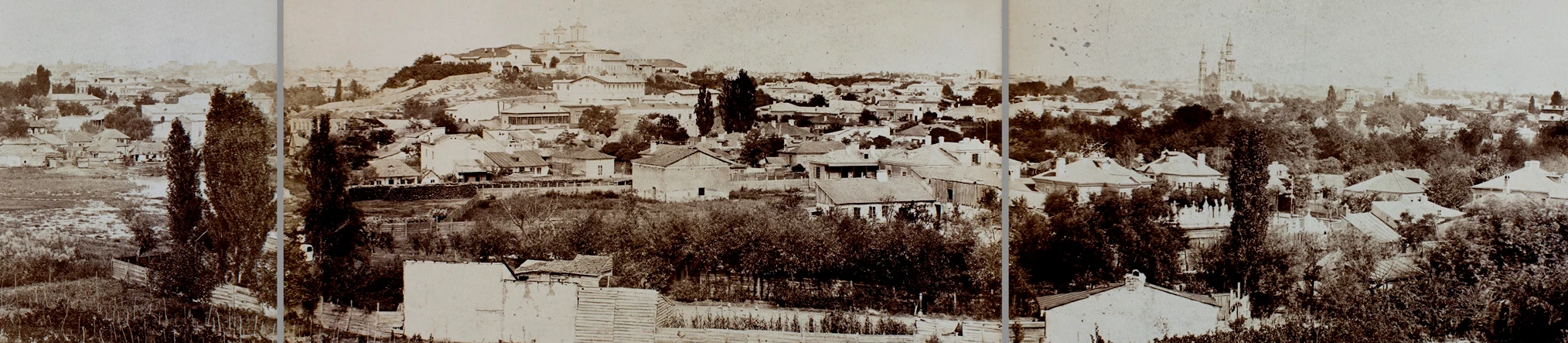
Around Filaret
The city fits on a long strip
Start with the line above the rooftops. At street level a courtyard wall or a roof interrupts your view. From the camera’s elevated vantage point, towers stand out above gardens and trees. They give us a way to read the photograph.
Find the joinsWhere the six images meet
Five vertical joins are visible in the photograph. The tone of the sky changes slightly on either side. Pull the images apart to see how much of the city each one covers.
The sky above the city
The sky gives the join away
Close the gaps between the frames. Watch the tone of the sky change as you cross from one exposure to the next. The vertical line runs down between the buildings. The city looks continuous because the edges have been brought together.
Bring the frames togetherThe five joins
Six frames, six pieces of the city
Pull the strips apart and see how narrow each exposure is. The edges follow the visible joins in the digital copy. Separating them shows how much of the city each surviving section holds.
Pull the frames apart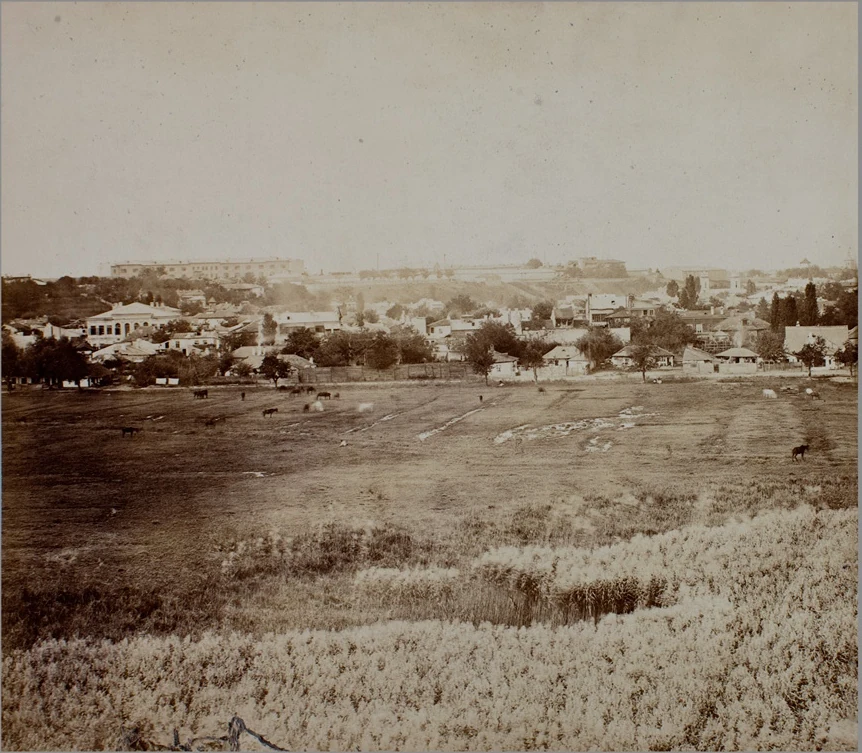 1
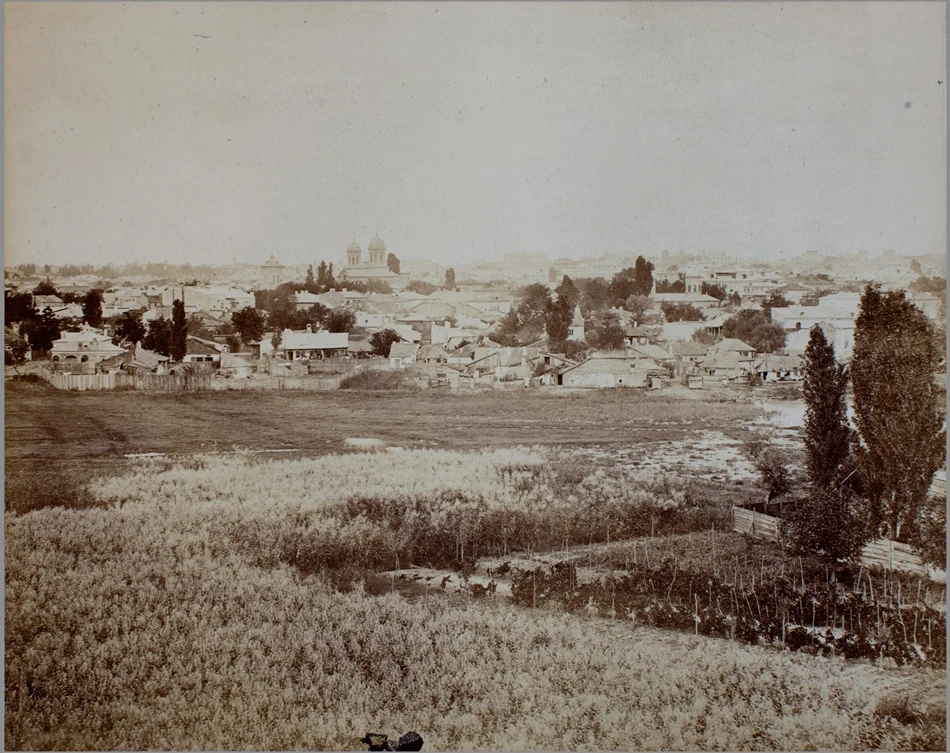 2
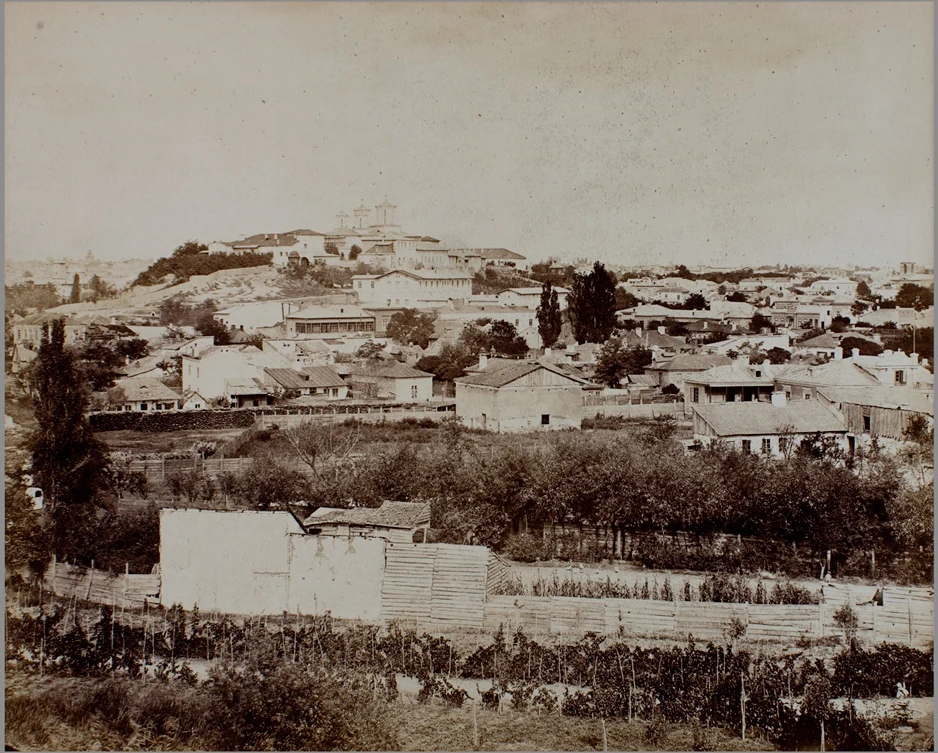 3
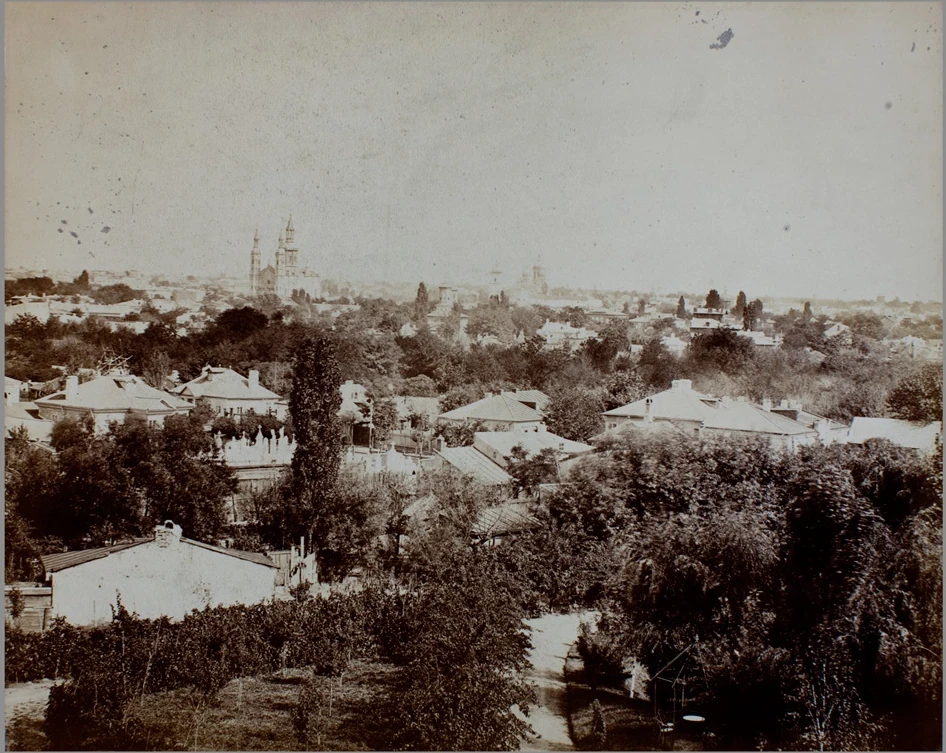 4
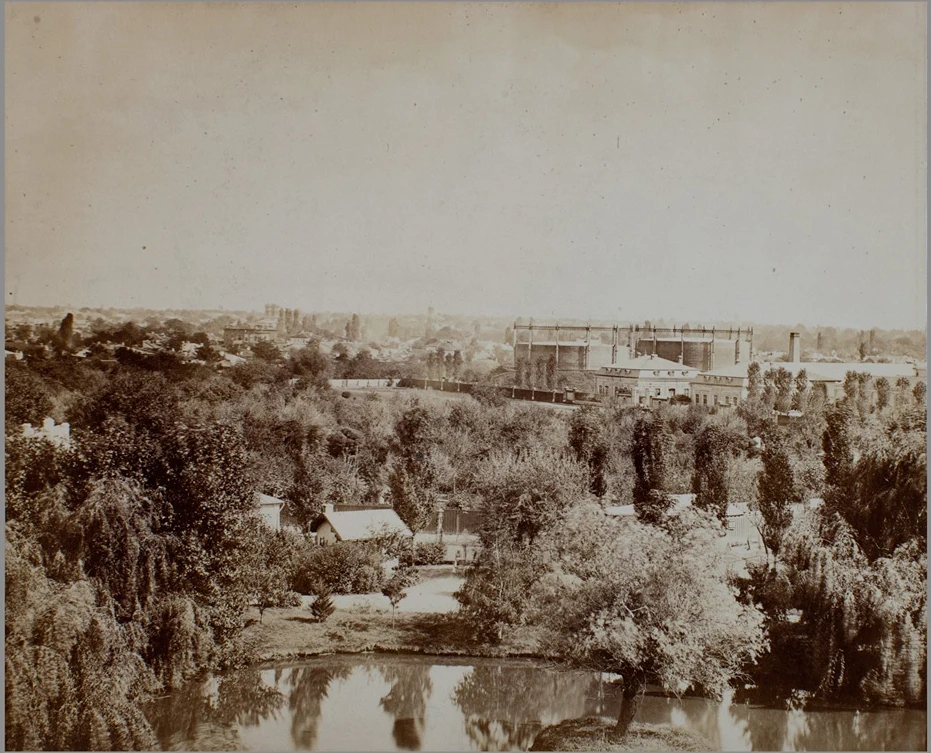 5
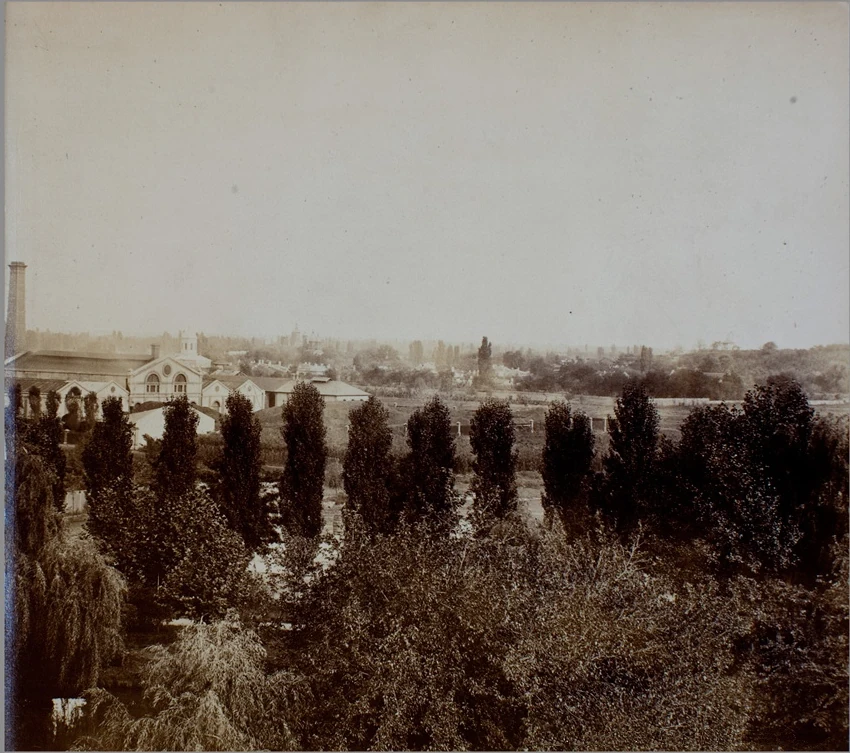 6
Towers above the rooftops
Move the loupe across the photograph or choose a landmark. Church towers stand out against the low roofs and trees.
Metropolitan Hill
Start with a place you can still find
Set the loupe on the cathedral. It stands clear of the roofs at the foot of the hill. Once you have found it, look in the same strip for two landmarks that have disappeared, one on either side.
Bring the cathedral closerLeft of Metropolitan Hill
The tower that once stood on the boulevard
Move the loupe to the left. Colțea Tower is visible in the distance, near the edge of the strip. It was demolished in 1888 when the boulevard was widened. Here you can see it from a vantage point where it was still part of the skyline.
Find Colțea TowerRight of Metropolitan Hill
Sfânta Vineri Church is still in the photograph
Cross to the other side of the hill and look for Sfânta Vineri Church, demolished in 1987. In the same strip you can move from a tower lost in the nineteenth century to a church demolished almost a century later.
Find Sfânta Vineri Church
Metropolitan Cathedral
The cathedral on the ridge overlooks the buildings at the foot of the hill.
- Antim Monastery. The church towers appear in the second image. The gate tower is farther to the left.
- Colțea Tower. This distant landmark stands to the left of the Metropolitan Hill in the photograph. It once stood beside Colțea Church.
- Metropolitan Cathedral. The cathedral on the ridge overlooks the buildings at the foot of the hill.
- Sfânta Vineri Church. The church is in the distance, to the right of the Metropolitan Cathedral. It was demolished in 1987.
- St Spyridon the New. The tall spires emerge from the haze above the roofs in the fourth image.
- Radu Vodă Monastery. Farther to the right, the church and monastery tower rise above the trees.
One photograph, two vanished buildings
Metropolitan Hill helps you place both buildings in the photograph. Set the loupe aside and try finding them again in the whole panorama. Three more images show Colțea Tower up close, alongside the measurements archaeologists took beneath the boulevard.
Colțea Tower in three viewsThe photograph and its landmarks
The digital copy comes from the Romanian Academy Library’s Prints Cabinet through the Muzeul de Fotografie. The landmarks follow Alex Gâlmeanu’s identifications for this photograph. The Muzeul de Fotografie dates this photograph to 1864. The Academy Library catalogue shows a separate panorama from Filaret Hill, dated to around 1870.
The five joins are measured in the 5,477 × 753 pixel digital copy. The loupe positions are coordinates in the digital photograph.
