A pound of purple silk was capped at six thousand days’ pay
In 301 the Roman emperor Diocletian capped a pound of purple silk at 150,000 denarii and a farm labourer’s day at 25, plus food: 6,000 days at the legal maximum. This page follows what the sources record about costly and reserved colours: a price in Rome and in Cennini’s workshop, a monopoly in Byzantium and New Spain, and written dress codes in Sui and Tang China, Japan and Tudor England.
20 October 2026, revised 23 October 2026 · Quotations are checked against the texts linked at the end.
Each strand is a year of work. Woven together: 6,000 days of a farm labourer’s pay at the edict’s maximum, 16.4 years, the ceiling price of one pound of purple silk in 301.
Which colours were priced or reserved, and where?#
Eight cases. Purple was the colour most often priced out of reach or regulated: by the cost of the dye in Rome, by imperial law in Byzantium, by rank codes in Sui and Tang China and in Japan (where the chronicle records the grades but not their colours) and by statute in Elizabethan England. The last column says only what each source records.
No private person may dye or sell the three named purples; everyone must give up the emperor’s vestments; the emperor’s purple ink forbidden to all others.
Vermilion and purple for the fifth rank and above in 605; in 621 purple from the third rank, vermilion from the fifth, yellow for the sixth rank downward and for commoners. Reddish-yellow was barred to officials and commoners, and in 668 yellow was no longer allowed in the dress the treatise describes.
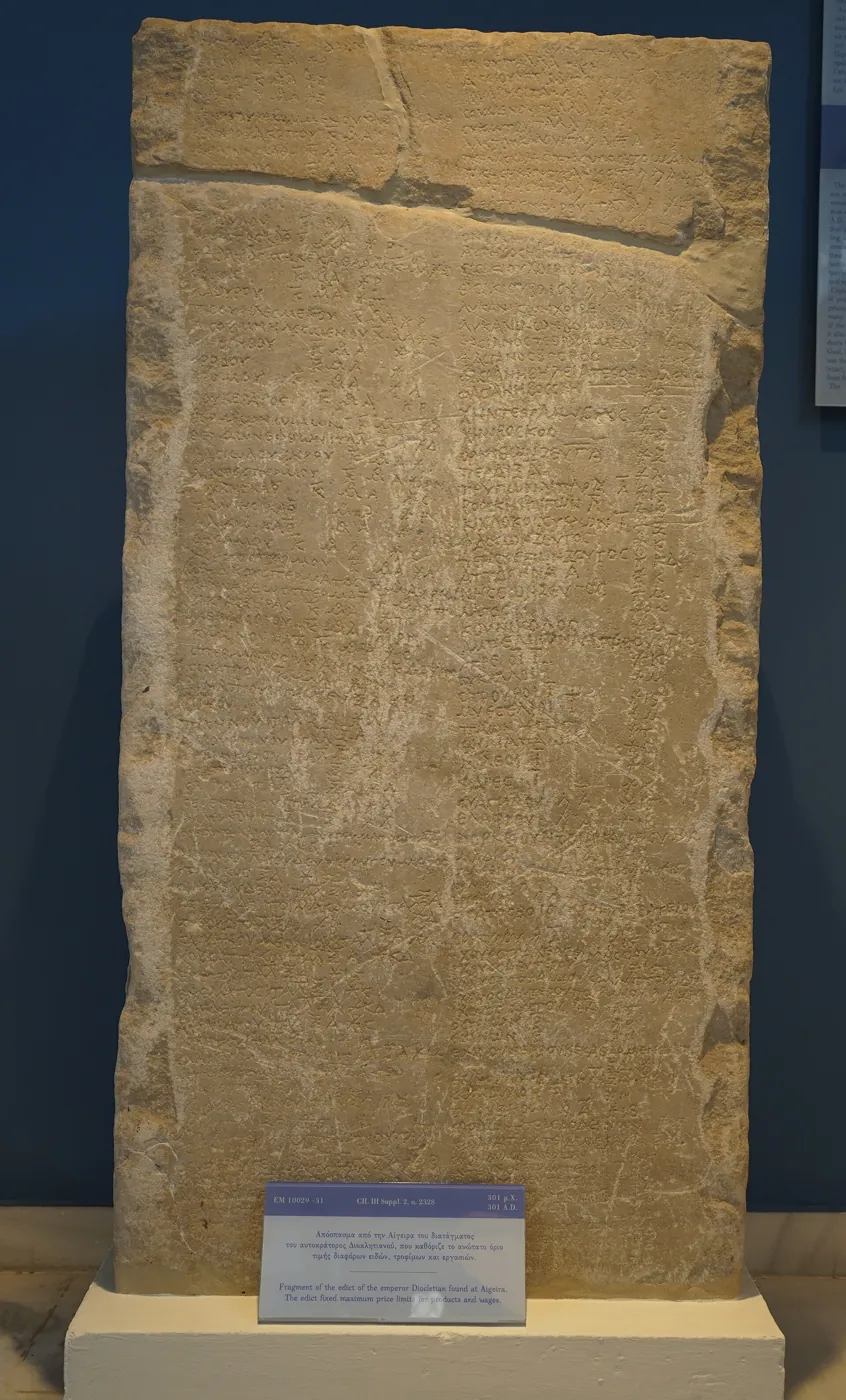
The best price list is the Edict on Maximum Prices, issued between 20 November and 10 December 301 by Diocletian and his co-rulers to check inflation. It capped more than 1,200 items, from fodder to lions, in denarii, which by then were a unit of account rather than a coin. These are ceilings, not market prices, and they include the wages of working people. Divide a price by a day’s pay and it becomes a number of days of work.
A copy of Diocletian’s Edict on Maximum Prices, 301. This fragment, cut in stone, was found at Aigeira in Greece and lists prices and wages; it is in the Epigraphic Museum in Athens (EM 10029).Image: TimeTravelRome, Fragment of Edict of Diocletian limiting prices for products and wages found in Aigeira 301 AD, CC BY 2.0, via Wikimedia Commons.
A farm labourer, earning the edict’s maximum of 25 denarii a day plus food, would have needed 6,000 days of pay for one pound of raw silk dyed purple. That is 16.4 years of work, every day of the year. At the edict’s own price for gold, that pound was worth 682 grams of gold; the pound itself weighed 327 grams.
Each row is one year of work · coloured: the pound you chose · dotted: a pound of purple silk
Each strand is one year of work, 365 days without a day off; each day of pay that the chosen pound cost fills 1/365 of a strand. The dotted outline is a pound of purple silk, for the same worker. Kermes is a red dye made from scale insects; archil, a purple made from lichens. Prices and wages are the edict’s ceilings, chapters VII, XXIII and XXIV; wages include food.
Ceiling prices per Roman pound of dyed silk or wool (thread and fibre) in Diocletian’s edict, chapters XXIII and XXIV, in Kropff’s wording, with the days a farm labourer at 25 denarii (plus food) would have worked for each.
Dyed silk or wool
Denarii a pound
Days of a labourer’s pay
Worth in grams of gold
Raw silk dyed purple
150,000
6,000
682
Wool dyed purple
50,000
2,000
227
Wool dyed lighter purple
32,000
1,280
146
Wool dyed bright Tyrian purple
16,000
640
73
Wool dyed purple once
12,000
480
55
Wool dyed twice in the best Milesian purple
12,000
480
55
Wool dyed in second-quality Milesian purple
10,000
400
45
Wool dyed scarlet with kermes from Nicaea
1,500
60
6.8
Wool dyed with the best archil, a lichen purple
600
24
2.7
Wool dyed with second-quality archil
500
20
2.3
Wool dyed with third-quality archil
400
16
1.8
Wool dyed with fourth-quality archil
300
12
1.4
White raw silk, undyed
12,000
480
55
For a farm labourer at 25 denarii a day, a pound of purple silk equalled 6,000 days of pay, about 16.4 years of work without a day off. Both figures are maximums, so this is a ratio of two ceilings, not a record of what anyone paid or earned. Most of the price was the dye: undyed silk was capped at 12,000, so purple multiplied it by 12.5. And purple was not one price. Bright Tyrian wool, at 16,000 denarii, was capped at about 27 times as much as wool dyed with archil, a purple made from lichens, at 600. The lichen purple was capped at 3.75% as much.
Turning denarii into today’s money is guesswork, and the edict’s translator, Antony Kropff, says how he guesses: pegging the labourer’s 25 denarii to a modern day’s wage, he puts a denarius at around €1.5. On that peg the pound of purple silk comes to about €225,000. The days are the sounder measure, because they need no exchange rate at all.
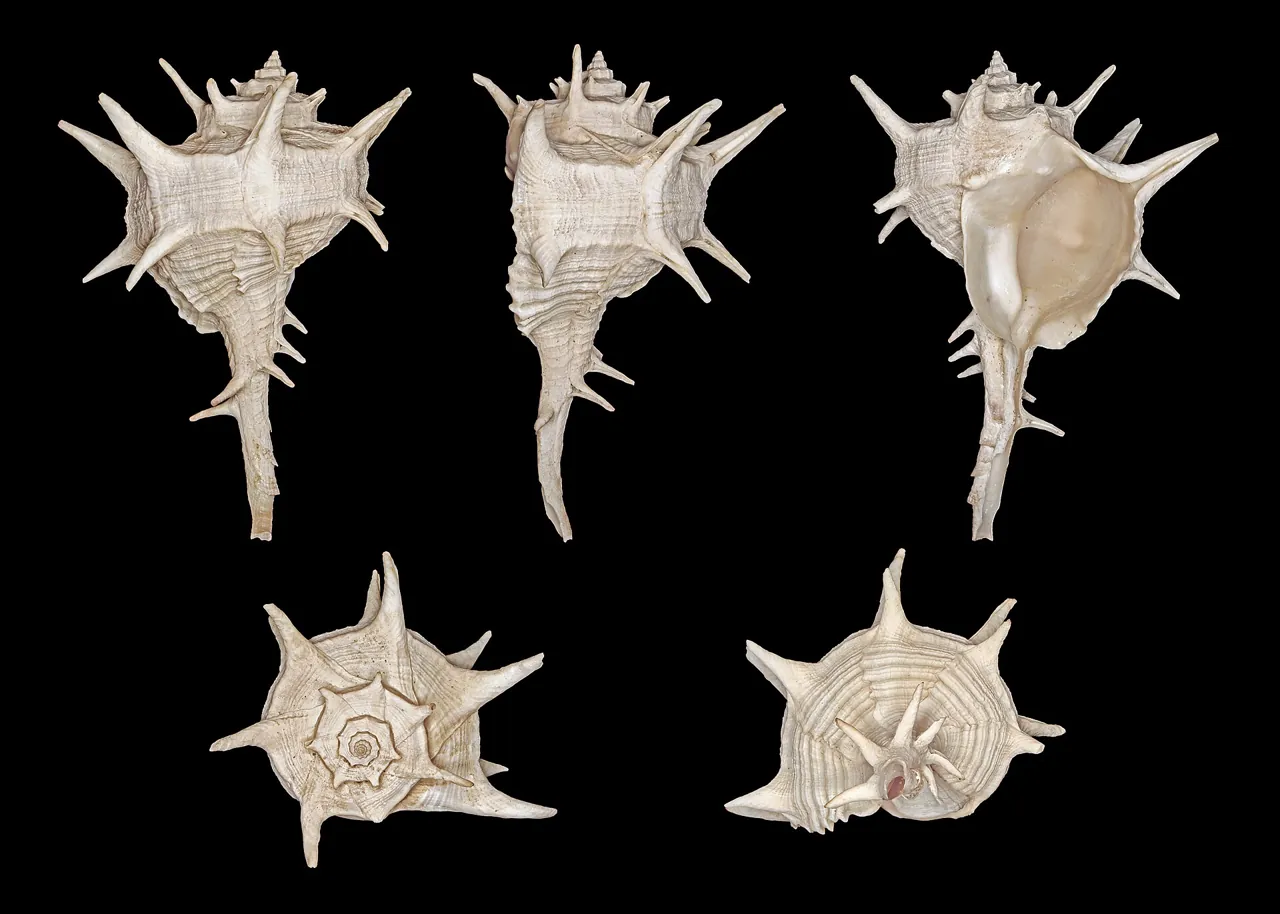
Shells of the purple-dye murex, Bolinus brandaris, called Murex brandaris in older books. This one is 7.5 cm long and comes from the French Mediterranean coast. The dye came from a gland of the living snail.Image: H. Zell, Bolinus brandaris 01, CC BY-SA 3.0, via Wikimedia Commons.
Why so dear? The dye came from sea snails, a few drops from a gland in each. When the chemist Paul Friedländer set out in 1909 to identify the pigment, he processed the glands of 12,000 Murex brandaris snails and obtained 1.4 grams. That is about 0.12 milligrams a snail, from a modern laboratory, not an ancient dye-works.
The fashions had been moving for centuries. Pliny quotes the historian Cornelius Nepos, who died under Augustus: in his youth violet purple sold at one hundred denarii a pound, then Tarentine red came into favour, and then “the Tyrian dibapha, which could not be bought for even one thousand denarii per pound.” Dibapha was cloth dyed twice. Publius Lentulus Spinther, aedile in the year of Cicero’s consulship (63 BC), was the first to use it for the purple-bordered toga praetexta, “and he was greatly censured for it.” By the time Nepos wrote, he asked, who did not have purple hangings on his banqueting couches? In the translation: “who is there that does not have purple hangings to his banqueting-couches, even?”
Price was not the only guard. In his account of how Nero raised money, Suetonius writes that “having forbidden the use of amethystine or Tyrian purple dyes, he secretly sent a man to sell a few ounces on a market day and then closed the shops of all the dealers.” He adds that Nero is said to have had a matron stripped of her garment and her property for wearing the forbidden colour at one of his recitals.
The denarius of Nepos’s day and the denarius of 301 cannot be set side by side: the first was a silver coin, the second a unit of account. Metal can. Each source in this chart states a price in coins whose weight in gold or silver is known, or, in 301, sets its own price for gold and silver. So each colour can be weighed against metal in its own time, in the metal its own source uses.
Logarithmic scale: each tick is ten times the one before. The dashed line marks a value equal to the same weight of gold or silver.
0.1×1×10×
Against gold
Raw silk dyed purpleDiocletian’s edict, 3012.1× its own weight in gold
Ultramarine, the best gradeCennini, about 14000.7–1.1× its own weight in gold
Wool dyed bright Tyrian purpleDiocletian’s edict, 3010.22× its own weight in gold
Against fine silver
Tyrian purple dyed twice (dibapha)Nepos, first century BCmore than 11.5× its own weight in silver
Wool dyed bright Tyrian purpleDiocletian’s edict, 3012.7× its own weight in silver
Violet purpleNepos’s youth1.2× its own weight in silver
Wool dyed scarlet with kermesDiocletian’s edict, 3010.25× its own weight in silver
Wool dyed with the best archilDiocletian’s edict, 3010.10× its own weight in silver
0.1×1×10×
Value of a quantity of each colour against the same weight of gold or silver, in the metal each source uses. Bar length is logarithmic: each tick is ten times the one before. Edict of 301: price ÷ the edict’s gold (72,000) or silver (6,000) per pound. Nepos: denarii ÷ 84 to the pound of silver coin, less 1/30 for alloy (Smith). Cennini: eight ducats of about 3.5 g of gold against an ounce of 25 to 28 g (light pounds of Venice and Padua, Florence’s pound), or 40.5 g on Padua’s heavy pound.
Nepos’s thousand denarii were silver coins struck 84 to the Roman pound, which is 11.9 pounds of coin. Allowing, as the dictionary cited for the 84 does, one thirtieth of a late-Republican denarius for alloy, that is about 11.5 pounds of fine silver, and a pound of Tyrian dibapha cost more than that. Three centuries later the edict priced a pound of gold at 72,000 denarii and a pound of refined silver at 6,000. Raw silk dyed purple, at 150,000, was capped at 2.1 times its weight in gold and 25 times its weight in silver. An ounce of Cennini’s best ultramarine cost eight ducats, coins holding about 28 grams of gold: roughly its weight in gold, or two-thirds of it if he meant Padua’s heavy ounce.
The comparison has limits. Gold and silver themselves changed in value, the edict gives ceilings, Nepos gives a memory of his youth, and Cennini prices a pigment, not a cloth. The 84 to the pound comes from Smith’s dictionary of 1875, which dates the first denarius to 269 BC; Crawford’s Roman Republican Coinage (1974), as summarised on Wikipedia, puts it about 211 BC, at first 72 to the pound, with 84 standard later, so 84 holds for Nepos’s youth. What the metal shows is the order of magnitude: the best purple and the best blue were priced like precious metal.
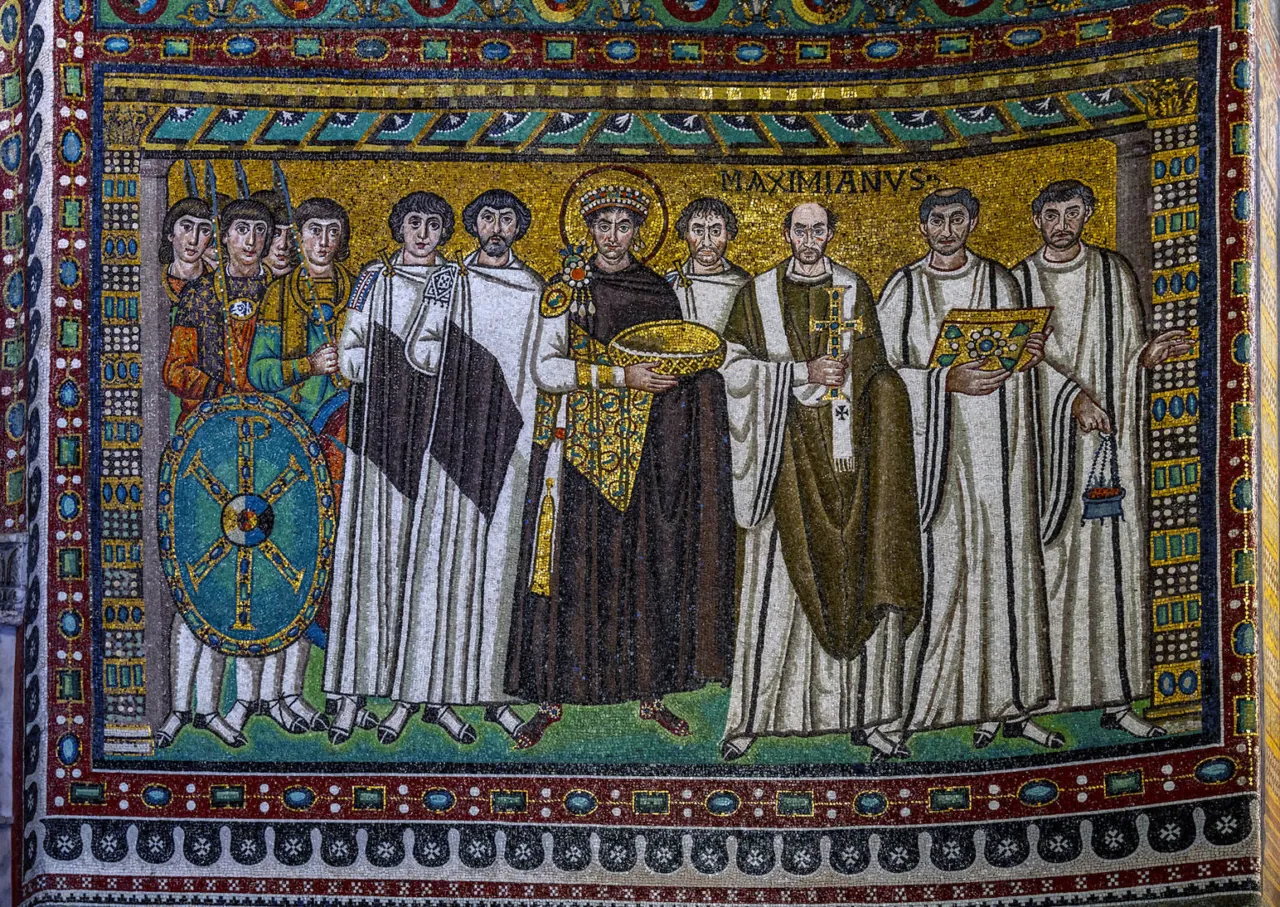
In the eastern empire, price gave way to monopoly. The Code of Justinian, a sixth-century collection of imperial laws, records how the restrictions grew. A law of Valentinian II, Theodosius I and Arcadius, issued between 383 and 392 (CJ 4.40.1), says that “no private person shall have power to dye or sell purple goods, silk or wool, which is called blatta, oxyblatta and hycinthina”, three named shades of purple, on pain of losing “his property and his head.”
Justinian I with his court, in the mosaic of San Vitale, Ravenna, finished about 547. The emperor wears a purple cloak.Image: Steven Zucker, Justinian mosaic, San Vitale, consecrated 547, Ravenna, Italy, CC BY 2.0, via Wikimedia Commons.
In 424 Theodosius II went further (CJ 11.9.4, 16 January). “All persons of both sexes and of every rank, business, profession or birth must refrain from possessing vestments reserved for the emperor and his house alone,” and every tunic and cloak “dyed through and through with the blood of the purple fish” was to be produced and handed over. The people who gathered the snails were bound to the work as well. In October of the same year (CJ 11.8.11) gatherers who had abandoned their station and taken on the dress of rank were “recalled to the bonds of their own trade and birth,” and in 427 (CJ 11.8.15) their children were declared bound to it too.
The colour reached the emperor’s pen. In 470 the emperor Leo I ordered (CJ 1.23.6) that imperial orders appear only in “purple script”, which the law describes as marked by “the brightness of the cooked purple fish and crushed (triti) shellfish”, and that “the making of this sacred ink shall be permitted or granted to no one,” on pain of confiscation and death. The translator marks his wording as uncertain.
Further east, colour was tied to rank in writing. Choose a code and a row: the page shows what the source records for it and, where the rows form a ladder, the rows above and below. The first five codes are the Japanese chronicle and the Chinese passages, in order of date; the last is England’s proclamation of 1574, whose rows are overlapping groups.
Choose a code or proclamation, then tap a row.
Japan, 603
The Nihon Shoki, Japan’s oldest official history, records under the twelfth month of the eleventh year of Empress Suiko (603 in Aston’s dating; 11 January 604 in the Julian calendar) that cap-ranks were first instituted: twelve grades, a greater and a lesser one for each of six virtues, each cap made of sarcenet of a special colour. It does not say which colour went with which grade. The colours below come from Aston’s 1896 notes and from later guesses.
Hatched: a colour from a later reading. The chronicle gives none.
Tap a row to see what the source records for it.
Source: Nihongi, book XXII, translated by W. G. Aston (1896): the entries for 603, 604 and 611, and his notes. The chronicle gives no colour for any grade. Aston’s note gives green, red, yellow, white and black for the five lower pairs; purple for the top pair is inferred from his remark about Sui China. Modern scholarship, as summarised in the Japanese Wikipedia article on the system, treats every mapping as unproven.
The source’s list in full
Rank
Colour (a later reading)
What the source records
Greater virtue (Dai-toku)
Purple, by inference
First of the twelve grades. In 611 the hair ornaments of this grade were gold.
Lesser virtue (Shō-toku)
Purple, by inference
Second grade. In 611 its hair ornaments were gold.
Greater benevolence (Dai-nin)
Green, per Aston
Third grade. In 611 its hair ornaments were leopards’ tails.
Lesser benevolence (Shō-nin)
Green, per Aston
Fourth grade. In 611 its hair ornaments were leopards’ tails.
Greater propriety (Dai-rai)
Red, per Aston
Fifth grade. In 611 its hair ornaments, like those of all lower grades, were birds’ tails.
Lesser propriety (Shō-rai)
Red, per Aston
Sixth grade. Hair ornaments of birds’ tails in 611.
Greater faith (Dai-shin)
Yellow, per Aston
Seventh grade. Hair ornaments of birds’ tails in 611.
Lesser faith (Shō-shin)
Yellow, per Aston
Eighth grade. Hair ornaments of birds’ tails in 611.
Greater justice (Dai-gi)
White, per Aston
Ninth grade. Hair ornaments of birds’ tails in 611.
Lesser justice (Shō-gi)
White, per Aston
Tenth grade. Hair ornaments of birds’ tails in 611.
Greater knowledge (Dai-chi)
Black, per Aston
Eleventh grade. Hair ornaments of birds’ tails in 611.
Lesser knowledge (Shō-chi)
Black, per Aston
Twelfth and lowest grade. Hair ornaments of birds’ tails in 611.
Sui China, 605–610
Before 605, the Old Book of Tang says, Sui emperors and noble ministers mostly wore yellow figured twill, and officials’ everyday dress was the same as the common people’s: yellow robes. In 605 Emperor Yang had caps and dress redesigned, “from the Son of Heaven down to the clerks”, and allowed the fifth rank and above to wear vermilion and purple. In 610 he gave the code below, for officials accompanying him on distant journeys, in military dress.
The rows follow the order of the treatise. Clerks, commoners, butchers and merchants, and soldiers are not ranked against one another.
Tap a row to see what the source records for it.
Source: Old Book of Tang (Jiu Tangshu), chapter 45, Treatise on Carriages and Dress; translation by Marius Comper. The text calls the colours of 610 a “mixed use of the five colours”. 青 is rendered blue by convention; it can also cover green.
The source’s list in full
Rank
Colour
What the source records
Fifth rank and above
Purple
Purple robes. The order of 605 had named vermilion and purple.
Sixth rank and below
Crimson and green
Both crimson and green were used.
Clerks
Blue
Blue.
Commoners
White
White.
Butchers and merchants
Black
Black.
Soldiers
Yellow
Yellow.
Tang China, 621
An edict of the eighth month of Wude 4 gave each band of rank its cloth, colour and fittings. Purple and vermilion stand above yellow: here yellow belongs to the lower ranks and to commoners. The reddish-yellow that officials and commoners were barred from early in the dynasty is a narrower matter, the emperor’s own colour.
Tap a row to see what the source records for it.
Source: Old Book of Tang (Jiu Tangshu), chapter 45, Treatise on Carriages and Dress; translation by Marius Comper. The New Book of Tang, chapter 24, prints the same “sixth rank and above” for yellow. 大科 and 小科 are rendered as large and small pattern.
The source’s list in full
Rank
Colour
What the source records
Third rank and above
Purple
Pongee, damask and gauze of the large pattern, purple, with jade fittings.
Fifth rank and above
Vermilion
The same cloths of the small pattern, vermilion, with gold fittings.
Sixth rank, and the ranks below it
Yellow
Silk cloth and small-patterned damask, yellow. The text prints “sixth rank and above”; the clauses that follow give silver fittings to the sixth and seventh ranks and brass to the eighth and ninth.
Outside the ranks, and commoners
Yellow
Pongee, coarse silk and cloth, the colour “generally yellow”, with fittings of copper and iron.
Tang China, 630
In Zhenguan 4 a further regulation set colours by rank. Purple and red were not new: the edict of 621 had already put purple and vermilion above yellow. What the 630 text adds is green and blue for the lowest ranks, and the remark that yellow was still allowed.
Tap a row to see what the source records for it.
Source: Old Book of Tang (Jiu Tangshu), chapter 45, Treatise on Carriages and Dress; translation by Marius Comper; parallel text in the Tang huiyao, chapter 31.
The source’s list in full
Rank
Colour
What the source records
Third rank and above
Purple
Purple.
Fourth and fifth ranks
Crimson
Crimson. The Old Book of Tang prints “fifth rank and below”; the sixth and seventh ranks follow in green, and the Tang huiyao names the fourth and fifth.
Sixth and seventh ranks
Green
Green.
Eighth and ninth ranks
Blue
Blue, with belts of brass.
Everyone
Yellow still allowed
“Although there is an ordinance, wearing yellow is still permitted.” Wives follow their husbands’ colour.
Tang China, 674
In the eighth month of 674 an edict fixed court dress by rank: a robe colour and a belt fitting for each. By then reddish-yellow had long been closed to officials and commoners, and the treatise records that in 668 wearing yellow was no longer allowed at all.
Tap a row to see what the source records for it.
Source: Old Book of Tang (Jiu Tangshu), chapter 45, Treatise on Carriages and Dress; translation by Marius Comper. The first row combines the passage on early Tang informal dress with the 674 edict, which covers ranks and commoners.
The source’s list in full
Rank
Colour
What the source records
The emperor
Reddish-yellow
A yellow robe and tunic in informal dress, later increasingly reddish-yellow. Officials and commoners were forbidden to use reddish-yellow for clothing or trim.
Third rank and above
Purple
Purple, with a belt of gold and jade.
Fourth rank
Dark red
Dark red, with a gold belt.
Fifth rank
Light red
Light red, with a gold belt.
Sixth rank
Dark green
Dark green, with a silver belt.
Seventh rank
Light green
Light green, with a silver belt.
Eighth rank
Dark blue
Dark blue, with a brass belt.
Ninth rank
Light blue
Light blue, with a brass belt.
Commoners
Not set
Belts of copper or iron. This edict names no robe colour for them; the edict of 621 had given commoners’ cloth the colour yellow.
England, 1574
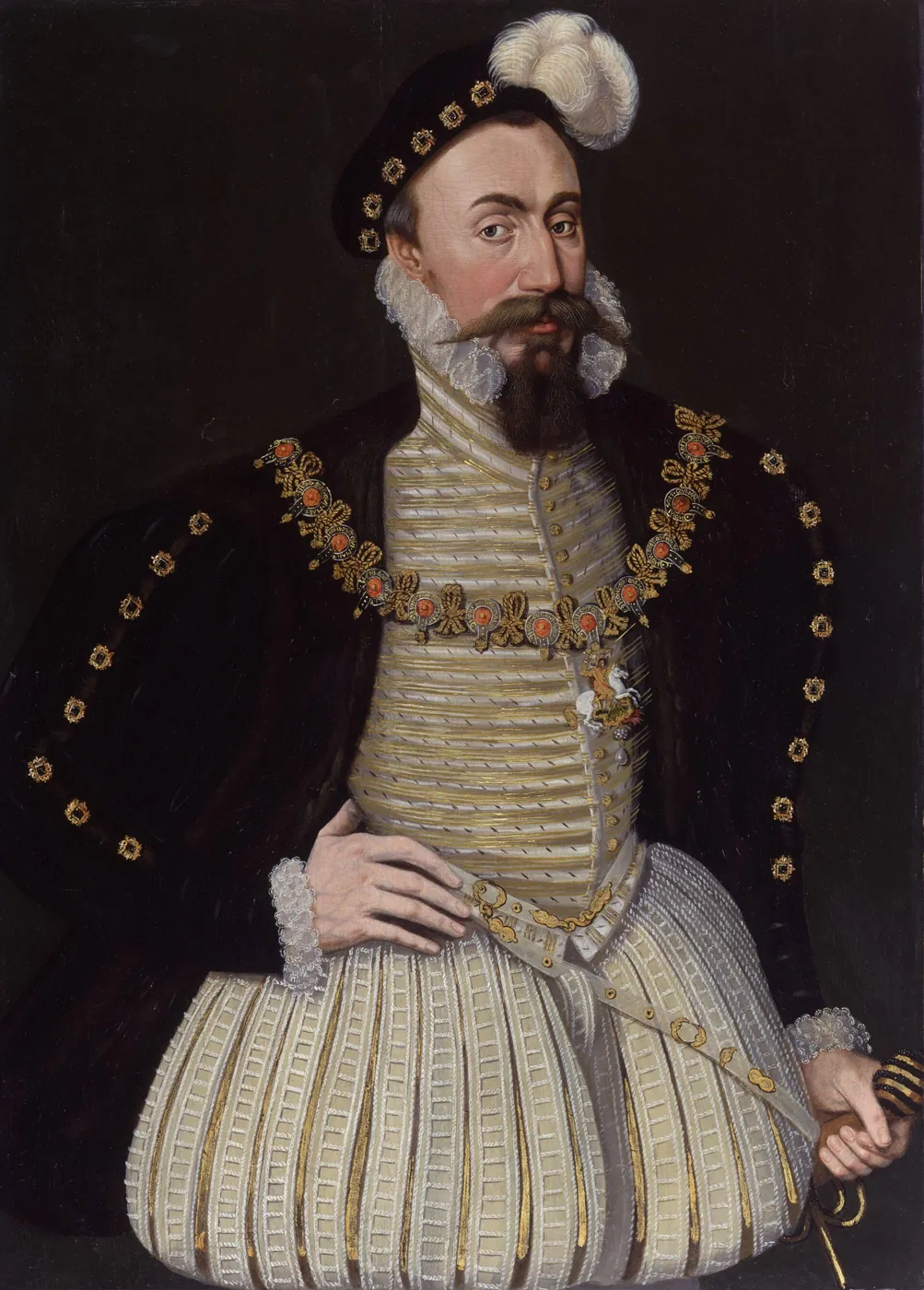
Elizabeth I’s proclamation of 15 June 1574 gives “a brief content of certain clauses” of the apparel statutes of Henry VIII and Mary, “with some moderation”. Its list for men’s apparel opens with a ban on silk of the colour of purple and then names who is excepted, in words that go back to Henry VIII’s act of 1533 and still name a king. A man could belong to several of these groups: Robert Dudley was both an earl and a Knight of the Garter, so the list gave him two different allowances.
These rows are groups, not a ladder. They overlap and are not ranked above one another.
Tap a row to see what the source records for it.
Source: proclamation of 15 June 1574 (16 Elizabeth I), Hughes and Larkin, Tudor Royal Proclamations, II, no. 601, transcribed at elizabethan.org in modern spelling; the 1533 act, 24 Hen. VIII c. 13. Only the purple provisions are shown.
The source’s list in full
Group
Colour
What the source records
King, queen, king’s mother, children, brothers, sisters, uncles and aunts
Purple silk
May wear silk of the colour of purple.
Dukes, marquises and earls
Purple silk, in part
Purple silk in doublets, jerkins, linings of cloaks, gowns and hose.
Those of the Garter
Purple, in mantles
Purple in mantles only.
Lord Chancellor, Treasurer, President of the Council, Privy Seal
Any silk but purple
Any velvet, satin or other silk except purple.
King’s council, judges, serjeants at law, mayors and similar officers
Customary dress
May wear what they have worn before, except velvet, damask or satin in crimson, violet, purple or blue.
All other men
No purple silk
None may wear silk of the colour of purple in his apparel. The proclamation does not forbid silk buttons or facings “for comeliness only”, a servant’s wearing his master’s cognizance, or the dress of heralds, jousters, people the Queen has clothed or those she licenses.
Women
No purple clause
The separate list for women restricts cloth of gold, tissue, sables and crimson or carnation velvet, among other things. It has no clause on purple silk.
Robert Dudley, Earl of Leicester, about 1575, by an unknown artist (National Portrait Gallery, London, NPG 247). He was an earl and a Knight of the Garter, so the 1574 list gave him two different allowances.Image: unknown artist, Robert Dudley, Earl of Leicester, public domain, via Wikimedia Commons.
What happened to yellow under the Sui and early Tang?#
The Old Book of Tang’s treatise on carriages and dress follows yellow through four roles in about sixty years. Under the Sui dynasty, before 605, it says, emperors and noble ministers mostly wore robes of yellow figured twill, and the everyday dress of officials was “the same as that of the common run of people: all wore yellow robes.”
Then Emperor Yang changed it. In the first year of Daye (605) he had caps and dress redesigned, “from the Son of Heaven down to the clerks”, graded by rank, and allowed the fifth rank and above to wear vermilion and purple. In the sixth year (610), for officials accompanying him on distant journeys in military dress, the treatise records a code of colours: purple robes for the fifth rank and above; crimson and green for the sixth rank and below; blue for clerks, white for commoners, black for butchers and merchants and yellow for soldiers. By 610, then, purple stood at the top of the Sui scale and yellow was the soldiers’ colour.
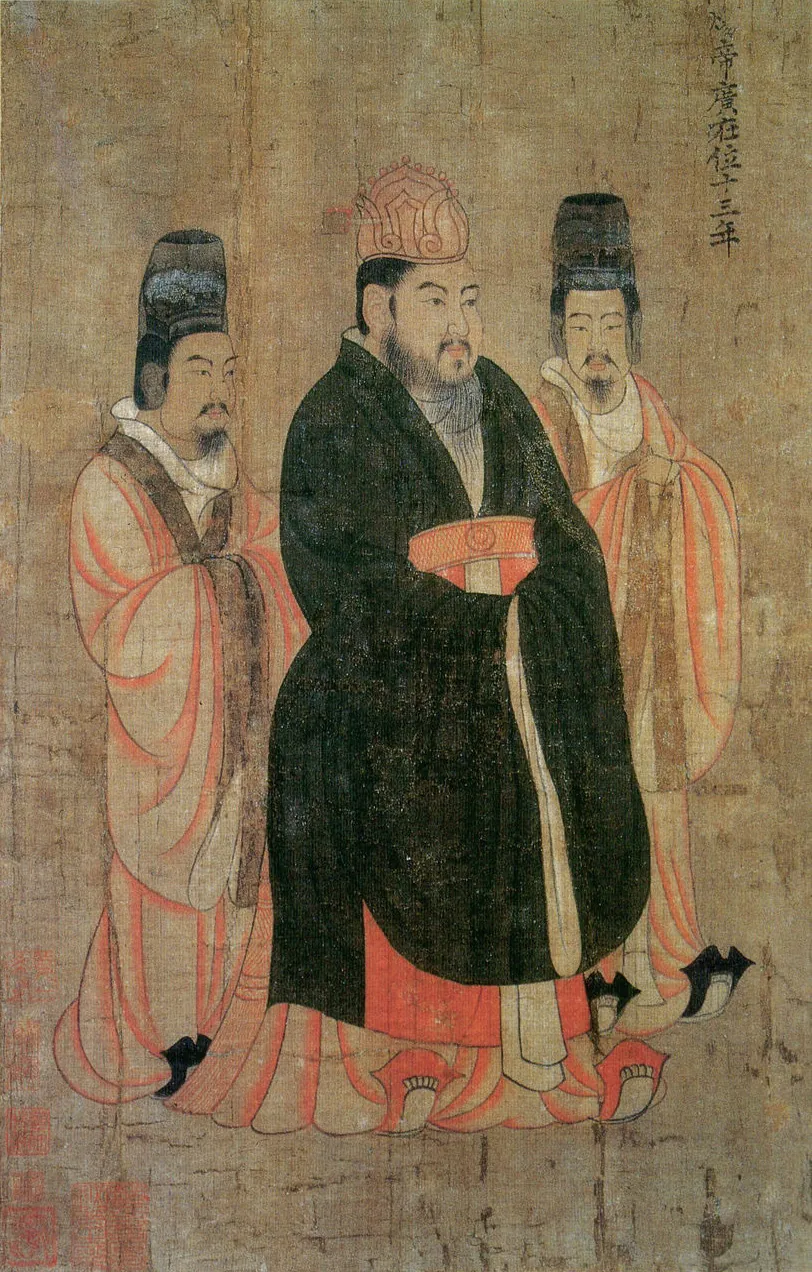
Emperor Yang of Sui, who issued the dress codes of 605 and 610, in the Thirteen Emperors scroll attributed to Yan Liben, seventh century (Museum of Fine Arts, Boston). The picture was made after his death and says nothing about the colour rules.Image: Yan Liben (attributed), Thirteen Emperors Scroll (detail), Sui Yangdi, public domain, via Wikimedia Commons.
The early Tang kept yellow for the emperor:
In the early Wude years, following the Sui system, the emperor’s informal dress, also called everyday dress, was only a yellow robe and tunic; later reddish-yellow was gradually used, and so officials and commoners were forbidden to use reddish-yellow for clothing or trim.
Old Book of Tang, chapter 45, Treatise on Carriages and Dress; translation by Marius Comper
The ban named a shade, not the whole colour, and the ranks already had colours of their own. An edict of the eighth month of the fourth Wude year (621) gave purple, with jade fittings, to the third rank and above; vermilion, with gold, to the fifth rank and above; and yellow to the sixth rank and, as the clauses on silver and brass fittings show, the ranks below it, with colours “generally yellow” for those outside the ranks and for commoners. So purple and vermilion stood above yellow from 621, not from 630. In the fourth year of Zhenguan (630) the ranks were set in purple, crimson, green and blue, and “although there is an ordinance, wearing yellow is still permitted.” In 662 a request to move the eighth and ninth ranks from blue to blue-green was approved, on the ground that deep blue could be mistaken for purple, with permission to wear yellow as well at court attendance. In 668, the treatise records, wearing yellow was no longer permitted at all; it does not say who is meant, and the sentences around it concern officials’ dress. In 674 the ranks received purple, dark and light red, green and blue, and commoners belts of copper or iron.
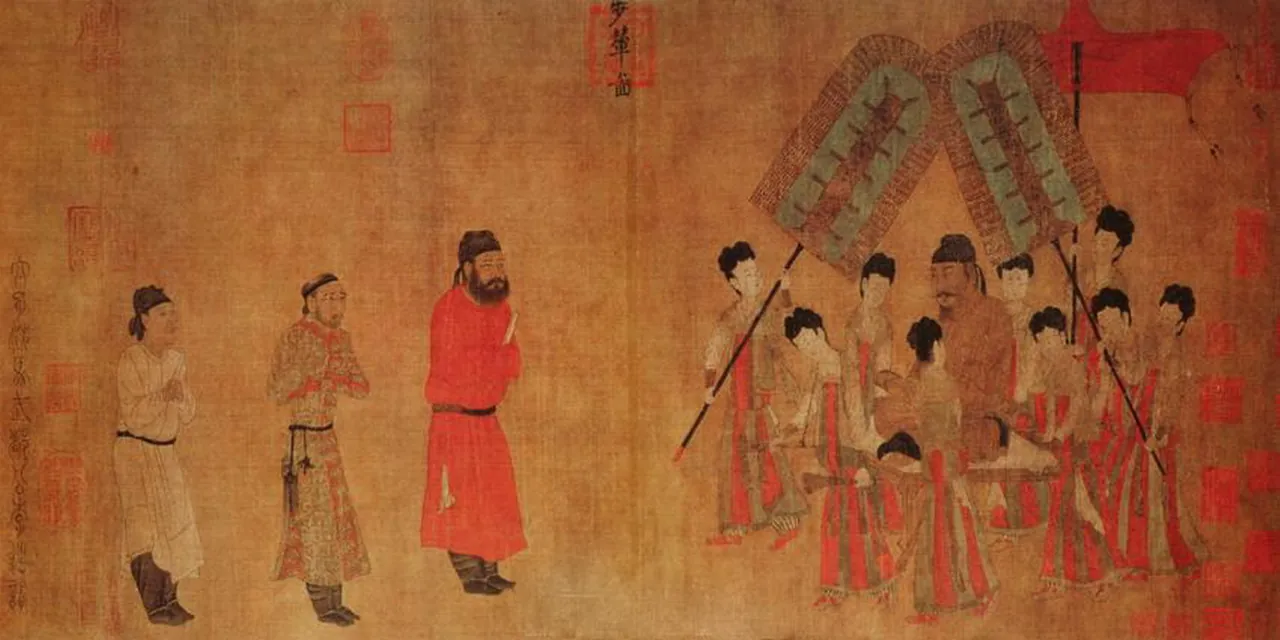
Emperor Taizong receives a Tibetan envoy, an event of 641. The scroll is attributed to Yan Liben; the surviving copy dates from the Song dynasty (Palace Museum, Beijing). It is shown for the court setting; the surviving copy is later, so its colours are not evidence for the rules.Image: Yan Liben (attributed), Emperor Taizong Receiving the Tibetan Envoy (Bunian Tu), public domain, via Wikimedia Commons.
The emperor’s colour moved too. The emperor’s table cushions, bed cushions and bed curtains had all been decorated in purple; in 747 a rites official asked that they follow the colour of the imperial robe, reddish-yellow, and the request was granted. In 751 the guards’ banners changed from crimson to reddish-yellow “to match the virtue of earth.”
What the treatise shows is yellow in motion: the common colour of Sui everyday dress, then the soldiers’ colour in the code of 610, then the lowest band of the ranks in 621 and the colour of commoners, while a narrower reddish-yellow was claimed for the emperor and closed to officials and commoners, until in 668 yellow itself was no longer permitted. Purple and vermilion stay on top from 605. The treatise gives no reason for the first ban on reddish-yellow and says nothing about the cost of yellow dyes. Rules under the later Ming and Qing are outside the sources checked here.
The Nihon Shoki, in W. G. Aston’s translation, records under the twelfth month of the eleventh year of Empress Suiko (603 in Aston’s dating): “Cap-ranks were first instituted”: greater and lesser grades of virtue, benevolence, propriety, faith, justice and knowledge, “in all twelve grades. Each was made of sarcenet of a special colour.” In 604 the caps were first granted to the ministers, “there being a distinction for each.” The Japanese text says each cap was sewn of silk of its proper colour, 當色. In 611 “the colour of the clothing of the various Ministers agreed with the colour of their official caps,” and their hair ornaments were gold for the two highest grades, leopards’ tails for the next two and birds’ tails for the rest.
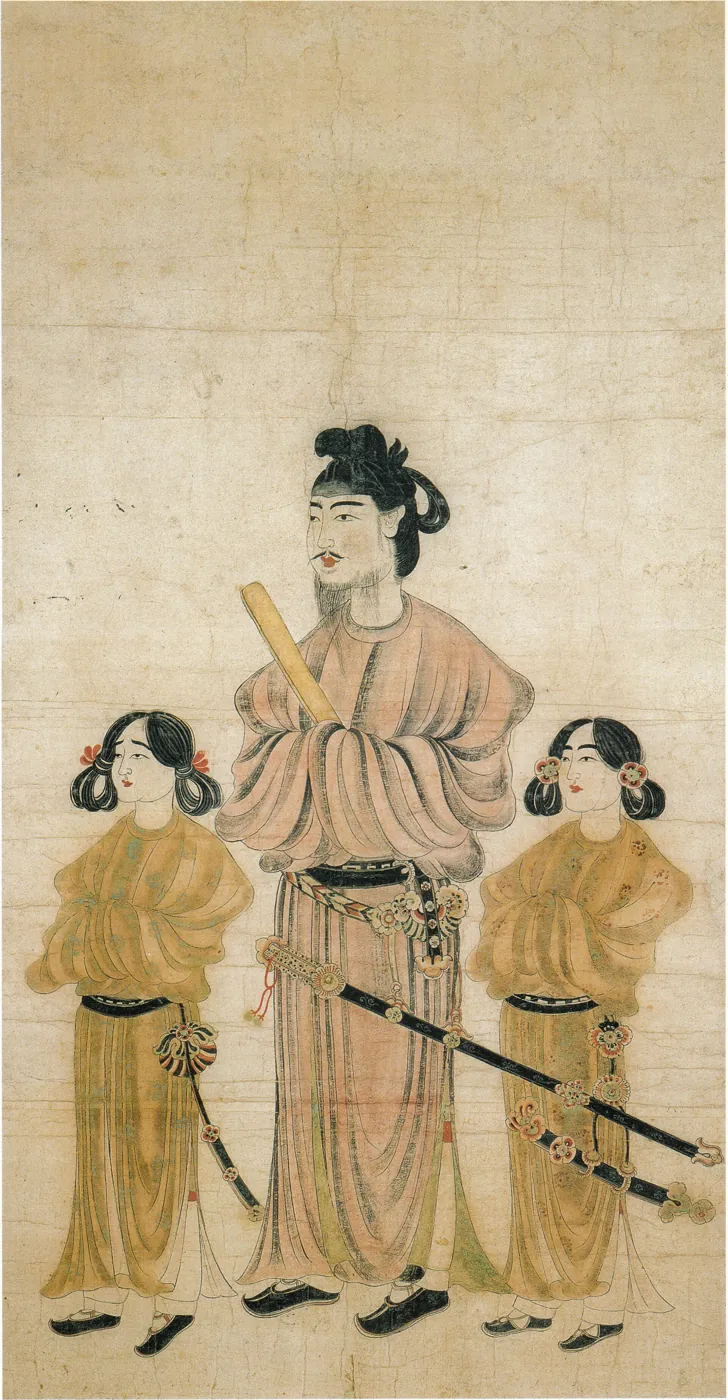
Prince Shōtoku and two princes, a portrait in the Japanese Imperial Collection traditionally attributed to Prince Asa and dated to the seventh or eighth century. It is not evidence for which colour went with which cap grade.Image: attributed to Prince Asa, Portrait of Prince Shōtoku and Two Princes, public domain, via Wikimedia Commons.
That is all the chronicle says about colour: each grade had one, and clothing matched the cap. It does not say which. The mapping comes from elsewhere. Aston’s notes of 1896 say that purple was for officials of the fifth rank and upwards “in imitation of the contemporary Sui dynasty of China,” that nin was green, rai red, shin yellow, gi white and chi black, and that princes and chief ministers wore the cap of the highest rank. Another of his notes says that these cap-ranks “did not remain long in use. They were subsequently modified, and ultimately abandoned altogether.” None of this is in the chronicle’s own text.
Japanese scholarship holds the colours unknown. The Japanese Wikipedia article on the system, which summarises work by Kishi Tetsuo (1982) and Takeda Sachiko (1984) among others, says that no source gives the colour for any grade and that every proposed mapping is unconfirmed. The commonest guess assigns the colours of the five Chinese elements: blue to benevolence, red to propriety, yellow to faith, white to justice and black to knowledge. Purple for the top grades is the long-standing guess, drawn from a later report that the minister Soga no Emishi privately gave his son a purple cap. The article adds that the Soga ministers and the imperial princes are now thought to have stood outside the twelve grades, which contradicts Aston’s note on princes and chief ministers, and that the system is no longer thought to have been modelled on Sui China. This summary is a tertiary source; the monographs behind it were not opened.
So the ladder of twelve colours often printed for this system is a reconstruction, and the picker above marks every colour in it as a reading. Nothing in these sources says the dyes were dear; the status came from the grade.
The best grade was worth eight ducats an ounce, and a painters’ handbook ranked it above every other colour. Cennino Cennini’s handbook for painters, written around 1400, probably in Padua (a supposition in the Enciclopedia dell’Arte Medievale), opens its chapter on the pigment with praise: “Ultramarine blue is a colour noble, beautiful, and perfect beyond all other colours, and there is nothing that could be said of it but it will still exceed this (praise).” It tells the painter that with this colour, “together with gold (which adorns all the works of our art) let everything be resplendent.”
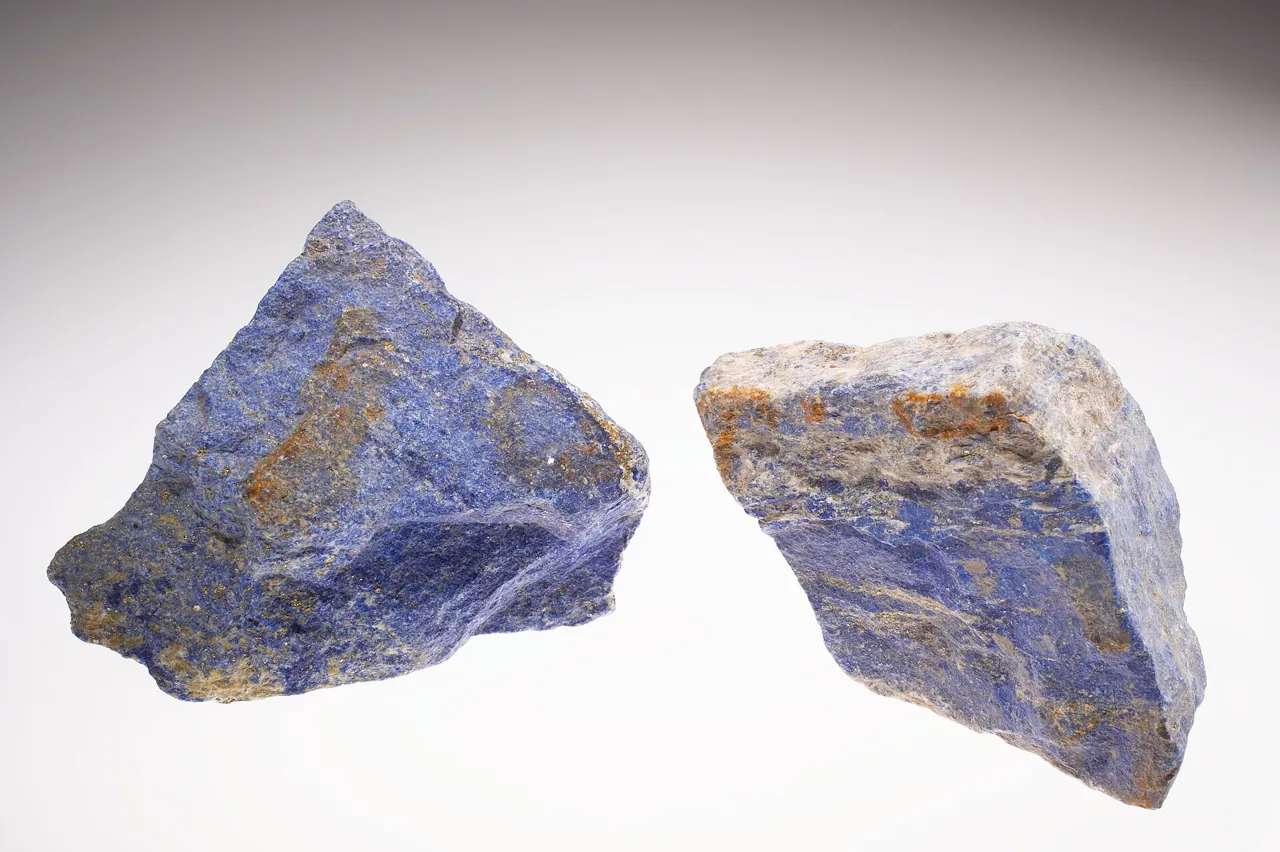
Rough lapis lazuli, the stone from which Cennini describes extracting ultramarine.Image: Central Intelligence Agency, Lapis Lazuli, public domain, via Wikimedia Commons.
He also gives the price. Describing how the pigment is extracted from the crushed stone in successive washings, he says that “if you have good lapis lazuli, the azure from the first two extracts is worth eight ducats the ounce. The last two extracts are worse than ashes.” A ducat, like the Florentine florin, was a gold coin of about 3.5 grams, so eight of them held about 28 grams of gold. An ounce weighed about 28 grams in Florence and on the light pound of Padua, and about 25 on Venice’s light pound: by those ounces the best blue was worth about its weight in gold. Padua also had a heavy pound, whose ounce of about 40 grams would make it two-thirds of its weight in gold. The same stone yielded a blue worth that much and a blue worth less than ashes, and the painter had to tell them apart. The chapter heading calls it “azzurro oltre marino”, blue from beyond the sea. This source records value in the workshop; it does not record laws on who could wear or commission it.
The Science History Institute’s account of the cochineal trade (Samantha Nadel, 2025) points to three reasons. The dye, made from insects that live on prickly-pear cactus, was far more concentrated than other insect reds, so artisans got deeper colour from less material. The Spanish Crown held a monopoly through Mexico and Peru. And Europe and Asia would pay: “depending on the year, cochineal could be worth half its weight or more in silver,” and only silver itself consistently brought the Crown more wealth over three centuries of colonial rule.
The trade was guarded. In 1674 Spain required all cochineal shipments to travel on, or under the protection of, warships. In 1600 the chronicler Antonio de Herrera claimed that Tlaxcala grew more cochineal than all the other regions of New Spain combined, and an estimated 150,000 pounds were shipped to Spain that year. The dye was far older than the empire: the oldest Mexican textile known to contain cochineal is about 2,300 years old, and the Tlaxcalteca were using cochineal-based paints in their pictographic books by the 1400s. The colonial state tried to standardise production, appointing a cochineal judge in Puebla in 1572 and ordering sun-drying in 1573. In 1585 four Tlaxcalan noblemen asked Philip II for a stamp certifying their province’s cochineal, and did not get one.
This source documents the value of the dye and the control of its trade, not who was allowed to wear red. Rules on red dress are not covered here.
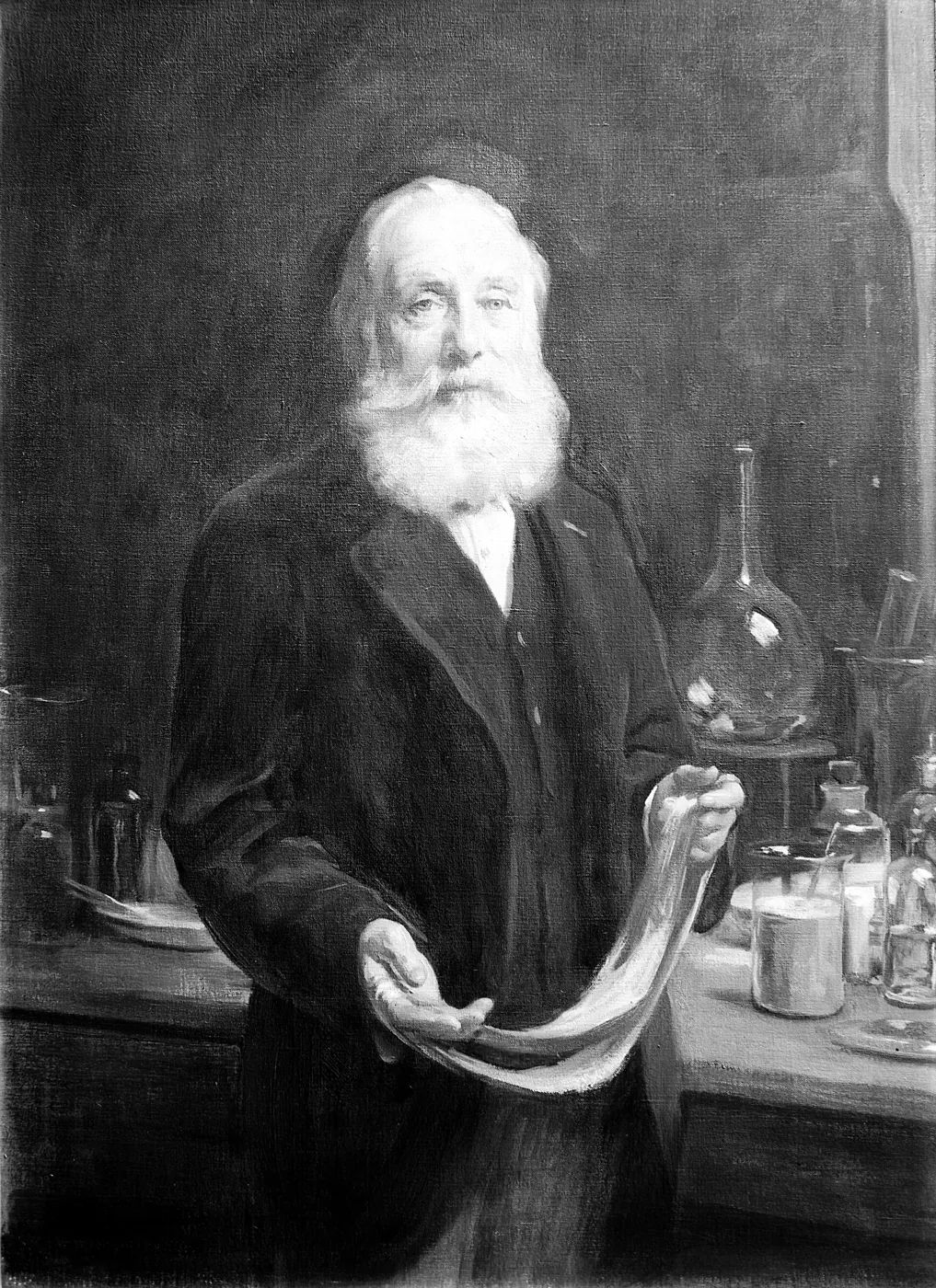
William Henry Perkin (1838–1907) in later life, in his laboratory (Wellcome Collection).Image: Wellcome Collection, Portrait of Sir William Henry Perkin (1838–1907), chemist, CC BY 4.0, via Wikimedia Commons.
William Henry Perkin, who found the dye by accident at 18. In 1856, during the Easter vacation from the Royal College of Chemistry in London, he tried to make quinine from coal-tar chemicals and produced a purple instead. The Science Museum Group records that the Patent Office granted him a patent on 26 August 1856 for “a new colouring matter for dyeing with a lilac or purple colour stuffs of silk, cotton, wool, or other materials.” In 1857 he opened a factory at Greenford Green, near London.
The Science History Institute calls the result mauve, or aniline purple, “the first commercialized synthetic dyestuff.” Friedländer needed 12,000 snails for 1.4 grams of the ancient pigment; Perkin’s purple came out of a factory from coal-tar chemicals. What happened to purple’s standing afterwards is not covered by these sources.
This is a reading across the sources above, not a finding any one of them states.
Three ways of setting a colour apart, often combined. Price made purple dear in Rome, ultramarine in Cennini’s workshop and cochineal in the Spanish trade. Law backed price or replaced it: Nero’s ban, the Byzantine monopoly, England’s 1574 list for men. Rank codes gave colours to ranks in Sui and Tang China, and in Japan, where the chronicle records the grades and says each cap had a colour.
Price alone did not decide. The 301 edict caps a lichen purple at under 4% of the Tyrian price. And a colour could move: yellow was the everyday robe of Sui officials, then the soldiers’ colour in 610, then the colour of the lowest ranks and of commoners in 621, while purple and vermilion stayed above it and a reddish-yellow was kept for the emperor.
What these sources cannot say. They do not show whether a colour made the status or the status made the colour, and they stop at 1856 for purple. For ultramarine and cochineal they record value, not who was allowed to wear them. India, Africa, the Islamic world and pre-Columbian feather and shell colours are not covered.
Quoted English is the translator’s, as linked; the Chinese passages are translated by Marius Comper. A second reader, OpenAI’s Codex, an AI model, checked the renderings against the Chinese and against parallel texts in the New Book of Tang and the Tang huiyao; where it disagreed, the wording follows its reading or says what is uncertain. Prices are the figures the sources give, in the units they give. The calculations are divisions: a price by a day’s wage; a price by the edict’s price for gold or silver; 1,000 denarii by 84 to the pound, less one thirtieth for alloy; and one multiplication: eight ducats times about 3.5 grams of gold each. The edict’s figure of 150,000 denarii for purple silk was read in Kropff’s translation and matches Crawford’s edition of the Aphrodisias text (purpurae metaxablattae, 150,000). A Roman pound is taken as 327.45 grams, the value Kropff follows from Lauffer. Colour swatches and cloths are drawn to suggest each colour; they are not reconstructions of ancient dyes. The images come from Wikimedia Commons, and each is credited under its figure.