UNESCO counted 277 points along Rome's Dacian frontier. Only a few can be visited, with a ticket.
UNESCO recognised the Roman frontier of Dacia as a World Heritage site in 2024: 277 components across more than 1,000 kilometres. Of those, a small number today publish opening hours, charge admission and have a museum that runs them. Here they are, with their sources.
Updated 13 September 2026
What UNESCO recognised in 2024
The Roman frontier of Dacia, known as the “Dacian Limes”, was inscribed on the UNESCO World Heritage List in 2024, as part of the transnational “Frontiers of the Roman Empire” series. It extended for more than 1,000 kilometres, along the province's western, northern and eastern borders, across the Transylvanian Plateau and through the lowlands of Muntenia, along the Olt river, with the Danube at each end. It operated from AD 106 to 271, and Roman troops officially withdrew around AD 270–275, under Emperor Aurelian.
The UNESCO-recognised property comprises 277 components — legionary fortresses, auxiliary forts, earthen ramparts, watchtowers, temporary camps, civilian settlements — grouped into seven sectors, plus an eighth, a cluster of high-altitude marching camps. Most have left traces in farmland, with no paths laid out for visitors, and the records about them sit mainly in archives. UNESCO recognition concerns the archaeological evidence of the frontier, not the visitor infrastructure at each point, and the two have moved separately.
Approximate positions, for orientation only — not surveyed coordinates. Click or tap a point to jump to its profile.
Sites
Seven sites, each with hours checkable at the source. The order follows the frontier line, north to south, plus one contrast point from Dobruja.
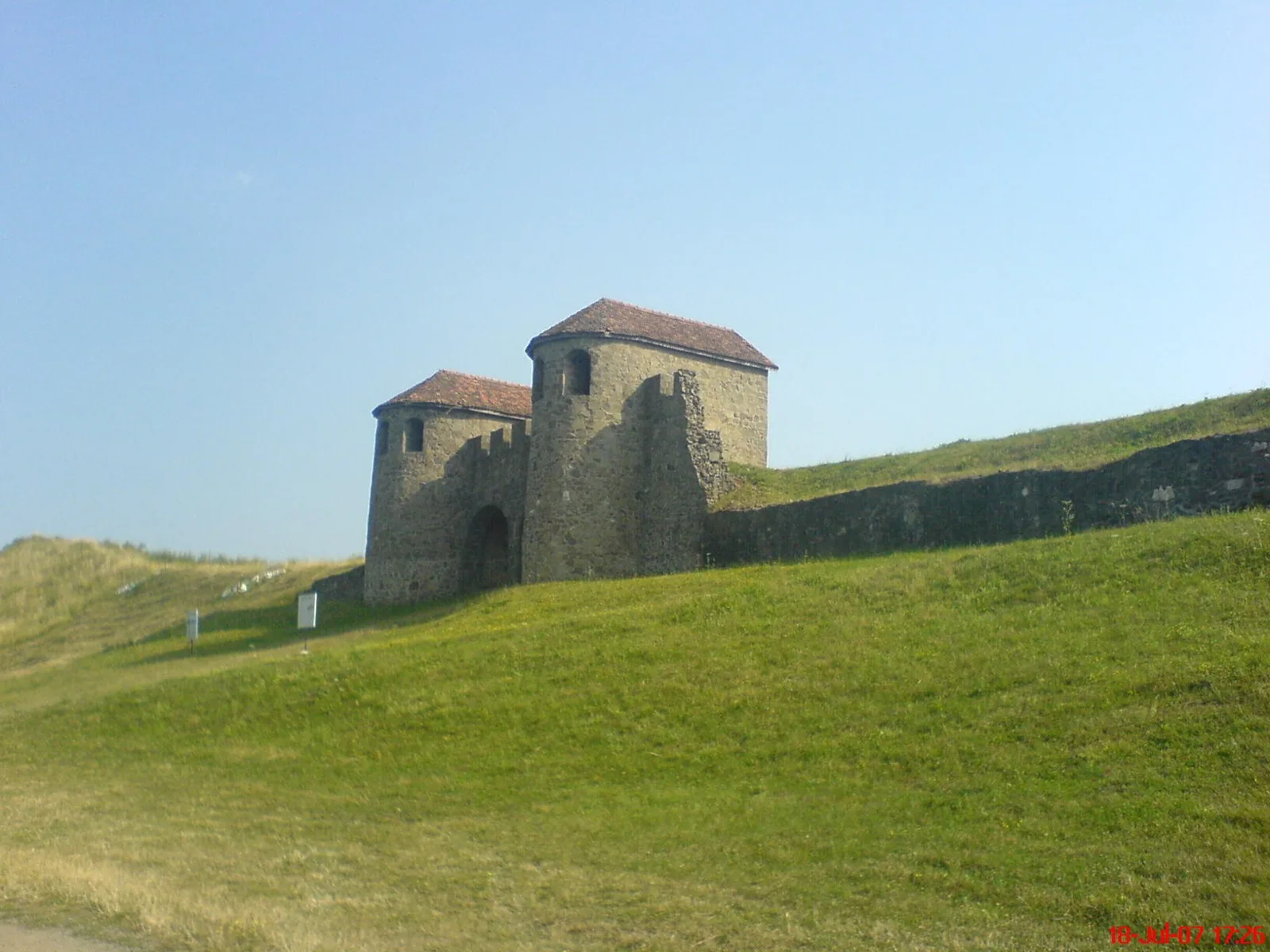
Porolissum — Moigrad-Jac, Mirșid commune, county of Sălaj
The praetorian gate of the Porolissum fort, seen from a distance. Klorofill, public domain. Wikimedia Commons.
auxiliary forts + town + amphitheatre · AD 106–271
The northernmost major fortified point of the province of Dacia, guarding the pass through the Meseș Mountains into Barbaricum, the territory beyond the frontier. The only site on this list with an amphitheatre, a rebuilt praetorian gate, and a stone wall visible for hundreds of metres.
Visiting
Administered by
Sălaj County Museum of History and Art, Zalău
Hours
daily, 9:00–21:00
Price
11 lei adults, 6 lei pensioners/students, free under 7
A fort on the eastern frontier of Roman Dacia, in the Niraj valley, facing the Eastern Carpathians. Over its history, its garrison included, at different times, detachments from Legio XIII Gemina and from the cohorts I Alpinorum and I Augusta Ituraeorum. It belongs to the same UNESCO property as Porolissum, on a different sector of the frontier. Limesparc, an extension of the older archaeological park open since 2015, opened here in June 2026.
Visiting
Administered by
Mureș County Museum — Roman Limes Research Centre
Hours
1 April – 30 November: Tuesday–Friday 9:00–18:00, Saturday–Sunday 9:00–16:00, Monday closed; calling ahead is recommended
Price
about 5 lei adults, 1 leu students, 2 lei pensioners (2026 rates; the Mureș County Council has proposed an increase for 2027)
The unearthed gate of the Roman fort Apulum, at Alba Iulia. Oguszt, CC BY-SA 3.0. Wikimedia Commons.
legionary fort, under a later citadel · AD 106–271
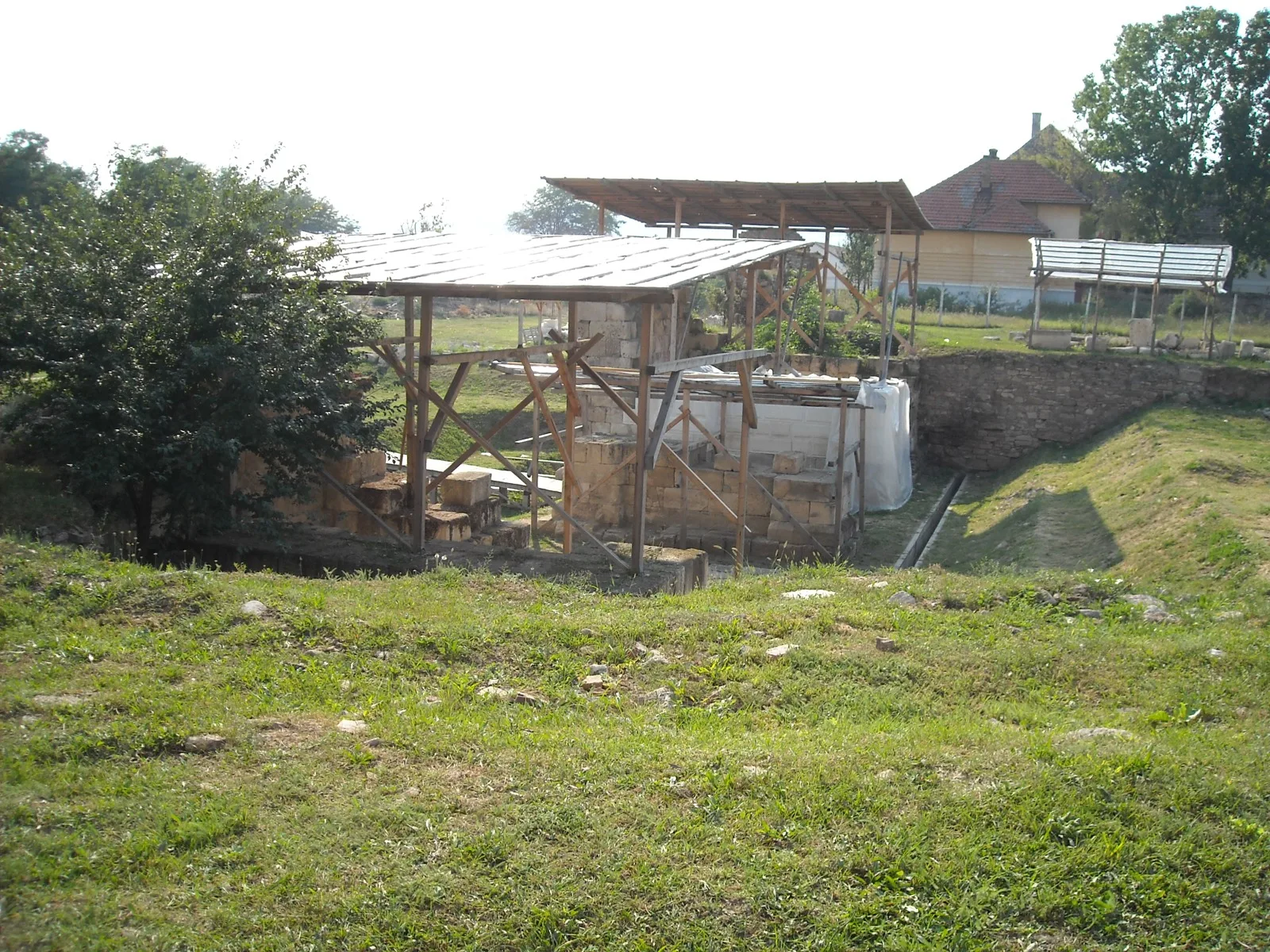
The fort of Legio XIII Gemina, buried under the 18th-century Alba Carolina citadel. The fort's southern gate and its principia, the command building, are partly reconstructed and visible along the citadel route.
Visiting
Administered by
National Museum of the Union, Alba Iulia
Hours
the Alba Carolina citadel is open at all times; the museums inside keep their own hours
Price
free access to the citadel; the museums charge separately
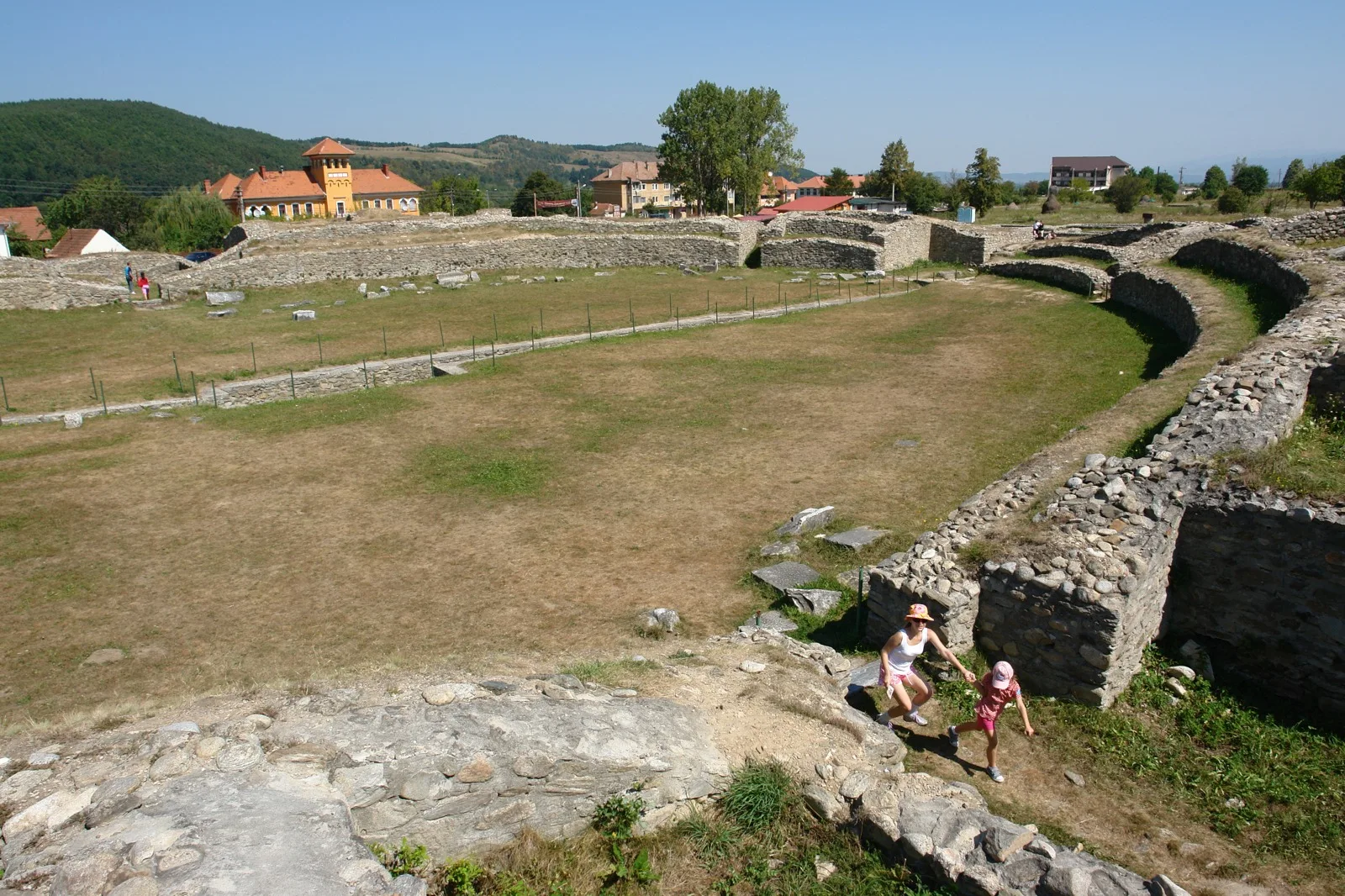
Ulpia Traiana Sarmizegetusa — Sarmizegetusa village, county of Hunedoara
The amphitheatre of Ulpia Traiana Sarmizegetusa. Uhserban, CC BY-SA 3.0 RO. Wikimedia Commons.
colonia — the province's capital, not a fort · AD 108 – 4th century
The civilian capital of Roman Dacia, founded by Trajan on the plain, after the conquest. Its provincial amphitheatre reopened in 2025 after 12 years of work, with 500 seats installed on metal bleachers.
One name, two places
“Sarmizegetusa” on its own often refers to Sarmizegetusa Regia, the former Dacian capital in the mountains, 40 kilometres from here, with walls built in the murus dacicus technique (stone and timber, no mortar) and sanctuaries. Ulpia Traiana Sarmizegetusa is a different place: the Roman province's capital, founded on the plain. The near-identical name was the Romans' own deliberate choice, not a modern translation coincidence.
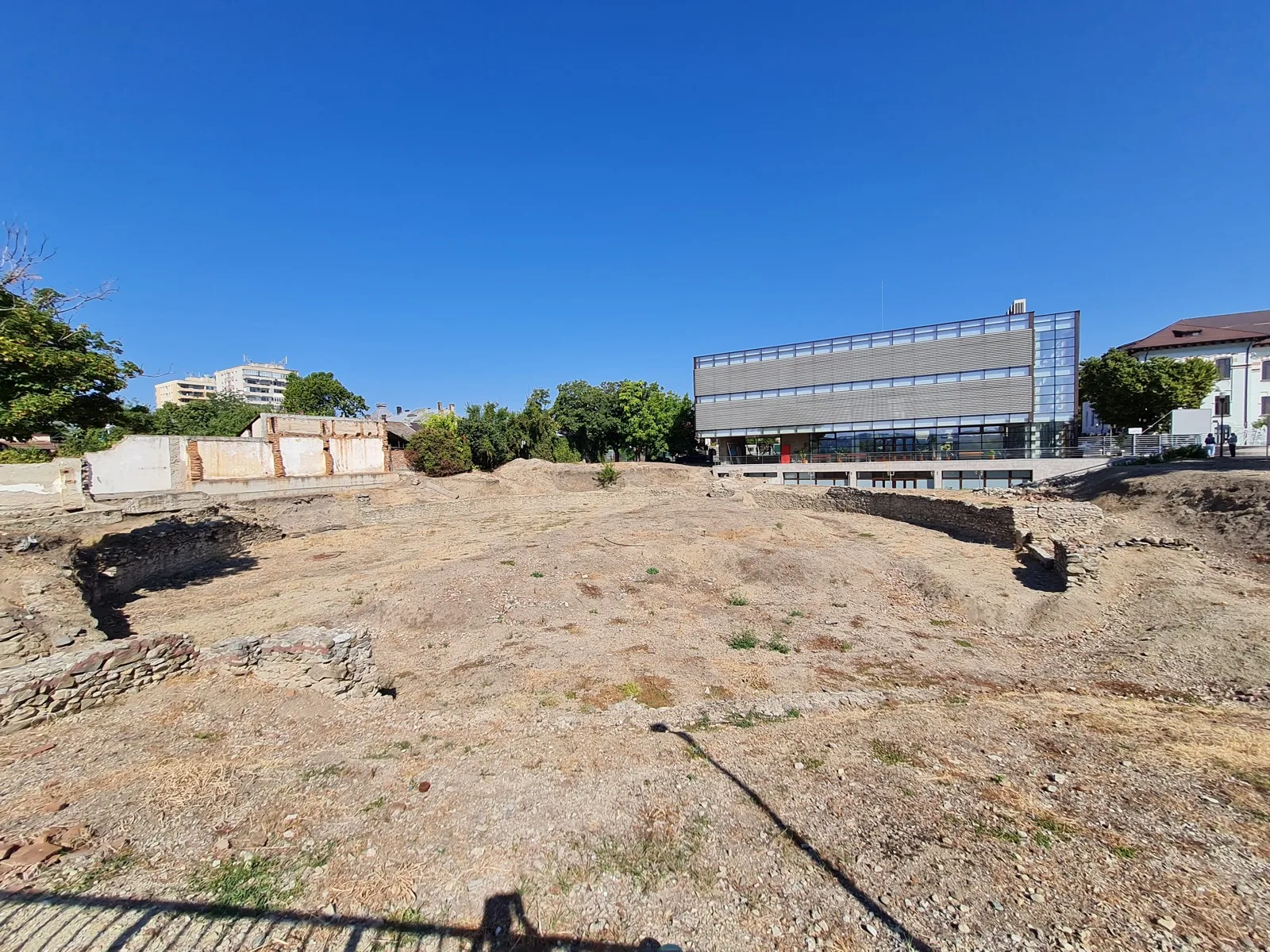
Drobeta — Drobeta-Turnu Severin, county of Mehedinți
The Roman amphitheatre at Drobeta, photographed in 2021. Leontin l, CC BY-SA 4.0. Wikimedia Commons.
fort + baths + amphitheatre · AD 101–271
The starting point of the Dacian frontier: the northern end of Trajan's bridge over the Danube, today inside a museum courtyard. Its amphitheatre is carved into Trajan's Column in Rome.
Visiting
Administered by
Iron Gates Region Museum
Hours
Tuesday–Sunday, 8:00–16:00
Price
8 lei for the archaeological park (fort, baths, amphitheatre, medieval church)
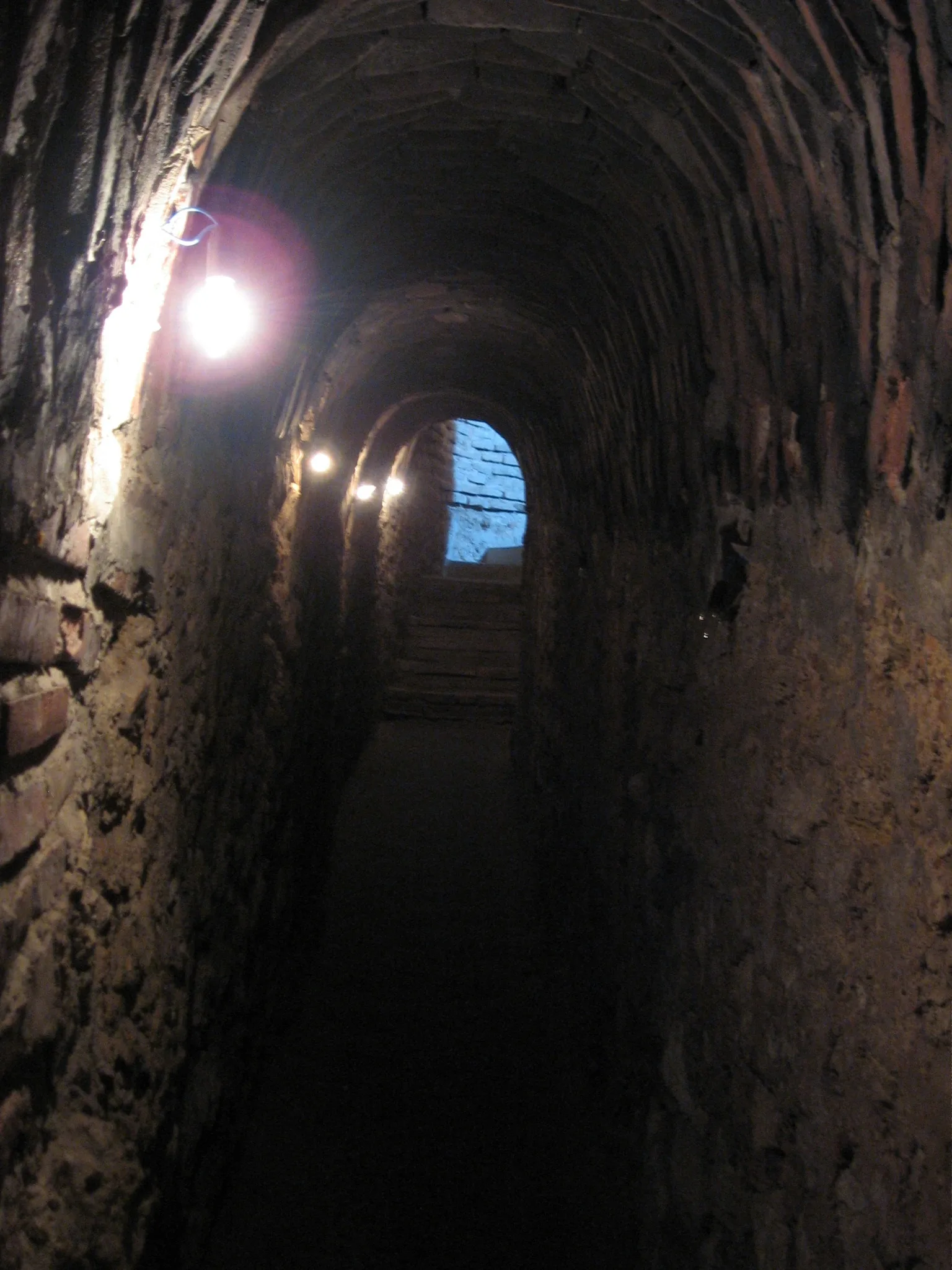
The entrance to the secret well of the Sucidava fortress, Celei, Corabia. noridamar, CC BY-SA 2.0. Wikimedia Commons.
Roman-Byzantine fortress · 3rd–6th century AD
The southern end of the Olt line, where the frontier stayed active long after 271, the year Roman troops withdrew from Dacia under Emperor Aurelian. It has a 6th-century secret well unique in the Roman world: a hidden shaft that supplied the fortress with water even under siege.
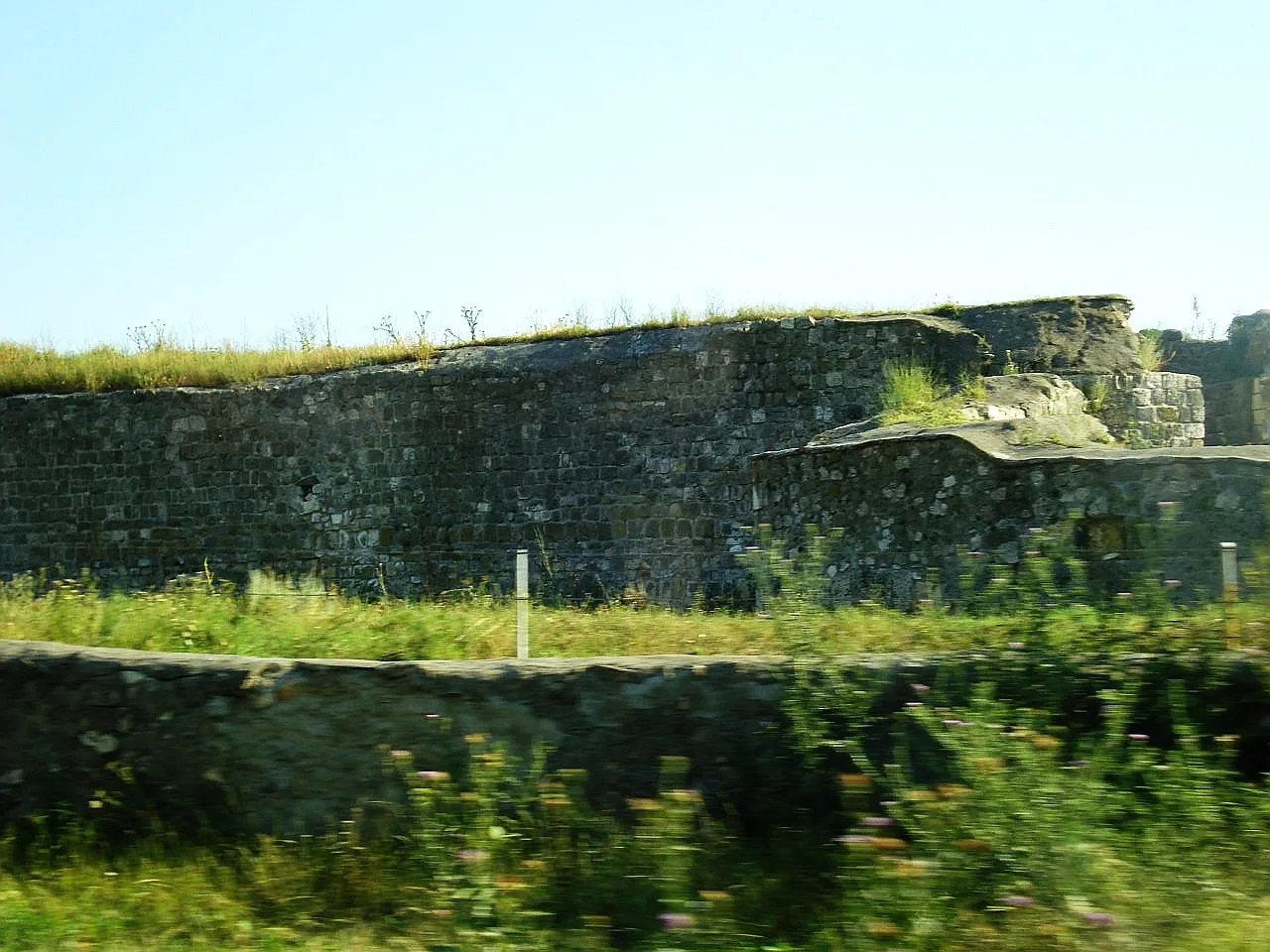
The walls of the Capidava fortress, on the bank of the Danube. Rotaru Florin, CC BY-SA 3.0 RO. Wikimedia Commons.
fort + Roman-Byzantine fortress · 2nd–6th century AD
A fortress built on the rocky bank of the Danube, occupied almost continuously from the 2nd to the 6th century.
Why Capidava is here too
Capidava is not part of the UNESCO-recognised Dacian Limes. It sits on the right bank of the Danube, in Dobruja, on a separate Roman frontier. While Roman Dacia existed, that territory belonged to the province of Moesia Inferior; only later was it reorganised as Scythia Minor. Capidava is included here for contrast: it shows what a well-guarded Roman frontier looked like on the other side of the country.
Visiting
Administered by
Museum of National History and Archaeology, Constanța
Hours
reopened from 15 June; check the seasonal schedule
Price
check the current fee with the administering museum


.jpg)
