Documented
Celtic settlement after 278 BC; Celtic names in Greek and Latin sources; Jerome’s testimony from 386
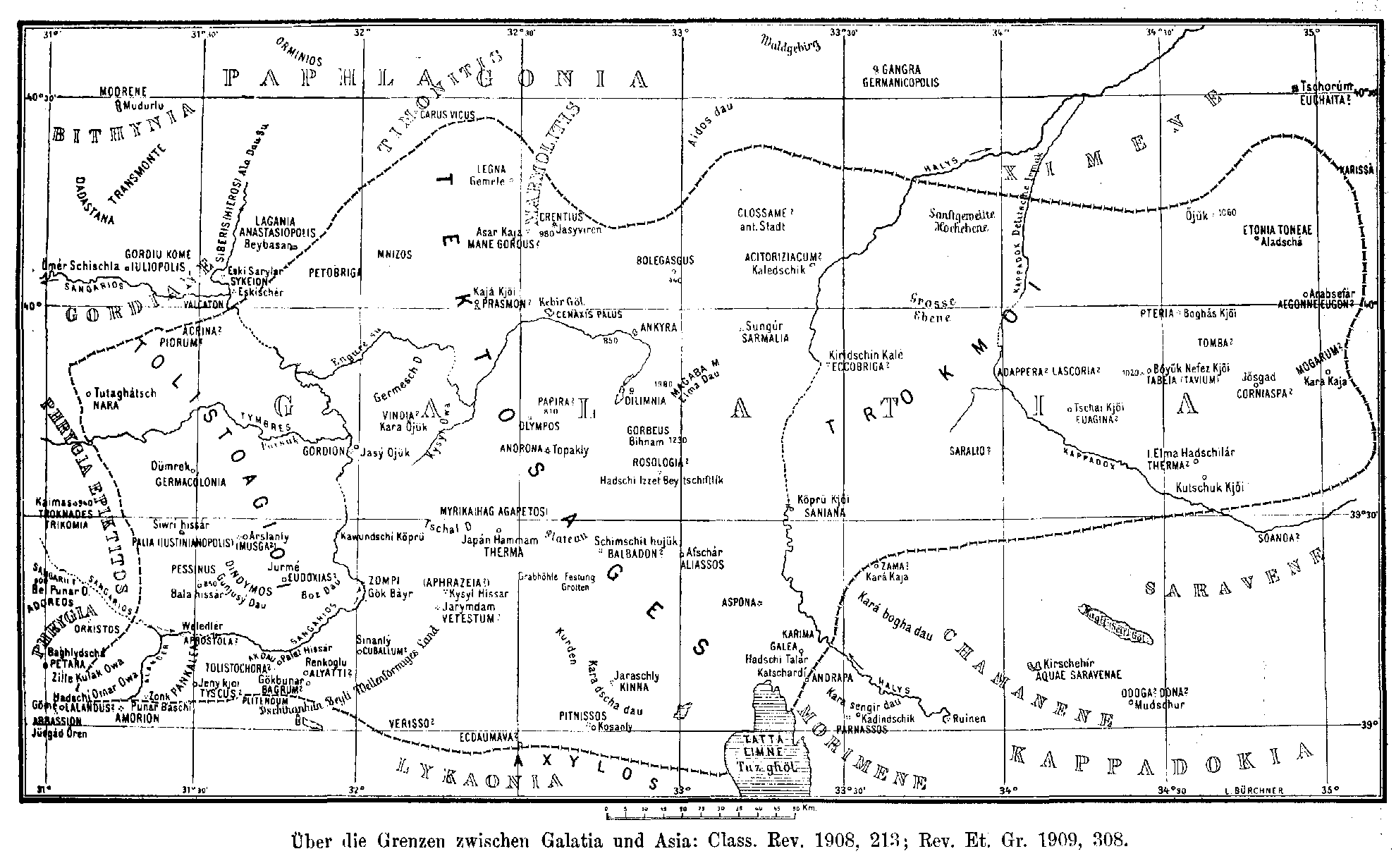
A Celtic language in Anatolia
Galatian travelled roughly 2,000 kilometres east and remained in central Anatolia for more than six centuries. Its voice disappeared. Names and witnesses remained.
0surviving Galatian sentences
386year of Jerome’s testimony
What we know
Scholars identify Galatian as a Celtic language closely related to Gaulish. Yet no inscription in a Celtic language has been found in Galatia. Public texts were commissioned in Greek, while the spoken language appears indirectly through names, a few glosses and remarks by ancient writers.
Celtic settlement after 278 BC; Celtic names in Greek and Latin sources; Jerome’s testimony from 386
the meaning of name elements through comparison with other Celtic languages
full pronunciation, grammar and every sentence spoken by a Galatian speaker
The geographic shock
Galatian belongs to the same language family as the languages of western Europe, but it was spoken in the heart of Anatolia. Jerome compared it with the speech of the Treveri, near modern Trier. The map puts them in one frame.

The archive without sentences
Select a name. The Greek letters are the surviving object; the Galatian form heard by the scribes remains a reconstruction.
Surviving script
Dēiotaros
What we can say
Celtic name, meaning debatedA Galatian royal name preserved in Greek and Latin writing. Scholars usually divide it into Celtic elements, although exact translations differ.
One family, three languages
A funerary stele from the Tavium area preserves three generations. The grandfather bears a Celtic name. His son has a name open to several readings. The grandsons divide Greek and Celtic traditions between them.
The sequence preserves different naming traditions within one family. Each member's spoken language remains unknown.
The last witness
"Besides Greek, which is spoken throughout the East, the Galatians use as their native tongue a language almost identical with that of the Treveri."
Jerome, Commentary on Galatians, Book II. The passage preserves an ancient comparison. Pronunciation and grammar are missing.
The viral claim of "800 years" compresses two things. Galatian communities and identity shaped the region for roughly eight centuries. Secure linguistic testimony links the settlement after 278 BC with Jerome's commentary written in 386.
Galatian groups enter Asia Minor and settle in central Anatolia.
Celtic names remain prominent among the elite of the Galatian kingdom.
The stele of Goutoumaros’s family mixes Celtic, Greek and hard-to-place names.
Jerome writes that the Galatians speak Greek and have a language of their own resembling that of the Treveri.
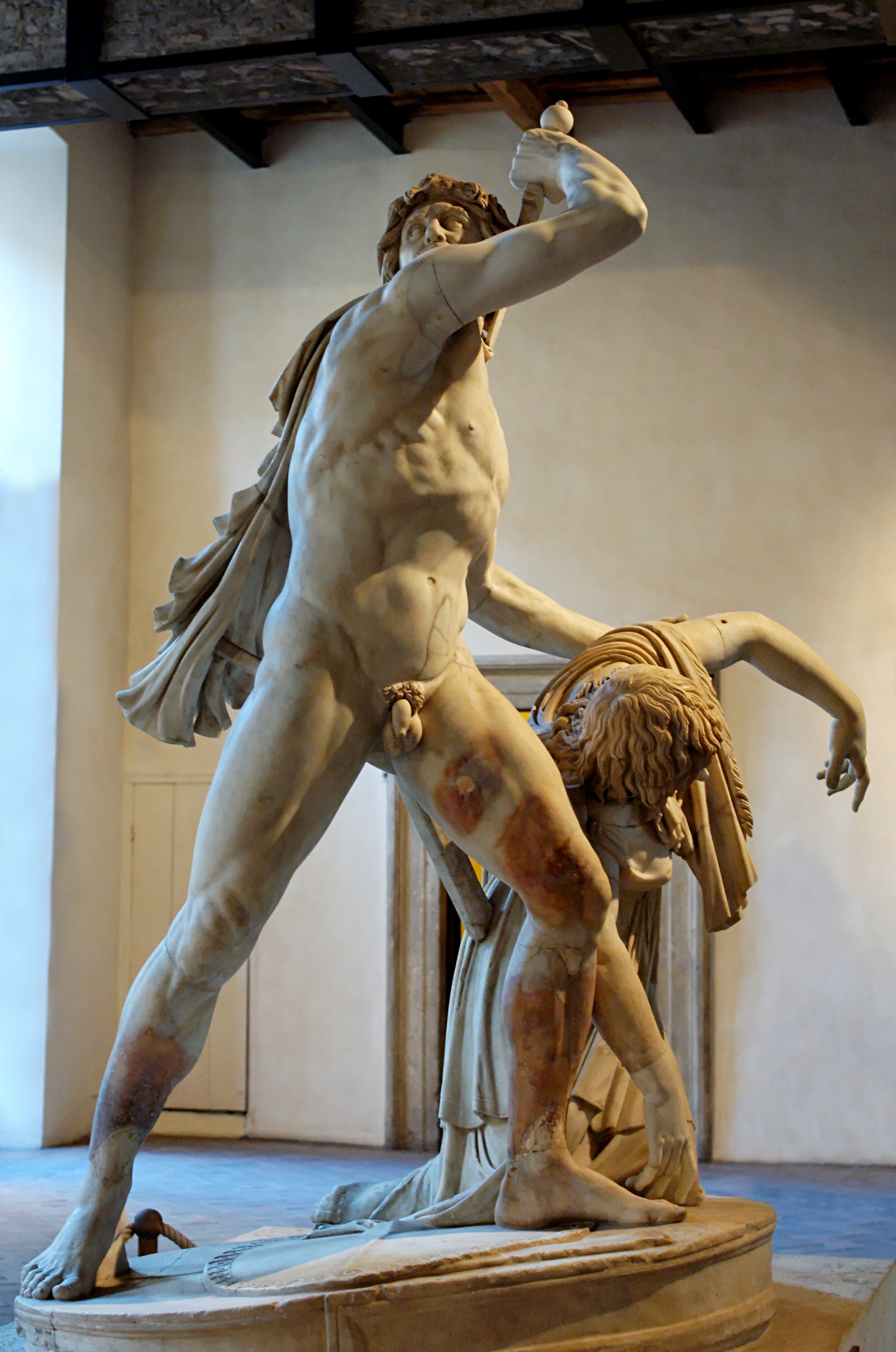
Other people’s gaze
The sculpture known as the Ludovisi Gaul is a Roman copy after a Hellenistic original associated with Attalus I’s victory over the Galatians. The victors turned the Celtic adversary into a memorable body. The sitter's identity remains unknown. Marble preserves none of the language's sound.
The screenshot, checked
A Celtic language was spoken in central Anatolia for centuries. Galatian names have real Celtic parallels.
The roughly 800 years better describe the history of Galatian communities and identity. The linguistic evidence is fragmentary.
No surviving inscription is composed in Galatian. ΔΟΜΝΕΙΟΥ has no direct translation as "Donald".
Galatian left no sentence. Names remain, along with traces in other languages and a witness who recognised it after more than six centuries. The gaps between them make up the history we can read.
Claims about the language come from scholarship and ancient texts. Images are stored locally and have verified open licences or public-domain status.
Recent scholarly synthesis: no Celtic-language inscription has been found in Galatia; also discusses the Goutoumaros–Bellon–Grimitalos family stele.
Explains why the recoverable corpus is chiefly onomastic and describes Galatian as a form of Gaulish transplanted about 2,000 km east.
Traces changing Celtic, Anatolian, Greek and Roman names from 278 BC into the third century AD.
Dates Jerome’s commentary to 386 and explains the textual transmission of the work.
Public translation of the passage about Greek, the Galatians’ own language and its resemblance to the speech of the Treveri.
Traces roughly eight centuries of political, cultural and identity history. The linguistic record remains fragmentary.
Evidence checked 14 August 2026. Evergreen; review when a new inscription or major scholarly synthesis appears.