Rome, 14 January 1900 · The soprano from Brăila who created Tosca
The first Tosca: 21 curtain calls and an unissued record
Hariclea Darclée recorded Vissi d'arte in Milan in 1905. The record was never put on sale, and nothing of her operatic voice survives. What survives is the applause, counted act by act by Ricordi's magazine.
Raise the curtain on the premiere. It falls for each call, and every encore is marked on the line. The applause and the three opening chords are synthesised in your browser; wherever she sings, the stage stays silent.
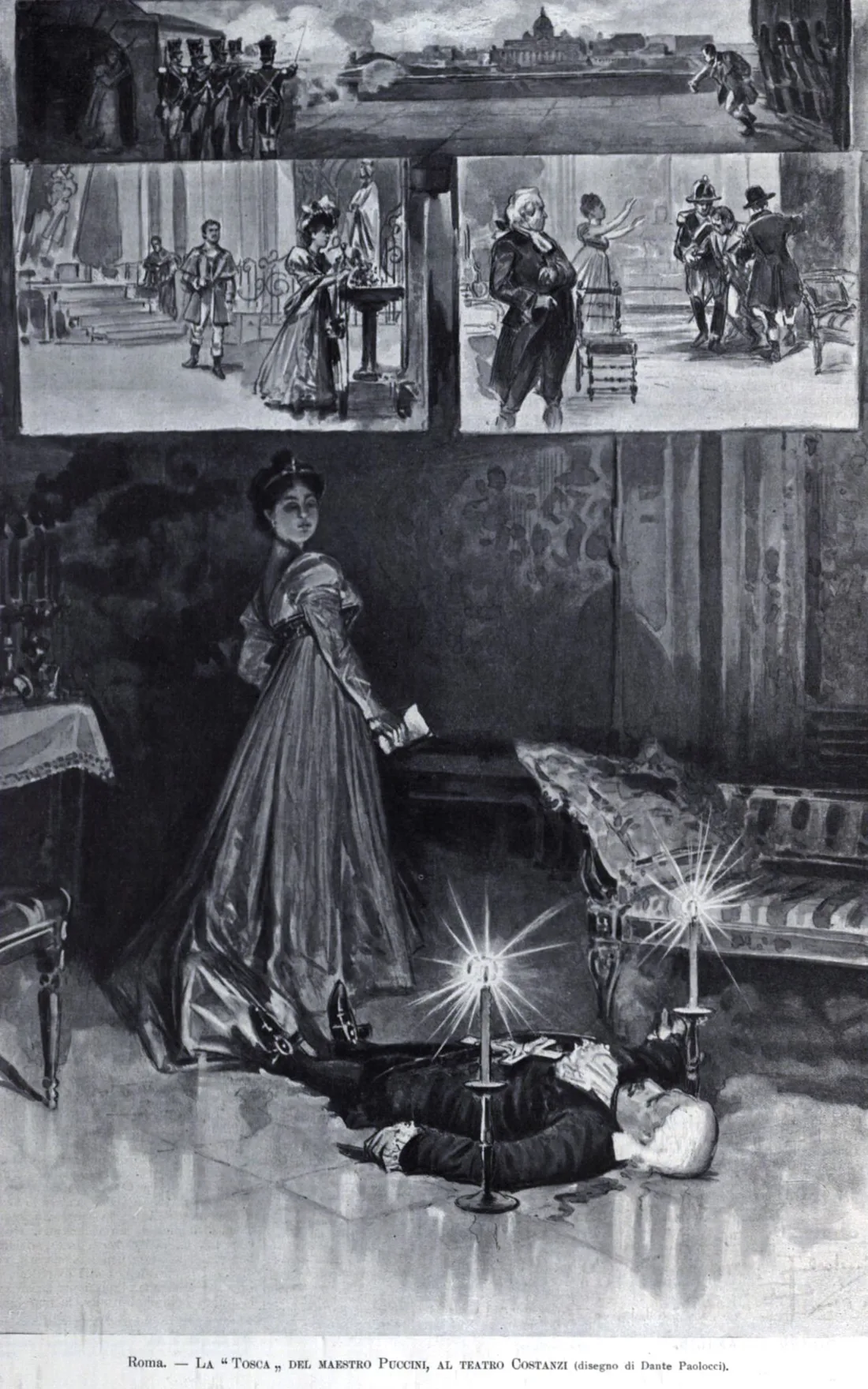
Darclée sings here. No recording of her in an opera role survives.
14 January 1900
A house full since 11 o'clock, and an orchestra stopped after three minutes
The Teatro Costanzi in Rome was packed hours before the performance. The telegram sent next day to the Gazzetta Musicale di Milano, the magazine of the Ricordi firm, which also published the score, opens with the crowd pressing at the doors “from 11 o'clock”. At 20:40 the conductor Leopoldo Mugnone gave the signal. After three or four minutes the noise of people who could not get into the stalls forced him to stop. The curtain came down and the opera began again.
Floria Tosca, the singer who kills the police chief blackmailing her, was Hariclea Darclée, a soprano born in Brăila, Romania. With her were the tenor Emilio De Marchi as the painter Cavaradossi and the baritone Eugenio Giraldoni as Scarpia.
The telegram counts everything: five numbers encored and 21 curtain calls. The third encore is her prayer in Act II, Vissi d'arte. The performance, the telegram adds, was “excessively nervous”, partly from first-night nerves, partly from panic over threatening letters sent to the singers and rumours of attacks.
Queen Margherita arrived at the start of Act II, the correspondent notes. Act I lasted about an hour, Act II fifty minutes, the last act forty. Pietro Mascagni had come to Rome for the evening. The Roman papers agreed “unanimously” on the success, while their critical verdicts were “the most disparate”.
At the second performance, the telegram left out her encore. The correspondent corrected it in his next letter: on the second night too Vissi d'arte had been repeated, and the calls for the composer had risen to “about thirty”. Tosca ran for 17 performances at the Costanzi, until 15 February.
Where did Vissi d'arte come from? In 1931 Darclée told the journalist Ion Massoff, in the Bucharest paper Rampa, that she had told Puccini she liked the opera but had “no number that would make much of an impression”, and that he “admitted the gap and wrote Vissi d'arte for me”. The story is hers, told 31 years after the premiere.
The finding
How many curtain calls? It depends which paper you read
Applause was a kind of currency then. Papers counted it, impresarios wired it, composers read it as a verdict. The Gazzetta Musicale reprinted other papers' reviews, and that allows something rare: the same night, counted by several witnesses.
At the premiere of Mascagni's Iris on 22 November 1898, also at the Costanzi and also with Darclée in the title role, the end of Act II drew 3 curtain calls according to one paper and 10 according to three others. For the whole night, the six reports that give figures for every act reach totals between 13 and 21.
The same night, counted by different papers
Ricordi's magazine (telegram or chronicle)Other papers, reprinted by the magazine
The differences do not look like misprints. The reports do not always count the same thing: some only the composer's calls, others the singers' too. The magazine's correspondent watched journalists sending telegrams during the intervals. The paper La Sera reported “about twenty” calls, although its own figures for each act add up to 13.
Even the most precise source is not neutral. The Gazzetta was the house magazine of Ricordi, which published Tosca, Iris and La Wally, and for Iris its telegram gives the highest total of the six. For Tosca, though, its whole-night figure of 21 is below the 25 of a London paper. Yet Giulio Ricordi himself mocked the inflation of applause in 1892:
“There is no way for us to announce the 45, the 40, the 33, or even the 30 calls that custom requires.”
Giulio Ricordi on the premiere of La Wally, Gazzetta Musicale di Milano, January 1892. He counted 13 calls for Catalani, the paper Il Secolo 12. A Turin critic, writing about the first two nights, estimated “about fifteen” and added that calls “no longer mean anything”.
How the counts were made
The figures come from the machine-read (OCR) text of the magazine's volumes on Wikimedia Commons, read page by page for the three premieres. Only printed numbers are kept: “eight or ten” appears as two dots, and “countless” or “several times” are left out of the chart. For Iris, the whole-night total is the sum of the acts; papers that do not give every act are missing from that row. Where the OCR mixes columns, the attribution was checked on the scanned page, as was the Tosca telegram.
Three premieres, three encores
At all three premieres, the house asked for her aria again
Darclée created three roles still sung today: Wally, Iris and Tosca. At all three premieres, the audience demanded an encore of her aria.
1892 · LA SCALA
La Wally
Ebben? Ne andrò lontana
The aria in which Wally leaves her home, at the end of Act I. Encored at the premiere and on the second night.
1898 · COSTANZI
Iris
Un dì, ero piccina…
The story of the octopus painted on a screen, in Act II. Encored at the premiere and on the nights that followed.
1900 · COSTANZI
Tosca
Vissi d'arte
The prayer in Act II. Encored at the premiere, on the second night and, in Buenos Aires in 1901, “as always”.
In Buenos Aires on 20 June 1901, the sixth Tosca at the Teatro de la Ópera had Enrico Caruso and Giraldoni beside her, with Arturo Toscanini conducting. The magazine's correspondent wrote that “Ericlea Darclée, as always, had to repeat” Vissi d'arte.
Not every premiere went that way. At Condor, the opera by Carlos Gomes created at La Scala in February 1891, Ricordi wrote that the part did not suit the kind of voice she had, yet she won admiration for “the softness, evenness and range of the voice”; he also condemned the paid applauders, the “indecent claque”, trying to take hold at La Scala. I Rantzau, created in Florence in November 1892, drew 35 calls for Mascagni, and the telegram named Darclée first in the cast.
When Tosca reached La Scala in March 1900, the magazine counted 14 calls and two encores, against 21 and five in Rome. The opera had won, the Gazzetta wrote, “at first instance in Rome and on appeal in Turin”; La Scala was the court of cassation.
285 mentions
Her career, as Ricordi's magazine followed it
Beyond the premieres, the magazine followed her from theatre to theatre. Her name appears 285 times in the 31 volumes from 1886 to 1902.
1888The Paris letter: “the new Juliette” will use the name she had before marrying.
1890–92La Scala debut, Condor, La Wally, I Rantzau.
1896La bohème, first given in Buenos Aires: “Darclée was delightful”.
1898Iris in Rome: 51 mentions in one half-year.
1900Tosca in Rome, then Turin and La Scala.
1901Buenos Aires, with Caruso and Toscanini.
The chart measures the magazine's attention, not her whole career. In a random sample of 40 mentions, all were genuinely about her; the OCR does miss some (her name is often read as “Dardée”), the magazine mostly followed Italian theatres and its own operas, and seasons in Russia, Spain or South America appear only when someone sent a dispatch.
Brăila, Paris, Milan
Born Hariclea Haricli, married Hartulari, billed as Darclée
She was born Hariclia Haricli in Brăila on 10 June 1860, the daughter of Ion Haricli and Maria Aslan; some sources say 1863. Her first public appearance was in Brăila in March 1881, at a concert for Greek national day. She married Iorgu Hartulari and studied singing in Bucharest, then in Paris.
In 1888 the Paris correspondent of Ricordi's magazine announced that the Opéra had at last found “the much-sought Juliette” for Gounod's opera: a young woman “of Romanian origin”, married to “one Hartulary”. Since that name “is not easy to remember”, he wrote, the new Juliette would use “the name she had before marrying”: Darclée. Her 1961 biographers tell it differently: Gounod himself is said to have coined the name by repeating “Hartulari”, “Hariclée”, “d'Hariclée”.
The same letter says her Paris teacher, Edmond Duvernoy, took her to Pedro Gailhard, director of the Opéra, who hurried to Gounod. She sang the duet from Les Huguenots and Juliette's waltz, and the Opéra signed her on the spot for two years: 20,000 francs the first, 24,000 the second, “about what Patti earns in a single evening”. Her Opéra debut came on 14 December 1888 as Marguerite in Faust; Juliette followed in January 1889, and in 1889 she also sang in St Petersburg.
Her La Scala debut came on 26 December 1890 as Chimène in Massenet's Le Cid. The opera had “a rather modest success”; of the cast, the magazine wrote, “only Mrs Darclée had a truly complete success”. Madrid, Barcelona, Lisbon, Moscow, Buenos Aires, Montevideo and Rio de Janeiro followed.
56 works
From Carmen to Gilda: the repertoire of a single voice
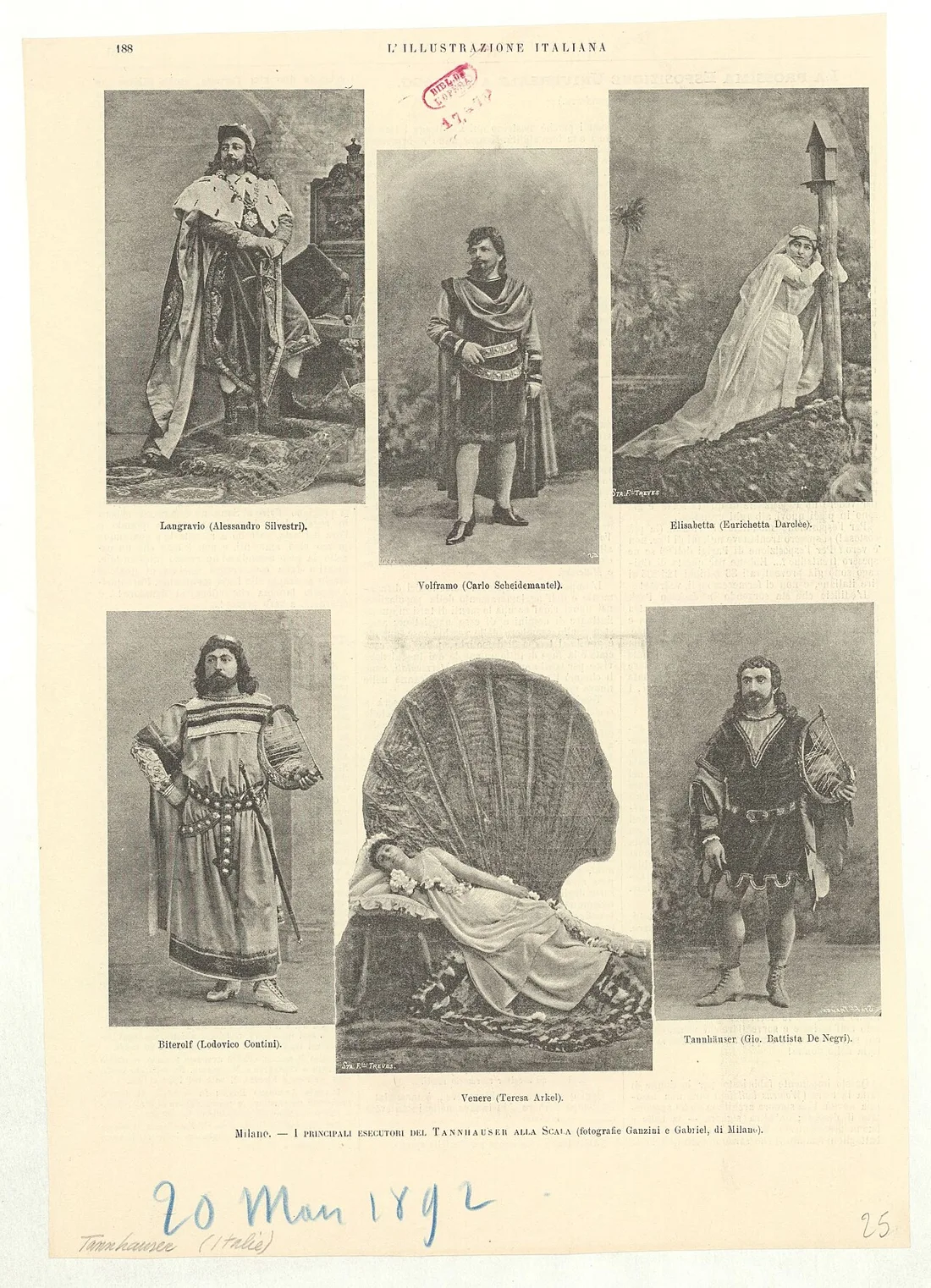
The list her biographers drew up from the playbills, programmes and letters kept by her son has 56 works: 55 operas and Rossini's Stabat Mater. She sang Carmen, written for mezzo-soprano, and Gilda in Rigoletto, a light soprano role; Aida and Mimì; Elisabeth in Tannhäuser and Norina in Don Pasquale.
The 1961 biography quotes an 1888 Paris report in which her voice rises “without effort from low G to high E”; in a note, the same authors credit Gounod with a high G. No recording of her in an opera role survives, so the claim cannot be checked. The list of roles is the only measure left.
The roles are as the list gives them; where it leaves the column blank there is a dash. For A Life for the Tsar the list gives the role of Vania, and for La muette de Portici the title role, Fenella, a silent mime part. Five world premieres are confirmed by the press of the time. For the other dates in the list, her biographers write “creation” without always saying whether it was a world premiere, a first in one country or her own first appearance in the role.
- title role (Fenella, a mime part)La muette de Portici · Auber
- CarmenCarmen · Bizet
- Margherita and ElenaMefistofele · Boito
- WallyLa Wally · CatalaniWorld premiere: La Scala, 20 January 1892
- Annie LeeEnoch Arden · CatargiNational Theatre, Bucharest: 1904 per her biographers, 1906 per others
- Amy RobsartAmy Robsart · De LaraMonte Carlo, April 1897, in a revival, per her biographers
- NorinaDon Pasquale · Donizetti
- —L'elisir d'amore · Donizetti
- LindaLinda di Chamounix · Donizetti
- LucreziaLucrezia Borgia · Donizetti
- MariaMaria di Rohan · Donizetti
- Isabella, IguamotaCristoforo Colombo · Franchetti
- VaniaA Life for the Tsar · GlinkaBiographers: first in France, Nice, 1890
- OdaléaCondor · GomesWorld premiere: La Scala, 21 February 1891
- —Il Guarany · Gomes
- MargueriteFaust · Gounod
- JulietteRoméo et Juliette · Gounod
- title roleLa Juive · Halévy
- NeddaPagliacci · Leoncavallo
- ZazàZazà · Leoncavallo
- HeroEro e Leandro · MancinelliTeatro Real, Madrid: 1896 per her biographers; stage premiere 30 November 1897
- SantuzzaCavalleria rusticana · Mascagni
- SuzelL'amico Fritz · MascagniBiographers: Pergola, Florence, 1891
- LuisaI Rantzau · MascagniWorld premiere: Pergola, Florence, 10 November 1892
- IrisIris · MascagniWorld premiere: Costanzi, Rome, 22 November 1898
- ChimèneLe Cid · MassenetLa Scala debut, 26 December 1890
- ManonManon · Massenet
- ThaïsThaïs · Massenet
- title roleL'Africaine · Meyerbeer
- The Queen; ValentineLes Huguenots · Meyerbeer
- ZerlinaDon Giovanni · Mozart
- SaffoSaffo · Pacini
- CatinaEidelberga mia · PacchierottiBiographers: Colón, Buenos Aires, 1909
- AuroraAurora · PanizzaColón, Buenos Aires, 1909, in a revival of the 1908 opera
- ManonManon Lescaut · Puccini
- MimìLa bohème · PucciniFirst in Buenos Aires: Teatro de la Ópera, 16 June 1896
- Floria ToscaTosca · PucciniWorld premiere: Costanzi, Rome, 14 January 1900
- —Crispino e la comare · Ricci
- MathildeGuillaume Tell · Rossini
- —Stabat Mater (oratorio) · RossiniBiographers: Rossini birth centenary, 1892
- TamaraThe Demon · Rubinstein
- ProserpineProserpine · Saint-Saëns
- The MarschallinDer Rosenkavalier · R. StraussBiographers: Costanzi, Rome, November 1911
- OphélieHamlet · Thomas
- MignonMignon · Thomas
- —Il voto · ValliniCostanzi, Rome, 27 November 1893, as Maria, per the theatre archive; her biographers say 1895
- AidaAida · Verdi
- AmeliaUn ballo in maschera · Verdi
- DesdemonaOtello · Verdi
- GildaRigoletto · Verdi
- ViolettaLa traviata · Verdi
- LeonoraIl trovatore · Verdi
- —Simon Boccanegra · Verdi
- EvaDie Meistersinger · Wagner
- ElsaLohengrin · Wagner
- ElisabethTannhäuser · WagnerBiographers: La Scala, 1891
Master xPh 1503
6 December 1905: Tosca's creator records Vissi d'arte
Towards the end of her life, her biographers relate, Romanian Radio asked her for her records for a special broadcast. She had none. She remembered recording a passage from Don Pasquale and Santuzza's romanza for the Fonotipia company. The biographers date the session to 1904 and compare the sound to a caricature.
The Fonotipia matrix register, reconstructed by the discographer Christian Zwarg, confirms the memory and adds to it. On Wednesday 6 December 1905 in Milan, with a pianist Zwarg identifies, in square brackets, as Salvatore Cottone, Darclée recorded four sides: Norina's cavatina from Don Pasquale in two parts, Santuzza's romanza from Cavalleria rusticana and, on master xPh 1503, Vissi d'arte. Zwarg marks her as the role's creator.
None of them received a catalogue number. Of the 521 takes from 1905 for which the register names a singer, 369 reached the shops, about seven in ten. Hers: none of four. Eugenio Giraldoni, the Scarpia of the premiere, recorded five arias six days later, and all five were issued. Darclée was not the only case: in 1905, four other singers with at least three masters had none of them issued.
| Master | Date | Soprano | Result |
|---|---|---|---|
| xPh 390 | 12.10.1905 | Amelia Talexis | issued: X 39333 |
| xPh 1503 | 06.12.1905 | Hariclea Darclée | unissued, no note |
| xPh 1822 | 23.04.1906 | Emma Carelli | issued: X 39649 |
| xPh 2064 | 31.08.1906 | Regina Pacini | issued: X 39773, C 4111 |
| xPh 2161 | 22.10.1906 | Enriqueta B. de Catelin | issued: X 39845 |
| xPh 2623 | 08.05.1907 | Avelina Carrera | failed wear test |
| xPh 2777 | 25.06.1907 | Maria Giudice | issued: X 62109 |
| xPh 2859 | 12.11.1907 | Salomea Kruszelnicka | unissued, no note |
| xPh 2889 | 20.11.1907 | Amelia Talexis | issued: X 92063 |
| xPh 2992 | 09.12.1907 | Avelina Carrera | unissued, no note |
| xPh 3008 | 12.12.1907 | Amelia Karola | issued: X 92819 |
| xPh 3112 | 31.03.1908 | Avelina Carrera | wax broken |
| xPh 3145 | 14.04.1908 | Ester Mazzoleni | unissued, no note |
| xPh 3362 | 02.07.1908 | Giannina Russ | rejected |
| xPh 3537 | 19.10.1908 | Amelia Pinto | rejected |
| xPh 3880 | 03.06.1909 | Ester Mazzoleni | rejected |
| xPh 3880-2 | 03.06.1909 | Ester Mazzoleni | rejected |
| xPh 4119 | 27.10.1909 | Mathilde De Lerma | rejected |
| xPh 5103 | 03.04.1917 | Carmen Melis | issued: X 69208, B 3618 |
| xPh 5155 | 03.04.1917 | Maria Farneti | issued: X 69260, B 3609 |
| Pho 5435 | 25.02.1924 | Gilda Dalla Rizza | issued: A 152028, B 3417 |
| Pho 5506 | 04.12.1922 | Giuseppina Baldassare-Tedeschi | issued: A 152529, B 3523 |
| Pho 5711 | 12.04.1926 | Rosetta Pampanini | rejected by artist |
| Pho 5891 | 12.05.1927 | Ada Campi | issued: A 168044 b (B 3693) |
| Pho 6231 | 19.04.1928 | Etty Maroli | unissued, no note |
| xxPh 6316 | 15.06.1928 | Gilda Dalla Rizza | issued: XX 120164 a (N 6600) |
| Pho 6524 | 12.12.1929 | Tina Poli-Randaccio | unissued, no note |
From Christian Zwarg's Fonotipia matrix discography (GHT Wien). Marked row: Darclée, the role's creator.
The register holds 27 takes of Vissi d'arte; for 13 it lists an issued disc. For some of the others it gives a reason: “rejected”, “wax broken”, “failed wear test”. Against hers there is nothing. The earliest take with a catalogue number, by the soprano Amelia Talexis, had been made on 12 October 1905, 55 days before hers.
Her voice is not entirely lost. The Dutch biographer René Seghers found a privately pressed Gramophone disc, a single copy, with two Romanian songs, dated by Christian Zwarg to 1910; Ștefan Petrescu cites an older dating of the same songs to 1926. It is all of her voice known to survive; no opera role.
This page uses no recording of her. It holds what the house left behind: the calls, the encores, and the way the papers counted them.
Bucharest, 1939
The last years
The historian Ștefan Petrescu places her last stage appearance in Florence in 1918; she herself said in 1931 that she retired in 1922, after a car accident. From September 1936 to December 1938 she lived in a room at the Hotel Bratu near the Gara de Nord, where writers, musicians and old members of her audience came to see her.
She died at the Filantropia hospital on 10 January 1939 according to the historian Ștefan Petrescu (the George Enescu National Museum gives 12 January) and was buried at Bellu cemetery. In 1938 the novelist Cezar Petrescu wrote that “everywhere and always she felt Romanian and remained Romanian”. Nicolae Carandino's biography appeared that year; the 1961 book drew on the archive kept by her son, the composer Ion Hartulari-Darclée.
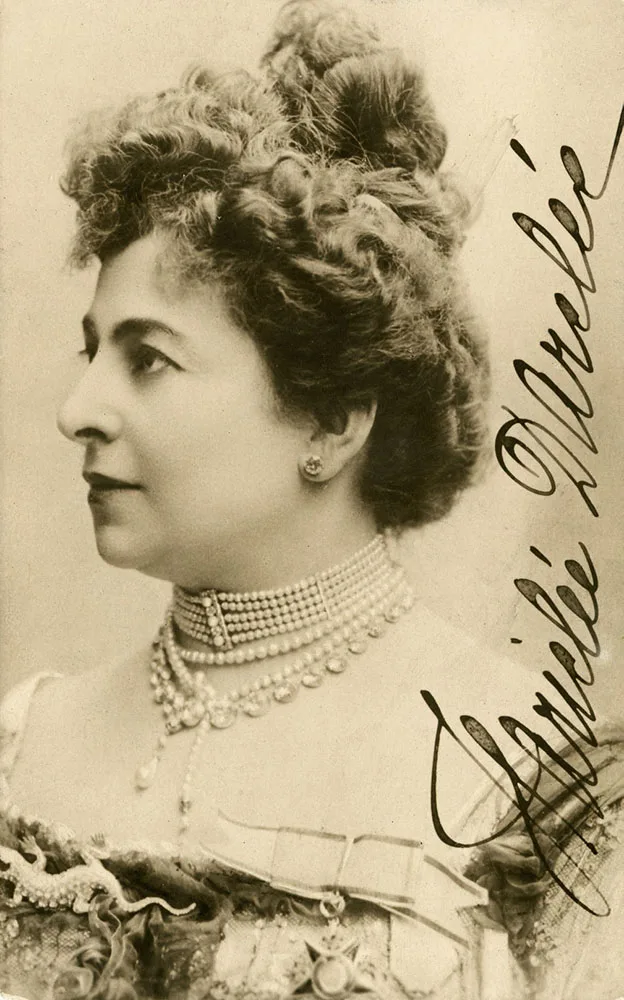
The first five photographs below are by the Florentine photographer Mario Nunes Vais; the first shows her in stage costume. The last is a cabinet photograph by an unknown photographer.
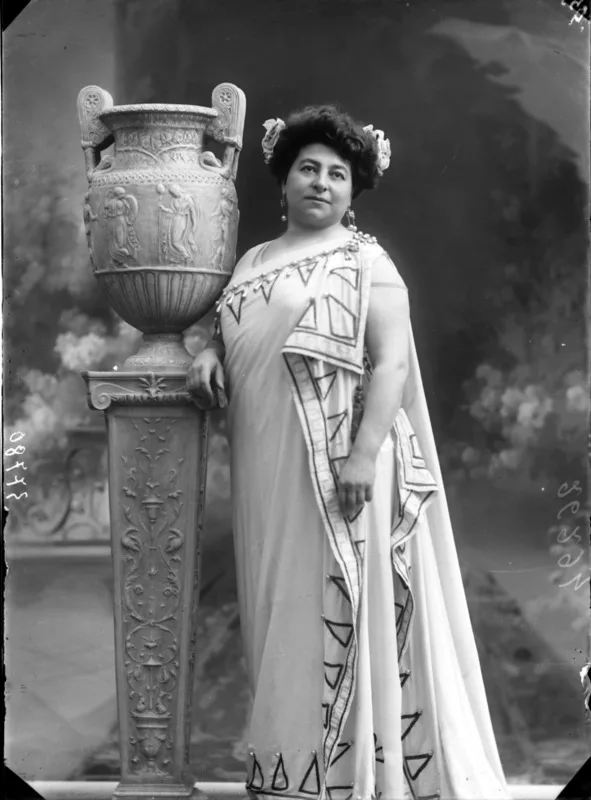
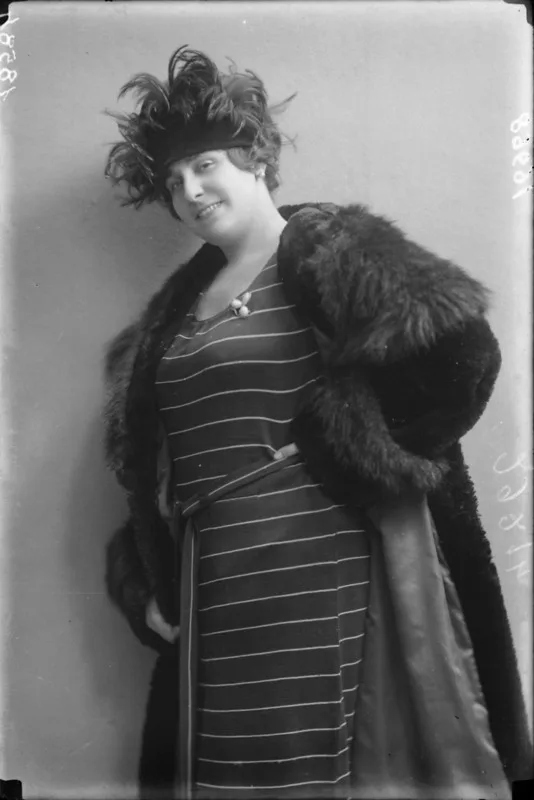
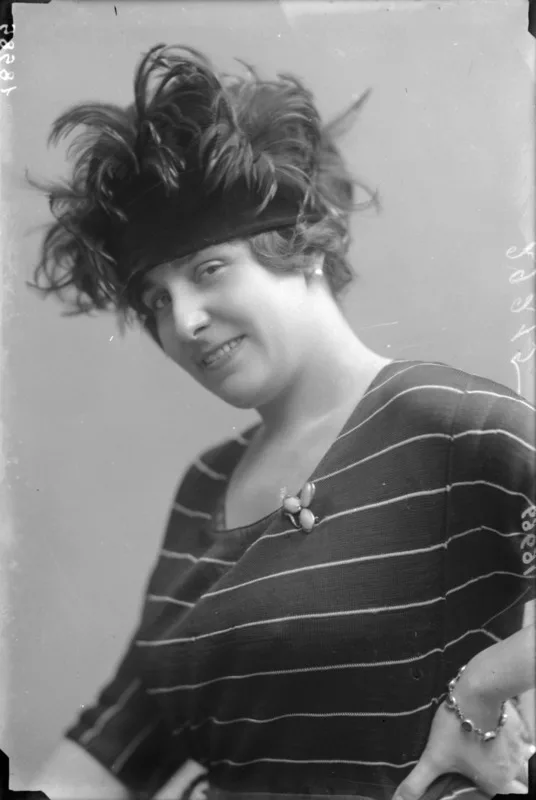
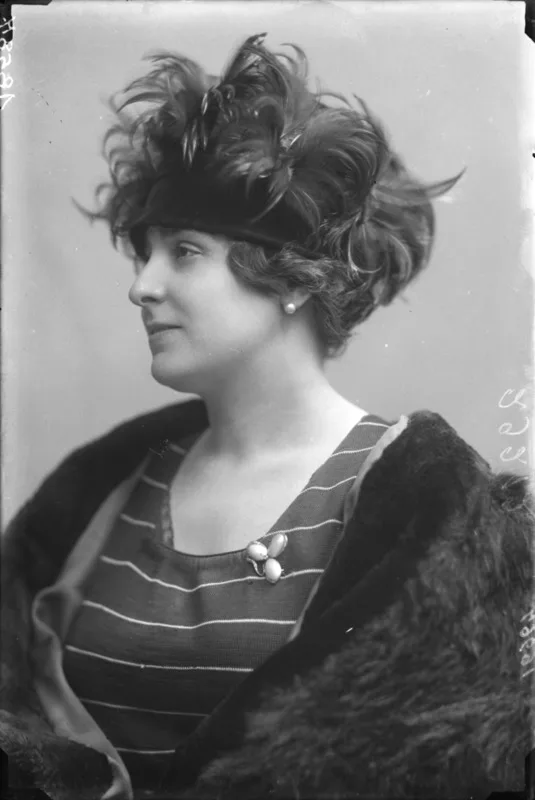
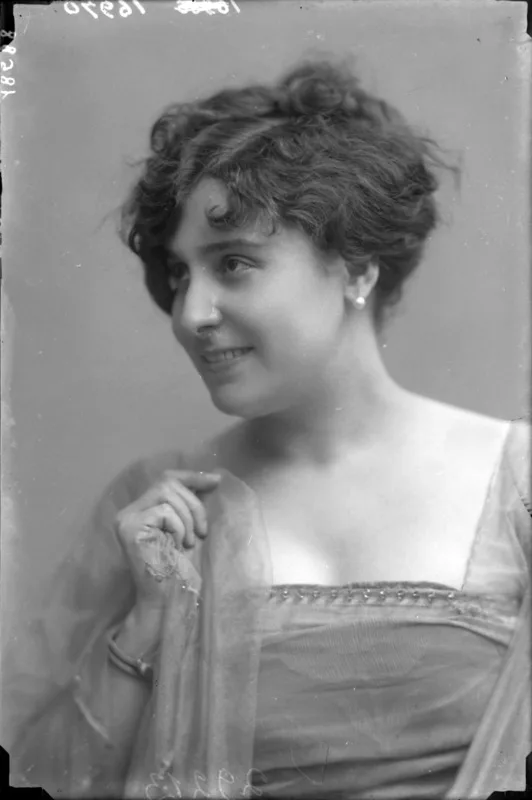
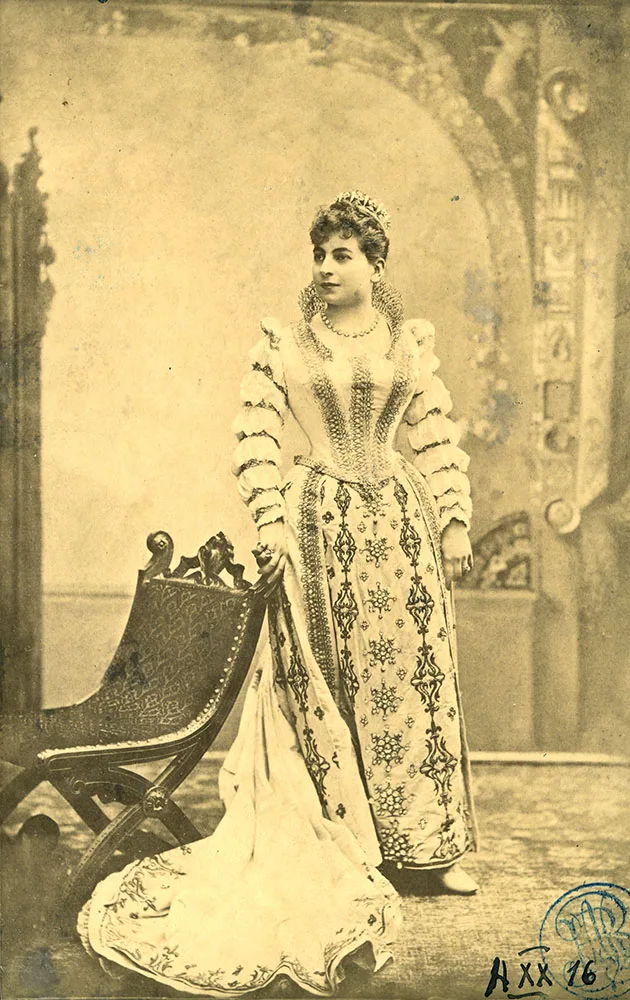
First five portraits: Mario Nunes Vais (1856–1932), Fondo Nunes Vais, ICCD Rome. Public domain, via Wikimedia Commons.
Sources
The counts of calls and encores come from the press of the day, read in the scanned pages of the Gazzetta Musicale di Milano. The 1961 biography is used for the repertoire and for her own recollections, marked as such.
- Gazzetta Musicale di Milano, 1900 vol. I: telegram and chronicle of the Tosca premiere (pp. 33–35), the second night (p. 35), the letter of 22 January, foreign press, Tosca at La Scala (March).
- Gazzetta Musicale di Milano, 1898 vol. II: the Iris premiere telegram and more than ten newspaper reviews reprinted.
- Gazzetta Musicale di Milano, 1892 vol. I: Giulio Ricordi's article on La Wally, the “kilometric calls”, the Gazzetta Piemontese.
- Gazzetta Musicale di Milano, 1888: the Paris letter on “the new Juliette”, the name Darclée and the Opéra contract.
- Gazzetta Musicale di Milano, 1901 vol. II: Buenos Aires, the sixth Tosca, with Caruso, Giraldoni and Toscanini.
- Gazzetta Musicale di Milano, all 31 volumes 1886–1902, machine-read (OCR) text via the Wikimedia Commons API: the count of mentions.
- Christian Zwarg, ODEON Matrix Numbers Ph/xPh (Fonotipia), GHT Wien: masters xPh 1503–1506 of 6 December 1905 (p. 112), every Vissi d'arte, and the 1905 issue rate.
- Ștefan Petrescu, „Primadona Hariclea Darclée între scenă și culise”, Revista Istorică, 2017, nr. 5–6, pp. 555–579: birth (10 June 1860), first concert, the 1931 Rampa interview, the Hotel Bratu, death (10 January 1939).
- René Seghers, Darclée biography: the private 1910 disc with two Romanian songs. Operanostalgia
- Archivio storico del Teatro dell'Opera di Roma, Tosca 1899–1900: the cast and the 17 performances.
- George Sbîrcea, Ion Hartulari-Darclée, Hariclea Darclée, Editura Muzicală a Uniunii Compozitorilor, București, 1961, Editura Muzicală, 1961: the repertoire (pp. 246–248), the Fonotipia recollection, the last years.
Pictures and sound
- Dante Paolocci (1849–1926), L'Illustrazione Italiana, January 1900. Public domain, via Wikimedia Commons.
- Gazzetta Musicale di Milano, 18 January 1900, p. 33. Public domain, scan on Wikimedia Commons.
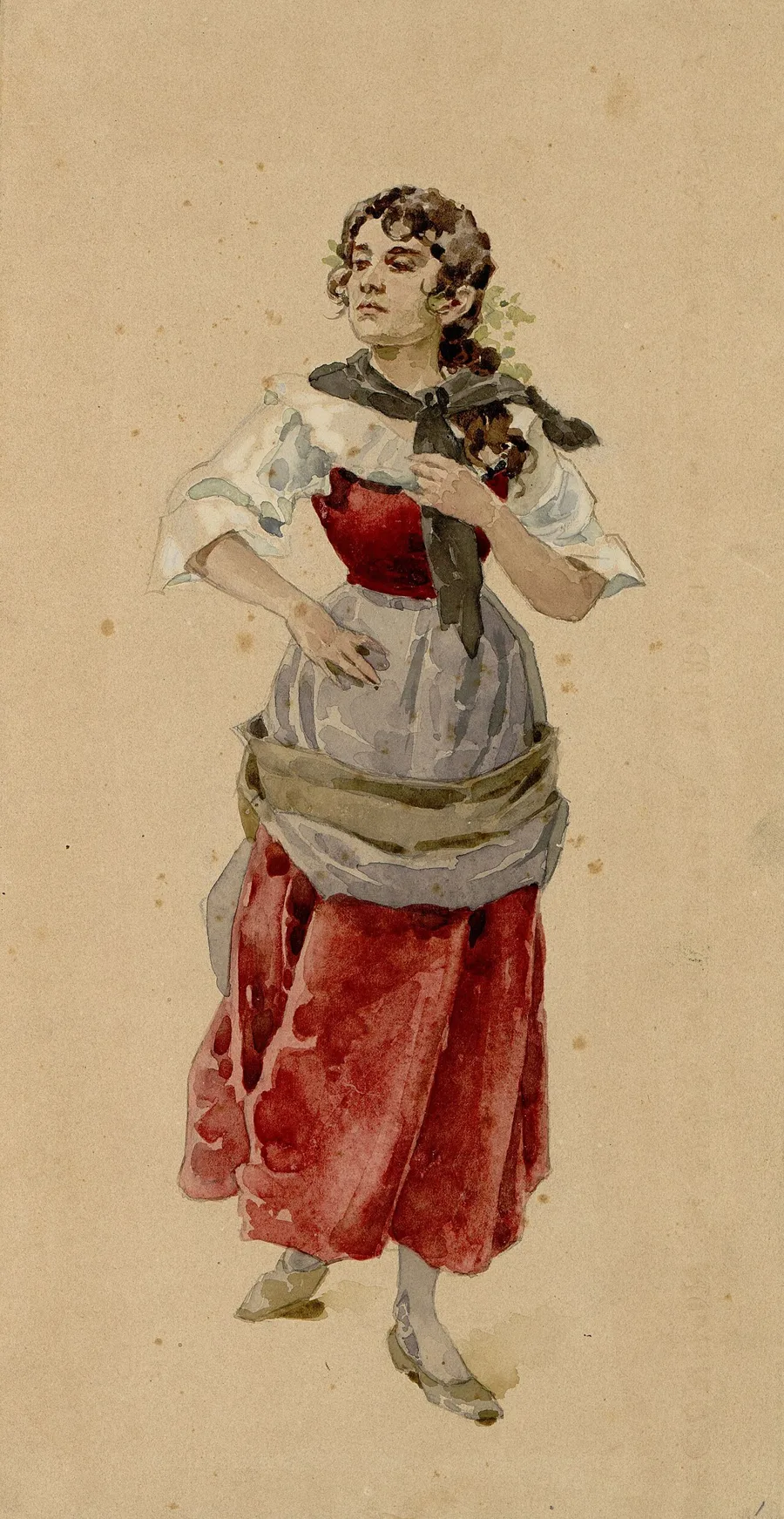
- Adolfo Hohenstein, costume design for La Wally, 1892. Archivio Storico Ricordi, ICON004639, CC BY-SA 4.0.
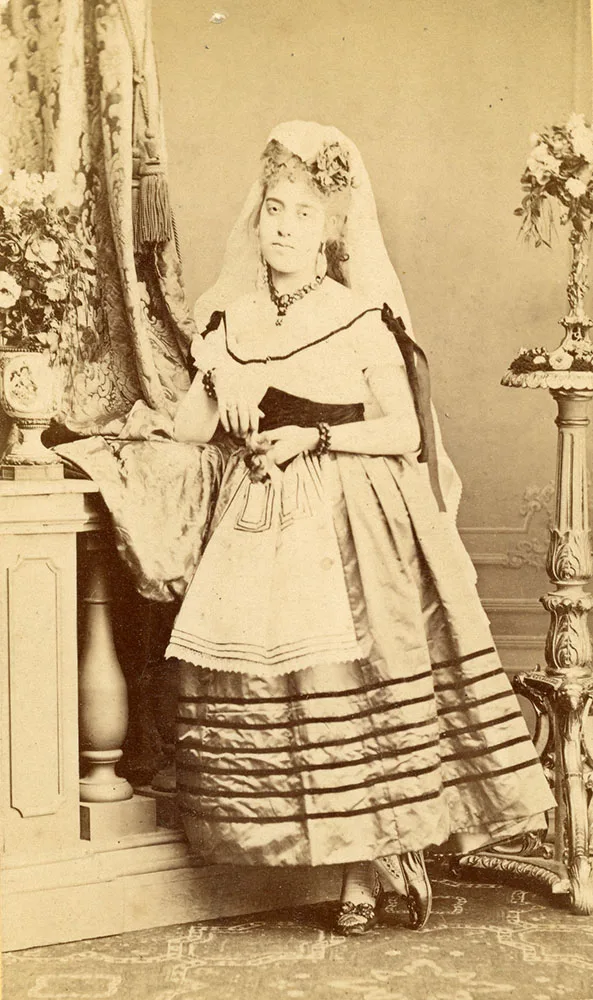
- Attributed to Carol Popp de Szathmari. Library of the Romanian Academy, Prints Room. Photo Dragosandriana, CC BY-SA 4.0.
- Library of the Romanian Academy, Prints Room. Photo Dragosandriana, CC BY-SA 4.0.
- O Occidente, Lisbon, 5 March 1896. Public domain, via Wikimedia Commons.
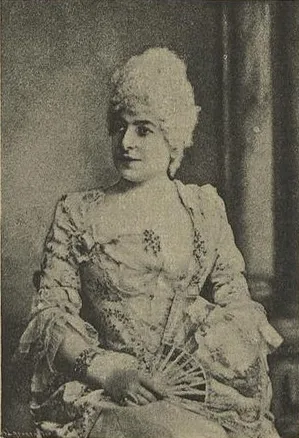
- Photographs by Ganzini e Gabriel, Milan, in L'Illustrazione Italiana, 1892. Bibliothèque nationale de France (Gallica), public domain.
- Iris libretto, G. Ricordi & C., 1898: cover and cast. Public domain, via Wikimedia Commons (Internet Archive).
- First five portraits: Mario Nunes Vais (1856–1932), Fondo Nunes Vais, ICCD Rome. Public domain, via Wikimedia Commons.
- The applause, chords and bells you hear are synthesised in the browser. No recordings are used.