Projects
Blast Furnace No. 2 · Reșița
Inside the
blast furnace
Inside Reșița’s blast furnace, the charge descended while gas rose through it. Open the shell to see why the two routes had to meet.
Open the furnaceA site built in stages
The surviving furnace belongs to a later phase
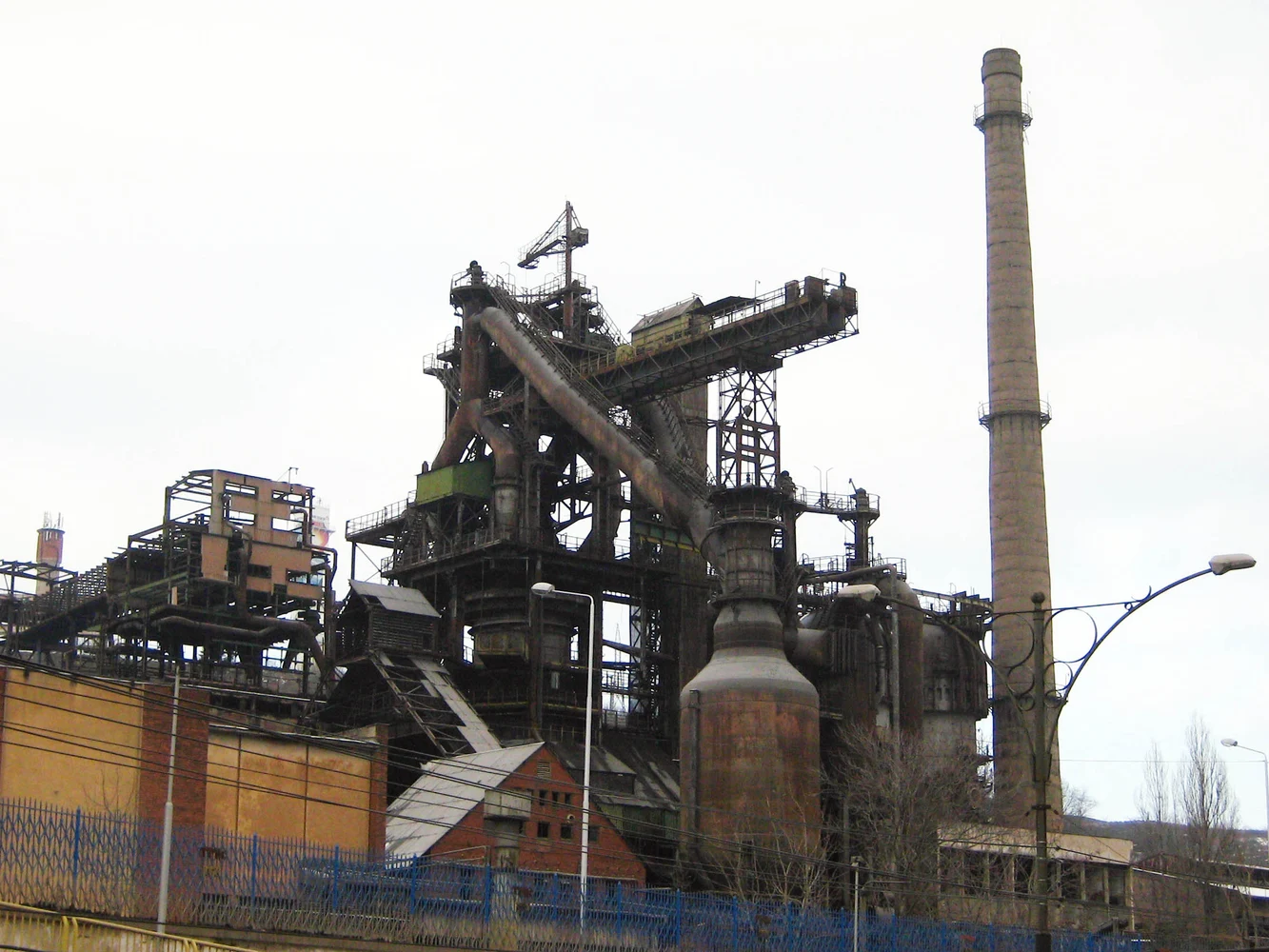
The first furnaces on Reșița’s site entered service in 1771, using iron ore and charcoal. The installations changed with the technology; Blast Furnace No. 2 entered service in its modernized form in 1962. The preserved shell records a later stage in a much longer industrial history.
From charcoal to coke
The first furnaces on the site entered service in 1771 and used charcoal. Later installations switched to coke. Blast Furnace No. 2 entered service in its modernized form in 1962.
Two inlets at different heights
Ore goes in at the top, air near the bottom
Ore, coke and fluxes enter at the top. Hot air enters through side openings near the base. Follow both inlets. Next comes the place where the gas and ore meet.
Ore goes down. Gas goes up
Ore, coke and flux enter from above. Hot air enters near the base. Rising gases help separate the iron from its ore. Molten iron and slag collect at the bottom.
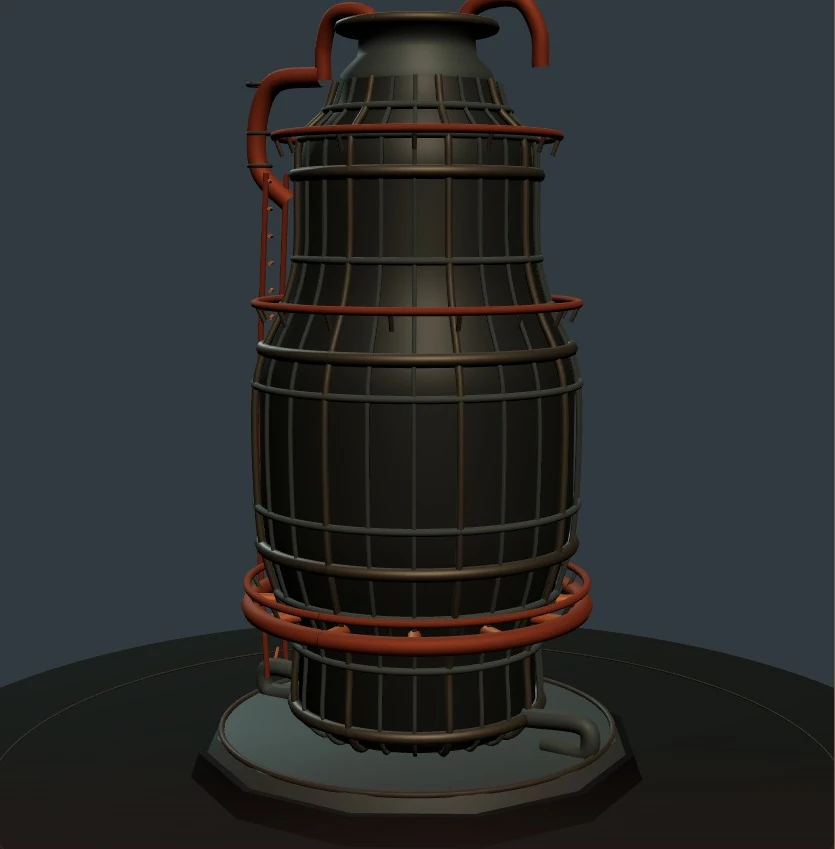
The section explains how a blast furnace works. It simplifies the shape and workings of the installation at Reșița.
Gas passes through the charge
The two flows meet
Hot gas rises through the descending charge. When it reaches the ore, the gas helps remove oxygen from iron oxides. The particles in the model show the two directions. The slider changes playback speed.
At the base of the furnace
Molten iron and slag collect in layers
At the base, molten iron and slag collect separately. Lighter slag sits above the iron. When the particles pause in the cutaway, you can look at the two layers and where they collect.
What the furnace’s height is for
Inside the tall vessel, the charge and the gas can meet along their routes. Material goes in at the top, while molten iron and slag collect below. The exterior preserved at Reșița dates to the modernised furnace. The cutaway illustrates how a blast furnace works.
Blast Furnace No. 2 in Reșița
The Reșița Virtual Museum traces how the furnaces changed over time. The photograph shows the exterior of the surviving installation.