Paleontology · Hațeg Island, 70 million years ago

Half the Length, One-Eighth the Weight

An island roughly the size of Hispaniola sat under present-day Transylvania at the end of the age of dinosaurs. On it, a plant-eating dinosaur the size of a large horse lived beside a flying reptile with the wingspan of a small airplane. The same isolation pushed them in opposite directions: one stayed under 900 kilograms, the other became one of the largest flying animals ever known.

80,000 km²
the area of Hațeg Island 70 million years ago, close to present-day Hispaniola
< 900 kg
the estimated weight of Magyarosaurus dacus, the smallest known adult sauropod
≈ 77×
how much heavier its mainland cousin, Patagotitan mayorum, was
8–12 m
the wingspan of Hatzegopteryx, the flying reptile that grew on the same island
Where and what the island was

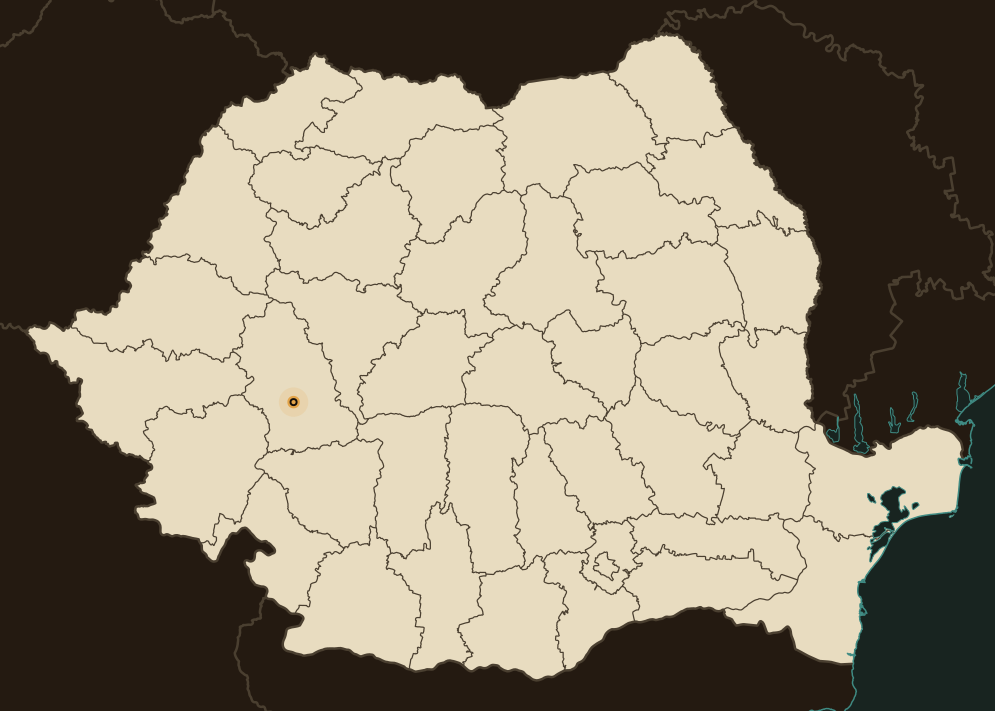
An island in the Tethys Sea, under today's Hunedoara county

Seventy million years ago, in the Late Cretaceous, Europe was an archipelago scattered across a warm sea, Tethys, with only a few large islands rising above the water. One of them corresponds today to the Hațeg Basin, in Romania's Hunedoara county. It covered roughly 80,000 square kilometers, an area close to today's Hispaniola, and sat fully isolated from any larger landmass, hundreds of kilometers away.

The dinosaur fauna that lived there looked strikingly different from its mainland relatives, even though it belonged to the same major families. The pattern that shaped their bodies is known today as the island rule: large animals, isolated on a small landmass with limited resources, tend to shrink over generations, while small animals, freed from mainland predators and competitors, tend to grow. The phenomenon shows up elsewhere too, from the Mediterranean's dwarf elephants to the giant rodents of some Pacific islands.

Instrument

The island's balance

Switch each row between the island size and its mainland relative or a modern reference. Every bar is drawn to the same scale; the vertical line marks 1.7 meters, an average adult's height.

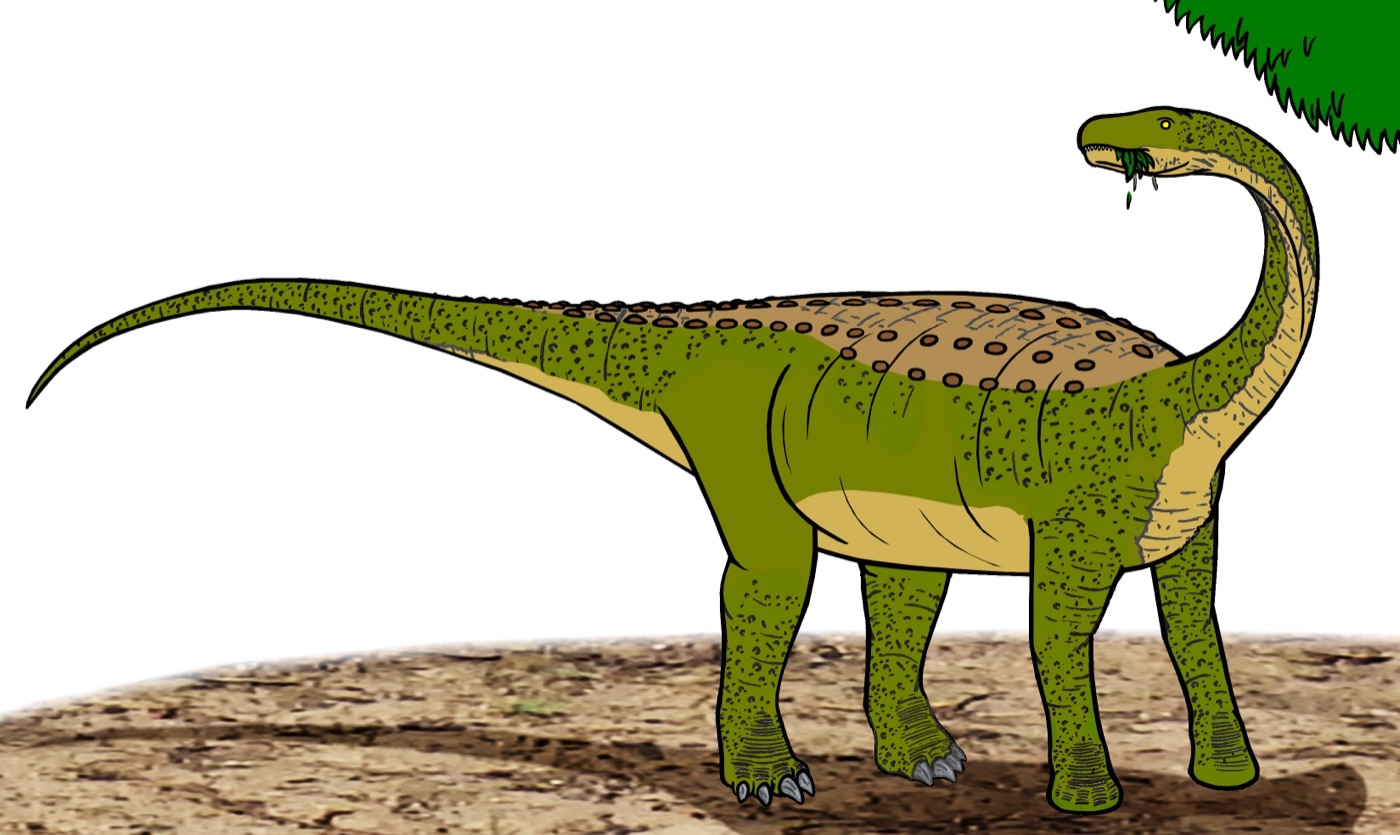
Magyarosaurus dacusdwarf titanosaur, Hațeg Island
6 m
Magyarosaurus dacus: about 6 meters long, under 900 kilograms (published range: 660–972 kg).
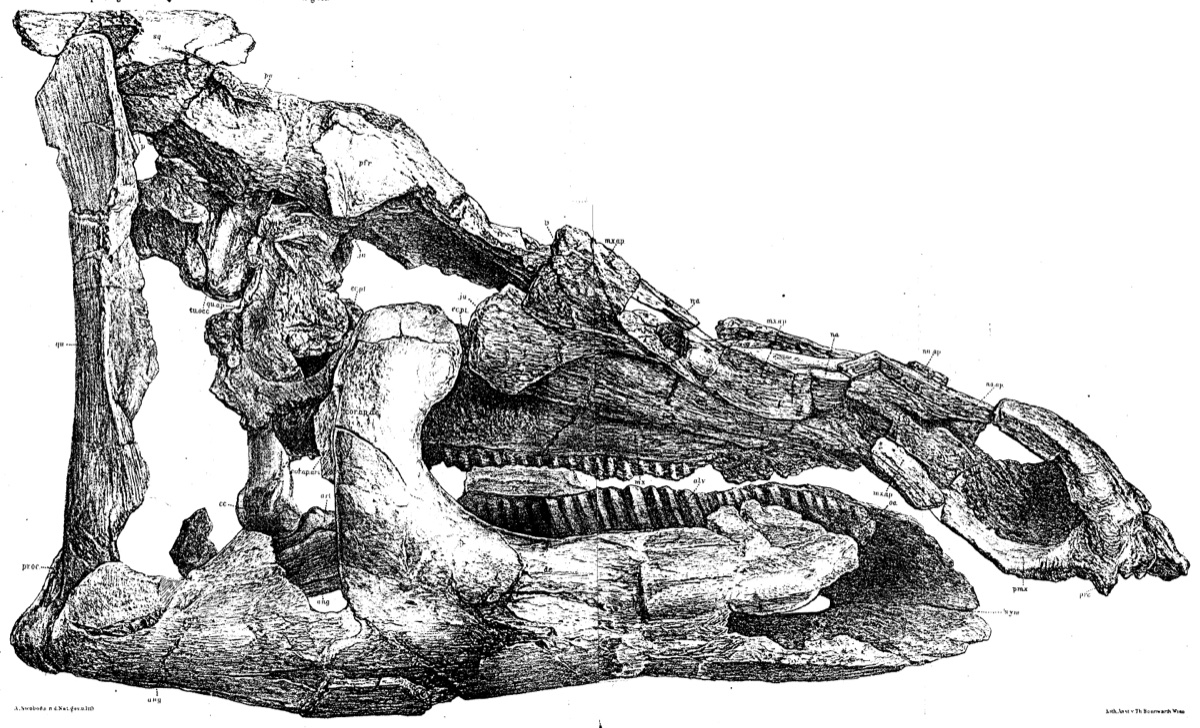
Telmatosaurus transsylvanicusearly duck-billed dinosaur, Hațeg Island
5 m
Telmatosaurus transsylvanicus: about 5 meters long, one of the earliest known relatives of the duck-billed dinosaurs.
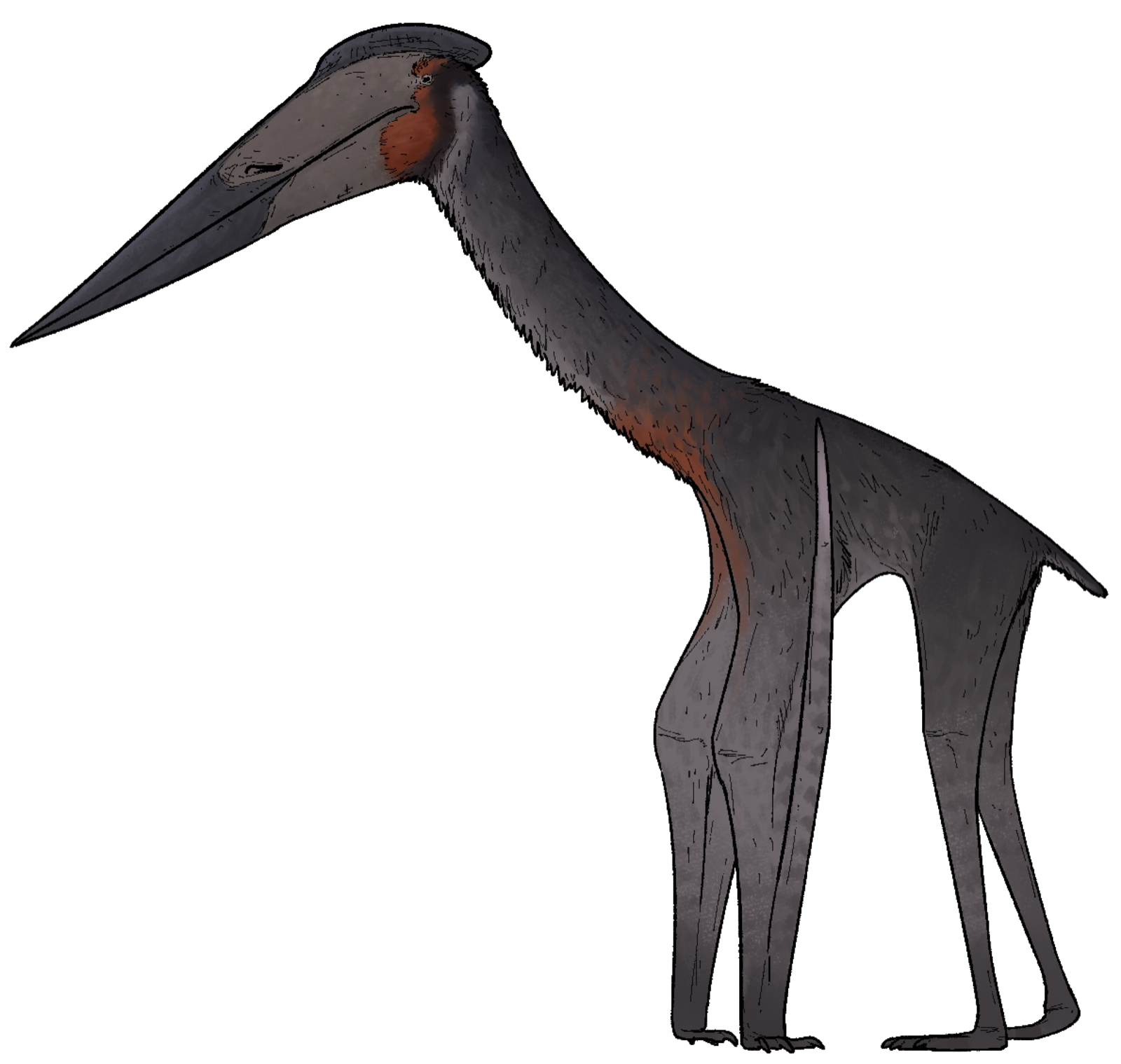
Hatzegopteryx thambemagiant flying reptile, Hațeg Island
8–12 m
Hatzegopteryx thambema: wingspan estimated between 8 and 12 meters depending on method, with a skull about 2.5 meters long. One of the largest flying animals known.
Bars are drawn to the same scale (34 meters = Patagotitan's upper length estimate). Exact sources for each figure are listed below, in the sources section.
Why they shrank

The rule points one way for large herbivores

British paleontologist Michael Benton, one of the researchers who re-examined Hațeg's geology and fossils, summarized the pattern found in most of the island's dinosaurs: they typically ran half the length of their relatives on larger landmasses, which works out to roughly one-eighth the weight. The ratio checks out directly: if length is halved and body shape stays broadly similar, volume and weight scale with the cube of the length ratio, and 0.5 cubed equals 0.125, exactly one-eighth.

A 2010 bone-microstructure study led by Koen Stein confirmed that the small Magyarosaurus specimens were not juveniles but fully grown adults: the bone showed growth rings that had stopped, the signature of a mature skeleton. The island did not produce unfinished young. It produced an adult species smaller than its relatives, passed down that way across generations.

The mechanism behind the rule comes down to resources. An adult titanosaur weighing dozens of tonnes needs more food than an 80,000-square-kilometer island can sustain indefinitely. Lineages that stayed smaller had a better chance of surviving successive generations of drought or lean seasons. The rule did not shape every animal on the island the same way, and the case that shows its limit best is a flier.

The exception that proves the mechanism

A flier does not compete for the same food

Hatzegopteryx thambema was described in 2002 by Eric Buffetaut, Dan Grigorescu, and Zoltan Csiki, based on skull and humerus fragments also found in the Hațeg Basin. The reconstructed skull runs about 2.5 meters, one of the largest known skulls on any land or flying animal. Its wingspan remains debated: initial estimates, based on comparisons with other species' humeri, reached as high as 12 meters; a 2010 recalculation by Mark Witton and Michael Habib brought the figure down to 10–11 meters; a more conservative 2018 analysis by Mátyás Vremir and colleagues proposes about 8 meters. Even at the low end of that range, the wingspan stays close to that of a Cessna 172, the most-produced aircraft in aviation history.

The explanation is also about resources, running in the opposite direction. A flying reptile hunting on land or at the water's edge does not depend on the same volume of vegetation as a herbivore weighing dozens of tonnes, and on an island without large land predators to limit its access to prey, a big flier had an advantage rather than a disadvantage. The result is an island where the herbivores shrank dozens of times over, while the largest predator above them grew into one of the biggest flying creatures in the history of the planet.

How they were found

A sister who found bones on the family estate

  • 1895

    Ilona Nopcsa finds the first dinosaur bones at Sânpetru, on her family's baronial estate in Transylvania.

  • 1897

    Her brother, Franz Nopcsa, twenty years old, presents the first scientific report on the Hațeg fossils.

  • 1912–1914

    Nopcsa notes that while the turtles and crocodilians from the same deposit reached ordinary sizes, the dinosaurs stayed consistently small. In a talk in Vienna and then a published paper, he proposes that the fossils belong to island animals, shrunk by isolation, decades before ecologists had a name for the phenomenon: the island rule.

  • 2010

    A team led by Michael Benton re-examines Hațeg's geology and bone histology and confirms Nopcsa's hypothesis with modern methods.

  • 2025

    A revision of Romania's titanosaur skeletons, led by Verónica Díez Díaz and colleagues, refines the mass estimates for Magyarosaurus and reveals a wider range of body sizes on the island than previously thought.

Franz Nopcsa remained a singular figure in European paleontology: a Transylvanian baron, polyglot, wartime intelligence agent, and self-declared candidate for the Albanian throne. His idea about an island of small dinosaurs was long treated as a biographical curiosity rather than front-rank science. A century later, it became one of the founding reference points of island biology.

Sources

Primary literature and reviews

Dinosaur mass estimates are not direct weighings. They come from volumetric models or equations based on long-bone thickness, which is why they differ between studies and are given here as ranges rather than single values. Hatzegopteryx's wingspan is the most uncertain figure on this page, since the species is known only from skull and humerus fragments, without a complete skeleton.