Densuș
The tower rises from the nave
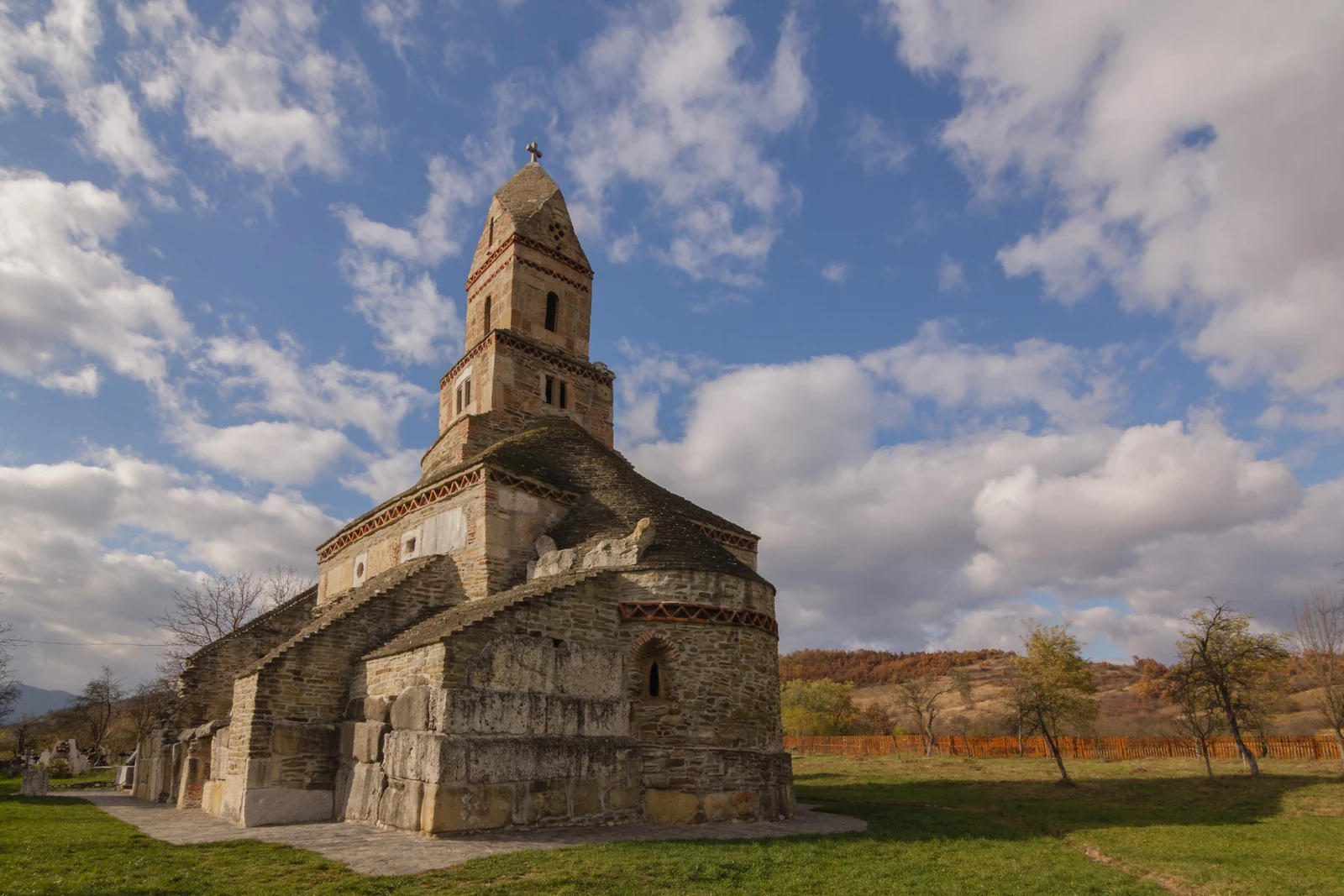
Look at the tower above the stone roof. At Densuș it rises from the middle of the nave, the room where the congregation gathers.
From the yard you can see its height. Follow the masonry indoors to see what carries it.

Four piers carry the tower
The nave measures about 6 × 6 metres. Four massive piers carry the tower at its centre, leaving a passage along the walls.
Lift the roof and look from above. The tower dominates the church from the yard, but in plan it stands over a smaller square.
The four piers appear around the central opening.
The walls and slabs hide the piers again.
The funerary stoneA Roman name in a pier
Roman funerary stones with inscriptions were incorporated into the piers. Researchers read the name Longinus Maximus on one of them.
Isolate a block and follow its two uses. The stone carried a name before it carried the weight of roof slabs and a tower.
See the block inside the masonry, below the tower.
The block slides out to show its shape away from its load-bearing position.
Reused stoneThe wall preserves differences between stones
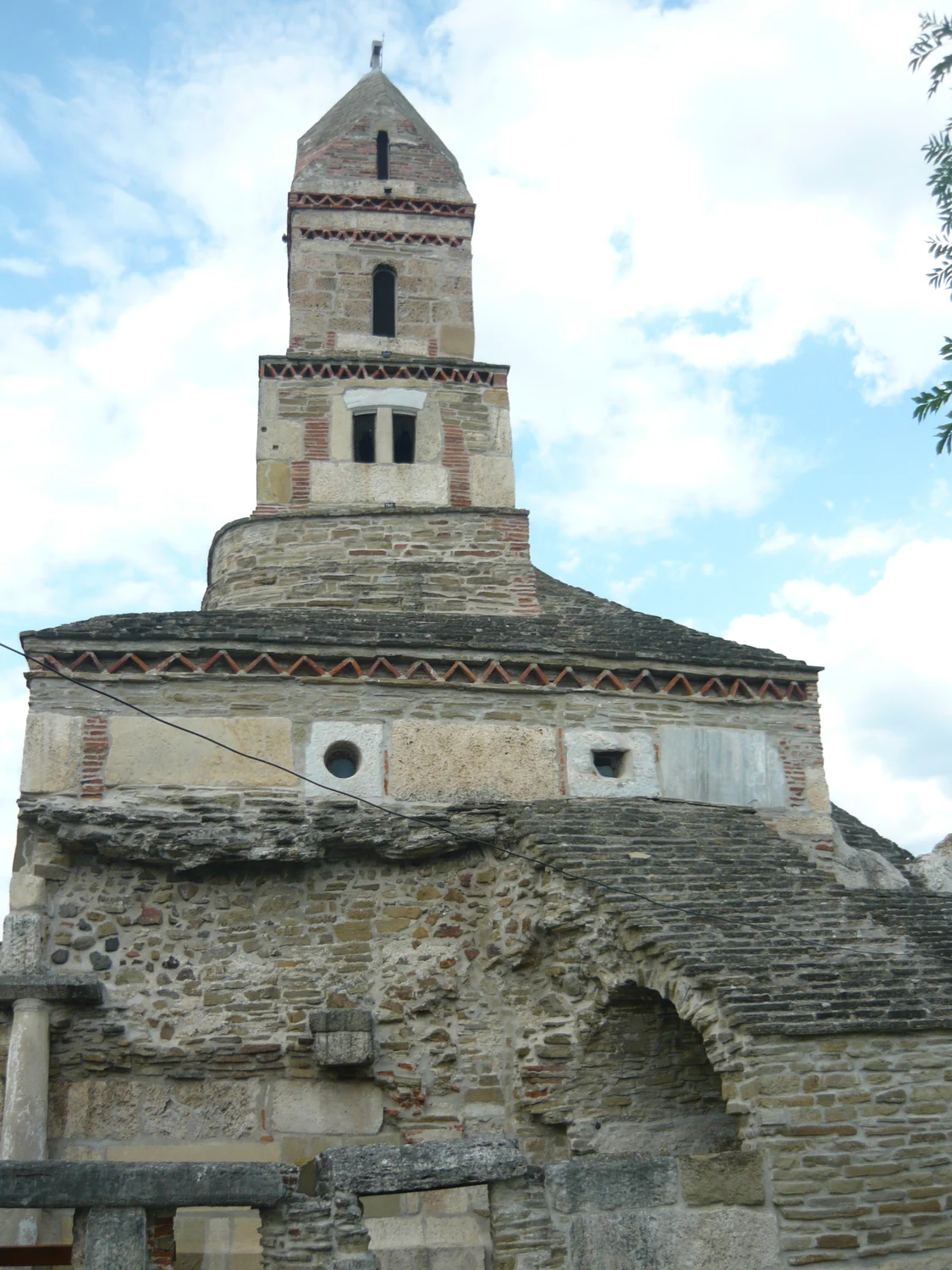
The restoration team identifies shaped stone from the ruins of the Roman city of Ulpia Traiana Sarmizegetusa. The photographs show large dressed blocks beside joints filled with much smaller stones.
Change the light and follow the joints. The meeting of differently shaped pieces shows how they were put to work again.
The shadows fall to the right and bring out the edges of the blocks.
The same masonry now reveals faces which were in shade.
DatingA block and a wall have different ages
The name on the stone led some writers to identify the church as a Roman mausoleum. The inscription dates a reused object. Its first location remains uncertain.
Archaeologist Adrian Andrei Rusu places rebuilding of the upper walls in the second half of the thirteenth century. The beginning of the building is harder to date.
The inscribed block is the older evidence in the comparison.
See how a later building incorporated the older piece.
Back outsideFollow the weight to the ground
From the yard you see the mass of stone. Having looked at the section, you can also trace the load from the tower into the four piers and down through the floor.
A funerary stone ended up carrying some of that weight. It is evidence for the building of the church and leaves open a question about where the stone came from.
