History · ten documented facts
Ten true things in history that sound wrong
A Spanish dollar that was American money for 63 years. A doge chosen in ten rounds, with a boy drawing the lots from 1328. A British king of France in 1800. Each fact comes from a statute, a gazette, a table or a dataset that is linked under it, and each says what the source cannot tell you.
In 1086, about one in ten recorded rural entries was a slave
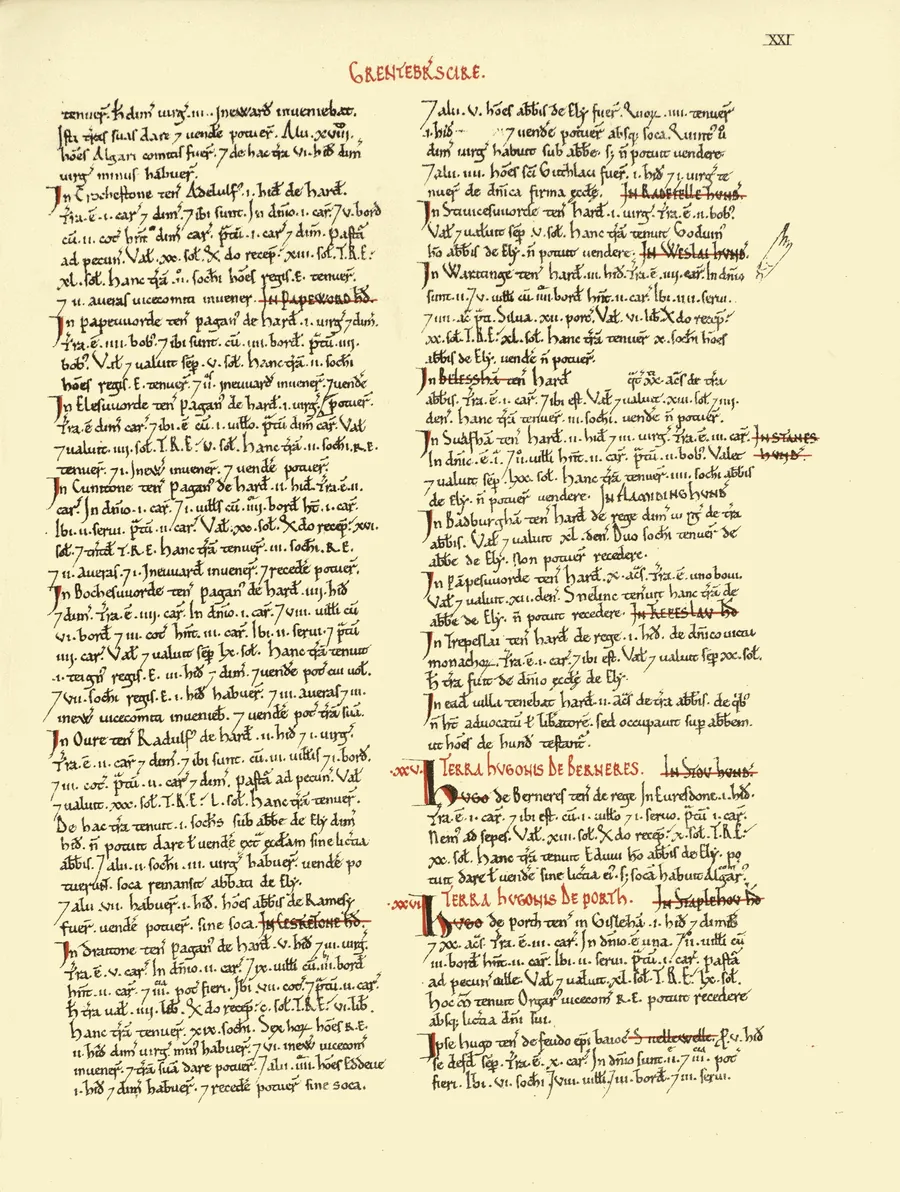
Domesday Book lists 28,235 slaves among 268,984 recorded rural entries, mostly heads of household: 10.5%. Gloucestershire shows about one in four, and four counties record none.
William the Conqueror’s commissioners wrote the survey in 1086. H. C. Darby added up its rural entries in Domesday England (1977). His summary table has 109,230 villeins, 81,849 bordars and 28,235 slaves, which Domesday calls servi. Slaves are the third largest group, ahead of the 23,324 sokemen.
The total is a count of entries, mostly heads of households, and it leaves out the towns. A slave entry may be one person or a household, and historians do not agree which. So 10.5% is a share of recorded rural entries, not of everyone alive in England.
The county table shows how uneven the record is. A House of Commons Library paper, working from Darby, gives Gloucestershire 26% slaves, Cornwall 21% and Shropshire 20%, and nothing at all for Huntingdonshire, Lincolnshire, Nottinghamshire and Yorkshire. The Hull Domesday Project says that is a quirk of the northern circuit’s return: another text for that circuit shows slaves on estates that Domesday does not list.
Select a county to read its figures.
Data table
| County | Rural households | Slaves | Circuit 6 |
|---|---|---|---|
| Bedfordshire | 3,591 | 13% | |
| Berkshire | 6,139 | 13% | |
| Buckinghamshire | 5,103 | 17% | |
| Cambridgeshire | 4,868 | 11% | |
| Cheshire | 1,852 | 10% | |
| Cornwall | 5,368 | 21% | |
| Derbyshire | 2,836 | 1% | yes |
| Devonshire | 17,246 | 19% | |
| Dorset | 7,382 | 17% | |
| Essex | 14,004 | 13% | |
| Gloucestershire | 8,249 | 26% | |
| Hampshire | 9,780 | 18% | |
| Herefordshire | 4,341 | 17% | |
| Hertfordshire | 4,556 | 13% | |
| Huntingdonshire | 2,500 | none recorded | yes |
| Kent | 11,753 | 10% | |
| Lancashire (south) | 260 | 8% | |
| Leicestershire | 6,423 | 6% | |
| Lincolnshire | 21,462 | none recorded | yes |
| Middlesex | 2,177 | 5% | |
| Norfolk | 26,309 | 4% | |
| Northamptonshire | 7,663 | 10% | |
| Nottinghamshire | 5,608 | none recorded | yes |
| Oxfordshire | 6,713 | 15% | |
| Shropshire | 4,757 | 20% | |
| Somerset | 12,991 | 16% | |
| Staffordshire | 3,028 | 8% | |
| Suffolk | 19,070 | 5% | |
| Surrey | 4,105 | 12% | |
| Sussex | 9,600 | 4% | |
| Warwickshire | 6,277 | 12% | |
| Wiltshire | 9,944 | 16% | |
| Worcestershire | 4,604 | 16% | |
| Yorkshire | 7,566 | none recorded | yes |
Slaves formed “over 10% of the recorded population and significantly higher than this if allowance is made for their almost complete omission from the counties of circuit 6.”
Hull Domesday Project, entry “serf, or slave”Not shown. Domesday leaves out London, Durham and the far north, and the unit counted differs between entries. The Commons Library table totals 268,125 households and Darby’s summary 268,984; the page uses Darby for the national share and the table for counties.
Darby, Domesday England (Cambridge University Press, 1977), appendix 2, p. 337, read as the publisher’s page image. County figures: House of Commons Library Research Paper 99/111, p. 28. Unit of count: Goose and Hinde, Local Population Studies 78 (2007), p. 75. Circuit 6 and the omission: Hull Domesday Project.
Venice chose its doge in ten rounds, and from 1328 a boy drew the lots
Five rounds were drawn by lot and five were votes, in an order that mixes the two. The first two rounds are both lots, and the last two are both votes.
From 1268 until the republic fell in 1797, the doge was chosen by a procedure that Miranda Mowbray and Dieter Gollmann count as ten rounds. It started with the Great Council, the Venetian oligarchs aged 30 or over, and ended with 41 electors. No two members of one family could sit in the same college.
At first an oligarch appointed for the task drew the lots. In 1328 that rule changed, and a boy, the balotino, drew them. He was the first boy that the youngest member of the inner council of state saw after praying at St Mark’s Basilica on election day. The authors suspect that the first two rounds, 30 of the whole Council and then nine of the thirty, exist because about 480 ballot balls would have been hard to mix in one urn.
Every vote round before the last needs approval from three quarters of the electors, rounded up. The last round needs 25 of 41.
All ten rounds
| Round | Method | In the room | Result | Approvals needed |
|---|---|---|---|---|
| 1 | Lot | All members aged 30 or over | 30 | |
| 2 | Lot | 30 | 9 | |
| 3 | Vote | 9 | 40 | 7 of 9 |
| 4 | Lot | 40 | 12 | |
| 5 | Vote | 12 | 25 | 9 of 12 |
| 6 | Lot | 25 | 9 | |
| 7 | Vote | 9 | 45 | 7 of 9 |
| 8 | Lot | 45 | 11 | |
| 9 | Vote | 11 | 41 | 9 of 11 |
| 10 | Vote | 41 | the doge | 25 of 41 |
Not shown. The page follows the authors’ Table 1. Their sources for 1268 are books by Tappan and Norwich, and the original ordinance was not opened. Concurrent voting on names was introduced later, at a date nobody has fixed.
Mowbray and Gollmann, “Electing the Doge of Venice: analysis of a 13th century protocol”, IEEE Computer Security Foundations Symposium, 6–8 July 2007, pp. 295–308 (HP Labs report HPL-2007-28(R.1)). Rules in table 1, the boy in section 7, the lot-drawing reason in section 6.
Britain’s king still carried the title King of France in 1800
The claim was proclaimed in 1340, after some use of the title from 1337, and ended on 1 January 1801, about eight years and three months after the French monarchy was abolished.
Edward III was proclaimed King of France at Ghent in January 1340 and had a new great seal made. After the Calais promises of 24 October 1360 he used a seal without the claim, but the letters confirming his renunciation were never exchanged. Parliament agreed to resume the title on 3 June 1369.
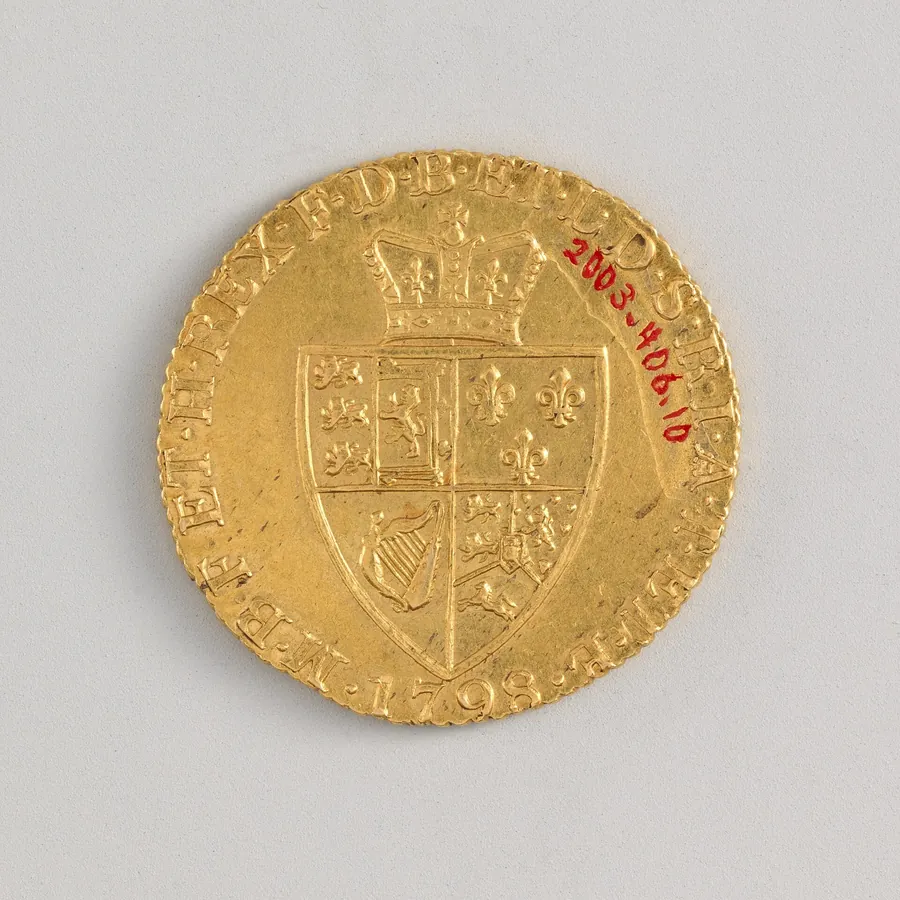
The French Convention decreed on 21 September 1792 that royalty was abolished in France. George III’s coins still carried the claim. The reverse legend of his guineas, M B F ET H REX, reads in full Magnae Britanniae, Franciae et Hiberniae Rex, King of Great Britain, France and Ireland. It appears on guineas to 1799 and half-guineas to 1800. A proclamation of 1 January 1801, printed in the London Gazette, gave the crown of the new United Kingdom a style with no France in it.
“of the United Kingdom of Great Britain and Ireland King, Defender of the Faith”
Proclamation of 1 January 1801, London Gazette issue 15324, p. 2 (Open Government Licence)Not shown. The page documents the dates above and the 1783 treaty. It has no document for every reign between them. The 1360 to 1369 dates come from Archontology, a compilation that cites Rymer’s Foedera, which was not opened.
London Gazette 15324, pp. 2–3. Archontology, Royal styles 1360–1369. Act of 17 March 1649. Treaty of Paris, 1783. Convention, 21 September 1792: procès-verbal. Coin legend: Numista, Royal Mint Museum.
Muscovite records list 2,280 people lost to Tatar raids in 1637, 37 of them killed
In Muscovite loss records, about one person in sixty lost to raiders in 1637 was killed. Davies reads most of the rest as captives.
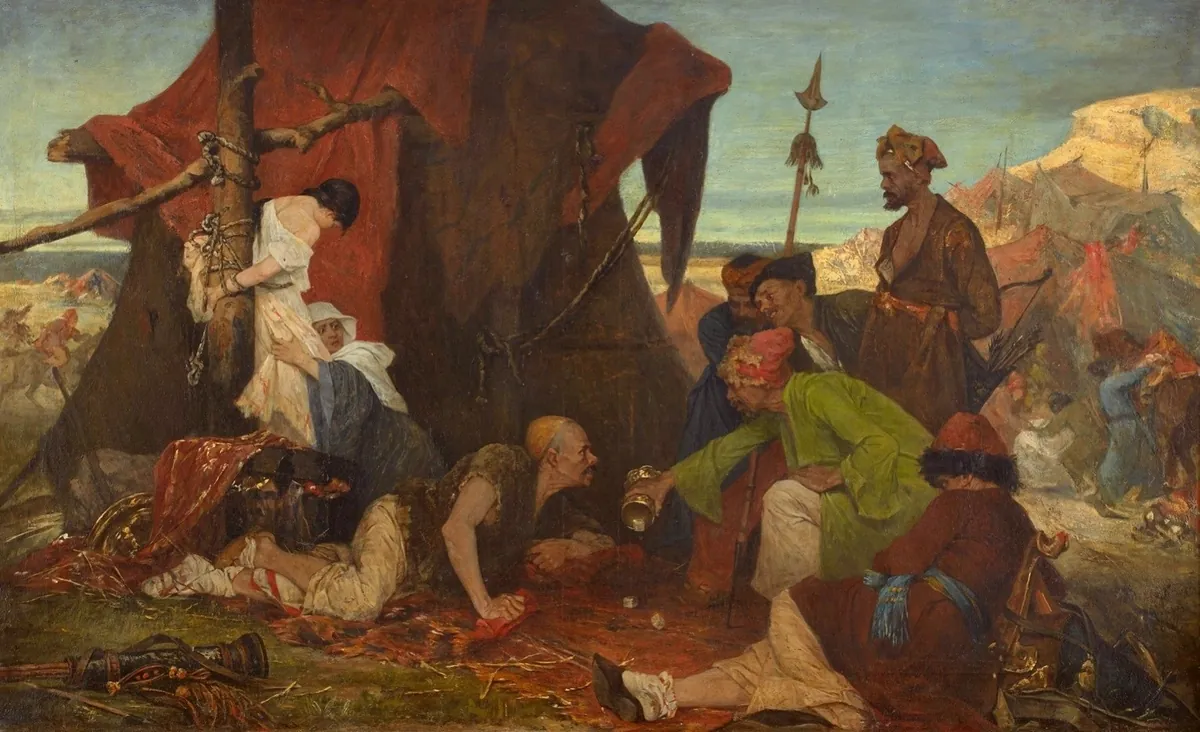
Crimean Tatar and Nogai horsemen rode north from the steppe to take captives, who were sold in the Crimean markets, above all at Kaffa. The historian Brian Davies reports that Muscovy’s Military Chancellery kept records of its losses. In 1637 they total 2,280 people, of whom 37 were killed. In 1645 the total is 5,750, of whom 20 were killed. For one district, Kursk, he gives 15,115 people killed or captured in 1633–1646 and writes that most were probably captured.
Those records suggest 150,000 to 200,000 Muscovites were captured in 1600–1650. For Poland and Ukraine, Davies reports that Bohdan Baranowski estimated about a million lost between 1500 and 1644. Mikhail Kizilov cites another historian’s estimate that Russia and Poland-Lithuania together lost “roughly” two million between 1500 and 1700.
Not shown. Estimates differ because few records survive, and Davies warns that some contemporary numbers were exaggerated: Isaak Massa’s 200,000 Russians for 1555 is implausible, since guarding captives held the ratio of captives to raiders near 1 to 3. The two numbers in Davies’s sentence on Poland, 20,000 a year and a million in all, do not match each other. The sources cover different places and years, so the figures above cannot be added together.
Davies, Warfare, State and Society on the Black Sea Steppe, 1500–1700 (Routledge, 2007), pp. 24–25. Kizilov, “Slave trade in the early modern Crimea…”, Journal of Early Modern History 11 (2007), p. 7 n. 11, citing Kołodziejczyk. Painting: Wikimedia Commons.

The Tea Act cut the cost of exporting tea, and colonists refused it
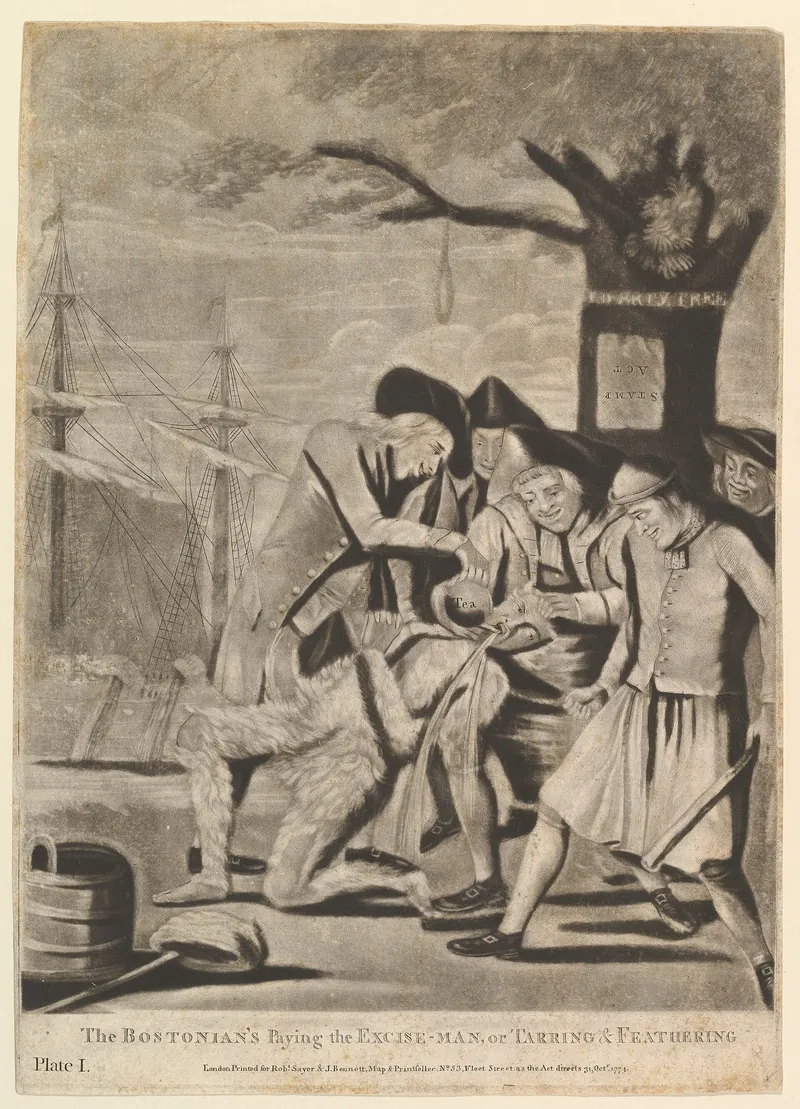
The Act refunded the British duty on tea sent to America so that the East India Company could sell it. Philadelphia then declared anyone who helped unload the Company’s tea while a duty was due on it “an enemy to his country”.
The Act’s own title says it allows “a Drawback of the Duties of Customs on the Exportation of Tea” to the colonies and lets the Treasury license the East India Company to export tea duty free. Its preamble says the drawback “may tend to the Benefit and Advantage of the Trade” of the Company. The reason the statute gives is the Company’s benefit; it says nothing about cutting the price for drinkers.
The duty of three pence a pound that the Townshend Act of 1767 laid on tea landed in America was still due when the Company’s tea arrived. That duty was what colonists objected to, as the documents below show in their own words.
1767 Townshend Act
Among the duties on goods carried from Britain to the colonies it lists “For every pound weight avoirdupois of tea, three pence.” The stated aim was “defraying the charge of the administration of justice”.
May 1773 Tea Act
The drawback applies to tea sold at the Company’s sales after 10 May 1773 and later exported to the colonies. It refunds the whole of the customs duty payable when that tea was imported into Britain.
16 Oct 1773 Philadelphia
Resolution 2: “the duty imposed by Parliament upon tea landed in America is a tax on the Americans”. Resolution 7 names anyone who helps unload or sell the Company’s tea while the duty is due “an enemy to his country”.
29–30 Nov 1773 Boston
A meeting of the people of Boston and nearby towns voted that no duty should be paid on the Company’s tea.
16 Dec 1773 Boston harbour
John Adams wrote on 17 December: “Last Night 3 Cargoes of Bohea Tea were emptied into the Sea.”
Not shown. The page gives no tea prices and no smuggling volumes, because the books that report them were not opened. The Act is read from the Parliament scan, whose text is hard to read in places. The Boston vote is read from a modern transcription of the proceedings.
13 Geo. 3 c. 44 (the Tea Act). Townshend Act, 1767. Philadelphia resolutions, 16 October 1773. John Adams, diary, 17 December 1773 (Founders Online). Print: Wikimedia Commons.

Spanish silver dollars were American legal tender for 63 years
From 1 July 1793 to 21 February 1857, 63 years, 7 months and 20 days (23,245 days), a Spanish milled dollar of the required weight paid any debt in the United States at 100 cents. The 1793 act asked for at least 17 pennyweights 7 grains, the 1843 act for 415 grains at .897 fine.
The Act of 9 February 1793 made foreign gold and silver coins legal tender from 1 July at fixed rates, among them “Spanish milled dollars, at the rate of one hundred cents for each dollar”. Section 2 took legal-tender status from other foreign coins three years after the mint began coining, “except Spanish milled dollars and parts of such dollars”. The Act of 10 April 1806 repealed the first section and re-enacted the rates. The Act of 3 March 1843 names “the Spanish pillar dollars” again, at 100 cents each.
The Act of 21 February 1857 ended it: “all former acts authorizing the currency of foreign gold or silver coins, and declaring the same a legal tender in payment for debts, are hereby repealed.” The same act told the Treasury to take in Spanish and Mexican fractions at 20, 10 and 5 cents, to recoin them, and to stop minting the half cent. The new cent was 88% copper and 12% nickel.
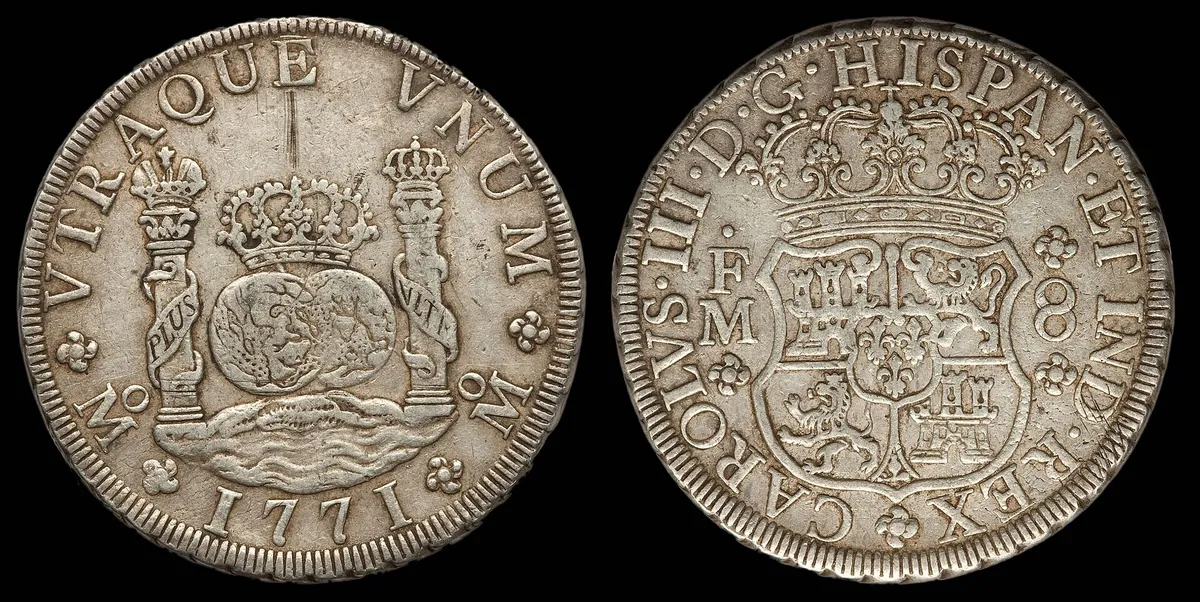
Not shown. Read, in their relevant sections: the acts of 1793, 1798, 1802, 1806, 1843 and 1857, and the 1834 act on other silver dollars. The 1834 act adds the dollars of Mexico, Peru, Chile and Central America and does not remove the Spanish dollar. The 1793 date is when the law took effect, not when it was signed.
US Statutes at Large: 1 Stat. 300 (1793); 2 Stat. 374 (1806); 5 Stat. 606 (1843); 11 Stat. 163 (1857). Coin: Wikimedia Commons.

Haiti’s 1825 debt to France was paid off in 1888
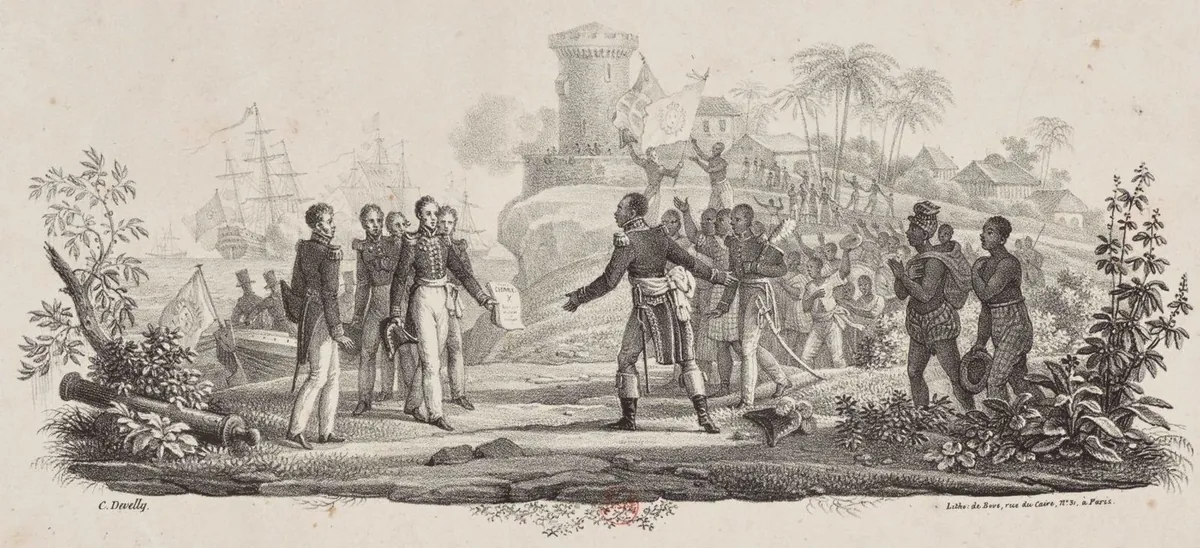
Haiti’s payments on the 1825 indemnity and on the loan taken out to pay it ran from 1826 to 1888 and came to 112.3 million francs. The indemnity itself ended in 1878, and 1947 is the year the 1922–23 dollar loan, which refinanced earlier debts, was cleared under US supervision.
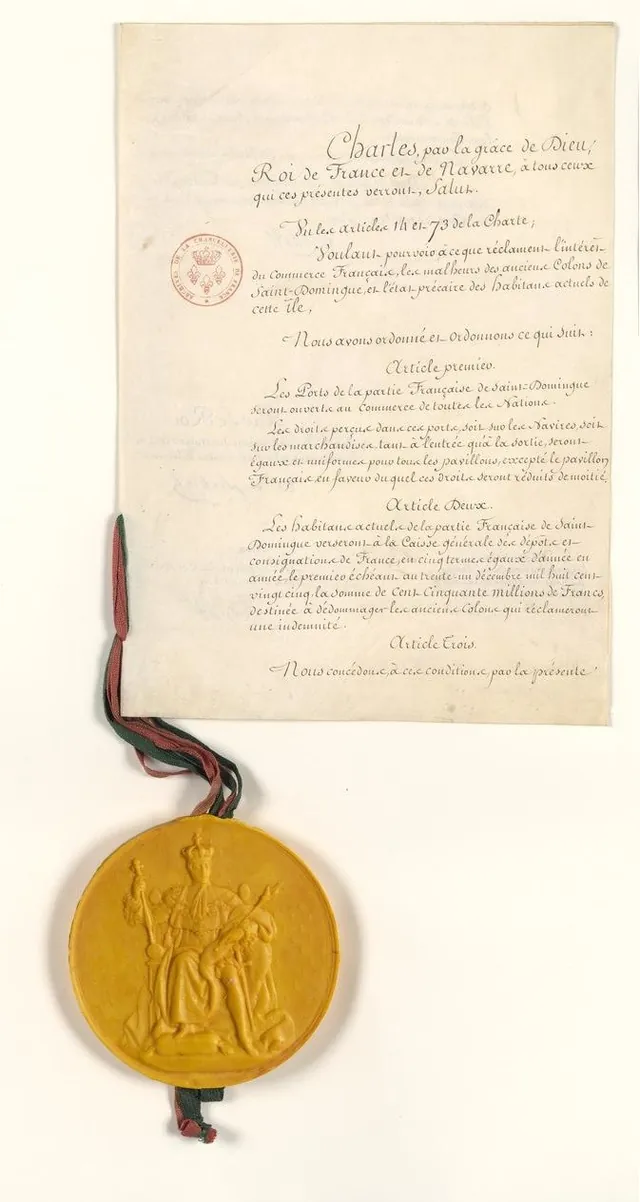
Charles X’s ordinance of 17 April 1825 set two conditions for Haiti’s independence. Article 1 opened Haiti’s ports to all nations but cut the duties for French ships by half. Article 2 required 150 million francs, to compensate former colonists, in five equal annual instalments, the first due on 31 December 1825. Article 3 granted independence “à ces conditions”. A scholarly annex says the sum was rounded from 144.7 million francs of estimated annual revenue from the colonists’ plantations in 1789, plus 5 million for urban property.
Haiti borrowed 30 million francs in 1825, but the bankers kept 6 million, so it received 24 million. A treaty of 1838 cut the unpaid remainder to 60 million francs plus 700,000 from the first instalment. The New York Times tabulated the payments year by year from French archives: 66.0 million francs went directly to the indemnity, 24 million more came out of the 1825 loan, and the rest paid the loan and late fees. Together that is the 90 million francs the reduced indemnity came to.
The last indemnity payment was in 1878 and the double debt of indemnity and loan was settled in 1888. The year 1947 belongs to the 1922–23 dollar loan: a United Nations report says US supervision lasted “until full redemption of the 1922/23 loan in 1947”. Some accounts, including summaries of the Times investigation, link such later loans to the indemnity through refinancing. The page counts only payments on the 1825 indemnity and its loan; later French loans are outside the count.
Payments by decade
| Decade | Indemnity, millions of francs | Loan and late fees, millions of francs |
|---|---|---|
| 1820s | 5.3 | 0.0 |
| 1830s | 3.2 | 13.1 |
| 1840s | 6.6 | 7.6 |
| 1850s | 18.2 | 4.5 |
| 1860s | 20.1 | 5.9 |
| 1870s | 12.6 | 10.1 |
| 1880s | 0.0 | 5.1 |
Not shown. The page does not convert francs to today’s money or compare payments with Haiti’s economy; the Times’s estimates for both are its own. The 1947 loan record was read in a UN report, which does not name the final recipient of the money. The Times article that links later loans to the indemnity could not be opened.
Ordinance text: scholarly annex; scan: Archives nationales via Wikimedia Commons. The New York Times, Historical data on Haiti’s debt (2022). United Nations, Foreign Capital in Latin America (1955), p. 101 n. 2. Lithograph: Wikimedia Commons.


Most of Africa’s borders were not drawn at Berlin
The conference settled few borders. Across 107 bilateral borders, the median year a border first formed was 1891, and the median year it took its final form was 1908.
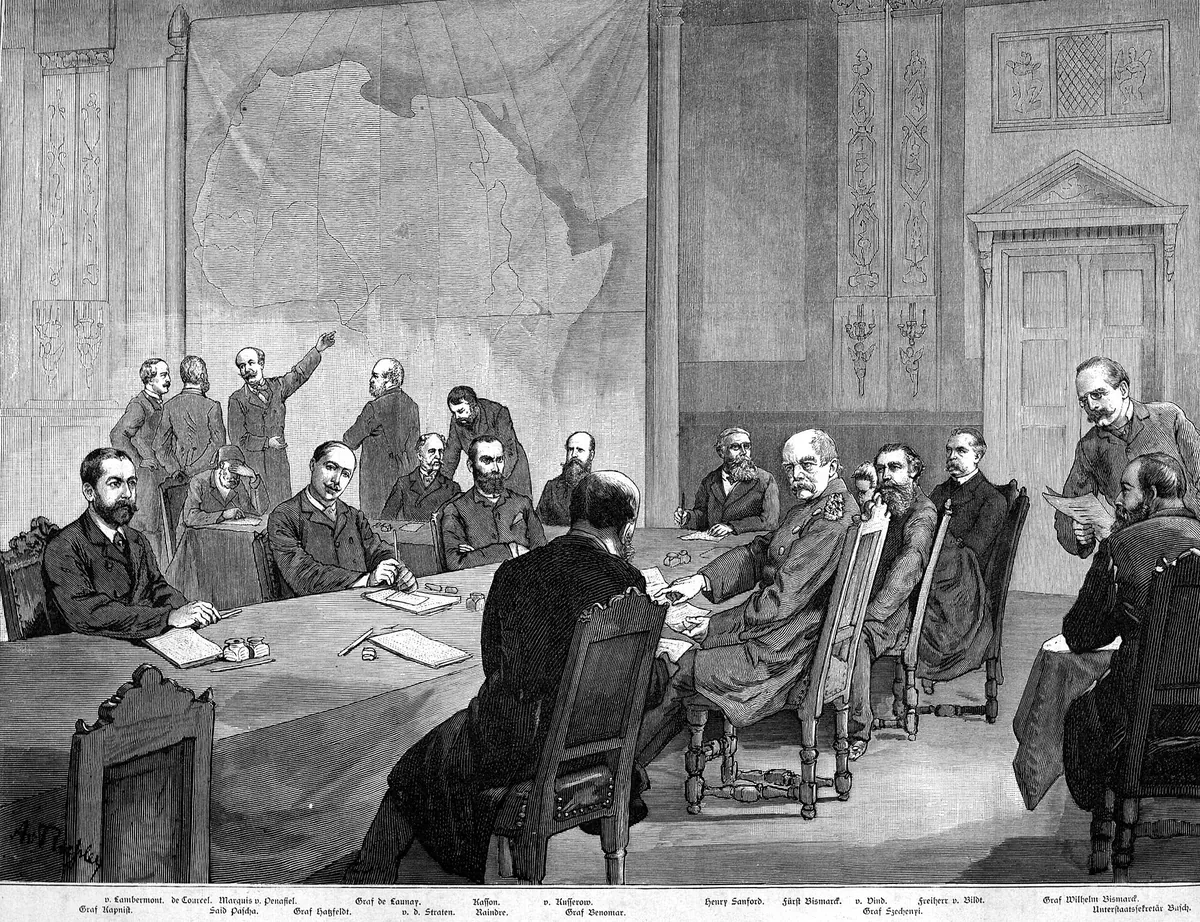
The Berlin Conference met from 15 November 1884 and ended with a General Act on 26 February 1885. Fourteen powers signed it: the United Kingdom, France, Germany, Austria-Hungary, Belgium, Denmark, Spain, the United States, Italy, the Netherlands, Portugal, Russia, Sweden-Norway and the Ottoman Empire. No African ruler signed. The Act covers freedom of trade in the Congo basin, navigation of the Congo and Niger, the slave trade, and the notification of new occupations.
Its famous rule on occupation is narrow. Articles 34 and 35 apply to new possessions “on the coasts of the African continent”, which must be notified to the other signatories and ruled with authority enough to protect existing rights. Those two articles say nothing about the interior; other articles of the Act cover the Congo basin. The United States signed but never ratified: a State Department letter of 1928 says it “is not a party to the General Act of Berlin”.
A study of every bilateral border in Africa by Jack Paine, Xiaoyan Qiu and Joan Ricart-Huguet says that as late as 1887 European claims “were largely limited to the coast”. On borders, they say the conference “addressed the Congo region only”, and the boundaries it created for the Congo Free State were later revised.
| Year | What happened | Source |
|---|---|---|
| 1885 | The General Act is signed on 26 February; its rules on occupation cover the coasts only | Act, articles 34 and 35 |
| 1887 | Of 107 bilateral borders, 31% had begun to form and 7% had taken their final form; claims were largely limited to the coast | Paine, Qiu and Ricart-Huguet |
| 1891 | Median year in which a border first formed | same |
| 1895 | 55% had begun to form and 25% had taken their final form | same |
| 1908 | Median year in which a border took its final form | same |
“The United States is not a party to the General Act of Berlin”
Secretary of State Kellogg, 22 May 1928, Foreign Relations of the United StatesNot shown. The study rests on its authors’ coding of treaties and maps, and its 107 borders are those on the final colonial map of about 1960. and historians still argue about how far the conference shaped later partition. “Final form” means the last major revision of each border, not a date of independence.
General Act of 26 February 1885. Paine, Qiu and Ricart-Huguet, “Endogenous Colonial Borders”, American Political Science Review 119(1), 2025, pp. 2–5 (online 7 March 2024). FRUS 1928, vol. I, doc. 310, p. 436. Opening date: De Leon, 1886. Drawing: Wikimedia Commons.

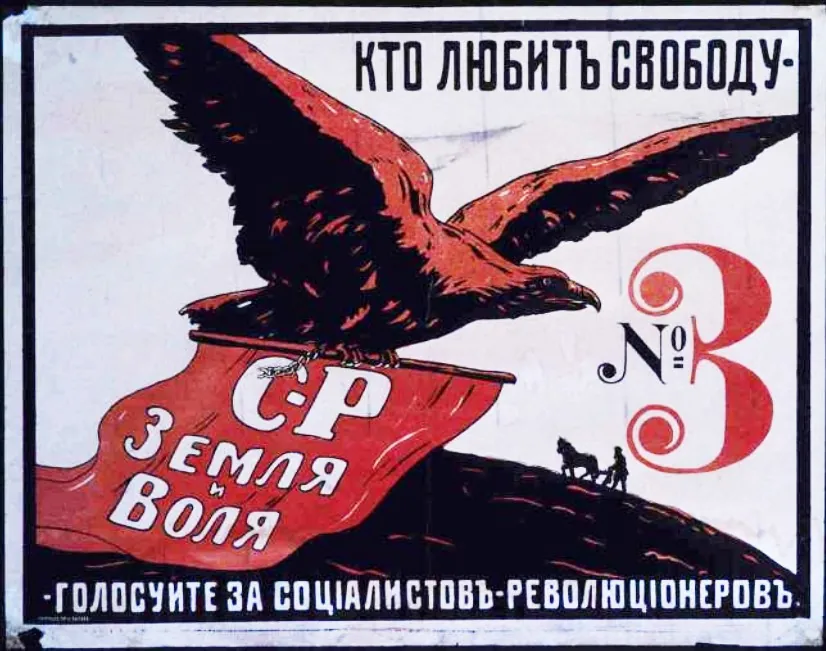
The Bolsheviks won about a quarter of the vote, and the Assembly sat once
In the election for Russia’s Constituent Assembly, the Bolsheviks took 23.6% of 41.7 million votes counted. The Socialist Revolutionaries took 38.0%.
The vote was set for 12–14 November 1917 by the old calendar, 25–27 November by the new calendar, less than three weeks after the Bolsheviks took power. In most of the country it happened as scheduled, and in some districts it was postponed. The Assembly met on 5 January 1918 by the old calendar, 18 January by the new. Lenin dissolved it by force after a single session, Radkey writes.
The Bolsheviks, in Radkey’s words, “had mustered only one-fourth of the electorate”. Two counts disagree on the exact share because neither has returns from every district. Svyatitsky’s 1918 count gives them 24.9% of 36.3 million votes. Radkey’s count of 41.7 million, from 60 of the 79 districts, gives 23.6%.
Data table
| Count | Party | Votes | Share of the votes counted |
|---|---|---|---|
| Svyatitsky (1918) | Socialist Revolutionaries | 16,509,756 | 45.5% |
| Svyatitsky (1918) | Bolsheviks | 9,023,963 | 24.9% |
| Svyatitsky (1918) | Mensheviks | 668,064 | 1.8% |
| Svyatitsky (1918) | Kadets | 1,856,639 | 5.1% |
| Radkey (1950) | Socialist Revolutionaries | 15,848,004 | 38.0% |
| Radkey (1950) | Bolsheviks | 9,844,637 | 23.6% |
| Radkey (1950) | Mensheviks | 1,364,826 | 3.3% |
| Radkey (1950) | Kadets | 1,986,601 | 4.8% |
Not shown. Neither count covers every district. Radkey’s unclassified rest includes Cossack and other votes that the returns do not split out. The page uses Radkey’s table only for the five groups printed in it.
Oliver H. Radkey, The Election to the Russian Constituent Assembly of 1917 (Harvard University Press, 1950), p. 2 and the table “The Vote by Parties for the Whole Country”, pp. 16–17, read in the Internet Archive scan. Poster: Wikimedia Commons.

In 1944 only 42 of Germany’s 264 combat divisions were armoured or motorised
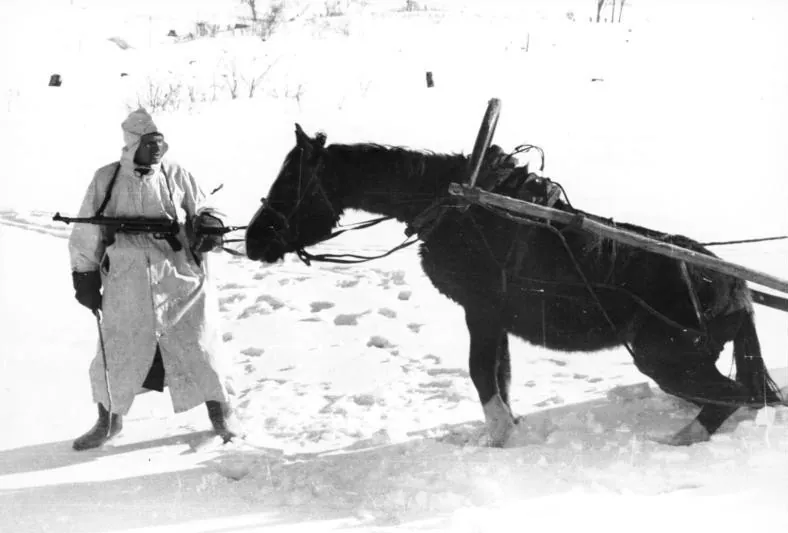
Most of the German Army moved on foot and behind horses. In November 1943 only 52 of 322 divisions were armoured or motorised, and the army’s horses averaged about 1.1 million over the war.
A US War Department bulletin of March 1946 says that “the bulk of German combat divisions were horse drawn throughout World War II”. It gives the count of divisions, armoured or motorised against the rest, for two Novembers. It also gives the equipment of three types of infantry division: an old-type one had about 5,300 horses and 950 motor vehicles, and in 1943 the Eastern Front allotment was changed to about 6,300 horses and 400 motor vehicles.
Data table
| November | Armoured or motorised divisions | Share |
|---|---|---|
| 1943 | 52 of 322 | 16.1% |
| 1944 | 42 of 264 | 15.9% |
Horses and motor vehicles in one infantry division
Not shown. This is a wartime US intelligence summary published in 1946, and the site that hosts it notes that later postwar publications have more accurate data. The page gives no total of horses used in the war and no horse losses for winter 1941–42, because the book that reports them was not opened.
“German horse cavalry and transport”, Intelligence Bulletin, March 1946, in the Lone Sentry transcription. Photograph: Wikimedia Commons.

Where each claim comes from
Every number on the page is taken from a document named in the item that uses it. Wikipedia was used to find leads and never as a source. The list says what was opened and what was read through someone else.
- Domesday. Opened: Darby’s page image, the Commons Library table, the Hull Project entry, Goose and Hinde. Not opened: the Domesday text itself or Darby’s chapters.
- Venice. Opened: the Mowbray and Gollmann paper. Not opened: the 1268 ordinance, Tappan, Norwich.
- King of France. Opened: London Gazette, the 1649 Act, the 1783 treaty, the Convention record, Archontology. Read through a second reader: Numista and Royal Mint Museum coin legends. Not opened: Rymer’s Foedera.
- Tatar raids. Opened: Davies pp. 24–25. Read through a second reader: Kizilov’s footnote.
- Tea. Opened: the Act (scan), the Townshend Act, the Philadelphia resolutions. Read through a second reader: Adams’s diary entry and the Boston vote.
- Spanish dollar. Opened: the acts of 1793, 1798, 1802, 1806, 1834, 1843 and 1857.
- Haiti. Opened: the ordinance text, the New York Times data and notes. Read through a second reader: the UN report. Not opened: the New York Times article itself, which is behind a paywall.
- Berlin. Opened: the General Act, the Paine, Qiu and Ricart-Huguet paper, the 1928 FRUS letter, De Leon.
- Constituent Assembly. Opened: Radkey’s 1950 book in the Internet Archive scan, pages 2 and 12–17.
- Horses. Opened: a transcription of the March 1946 bulletin. Not compared with a scan of the original.
Image credits
- Domesday folio: Professor J. J. N. Palmer and George Slater, via Open Domesday, CC BY-SA.
- Guinea of George III: Lewis Pingo; Metropolitan Museum of Art, CC0.
- Tatars and captive: Józef Brandt and Stanisław Bohusz-Siestrzeńcewicz; Muzeum Podlaskie; public domain.
- “The Bostonians Paying the Excise-Man”: attributed to Philip Dawe; Metropolitan Museum of Art, CC0.
- Pillar dollar: image courtesy of Heritage Auctions, CC BY 4.0 (the 1771 coin is out of copyright).
- Ordinance of 1825: Archives nationales (France), CC BY 4.0.
- Mackau and Boyer: Jean-Charles Develly; Bibliothèque nationale de France; public domain.
- Berlin conference: Adalbert von Roessler; public domain.
- SR poster: Hoover Institution Library & Archives; public domain.
- Horse and sledge: Bundesarchiv, Bild 101I-215-0366-03A, photographer Geller, CC BY-SA 3.0 DE.
- Haiti payments: The New York Times, historical data set on Haiti’s debt, non-commercial use with credit.
What is estimated or still open
- Domesday. The unit of a slave entry is disputed, the towns and the far north are missing, and one circuit leaves most slaves out.
- Venice. The rules are those of the 1268 reform as two modern authors describe them. Changes after 1268 are not detailed.
- King of France. Whether the claim was dormant between 1360 and 1369 depends on how the Calais promises are read, and the page has no document for each reign.
- Tatar raids. Totals are historians’ estimates, and the sources do not agree on place or years.
- Tea Act. The page does not say how much cheaper the Company’s tea would have been.
- Spanish dollar. The page covers the laws, not how much Spanish money actually circulated.
- Haiti. The Times tabulation is a reconstruction from archives, and some years are averages.
- Berlin. Borders are coded by the study’s authors. Historians disagree about the conference’s wider influence.
- Constituent Assembly. Neither count covers all districts.
- Horses. The bulletin is a 1946 intelligence summary.