A tune from the King
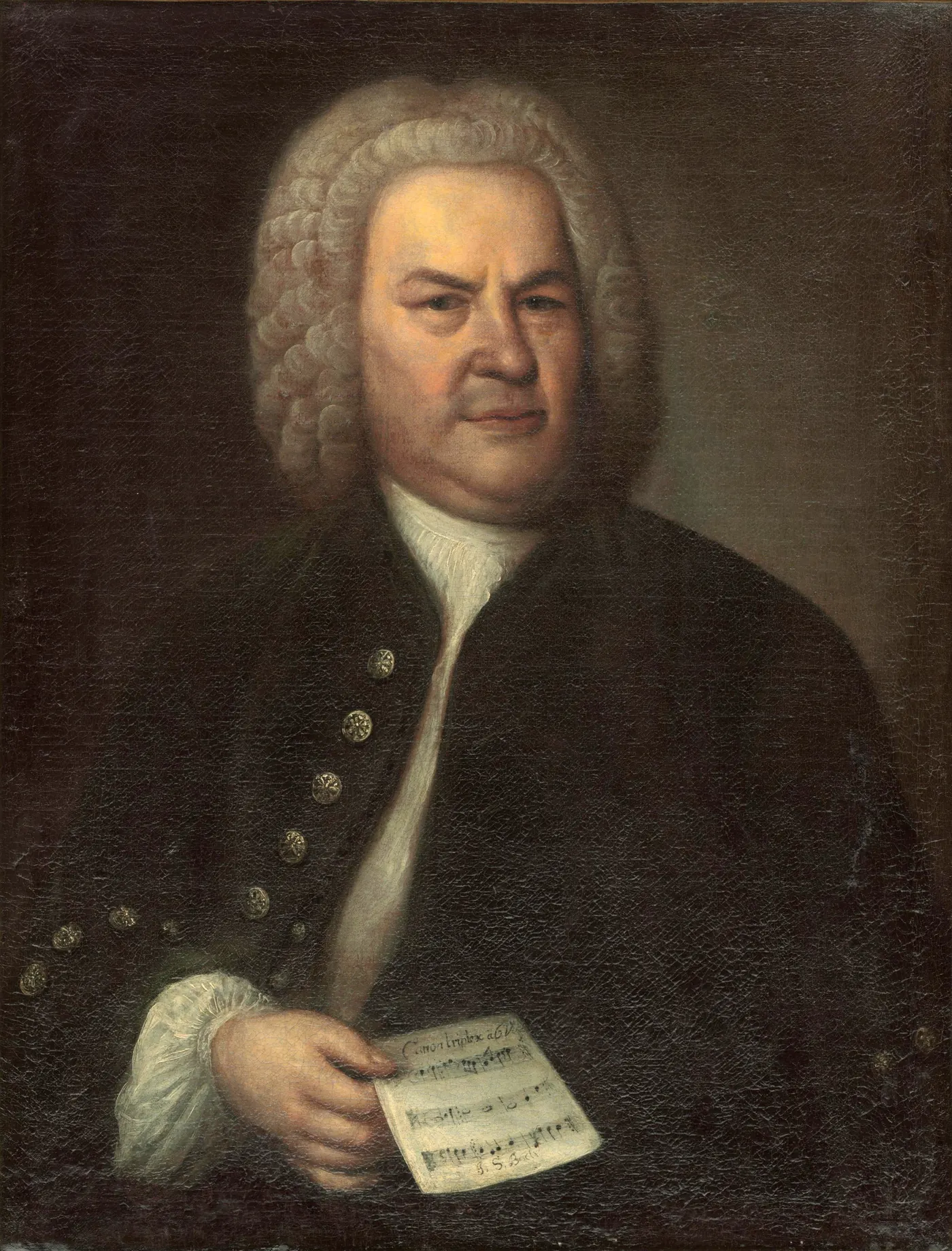
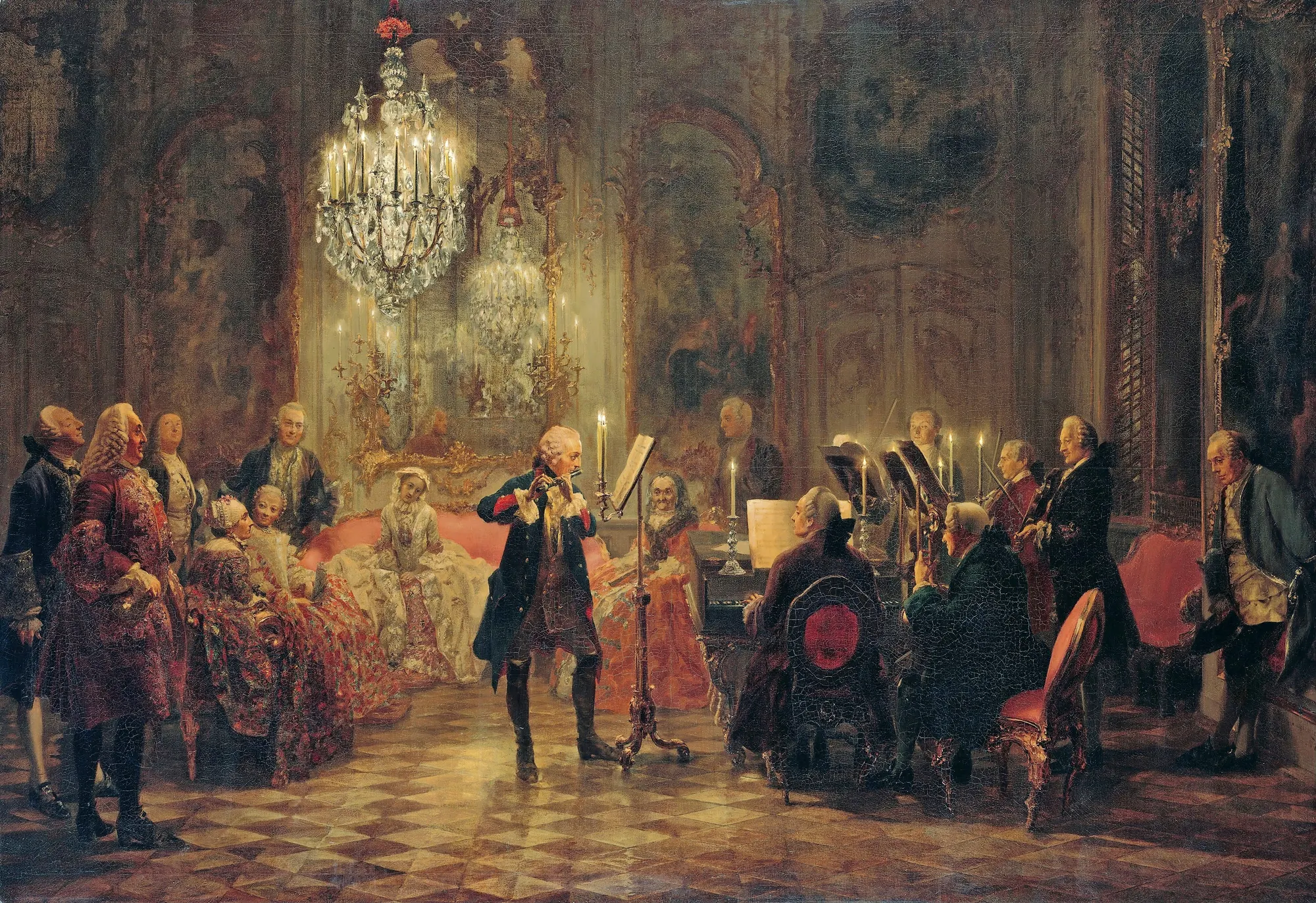
On Sunday 7 May 1747 Bach, then 62, arrived at the palace in Potsdam, where his son Carl Philipp Emanuel was the King’s harpsichordist. Frederick, a keen flautist, set the evening’s concert aside, gave Bach a theme and asked him to improvise a fugue on it. Bach did, at one of the King’s new Silbermann fortepianos. A Berlin paper reported it four days later.
Back in Leipzig he worked the theme out on paper. On 7 July he dedicated the result to Frederick: the Musical Offering, two fugues, a trio sonata and ten canons, every one of them built on the King’s theme.
One line, and a hint
A canon is a tune that answers itself: a second voice plays the same line, usually starting later. Bach printed several of these canons as riddles. He wrote out only the first voice and left the second for the player to find: when it comes in, on which note, and whether it runs forwards, backwards or upside down. Over one of them, the Canon a 2, he wrote Quaerendo invenietis: seek and you shall find.
Each puzzle below gives you Bach’s line and a few dials. Turn them, press play and listen. The red marks show where the voices grate, or move in lockstep octaves and fifths, which the old rules forbade. Each one adds to the score. Bach’s answer is the one that scores lowest.
- Bach’s written line
- your second voice
- the King’s theme
- a clash
Riddle I · Canon a 2 Violini in unisono
Two violins, one line
Both violins play exactly the same notes, over the King’s theme in the cello. The only question is when the second one starts.
Riddle II · Canon a 2 cancrizans
The crab
One line, 18 bars long, opening with the King’s theme in long notes. Its name gives the game away: cancrizans, crab-wise.
Riddle III · Canon a 2 per Motum contrarium
The mirror
The King’s theme sits on top. Below it, the second voice answers the first in contrary motion: where the leader climbs, the follower falls. Choose when it enters and where its mirror stands.
Finale · Canon a 2 per tonos
A glory that keeps rising
Ascendenteque Modulatione ascendat Gloria Regis
This canon plays a different trick. Over the King’s theme the second voice follows the first a fifth higher, one bar behind. But its eight bars end a whole tone above where they began, in D minor instead of C minor, so the piece can begin again from there.
Six rounds take it through C, D, E, F sharp, G sharp and B flat minor; a seventh would begin in C minor again, an octave higher. Douglas Hofstadter opened Gödel, Escher, Bach (1979) with it, as an endlessly rising canon.
The six rounds wrapped once round a clock, starting at the top. Each arc is a note; further out is higher. Gold: the leading voice; ivory: the follower; green: the King’s theme. The dotted line rises a whole tone a round: where the circle closes, a seventh round would begin in C minor, an octave further out.
How this page listens
The notes are Bach’s, from the Bach-Gesellschaft text (volume 31.2, 1885) in a modern public-domain engraving. Each following voice is the leading voice transformed by the canon’s own rule. Trilled notes are played without the trill. The sound is synthesised in your browser.
The score listens on every semiquaver. It adds points for seconds, sevenths, tritones and fourths against the bass that are not passing notes, suspensions or part of a seventh chord, more on the beat than between beats, and for voices moving in parallel unisons, octaves or fifths. It is a rough ear, not a theory of harmony. Leaving aside the settings that only double or shadow the first voice, Bach’s answer has the lowest score of the 8 offered in the first riddle, of the 3 in the second and of the 102 in the third. The rising canon is played as Bach wrote it.
Sources
- Bach, Musikalisches Opfer BWV 1079 (Leipzig, 1747); score from the Bach-Gesellschaft edition, vol. 31.2 (1885), modern engraving ↗
- Report of the Potsdam visit, Berlinische Nachrichten (Spenersche Zeitung), 11 May 1747; and Grove, “Bach, Johann Sebastian”
- Ursula Kirkendale, “The Source for Bach’s Musical Offering”, JAMS 33 (1980): the inscriptions ↗
- Elias Gottlob Haussmann, portrait of J. S. Bach, 1746; public domain, via Wikimedia Commons ↗
- Adolph Menzel, Flötenkonzert Friedrichs des Großen in Sanssouci, 1850–52; public domain, via Wikimedia Commons ↗
- Douglas Hofstadter, Gödel, Escher, Bach (1979)

