Roman Agora, Athens
The Tower
of the Winds
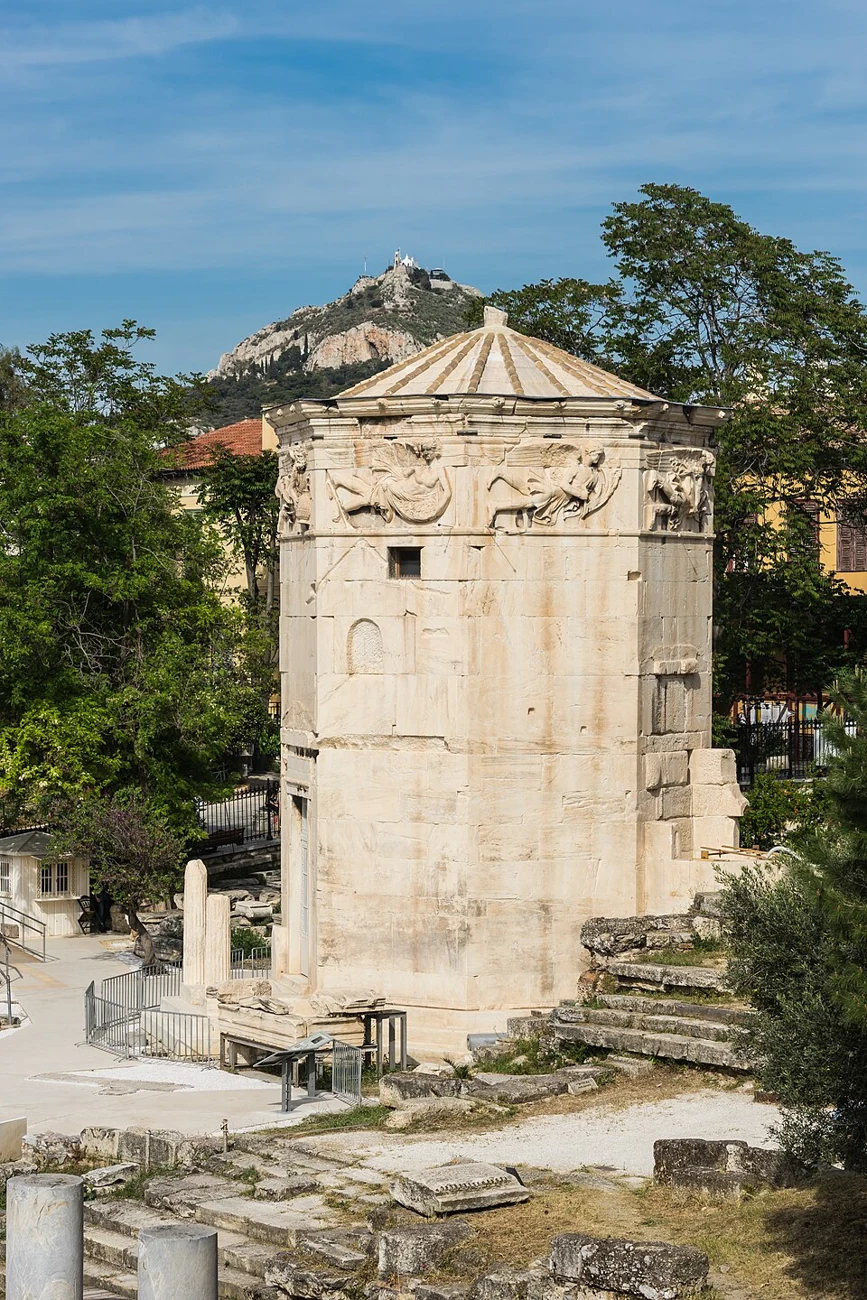
Above the Roman Agora in Athens, eight figures carved in marble face the winds they represent. Below them, lines cut into the walls catch the shadows of sundials.
Meet the eight windsA face for every wind
The wind names are carved into the marble above the figures. Vitruvius also describes a bronze Triton on the roof. Its wand pointed to the face where the wind came from.
Choose the direction the wind comes from.
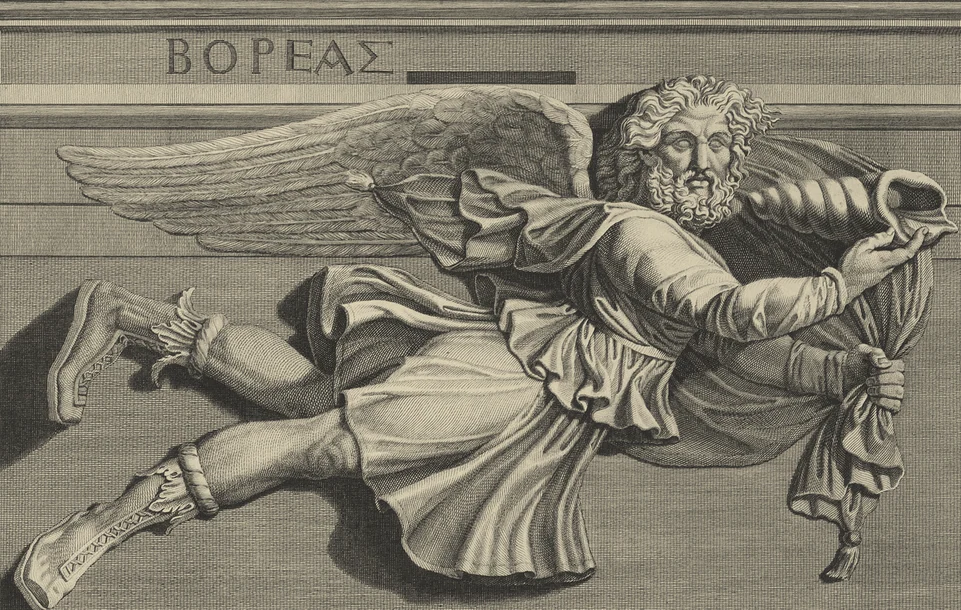
Boreas blows through a shell.
Marble reliefs as drawn by James Stuart and Nicholas Revett, published in 1762.One sun, eight walls
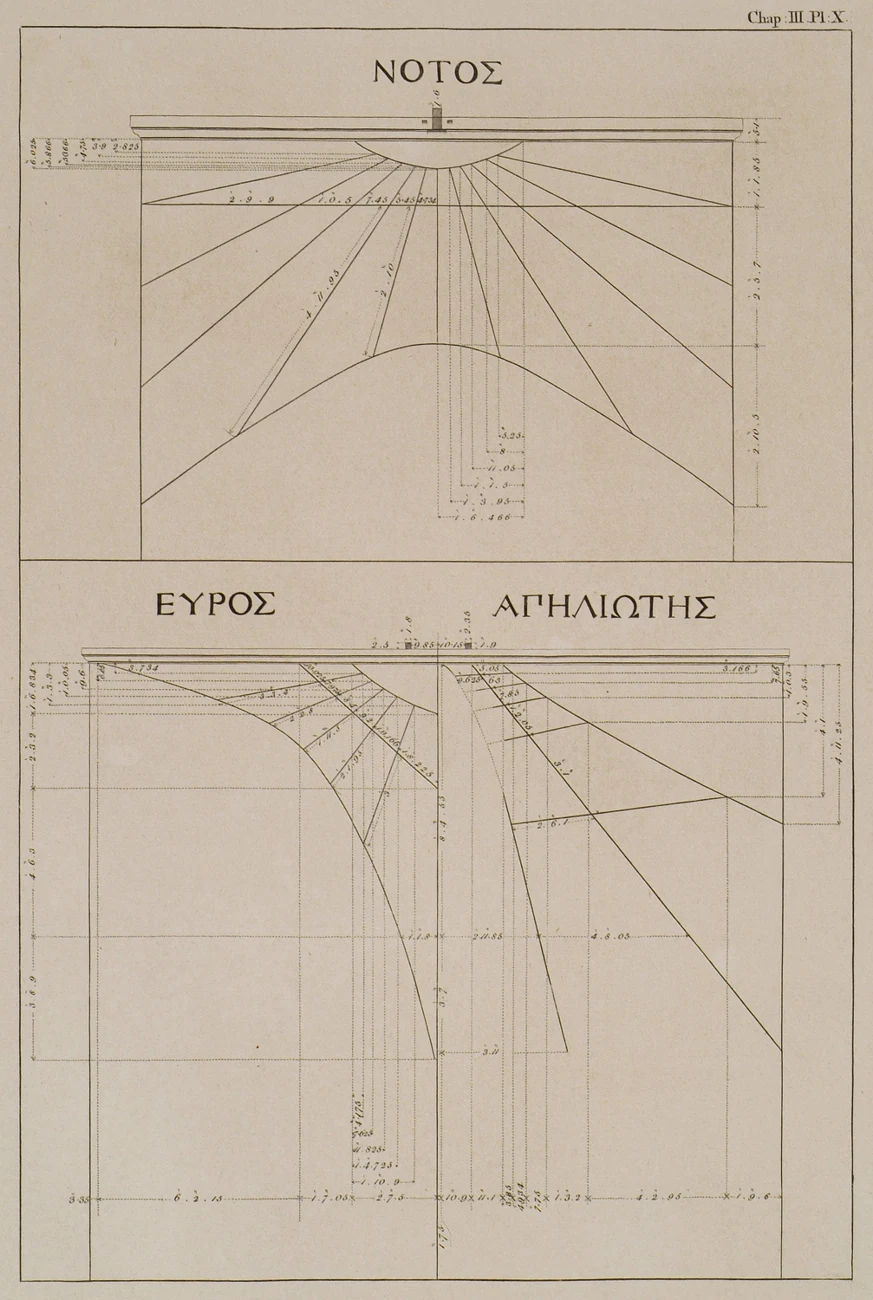
An east-facing wall catches the morning sun. In the afternoon, sunlight moves to the west-facing walls. The lines beneath the reliefs could tell the hour while their walls were lit.
Selected face
Blue walls are in shade. Gold walls face the sun. The red mark is the shadow of a short pin on the wall you choose.
How to read the simulation
Hours are in apparent solar time. At 12:00 the sun crosses the local meridian. These dates use a modern calendar and an approximate solar model at the tower’s latitude. The short pins and lines illustrate the geometry. The engraved plate records the original dials.
Below the sundials
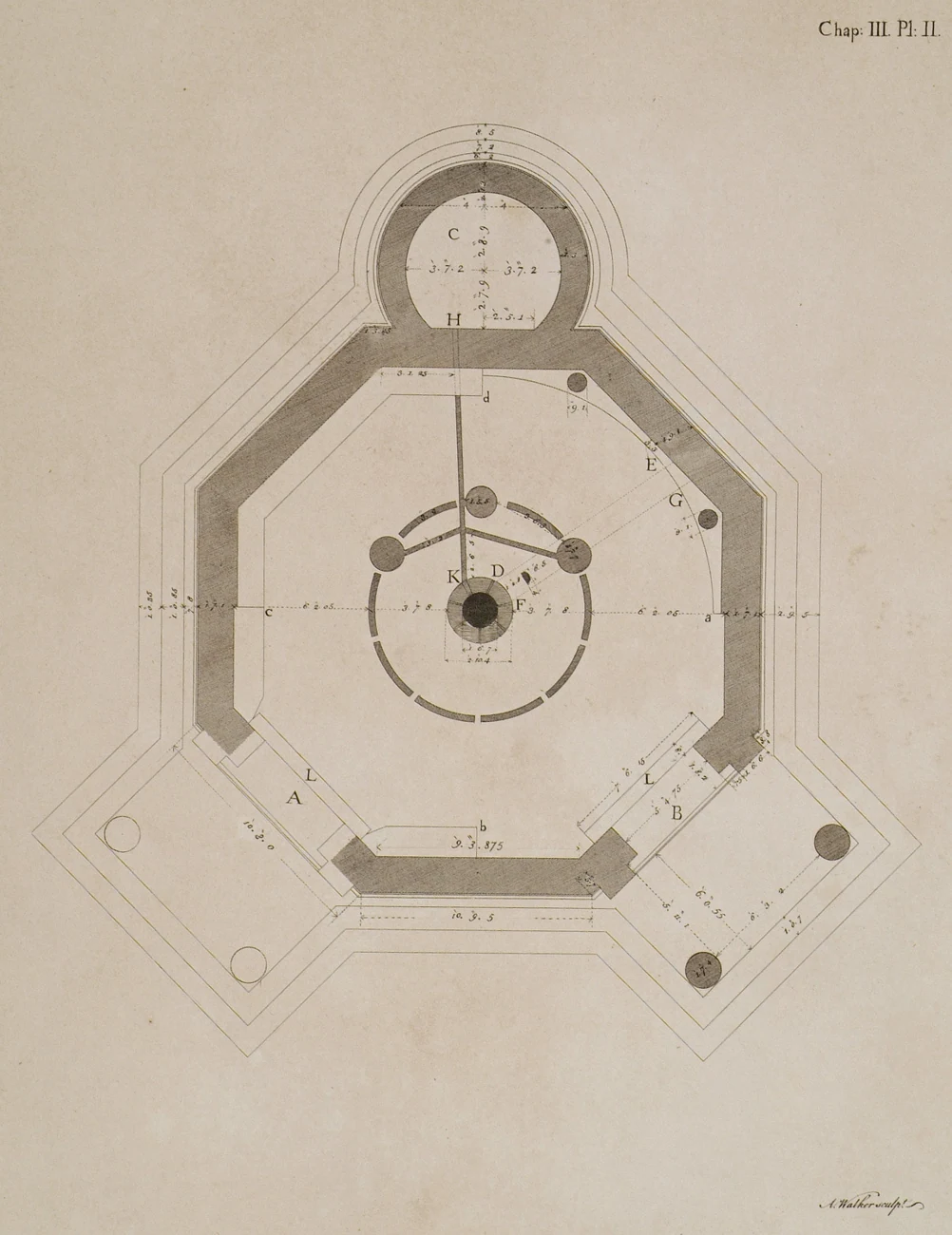
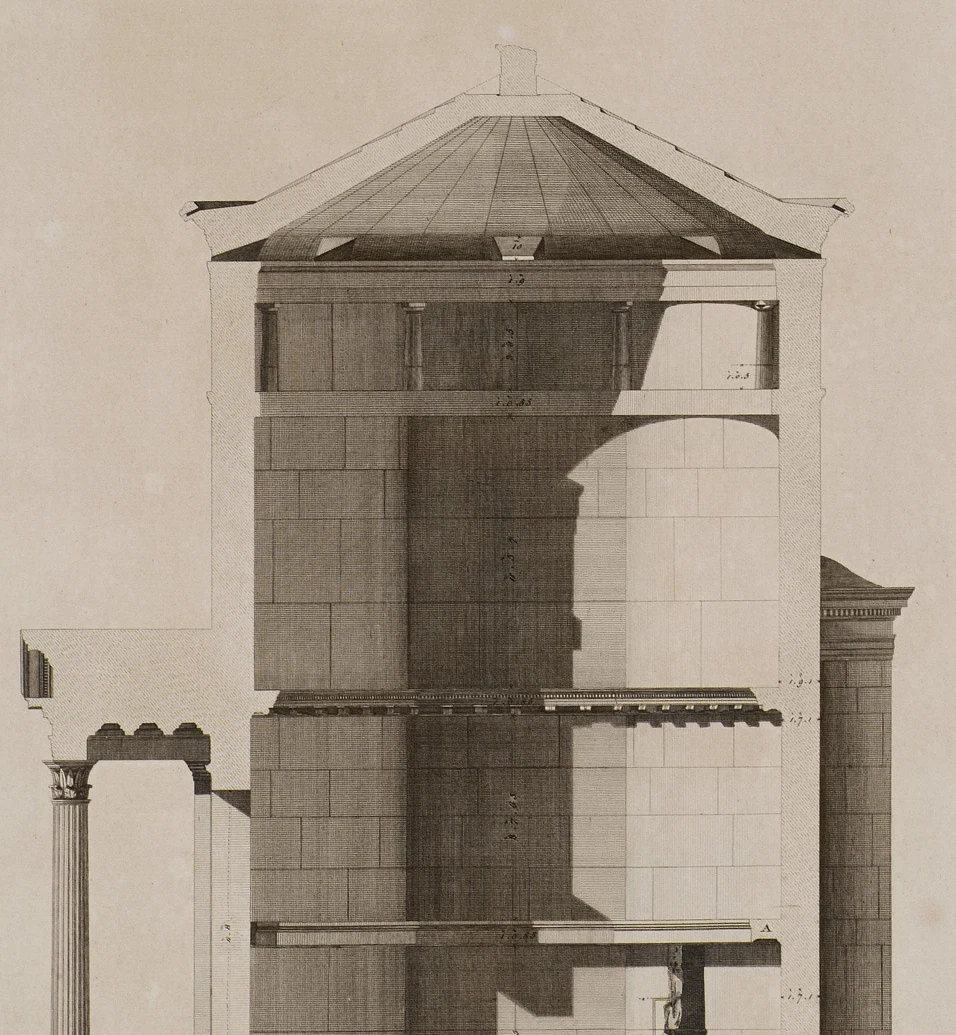
A round annex adjoins the tower on the south. Holes and channels in the floor led Joseph Noble and Derek de Solla Price to propose a water-powered clock. The mechanism those features once served has not survived.
The cutaway opens the tower and shows its south annex. Stuart and Revett’s section records the interior long after antiquity.
See the floor plan