Romania is debating compulsory school uniforms. Here are the 15 arguments you hear from both sides. Say what you think of each one, then see what the studies show. Each side is right a few times.
Bill L443/2026, put forward by 34 members of parliament, 32 of them from the Social Democrats (PSD), amends Romania’s school education law. The Senate passed it by 84 votes to 18, with 4 abstentions. According to the Senate’s vote record, senators from PSD (33), the nationalist AUR (25), the Hungarian minority party UDMR (7), the PIR group (6) and four unaffiliated senators voted for. The National Liberals (PNL) split: 9 for, 3 against, 3 abstentions. All 14 senators of the reformist USR voted against. The Chamber of Deputies has the final say.
Who wears it
Every pupil in pre-university education, from primary to the end of secondary.
Who chooses the design
Each school, through its board, with the agreement of the parents’ council. There is no national design.
Who pays
Families. Low-income families would get it free or at half price, and the cost “may be” covered from local budgets and EU funds. The law does not guarantee the money.
What if you don’t wear it
Fines of 1,000–5,000 lei for parents were removed in committee. Pupils who do not wear it, however, face disciplinary action under the pupils’ statute, starting with a warning. The statute’s heavy sanctions, such as suspension, are set there for other offences.
From when
Three days after publication in the Official Gazette, if the Chamber of Deputies passes it too.
The Ministry of Education does not support the bill. The Economic and Social Council gave it a negative opinion. On 28 September, the National Pupils’ Council asked pupils to come to school dressed in black, under the slogan “Education can’t be fixed at the tailor’s”. The Edupart parents’ federation does not oppose uniforms, but it opposed the fines.
These are the arguments heard most often, in the words people use. For each one, say what you think before you see what the studies show. Nothing leaves your device.
For uniforms
“Uniforms reduce bullying.”
Not backed by evidence
It is the first aim written into the bill’s explanatory memorandum. No solid study has confirmed it. The largest study to measure it directly followed 6,320 American children from kindergarten to fifth grade: in schools with uniforms, bullying, social anxiety and behaviour were the same as elsewhere.
The Ministry of Education said no study shows that uniforms reduce bullying. Romania’s Economic and Social Council gave the bill a negative opinion, writing that bullying appears where a school has no real means of prevention, whatever pupils wear. Nor do the two EU countries that impose uniforms by law give a clear answer. In PISA 2025, 53.9% of pupils in Cyprus said they had not been bullied, slightly above Romania (48.8%), while in Malta only 44.5% did.
“Uniforms hide the differences in wealth between children.”
Nobody has measured it
The clothes, yes. The rest, no: the phone, the school bag, the shoes, the winter coat and the car that drops the child off all stay in view. Nobody has measured whether, in the end, children in a uniformed school feel the gap in wealth any less.
Romanians believe they do. In an INSCOP poll taken on 1–7 September 2026, 77% said a compulsory uniform would reduce discrimination between pupils. It is a widely held view, but it is a view: the question asked what people think, not what happened in schools.
“In uniform, pupils behave better and learn more.”
Not backed by evidence
The large American studies found no gain. Brunsma and Rockquemore (1998) found no link with behaviour and even a small negative link with achievement. Yeung (2009) found no link with achievement, and Ansari and colleagues (2022) none with behaviour. The only study that comes close to showing cause and effect, Gentile and Imberman (2012), followed schools in one American district before and after they adopted uniforms. The effects on grades and discipline were small or impossible to tell apart from zero.
A study of PISA data found that pupils in uniform describe more orderly lessons. But it compares very different countries and schools (Japan with Germany, Catholic schools with state ones), so it cannot say whether the order comes from the uniform or from everything else.
“A uniform gives children pride in belonging to their school.”
Partly true
Here the studies disagree, which is interesting. From 2024 France tried a common outfit in about a hundred schools. In the official evaluation, published in May 2026, three in four primary head teachers said pupils felt more attached to their school. Independent researchers who visited the schools found, however, that older pupils kept to it poorly.
In the United States, the study of 6,320 children, which asked the children themselves, found the opposite: in fifth grade, children in uniformed schools said they felt they belonged less. Who chooses the uniform probably matters. A uniform wanted by a school with its own identity, such as the one at the Andrei Șaguna College in Brașov, is not the same as one imposed on every school by law.
It is the only effect that several studies find, and it is small. In the American district studied by Gentile and Imberman, girls in middle and high school missed about one day less a year after uniforms came in. In the study of 6,320 children, pupils from poor families missed less than one day less a year.
An experiment in Kenya showed a much larger effect: a free uniform worth about $6 cut absences by 43% (from 15% of days), more among children who had no uniform before. But that result is about a uniform given away, in a place where not having one kept children at home. It shows how much the cost weighs, not that a uniform makes children more diligent.
Simpler, probably: there is nothing left to choose in the morning. Cheaper depends. The Romanian press in 2026 quotes 200 to 400 lei for a full uniform, and up to 1,500 lei at some schools. A uniform comes on top of home clothes rather than replacing them all, and a growing child needs two sets.
In England, where uniforms are a tradition, the government measured the cost: £343 a year for uniform and PE kit at primary school, £442 at secondary. Costs rose so much that a 2026 law caps at three the number of items bearing the school logo a school can require.
“In Britain every child wears a uniform; it’s the law.”
Partly true
The great majority, yes. By law, no. The bill’s explanatory memorandum says the United Kingdom requires every school by law to have a dress policy. Official British guidance says otherwise: schools and their governors decide whether there is a uniform and what it includes.
The law steps in from the other side: to bring costs down, from September 2026 a school in England can require at most three branded items (four at secondary, if one is a tie).
France tried. From 2024 about a hundred schools, mostly primary, tested a common outfit on a voluntary basis. The official evaluation in May 2026 found limited effects on behaviour, learning and school climate. Primary head teachers said pupils felt more attached to the school, but older pupils kept to it less. In August 2026, education minister Édouard Geffray confirmed that it would not be extended across the country for the 2026–27 school year.
“Uniforms crush personality and turn children into conformists.”
Nobody has measured it
Nobody has measured it. There is no study comparing how conformist adults are depending on whether they wore uniforms at school. What has been measured in children, social skills and behaviour, does not differ between schools with and without uniforms.
Still, the worry has real history. In 1969 the US Supreme Court ruled, in the case of pupils who had worn black armbands against the Vietnam war, that pupils do not shed their constitutional rights at the schoolhouse gate. Clothes can be a form of expression, and a school that regulates all of them takes away some of that freedom.
The comparison has a basis: until 1989 the uniform was compulsory in every Romanian school, and the new law would make it compulsory for everyone again. But history also shows the limits of the comparison. The uniform is four centuries older than communism: the one at Christ’s Hospital in London has been worn since 1552. Even the matricolă, the number sewn on the sleeve that Romanians who went to school before 1990 remember, existed, according to a press reconstruction, in the lycées of interwar Bucharest, again so that a pupil who misbehaved could be punished quickly. And the pioneers’ uniform, with its red tie, belonged to a party organisation and was separate from the school uniform.
What is true: a uniform imposed by law on every state school is rare in European democracies. According to an analysis by Edupedu, of the 27 EU countries only Cyprus and Malta impose one by law. And the text passed by the Senate says pupils who do not wear it are liable to disciplinary action.
“The only sure effect: one more cost for poor families.”
Partly true
The cost is real, and it is the only effect you can work out in advance. For poor families, though, the law promises the uniform free or at half price; the risk is that the money does not come. The text passed by the Senate makes families pay. Low-income families would get the uniform free or at half price, but the cost “may be” covered from local budgets and EU funds. The text allows funding from these sources without guaranteeing it. The opposition party USR puts the cost of the subsidies alone at over 1.2 billion lei.
The Kenyan example shows the other side of the cost. There, a uniform that the school required and the family could not pay for kept poor children at home, and a free uniform brought them back. A law that requires uniforms without guaranteeing the money for those who cannot afford them risks exactly the problem the Kenyan experiment solved.
“Girls have it worse: pinafores, skirts, tights even in summer.”
Partly true
There is a signal. A 2024 University of Cambridge study, using data from 135 countries and nearly 1.1 million young people, found that in countries where most schools require uniforms, fewer children get the recommended exercise (16% against 19.5%). At primary school the gap between boys and girls was wider: 9.8 percentage points against 5.5. The authors say the data show an association, not a cause.
In South Korea in 2018, schoolgirls petitioned against tight uniforms and compulsory skirts. In Japan, in a survey by the uniform maker Kankō, half of schools said it would be appropriate to let girls wear trousers. The Romanian bill sets no model: each school chooses its own, with the parents’ agreement.
“There is no evidence that uniforms help with anything.”
Partly true
Nearly true. There is no controlled experiment, with schools chosen at random, on uniforms as a rule. Britain’s Education Endowment Foundation, which gathers studies on what works in schools, says the evidence is “extremely limited” and gives no estimate of the effect.
Two small effects do exist. In the American district studied by Gentile and Imberman, secondary-school girls missed about one day less a year, and primary schools kept more of their teachers. And a lack of evidence that uniforms help is not evidence that they harm: apart from a small negative link with grades in one study, the research found no harm to grades or behaviour. The side saying “it helps with nothing” is right about the big promises.
“In Europe, a uniform imposed by law barely exists.”
Backed by evidence
True. Germany, France, the Netherlands and the Nordic countries have no national uniform mandate, and pupils usually come to school in their own clothes. In Britain uniforms are almost universal, but each school chooses its own. Among EU countries, according to Edupedu’s analysis, only Cyprus and Malta impose one by law. In PISA 2025 both do worse than Romania on classroom discipline; on bullying, Cyprus does slightly better and Malta worse.
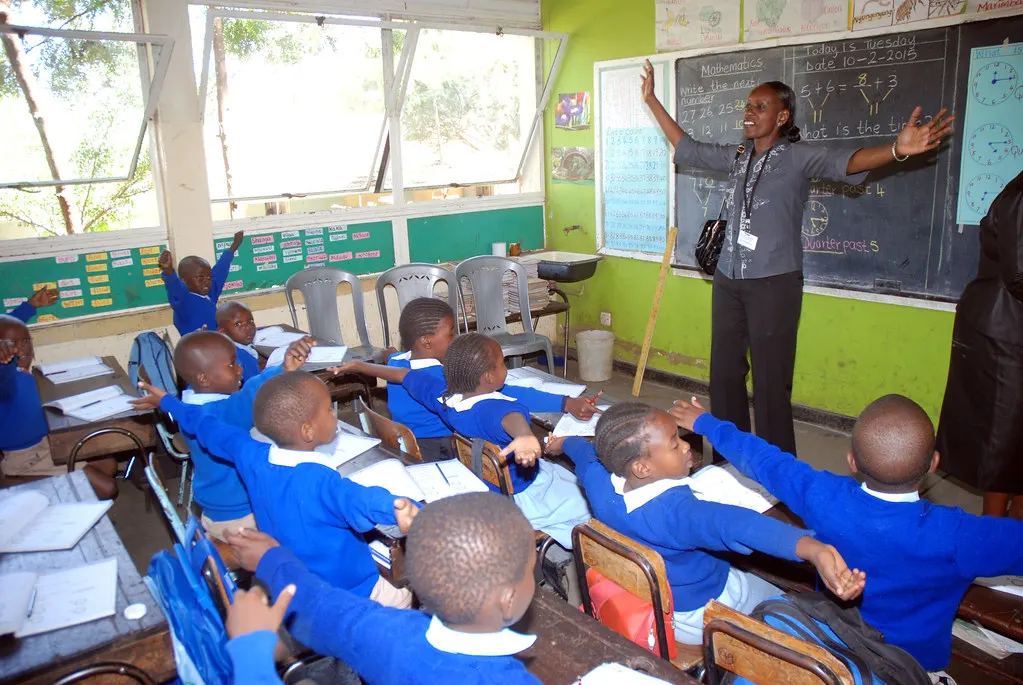
In many countries outside Europe, from Japan to Kenya and Ghana, uniforms are the rule, by law or by custom. Whether that is a good idea depends on what you expect from them. As a custom, they are everywhere. As a law, they are the exception.
“The law adds nothing good: schools can already choose a uniform.”
Partly true
True in its first part. Even today a Romanian school can bring in a uniform through its own rules, and some have. The Andrei Șaguna College in Brașov has a suit with the school’s emblem. Education minister Mihai Dimian said on 28 September 2026 that wherever a school community wants a common outfit, it can be discussed with parents and pupils.
What the law changes: the choice moves from “may” to “must”, for every school, and pupils face disciplinary action if they do not comply. No research shows whether a uniform imposed on all adds anything over one chosen by each school. Whether the change is good or bad is a question of values.
Of the 8 arguments from the side that wants uniforms, one is backed by data (attendance, with a small effect), two are partly true, two are not backed by evidence, one is false and two nobody has measured. Of the 7 from the side against, one is backed by data, four are partly true, one nobody has measured and one is a matter of history and values.
The difference lies in what each side promises. Supporters promise big changes: less bullying, better discipline, better grades. The studies do not confirm them, but they do find a few small gains: attendance, belonging reported by head teachers, lessons described as more orderly. Opponents are right that the evidence is missing, that the money for poor families is not guaranteed and that pupils can be disciplined. Then again, there is no clear evidence that uniforms harm children either. And no research compares a uniform imposed by law with one chosen by each school.
The bill passed by the Senate sorts families by gross monthly income per family member. Enter yours and see which group you would fall into. Prices in the Romanian press for the 2026–2027 school year: 200 to 400 lei a set, but up to 1,500 lei at some schools. (A euro is roughly 5 lei.)
The thresholds come from the annex to the bill passed by the Senate, as published by Tribuna Învățământului, and are based on a social reference indicator of 660 lei. The law may still change in the Chamber of Deputies.
Not all studies weigh the same. An experiment in which children are chosen by lottery can show a cause. A school compared with itself, before and after uniforms, comes close to a cause. A comparison between schools with and without uniforms only shows that two things occur together. Below are the most cited studies, from the most solid to the weakest.
Less exercise where uniforms are the rule, especially for girls. Association only.
The only experiment on the list does not test uniforms as a rule. It tests what happens when a poor family gets a uniform for free. For Romania’s question, whether a law requiring uniforms changes anything in schools, there is no experiment at all. The British foundation that gathers these studies calls the evidence “extremely limited”.
Over the centuries the uniform has meant opposite things: the clothes of poor children, the badge of an elite, the dress of an authoritarian state, and today, in many countries, a habit nobody notices any more.
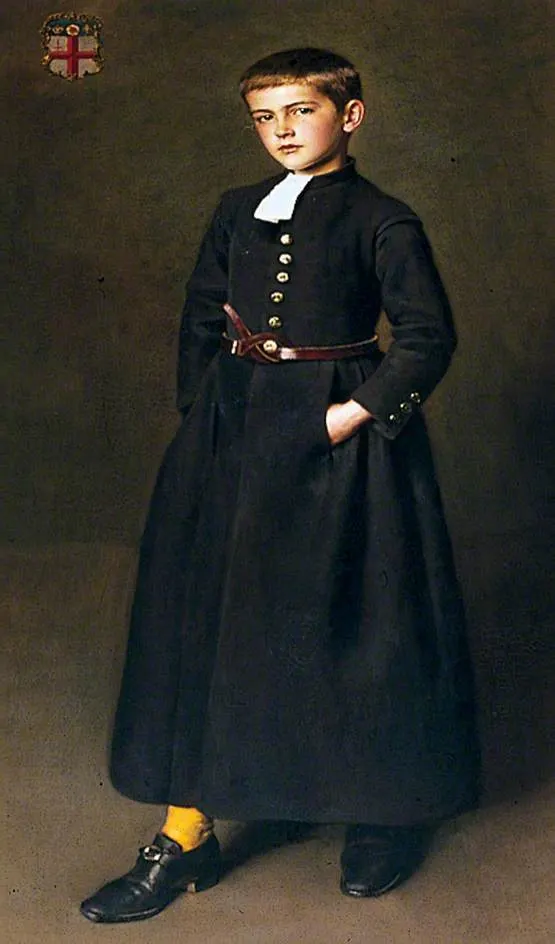
1552
London. Christ’s Hospital, a school for poor children, dresses its pupils in long blue coats and yellow stockings. Blue was probably chosen because it was a cheap dye. The uniform then marked a pupil who lived on charity. The school’s pupils still wear it today.
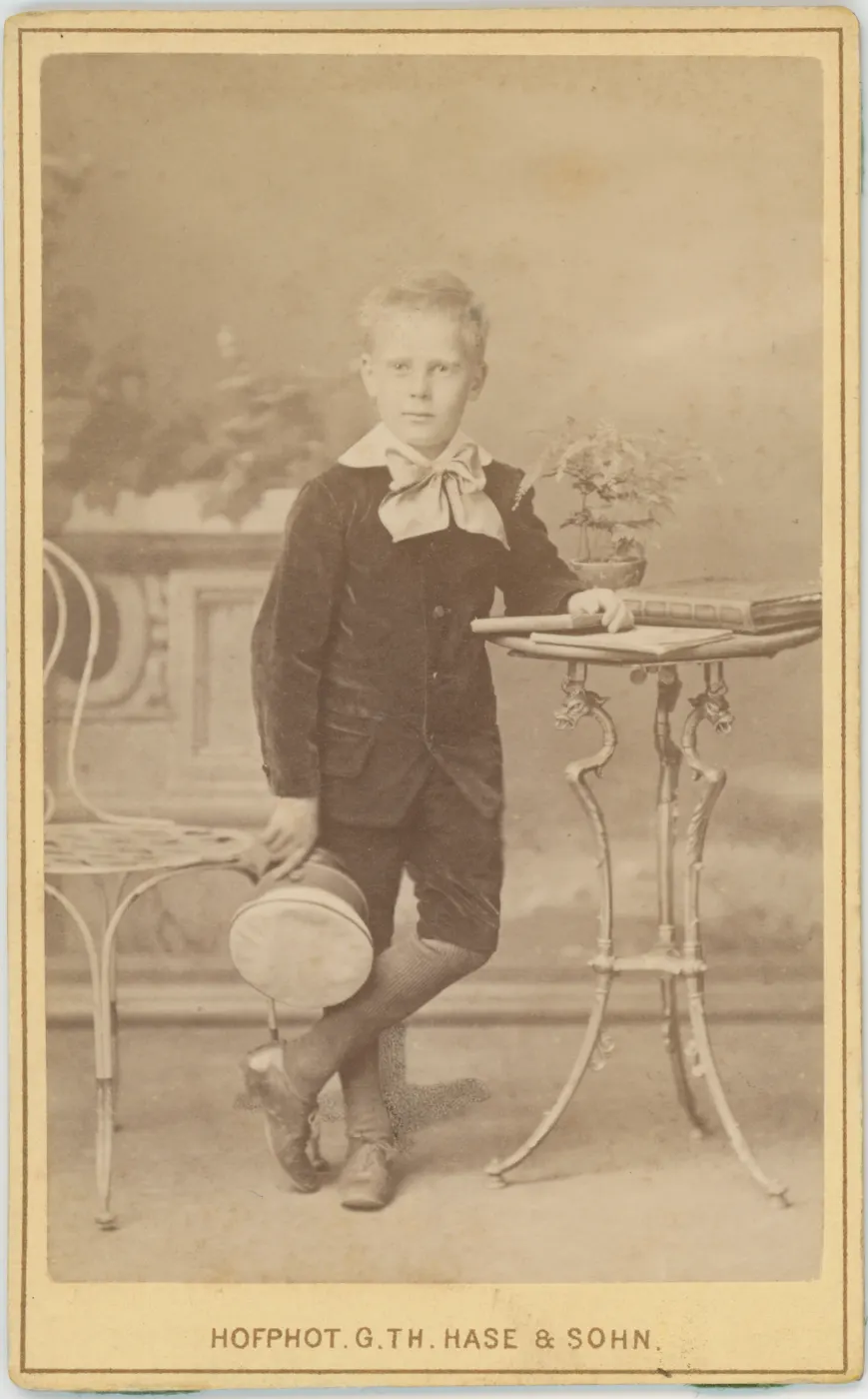
Germany. Grammar-school pupils have no full uniform, but they wear the school cap, with a colour for each school and each year. Anyone who saw them in the street knew what year they were in.
Gottlieb Theodor Hase, 1881, Städtische Museen Freiburg · CC0 · Wikimedia Commons
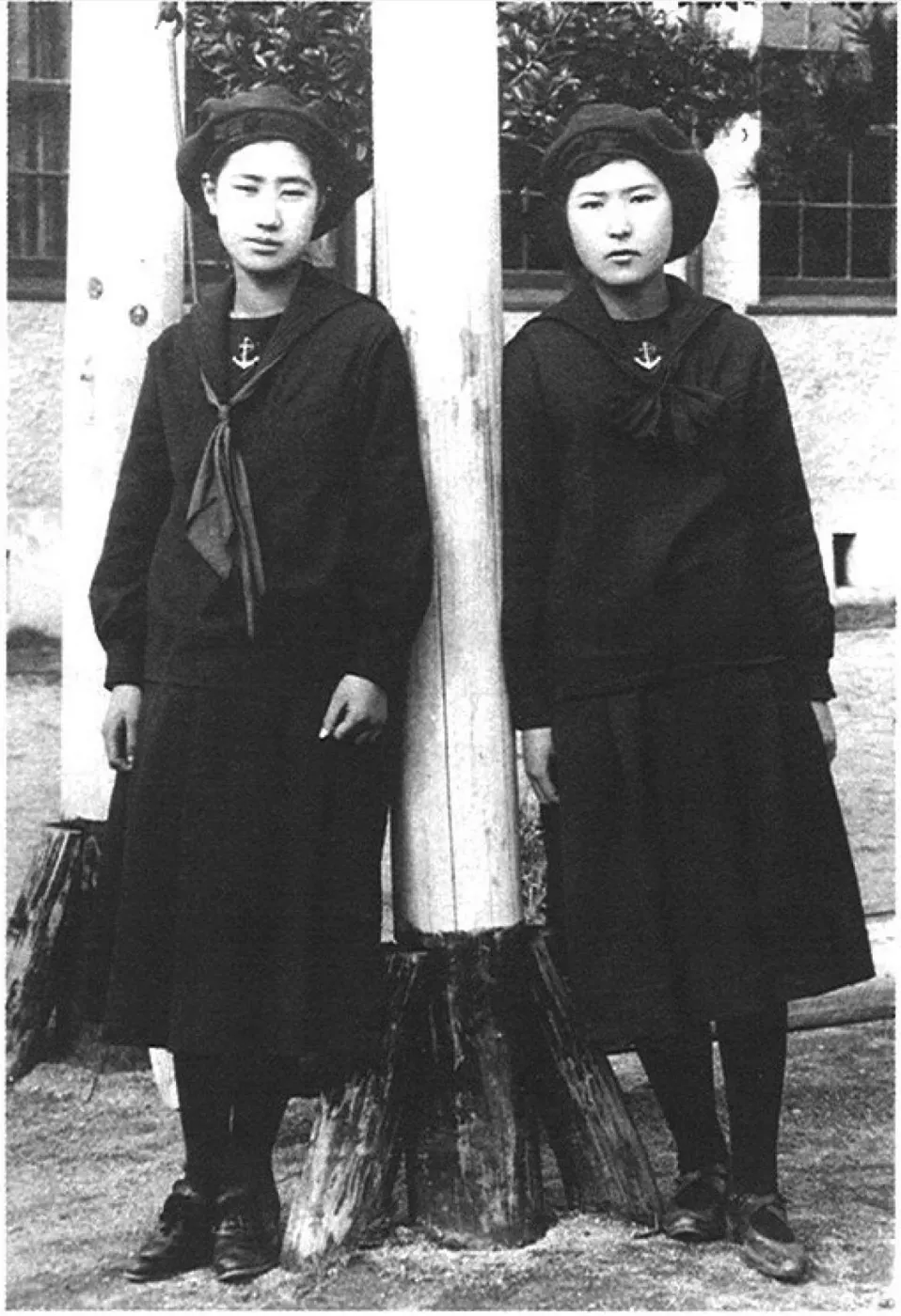
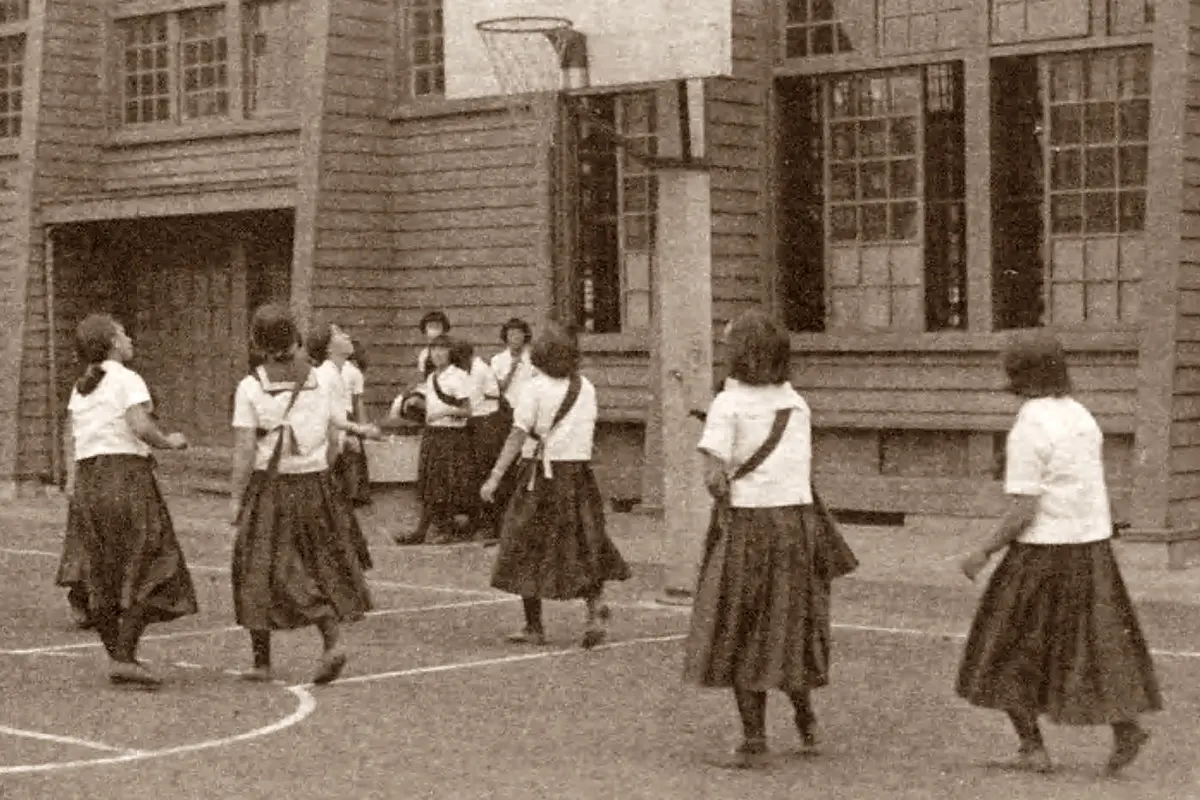
1920–1921
Kyoto and Fukuoka. Two girls’ schools claim the first sailor uniform. The one at Fukuoka Jo Gakuin, brought in by principal Elizabeth Lee, is the ancestor of the uniform millions of Japanese schoolgirls wear today.
Bucharest. Each lycée has its own colours. At Gheorghe Lazăr the uniform is khaki, with a blue cord on the cap. The pupil’s matriculation number is sewn on the sleeve, so that misconduct can be punished quickly.
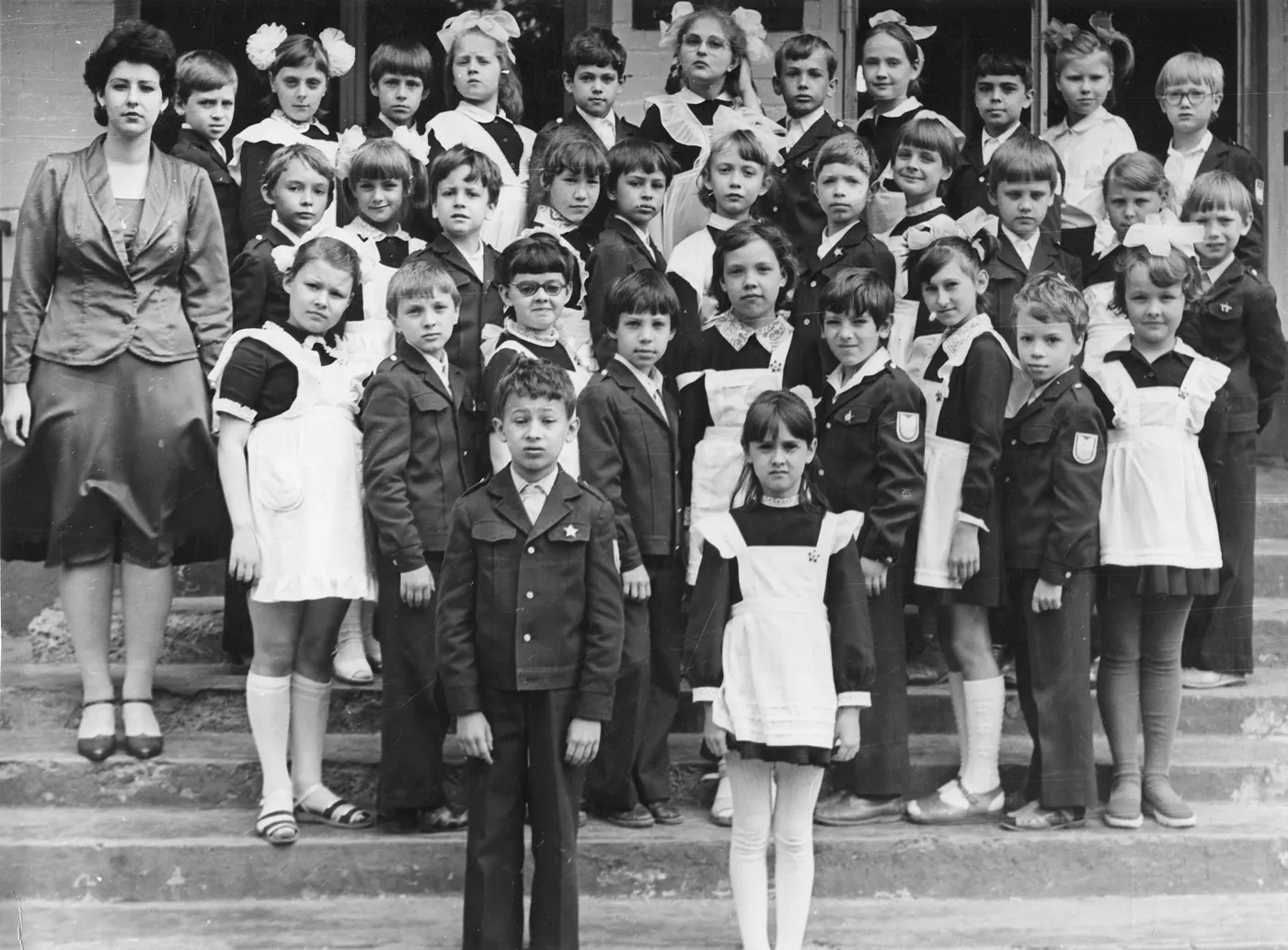
Soviet Union. A class in Rostov-on-Don in Soviet school uniform: dark suits for the boys, dresses with white aprons for the girls, on a special day. After the USSR breaks up, Russia drops the compulsory uniform in 1992.
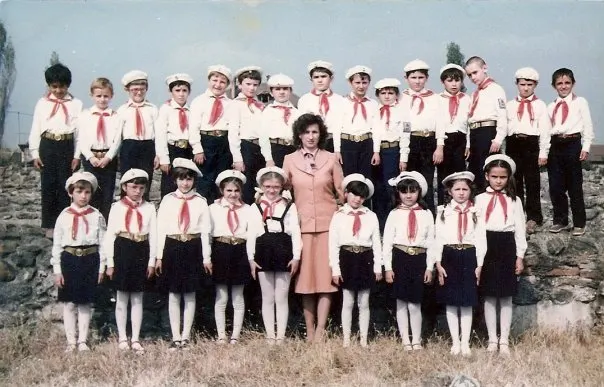
Romania. The school uniform is compulsory: blue for girls and boys, with the matriculation badge sewn on the sleeve, worn at school and on the way home. Separately, children wear the uniforms of the communist organisations: the Falcons of the Homeland and the pioneers, with their red tie (in the photo, pioneers in 1986).
USA. In Tinker, the Supreme Court rules that pupils who wore black armbands against the Vietnam war had the right to do so: pupils do not shed their rights at the schoolhouse gate.
Romania. In January the Ministry of Education makes the uniform optional and abolishes the compulsory insignia. Many schools keep it for a few years, then it disappears.
Long Beach, California. The first American school district to require uniforms in elementary and middle schools. President Clinton praises it in 1996 as an example of discipline. Nobody, however, compared the district with schools without uniforms. The share of American public schools with uniforms rises from 3% in 1995–96 to nearly 20% in 2011–12.
Kenya. J-PAL economists give free uniforms to children chosen by lottery. Absences fall by 43%. It is the most solid study of uniforms, but it measures what happens when a uniform is given away; a law that requires one is something else.
France. About a hundred schools test a common outfit. In 2026 the evaluation finds limited effects, and the government drops plans to extend it nationwide. In England, a 2026 law caps branded items at three, to bring costs down.
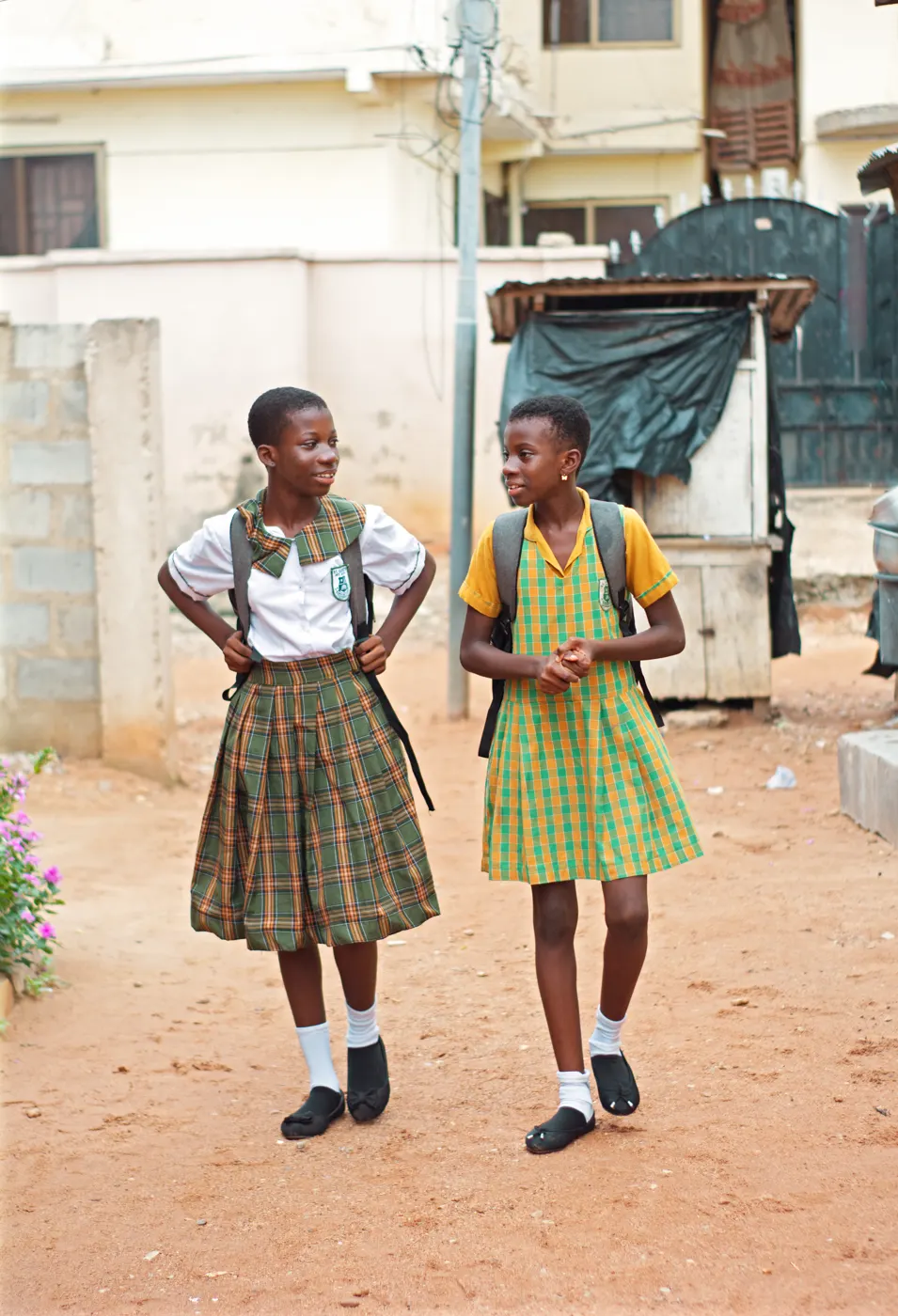
Romania. The Senate votes for compulsory uniforms in state schools. The same month, 77% of Romanians tell a pollster it would reduce discrimination, and pupils come to school dressed in black in protest. (In the photo, schoolgirls in Accra, Ghana, 2024. In much of Africa, uniforms are the rule.)
a uniform chosen by a school can build belonging, especially among young children, as head teachers in France reported (2026);
children miss school slightly less, about one day a year, and a free uniform brings poor children to school (Kenya);
the uniform is not a communist invention: it is four centuries older and is worn in democracies today;
most Romanians think it would reduce discrimination, and their view counts in a political decision.
Those who oppose them are right that
there is no evidence that uniforms reduce bullying or improve grades and discipline;
the cost is certain, and the money for poor families is not guaranteed;
in Europe, a uniform imposed by law is the exception, and France has not extended its trial nationwide;
schools can bring one in now, if they want to, and the law would add disciplinary liability for pupils.
The question that remains is one studies cannot settle on their own: whether a shared outfit should be each school’s decision or Parliament’s. They can only say they have not found uniforms stopping bullying or raising grades. Nor have they found them turning children into soldiers.
Ansari, Shepard and Gottfried, “School uniforms and student behavior: is there a link?”, Early Childhood Research Quarterly, 2022 (6,320 children, ECLS-K:2011). news.osu.edu
Edupedu: the Ministry of Education does not support compulsory uniforms; no study shows they reduce bullying. www.edupedu.ro
Edupedu: the Economic and Social Council’s negative opinion on the bill, 4 September 2026. www.edupedu.ro
Edupedu, analysis of the examples in the explanatory memorandum, with PISA 2025 data for Romania, Cyprus and Malta, 28 September 2026. www.edupedu.ro
G4Media: INSCOP poll for Informat.ro, 1–7 September 2026. www.g4media.ro
Brunsma and Rockquemore, “Effects of student uniforms on attendance, behavior problems, substance use, and academic achievement”, Journal of Educational Research 92(1), 1998. eric.ed.gov
Yeung, “Are school uniforms a good fit? Results from the ECLS-K and the NELS”, Educational Policy 23(6), 2009. doi.org
Gentile and Imberman, “Dressed for success? The effect of school uniforms on student achievement and behavior”, Journal of Urban Economics 71(1), 2012. www.nber.org
Baumann and Krskova, “School discipline, school uniforms and academic performance”, International Journal of Educational Management 30(6), 2016. eric.ed.gov
DEPP, French Ministry of Education, evaluation of the common-outfit experiment, May 2026. www.education.gouv.fr
Andrei Șaguna National College, Brașov: school regulations, October 2020. www.saguna.ro
Evans, Kremer and Ngatia, the free-uniform experiment in Busia district, Kenya (J-PAL). www.povertyactionlab.org
Bugetul.ro: uniform prices for the 2026–2027 school year. www.bugetul.ro
Info Huedin: uniform prices reach 1,500 lei, September 2026. infohuedin.ro
Department for Education (England), Cost of School Uniforms Survey 2023, summarised by Full Fact. fullfact.org
Ryan and colleagues, 135-country study of uniforms and physical activity, Journal of Sport and Health Science, 2024 (University of Cambridge release). www.cam.ac.uk
The Korea Times: schoolgirls ask for larger uniforms, 12 September 2018. www.koreatimes.co.kr
Nippon.com: gender-free uniforms in Japanese schools (Kankō survey). www.nippon.com
_-_Edward_Logsdail_(1896%E2%80%931923),_as_a_Christ%27s_Hospital_Scholar_-_69_-_Christ%27s_Hospital.jpg)


