Agnita, Sibiu
Agnita, Sibiu
What can you see from the square?
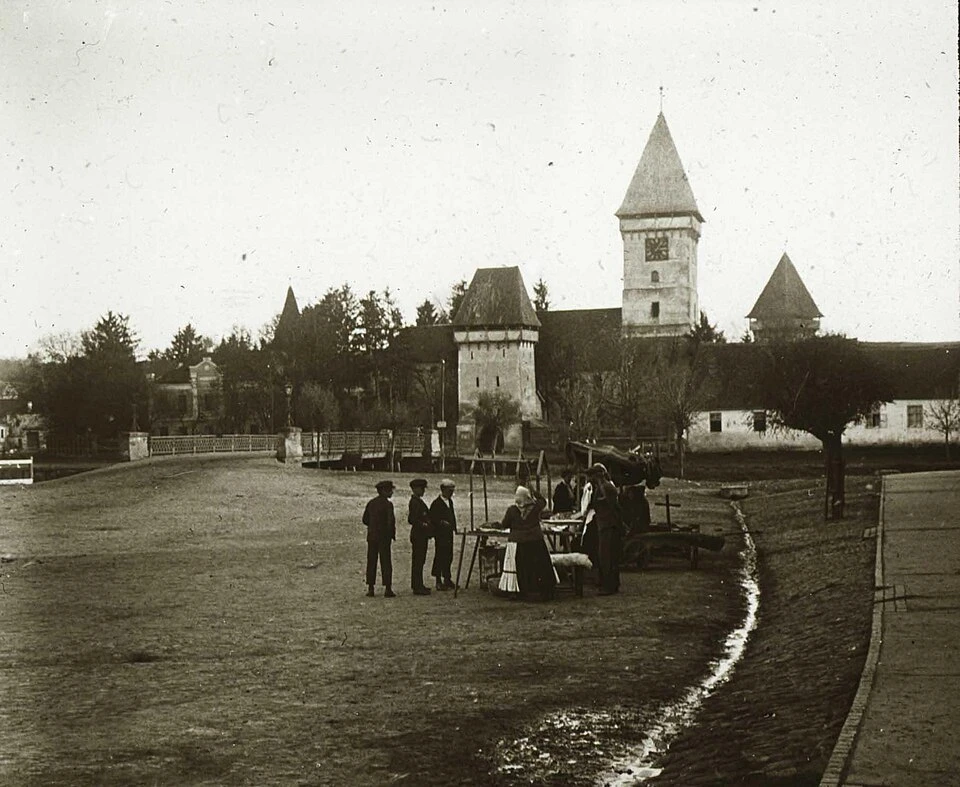
A handful of people have stopped in the market square in Agnita. Behind them, two roofs stand out on a glass plate by the geographer Emmanuel de Martonne. The taller one belongs to the bell tower. The lower roof near the centre of the frame covers the old entrance to the fortified enclosure. The date on the record is incomplete: “192?”. [6] [1]
Switch photographs and look for the same two landmarks. The Lutheran church stands in the centre of Agnita, in the Hârtibaciu valley. Pass through the gate and you’ll find towers named for trades. The town’s history museum holds a different set of traces left by the guilds. [7] [1] [2]
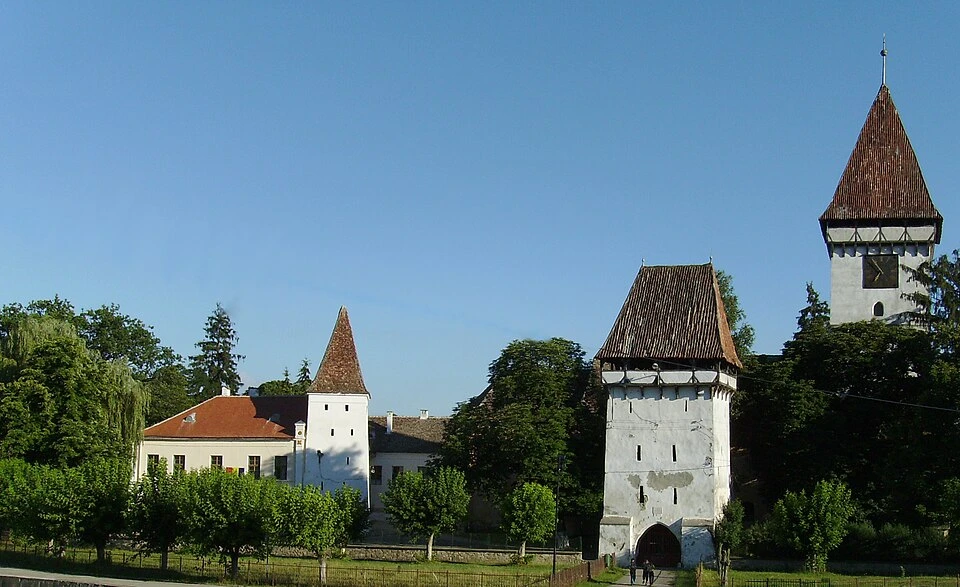
Towers and enclosure
What joined the four towers?
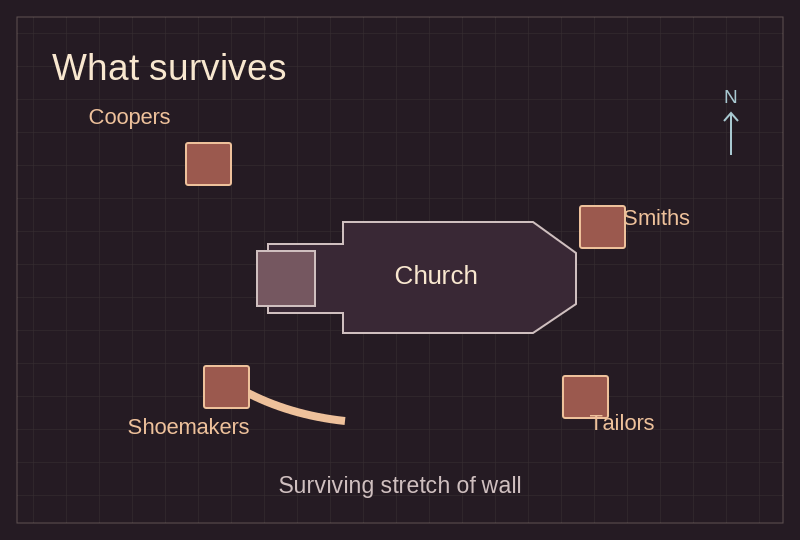
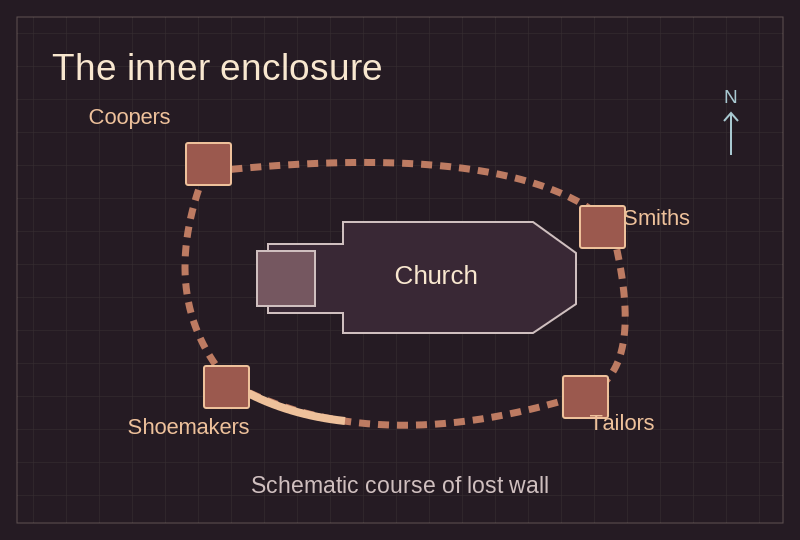
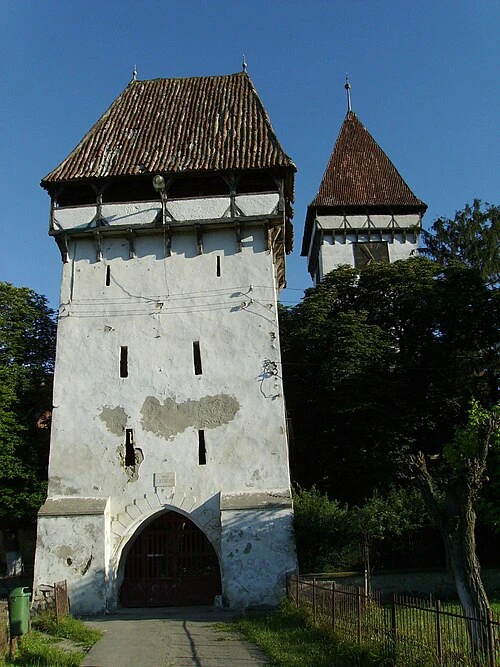
The excavation report locates the gate, also known as the Coopers’ Tower, to the north. The smiths’ stands beyond the choir. The tailors’ and shoemakers’ towers stand to the south. These four belonged to the enclosure. The bell tower, attached to the main church, is a separate landmark. [1]
Switch to the view with the wall between the towers. The plan traces the inner enclosure around the church. A length of the wall survives to the south. The archaeologists describe how walls and storerooms built up against the outside of the inner wall were taken down in stages in the nineteenth century. The route of the outer enclosure is harder to establish and lies outside this diagram. [1]
March 2018
What is left when a wall comes down?
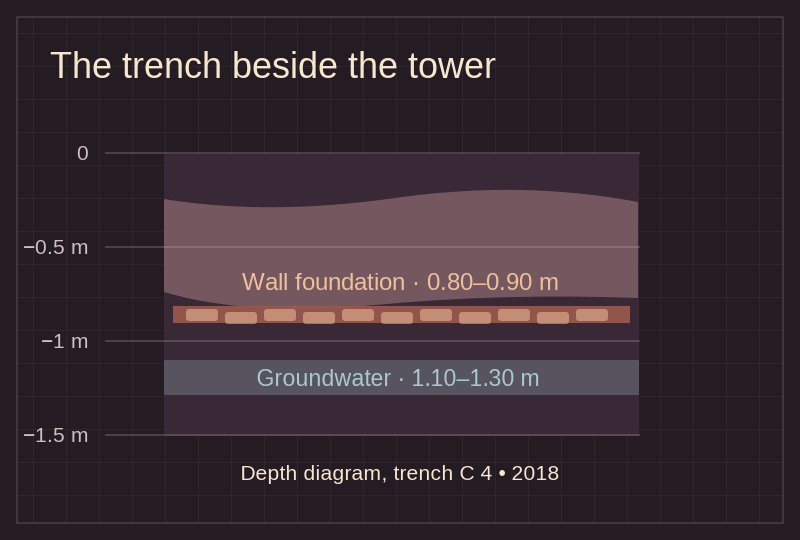
In March 2018 archaeologists opened four small trenches at Agnita. The fourth, C 4, measured 2.10 by 1.60 metres and lay beside the north-west side of the Shoemakers’ Tower. There they found stone from the foundation of the first fortified enclosure, 0.80–0.90 metres down. [1]
At 1.10–1.30 metres they encountered groundwater. The diagram shows how far below the wall that happened. Figure 32 of the report shows the trench plan and the position of the foundation they found. The trench confirmed the wall at one point on its course. The plans and surviving masonry help trace the whole enclosure. [1]
From one guild master to another
Who guarded the chest on its way through town?
In town, guilds grouped craftspeople by trade. Mihaela Nevodar of the history museum describes a collection of chests, seals and statutes. One dated item is a pewter cup from 1805, belonging to the shoemakers’ fraternity. Someone who used that cup would have recognised the trade name attached to one of the towers. [2] [1]
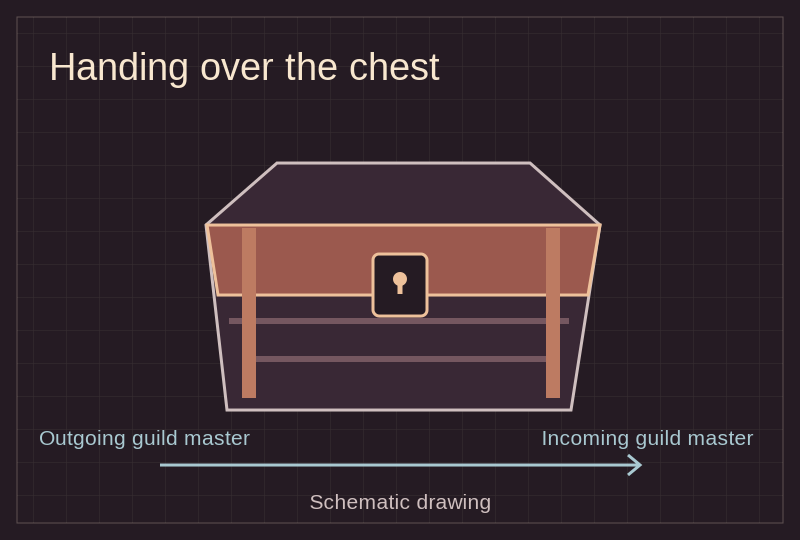
At the change of guild master, the outgoing leader handed the guild’s chest to his successor. ASTRA Museum curators describe how the masked participants, known as lole, went with it. In the shared parade, townsmen in traditional dress carried chests and flags while the masked performers surrounded them. The local museum holds chests from several guilds, and the custom explains what one of these boxes could do beyond its display case. [3] [4] [2]
1911 · the first shared parade
How could you recognise a trade in the parade?
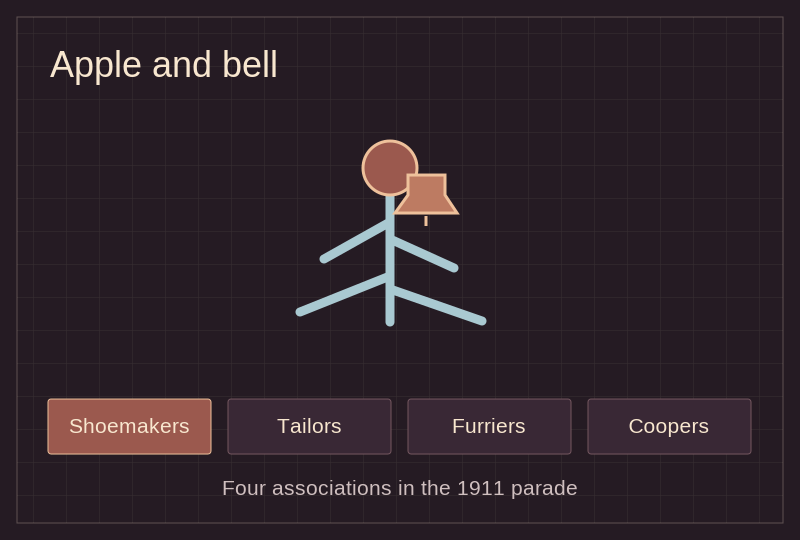
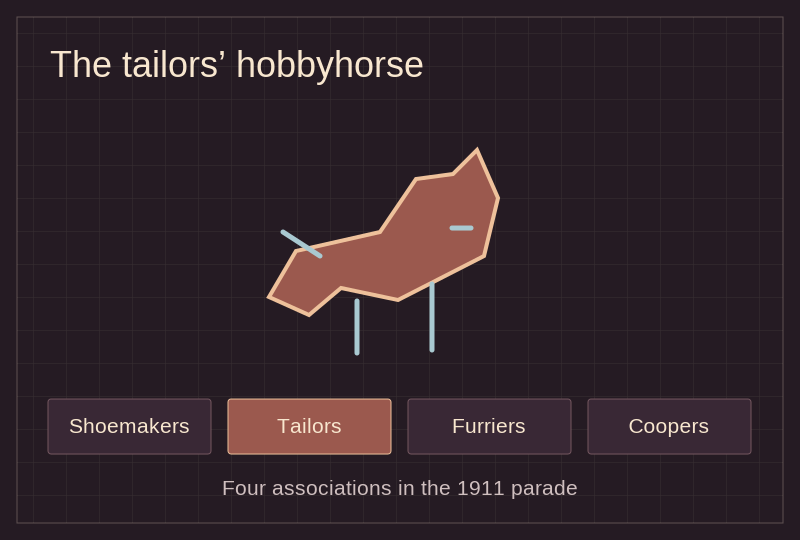
In 1911, the associations that succeeded the shoemakers’, tailors’, furriers’ and coopers’ guilds held a parade together. The shoemakers’ captain led it with two children. Their crown bore an apple and a bell. The tailors brought a dancing hobbyhorse. [3] [4]
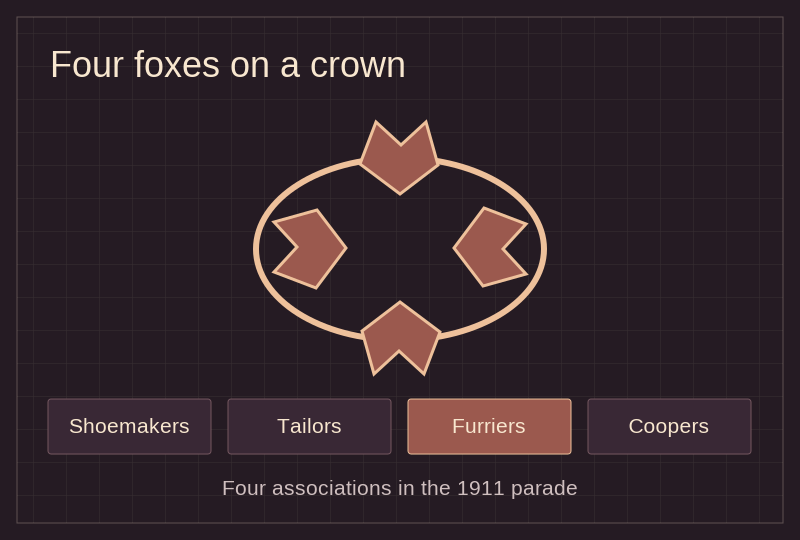
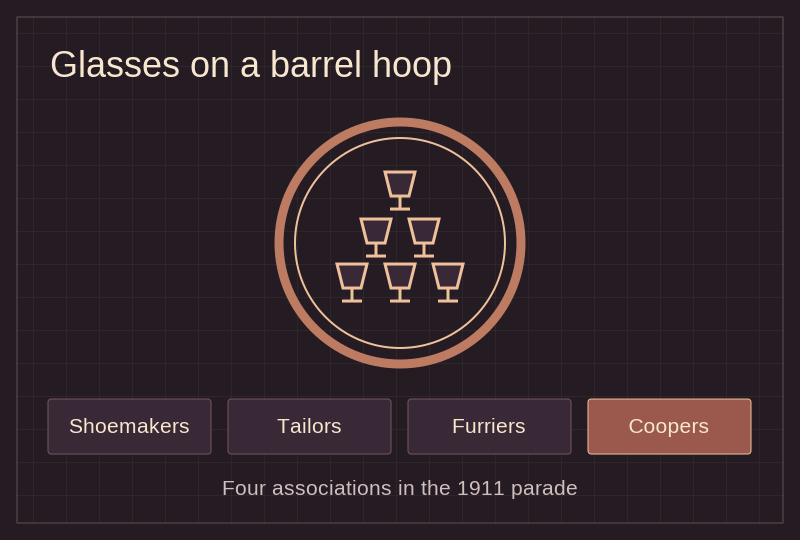
Choose each of the four emblems in turn. The furriers’ crown spun. The curators describe four foxes, each carrying a marten with an egg in its teeth. At the rear, the coopers swung a barrel hoop carrying glasses of wine. Compare that list with the enclosure plan: the smiths have a tower on the plan, while the 1911 list includes the furriers. [3] [1]
Agnita and Sachsenheim
How far did the custom travel?
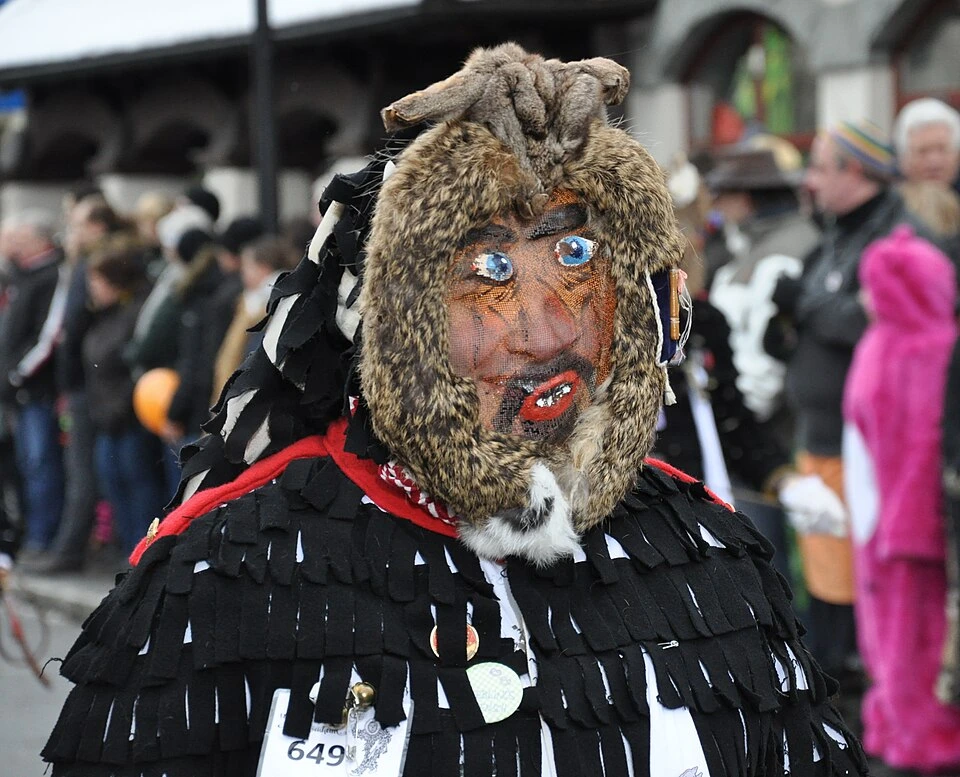
Saxons who left Agnita took the custom to Sachsenheim in Germany, where a local group practised it from 1965. The photograph shows one member of that group at a 2015 carnival gathering in Weingarten. Look at the mask. His association still explains why, in the old Agnita custom, the masked figures accompanied the chest from one guild master to the next. [3] [5] [9]
In Agnita the custom waned after the emigration of the 1990s. The parade was included in the Sibiu European Capital of Culture programme in 2007, and the Breasla Lolelor association formed in 2008. When you cross the square, you can follow two traces of the guilds in the same town: the names on the stone towers and the chests that went from one house to another. [3] [4] [1] [2]