Alun, Hunedoara

Alun, Hunedoara
What kind of stone lies under the wheels?
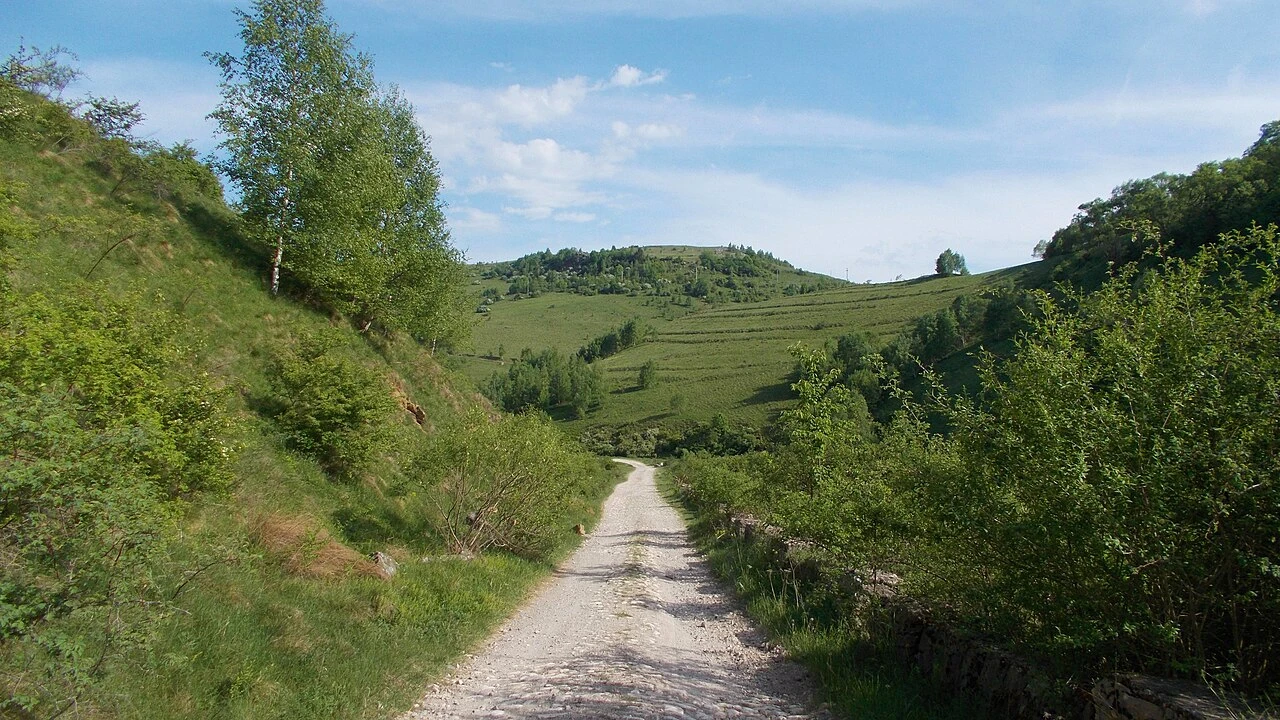
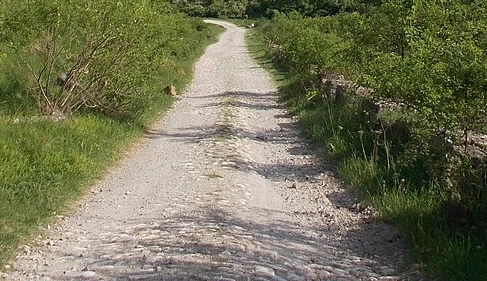
At Alun, in the Bunila commune, the road photographed in 2018 shows up as a pale strip between the Pădureni hills. Closer in, individual pieces of paving are visible. Doina Ionescu’s study links the road stone to the nearby marble quarry. [6] [5]
Historical records describe the marble as a building material and goods carried over long distances. In local homesteads it also served an everyday purpose. The ASTRA Museum guide identifies it in the steps and at the base of a house moved from Alun to the museum. [1] [2] [4]
Radu Pascu’s quarry survey
Where did the marble come from?
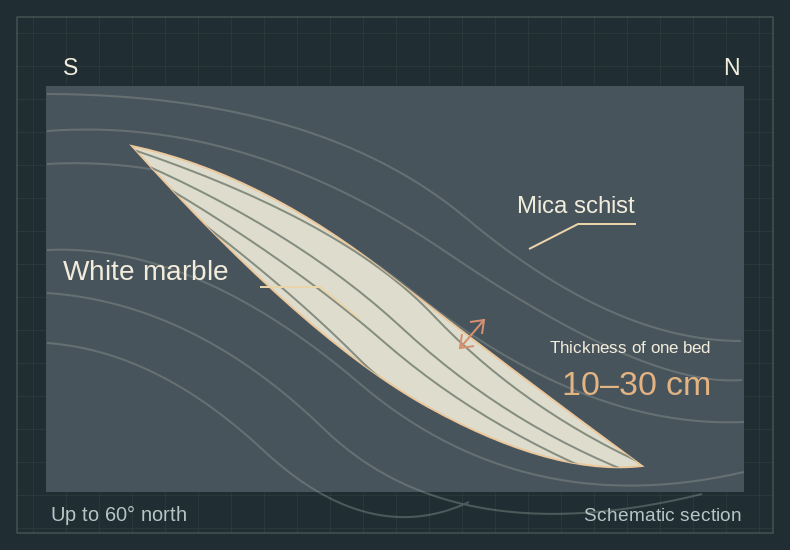
Radu Pascu’s quarry survey, published in 1932, describes a lens of white marble within the hillside’s mica schist. A rock lens is thickest towards the middle and tapers at the margins. Pascu recorded marble beds 10–30 cm thick, dipping north at angles of up to 60°. [1]
The commune’s quarry had five openings on the hillside. The marble had few planes along which it split. The survey says workers could extract blocks one to two metres long. Bed thickness and the length of an extracted block are different dimensions. [1]
Alun, Govăjdia and Arad
Where did the large blocks go?
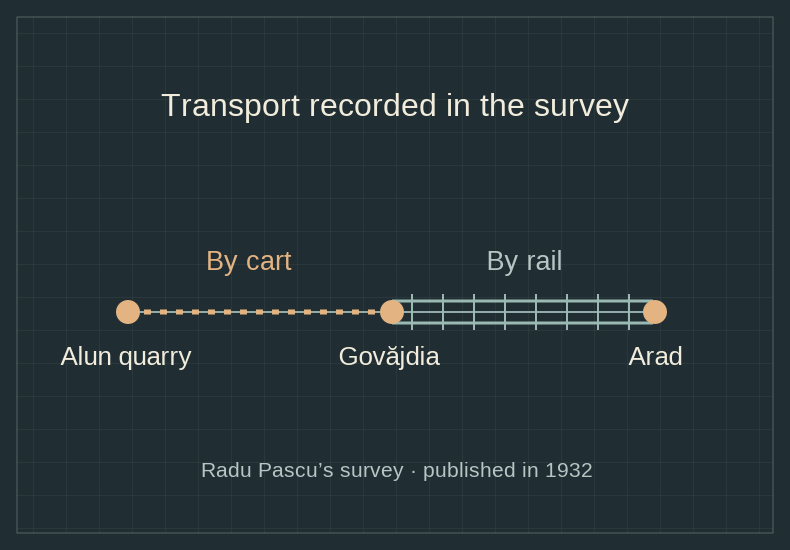
Pascu records a journey in two stages. Carts took the stone down the Poienița valley to Govăjdia. There it was loaded onto trains heading for Arad. The survey also records Italian quarry workers. [1]
That is the route the engineer documented at the time. The photographed marble road shows another use for the stone, as a surface for the village road. The sources record both blocks taken out for buildings and art, and stone used in Alun itself. [1] [5] [6]
The Herbann family’s house
Marble steps and fir walls
Museum researchers documented the Herbann family’s house at Alun, dating it to the early nineteenth century. Their guide identifies the owners as miners who also made wheels when needed. An earlier study tentatively connects them to the village quarry and the iron mines at Ghelari. [2] [3]
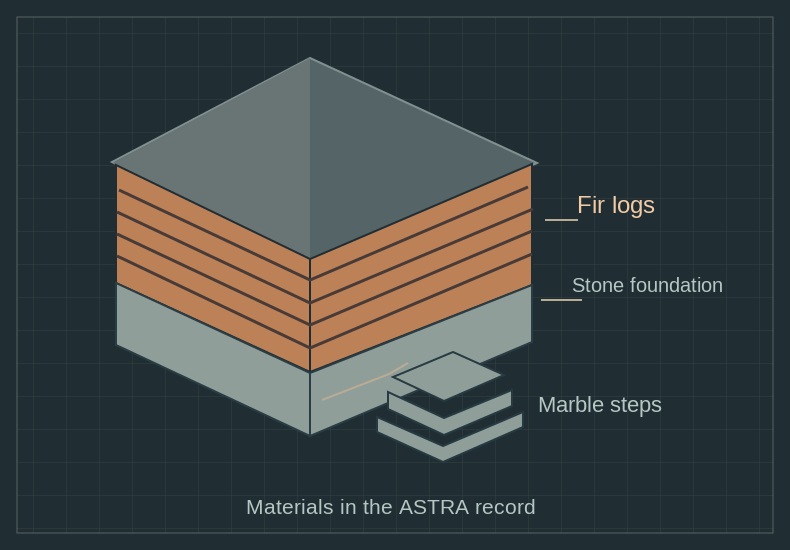
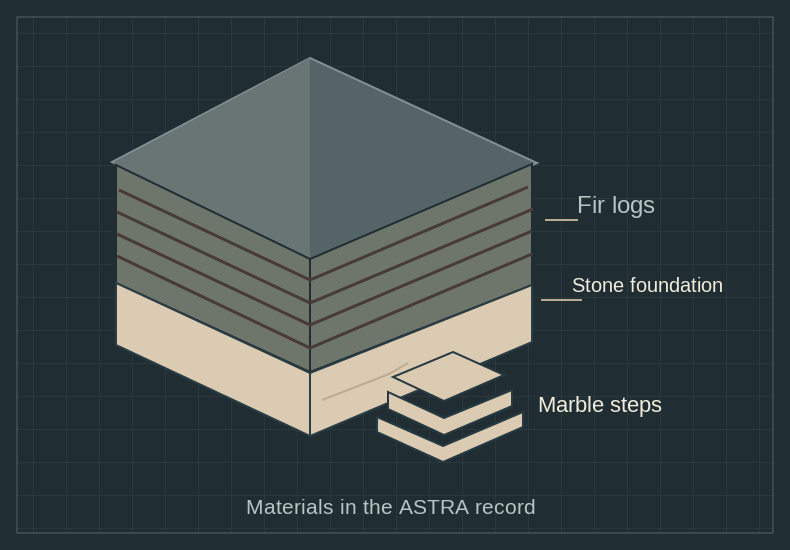
Switch the drawing between materials. The museum records a foundation made with stone from the marble quarry, steps built of pieces of marble, and walls of round fir logs. Each material served a different part of the same house. [2]
Another foundation
The stone beneath the wooden church
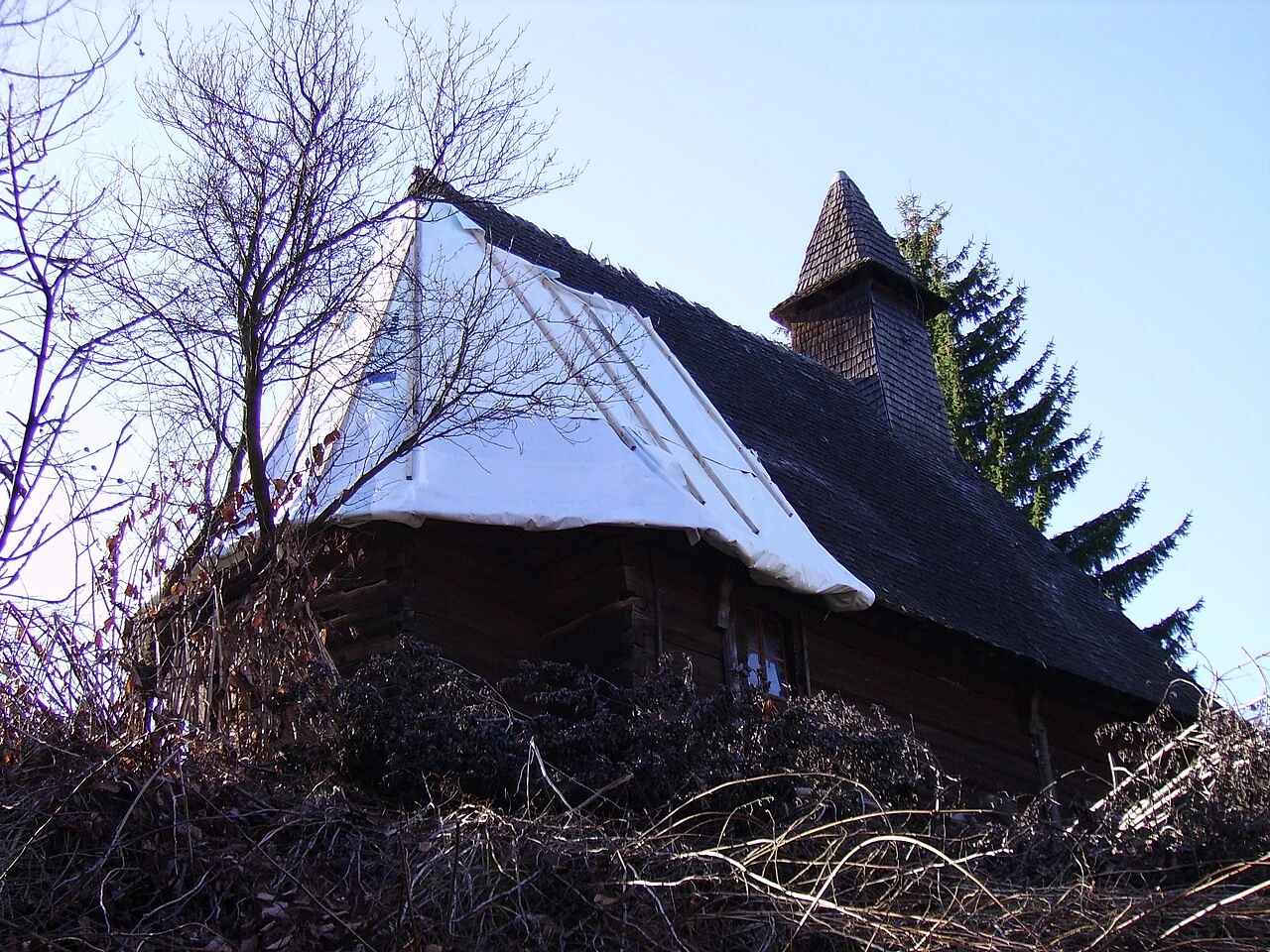
The October 2009 photograph shows the log walls and roof of the wooden Church of the Dormition. It records the building as it was at the time. Doina Ionescu studied parts that are harder to see. She documents marble laid at the church’s foundation. [7] [5]
Marble is visible on the road. At the Herbann house the museum records it in the steps and foundation stone. In the church study, it appears again beneath wood. The material is identified by examining the building itself. [5] [2]

Alun and Dumbrava Sibiului
What went to the ASTRA Museum?
The Herbann family’s house was moved in 2005. The museum guide dates reconstruction to 2008–2010. Fieldwork also documented quarry tools, household equipment and the kind of enclosure used locally. Ciprian Ștefan records the opening in September 2010 with the Alun community. [4] [2] [3]
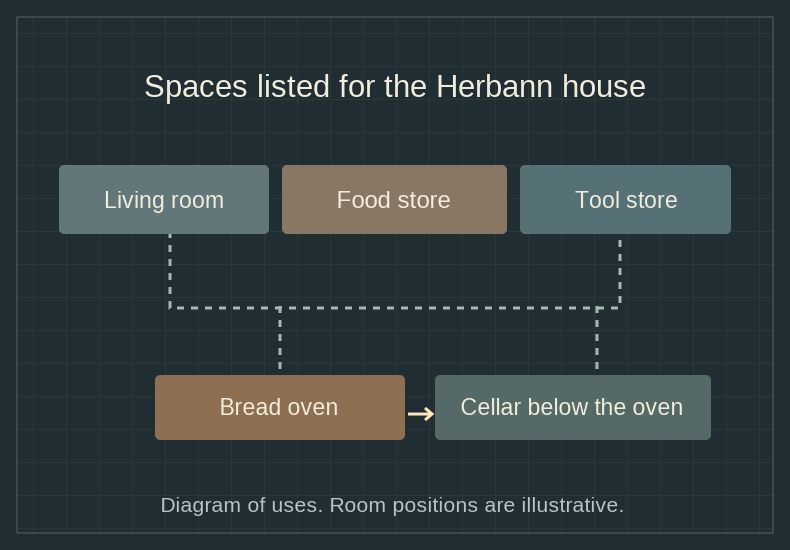
The museum record preserves the rooms and their uses, including the bread oven, cellar beneath it and a separate tool store. The barn has its own date, 1868, read from an entrance post. Together, the house, road photograph and quarry survey show how stone from the hill became part of everyday life. [2] [3] [6] [1]