On Clocotișul hill
On Clocotișul hill
A fire whose vents move
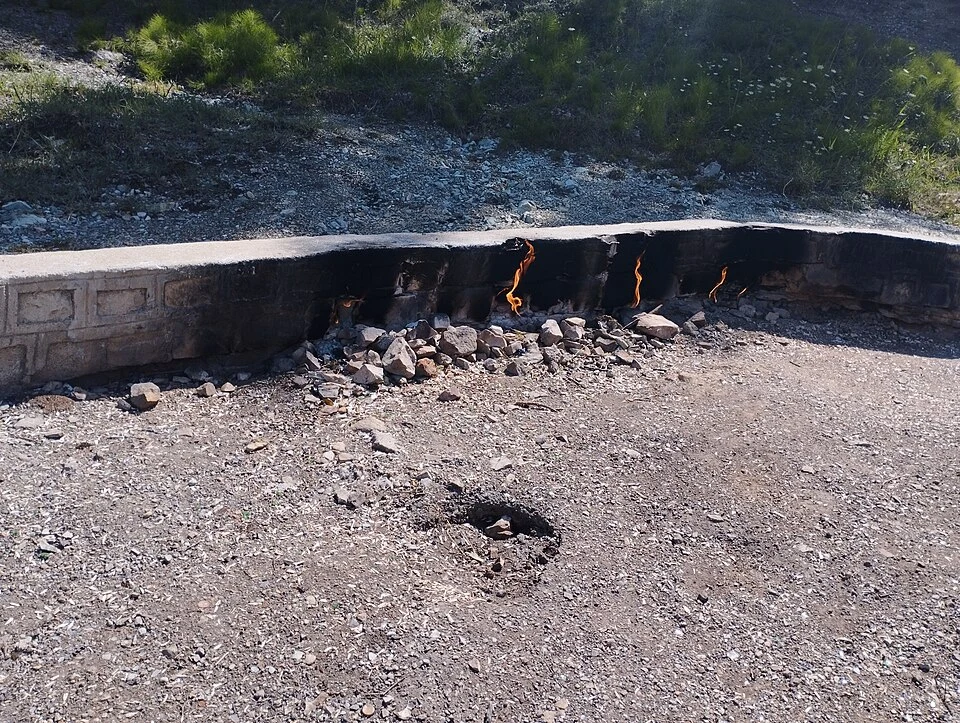
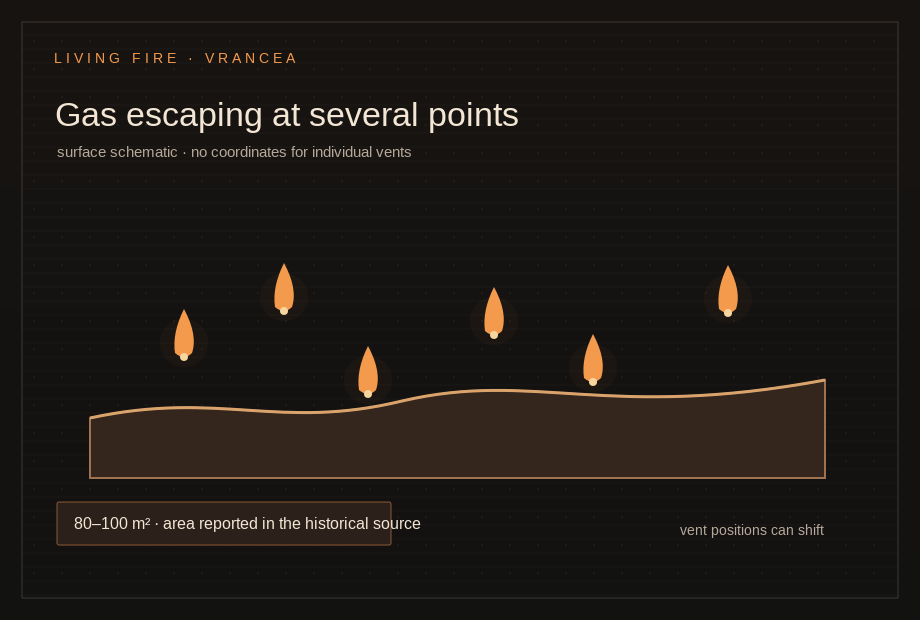
On Clocotișul hill, above the Milcov valley, gas escapes through small openings and burns at the surface. The historical account says active vents can close while others open nearby; the observed flames reached up to 50 centimetres. [1]
This drawing is a schematic field, not a map of each vent. The 2013 article cites a local monograph that describes an area of 80–100 square metres. [1]
A sample that failed
What was inside the two demijohns
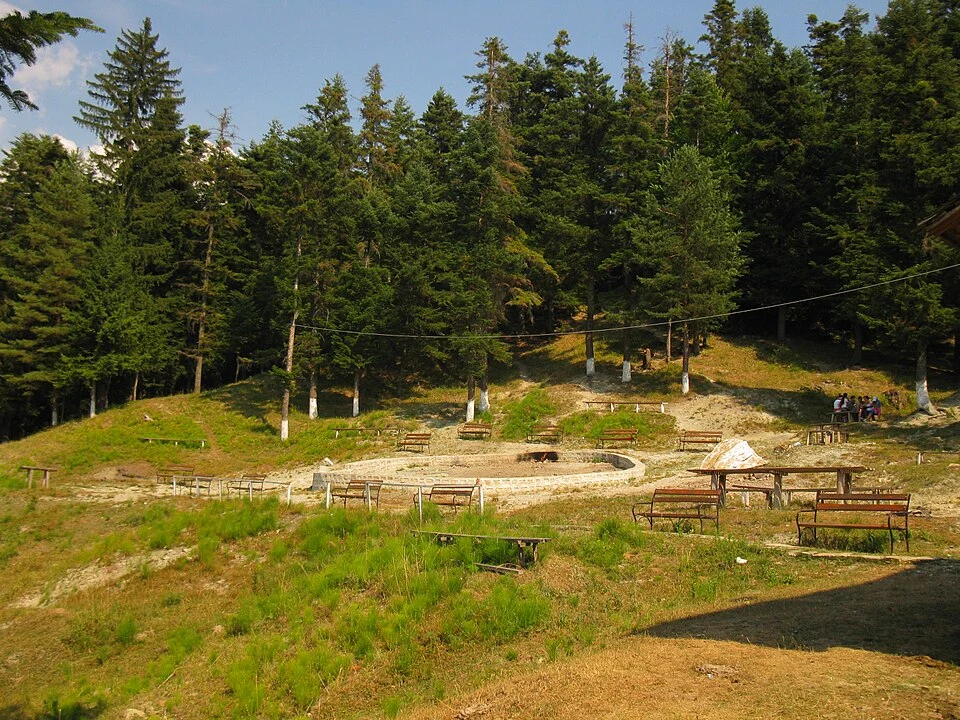
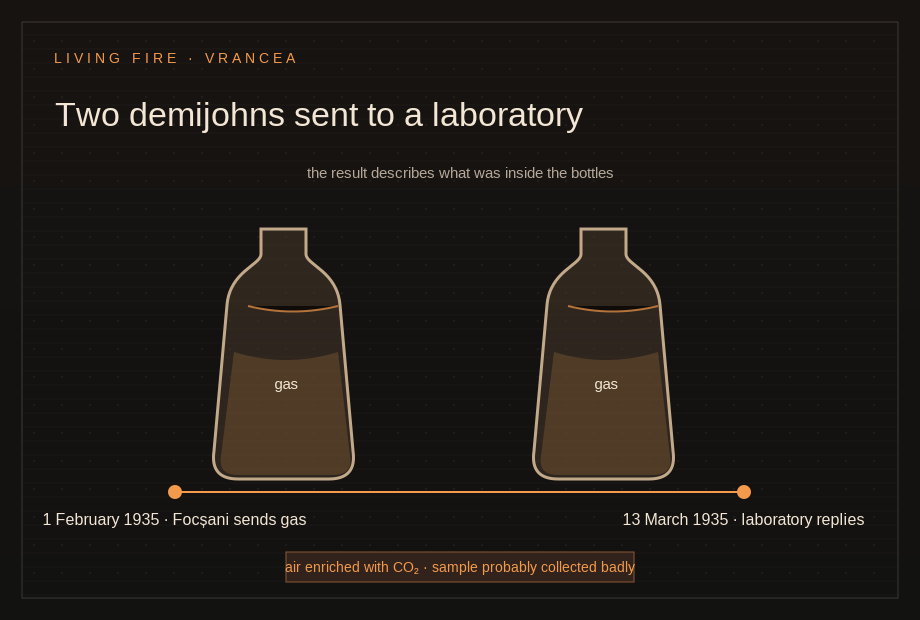
On 1 February 1935, Focșani town hall sent two demijohns of gas from the Living Fire to the Polytechnic School in Bucharest for analysis. The laboratory reply, dated 13 March, says the sample contained no combustible gas: it was air enriched with carbon dioxide. The lab suspected poor collection and asked for another sample. [1]
The report describes the gas that reached the containers in Bucharest. To identify the gas escaping from the ground in Andreiașu, the laboratory asked for a repeat sample. The article identifies the archival records behind the account. [1]
Gas becomes a plan
A plant proposed, not shown in operation
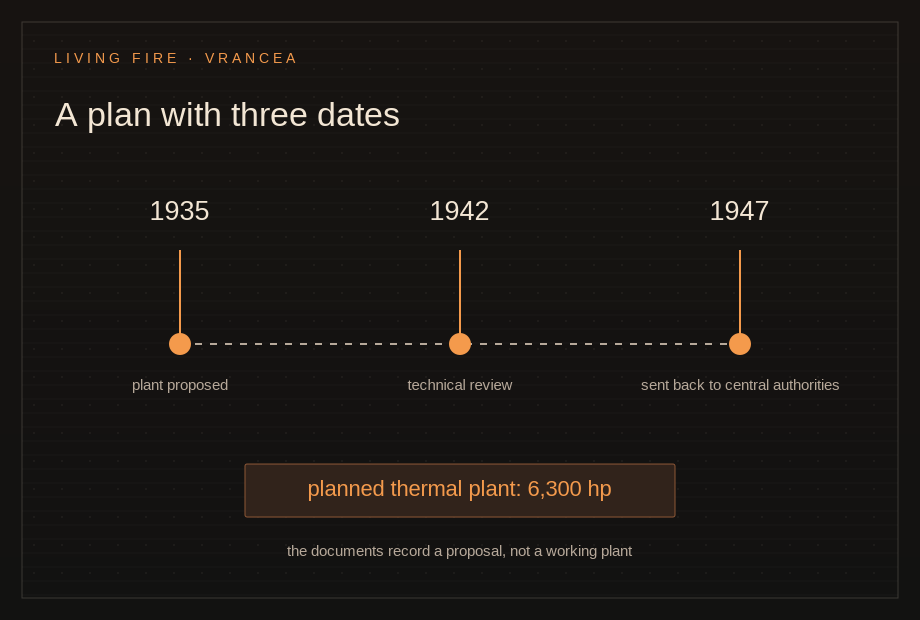
That same year, geologist Mircea Păucă reported large quantities of gas on the right bank of the Milcov. Focșani’s town hall relayed a project for a thermal plant at Andreiașu, with local gas as its fuel. [1]
The Superior Technical Council reviewed the project in 1942; central authorities brought it back for consideration in 1947. The design specified 6,300 horsepower. The source documents the proposal and reviews; it does not record a completed or operating plant. [1]
The site’s protection
From natural monument to reserve
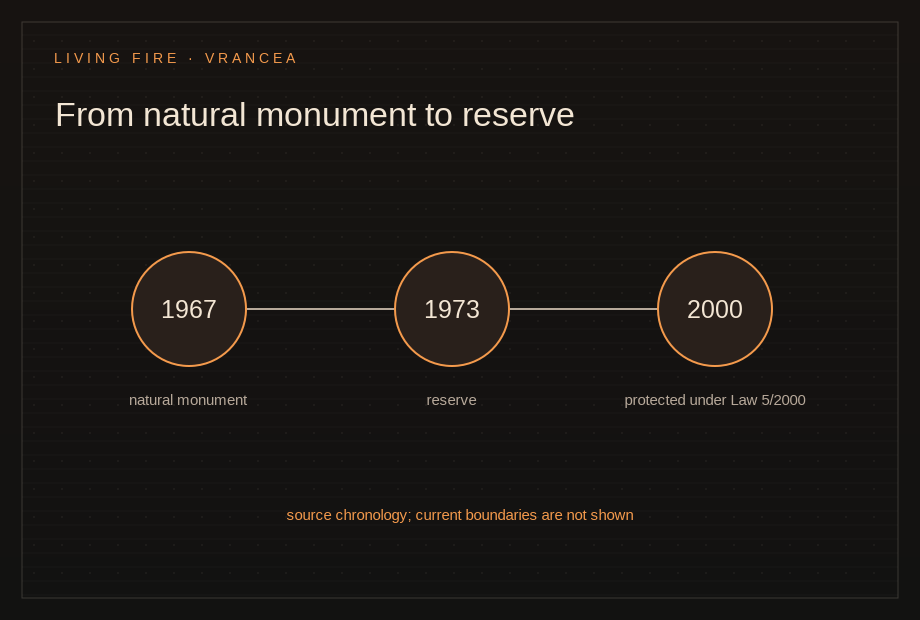
The history published in 2013 records the designation of the area on the right bank of the Milcov as a natural monument in 1967 and as a reserve in 1973. [1]
The annex to the 2000 law lists 12 hectares for the Andreiașu de Jos Living Fire. The timeline follows the site’s protection records. [1] [3]
Measured at the vent
Two seeps, two gas mixtures
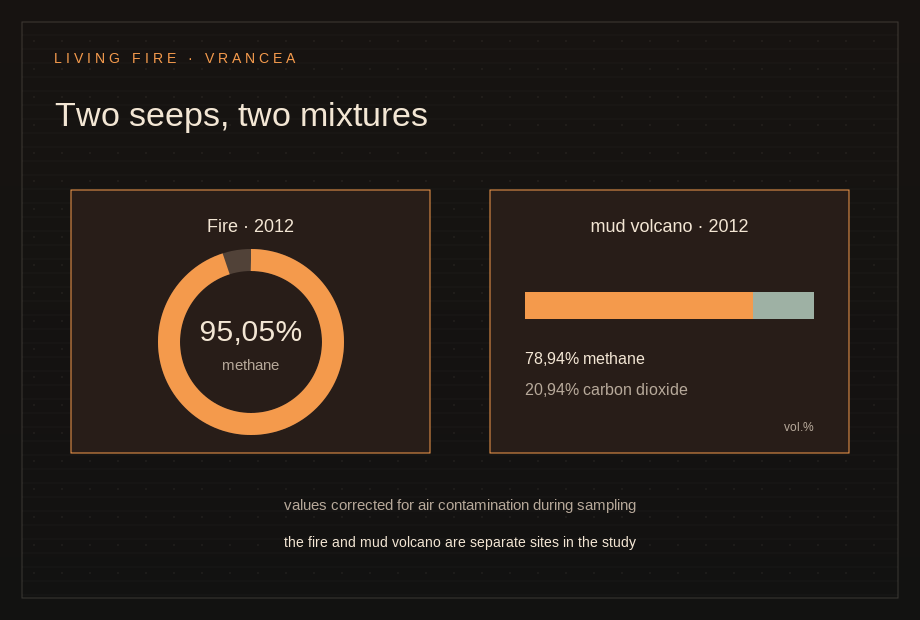
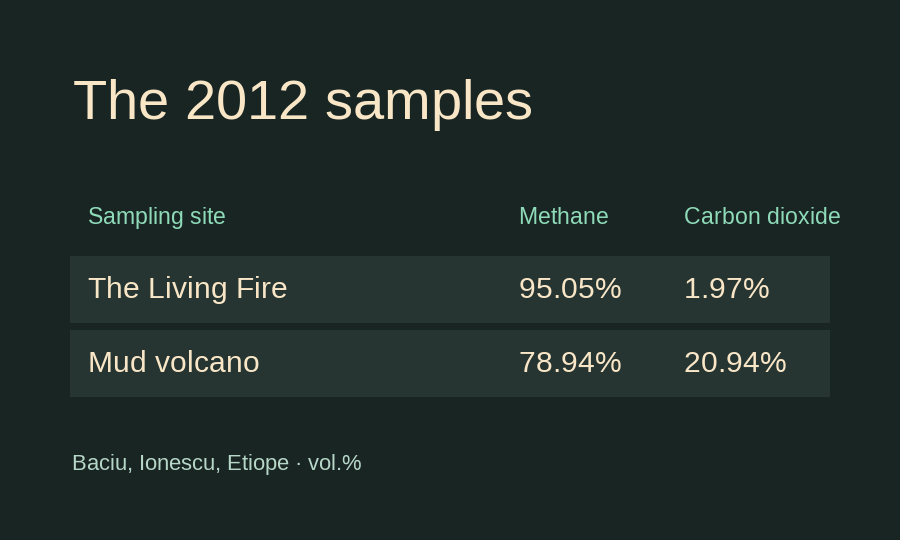
Călin Baciu’s team sampled the gas fire in 2004, 2007 and 2012. Methane made up 95.05% by volume in the 2012 sample; the table corrects for air contamination during collection. The authors group Eastern Carpathian seeps among gases that are mainly thermogenic, formed as buried organic matter is heated. [2]
The study reports the gas fire separately from a mud volcano in the same area. Its 2012 mud-volcano sample contained 78.94% methane and 20.94% carbon dioxide. These figures describe two sites and two seep types; the 1935 result remains a report about a sample the laboratory said was collected badly. [1][2]