Arad · Șiria, Arad county, Romania · August–October 1849
Arad, 1849: from the surrender at Világos to the 6 October executions
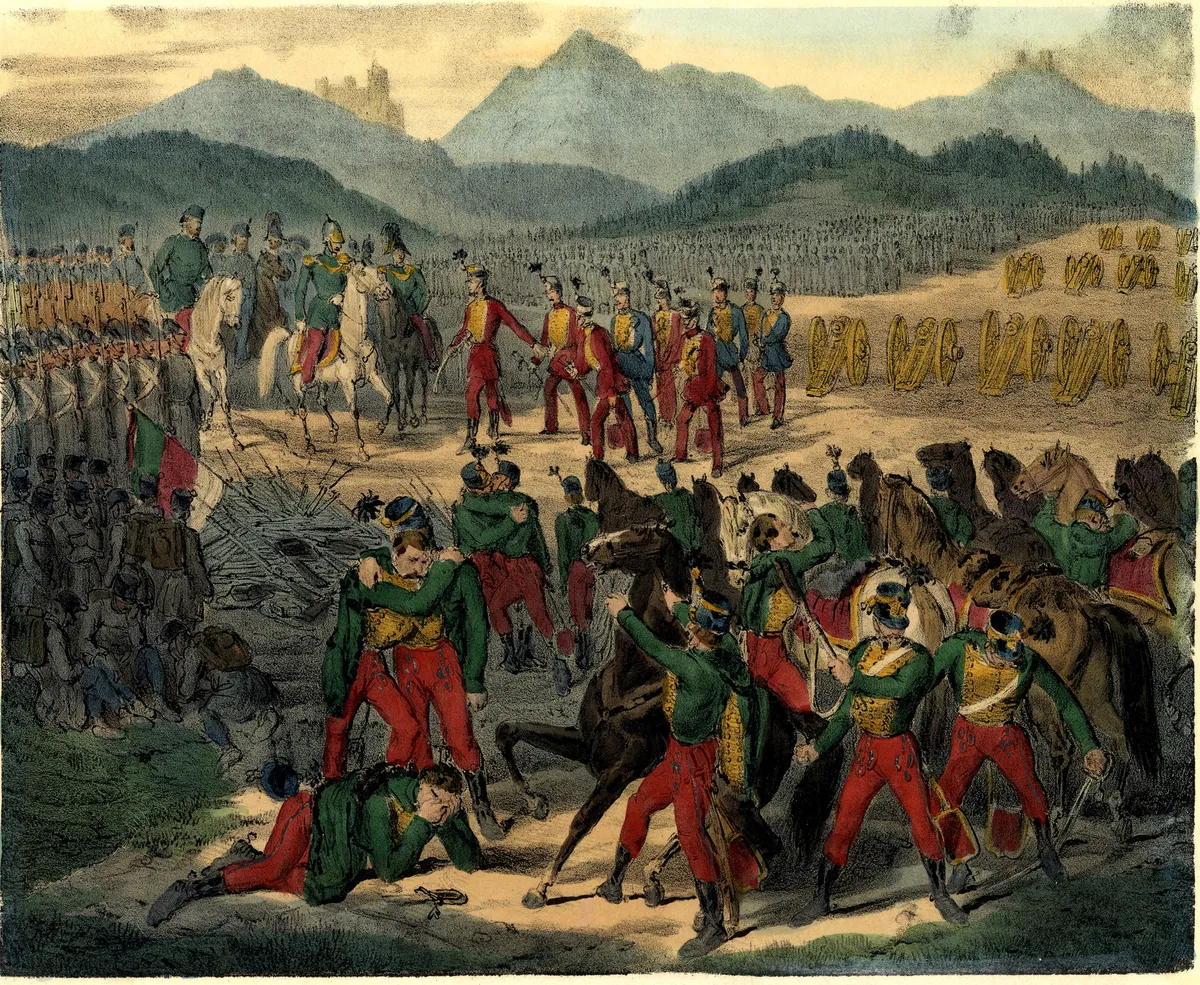
On 13 August 1849, a Hungarian army laid down its arms on a plain near Világos. On 6 October, thirteen of its officers were executed by the fortress of Arad, then in Hungary, today in western Romania. Between the two dates lie 54 days, 25.9 kilometres in a straight line between today's Șiria and fortress points and fourteen files — each in its place and date.
Arad fortress stands in Arad county, Romania, in the bend of the Mureș.
The distance is computed in the browser; the reader's location never leaves the device.

What happened between 13 August and 6 October?
The short answer sits in two papers: the Russian report of 13 August and the Austrian report of 6 October. The rest is the road between them.
- Dated record
- Hungarian army
- Russian troops
- Town or village
- The fortress
day −2 · 11 August
11 August, Arad: the council votes to surrender
After the defeat at Temesvár (today Timișoara), Görgei gathers the council of war in the fortress. He reports 1,460 officers arrived from the scattered army, empty coffers, Russians at Șimand and Austrians at Pecica. He proposes — and the council accepts — unconditional surrender, but only before the Russians: the road, he tells them, may lead to the scaffold.
In the evening, at nine o'clock, he writes to the Russian general Rüdiger that he will lay down his arms only before the Tsar's hosts: rather than before the Austrians, he would have his corps destroyed in a hopeless battle. That day the government had resigned and handed him supreme power.
inkább fogom egész hadtestemet egy bármekkora túlerő elleni kétségbeesett csatában megsemmisíttetni engedni, mintsem osztrák csapatok előtt tegyem le feltétlenül a fegyvert
Görgei's letter to Rüdiger, Ó-Arad, 11 August 1849, 9 PM
the night of 11–12 August
The march to Világos
In the night of 11–12 August the army leaves Arad for Világos (today Șiria) and arrives at dawn, facing back towards Arad. Damjanich, the fortress commander, declares that he follows the army's example. The Russians are still far off: on 11 August only Cossacks had been seen at Șimand.
Damjanich commanded Arad fortress, taken by the Hungarians on 1 July.
day −1 · 12 August
12 August, Világos: the envoys return; Bohus: the instrument is signed
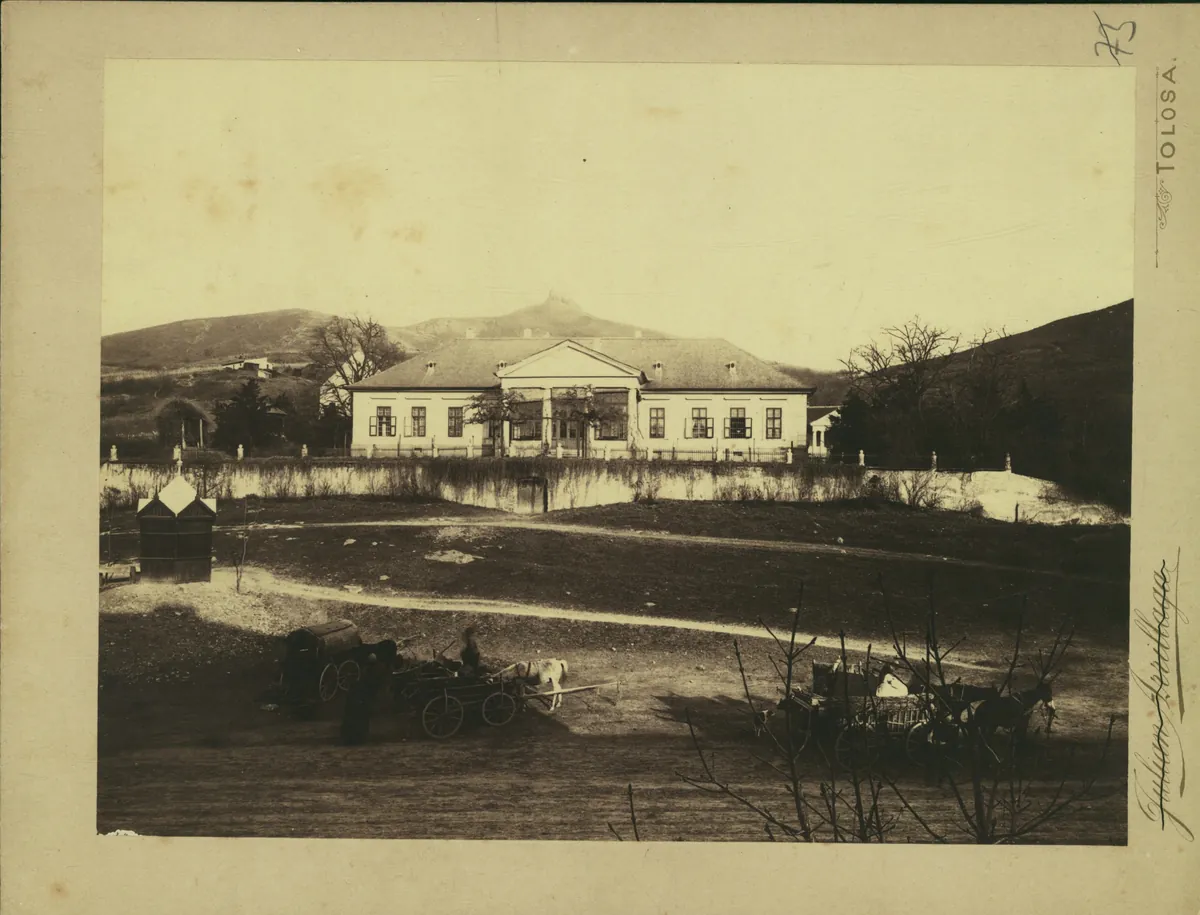
At about ten in the morning the envoys return from Rüdiger — Poeltenberg, Bethlen, Beniczky — with the answer: unconditional surrender, only trust in the Tsar's generosity. At noon the Russians enter Világos. In Antonia Bohus's memoir, their chief of staff, General Frolov, signs the surrender instrument with Görgei, without witnesses, in a room of the castle.
Today's museum dates the signing to 13 August and places it before Austrian and Russian generals; the lady of the castle, who sat at table between Frolov and Görgei, dates it to the 12th. Both dates stand here side by side, unchanged.
Feltétlen megadás és meghódolás, csupán a cár nagylelkűségében való bizalommal
The memoirs of Antonia Bohus, née Szögyény, lady of the castle
day 0 · 13 August
13 August: arms down, on the Szőllős plain
Between ten and eleven in the morning the troops leave their last camp. The disarming takes place at Szőllős — the Szőllős plain, as Rüdiger calls it; the village, provisionally identified here with today's Seleuș, 14.1 km from Șiria — at the road crossing, between the southern edge of the village and the mill canal. The Russian corps closes the field from the east, north and west.
Rüdiger reports the same day, from Chișineu: eleven generals, Görgei included, over 20,000 men and 130 harnessed guns, sent towards Oradea. The report is dated 1/13 August — old style and new style on the same page.
Görgey önként és feltétel nélkül megadta magát
Rüdiger's report to Haynau, Kisjenő, 1/13 August 1849
13 August, evening
The same day: the fortress offers itself, with one condition
Two Arad emissaries offer Rüdiger the fortress, on condition that the handover happen only in the presence of the Russians. Rüdiger writes about it to the Prince of Warsaw, the Russian commander-in-chief. The fortress, besieged since October 1848, had already changed masters once, on 1 July.
From here the thread moves inside the walls: the court-martial follows.


What do the fourteen files say?
Names stand as the verdicts print them, family name first. The ages are the court-martial's figures, not ages verified today.
day 39 · 21 September
The first two verdicts: Kiss, Vécsey
The fortress court-martial condemns Kiss Ernő — powder and ball — and Vécsey Károly — the rope. Both lose their ranks, decorations and estates. Vécsey had besieged Temesvár from April until its relief in August.
lőpor és golyó általi halállal büntetendő
The Kiss verdict, Arad fortress, 21 September 1849
day 44 · 26 September
Eleven, and one more
The second verdict condemns eleven men to death, and a twelfth, Gáspár András, to ten years of fortress prison, because he had withdrawn after the Debrecen resolutions of 14 April. The same day, the court's president and judge ask for mercy — not pardon, only a softening of the punishment — for Dessewffy, Lázár, Schweidel and Poeltenberg.
The reason for Dessewffy and Lázár: they had led their troops to the Austrians, not the Russians, and had not followed Bem. Lázár, the plea says, was only a lieutenant-colonel and had never been an independent commander.
korántsem a büntetés elengedése, csupán megváltoztatása
The mercy plea, Arad fortress, 26 September 1849
day 50 · 2 October
Haynau confirms; the list reverses two execution methods
From Ács, Haynau sends the Emperor the attached list; the verdicts he has confirmed go by courier to Arad. His list puts Schweidel down for the rope and Láhner for the bullet — the reverse of the verdicts — and, separately, enters Lázár under the first name János.
The hangman's receipt for Láhner, dated 6 October, says it plainly: executed by the rope, at Arad. The list was wrong; the verdict and the receipt agree.
Franz Bott hóhér 1849. október 6-án ... Láhner Györgyöt Aradon kötél által kivégezte
Judge Schückl's certificate for the hangman, Arad, 6 October 1849
day 53 · 5 October
7 in the morning: the verdicts are read
The verdicts are read to all the condemned, at seven in the morning. Gáspár's sentence begins the same day. One night remains before the executions.
Tap a name to see it in both papers.
Verdicts of 21 and 26 September, including Haynau's modifications
Thirteen names, with the punishments authorised for execution.
Haynau's list, 2 October
The same names, as Haynau forwarded them to the Emperor.
The hangman’s receipt for Láhner, 6 October: executed by the rope, at Arad.
Aulich Lajos the rope
- Born
- Pozsony, Hungary · 57 years old, after the verdict
- Last imperial rank
- lieutenant-colonel in the Sándor császár infantry regiment
- In the revolutionary army
- general and corps commander
kötél általi halál — death by the rope
the 26 Sept verdict, the Sujánszky witness, the Ernst report
Török Ignác the rope
- Born
- Gödöllő, Pest county · 54 years old, after the verdict
- Last imperial rank
- lieutenant-colonel in the engineers; fortification director of Komárom fortress
- In the revolutionary army
- accepted the general's rank
kötél általi halál — death by the rope
the 26 Sept verdict, the Sujánszky witness, the Ernst report
Láhner György the rope
- Born
- Besztercebánya, Zólyom county · 53 years old, after the verdict
- Last imperial rank
- major, commander of the III battalion, Gyulay regiment
- In the revolutionary army
- arms inspector, with a general's rank
kötél általi halál — death by the rope
the 26 Sept verdict, the Sujánszky witness, the hangman's receipt, the Ernst report
Schweidel József the bullet
- Born
- Zombor, Bács county · 53 years old, after the verdict
- Last imperial rank
- major in the 4th hussar regiment
- In the revolutionary army
- accepted the general's rank; commander of the city of Pest
golyó általi halál — death by the bullet
the 26 Sept verdict, the Sujánszky witness, the Ernst report
Poeltenberg Ernő the rope
- Born
- Vienna, Austria · 35 years old, after the verdict
- Last imperial rank
- captain in the 4th hussar regiment
- In the revolutionary army
- general and corps commander
kötél általi halál — death by the rope
the 26 Sept verdict, the Sujánszky witness, the Ernst report
Nagysándor József the rope
- Born
- Nagyvárad, Bihar county (Oradea) · 45 years old, after the verdict
- Last imperial rank
- captain in the 5th hussar regiment, retired since 1847
- In the revolutionary army
- general and corps commander
kötél általi halál — death by the rope
the 26 Sept verdict, the Sujánszky witness, the Ernst report
Knezić Károly the rope
- Born
- Veliki Grđevac, border regiment district · 41 years old, after the verdict
- Last imperial rank
- captain in the 34th infantry regiment
- In the revolutionary army
- general and corps commander
kötél általi halál — death by the rope
the 26 Sept verdict, the Sujánszky witness, the Ernst report
Leiningen-Westerburg Károly the rope
- Born
- Ilbenstadt, Grand Duchy of Hesse · 30 years old, after the verdict
- Last imperial rank
- captain in the 31st infantry regiment
- In the revolutionary army
- general and division commander
kötél általi halál — death by the rope
the 26 Sept verdict, the Sujánszky witness, the Ernst report
Dessewffy Arisztid the bullet
- Born
- Csákány, Abaúj county · 47 years old, after the verdict
- Last imperial rank
- former captain in the Radetzky hussars, retired since 1839
- In the revolutionary army
- general and division commander
lőpor és golyó általi halál (mode of execution changed) — death by powder and ball (mitigation)
the 26 Sept verdict, the Haynau mitigation, the Sujánszky witness, the Ernst report
Damjanich János the rope
- Born
- Staza, 2nd Ban border regiment district · 45 years old, after the verdict
- Last imperial rank
- captain in the 61st infantry regiment
- In the revolutionary army
- general and corps commander; commander of Arad fortress
kötél általi halál — death by the rope
the 26 Sept verdict, the Sujánszky witness, the Ernst report, Görgei
Lázár Vilmos the bullet
- Born
- Nagybecskerek, the Banat · 34 years old, after the verdict
- Last imperial rank
- resigned his lieutenancy in 1843
- In the revolutionary army
- lieutenant-colonel and division commander
lőpor és golyó általi halál (mode of execution changed) — death by powder and ball (mitigation)
the 26 Sept verdict, the Haynau mitigation, the Sujánszky witness, the mercy plea, the Ernst report
Kiss Ernő the bullet
- Born
- Temesvár, the Banat (Timișoara) · 49 years old, after the verdict
- Last imperial rank
- colonel and commander of the Hanover hussars
- In the revolutionary army
- accepted the general's and lieutenant-general's ranks; commander-in-chief in February
lőpor és golyó általi halál — death by powder and ball
the Kiss verdict, 21 Sept, the Sujánszky witness, the Ernst report
Vécsey Károly the rope
- Born
- Pest, Hungary · 42 years old, after the verdict
- Last imperial rank
- major in the 2nd hussar regiment, imperial chamberlain
- In the revolutionary army
- general, V corps commander; began the Arad blockade, besieged Temesvár
kötél általi halál — death by the rope
the Vécsey verdict, 21 Sept, the Sujánszky witness, the Ernst report
Gáspár András 10 years
- Born
- Kecskemét, Hungary · 45 years old, after the verdict
- Last imperial rank
- former captain in the 9th hussar regiment
- In the revolutionary army
- withdrew after the 14 April Debrecen resolutions
tízévi várfogság — ten years of fortress prison
the 26 Sept verdict, the Ernst report
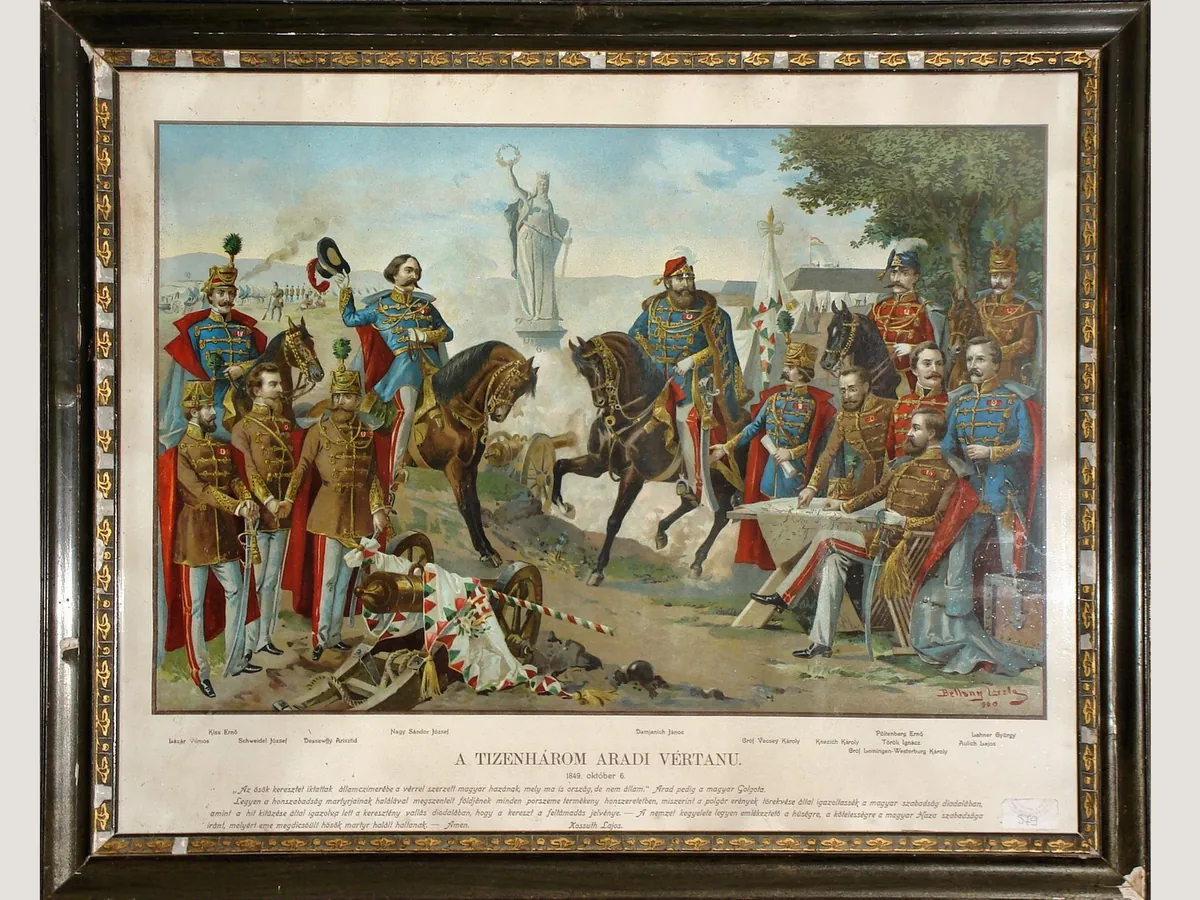

What did the morning of 6 October look like?
The hours below are the witnesses' own, not reconstructions. The Minorite friar Sujánszky Euszták stayed with the condemned through the night before.
6 October, 2 AM
The friars set out for the fortress
Nine priests had been requested, but Sujánszky's monastery could not send that many; it named four of its own — Pléva Balázs, Vinkler Brúnó, Bardócz Sándor and Sujánszky himself. At two in the morning they set out for the fortress, with passes from the commander. The condemned do not sleep: they take leave in letters and set their last affairs in order.
6 October, a quarter to six
The four, between the ramparts
Kiss, Schweidel, Lázár and Dessewffy are shot between the ramparts, as the procession leaves the fortress; a 1932 newspaper account places the halt at the first earthwork. Kiss does not fall at the first volley; three men shoot him again, at close range. The bodies lie in the moat until sundown, then are covered by the ramparts' turf.
háromnegyed hatra a négy golyóra ítélt tábornok ... a sáncok között agyonlövettek
Sujánszky Euszták, Minorite friar, eyewitness
6 October, after six
The nine, on the field towards New Arad
According to Sujánszky, half an hour later the procession reached the field towards New Arad, where nine gallows stood; the verdict was read again and the hangings began. Leiningen asks to speak and denies, from the scaffold, the charge from Buda. The hanged are buried, most of them, on the spot.
Judge Ernst's report to Haynau, dated 6 October with no hour stated, lists thirteen names and says: the punishment was carried out 'at dawn today', and the public display of the condemned follows the same day, as the law requires.

Who were the others?
Ormai Norbert, a colonel of riflemen, had been tried by a summary court at New Arad back on 22 August, and hanged the same day. Kazinczy Lajos was condemned on 13 October, to powder and ball, and executed at Arad on 25 October. Major Hauk Lajos, Bem's aide-de-camp, was executed in March 1850.
On the same 6 October, at Pest, Prime Minister Batthyány Lajos was executed. Wenkstern writes that he had been held since January 1849, that he had been condemned to the rope and that, after cutting a deep wound in his own neck with a hidden dagger, he was shot instead of hanged.
The minister Csányi László was also hanged at Pest — the man who had eaten at the Șiria castle on the morning before the surrender. And the case against Lenkey went on: in the 6 October report, Ernst asks Haynau for the file back.
What do the Hungarian and the Romanian accounts say?
The sources include imperial court-martial records, participants' memoirs, later histories and museum accounts; their authorship and purpose differ.
The Hungarian accounts
The documentary account stands in three verdicts, in letters and memoirs — Görgei, the lady of the Șiria castle, the priests at the executions — and in the document volume edited by Katona Tamás (1983). There too stands the monument to the thirteen, the work of Zala György between 1885 and 1890, after the death of Huszár Adolf; in 1911, the Britannica describes it standing in an Arad square: a colossal Hungary, four allegorical groups, the medallions of the executed.
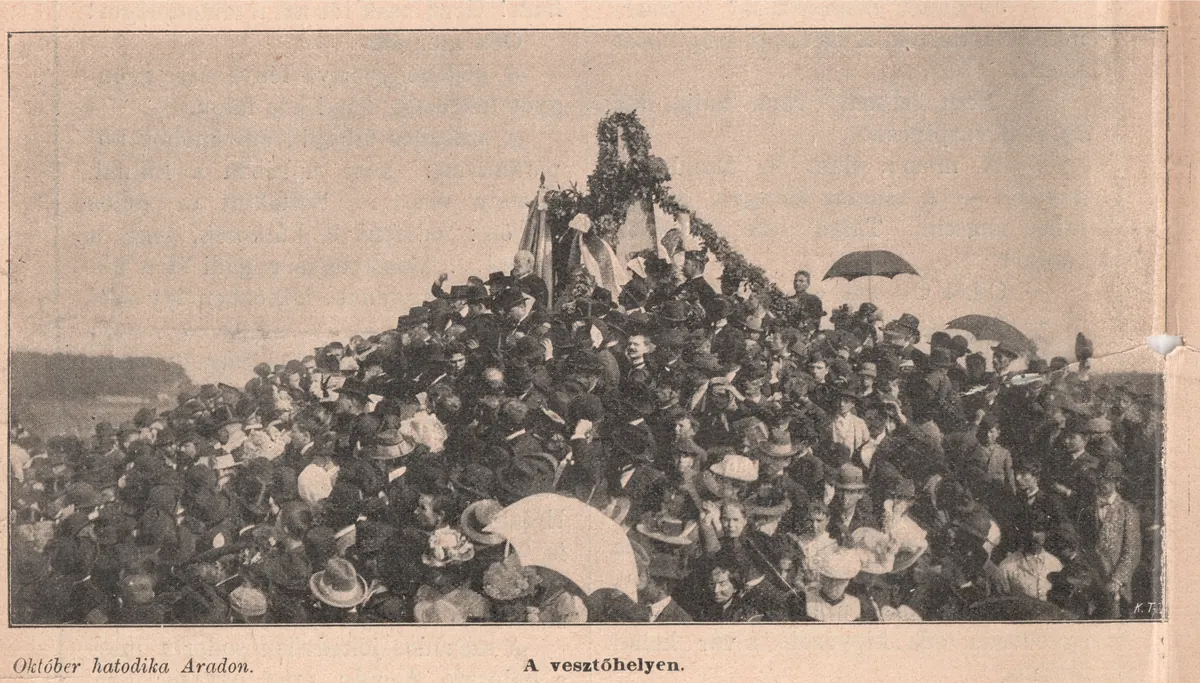
Commemorations began early: the 1899 photograph shows the crowd at the execution site, fifty years on. In 1932, a newspaper report questioned whether the obelisk marked the execution site: if Finster watched the execution from the old wooden bridge, the obelisk would stand a few hundred metres off. The sources used here do not establish how that question was subsequently resolved.
The Romanian accounts
The Romanian side stands first in the museum: the Arad museum opened in 1893 as a relics exhibition of the 1848 revolution, and after the war, in 1954–55, the 'Museum of the 1848 Revolution' reopened. Today the Cultural Palace holds the '1848–1849 Treasure' exhibition. At Șiria, the Bohus manor has held the memorial museum since 1959 — and the museum says the capitulation instrument was signed here.
The second thread is the reconciliation Berindei sums up as 'too little, too late': Bălcescu talked with Kossuth through the spring and summer of 1849, and on 28 July the Szeged assembly voted the nationalities resolution — 'the free development of all nationalities living on the territory of Hungary'. The Világos surrender followed on 13 August.
The third thread is the prison: the same fortress also held, for a while, the Romanian revolutionary Eftimie Murgu, and several Romanian parliamentary deputies from Bihar and the Banat who had supported the revolution were imprisoned by the Austrian authorities.
What kind of fortress is Arad fortress?
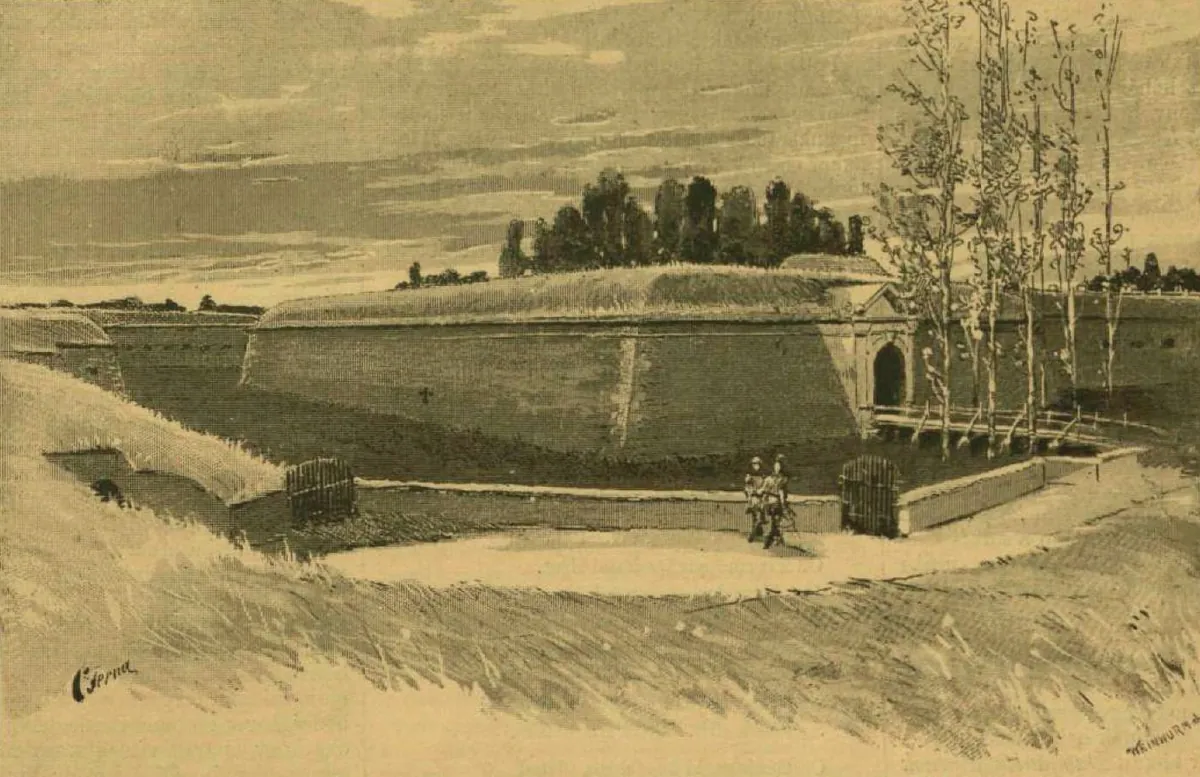
Arad fortress — Cetatea Aradului — is a Vauban star fortress with six bastions. The works began in 1762 and lasted over twenty years, until 1783, to the plans of the Austrian military architect Harsch. The walls, brick filled with earth, run about three metres thick; a moat of Mureș water ringed them. The walls run 3,180 metres round, with 296 gun emplacements.
Between October 1848 and June 1849 the fortress sat under siege for nine months. The Austrian general Berger held it until 1 July 1849; the Hungarians made it their headquarters, from which Kossuth issued the 11 August proclamation and handed power to Görgei. After Világos, the Austrians took it back.
Pro Urbe describes the fortress as housing the 191st Infantry Battalion and reports that moves begun after 2000 for civilian use had not been completed when its account was written. The same account says the fortress reveals itself from the ring road; present-day access is not verified in the sources used here.
How was the memory kept?
In 1893, Arad opened its museum as a relics exhibition of the revolution; in 1913 the collections moved to the Cultural Palace. The monument to the thirteen was standing in 1911. In 1932, a newspaper report questioned the exact spot of the executions.
After the war, the new regime reopened the 'Museum of the 1848 Revolution' in 1954–55, and at Șiria, in 1959, the memorial museum in the Bohus manor. The line ends, for now, with the '1848–1849 Treasure' at the Cultural Palace.

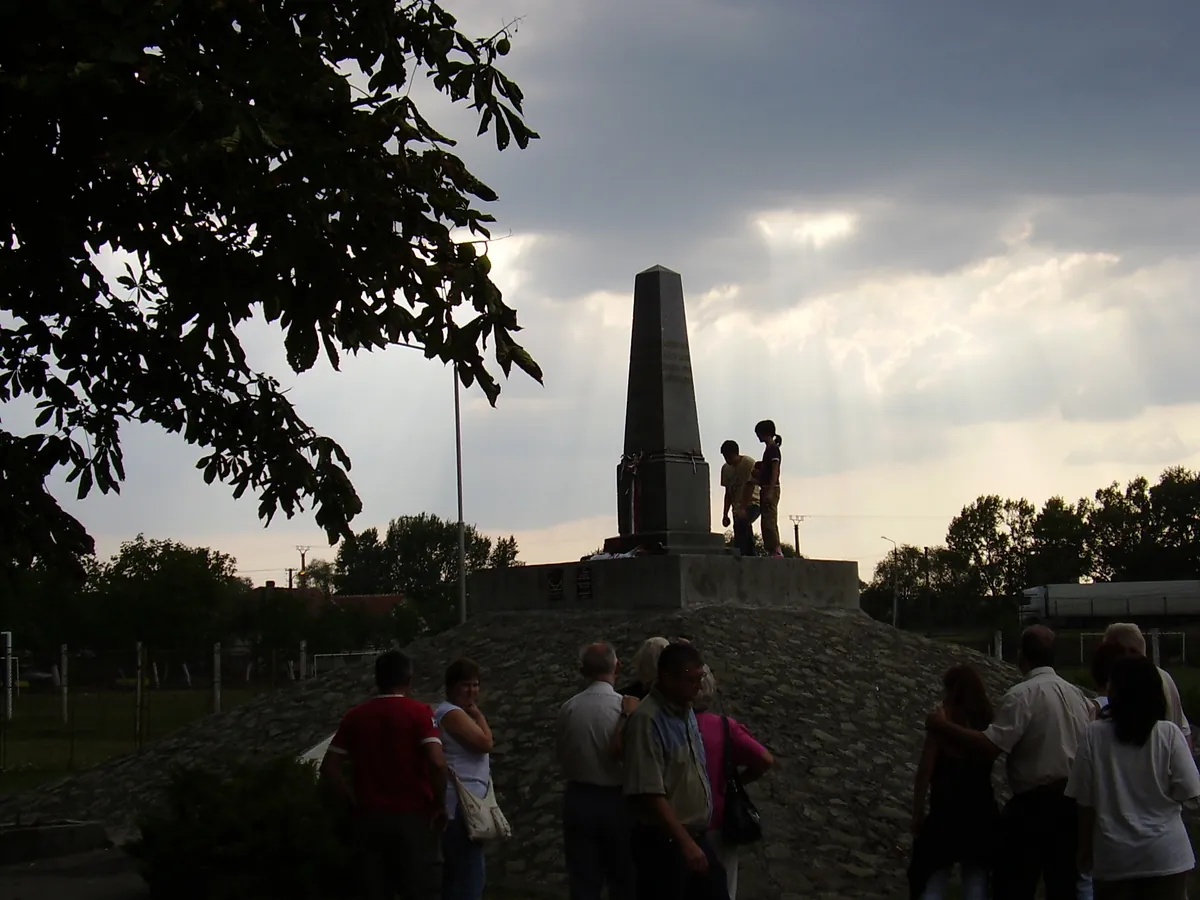

What can be seen today
Three things can be done with this story. In Arad, the Cultural Palace (Piața George Enescu 1) holds the '1848–1849 Treasure' exhibition. At Șiria, the Bohus manor holds the memorial museum — the building where, in Antonia Bohus's memoir, the instrument was signed. And the fortress — a closed garrison in the older Pro Urbe account; present-day access should be checked before travelling — reveals itself from the ring road: 37.4 km in a straight line separate today's Seleuș village point (the field lay south of it) from the fortress point.
The distances below are measured from the reader's location, on the device.
- The museum — '1848–1849 Treasure', Cultural Palace, Piața George Enescu 1, Arad
- The Bohus manor, Șiria — the memorial museum
- Arad fortress, seen from the ring road
Sources and method
- Szőllős (Szöllös in the period documents): the plain is directly attested — Görgei writes 'at Szöllös', Rüdiger, 'a szöllősi síkságon'. The village, provisionally identified here with today's Seleuș, from Görgei's description — the crossing of the Kis-Jenő–Zaránd road with the Világos–Új-Pankota–Boros-Jenő road, and the Csiger brook between Moroda and Szöllös — and from the Hungarian name of Seleuș, Csigérszőllős, Szőllős on the Csiger. The map dot is the village; the field lay south of it, at the mill canal; the 14.1 km distance inherits the proviso.
- The fortress start: 1762 after the Pro Urbe association, 1763 after the 1911 Britannica. Years kept: 1762–1783.
- The ages of the thirteen are the court-martial's figures, not verified ages; one verdict writes Damjanich once as 'dános' and once as 'József', the latter flagged by the editor with [!]. János is kept.
- Görgei's name appears in the period documents as Görgey; today's form, Görgei, is kept.
- Rüdiger's report is dated 1/13 August: Russian old style and new style on the same page.
- Hours are the witnesses' alone, with the source beside them; the page reconstructs no clocks.
Verdicts and files (Katona Tamás, Az aradi vértanúk, 1983, via MEK)
- The verdict on the eleven + Gáspár, 26 September (02865k)
- The Kiss verdict, 21 September (02863e)
- The Vécsey verdict, 21 September (02864d)
- The Haynau confirmation, 2 October (02874)
- The Ernst report, 6 October (02875)
- The mercy plea, 26 September (02865l)
- The hangman's receipt for Láhner (02877)
- The Ormai file (02845, 02850)
- The Kazinczy verdict (02882d)
Memoirs and histories
- Görgei, My Life and Acts, vol. 2 (1852), ch. XXXIII–XXXIV
- The Antonia Bohus memoirs (in Katona, 02702)
- The Sujánszky memoirs (in Katona, 02705)
- Wenkstern, History of the War in Hungary (1859)
- Britannica, 11th ed., 'Arad' (1911)
Historiography and museums
- History of Transylvania, vol. 3, 'The Reprisals'
- Gángó, '1848–1849 in Hungary' (2001)
- Berindei, 'Balcescu, Nicolae' (Ohio)
- The Arad County Museum (site)
- Pro Urbe Arad: Arad Fortress
The map
- OpenStreetMap: Arad fortress (way 1306141035), the Mureș and Cigher rivers, the roads, buildings and towns of the valley. © OpenStreetMap contributors, ODbL. openstreetmap.org. The Szőllős dot is today’s village of Seleuș, a provisional identification; the field lay south of it, after Görgei’s description.
- Relief: AWS Terrain Tiles (Terrarium), Mapzen data from SRTM and other sources, computed as hillshade. registry.opendata.aws
- Coordinates: Nominatim (OpenStreetMap). nominatim.openstreetmap.org
- Wikidata Q914303 (Arad fortress). wikidata.org
The year before, elsewhere: 1848. On Arad as a border city: Trianon 1920. Another star fortress: Alba Iulia Fortress.