Iași – Blaj – Islaz, 1848
Was there one Romanian revolution in 1848?
At Iași they petitioned the prince, at Blaj the nation gathered, at Islaz a new country was proclaimed: 35, 16 and 22 points that rhyme and clash. It was not one Romanian revolution – it was three different summers.
Three lands, one summer, in four chapters
Representative route
Three lands, one summer
On 27 March they petitioned at Iași, on 3 May tens of thousands gathered at Blaj, on 9 June the Proclamation was read at Islaz: 35, 16 and 22 points that rhyme and clash. Below, the summer of 1848 in four chapters – the petition, the assembly, the proclamation, and what remained.
The routes on the map are representative: Iași–Cernăuți, the Moldavian exile road; Sibiu–Blaj, the assembly road; Islaz–Bucharest, the proclamation road.
Chapter I
Iași
27 March – August 1848 · Moldavia, 1848, the petition
- Chapter
- 27 March – August 1848
- The petition
- 27 March/8 April, 35 points
- The answer
- 33 points accepted, then repression
- The exile
- Cernăuți, August: the Wishes
News of the February revolution in Paris roused Moldavia's intellectuals, and after weeks of small meetings and manifestos against despotism, on 27 March/8 April about 1,000 people – great boyars opposed to Sturdza, young liberal boyars, townsfolk – gathered at the Petersburg Hotel in Iași. The moderates won: a petition to the prince, then the assembly's dispersal.
A committee chaired by the poet Vasile Alecsandri drafted the Petition-Proclamation in 35 points: strict adherence to the law, a new and more representative Assembly with the right to make proposals to the prince, a national bank «to facilitate commerce», the abolition of tariffs «harmful to agriculture and commerce». It meant a moderate liberal regime, with no overturning of the country's order.
.jpg)
Sturdza received the petition on 9 April, accepted 33 of its 35 points, but rejected the dissolution of the Assembly and the national guard. The leaders demanded all or nothing; that evening the prince withdrew to the barracks and crushed the movement – hundreds arrested, while the fugitives, among them Alecsandri and the young officer Alexandru Ioan Cuza, took the road to Transylvania and Bukovina.
A national bank «to facilitate commerce» and the abolition of tariffs «harmful to agriculture and commerce».
The Petition-Proclamation, 27 March 1848, after the historical account
Meanwhile In Paris the monarchy had fallen in February; the news lit up Iași before any student had returned from there.
Chapter II
Blaj
3 – 5 May 1848 · Transylvania, 1848, the assembly
- Chapter
- 3 – 5 May 1848
- The assembly
- 3/15 – 5/17 May, Câmpia Libertății
- The program
- The National Petition, 16 articles
- The voice
- Bărnuțiu, 2/14 May, in the cathedral
On 18 April the leaders – Bărnuțiu, Șaguna, Iancu, Barițiu – had decided at Blaj to convene a Great National Assembly, and on 30 April, St Thomas's Sunday, a first assembly had met. On 2/14 May Bărnuțiu spoke in Blaj cathedral against any unilateral change in Transylvania's government, with patience and moderation – and with an oath of allegiance to the Emperor.
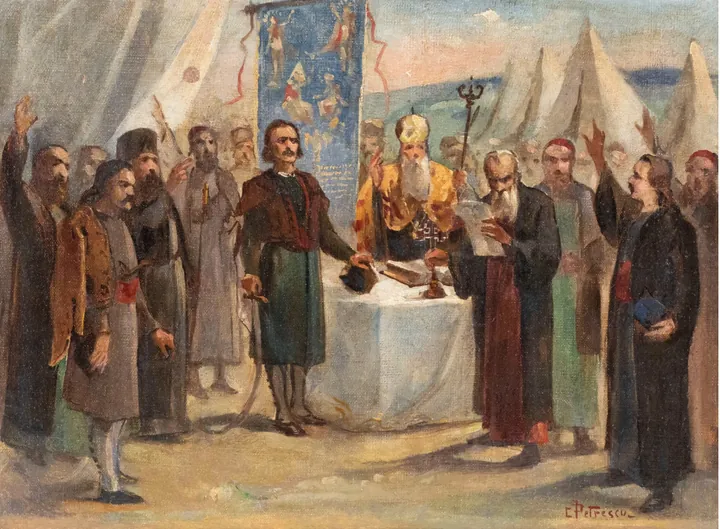
On 3/15 May tens of thousands gathered on the field named from then on Câmpia Libertății, the Field of Liberty. The next day, on 4/16 May, August Treboniu Laurian presented the crowd with the National Petition in 16 articles: the Romanian nation declared itself independent and demanded proportional representation in the Diet (art. 1), the Romanian Church became independent and equal with the others (art. 2), serfdom was abolished with no compensation from the peasants (art. 3), the Romanians formed a national guard (art. 10) – and protested against the union of Transylvania with Hungary.


Each point read out was acclaimed with «Așa!» – «So be it!» – and the crowd shouted «Noi vrem să ne unim cu țara!», «We want to unite with the country!». It was a national program, not a social one: the nation, the Diet and the Church came first, not the throne – whose Emperor remained the Romanians' surety.
Noi vrem să ne unim cu țara! – We want to unite with the country!
The crowd's cry at Blaj, 3/15 May 1848
Meanwhile That same summer the diets voted the union of Transylvania with Hungary, sanctioned by the Emperor in June – the very union Blaj had rejected.
Chapter III
Islaz
9 – 13 June 1848 · Wallachia, 1848, the proclamation
- Chapter
- 9 – 13 June 1848
- The proclamation
- 9/21 June, 22 points
- Bucharest
- 11 June: Bibescu accepts
- The abdication
- 13 June: Bibescu leaves
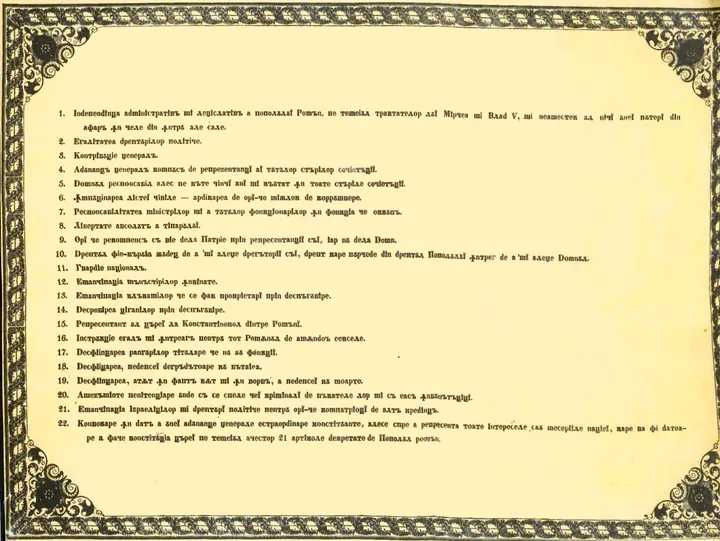
Ion Heliade Rădulescu had written the Proclamation: 22 provisions with the value of a constitutional act – the independence of administration and legislature, the separation of powers, equal rights, a responsible prince elected for five years, a reduced civil list, the emancipation of Jews and Gypsies, equal instruction, a national guard. On 9/21 June it was read at Islaz, a Danube port of Romanați county beyond direct Turkish control, on the field named from then on Câmpul Regenerării.
The people, said the Proclamation, rise «not to break their foreign ties»: it demanded autonomy, not a break with the Porte. The clăcași were made owners «through compensation», and the throne was given «for five years only» – while the title of «prince» was struck out, fit only «for those who know the languages of Europe».

.jpg)
On 11 June Bucharest rose, the crowd filled the streets before the palace, and Bibescu accepted the Proclamation; on 13 June he abdicated and left the country for Brașov. The provisional government took the reins of the Wallachian summer, under the motto «Dreptate, Frăție!» – «Justice, Brotherhood!» – of the Frăția society.
Emancipația clăcașilor ce se fac proprietari prin despăgubire: the emancipation of the clăcași, made owners through compensation.
The Islaz Proclamation, point 13
Meanwhile On 7 July the Russians had already entered Moldavia, lest a government like Bucharest's be born there.
Chapter IV
The aftermath
September 1848 – May 1849 · 1848–1849, what remained
- Chapter
- September 1848 – May 1849
- Spirea
- 13 September: two and a half hours
- The occupation
- 25 September: Bucharest falls
- The peace
- 1 May 1849: Balta Liman
Autumn came with the armies. On 13/25 September Fuat Pasha's Ottomans entered Bucharest: about 900 Romanians – infantry and Captain Pavel Zăgănescu's firemen – held them on Dealul Spirii for two and a half hours, with 48 Romanians and 158 Turks dead. By evening the city was pacified, and on 25 September the occupation sealed the end of the Wallachian revolution.
The Russians had crossed into Wallachia on 27 September; Moldavia had received them as early as 7 July, and on 1 May 1849 the Convention of Balta Liman placed the Principalities under Russo-Turkish control. In Moldavia the new prince, Grigore Alexandru Ghica, called Kogălniceanu, Alecsandri and Ion Ionescu de la Brad into his government.


Transylvania went on burning in the war of 1848–1849, where Iancu earned in the Apuseni the name of «Prince of the Mountains». Three different summers, three different endings: the petition crushed in one evening, the assembly drowned in war, the proclamation extinguished on Dealul Spirii.
Dreptate, Frăție! – Justice, Brotherhood!
The Frăția society's motto, the Wallachian summer's cry
Meanwhile On 1 May 1849 the Convention of Balta Liman placed the Principalities under the joint control of Russia and the Porte.
Three programs, face to face
The same questions – the land, the prince, the nation, the empires – and three answers. Every cell points to its article.
| x | Iași, 27 March | Blaj, 3 May | Islaz, 9 June |
|---|---|---|---|
| The land | A general plea: better relations between peasants, owners and the state. | Serfdom abolished, with no compensation (art. 3). | Clăcași as owners through compensation (point 13). |
| The prince | Nothing about the throne: the petition addresses Sturdza. | No prince: loyalty to the Emperor. | A responsible prince, elected for five years. |
| The nation | A moderate liberal regime, with no national program. | The Romanian nation, independent and equal (art. 1). | «Tot românul e liber, tot românul e nobil.» |
| The great powers | Reforms within the Regulament, under Russia and the Porte. | Against union with Hungary; loyalty to the Emperor. | Autonomy, not rupture: the foreign ties stand. |
Which land promised what?
Four reforms, four cards: guess which land promised each, then check against the articles.
-
1
Land with compensation
One program promises the clăcași will be made owners «through compensation».
What happened
Islaz, point 13: ownership through compensation. Blaj demanded serfdom wiped out with no compensation (art. 3).
-
2
A nation among nations
One program declares the Romanian nation independent and demands proportional representation in the Diet.
What happened
Blaj, art. 1: the independent nation, with representation in the Diet. Islaz knew no Diet: Wallachia had its own prince and Assembly.
-
3
A prince for five years
One program demands a responsible prince, elected for five years.
What happened
Islaz: the throne «for five years only». Iași never touched the throne: the petition asked Sturdza for reforms, not for his seat.
-
4
«Respect the Regulament»
One program demands strict adherence to the law and reforms within the Organic Regulament.
What happened
Iași, March: reforms within the Regulament; only at Cernăuți, in August, would Kogălniceanu cast it off. Islaz wanted a new order.
Answer a card to begin.
Seven plates of 1848
Seven images, in the order of the story: the allegory, the Moldavian, the Transylvanian, the prince, the pen, the print, the Wallachian.
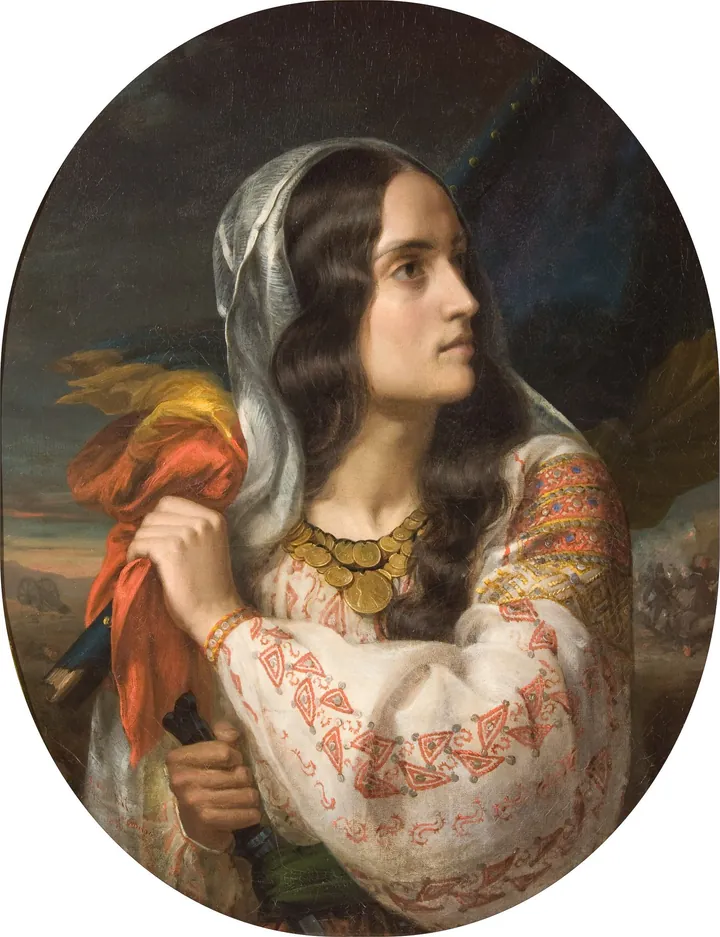
Plate 1850The allegory
The allegory C. D. Rosenthal, 1850 · Wikimedia Commons - «România revoluționară», painted by C. D. Rosenthal in 1850, two years after the summer.
- The model is Maria Rosetti: the country embodied by a woman with a flag.
- Rosenthal (1820–1851) never lived to see any 1848 fulfilled.
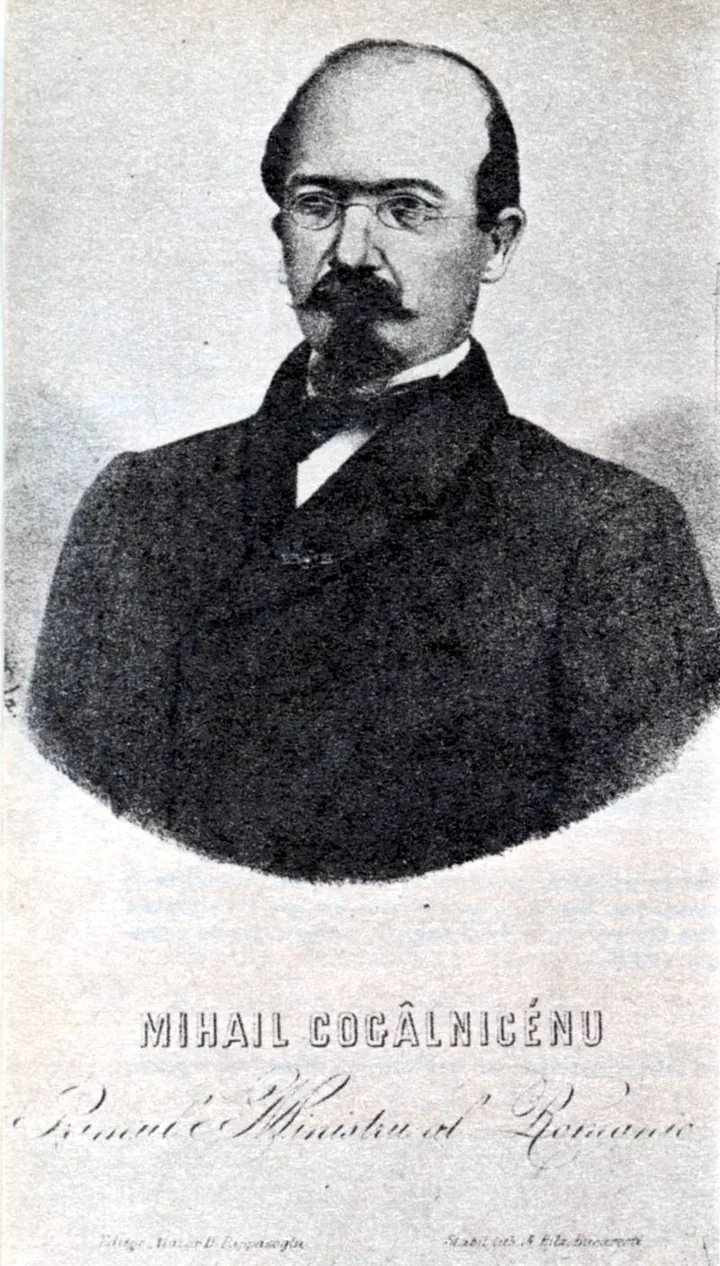
Plate c.1850The Moldavian
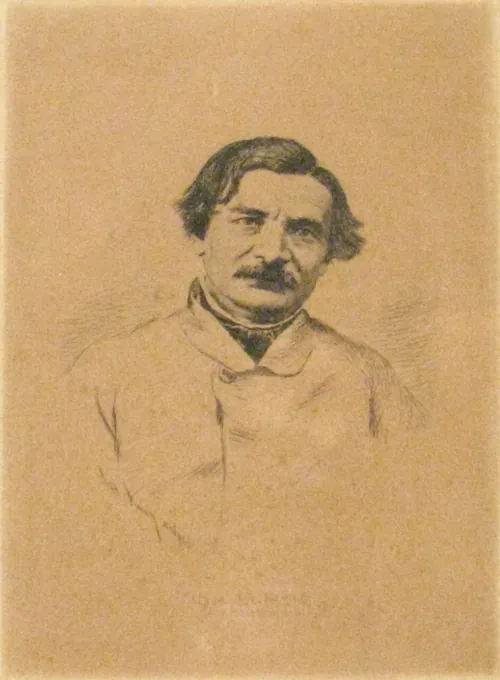
The Moldavian A nineteenth-century engraving · Wikimedia Commons - Kogălniceanu as a young man, in an engraving from around 1850.
- He did not sign the March petition; in August he wrote its successor at Cernăuți.
- He would later be Prime Minister of Romania.
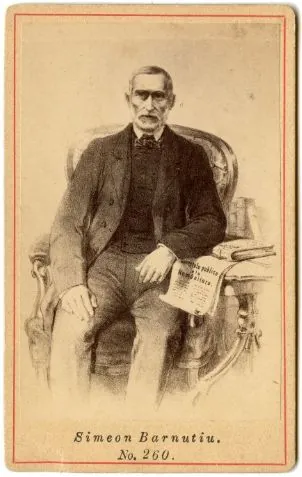
Plate c.1860The Transylvanian
The Transylvanian A period photograph, around 1860 · Wikimedia Commons - Bărnuțiu, the voice of Blaj, in a period photograph.
- On 2/14 May he spoke in the cathedral, with an oath to the Emperor.
- A professor of philosophy at Iași before and after 1848.
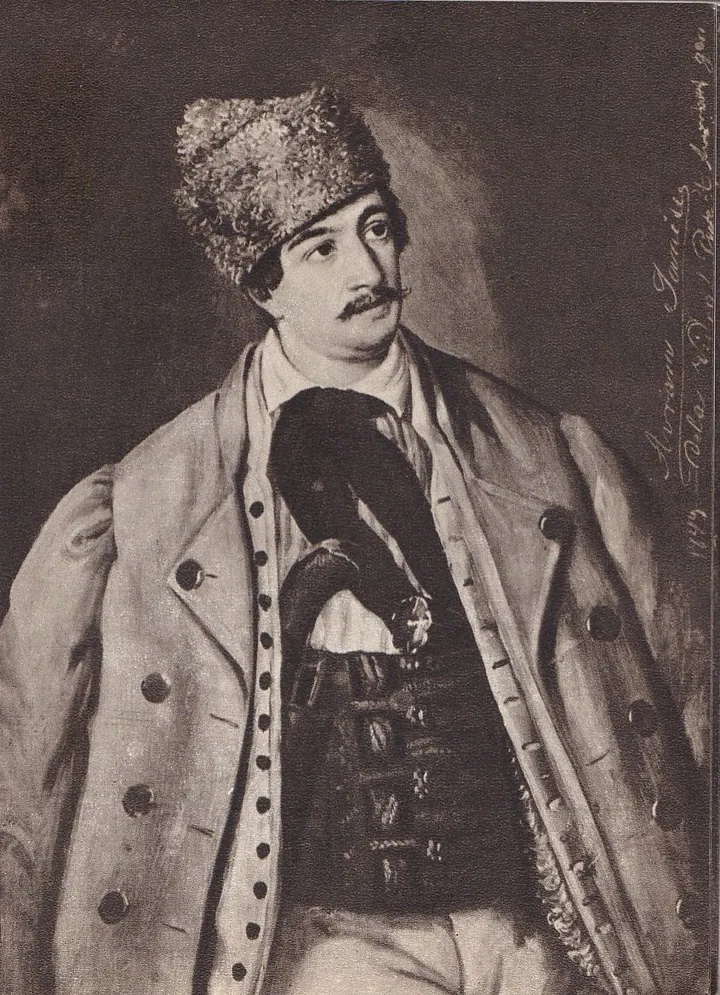
Plate 1849The prince
The prince Barbu Iscovescu, 1849 · Wikimedia Commons - Iancu, painted by Barbu Iscovescu in 1849, in the thick of the war.
- «Prince of the Mountains»: Țara Moților and the Apuseni, 1848–1849.
- At Blaj he had been one young man among many; fame came after.
Plate n.d.The pen
The pen Theodor Aman, nineteenth century · Wikimedia Commons - Heliade Rădulescu, the Proclamation's pen, painted by Theodor Aman.
- The 22 provisions are his, read out on 9 June.
- «The throne is no family's inheritance.»
Plate 1848The print
The print A print of 9 June 1848 · Wikimedia Commons - The Proclamation printed on 9 June 1848, in Cyrillic letters.
- It opens with «Fraților români, Popolul român se scoală...».
- Point 13: the clăcași as owners «through compensation».
Plate 1845The Wallachian
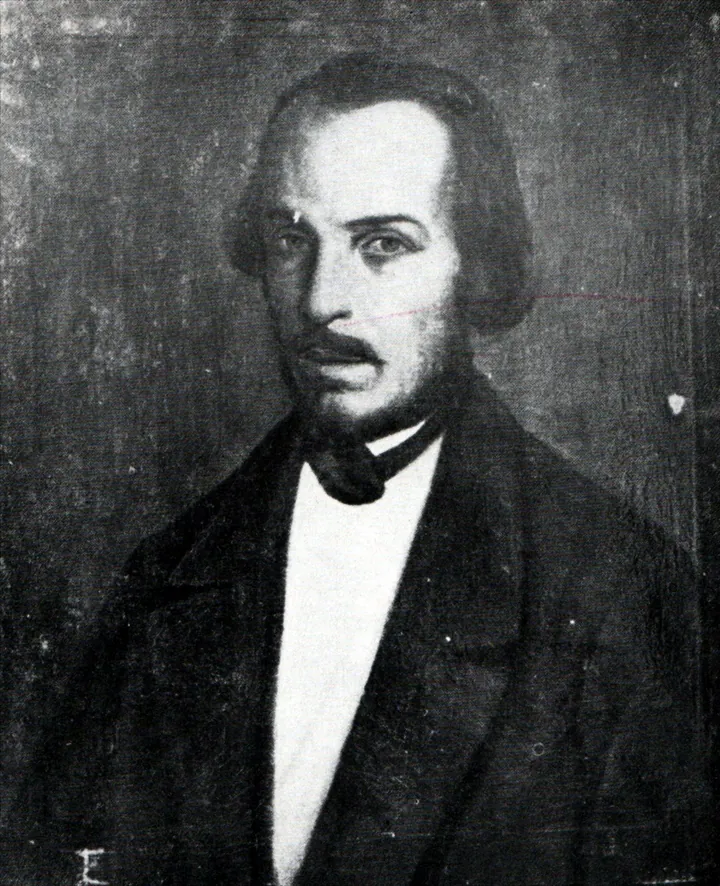
The Wallachian Ion Negulici, 1845 · Wikimedia Commons - Bălcescu, painted by Ion Negulici in 1845, three years before.
- Historian and leader of the Wallachian revolution (1819–1852).
- Negulici (1812–1851) himself was the revolution's prefect in Prahova.

Images via Wikimedia Commons (all public domain). Dates are plate references.
1848 in six numbers
Every number below comes from the cited sources: the year, the petition month, the articles, the provisions, and Bucharest's two days.
- 1,848
- the year of the three programs
- 27
- March: the Iași petition
- 16
- articles at Blaj
- 22
- provisions at Islaz
- 11
- June: Bucharest rises
- 13
- September: Dealul Spirii
Three things people get wrong
There was one Romanian revolution
False: Iași petitioned a prince (35 points), Blaj gathered a nation (16 articles), Islaz proclaimed a new country (22 provisions) – three addressees, three endings.
Islaz broke with the Porte
False: the Proclamation says plainly that the people rise «not to break their foreign ties» – it demanded administrative and legislative autonomy, not independence.
Iancu led Blaj
False: Blaj belonged to Bărnuțiu, Laurian, Barițiu and Șaguna. Iancu (1824–1872) became the «Prince of the Mountains» in the months that followed, in the Apuseni – the Iscovescu portrait dates from 1849.
Sources and methods
The story follows the three programs – the Iași Petition, the Blaj Petition, the Islaz Proclamation – and the sourced histories of the 1848 summer. Day-dates are Old Style, the calendar of the time; New Style stands beside them at first mention. All eight images are public domain, via Wikimedia Commons.
The short quotations come from public-domain texts: the Proclamation (Wikisource) and the assemblies' documented cries. Crowds are given in the sources' own words – «tens of thousands», «about 1,000 people» – never in figures of our own rounding.
Beyond the cited articles nothing is claimed: no hidden thoughts of the leaders, no death toll beyond Dealul Spirii. What could not be proven stayed out.
Iași
- 8 April 1848: about 1,000 people at the Petersburg Hotel, Iași; Alecsandri's committee drafts the 35-point Petition-Proclamation
- Sturdza receives the petition on 9 April, accepts 33 of 35 points, rejects dissolving the Assembly and the national guard; the crackdown follows that evening, about 300 arrested
- Cernăuți, August 1848: the Moldavian Revolutionary Committee; Kogălniceanu drafts the Wishes of the National Party of Moldavia, with Alecsandri and Negri
Blaj
- The Blaj National Assembly, 3/15–5/17 May 1848, Câmpia Libertății: tens of thousands, Bărnuțiu's 2/14 May speech in the cathedral
- The National Petition, 16 articles presented by Laurian on 4/16 May: the independent nation (art. 1), the equal Church (art. 2), serfdom abolished without compensation (art. 3), the national guard (art. 10), against union with Hungary
- An 1852 account: the 16 points read one by one, each acclaimed with «Așa!»
- Iancu (1824–1872) in Țara Moților and the Apuseni, 1848–1849, «Crăișorul Munților»
Islaz
- The Islaz Proclamation, 9 June 1848, written by Heliade Rădulescu: 22 provisions with constitutional-act value; the Danube port beyond direct Turkish control
- The full text (public domain): «Fraților români, Popolul român se scoală...», clăcași as owners «prin despăgubire», the reign «numai pe cinci ani»
- Bucharest 11 June: Bibescu accepts the Proclamation; 13 June he abdicates and leaves; a provisional government until the September Ottoman intervention
The aftermath
- Dealul Spirii, 13/25 September 1848: about 900 Romanians hold Fuat's Ottomans for two and a half hours; 48 Romanians and 158 Turks dead
- The Ottoman occupation of Bucharest, 25 September: the end of the Wallachian revolution
- The Russians enter Moldavia on 7 July, Wallachia on 27 September; the Balta Liman Convention, 1 May 1849; Ghica throned in Moldavia
- Bălcescu (29 June 1819 – 29 November 1852), a leader of the Wallachian revolution
Images
- C. D. Rosenthal, 1850 · Wikimedia Commons
- Ion Negulici, 1845 · Wikimedia Commons
- Barbu Iscovescu, 1849 · Wikimedia Commons
- Theodor Aman, nineteenth century · Wikimedia Commons
- A nineteenth-century engraving · Wikimedia Commons
- A period photograph, around 1860 · Wikimedia Commons
- A print of 9 June 1848 · Wikimedia Commons
- Costin Petrescu, twentieth century · Wikimedia Commons