1075 → TODAY · ONE LAND, THREE WORLDS
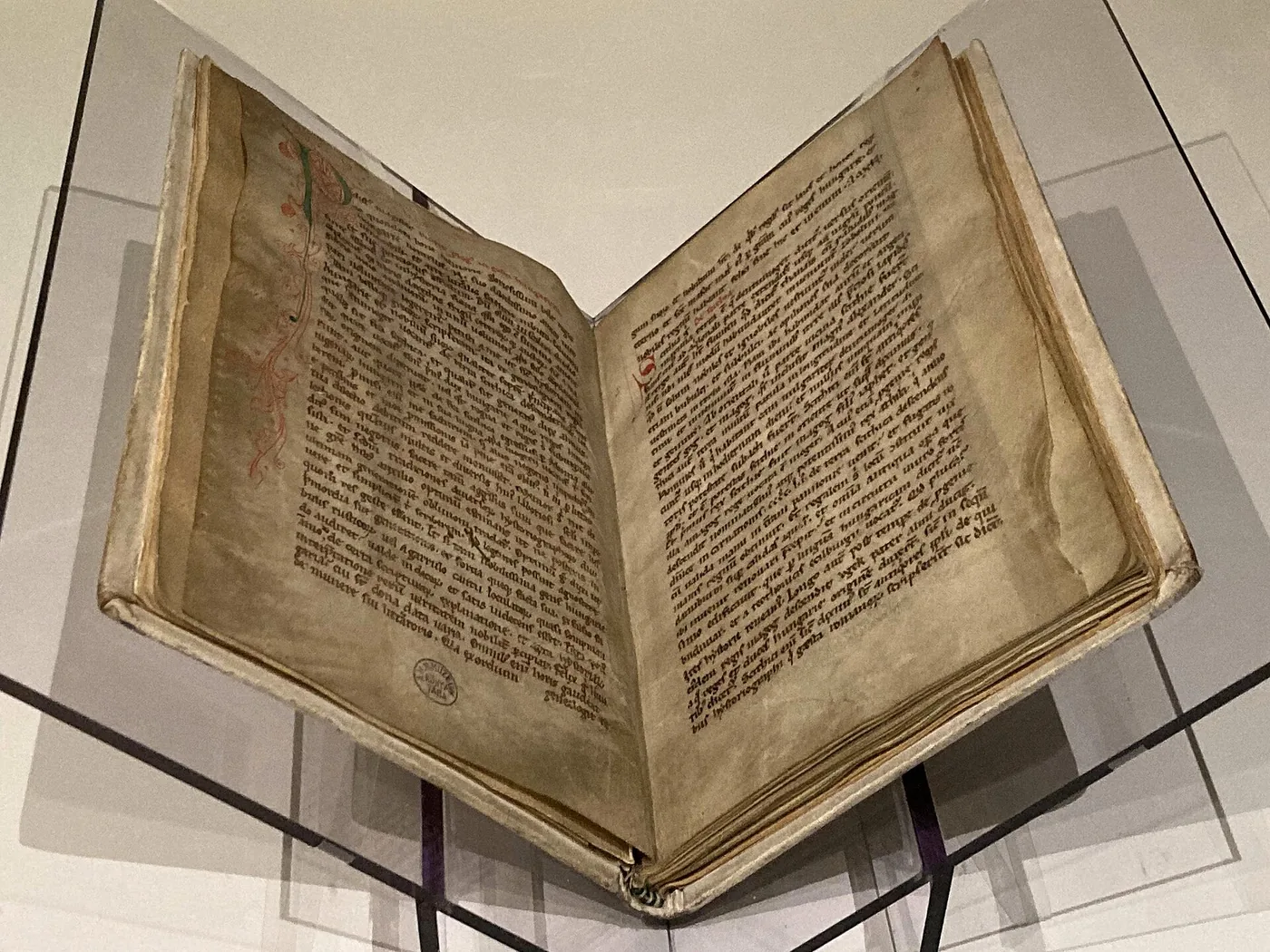
What do you call the land you claim as yours?
Three peoples named the same land from three different worlds: the forest-crossers called it Erdély, the Latin chancery translated it Transylvania, the Saxon towns cried Siebenbürgen. Each name stuck because a power stood behind it.
- 1075
- terra ultra silvam — the first mention, in Latin
- 1224
- the Andreanum — the Golden Charter to the German guests
- 10 × 357
- dated forms, from the first mention to Ardeliu

Five hands, one land, in documentary order:
- ULTRA SILVAM 1075 · the land beyond the forest the charter's Latin
- ERDEUELU ~1200 · beyond the forest Gesta Hungarorum
- SEPTEM CASTRA 13th c. · seven castles the annals' Latin
- SIEBENBUERGEN 1296 · seven castles the German world
- ARDELIU 1432 · the chancellery form the Slavonic chancellery
Chapter one · the Hungarian world
The forest: Erdély
The Hungarian name says where the land lies seen from the plain: beyond the forest. Two old pieces build the word, and a twin name proves the suffix.
Erdeuelu, in the Gesta Hungarorum
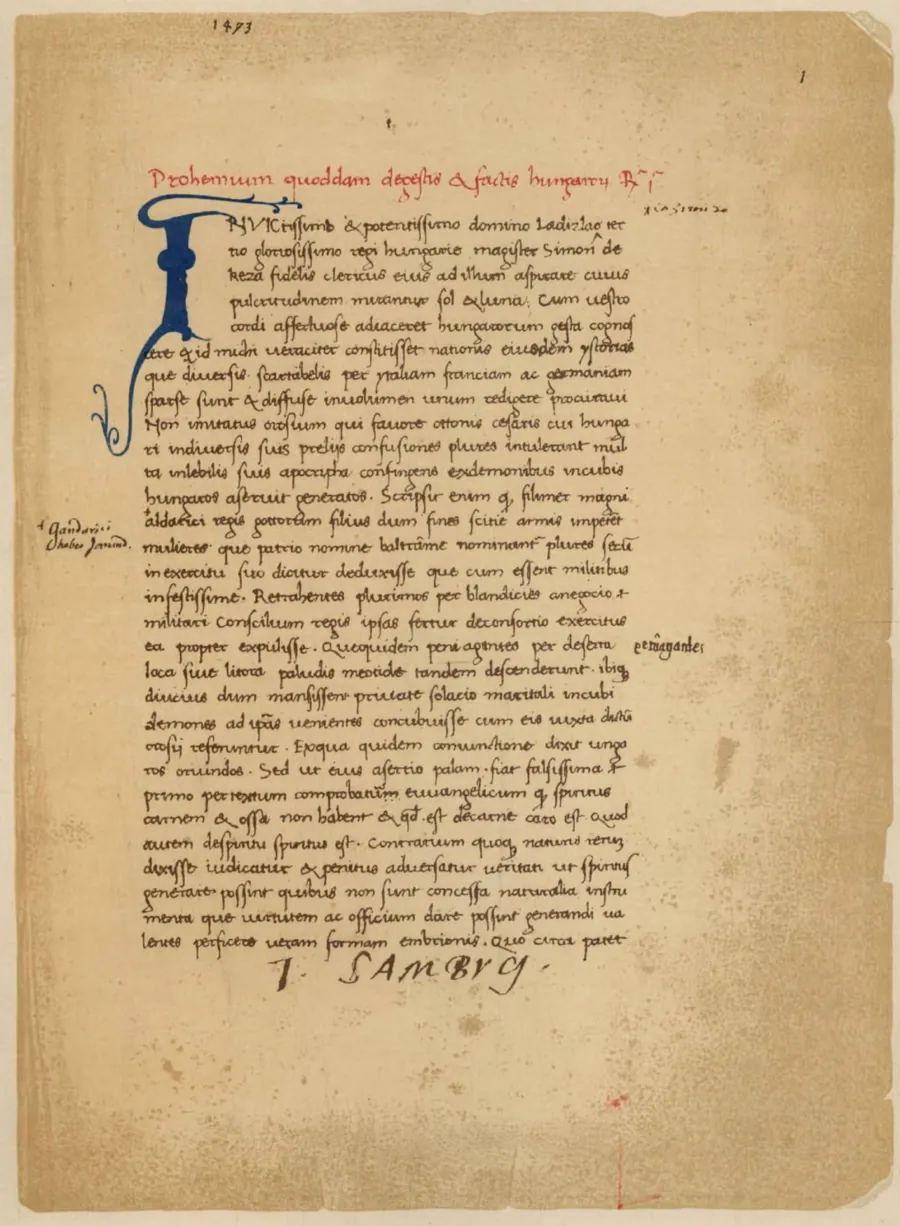
The oldest surviving Hungarian form is Erdeuelu, in chapter 11 of the Gesta Hungarorum. The Gesta was written around 1200, in Latin, by an anonymous notary; the Hungarian Electronic Library's scholarly commentary marks chapter 11 as Anonymus's first mention of Transylvania, under the Hungarian name Erdeuelu.
the word dates to ~1200; the events do not WORD DATED ~1200
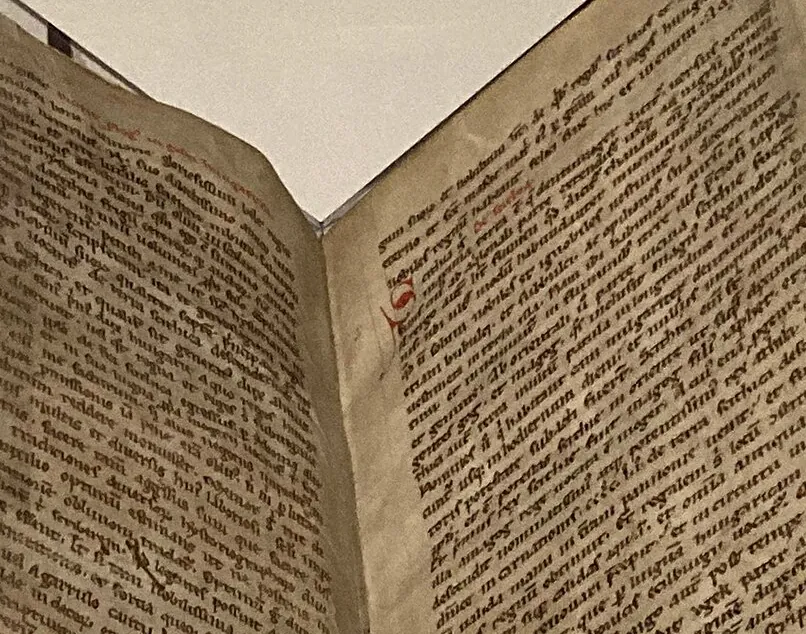
The twin proof: Havaselve
The same suffix lives in Havaselve, the old Hungarian name for Wallachia: beyond the snowy mountains, in Latin Transalpina. Gyepűelve, near Uzhhorod, stands beside it. Two beyond-names show the suffix is old, not improvised for one case.
Which forest?
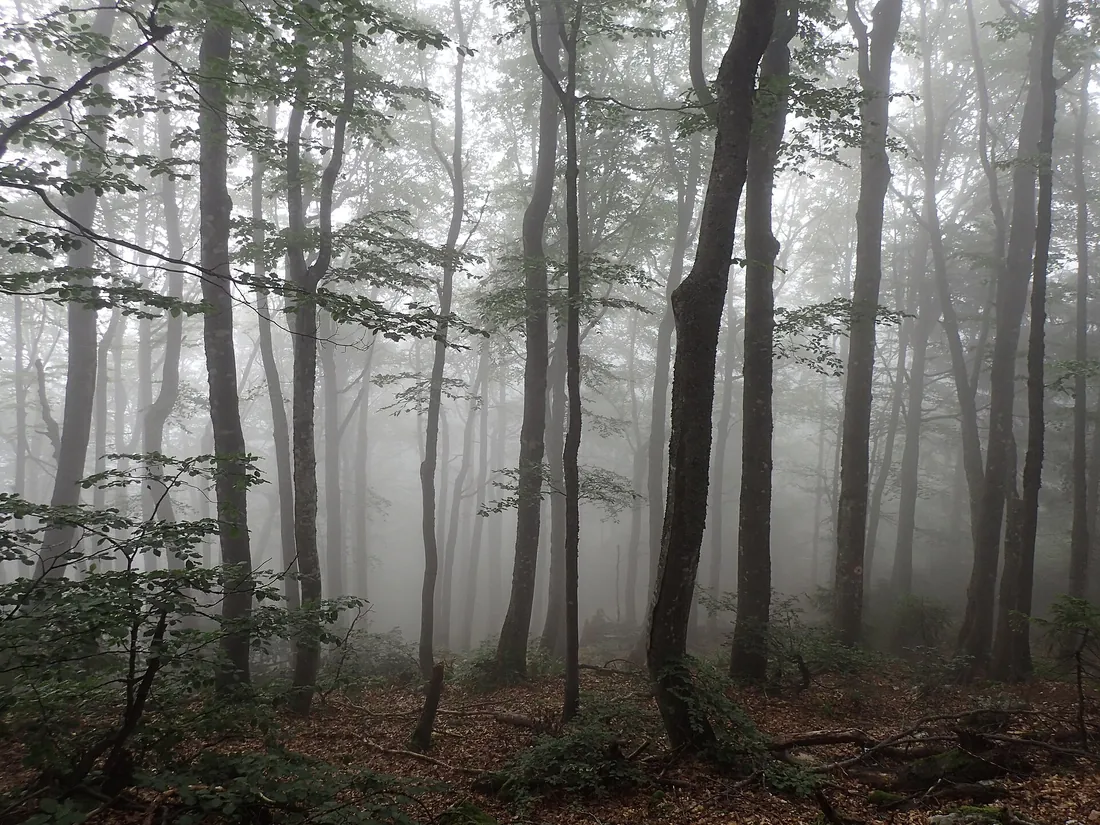
Hungarian historiography usually reads the Apuseni mountains, with the familiar probably. Another hypothesis places the name at Etelköz, before the settlement of the Pannonian plain. The page keeps both in view and picks neither.

Chapter two · the Latin chancery
The calque: Transylvania
The chancery translated rule. First it wrote the land as a description, then it packed the description into a single proper name.
1075: terra ultra silvam
The region's first mention is a Medieval Latin phrase, terra ultra silvam, in a charter of 1075. The 12th century brings Partes Transsylvanæ in the Legenda Sancti Gerhardi, then Transsilvania in the kingdom's documents.
terra ultra silvam
Translated from Hungarian?
The form Ultrasylvania, cited for 1077, becomes Transylvania. The consensus of linguists and historians, cited by Engel, reads the Latin name as a direct translation from the Hungarian form. Wiktionary lists the same direction: Medieval Latin Transsilvania as a calque on Hungarian. The direction stays an attribution, not a bare fact.
CITED CONSENSUS
The mirrors
Two more languages translated the same idea on their own: Ukrainian Zalissia and German Überwald, both meaning beyond the forest.
The chancery translates rule.

Chapter three · the Saxon towns
The castles: Siebenbürgen
The German world named the land after castles: seven of them. First in the annals' Latin, then in German, in charters and chronicles.
First the annals' Latin
1241
Septum urbium
Annales Sancti Trudperti and the Zwifalt annals: Tartari terras Pannonie, Septum urbium, Moraviae vestaverunt.
1242
Septem castrorum
The Erfurt friar's note, at the fall of Hermannstadt: terra scilicet Septem castrorum.
1285
Septemcastrenses
The annals: quid audientes Septemcastrenses — the people of the seven castles.
Then in German
1296
Siebenbuergen
A charter mentions one maister Dietrich von Siebenbuergen.
1300
Sybenburger
Ottokar of Styria writes Sybenburger in the rhymed chronicle.
The seven towns?
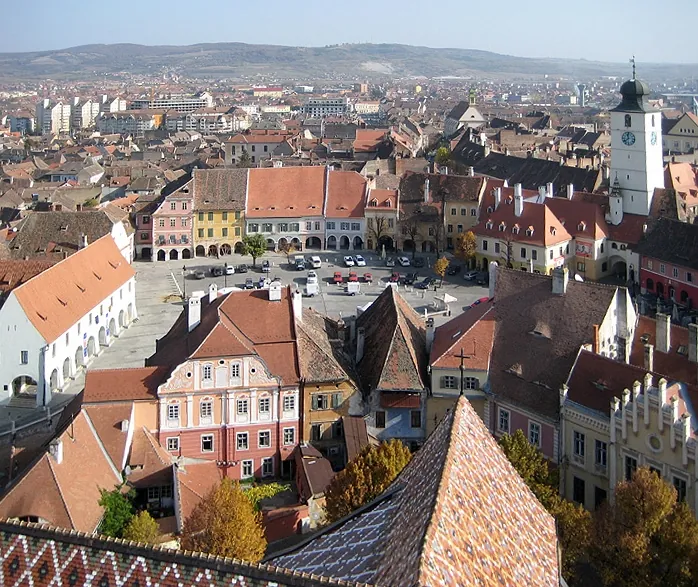
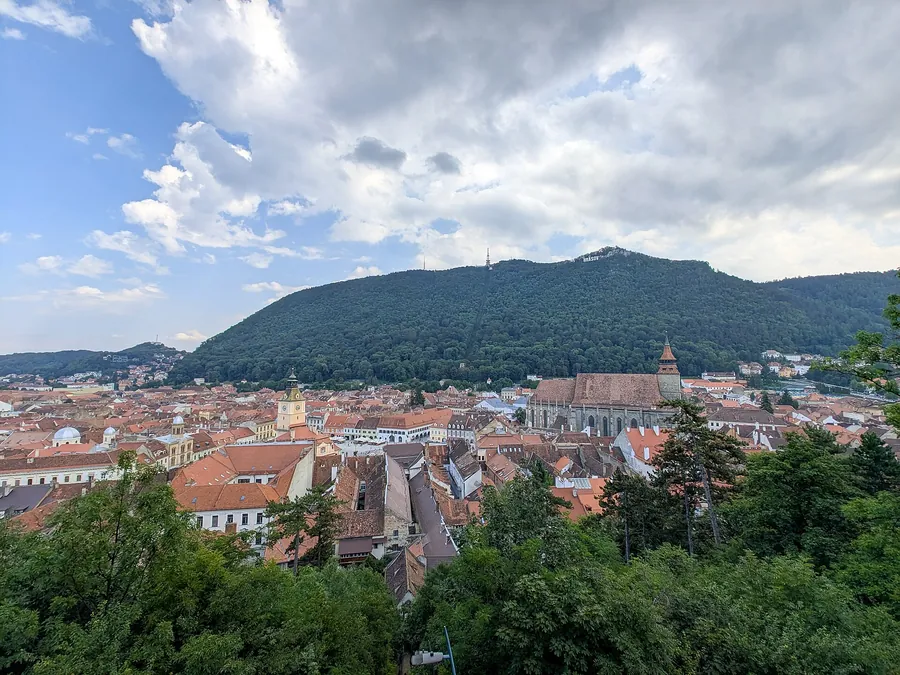
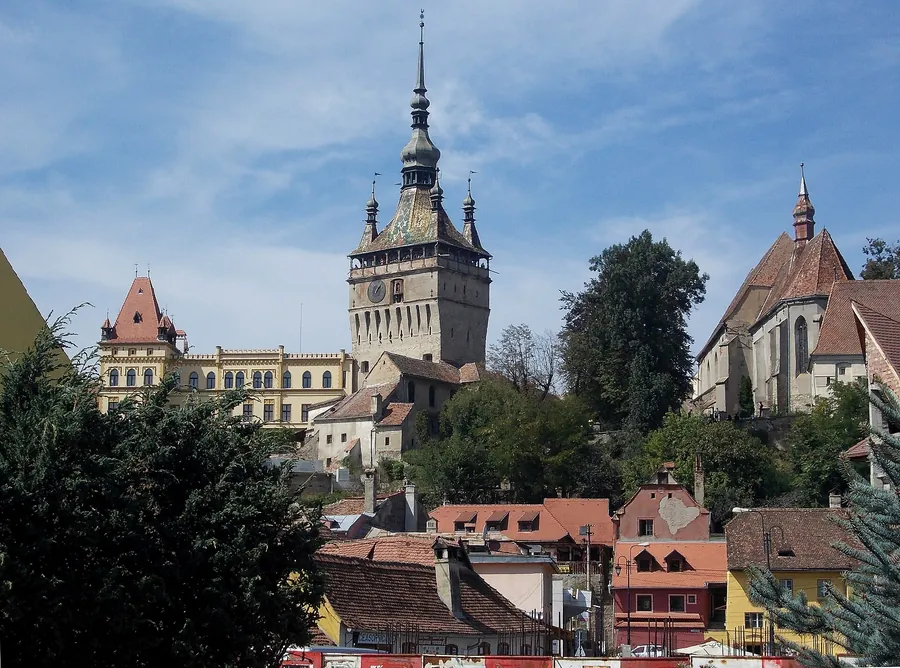
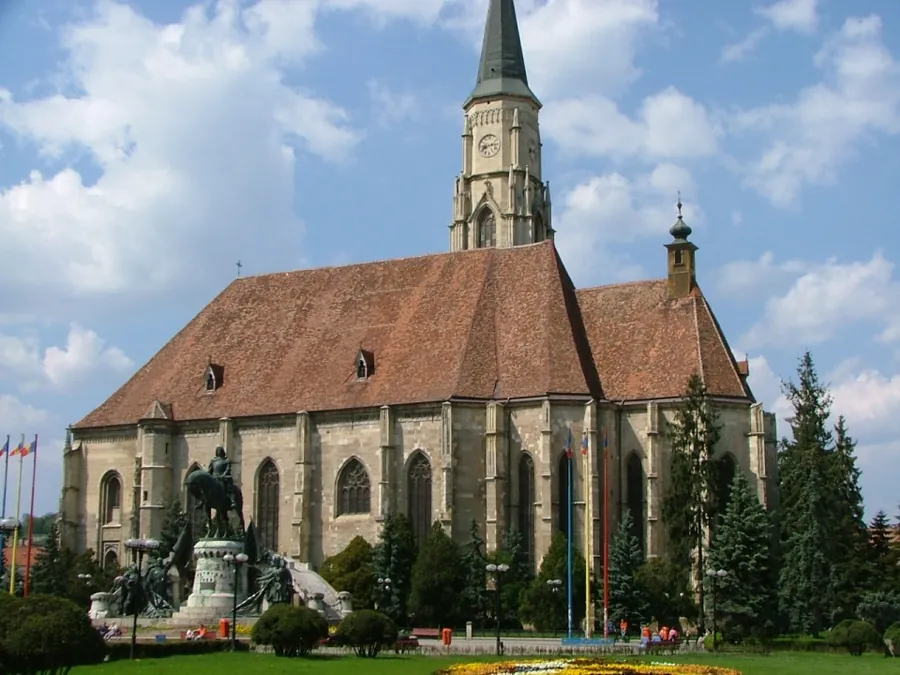
The most widely accepted account ties the name to seven fortified towns of the Saxons. The list circulates without a citable reference, so the page shows it as tradition, not established fact.
the traditional account · TRADITIONAL, UNVERIFIED
- Bistritz Bistrița
- Hermannstadt Sibiu
- Klausenburg Cluj
- Kronstadt Brașov
- Mediasch Mediaș
- Mühlbach Sebeș
- Schässburg Sighișoara




Three rival accounts
The chieftains
Each of the seven Magyar chieftains is said to have raised an earthen castle in the Mureș valley.
Zevenbergen
The first settlers, speakers of Low German, Flemish and Dutch, may have brought the name of home regions: Zevenbergen, Sevenbergen.
Cibinburg
Sibiu's early German name, Cibinburg, may have corrupted into Siebenbürgen and spread to the whole land.
The seven-armies legend
Thuróczy tells in the Chronica Hungarorum how the host divided into seven armies and seven hillforts were built for wives and cattle: This is why the Germans call this part of the land Siebenbürgen, meaning seven castles to this day. A legend with a named author, not an etymology.
LEGEND

The Slav echo
The region's Slav names translate the German one: Sedmigradsko, Siedmiogród, Semihorod — plus the Walloon Zivenbork.
Chapter four · in Romanian
Ardeal, through Hungarian
Romanian took the name from Hungarian, through the chancery. Two dates honestly keep apart the chancellery form and the word of the Romanian texts.
1432: Ardeliu
The oldest surviving Romanian form is Ardeliu, in 1432. The a/e alternation of the adaptation has known pairs: Hungarian egres becomes Romanian agriș, Erdőd becomes Ardud.
the chancellery, not the street
1432 · Ardeliu
The Slavonic chancellery form. That is what the document dates: the chancellery, not the street.
Ardeal
The word of the first Romanian texts, from the early 1500s. A silence of the documents lies between the two.
Erdel, through Hungarian
Turkish Erdel comes from Hungarian too, through Ottoman Turkish: Wiktionary lists it among the descendants of Erdély. For the Serbo-Croatian form the page has no citable source, so it gives none.
The hinge · 1075 → 1224
First the name. Then the seal.
Two parchments, 149 years apart. The first mentions the land; the second founds a body with rights inside it. That is how we read the row of seals: regimes reached for the name first.
1075 · the name
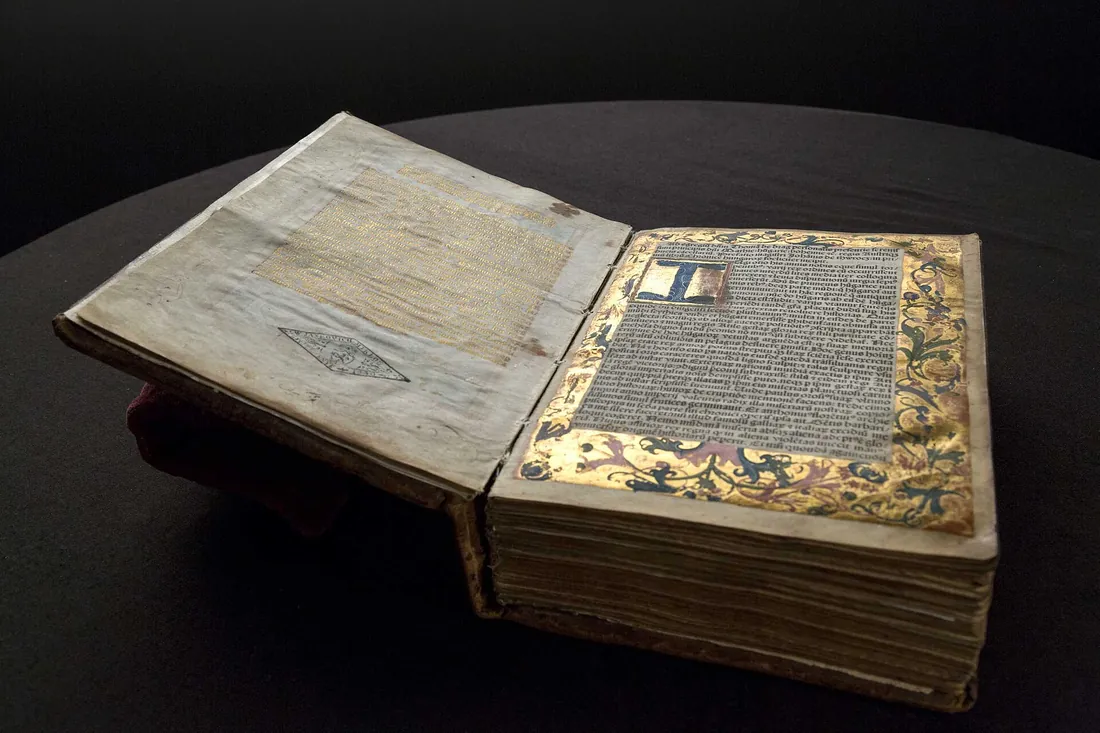
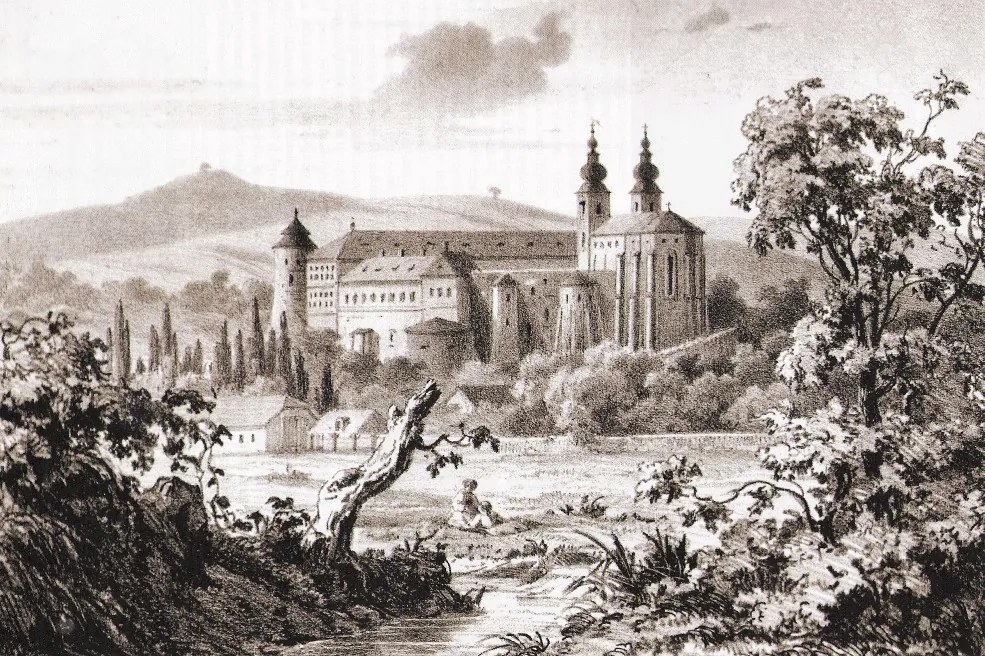
Géza I, crowned king in early 1075, gives the foundation charter of the Benedictine abbey of Garamszentbenedek, today's Hronský Beňadik in Slovakia. That charter holds the region's first mention: terra ultra silvam.
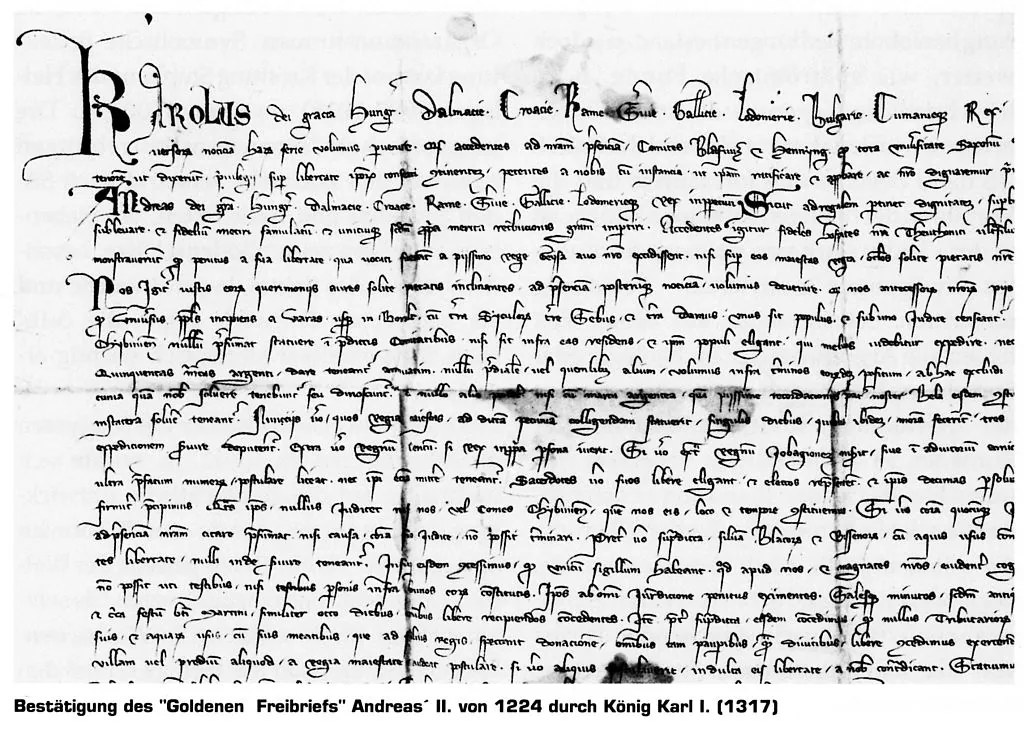
1224 · the seal
Andrew II gives the Diploma Andreanum, the Golden Charter: provisional autonomy to the colonial Germans of Transylvania, around today's Sibiu. Charles I reasserts its validity in 1317. The sentence stops at autonomy.



The engine · the document scroll
The registry of names
Ten dated forms, each with its document. Drag the years forward and the land's name changes exactly at the documented years; open a seal and read the line itself. The registry stops at the last sourced seal: 1432.
Year 1075
Form terra ultra silvam
Seals 1/10
Open a seal for the line, the gloss and the source.
1075 terra ultra silvam Géza I's foundation charter for Garamszentbenedek abbey
terra ultra silvam
the land beyond the forest
Latin · Géza I's foundation charter for Garamszentbenedek abbey
C01
1077 Ultrasylvania the form cited for 1077
Ultrasylvania
beyond the forest, in one Latin word
Latin · the form cited for 1077
C02
~1200 Erdeuelu Gesta Hungarorum, chapter 11
Erdeuelu
erdő + elü: beyond the forest
Hungarian · Gesta Hungarorum, chapter 11
WORD DATED ~1200
C04·C06
1224 Diploma Andreanum Andrew II's Golden Charter to the German guests
Diploma Andreanum
autonomy for the German settlers around Sibiu
Latin · Andrew II's Golden Charter to the German guests
C14
1241 Septum urbium Annales Sancti Trudperti; the Zwifalt annals
Septum urbium
of the seven towns
Latin · Annales Sancti Trudperti; the Zwifalt annals
C08
1242 Septem castrorum the Erfurt friar's chronicle: the fall of Hermannstadt
terra scilicet Septem castrorum
of the seven castles
Latin · the Erfurt friar's chronicle: the fall of Hermannstadt
C08
1285 Septemcastrenses the annals: the people of the seven castles
Septemcastrenses
the Seven-Castle people
Latin · the annals: the people of the seven castles
C08
1296 Siebenbuergen charter: maister Dietrich von Siebenbuergen
maister Dietrich von Siebenbuergen
seven castles
German · charter: maister Dietrich von Siebenbuergen
C09
1300 Sybenburger Ottokar of Styria's rhymed chronicle
Sybenburger
a Transylvanian Saxon
German · Ottokar of Styria's rhymed chronicle
C09
1432 Ardeliu Wallachia's Slavonic chancellery
Ardeliu
the chancellery form of Ardeal
Slavonic · Wallachia's Slavonic chancellery
C04·C10
The game · six rounds
Who says it how?
Six forms, six worlds. Pick the world each form comes from. Every round teaches one registry row; what is disputed stays in the text, not in the questions.
Score 0/6
1 Erdeuelu
Which world does Erdeuelu come from?
The Hungarians · The oldest surviving Hungarian form, Gesta Hungarorum, chapter 11.
2 Septem castrorum
Which world does Septem castrorum come from?
The Latin chroniclers · The annals' Latin, 1242, at the fall of Hermannstadt.
3 Siebenbürgen
Which world does Siebenbürgen come from?
The Saxons · The German world, 1296: maister Dietrich von Siebenbuergen.
4 Ardeliu
Which world does Ardeliu come from?
The Slavonic chancellery · The 1432 chancellery form behind Romanian Ardeal.
5 Transylvania
Which world does Transylvania come from?
The Latin chancery · A Latin calque on the Hungarian form, after the consensus cited by Engel.
6 Erdel
Which world does Erdel come from?
The Turks · Turkish, through Ottoman Turkish, still from Hungarian.
Three numbers
How long the row runs
1075
terra ultra silvam
The region's first mention, in Latin, in a charter of 1075.
1224
the Diploma Andreanum
Andrew II's Golden Charter to the colonial Germans around Sibiu.
10 · 357
forms · years
Ten dated forms from the first mention to Ardeliu, across 357 years.

Four corrections
What it is not
The 1075 record is Hungarian.
1075 is a Latin mention: terra ultra silvam. The first Hungarian form, Erdeuelu, appears in the Gesta, around 1200.
The Gesta proves what happened in the 900s.
The Gesta dates the word Erdeuelu, around 1200. Its tale of the 9th–10th centuries belongs to disputed historiography.
Siebenbürgen certainly means the seven Saxon towns.
The seven-town link is the most widely accepted account, its list still without a citable reference. Three rival accounts stand beside it.
Ardeliu 1432 is already the Ardeal of the Romanian texts.
1432 dates the Slavonic chancellery form. Ardeal arrives with the first Romanian texts, in the early 1500s.
Sources and method
What the page stands on
Every dated form has its document in the registry. Below, the claims with their direct sources and their hedges.
| C01 | First mention: terra ultra silvam, in a charter of 1075. | Encyclopedia synthesis, read directly; the charter: the Garamszentbenedek foundation. |
|---|---|---|
| C02 | Ultrasylvania, the form cited for 1077. | Encyclopedia synthesis, read directly. |
| C03–C05 | Erdély = erdő + elü/elv, beyond the forest; the Havaselve proof. | Wiktionary Erdély, read directly; Benkő/Kiss/Papp through synthesis. |
| C04·C06 | Erdeuelu in the Gesta, chapter 11; the Gesta written around 1200–1230. | The MEK scholarly commentary + the Gesta Hungarorum lemma, read directly. |
| C07 | Transylvania, a Latin calque on Hungarian. | The consensus cited by Engel; Wiktionary lists the same direction. |
| C08 | Septum urbium 1241; Septem castrorum 1242; Septemcastrenses 1285. | The Latin lines, read directly as quotes; Urkundenbuch not consulted. |
| C09 | Siebenbuergen 1296; Sybenburger 1300; seven towns; three rivals; the Slav echo. | Read directly as quotes; the town list without a citable reference. |
| C10 | Ardeliu 1432; the a/e pairs: egres → agriș, Erdőd → Ardud. | Encyclopedia synthesis, read directly. |
| C14 | The Andreanum of 1224, autonomy; reasserted 1317. | The Diploma Andreanum lemma, read directly. |
| U3·U4 | The Drăganu chain and Pop's thesis are missing: the sources could not be read directly. | The 1923 Drăganu edition was not accessible; no citable Pop edition was found. |
The quotes come from two encyclopedia lemmas; Wiktionary, the Hungarian scholarly commentary and the Géza I and Gesta Hungarorum lemmas were read directly. Anything that could not be verified in a directly read source was left out. The page dates words, not events.
Dictionaries and chronicles
The names and the diploma
Type: Fraunces, Newsreader and Atkinson Hyperlegible, under the SIL Open Font Licence.