The excavation
The excavation
Twelve metres from the apse
In 1974 and 1975, archaeologists investigated the ruins of St Mary’s Catholic Church in Baia before consolidation work. They also dug around it. North-east of the altar they found five households that succeeded one another on a plot about 50 metres wide. [1] [2]
The first of the five, called Dwelling III in the report, began 12 metres from the side of the choir apse. Eight trenches intersected it. The researchers reconstructed the timber house across those cuts from traces left by burnt beams. [1]
Baia is now a village in the Moldova valley. For the history of the medieval town, the plot beside the church provides unusual evidence: the dimensions of a house and the belongings it contained when it burnt. [1]
Sequence
Five houses, one chronology
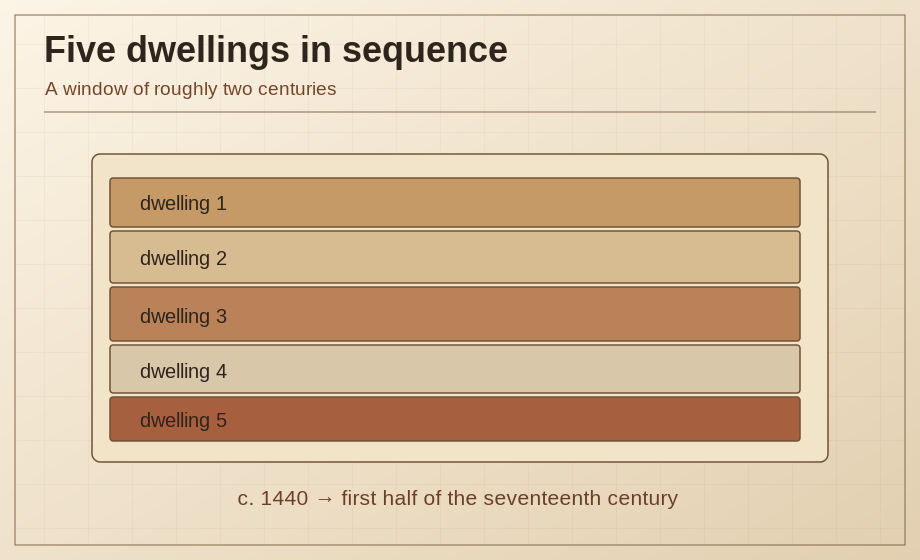
The house plan is only one trace. In the same area, researchers identified five successive dwellings; the published span begins around 1440 and runs into the first half of the seventeenth century. [1]
That changes how we read the place: this is not an isolated house in an unchanged village, but a lived-in area rebuilt across generations. Dating by layers gives an archaeological sequence; by itself, it cannot tell us who occupied each room. [1]
Work
The house grew from four rooms to six
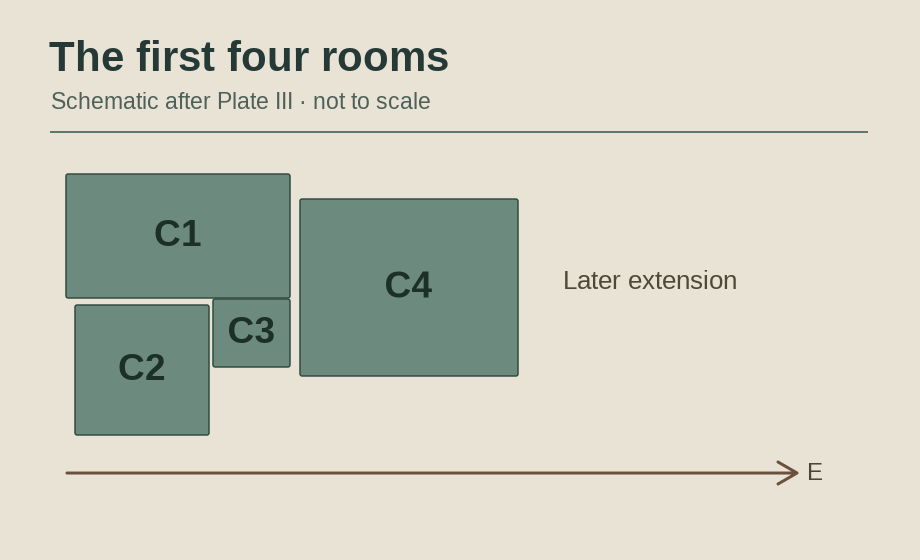
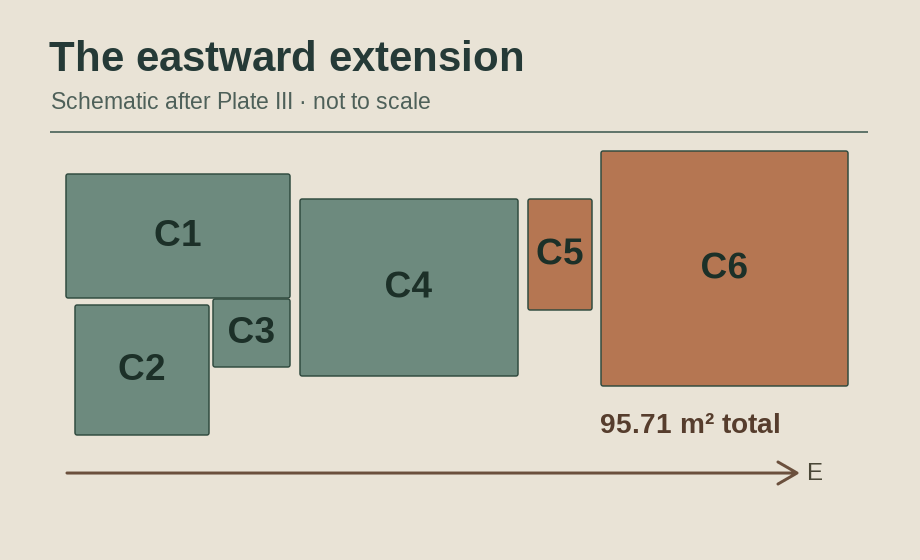
Four rooms came first. Archaeologists found traces of the oak sill beams at the base of each wall. The floors lay at different levels. When the owner enlarged the house eastwards, a narrow connecting space linked the large new room to the existing house. [1]
Plate III calls the original rooms C1–C4 and the additions C5–C6. The complete dwelling measured 95.71 m². The surviving tools and possessions led the authors to identify it as a prosperous blacksmith’s home. [1]
The finds
What the objects can tell us
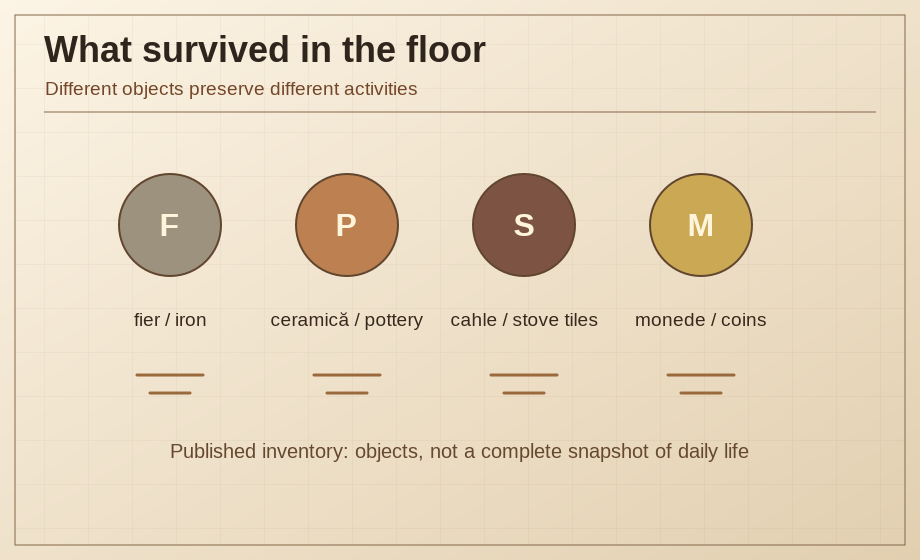
The house inventory includes iron objects, pottery, stove tiles and coins. Together, they point to domestic activity, heating, metalwork and the circulation of money; no single object reconstructs a whole day in the household. [1]
In C4 the authors list one of each of a range of iron objects. Many showed no signs of use. The authors infer that a blacksmith kept these objects for sale, linking the stock to the occupant’s trade. [1]
Dating
Why does 1467 appear?
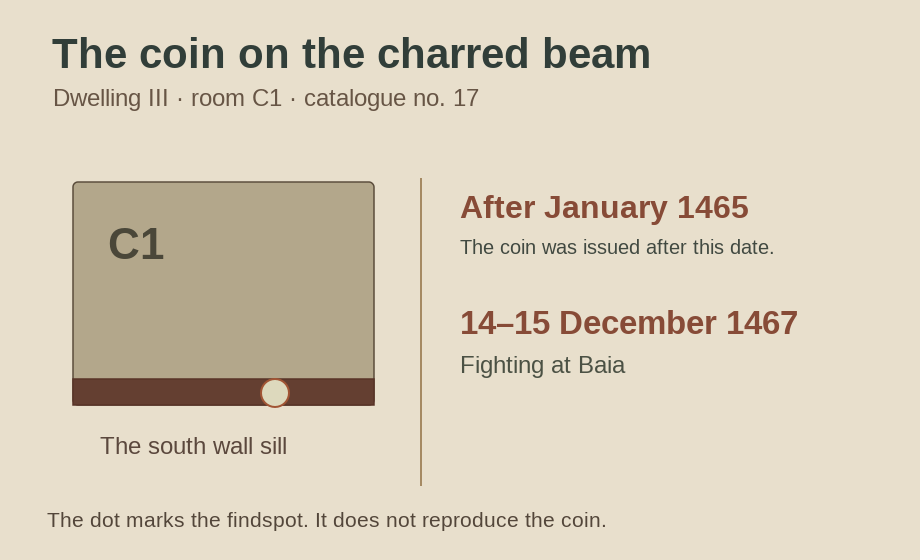
A silver grosz issued by Stephen the Great was found on the charred sill of the south wall of room C1. The authors date the issue to after January 1465 and before autumn or winter 1467. The coin puts a lower bound on when the fire could have happened. [1]
The armies of Matthias Corvinus and Stephen the Great fought in Baia on the night of 14–15 December 1467. The researchers connect the house fire with the fighting. The coin supplies a limit in time and written records date the battle. Together they support the archaeological interpretation. [1] [4]

The place today
The White Church stands elsewhere
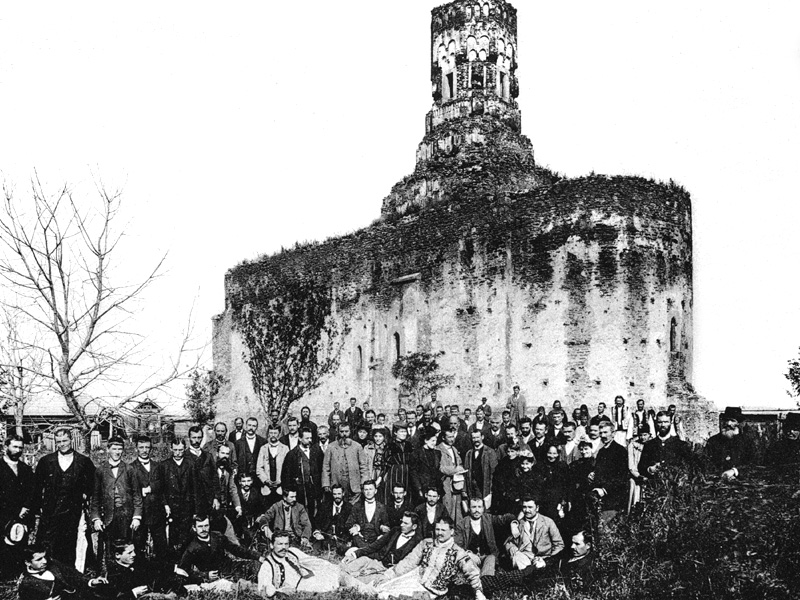
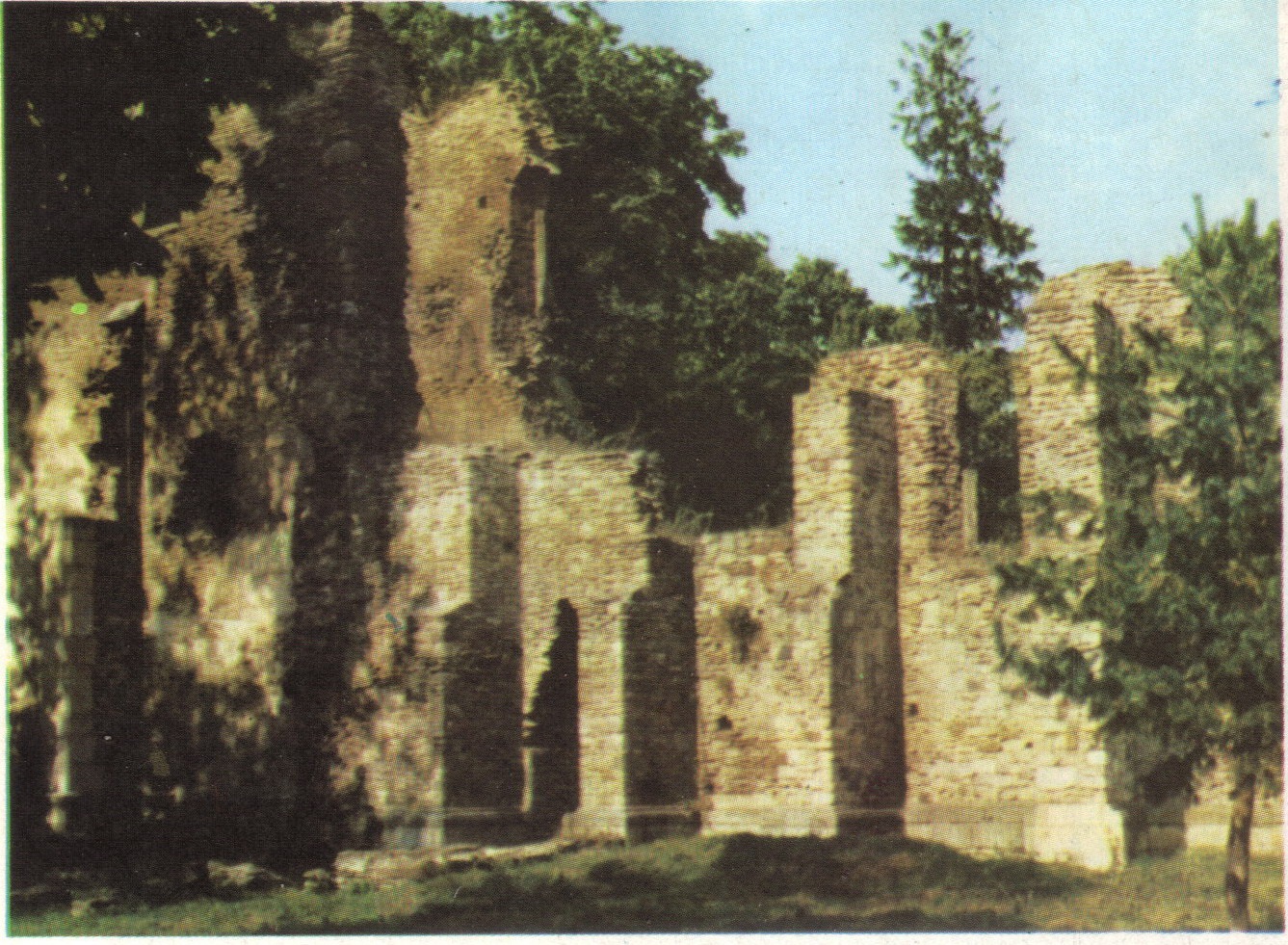
Alexandru Antoniu’s early twentieth-century album shows another church in Baia, the White Church. The two photographs distinguish the church in the album from the Catholic ruins beside which excavators found the house’s beams. [3] [6]
The official St Mary’s record lists the ruined church, traces of a wooden church and urban settlement from the fourteenth to the seventeenth century. The fifteenth-century house occupies a specific place in the excavated sequence on that plot. [2] [1]