BEDLAM · BETHLEHEM · LONDON
How did a hospital become a synonym for chaos?
The name already existed. A London hospital changed what it meant.
Bedlem was already a form of Bethlehem — “in bedlem borne”, around 1440 — two centuries before the chaos. Then a London priory, founded 1247, loaded that sound with new meanings: a hospital, a mad person, madness, uproar. The hospital crossed London. The word travelled further.
- 1247
- Priory of St Mary of Bethlehem founded
- 1522
- a “bedleme” can be a person (Skelton)
- 1660–61
- Cowley: “A Babel, and a Bedlam”
Two tracks
The building moves. The word escapes.
Two journeys on one line: the hospital walks across London while the word leaves the building behind. Drag through eight centuries and watch them separate.
- Bethlehemthe town
- Bedlemthe Middle English form
- Bedlamthe hospital's meanings
- bedlamuproar and confusion
The building
1247
The priory
The Priory of St Mary of Bethlehem is founded at Bishopsgate. Hospital status comes later; the lunatics later still.
B-01
The building
1403
The hospital
Recorded as a hospital since 1329; an inquisition finds its patients suffering from mental disorders.
B-02
The word
c. 1440
Bedlem already
“Ihesu, þat was in bedlem borne”: the short form already names Bethlehem itself.
B-10
The word
1522
A person
Skelton's “madde bedleme”: the name leaves the building — a bedlam can now be a person.
B-10
The word
1528
The hospital
Tyndale's “they of Bedlam”: Bedlam now names the London hospital.
B-10
The word
1598
Madness
Marston's roll call — “Bedlame, Frenzie, Madnes, Lunacie”: the word means the condition.
B-10
The word
1605–06
The beggars
Lear puts “Bedlam beggars, who with roaring voices” on stage.
B-07
The word
1660–61
Chaos
Cowley: “A Babel, and a Bedlam grow.” The building is no longer needed.
B-10
The word
1663
Any asylum
“The Bedlam” can mean any madhouse, anywhere.
B-10
The building
1676
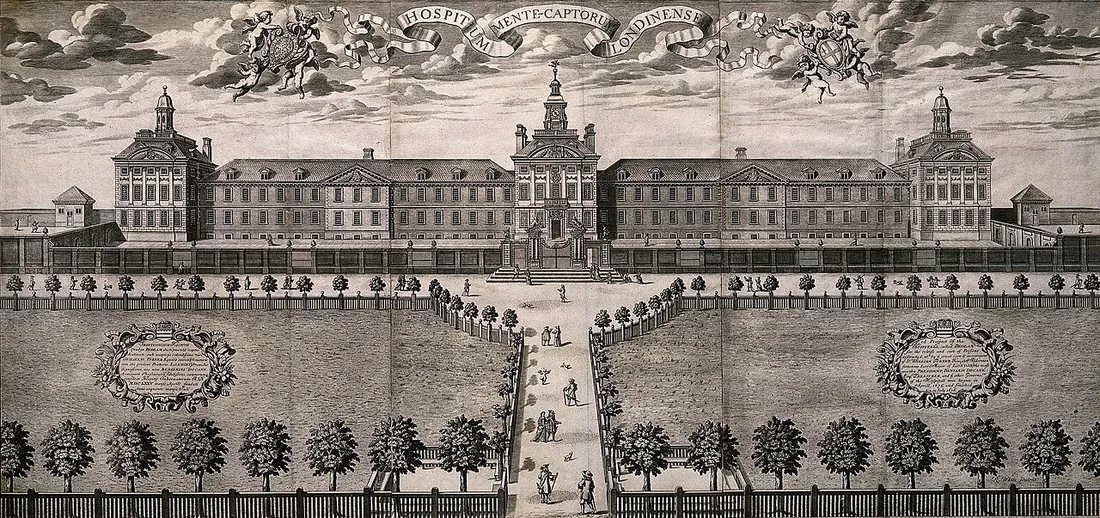
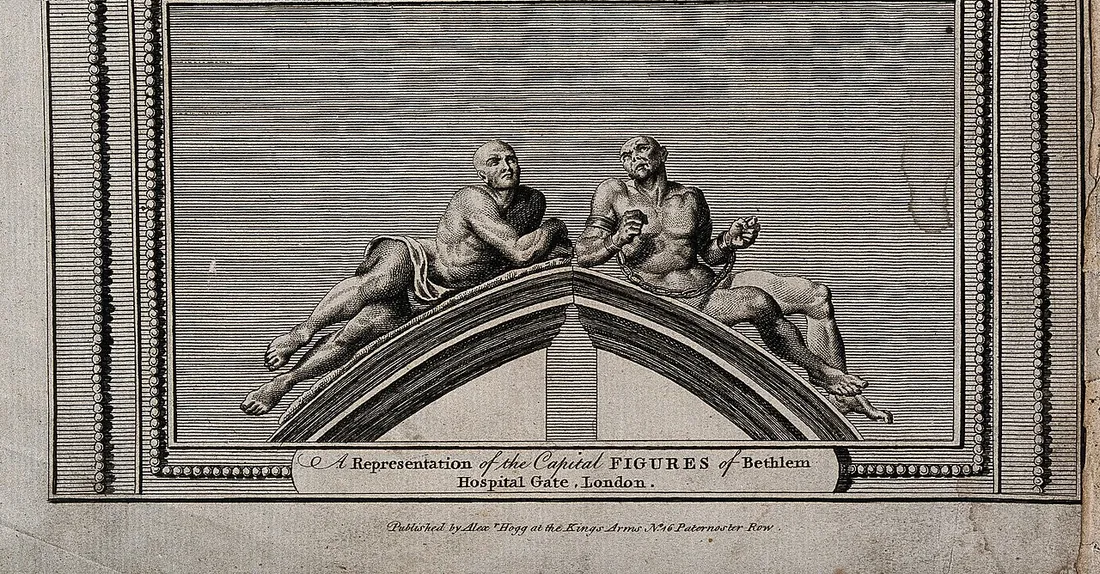
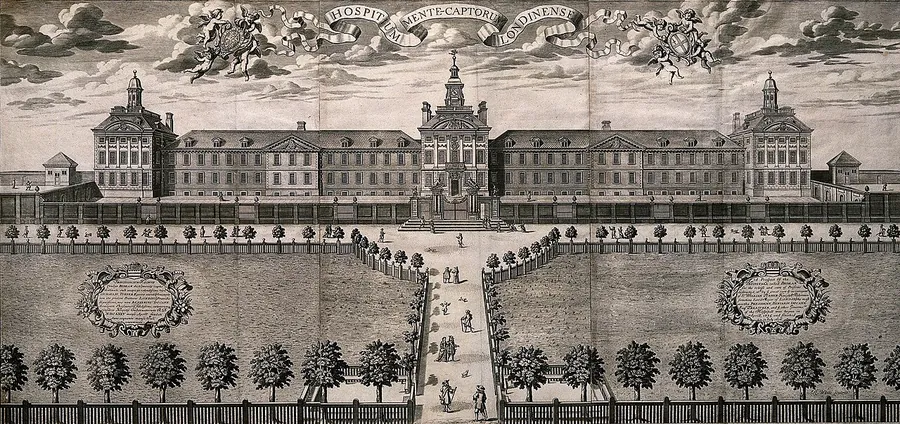
The palace
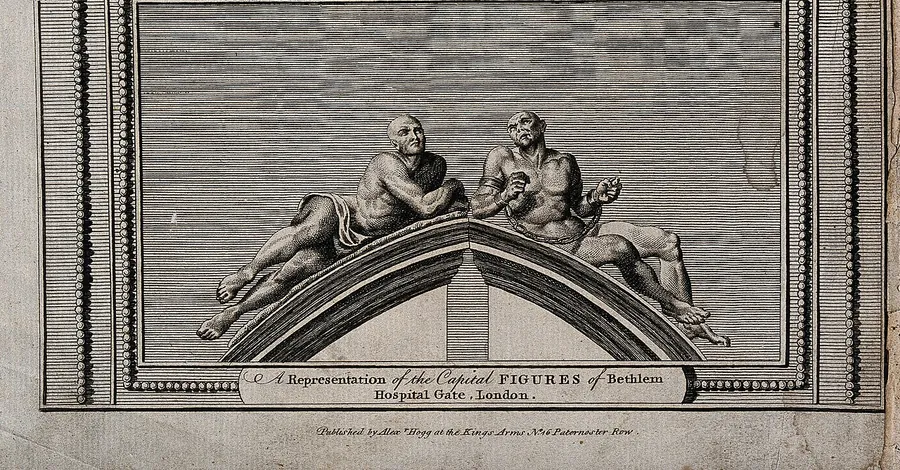
Moorfields: Hooke's palace for the hospital; Cibber's statues crown the gate.
B-03
The artwork
1735
The plate
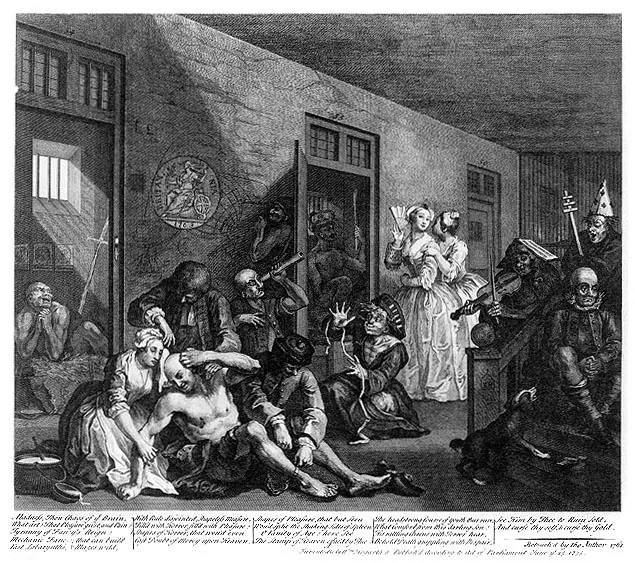
Hogarth publishes the final plate of A Rake's Progress: the Rake ends in Bedlam.
B-08
The building
1770
The doors close
Public visiting ends after centuries of open doors.
B-03
The building
1815
Southwark
The hospital moves south of the river.
B-03
The building
1930
Beckenham
The hospital leaves London; the word stays.
B-04
stop 1 of 14
Evidence rooms
Four rooms, one word
Open each room. Every line carries its source.
The form is older
Bedlem was Bethlehem before it was a hospital: Wyclif writes “Bedleem” in 1382, and a prayer book has Christ “in bedlem borne” around 1440. The hospital loaded an old sound with new meanings. (WEHD, MW)
The hospital
Priory 1247, hospital by 1329, mad patients by 1403, City protection 1346, royal foundation for lunatics 1547 — then four homes: Bishopsgate, Moorfields (1676, Hooke's palace, Cibber's statues), Southwark (1815), Beckenham (1930, still a hospital). (Survey of London, Museum of the Mind)
The escape
Person by 1522 (Skelton's “madde bedleme”), the hospital's own name by 1528 (Tyndale), madness by 1598 (Marston), Lear's beggars around 1605, any asylum by 1663 — with chaos already there by 1660–61, when Cowley writes “A Babel, and a Bedlam grow”. (WEHD)
The afterlife
Hogarth publishes the Rake's end in Bedlam in June 1735 (the plate, after the 1734 paintings); the public is shut out from 1770; today the dictionaries define bedlam as uproar and confusion, no hospital required. (Soane, MFAH, MW, Cambridge)


Test yourself
What does bedlam mean here?
Seven historical uses, five senses. Set each card on the sense it carries.
Choose each card's sense. Keys 1–5 place the chosen card.
- 1522 · Skelton
“Such a madde bedleme for to rewle this reame”
Sense - 1528 · Tyndale
“they of Bedlam may see that they are but madness”
Sense - 1598 · Marston
“Bedlame, Frenzie, Madnes, Lunacie”
Sense - c. 1605 · Lear
“Bedlam beggars, who with roaring voices”
Sense - 1699 · Pomfret
“'Twas both an hospital and bedlam too”
Sense - 1660–61 · Cowley
“A Babel, and a Bedlam grow”
Sense - 1713 · Guardian
“Our house is a sort of Bedlam, and nothing in order”
Sense
Score: 0 of 7
The right sense, card by card:
- PERSON — 1522 · Skelton “Such a madde bedleme for to rewle this reame”; c. 1605 · Lear “Bedlam beggars, who with roaring voices”
- HOSPITAL — 1528 · Tyndale “they of Bedlam may see that they are but madness”
- MADNESS — 1598 · Marston “Bedlame, Frenzie, Madnes, Lunacie”
- ASYLUM — 1699 · Pomfret “'Twas both an hospital and bedlam too”
- CHAOS — 1660–61 · Cowley “A Babel, and a Bedlam grow”; 1713 · Guardian “Our house is a sort of Bedlam, and nothing in order”
Years follow the historical dictionary; Murray dated the Cowley citation a.1667, but the passage stands in the 1660–61 issues.
Sources
Receipts
Every date above comes from below.
The hospital
The word

Type: Fraunces and Source Serif 4, under the SIL Open Font Licence.
Short answers
Why is chaos called bedlam?
Because a London hospital filled an old name with new meanings. Bedlem was already a form of Bethlehem; St Mary of Bethlehem (priory 1247) turned that sound into a mad person by 1522, madness by 1598, and a scene of uproar by 1660–61.
Where was Bedlam hospital?
Four homes: Bishopsgate (1247), Moorfields (1676), Southwark (1815, now the Imperial War Museum), Beckenham (1930, still a hospital).
When does “bedlam” first appear?
As a person-word in 1522 (Skelton's “madde bedleme”); as the hospital's name in 1528 (Tyndale); as chaos by 1660–61, when Cowley writes “A Babel, and a Bedlam grow”. Shakespeare's “Bedlam beggars” come around 1605, between madness and asylum.
Is Bedlam hospital still open?
The hospital works on in Beckenham as Bethlem Royal Hospital, with the Museum of the Mind on its grounds.