ONE WORD’S 2,500-YEAR JOURNEY
The church used to be the emperor’s hall
Dictionaries take biserică back to Latin basilica, and basilica back to Greek basilikē — “royal porch”. Between the endpoints, the same hall held laws, trials and, at last, the altar — the same plan, never the same building.
- 184 BC
- first basilica: Cato’s Porcia
- 117 × 55 m
- Ulpia, the largest in Rome
- 3 names
- the hall, the assembly, the Lord’s house
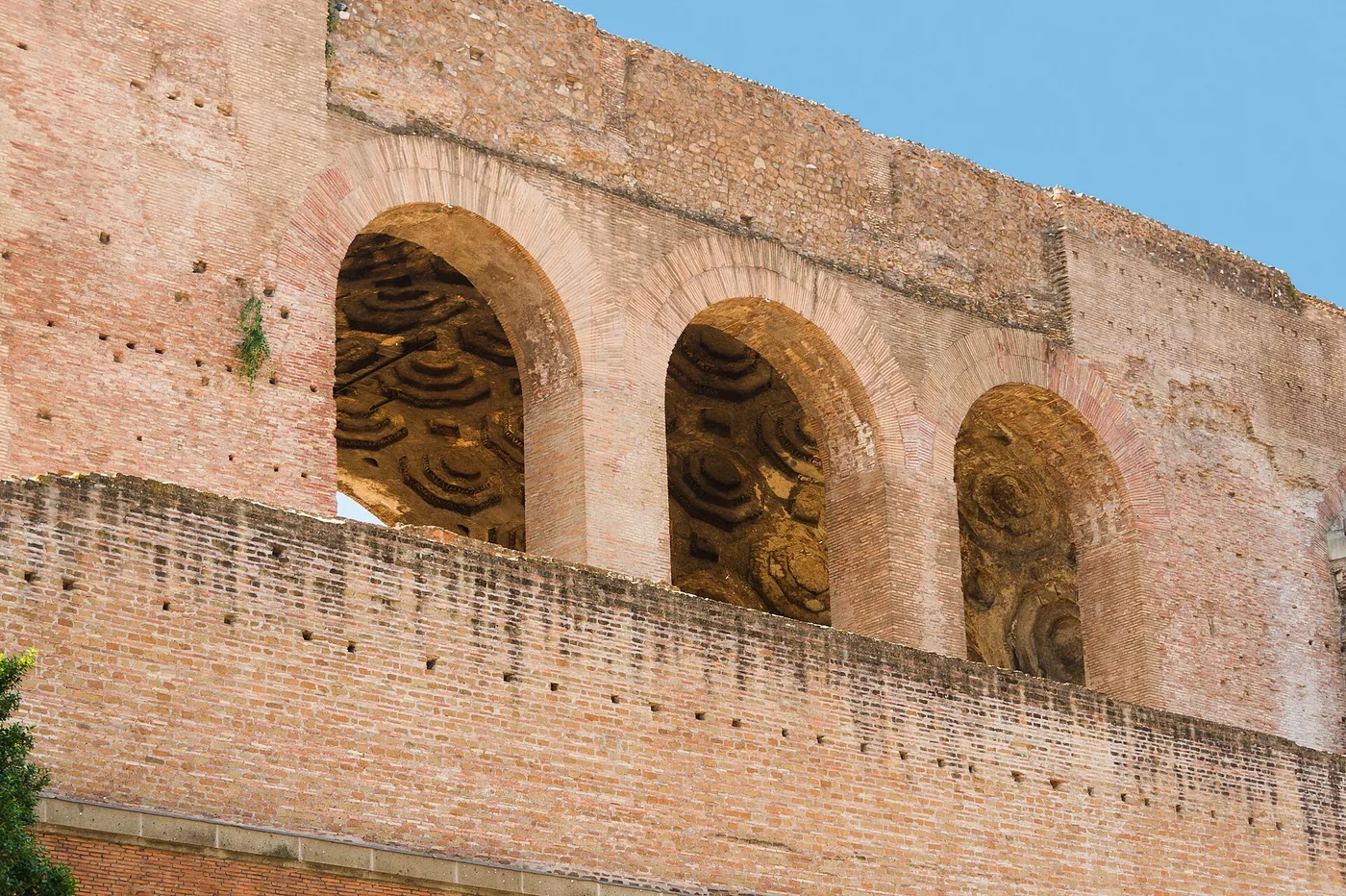

One word, three costumes:
- ΒΑΣΙΛΙΚΗ royal porch
- BASILICA law court
- BISERICĂ church
The outline below never changes: nave, aisles, apse.
CHAPTER 1 · ATHENS
The king’s porch
It all starts with an adjective: basilikos — “royal, of a king”. The 1911 Britannica derives Latin basilica from Greek basilikē (βασιλική), with stoa (“porch”) or domus understood: “royal porch”, “royal house”.
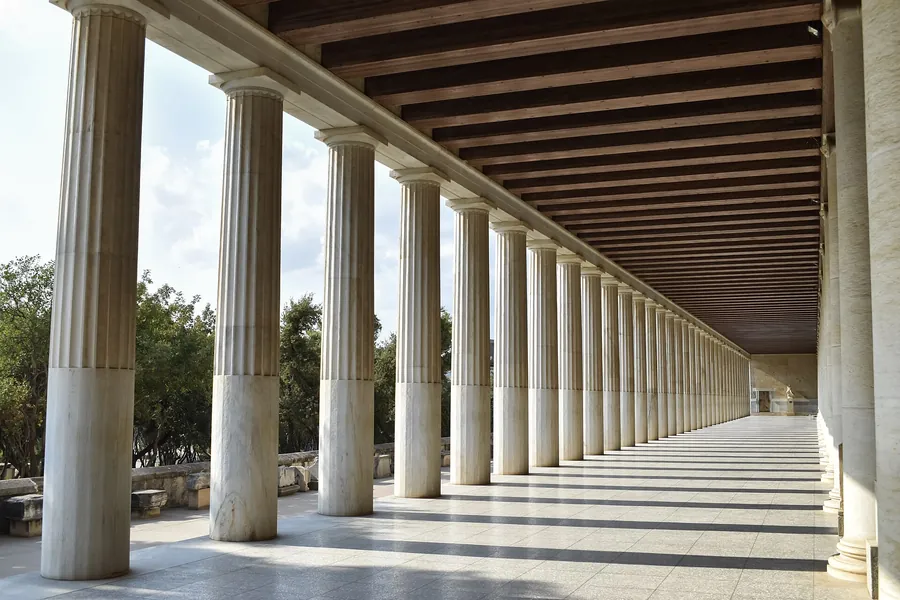
The first building to carry the name stood in the north-west corner of the Athenian Agora: the Stoa Basileios, the Royal Stoa, raised in the 6th century BC and rebuilt in the 5th. There the King Archon kept his seat, there the laws of Athens were kept, there incoming magistrates swore their oath.
It was among the smallest known stoas — and among the most laden with meaning: a colonnaded porch, open to the marketplace, where justice was done in the king’s name.
6th c. BC
first royal porch: the Stoa Basileios, Agora, Athens
- basilikē (stoa) “royal porch”
- basilikē (domus) “royal house”

CHAPTER 2 · ROME
The emperor’s hall
The Romans took the word and gave it a job: the hall of justice and the market. For five hundred years, a basilica had nothing holy in it.
Basilica Porcia, 184 BC
Rome’s first civil basilica, raised by Cato the Censor beside the Curia, “for laws and for merchants to meet”. Trials were held inside.
Basilica Ulpia, under Trajan
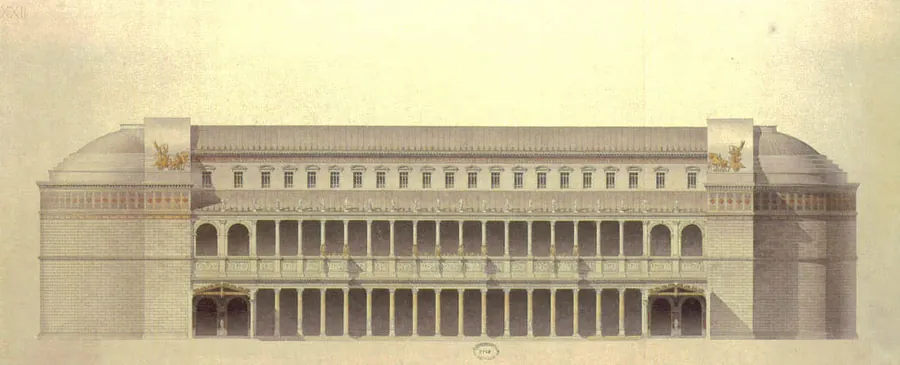
The largest in Rome: about 117 × 55 m. No known religious function: justice, commerce and the emperor’s presence.
Basilica of Maxentius, begun 308, finished 312
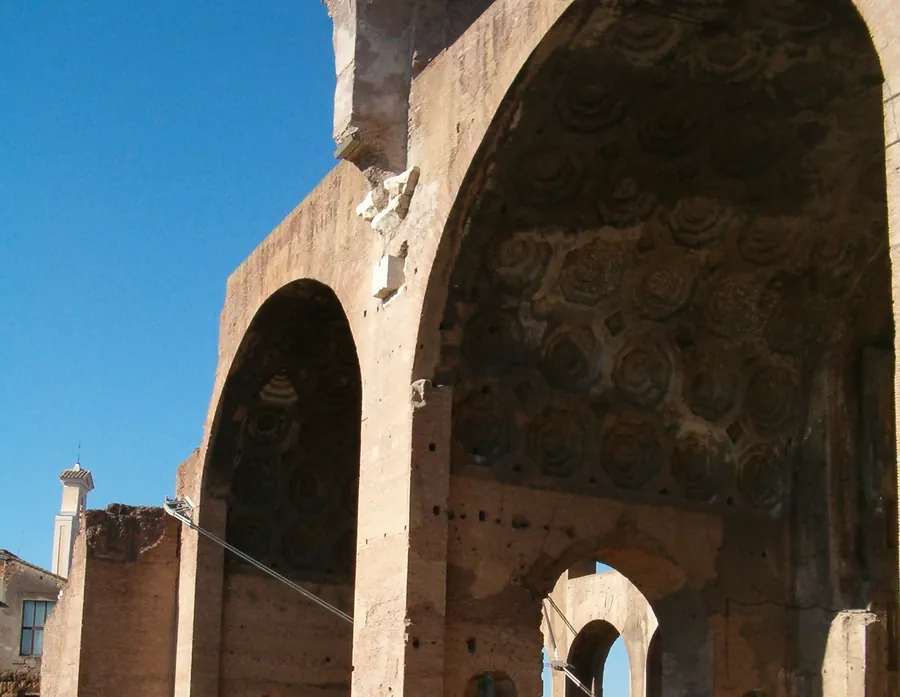
Rome’s last great basilica, a civic hall on the Via Sacra on a platform of about 100 × 65 m. Still a courtroom, not a church.
The plan: nave, aisles, apse
Nave
the great hall — trials and crowds
Aisles
passage, shops, people
Apse
the tribunal — the judges
The same hall, another power.
No building evolved from porch to basilica: each is its own. What travelled is the plan — and the name.


CHAPTER 3 · ROME → DOBROGEA
Constantine’s churches — and Dobrogea’s
Under Constantine, the civic plan becomes a church at city scale. Then the plan comes home: to Dobrogea.
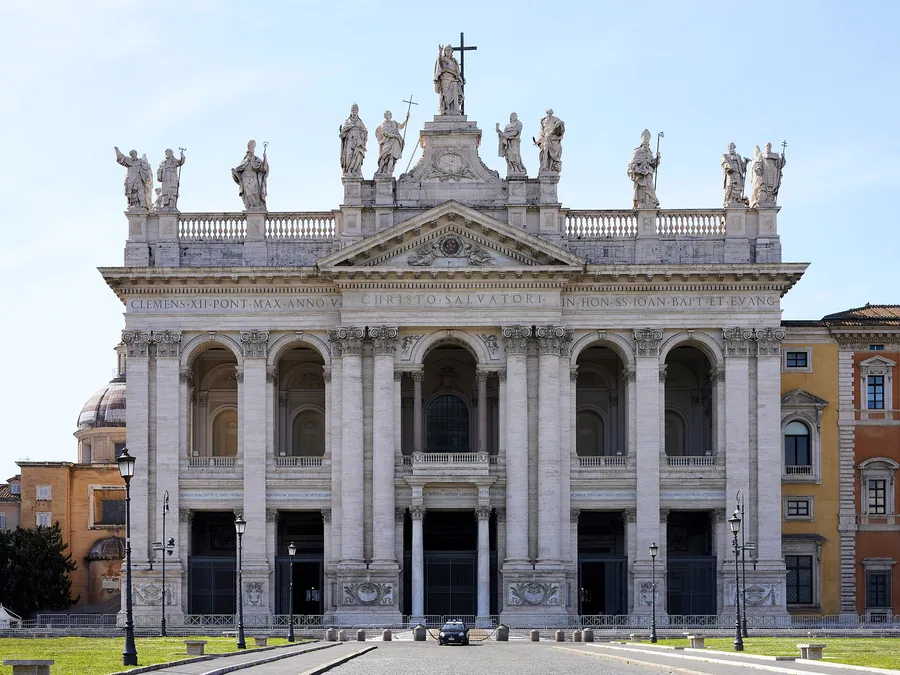
Lateran, the 310s
Constantine gives the Bishop of Rome the Laterani palace; by 314 it already hosts a synod. The palace basilica is converted and enlarged: it becomes Rome’s cathedral.
Old St Peter’s, 319/326–333
Two encyclopaedias give different starting years — 319 and 326; until it is settled, the page carries the span 319/326–333. A Constantinian basilican plan.
Histria, 4th–6th c.
An important Christian centre: an episcopal basilica in the middle of the city and at least five other Christian basilicas.
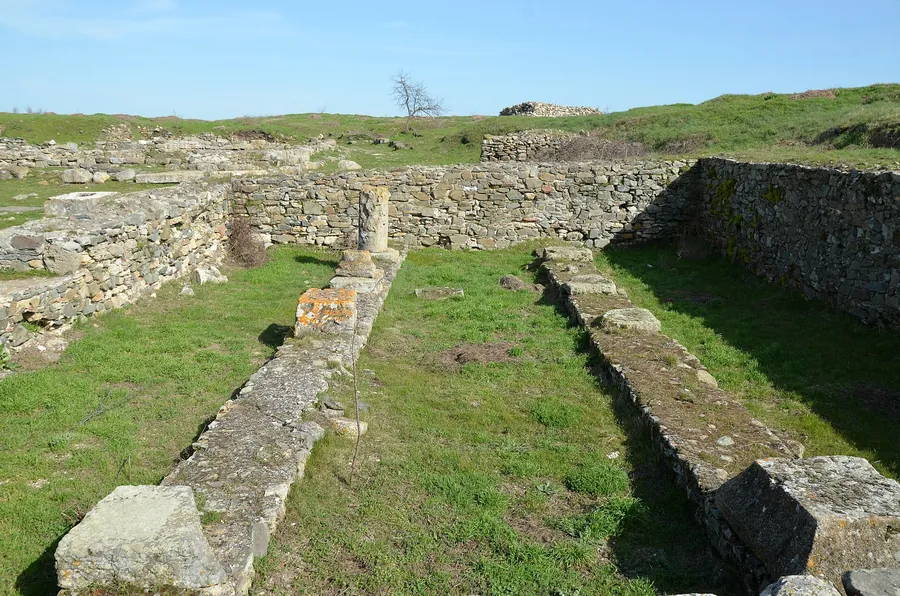
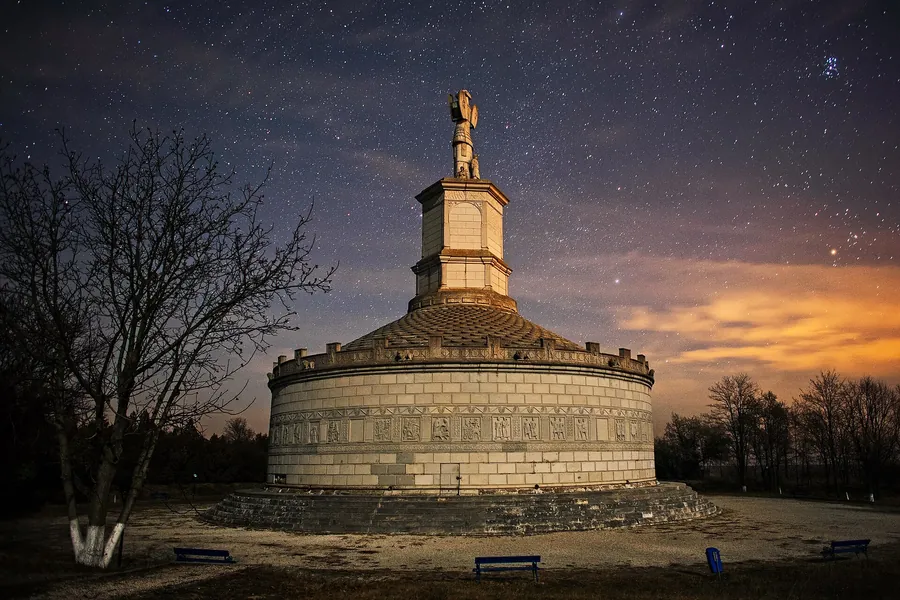
Adamclisi (Tropaeum Traiani)
Five practising basilicas inside the walls — marble, cistern, forensis, transept and A (plain) — plus two more, cemetery chapels, outside.
Three points: Rome, Histria, Adamclisi
The distance is one of meaning, not of footsteps: the plan from Rome lands in Dobrogea.
The plan comes home.



CHAPTER 4 · HOME
Three names for the same building
Romanian kept the BUILDING’s name. The rest of Europe named, inside the same walls, something else: the assembly — or the Lord’s house.
THE HALL
biserică ← basilica
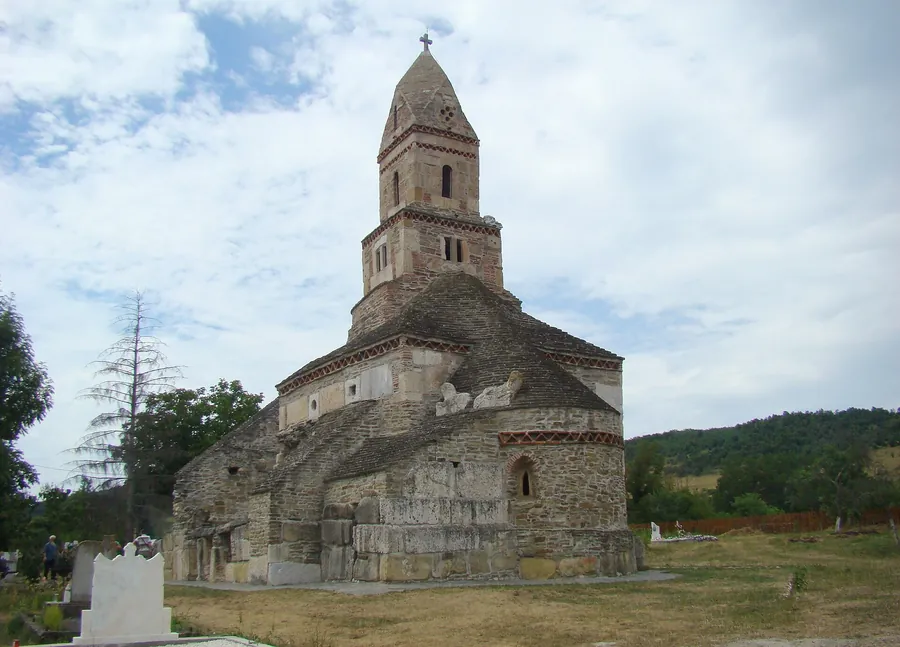
DEX and MDA2 take biserică to Latin basilica (“E: ml basilica”). Old forms: băsearecă, besearecă, beserecă. Romanian names the walls, the hall itself.
At: COD. VOR. 17R/7
The dictionary gives the shelfmark, not the year: the card shows it verbatim.
THE ASSEMBLY
église, iglesia ← ecclesia ← ekklēsia
French église and Spanish iglesia (from Old eglesia, 9th c.) come from Latin ecclesia, from Greek ekklēsia — “the assembly”. The West names the people, not the walls.
THE LORD’S HOUSE
church ← kyriakon doma
English church comes from cirice, from *kirika, from Greek kyriakon doma — “the Lord’s (house)”, from kyrios, “ruler, lord” — probably via the Goths. Used of houses of worship since about 300, especially in the East.
What do you call the building?
- The hall.
- The people.
- The Lord.

SALA
One outline, four meanings. Four stops, the same plan — nave, aisles, apse — relabelled in every era. Run the visualisation or pick a stop.
ATHENS · 6th c. BC
The Stoa Basileios
stop 1 of 4
- Nave here the laws of Athens were kept
- Aisles the colonnaded porch, open to the Agora
- Apse the King Archon’s seat
Sources: Stoa Basileios, 6th c. BC
ATHENS · 6th c. BC — The Stoa Basileios
- Nave here the laws of Athens were kept
- Aisles the colonnaded porch, open to the Agora
- Apse the King Archon’s seat
Sources: Stoa Basileios, 6th c. BC
ROME · 184 BC–2nd c. — The forum basilica
- Nave trials and merchants
- Aisles passage, shops, crowds
- Apse the judges’ tribunal
Sources: Porcia, 184 BC; Ulpia, 117×55 m
ROME · 314–333 — The Christian basilica
- Nave the congregation of the faithful
- Aisles the movement of the crowd
- Apse the altar and the cathedra
Sources: Lateran, 314; St Peter’s, 319/326–333
DOBROGEA · 4th–6th c. — Histria and Adamclisi
- Nave the faithful of the cities
- Aisles the side entrances
- Apse the episcopal basilica’s altar
Sources: Histria, ≥5; Adamclisi, 5+2
WHAT DO YOU CALL THE BUILDING?
Six rounds, two kinds: word → meaning, plan zone → office. Every round teaches one row of sources.
Score: 0 / 6
The numbers
6th c. BC → 4th–6th c.
from the Royal Stoa to the basilicas of Dobrogea
the span between the plan’s first and last stops
3 names
the hall · the assembly · the Lord’s house
three answers to “what do you call the building?”
Myths
“Basilica” always meant church.
No: for five hundred years it was a law court and a market — from Porcia (184 BC) to Constantine.
“Biserică” comes from “ecclesia”.
No: DEX takes it to basilica. Ecclesia went west — église, iglesia.
One building evolved into the next.
No: the plan and the name travelled. Every stop is its own building.
Sources
Dictionaries first, then history, then Dobrogea. Each row below is one of the page’s claims and its source.
| Claim | Source |
|---|---|
| biserică ← Lat. basilica; COD. VOR. 17R/7; băsearecă, besearecă, beserecă | DEX + MDA2, via dexonline |
| basilica ← basilikē, “royal porch” (stoa or domus understood) | Britannica 1911 |
| Stoa Basileios, 6th c. BC; the King Archon’s seat, the laws | Wikipedia |
| Basilica Porcia, 184 BC, Cato; laws and merchants | Wikipedia |
| Ulpia, 117×55 m, no religious function; Maxentius, 308–312 | Wikipedia |
| Lateran: Constantine’s gift; synod, 314; Rome’s cathedral | Wikipedia |
| Old St Peter’s, 319/326–333 (sources disagree) | Wikipedia + Britannica |
| Histria: episcopal basilica + at least five more | Wikipedia |
| Adamclisi: five inside the walls + two cemetery chapels | CBC-Culture (PDF) |
| church ← kyriakon doma, “the Lord’s house”; since about 300 | etymonline |
| église, iglesia ← ecclesia ← ekklēsia, “the assembly” | Wiktionary |
What stays open
- Old St Peter’s beginning: 319 or 326? The page carries both years until it is settled.
- The Voroneț Codex: the dictionary gives the shelfmark COD. VOR. 17R/7, not the year it was first written.
Method: every dated or numbered claim was read in the cited source; what did not fit the sources did not fit the page. The plans are redrawn originals, as SVG.
Type: Fraunces, Newsreader and Atkinson Hyperlegible, under the SIL Open Font Licence.