Marius ComperMureș
Română

Wooden church · Beica de Jos

The church on the arms stands in Nadășa

Beica de Jos commune’s coat of arms points to a church in another village. The records separately identify the Beica de Jos building, its 1810 date and a reported 1855 move that remains local tradition.

Follow the church in the arms ↓
Beica de Jos wooden church, seen outside.
The wooden church in Beica de Jos. The 2011 government decision identifies the church in Nadășa as the model for the arms. (Source · Țetcu Mircea Rareș · Wikimedia Commons · CC BY-SA 4.0)

The symbol

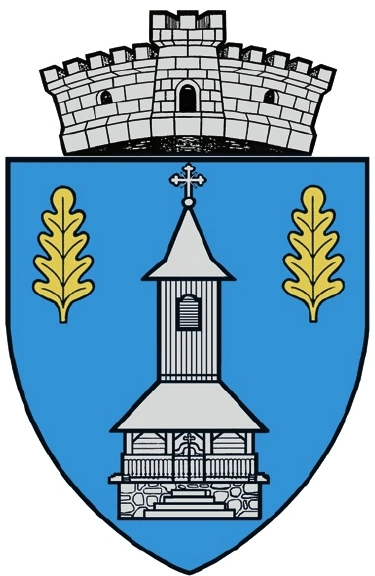
The commune arms show a white church on a blue shield beneath the mural crown.
Detail from the Official Gazette. Compare the features on the arms with the porch of the church in Nadășa. (Source · Monitorul Oficial, nr. 529/2011)

The symbol

A coat of arms with two places

A wooden church sits on the shield in Beica de Jos commune’s coat of arms. A 2011 government decision describes it with a tower, porch and vestibule, then names the building used as its model: the Orthodox Church of St Nicholas in Nadășa. Nadășa is another village in the same commune, a few kilometres from Beica de Jos.

The decision says the church represents the area’s architectural heritage; it does not present it as the address of the monument in Beica de Jos village. To read the arms accurately, we have to distinguish the commune’s symbol from the church at this map pin.
The commune arms show a white church on a blue shield beneath the mural crown.
Detail from the Official Gazette. Compare the features on the arms with the porch of the church in Nadășa. (Source · Monitorul Oficial, nr. 529/2011)
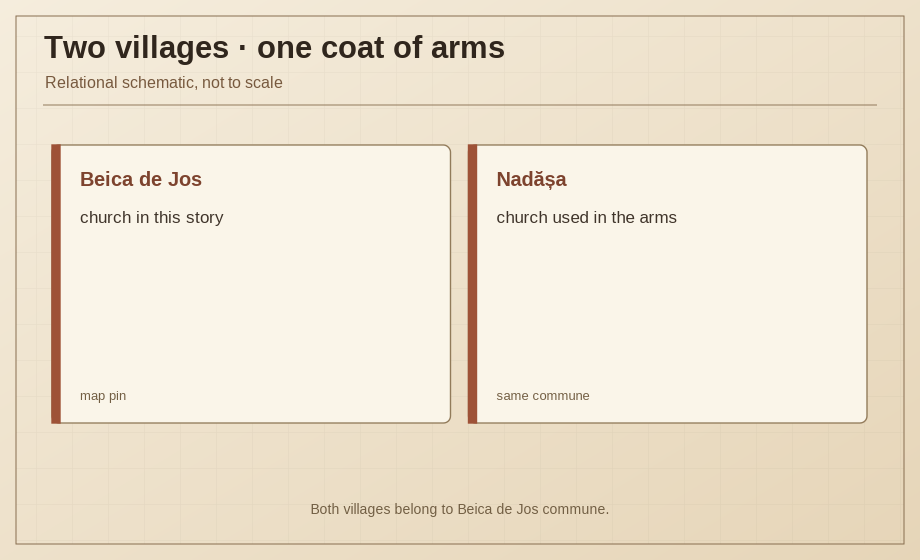
Two villages and two schematic churches, marked separately.
Relational schematic, not to geographic scale: the arms points to Nadășa; this story’s pin is in Beica de Jos. (Source)
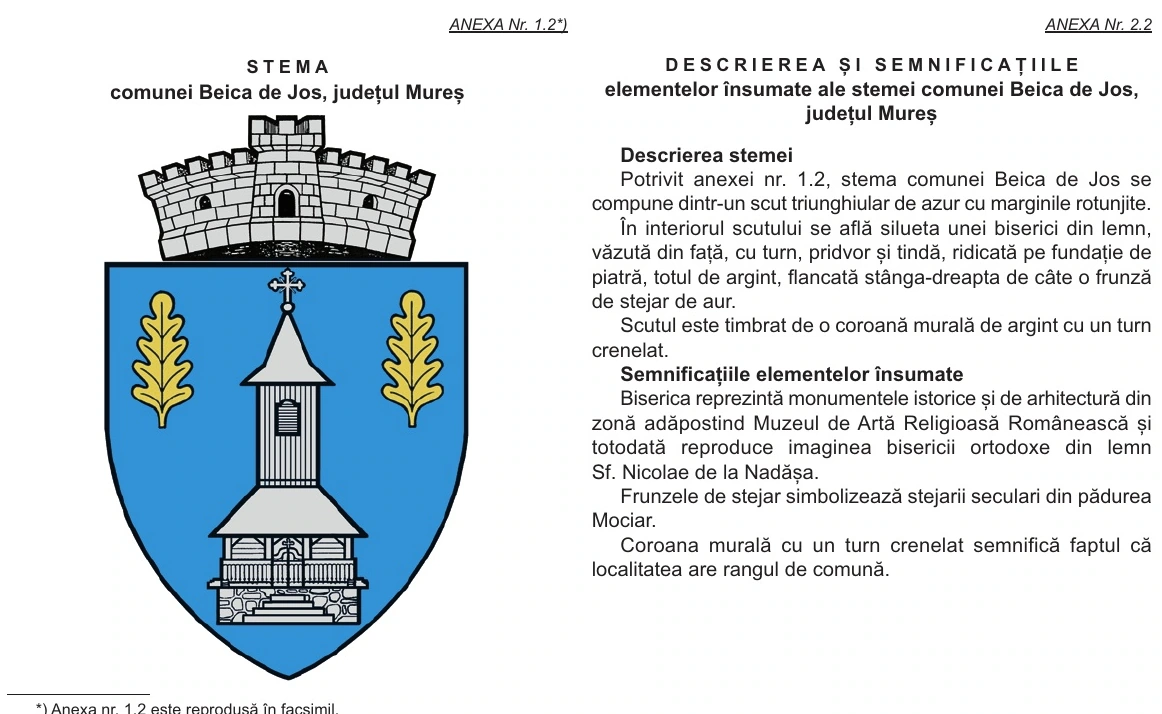
Printed page with the commune shield and its legal description.
Government decision 712/2011 names the church in Nadășa. The arms and description appear side by side in the Official Gazette, no. 529, p. 10. (Source · Monitorul Oficial · Hotărârea Guvernului nr. 712/2011 · )

The site

The church in Beica de Jos

This story’s pin marks the wooden church in Beica de Jos village, at no. 132-A. OpenStreetMap node 2431222966 locates the building at 46.73367, 24.79683; it is not the commune centre. CIMEC names it the Church of St Nicholas, while the List of Historic Monuments records it separately under code MS-II-m-B-15606.

The official list dates the church to 1810 and classifies it as Orthodox. That is the material site we can locate confidently. The commune coat of arms, by contrast, uses the image of a second wooden church with the same dedication, in Nadășa, listed separately in the same register.
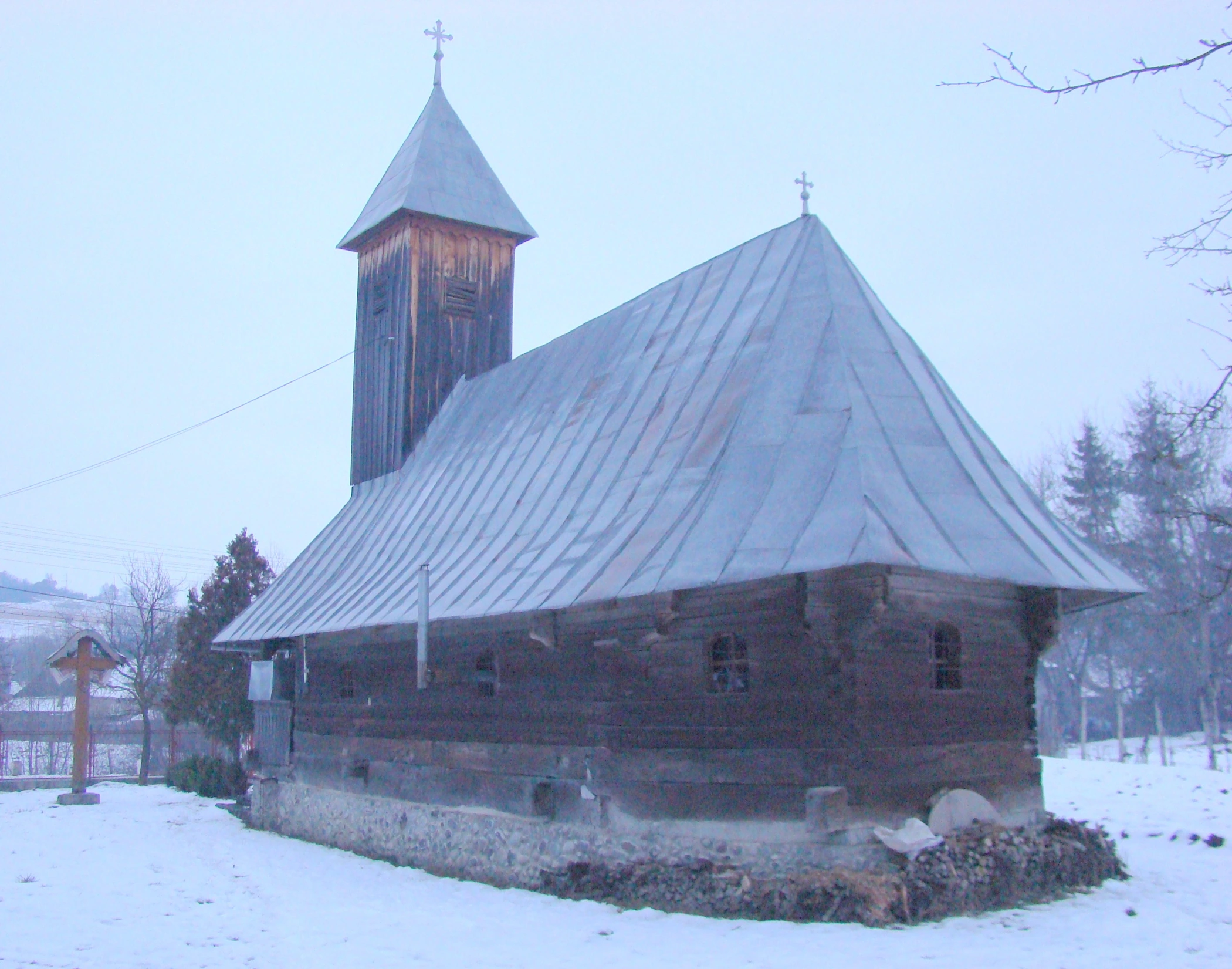
Beica de Jos wooden church outside, above its stone foundation.
The photograph shows the monument in Beica de Jos village; the commune arms reproduces the Nadășa church image. (Source · Țetcu Mircea Rareș · Wikimedia Commons · CC BY-SA 4.0)

The date

Where does the year 1810 come from?

The year 1810 comes through a chain of records. In 1969, architect Eugenia Greceanu published an inventory of wooden churches in central Transylvania, based on fieldwork from 1962 to 1965. For Beica de Jos, she wrote “Church of the Holy Archangels” and dated it to 1810. Her footnote points to the archdiocesan directory published in Blaj in 1900, page 482.

The 2016 heritage list keeps the date 1810 but calls the church “St Nicholas”. The town hall’s 2021 report calls it “Holy Archangels Michael and Gabriel” and gives St Nicholas as its dedication. The sources agree on the year but use different names. These entries do not show whether 1810 dates the present building’s erection, a rebuilding or another event.

Beatrice Budea gives 1713 in the list of churches in her thesis summary. The list does not explain where the date for the Beica de Jos building came from. It differs from the year in Greceanu’s survey and in the monuments list. [14]
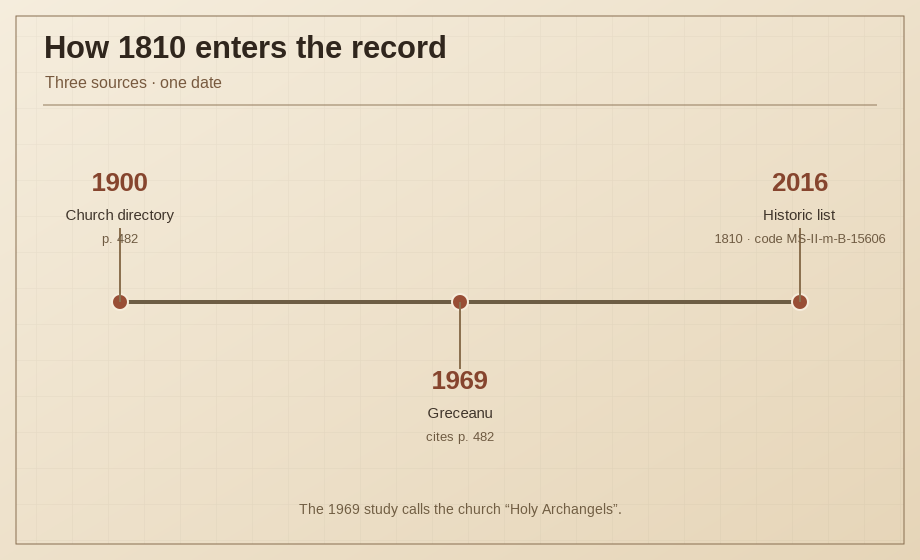
1900–1969–2016 source timeline and the date 1810.
The 1900 directory cited by Greceanu and the 2016 list connect the church with 1810. (Source)

The account

1855: a move remembered

The town hall’s 2021 report says that, “according to popular sources,” the church was brought around 1855 from an old cemetery “on the present site.” In the same passage, it says “most probably” that the church was erected or repaired in 1810, then moved to its present site. The wording leaves the starting point unclear: the report places the old cemetery at today’s site and also says the church was moved there.

The official heritage list confirms the date 1810 but does not describe a transfer. The material consulted for this story contains no dated transfer record. We can say the town hall recorded a tradition about a move; we cannot present 1855 as independently verified fact or supply a starting point the report does not give. Today’s photograph shows the church’s location and form, not how it got there.
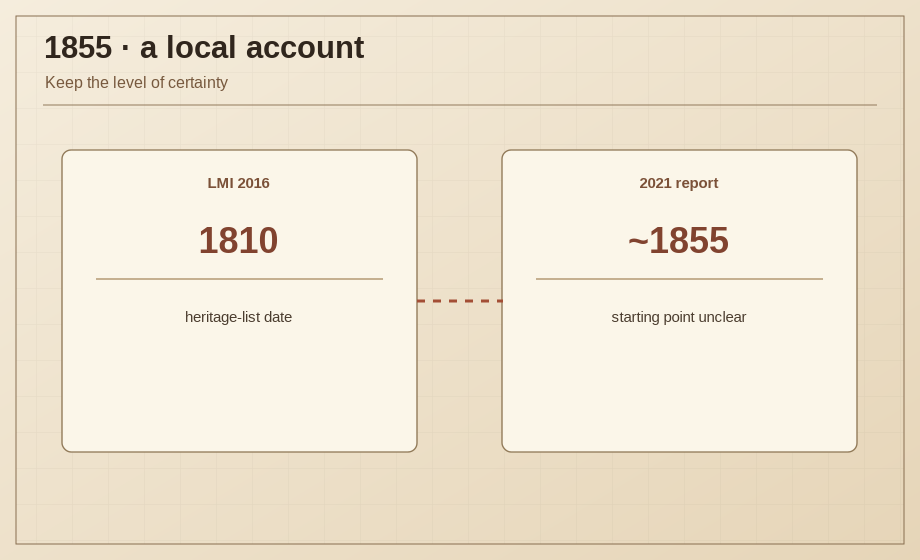
Two evidence panels with 1810 and circa 1855, each labelled by source.
Comparison between the official date and the move attributed in the report to popular sources. (Source)

The parish

Beica Maghiară and the 215

The 2013 study identifies Beica Maghiară as the historic name of Beica de Jos village. For 1880, the Greek Catholic directory recorded 215 Greek Catholics there; the author notes them alongside Hungarian residents. This is a religious record from a place where village names and identities do not neatly overlap.

The figure 215 refers to Greek Catholics, not the entire village population. Nor does the name Beica Maghiară mean all residents shared one religion or origin. We use it only when referring to the records and place it beside the parish community they describe.
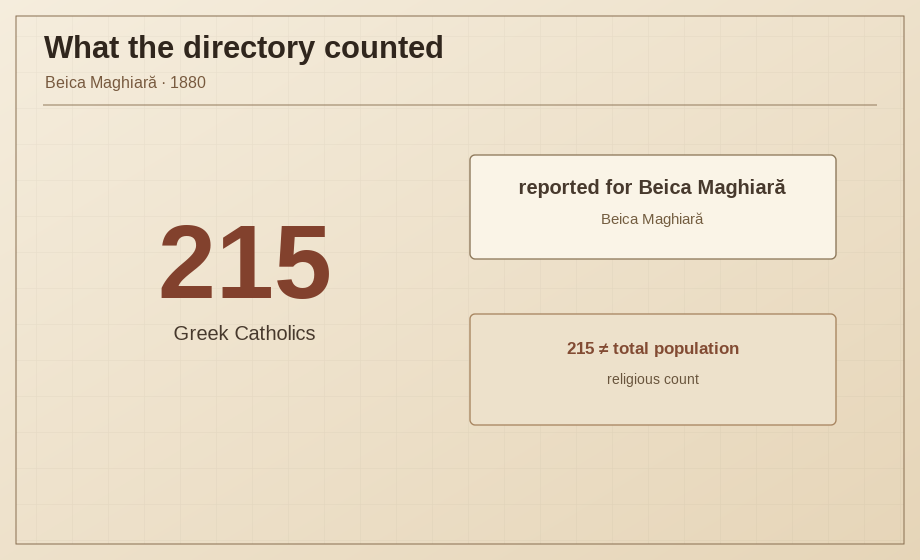
215 Greek Catholics; historic village name and a note that this is not a total.
215 is the reported Greek Catholic count for Beica Maghiară, not a total for all residents. (Source)

The school

First, a rented house

Deanery files show how fragile village institutions were. In 1884, priest Gavrilă Cioba reported that Beica Maghiară had no school building: children learned in a rented house, although materials for a local school had been gathered. One plan would have a travelling teacher teach in both Beicas in turn; until the new building was ready, pupils were to attend the neighbouring village school.

In 1886, the deanery was asked to intervene for the school’s reopening after it had been closed on the basis of disputed information about low enrolment. A letter in 1888 cited 30 children and the teacher’s qualifications; an inventory in 1890 listed a wooden school. The study traces these details to the archive files and estimates that the new building was erected between 1880 and 1890.
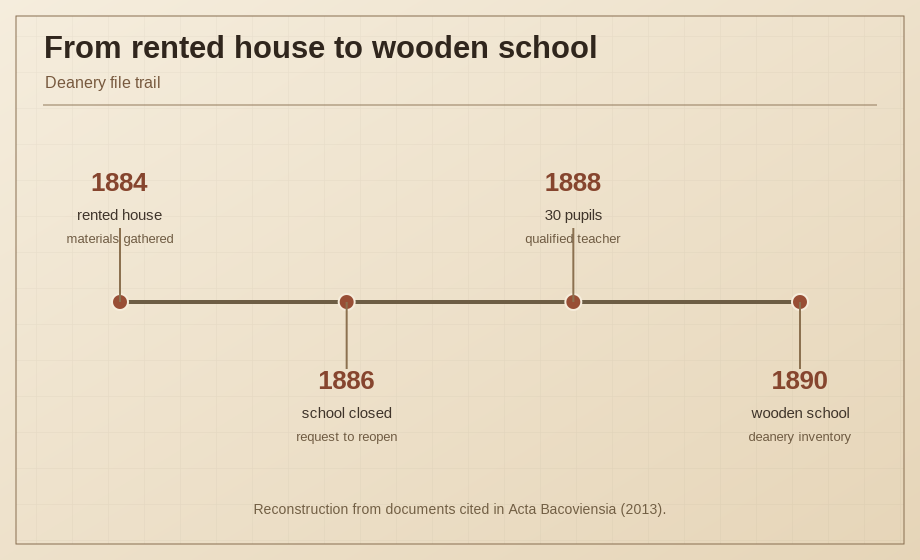
Timeline: 1884 rented house; 1886 request to reopen; 30 pupils in 1888; wooden school in 1890.
Reconstruction from archival records cited in the 2013 study; this is not an architectural plan. (Source)

The comparison

Two churches, two documentary trails

The churches in Beica de Jos and Nadășa share a dedication to St Nicholas, but the records distinguish them by village, code and date. The heritage list dates Beica de Jos to 1810 and Nadășa to 1717. CIMEC’s description of Nadășa also transcribes an inscription saying the church was made in 1712, during a famine, then separately records “Văleat 7227”. The commune strategy interprets 7227 as 1718–1719. [9] [15]

The commune arms reproduces the Nadășa church image, while this story’s pin remains at the Beica de Jos monument. The first is a heraldic reference to commune heritage; the second is the building dated 1810 in the official list. The move around 1855 appears in an account attributed to local tradition. That keeps both the map and the distinction between what is recorded and what is remembered.
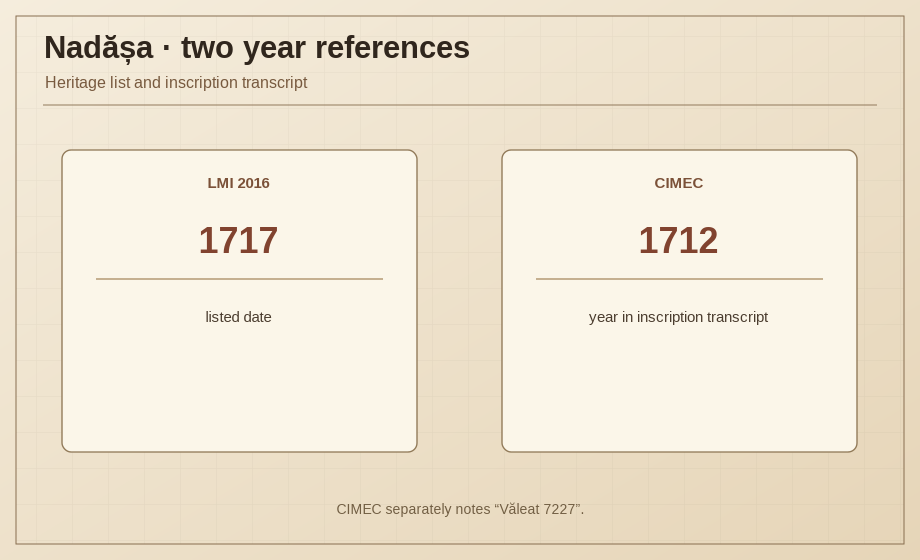
The monuments list gives 1717. The church record transcribes 1712 and “Văleat 7227” from the inscription.
The monuments list gives 1717. The church record transcribes 1712 and “Văleat 7227” from the inscription. (Source)
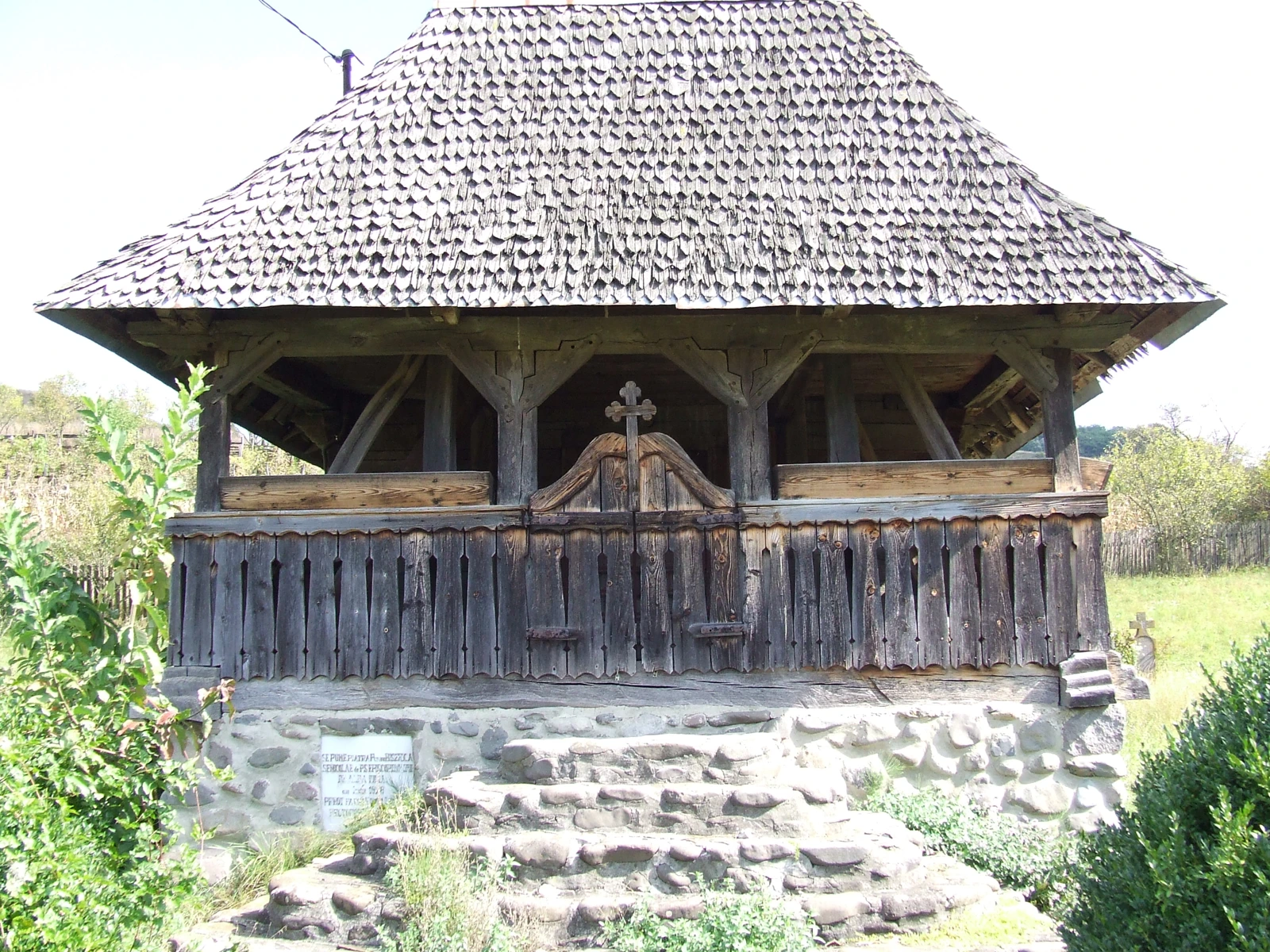
Nadășa wooden church, with a tower and covered gate in the foreground.
Porch of the church in Nadășa, the building named in the government decision on the arms. (Source · Bogdan Ilieș · Wikimedia Commons · CC BY 2.5)
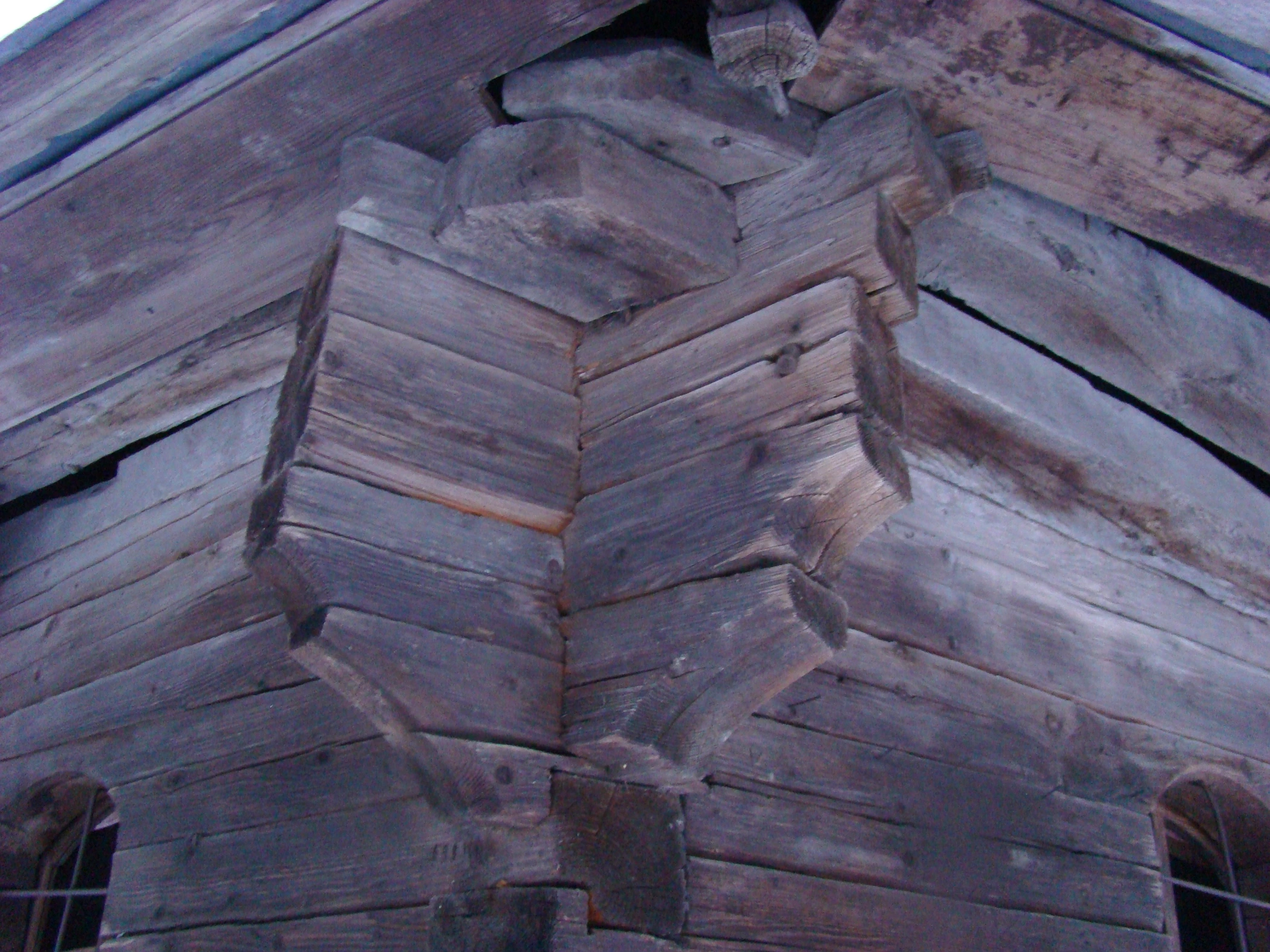
Interior detail of Beica de Jos wooden church, showing timber joints.
The timber joints and layers are visible; the photograph does not date the building. (Source · Țetcu Mircea Rareș · Wikimedia Commons · CC BY-SA 4.0)

Sources

The arms show the church in Nadășa; the map pin leads to the church in Beica de Jos. The heritage list dates it to 1810. The move around 1855 remains a tradition recorded by the town hall.

  1. OpenStreetMap node 2431222966, Beica de Jos wooden church.Feature point at 46.73367, 24.79683; not the commune centre.
  2. CIMEC record 21958-1: “St Nicholas” wooden church, Beica de Jos, no. 132-A.Record identifies the monument and address.
  3. Ministry of Culture, 2016 Historic Monuments List, Mureș, entry 435, MS-II-m-B-15606.“St Nicholas” wooden church, no. 132A, dated 1810, Orthodox.
  4. Official Gazette, Part I, no. 529, 27 July 2011, Government Decision 712/2011, Beica de Jos arms annex, p. 10.The legal description says the arms reproduce Nadășa’s wooden Church of St Nicholas.
  5. Eugenia Greceanu, “Typology of wooden churches in central Transylvania,” 1969, pp. 43–44.Based on a 1962–1965 inventory, calls the Beica de Jos church “Holy Archangels,” dates it to 1810 and cites the 1900 directory, p. 482.
  6. Beica de Jos Town Hall, Mayor’s 2021 activity report, “Culture” section, p. 5.Calls the building “Holy Archangels Michael and Gabriel,” gives St Nicholas as its dedication and attributes the c.1855 move to “popular sources”; it then places the church at the present site without clarifying the starting point.
  7. Acta Bacoviensia VIII, 2013, section on the two Beicas and their schools, pp. 149–151.The study cites Mureș National Archives, Greek Catholic Deanery of Reghin collection, files 20, 26, 32 and 13.
  8. 1880 archdiocesan directory, p. 196, cited in Acta Bacoviensia VIII, 2013, p. 150.The study reports 215 Greek Catholics for Beica Maghiară, not a population total.
  9. Ministry of Culture, 2016 Historic Monuments List, Mureș, entry 609, Nadășa wooden church, code MS-II-m-A-15733.Lists Nadășa’s “St Nicholas” church as 1717; its wooden gate is a separate entry.
  10. CIMEC record 25018-1, Nadășa “St Nicholas” wooden church, no. 163.The record transcribes 1712 from an inscription in the sanctuary, and separately gives “Văleat 7227”.
  11. Țetcu Mircea Rareș, photograph of Beica de Jos wooden church, Wikimedia Commons.CC BY-SA 4.0.
  12. Țetcu Mircea Rareș, interior detail of Beica de Jos church, Wikimedia Commons.CC BY-SA 4.0; the caption stays limited to what is visible in the frame.
  13. Bogdan Ilieș, Nadășa wooden church, Wikimedia Commons.CC BY 2.5.
  14. Beatrice Budea, Wooden churches of central TransylvaniaThe thesis summary, p. 12, gives 1713 for the church in Beica de Jos.
  15. Beica de Jos commune, local development strategy 2014–2020In the account of Nadășa’s church, the inscription year 7227 is rendered as 1718–1719.