Marius ComperBologa · Cluj
Română

Bologa watermill and vâltoare

How water did two jobs at Bologa

Below the mill house, water set the grinding stones in motion. In the tub beside it, a current turned wet textiles. Both devices survive in one household, where the family opened a museum in 2021.

See how the water turns ↓
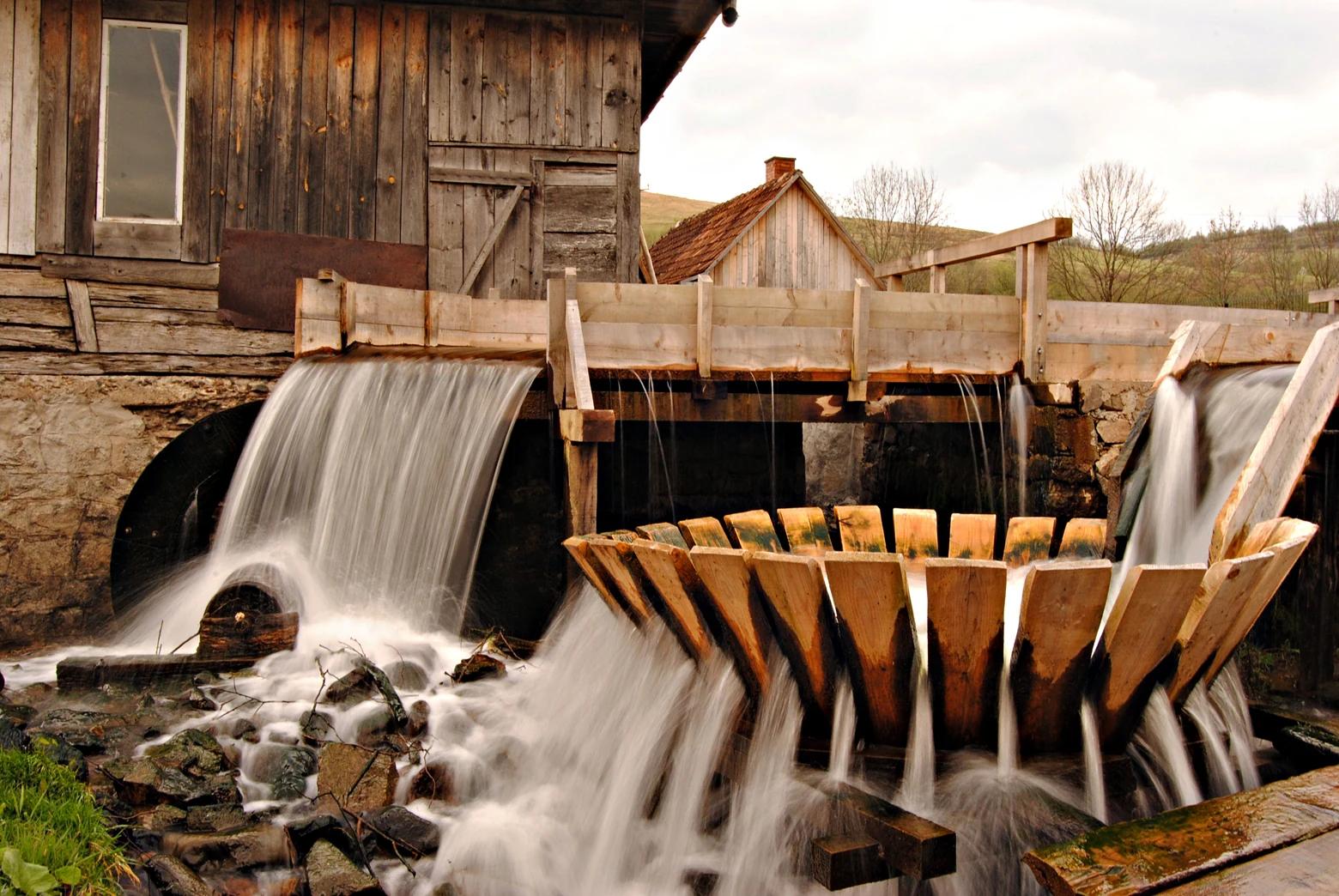
A wooden mill house, falling water and a tub built from a circle of staves.
Look from the floor of the mill towards the tub. A sloping chute ends right above the wooden rim. (Source · Andrea Polereczky · Wikimedia Commons · fotografie redimensionată / resized photograph · CC BY-SA 3.0)

In the household

What can you see beside the mill?

Bologa is a village in Poieni commune in western Cluj County. Water from the valley flowed to a household that ground grain and washed heavy textiles. In the 2011 photograph, the wooden tub is on the right, fed by a sloping chute. [4] [2]

A vâltoare is a tub that uses running water to move cloth. At Bologa it stands next to the mill in the same household. The two devices served different jobs. [8] [1]

A wooden mill house, falling water and a tub built from a circle of staves.
Look from the floor of the mill towards the tub. A sloping chute ends right above the wooden rim. (Source · Andrea Polereczky · Wikimedia Commons · fotografie redimensionată / resized photograph · CC BY-SA 3.0)

Water from the valley

Where did the water come from?

The Săcuieu River runs through Bologa towards the Crișul Repede. On the military survey, the village follows the valley between steep sides. Poieni’s municipal survey describes some of the valley’s water being diverted to the mill. [3] [4] [8]

Running water does the work in both devices. In the mill, falling water drives the grinding mechanism. In the tub, water runs along the sides and carries the textiles with it. [2] [8] [7]
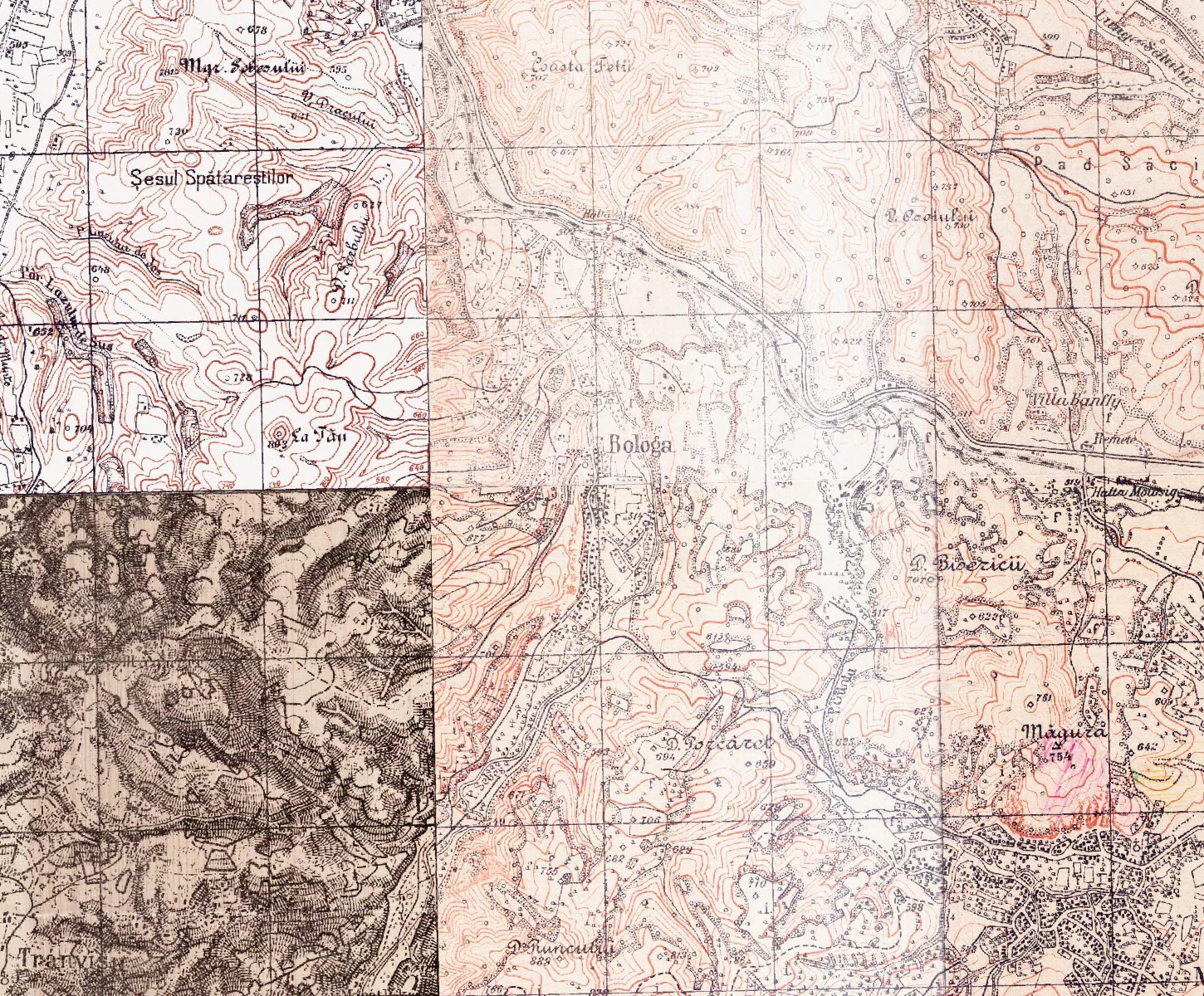
Topographic map showing Bologa, shaded hills, contours and a valley.
The survey shows the houses of Bologa along the valley. The caption links to the collection of maps. (Source · Serviciul Geografic al Armatei · eHarta / geo-spatial.org · decupaj / crop · CC BY-SA 4.0)
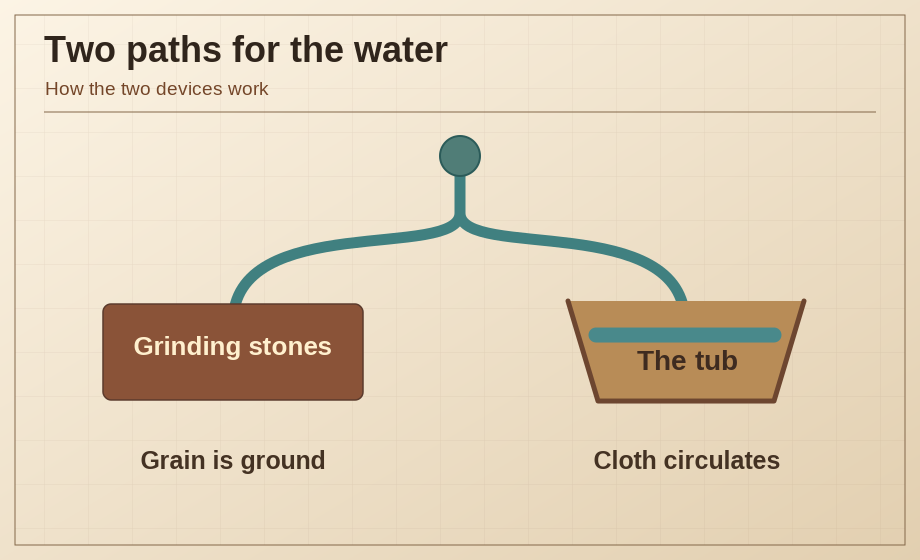
Two arrows lead from the water supply to the mill and the tub.
Water drives the mill mechanism. In the tub, it turns the cloth. (Source)

Inside the tub

What turns inside a vâltoare?

Look at the end of the trough. Water enters near the rim and circles along the wall. The staves form a vessel wider at the top. The tub stays still while the water carries the cloth around. [2] [6] [7]

Choose the cutaway to see where the cloth goes. The top view shows the circular flow. Start the animation in any view to follow the water through the tub. It illustrates the principle, without using measurements of Bologa’s flow. [2] [7]
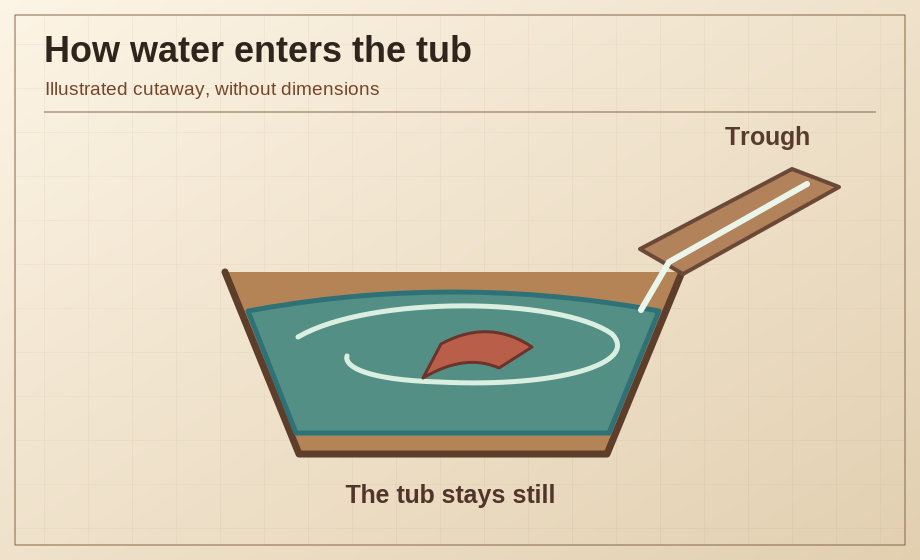
A trough pours water into a stationary tub. The water circulates around the cloth.
The illustration draws on records of vâltori in other villages. The Bologa photograph shows the tub and its chute. (Source)

Woollen cloth

What changed after hours in water?

In 2017, Florica Geran remembered people bringing woollen covers straight from the loom. The cloth was still wide and thickened in the tub. In her account, the work could take half a day. [5]

During fulling, wool fibres bind more closely, changing the feel and thickness of the cloth. The household also used the tub to wash items already in use, including heavy woollen covers, blankets and rugs. [5] [8]
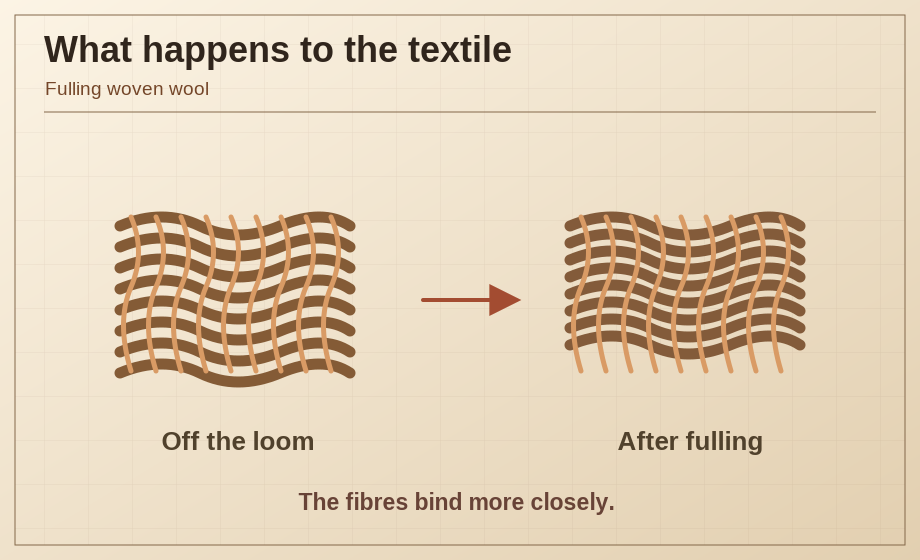
A loose weave beside a denser one.
The comparison shows the change in the cloth Florica Geran describes. (Source)

Who kept it

What needed looking after?

People brought wheat or maize to be ground in the mill house. Outside, the water had to be kept flowing to the tub. When the equipment broke, Florica Geran recalled in 2017, there could be weeks in which she was unable to work. [5] [8]

The family describes the mill and tub as a six-generation inheritance. A photograph from 2011 shows the two devices together. The 2017 interview records some of the work involved in keeping them going. [2] [5] [1]
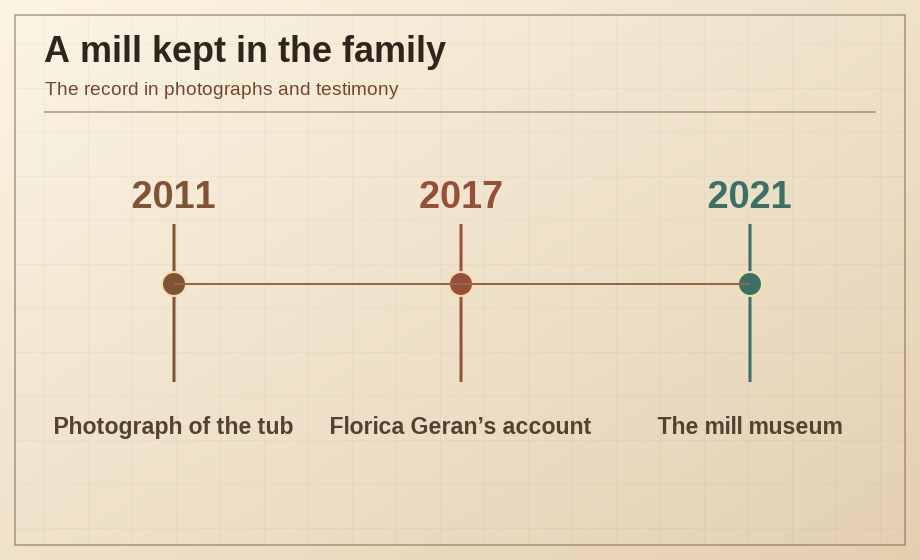
The 2011 photograph, 2017 interview and 2021 museum opening in order.
The photograph, interview and museum opening record the household at different moments. (Source)

The museum in the mill

What stayed in the mill room?

In August 2021, the family began showing visitors the objects collected in the mill room. The family says the mill had gone unused for around ten years. Things kept by the family were joined by objects brought by relatives and acquaintances. [1]

At household no. 167, the outdoor tub shows what happened to wool after it left the loom. The things gathered indoors show some of the ways those textiles were used. [1] [5] [9]
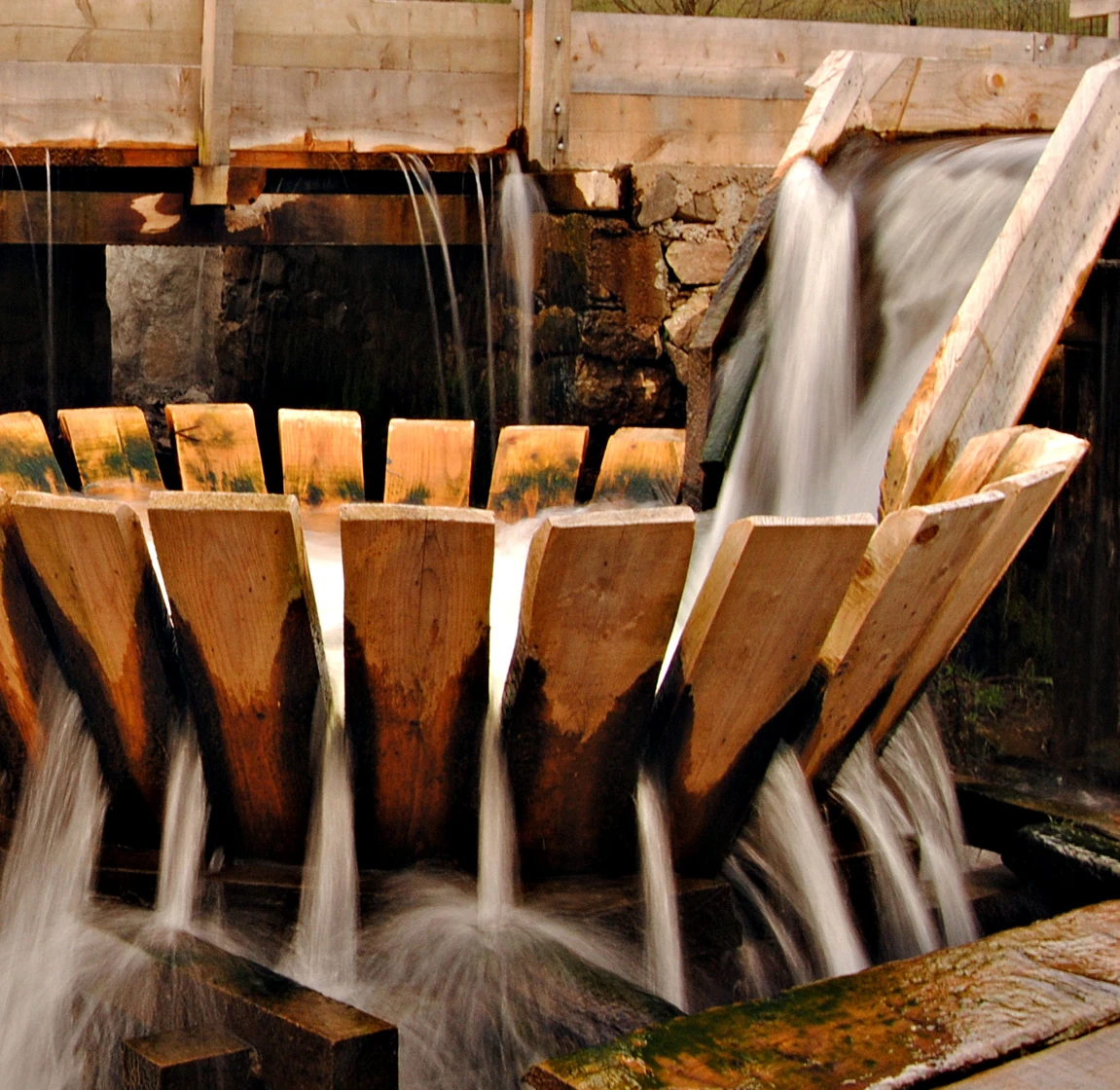
Detail of the tub’s mouth, sloping staves and water.
A detail from the 2011 photograph. Follow the staves to where the water enters. (Source · Andrea Polereczky · Wikimedia Commons · decupaj / crop · CC BY-SA 3.0)

Sources

Water entering the household ground grain on one side and fulled wool on the other. The family kept the two devices close enough together for you to understand them in one view.

  1. Bologa Mill Museum, its 2023 accountThe family describes six generations, restoration and the opening of the museum in August 2021.
  2. Andrea Polereczky, Bologa, 24 April 2011The photograph shows water beneath the mill house, the sloping chute at right and the wooden tub.
  3. Romanian Army Geographic Service, historic military surveyAn eHarta mosaic crop at an original scale of 1:20,000. It locates the village and valley. The sheet date is outside this crop.
  4. Poieni Local Council, municipal statute, 2022The local survey describes the branch of water that feeds the mill and its setting in the valley.
  5. Digi24, Florica Geran’s account, 2017Florica Geran describes fulling textiles and the interruptions when the equipment broke.
  6. National Heritage Institute, the vâltoare at SăpânțaValer Deleanu’s 2001 record describes a tapered wooden tub and water flow. This is a different village’s installation.
  7. National Heritage Institute, ethnographic record 139A/4A record of another vâltoare identifies the trough carrying the water and the tub holding the textile.
  8. Cluj Faculty of Orthodox Theology yearbook, Religion and History at the Foot of VlădeasaThe local study describes the valley, the family’s mill and water tub, and the objects local people washed there.
  9. OpenStreetMap, mill and museum at no. 167The point locates the mill and museum household. The 2023 event record confirms the address.