The records
The records
When does the mine become visible?
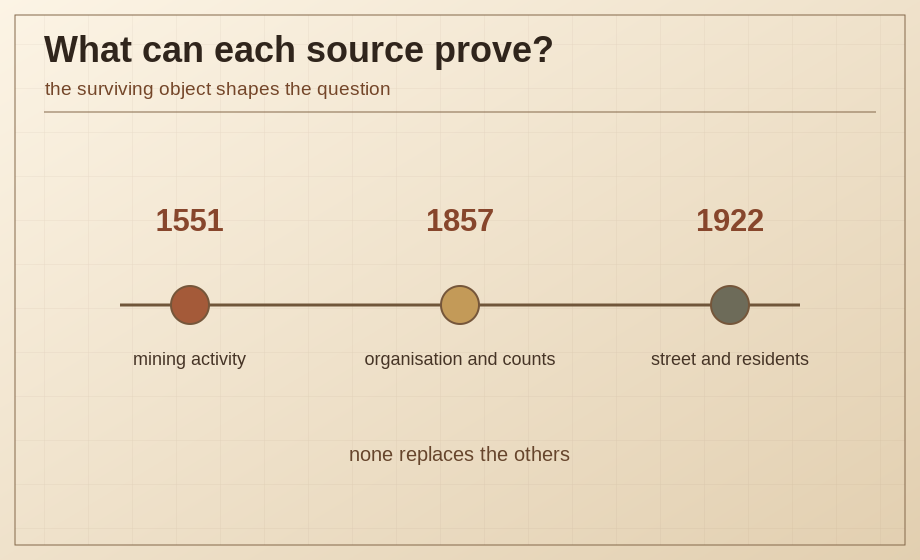
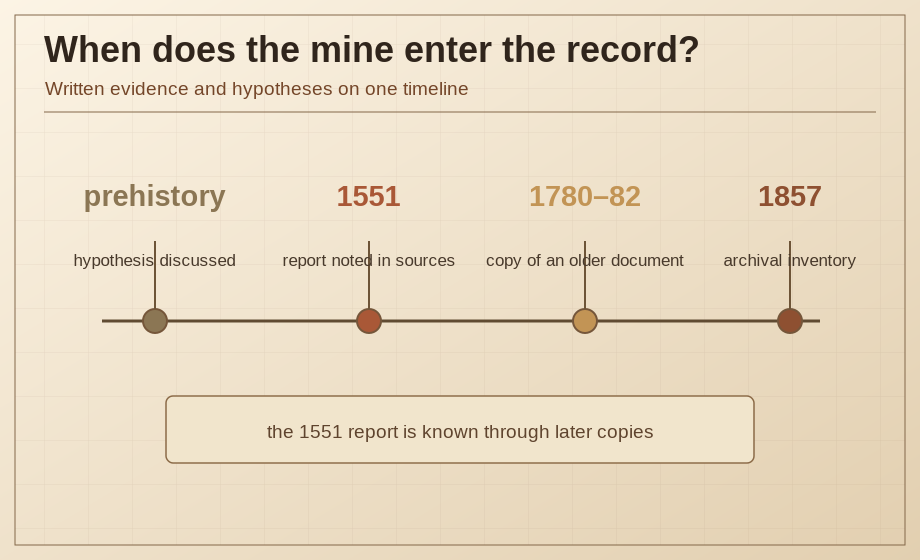
Băile Borșa, called Baia Borșa in the records, lies in the Cișla valley. A document from 1551 mentions gold and silver mines. Historian Ela Cosma identifies a copy made in 1782. Another study gives 1780 for the copy. The year 1551 dates the reference to mining. [6] [2] [4]
The author also discusses a hypothesis of prehistoric extraction, while noting that it rests on a different documentary footing. Here we begin with traces that can be dated and read: the old report, administrative inventory and production tables. [2]
Organisation
Who owned and organised extraction?
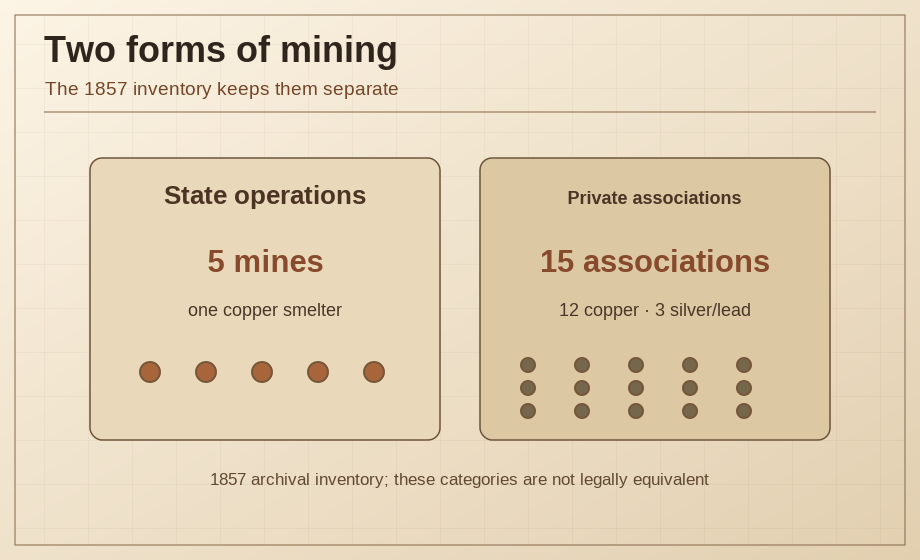
The State Archives guide describes five state mines and one copper smelter in its 1857 inventory, alongside private associations. The latter included 12 copper associations and three for silver and lead. The guide treats them as separate structures, not as 20 identical mines. [1]
That distinction matters: the state could administer galleries and smelters while private associations pooled investment or extraction rights. The records summarised by the guide do not turn each group into a countable gallery. [1]
The workforce
How many people appear in the inventory?
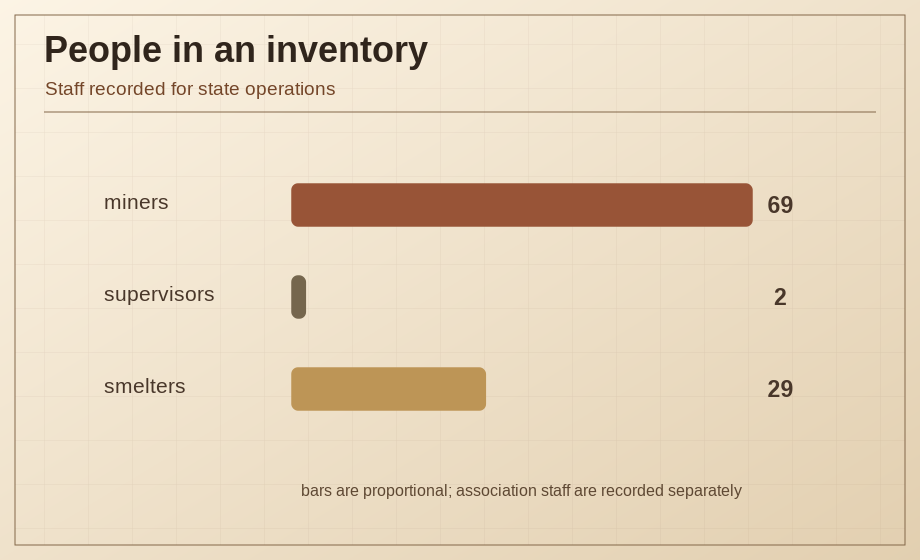
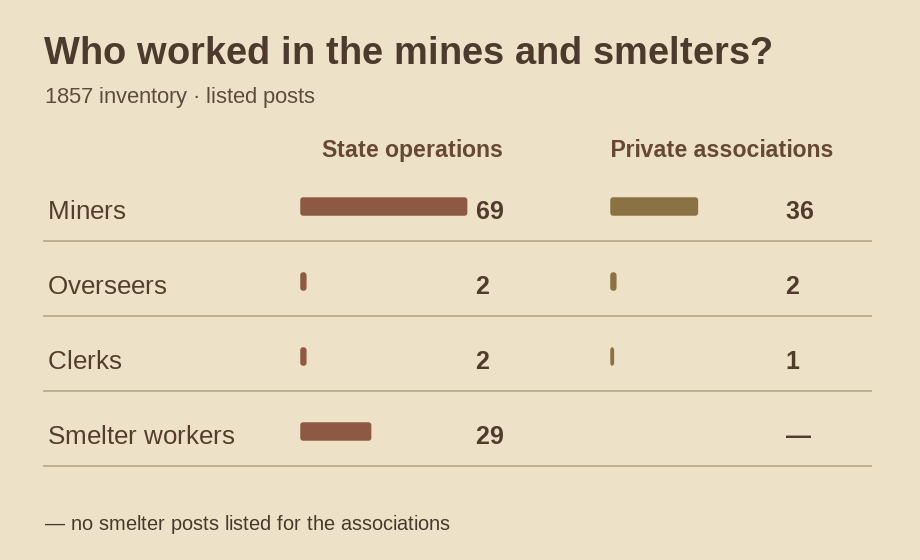
For state operations, the inventory cited by the guide records 69 miners, two supervisors and 29 smelter workers, alongside two office staff. These are posts listed for the state operation; staff in private associations appear in separate counts. [1]
Paul Ștefan Prună separately records 36 miners, two overseers and one clerk at the private mining associations. The 29 posts for smelter workers appear under the state operations. The list gives two categories of employers in the mining record. [1] [5]
Production
How was output measured in 1855?
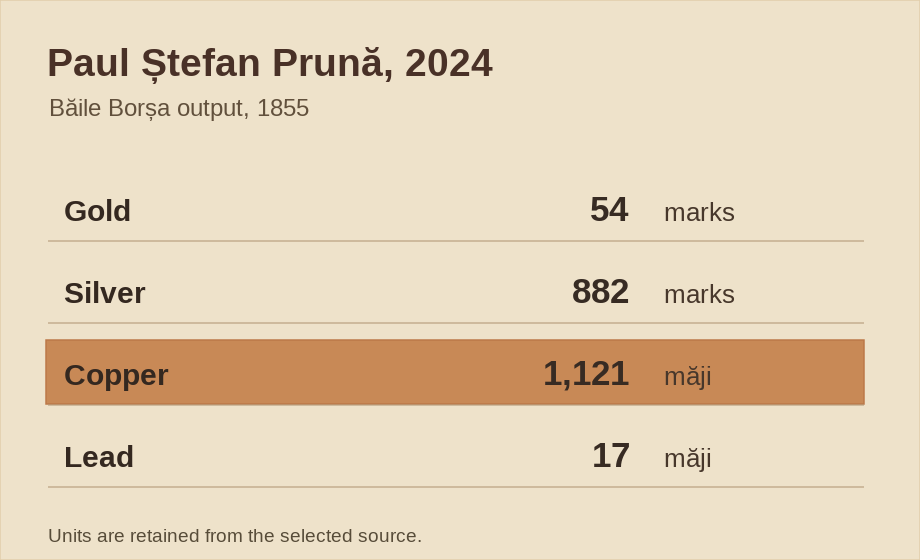
Paul Ștefan Prună’s study gives 54 marks of gold and 882 marks of silver for 1855. It uses another historical unit, the majă, for copper and lead: 1,121 măji of copper and 17 of lead. [5]
The mark and the majă were units of weight. Comparing the amounts of the four metals would require the kilogram equivalent of each unit in those records. [5]
Mutual aid
Two mutual-aid funds for miners in the valley
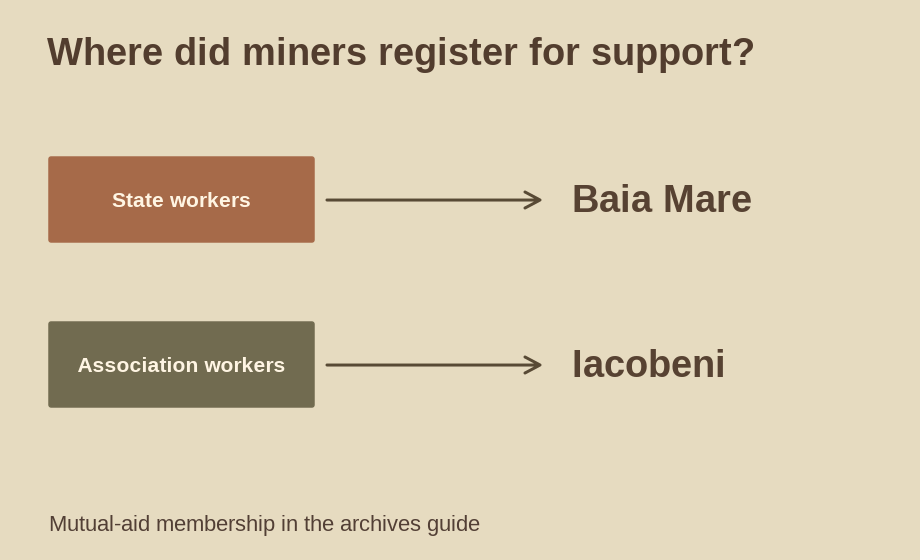
The archives guide names two funds. Workers in state operations belonged to the mutual-aid fund in Baia Mare. Staff at private associations belonged to the fund in Iacobeni. Support for two workforces in the same valley was administered from different places. [1]
The archives hold records of the miners’ fund for 1799–1860. The guide lists the files. Learning what a particular family received would require its own payment or membership record. [1]
Borșa in view
What the photograph does not show
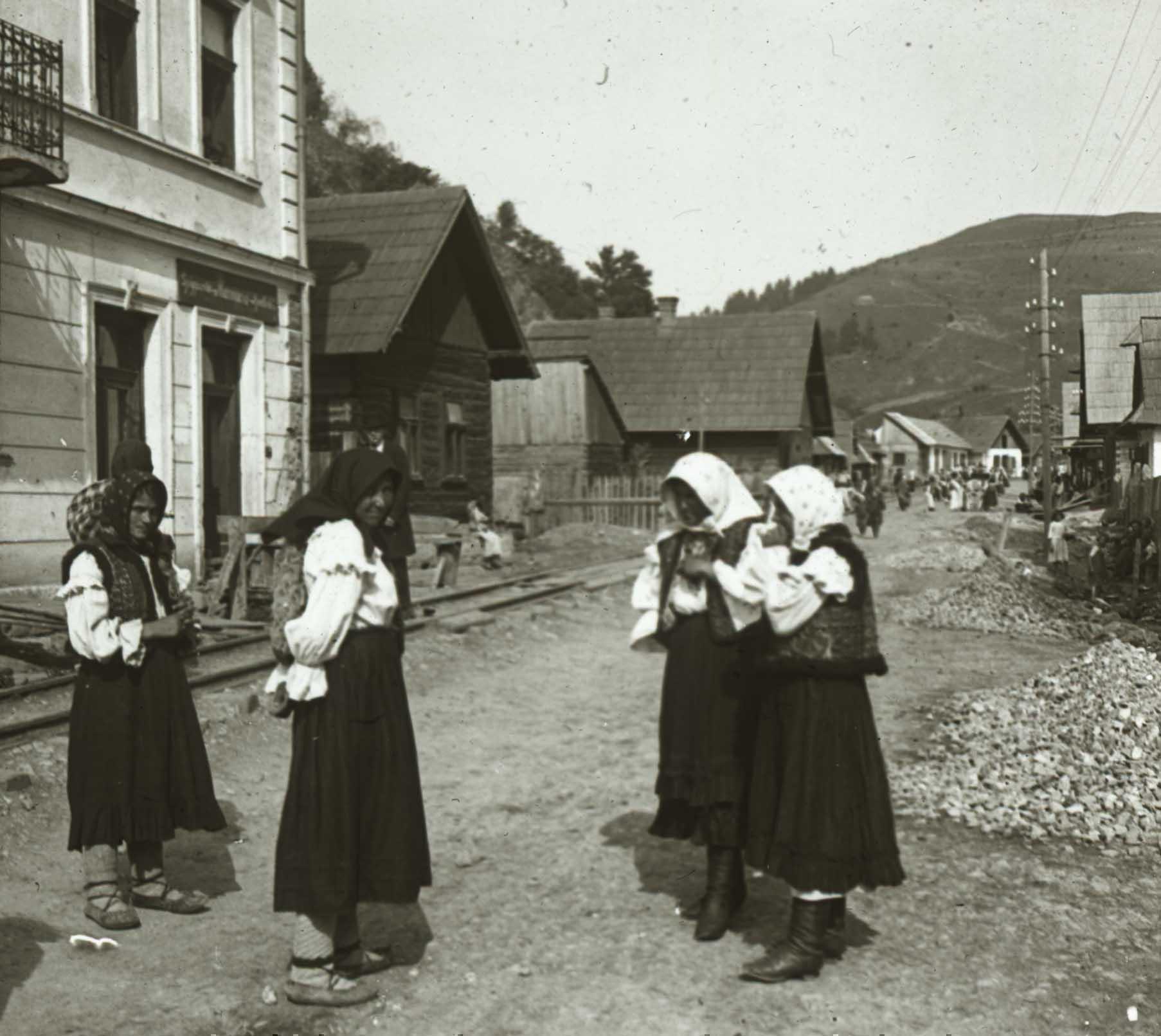
In 1922 the geographer Emmanuel de Martonne photographed women in traditional dress on a street in Borșa. Sixty-five years had passed since the mining inventory. [3] [1]
The photograph records a street and the people using it. Sources such as the inventory above describe work in the mines and smelting works. [3] [1]