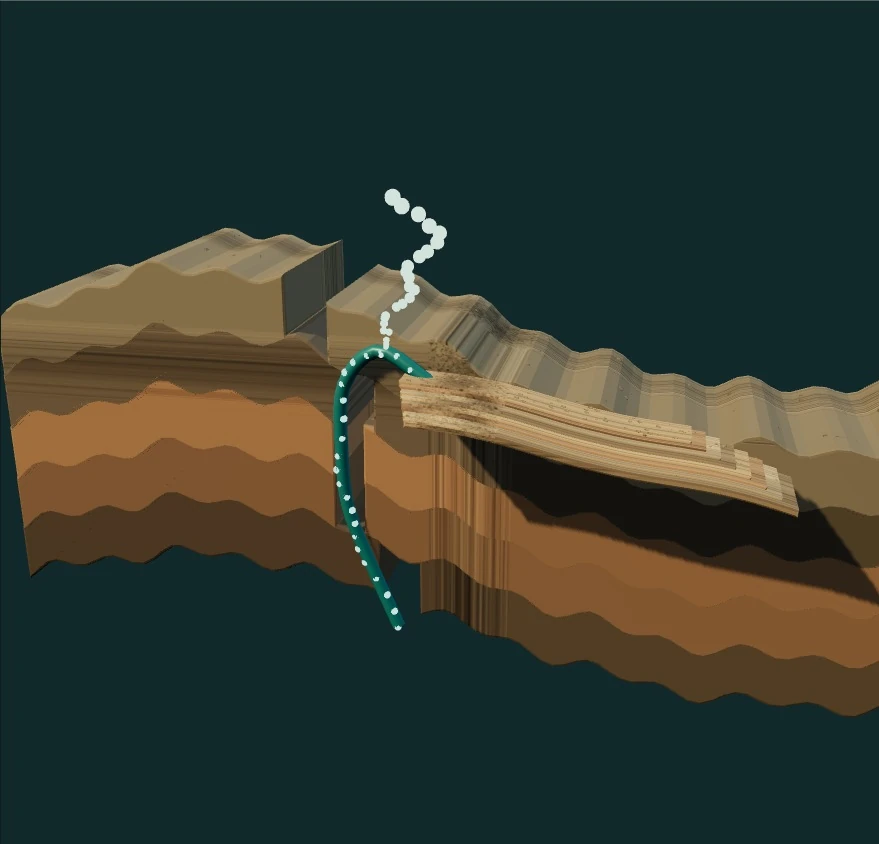
A schematic cross-section of a carbonated spring and the layers of travertine around it.
A section through the rock, fractures and spring

Scaunul Rotund, Borsec

The spring that leaves stone behind

At Scaunul Rotund, springs near Borsec have left behind travertine. The rock you can see today began with water carrying dissolved calcium to the surface. 1 2

Follow the path from old rock into the spring and then into new rock. Carbon dioxide does a different job at each step.

Start the story

Below ground

How the gas gets into the water

The management plan describes carbonate rocks and the movement of carbon dioxide through fractures. When the gas dissolves in water, the water can dissolve more calcium carbonate from the rock it flows through. 1

Choose what to follow through the section. You can watch the gas enter and the water emerge separately.

Follow through the section

At the surface

What changes when the water reaches air

At the spring, some carbon dioxide can move from the water into the air. Under the right conditions, dissolved calcium carbonate is deposited as solid mineral. This process forms travertine around some springs. 1 2

Switch between the buried rock and the opening to the air. In the model, the deposited particles stay at the edge of the water.

Look at

Travertine

How a layer of rock grows

A thin deposit can build on an older one. Water follows a changing path over an irregular surface and can thicken some areas faster than others. 2

Increase the number of layers in the model and watch its edge change. The layers in the image do not represent years or a rate of deposition.

Illustrated layers
3

At Scaunul Rotund

What to look for once the stone dries

In Borsec travertine, you can recognise the path taken by water even when the surface has dried. A lip, a hole or a thin band shows how the shape changed as the carbonate accumulated. 2

Sources

The section and reaction are schematic. The paths through the rock, bubbles and layer thickness are illustrative. The deposition control shows accumulation through time without modelling measured dates, speeds or concentrations.

  1. Toplița–Scaunul Rotund management plan

    The geology of the Borsec area and the movement of water and carbon dioxide.

  2. Scaunul Rotund Borsec, Green Week

    The reserve and the natural formation of travertine.