Marius ComperBacău
Română

Brad · Bacău

What pupils learned at the Brad agricultural school

Ion Ionescu de la Brad organised agricultural lessons for people who worked the land. The Romanian Academy Library catalogue records school pamphlets in 1870 and an account of the first year in 1872; a later study describes the curriculum and the school’s short life.

Start the story ↓
Black and white portrait of the agronomist Ion Ionescu de la Brad.
Portrait of Ion Ionescu de la Brad, from the Museums Guide. The entry gives no date for the image. (Source · Institutul Național al Patrimoniului / Ghidul Muzeelor · CC BY-SA 4.0)

Learning for whom?

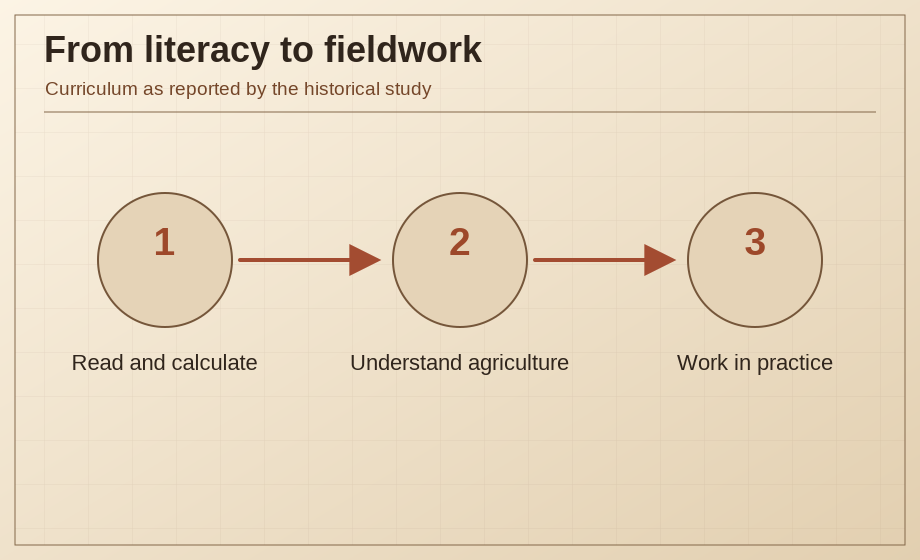
Reading, writing and arithmetic; agricultural theory; then practical work.
The curriculum described in the study of the Brad school. (Source)

Learning for whom?

An agricultural school in the village

Ion Ionescu de la Brad organised a practical agricultural school in Brad for people who worked the land. A study in Carpica describes three stages: reading, writing and arithmetic; agricultural theory; then practical work. [1]

The initiative centred on a farm and estate that its founder could use for demonstration. A later article records the purchase of the Brad estate for 1,050 lei and describes the farm as a model for small-scale agriculture. That wording belongs to the historical study; by itself it does not tell us which plot was used for each lesson. [2]

Reading, writing and arithmetic; agricultural theory; then practical work.
The curriculum described in the study of the Brad school. (Source)

Printed traces

Pupils studied the weather before sowing

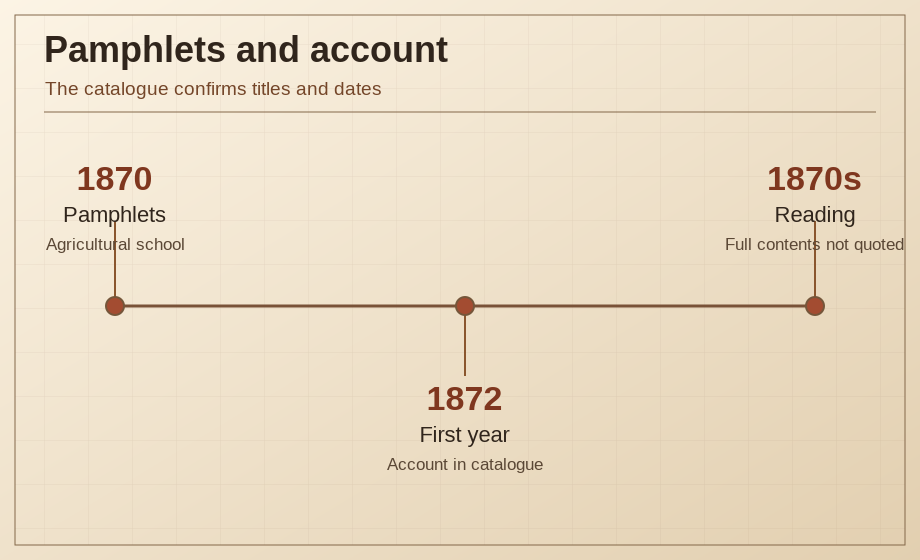
The Romanian Academy Library catalogue lists a textbook published in 1870 and an 1872 account of the school’s first year. A study in Carpica quotes article 16 of the school rules, which assigned pupils the Elementary Lessons in Agriculture textbook. [3] [9]

The study describes opening chapters on weather, climate and signs that the weather was changing. Pupils learned to relate what they saw in the sky and the field to farm work. These details come from the study that discusses the textbook and school rules. [9]
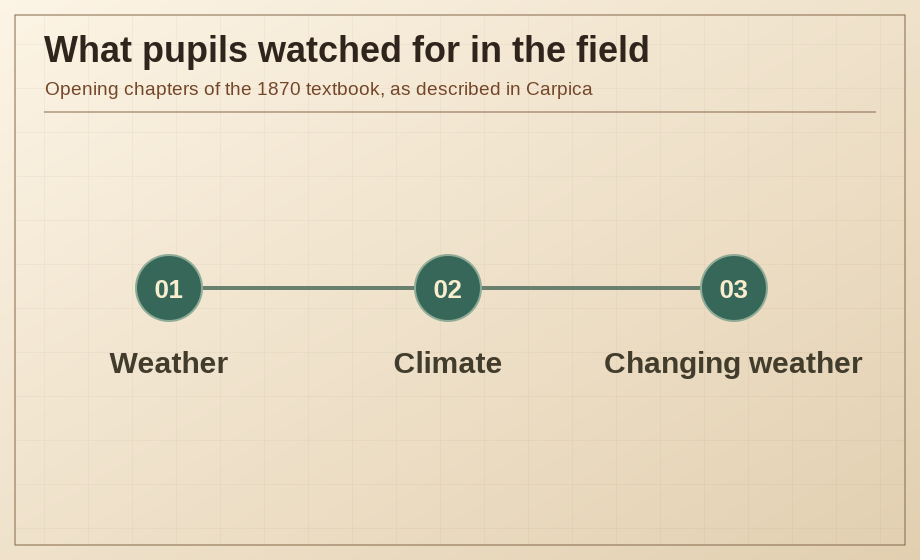
Weather, climate and signs of changing weather.
Opening topics described in the Carpica study. (Source)
The catalogue records pamphlets in 1870 and a report on the first year in 1872.
Bibliographic records, not quotations from the pamphlets. (Source)

A short-lived initiative

The study says the school operated for two years

Ioan Ciută says the school operated for two years because too few pupils enrolled. The 1988 study of the Ionești family at Brad gives the dates 1870–1873. The two accounts leave open how many of those years pupils actually attended lessons. [1] [2]

After the school ended, the initiative did not disappear entirely. The study describes a pupils’ savings bank operating from 1879 to 1885 and rewarding good results from Ionescu de la Brad’s income. A form of support continued later, but it was not the same school and does not prove that the agricultural programme resumed. [1]
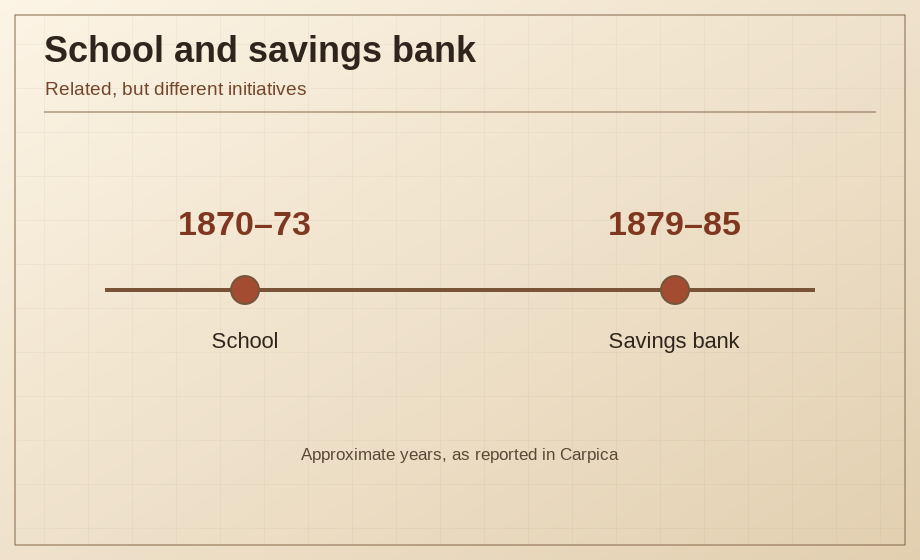
The school is dated around 1870–73; the savings bank is recorded for 1879–85.
The school and savings bank share a timeline but remain distinct institutions. (Source)
Three stages from literacy to practical agriculture.
The curriculum shows the ambition, not the school’s results. (Source)

The place remembered

The agronomist’s portrait in the Museums Guide

The National Heritage Institute’s Museums Guide lists a documentary exhibition devoted to Ion Ionescu de la Brad. The image published with the entry is a portrait of the agronomist. The guide gives no photographer or date. [4] [5]

A 1993 museum chronicle notes that the Brad farm or station helped repair the memorial house. The connection between the agricultural institution and the memorial is documented, but it does not prove that today’s farm is an uninterrupted continuation of the nineteenth-century school. [6]
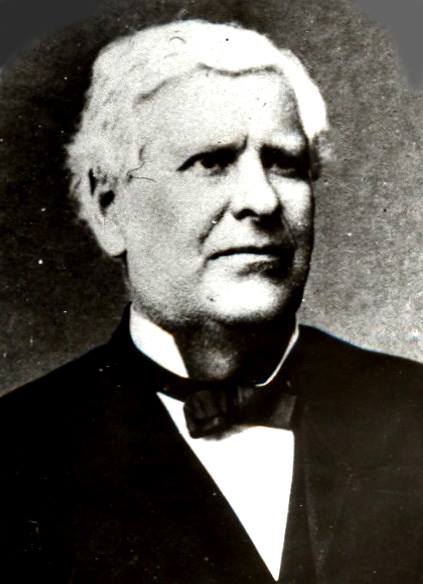
Black and white portrait of the agronomist Ion Ionescu de la Brad.
Portrait of Ion Ionescu de la Brad, from the Museums Guide. The entry gives no date for the image. (Source · Institutul Național al Patrimoniului / Ghidul Muzeelor · CC BY-SA 4.0)
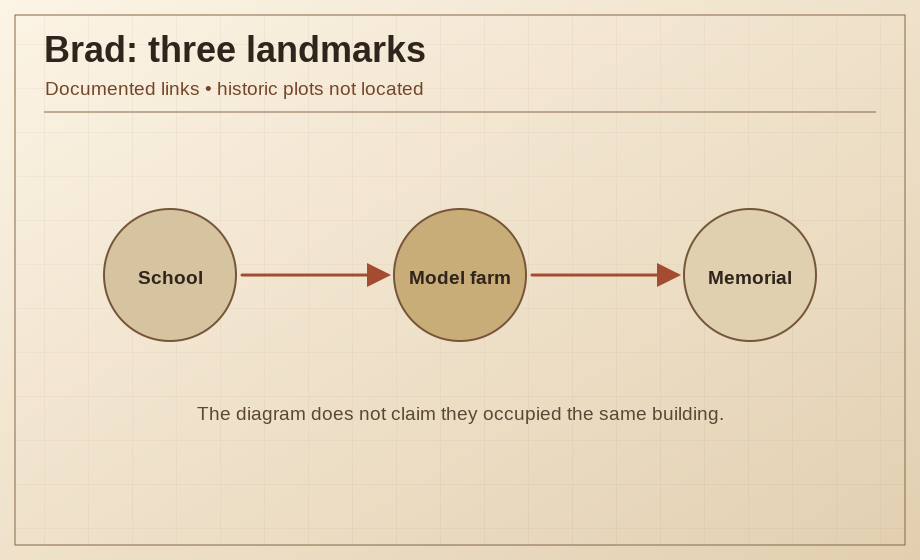
Three distinct circles connect the school, farm and memorial house; the diagram does not assign them to one building.
Conceptual view: sources connect these landmarks without locating every historic plot. (Source)

The memorial opens

A building keeps the story in the village

A local interview recorded in 2009 and published in 2026 recalls that the memorial opened in 1986 in a former school or ancillary building once used to store crops. The interviewee describes two exhibition rooms. This is a retrospective account of how the museum was arranged, not a building plan or a photograph of the nineteenth-century agricultural school. [7]

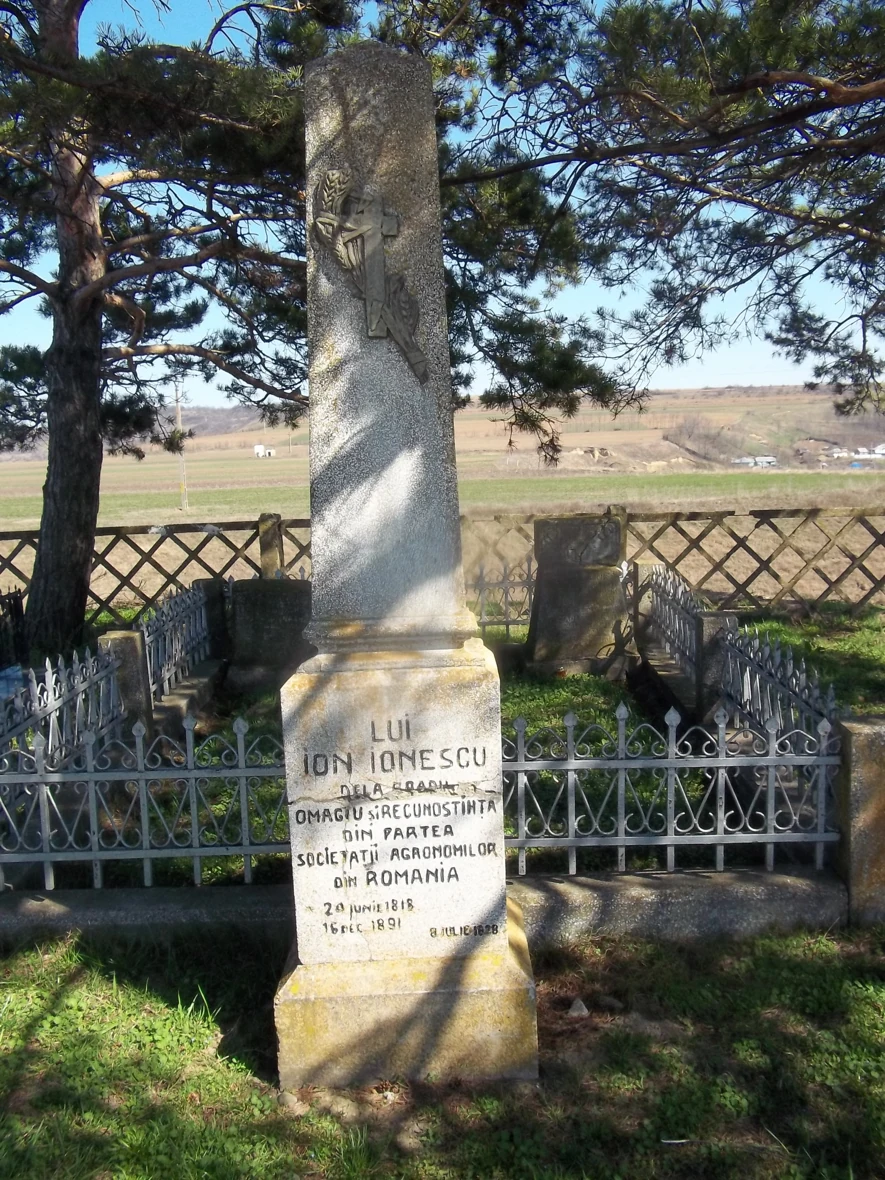
The same interview recalls a bust and family grave nearby, as well as an obelisk erected in 1928. These landmarks extend commemoration beyond the display cases: Ionescu de la Brad’s biography is tied to the village through a commemorative landscape. Details remain attributed to the interviewee, and their relative positions should be read as orientation rather than a survey. [7]
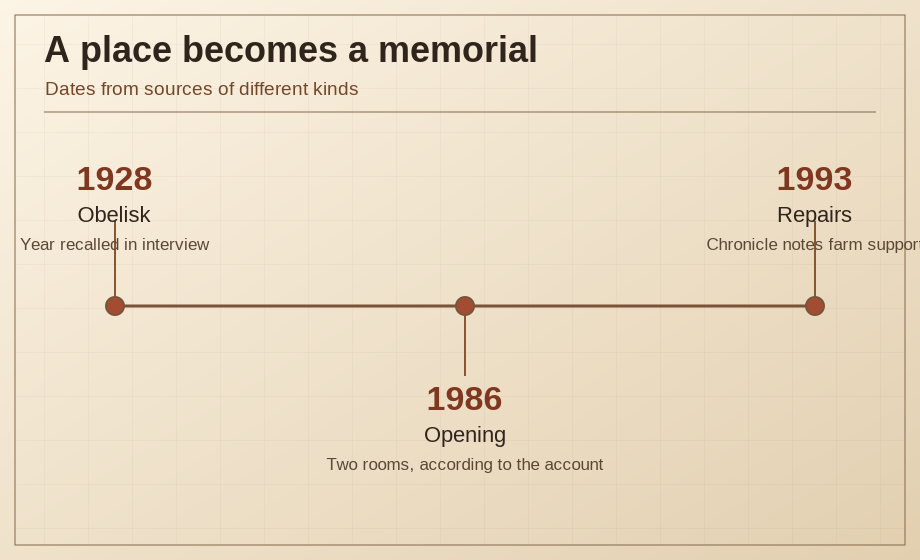
The interview dates the memorial house opening to 1986 and recalls the 1928 obelisk.
Commemoration timeline based on a retrospective interview published in 2026. (Source)
The stone monument dedicated to the agronomist.
The monument by the grave of Ion Ionescu de la Brad. Photograph from 2014. (Source · Arsene Stefan / Wikimedia Commons · CC BY-SA 3.0 RO)

Brad today

The experimental farm works in horticulture

The Bacău Vegetable Research and Development Station describes its Brad experimental farm in Negri commune and connects it with Ion Ionescu de la Brad. The present institution conducts horticultural research; its page does not prove that the same organisation, plots or curriculum operated without interruption from 1870. [8]

The sources show distinct episodes: the school described in a historical study, the model farm mentioned in a later article, the memorial and today’s experimental farm. Their connection to the place is documented, but they do not form an uninterrupted institutional timeline. [1] [2] [8]
Brad farm, Negri commune, vegetable growing research.
The Bacău research station lists its farm at Brad. (Source)

Sources

The Brad agricultural school combined basic education, agricultural theory and practical work. A study in Carpica says it operated for only two years; the library catalogue preserves titles and dates of the school’s publications, while memorial records show how Ion Ionescu de la Brad has been commemorated.

  1. Ioan Ciută, Ion Ionescu de la Brad and modern Romanian agricultural education, Carpica XXX, 2001, p. 134Historical study of the private school founded by Ion Ionescu de la Brad, its curriculum and the pupils’ savings bank. It says the school operated for only two years because of a lack of students; that duration is attributed to the study’s author.
  2. Study of Ion Ionescu de la Brad and the Brad farm, Carpica, XXI, 1988Local-history article recording the purchase of the Brad estate for 1,050 lei and its use as a model farm for small-scale agriculture. The precise identification and context of the transaction should be read in the full study.
  3. Romanian Academy Library, bibliographic catalogue, entries for Ion Ionescu de la BradRecords school pamphlets from 1870 and an 1872 account of the school’s first year. The catalogue establishes the publications and their dates; it does not substitute for reading the pamphlets.
  4. National Heritage Institute, Museums Guide, Ion Ionescu de la Brad photo-documentary exhibition, Brad villageThe entry describes the exhibition in Brad village and is accompanied by the agronomist’s portrait.
  5. Portrait of Ion Ionescu de la Brad, Museums GuideBlack-and-white portrait distributed through the Museums Guide under the credit and licence of the entry.
  6. Museum chronicle on the Ion Ionescu de la Brad Memorial House, Carpica, XXIV, 1993The chronicle notes support from the Brad farm/station for repairs to the memorial house. It records the place’s public commemoration, not proof that the present farm continues the same experimental work.
  7. “The Ion Ionescu de la Brad Memorial House in Brad”, local interview conducted in 2009, published in 2026Retrospective account of the memorial’s 1986 opening, its two-room display and nearby commemorative landmarks. Information is attributed to the interviewee, not to an independent architectural survey.
  8. Bacău Vegetable Research and Development Station, “About us”The institution’s page describes its Brad experimental farm in Negri commune and its connection with the founder of Romanian agricultural science. It is the station’s current account, not evidence of uninterrupted continuity from the nineteenth century.
  9. Carpica XXV, Ion Ionescu de la Brad’s elementary agriculture lessonsThe study quotes article 16 of the school rules and describes the textbook’s opening chapters.
  10. Arsene Stefan, photograph of the monument to Ion Ionescu de la Brad, 2014Photograph of the monument by the agronomist’s grave in Negri commune.