Marius ComperBuhuși · Bacău
Română

Buhuși cloth mill

Why the Buhuși mill asked for bells at five

In December 1891, the cloth mill’s management asked the parish priest to ring the bells at five in the morning. Some workers were arriving too early for fear of losing a day’s work. Period photographs, records and an interactive loom show how the mill in the Bistrița valley worked.

Try the loom ↓
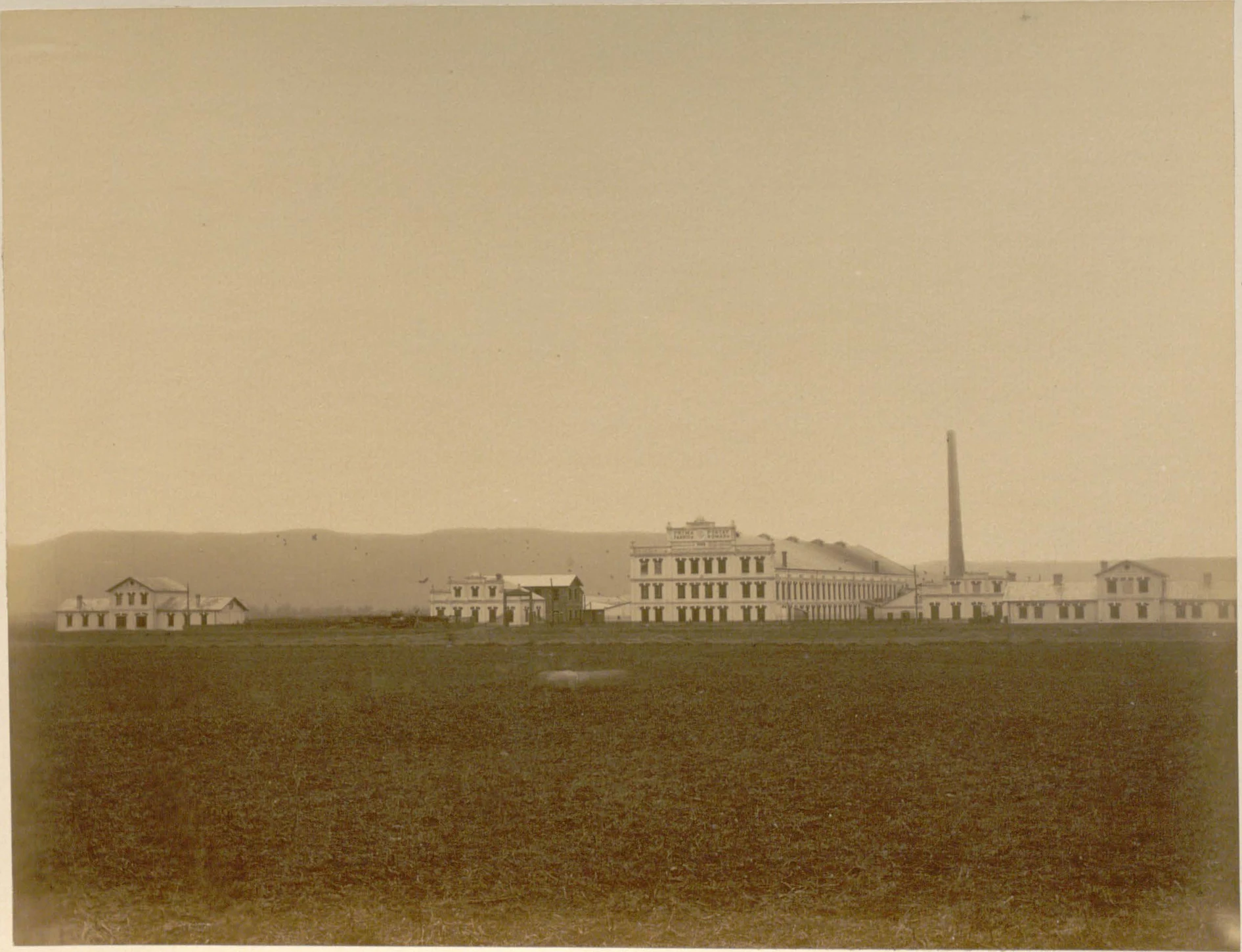
An archival photograph of the mill buildings and tall chimney in the Bistrița valley.
Alexandru Antoniu’s view from the General Album of Romania. A chimney and the mill buildings stand at the foot of the hill. (Source · Alexandru Antoniu · Wikimedia Commons · Public domain)

The Bistrița valley

An archival photograph of the mill buildings and tall chimney in the Bistrița valley.
Alexandru Antoniu’s view from the General Album of Romania. A chimney and the mill buildings stand at the foot of the hill. (Source · Alexandru Antoniu · Wikimedia Commons · Public domain)

The Bistrița valley

Why did the mill come to the valley?

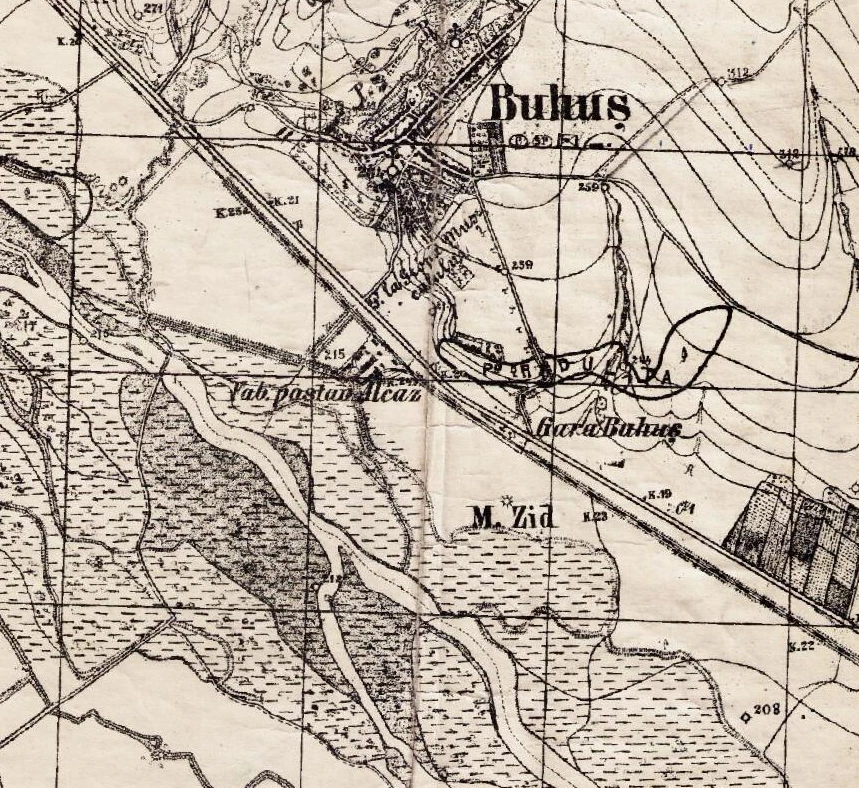
Colonel Eugen Alcaz founded the Buhuși cloth mill in 1885. In their study of Neamț County, Gheorghe Tănase and Gheorghe Țepeș link the choice of site to building land, water from the Bistrița and the railway that made transport easier. Some workers came from nearby villages. [3] [4]

In Alexandru Antoniu’s photograph, the mill buildings and a tall chimney stand at the foot of the hill. The picture shows the complex in the valley. The written study explains why water and the railway mattered: the mill needed to bring in raw materials and send cloth to buyers. [1] [3] [11]
An archival photograph of the mill buildings and tall chimney in the Bistrița valley.
Alexandru Antoniu’s view from the General Album of Romania. A chimney and the mill buildings stand at the foot of the hill. (Source · Alexandru Antoniu · Wikimedia Commons · Public domain)
Historic map placing the mill near the railway and the river further southwest.
The 1:20,000 survey labels the mill “Fab. postav Alcaz”, beside the railway. The station lies to the east. (Source · Serviciul geografic al Armatei · geo-spatial.org · Public-domain map)

A day’s work

Who needed to know the time?

On 10 December 1891, the mill’s management asked the parish priest to ring the bells at five in the morning on workdays. Petrina Țuglea records that the mill had no siren and some workers were arriving at midnight for fear of being late and losing a day’s work. [5]

The request addressed a problem with the work schedule. Management wanted people to arrive on time without waiting for hours. The account preserves the requested hour and the reason given. It leaves open whether the priest agreed or how long the arrangement may have lasted. [5]
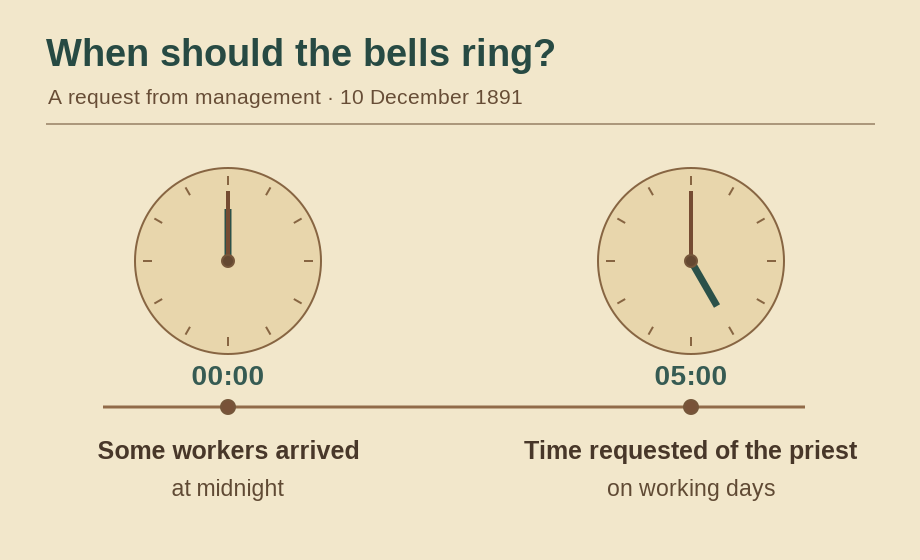
Two clock faces compare midnight with five, the time when management wanted the bells to ring.
Hours mentioned in the account of the 1891 request. (Source)

The machine hall

What did the façade say?

Look at the top of the building in the photograph. It reads “First Romanian cloth mill”, with 1885 below. The inscription shows how the company presented itself at the time. Dorel Bălăiță’s research also describes an older cloth mill run by Mihail Kogălniceanu near Târgu Neamț. [2] [10]

The Romanian word postav refers to a woollen cloth used, for instance, in heavy clothing. Inside the hall, lengthwise threads and crosswise threads met on the loom. A period patent and objects held by the Smithsonian show how these two sets of threads come together in a shuttle loom. [2] [8] [6]
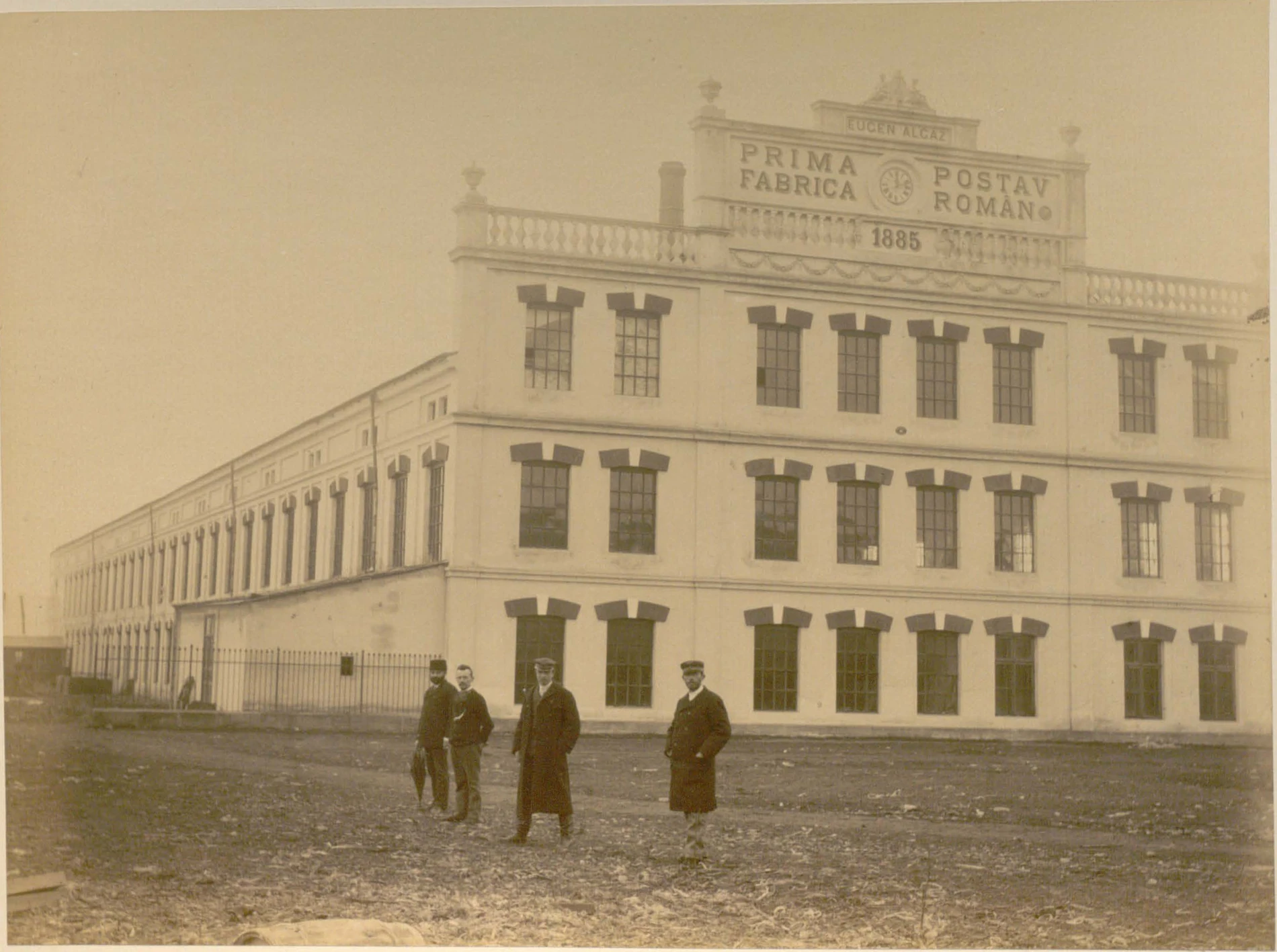
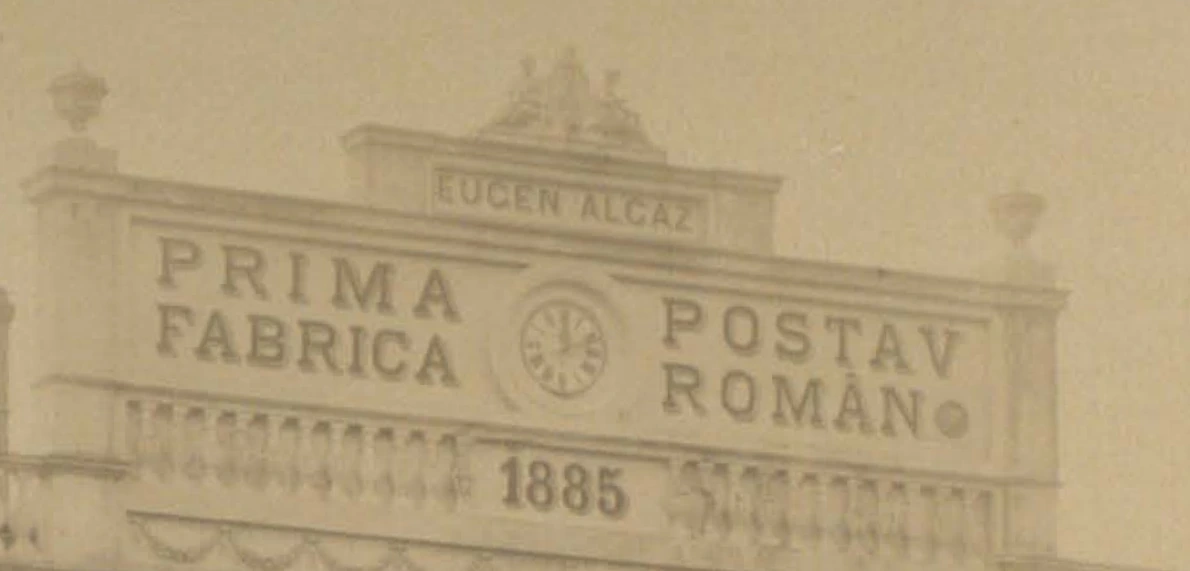
Façade of a three-storey building, with an inscription above and people standing in front.
The “Machine hall” plate shows the façade. The factory’s inscription and 1885 appear at the top. (Source · Alexandru Antoniu · Wikimedia Commons · Public domain)
Enlarged view of the façade inscription and the date 1885.
Detail of the same photograph. The date 1885 appears below the inscription. (Source · Alexandru Antoniu · Wikimedia Commons · Public domain)

A pass of the shuttle

What does a loom do as it weaves?

Warp threads run lengthways through the loom. Each passes through the eye of a heddle. When some heddles rise and the others fall, the threads part to make an opening called the shed. The shuttle crosses the shed, leaving a weft thread behind as it unwinds from the bobbin. [7] [6]

After the shuttle passes, the reed pushes the new thread against the edge of the cloth. The heddles reverse for the next pass. Choose “Thread close-up” and follow the copper-coloured weft. On its return it passes over the warp threads it went under on the first pass. The period patents and surviving parts explain the motion. The model shows the principle of weaving with a shuttle. [6] [7] [8]
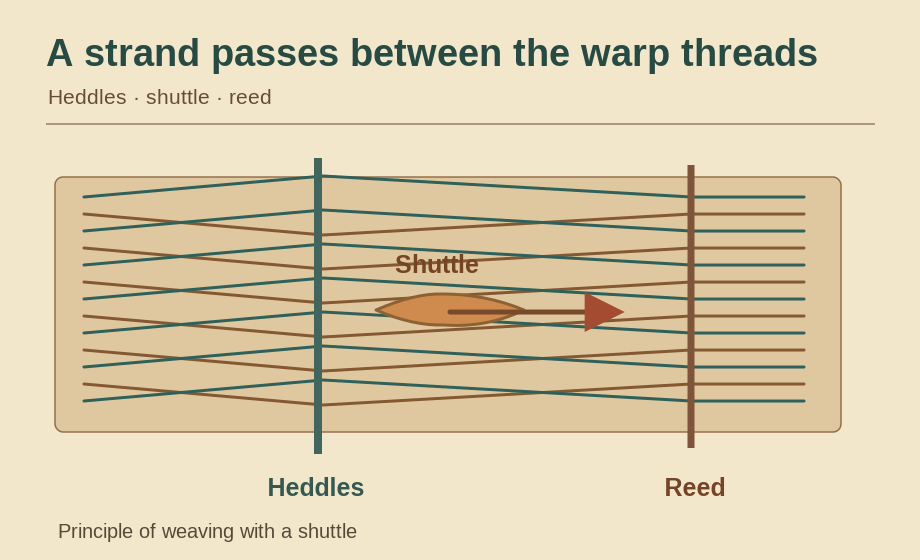
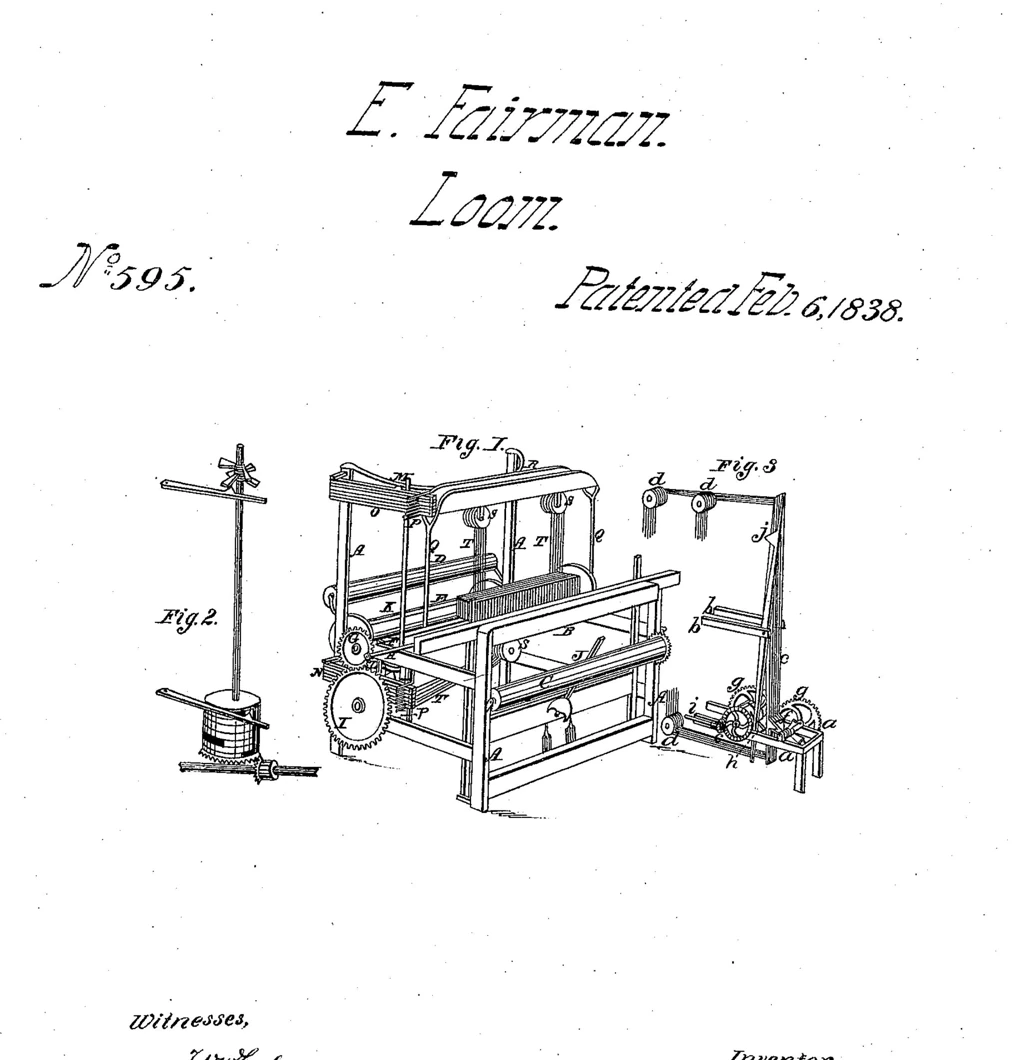
Diagram with warp threads, heddles, shuttle and reed.
Model of shuttle weaving based on period mechanisms. (Source)
Engraving of a power loom with frame, wheels, heddles and transmission.
Drawing from Elijah Fairman’s patent 595. An example of a period power loom. (Source · United States Patent Office · Public-domain patent drawing)

In 1937

What did a ten-million-metre mill mean?

The Neamț Chamber of Commerce put the mill’s maximum capacity at about ten million metres of cloth. It reported 4,550 horsepower. Its list included dress and suit fabrics, military cloth, blankets and shawls as well as cotton articles. [9]

The report counted about 4,500 workers and 400 office staff. Ten million metres was a stated production limit. The report does not give actual output that year. According to the Chamber, at the time of its report the mill’s production went to buyers within Romania. [9]
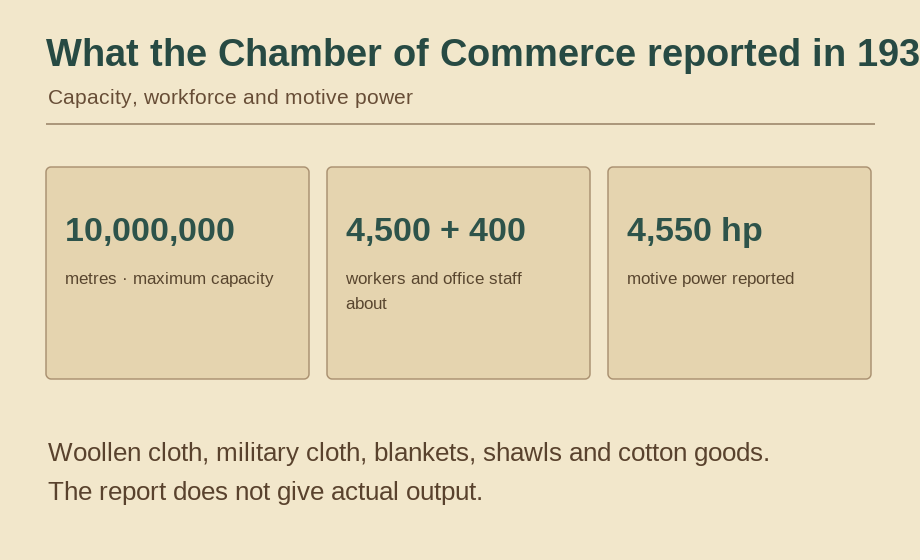
Maximum capacity of ten million metres, about 4,500 workers and 400 office staff, and 4,550 horsepower.
Values from the Neamț Chamber of Commerce’s 1937 economic report. (Source)

At the canteen

How did workers pay at the canteen?

In August 1943 the ministry responsible for military supplies asked the mill to set up a well-stocked canteen, writes Dorel Bălăiță. Orders were running late, and the ministry wanted to retain workers. He places the opening of the canteen around 1944. [10]

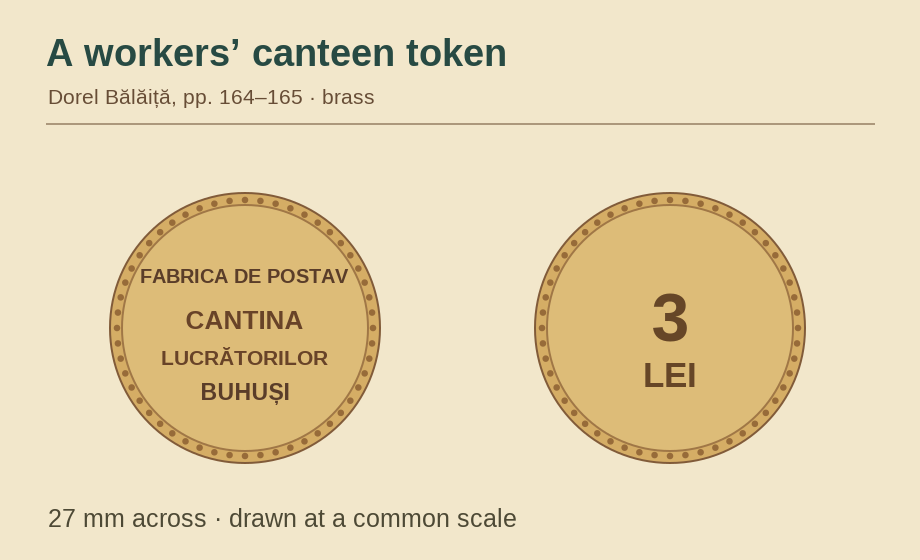
Two brass tokens in collections carry the inscription of the workers’ canteen. The one-leu token measures 23 mm across. The three-lei token measures 27 mm. They were used in the canteen, the study says. Bălăiță suggests they may have been issued after 1963, based on comparison with coins from that year. He found no document giving their issue date. [10]
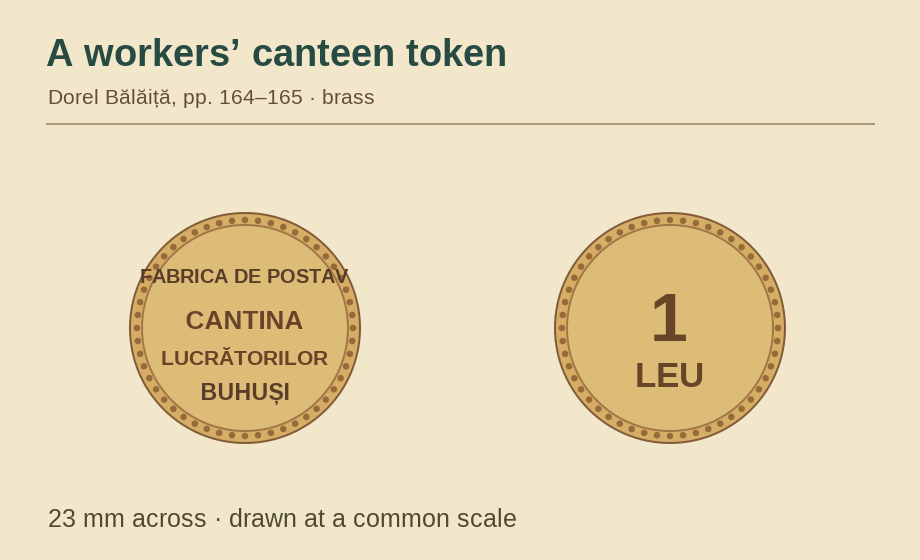
Both faces of the 23 mm canteen token.
Drawing at a common scale, based on the description and photographs in fig. 6. (Source)
Both faces of the larger, three-lei token.
Drawing at the same scale, based on fig. 7. This token measures 27 mm across. (Source)

The mill’s archive

What survives in the mill’s archive?

Eugen Alcaz leased the mill to Erhard Wolff in 1891. A joint-stock company took over in the 1890s. The mill was nationalised in June 1948. In 1969 four enterprises were brought together in the Buhuși Textile Combine. [4] [10]

The 1979 guide lists cash ledgers, board minutes, business correspondence and records of the guarantees workers deposited. They show what the mill’s management kept track of, from company accounts to the obligations of the people on the factory floor. [4] [2]
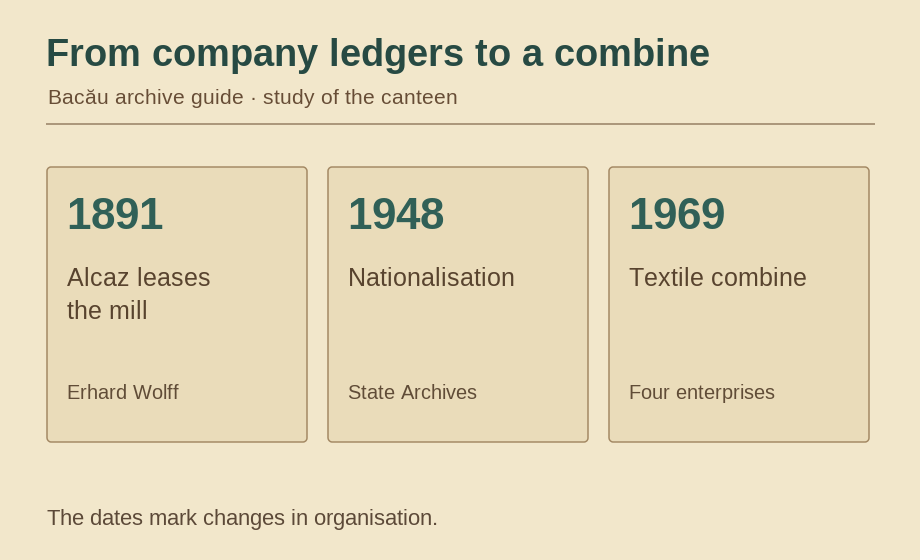
Timeline showing the lease, nationalisation and merger of four enterprises.
Dates from the archive guide and the study of the workers’ canteen. (Source)

Sources

In 1891, five in the morning was an answer to a practical problem. Some workers feared that turning up late would cost them a day’s work. The mill asked the parish priest to give a signal they could hear from the village.

  1. Alexandru Antoniu, General Album of Romania. A general view of the Buhuși millScan of the plate showing the mill, dated to 1893 in the Wikimedia Commons catalogue.
  2. Alexandru Antoniu, General Album of Romania. Machine hall at BuhușiThe plate is labelled “Machine hall” and shows the building from outside. The factory inscription and 1885 are visible on the façade. Scan dated to 1893 in the catalogue.
  3. Gheorghe Tănase and Gheorghe Țepeș, “From the history of Neamț County (1878–1914)”, Memoria Antiquitatis III, 1971The study links the site to the railway, the Bistrița’s water and recruitment from neighbouring villages.
  4. State Archives, Guide to the Bacău County State Archives, 1979, Buhuși cloth mill fondsThe guide describes changes of ownership and surviving records, from workers’ guarantees to cash ledgers.
  5. Petrina Țuglea, historical study of Buhuși up to Romania’s entry into the First World War, 2020The author describes a request the mill management addressed to the parish priest on 10 December 1891. An account of the document, without a facsimile.
  6. Smithsonian, shuttle and bobbin for a power loom, c.1870, E238655The object and record explain how the bobbin lets out weft as the shuttle travels.
  7. Smithsonian, Thorp and Angell’s loom-heddle model, patented 1840, NMAH 1070872The record explains how heddle eyes raise and lower warp threads.
  8. US Patent Office, Elijah Fairman’s power-loom drawing, US patent 595, 1838A period drawing for comparison with shuttle weaving. Its provenance is separate from the machines photographed at Buhuși.
  9. Neamț Chamber of Commerce, County economic report, 1937, “Textile industry”The report gives maximum capacity, types of cloth, motive power and two approximate workforce counts.
  10. Dorel Bălăiță, “The canteen tokens of the workers of the Buhuși cloth mill”, Suceava XLV, 2018, pp. 157–166The study reproduces the tokens, describes their dimensions and explains why their issue date remains uncertain.
  11. Romanian military survey, 1:20,000. Buhuși and “Fab. postav Alcaz”Detail of the historical sheet georeferenced by geo-spatial.org. Mill and station are marked separately.
  12. OpenStreetMap, Buhuși, Bacău CountyGeographic reference for the Buhuși cloth mill.