Two Franciscans at the Mongol court, 1245–1255
The Pope sent a friar to the Great Khan. The reply: come and submit
In 1241 Mongol armies burned Oradea and laid Transylvania waste. Four years later the Pope sent a Franciscan east, John of Plano Carpini, who came back with the Great Khan's reply: the Pope should come in person and submit. Eight years after him William of Rubruck reached Karakorum, found a goldsmith from Paris there, and was called on to defend his faith against Muslims and Buddhists.
John of Plano CarpiniWilliam of Rubruckthe 1241 columns, reconstructed
From Oradea to Karakorum
The map follows the text. First it shows the routes by which the Mongols entered Hungary and Transylvania in 1241, then the two friars' journeys: Carpini in red, Rubruck in blue.
The lines run through the places the writers name. Where a place cannot be identified with confidence, the line is dotted or dashed. Distances are measured through those places, so the real journeys were longer.
Chapter I
What the Mongols left behind in 1241
March 1241 – 1242
- When
- March 1241 – 1242
- The witness
- Rogerius, a canon of Oradea
- A detail
- 600 Germans from Rudana taken as guides
The lines run through the places Rogerius and Rashid al-Din's chronicle name; the paths between them are reconstructed.
In March 1241 Mongol armies entered the Kingdom of Hungary by several routes at once. On 12 March King Béla IV's palatine fought them at the “Russian Gate”, a pass in the northern Carpathians, and escaped with only a few men. Batu, who led the campaign, came through it towards the Danube plain. In April the king's army was destroyed by the River Sajó.
Another commander, Kadan, marched three days through the forests “between Rus' and Cumania” and reached Rudana, a rich town of German settlers with the king's silver mine, which historians usually identify with Rodna. The townsmen came out to fight, Kadan pretended to flee, and they sat down to drink. In the end the town surrendered, and Kadan took Count Aristaldus and 600 armed Germans as guides.
With them leading the way, the Mongols came out of the forest and crags near Oradea. Rogerius, a canon of the cathedral, refused to shut himself in the citadel and fled into the woods. The citadel was broken with seven siege engines. The women who had taken refuge in the cathedral burned with it.
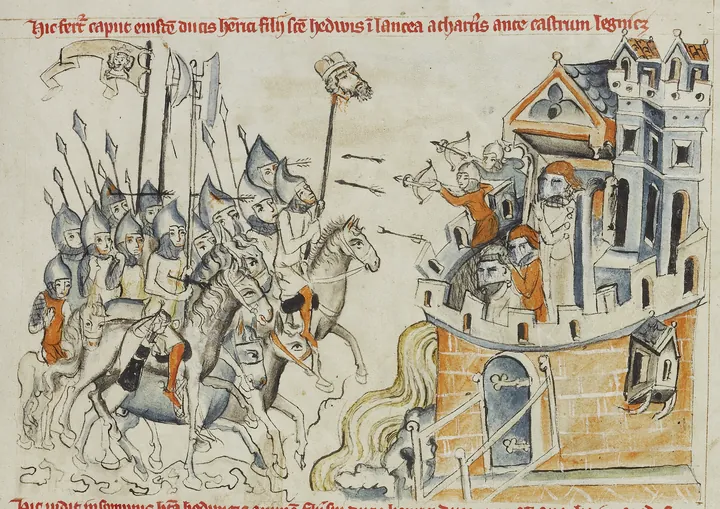
.jpg)
A third force, led by a man Rogerius calls Bochetor, crossed the Siret into “the land of the bishop of the Cumans”, east of the Carpathians, and defeated those who gathered to fight. It is Rogerius's only sentence about the Mongol advance east of the Carpathians. In Rashid al-Din's Persian chronicle a prince named Böchek crosses the mountains into “Kara-Ulagh” and defeats the “Ulagh”, a name historians usually read as the Vlachs.
In 1242 the Mongols withdrew. Rogerius, by then their prisoner, went with a column that passed “beyond the forests” (ultra siluas, the phrase behind Transylvania's Latin name) and left the land “desolate and empty” before crossing into Cumania. After escaping he reached Alba, probably Alba Iulia, where he found “nothing but the bones and skulls of the slain” and stones “still red with blood”.
Rogerius says only that the Mongols “were suddenly recalled”. Four years later the Pope would write to ask them what had moved them to destroy so many peoples, and what they intended next.
Chapter II
A Franciscan sets out from Lyon
April 1245 – August 1246
- When
- 16 April 1245 – 24 August 1246
- On the map, from the start
- 7,700 kmat least, through the places named
- A detail
- fresh horses “five times or more” a day on the Cuman steppe
Pope Innocent IV was at Lyon. In March 1245 he wrote to “the king and people of the Tartars”, as Europeans called the Mongols: he was astonished that they laid waste so many lands “sparing neither sex nor age”, and asked them to say what they intended. The letter was entrusted to John of Plano Carpini, a Franciscan from near Perugia and one of the first members of the order. A Franciscan chronicler says he was a corpulent man who rode a donkey.
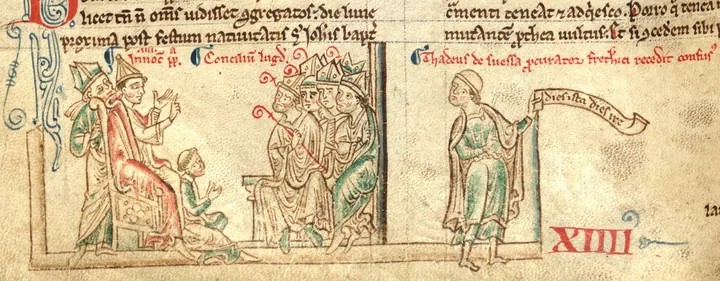

Carpini left Lyon on Easter Day 1245, 16 April. At Wrocław another Franciscan, Benedict the Pole, joined him as companion and interpreter. Before Kyiv, at Danilov, he fell ill “to the point of death”, but had himself carried on in a cart through the cold and deep snow. In Kyiv, which the Mongols had destroyed, “barely 200 houses remained”, and the fields were strewn with “countless heads and bones of dead men”.
On 4 February 1246 they left Kyiv for the Mongol outposts. From there they were taken to Batu on the Volga, riding “as fast as the horses could trot”, with fresh horses three or four times a day, from morning until night. All through Lent they ate only millet boiled with water and salt and drank melted snow. In Batu's camp Carpini saw linen tents that had belonged to the King of Hungary.
They left Batu on Easter Day, 8 April 1246, “with many tears, not knowing whether we were going to death or to life”. They crossed the Cuman steppe changing horses “five times or more a day”, except in the deserts, where they were given stronger ones. There they found “many heads and bones of dead men lying on the ground like a dunghill”, and further on ruined cities in Central Asia. On 22 July 1246 they reached Güyük, son of Ögedei, who “had not yet been elected” and was not yet taking part in the business of the empire.
The camp was called Syra Orda. Carpini describes a white tent that could hold more than 2,000 people, “more than 4,000 envoys” according to the camp's officials, a Rus' duke, two sons of the King of Georgia and the envoy of the Caliph of Baghdad. The election was held there over some four weeks. On 24 August 1246 Güyük was set on the throne and the chiefs knelt before him, “except us, who were not their subjects”. On a hill stood more than 500 carts full of gold, silver and silk.
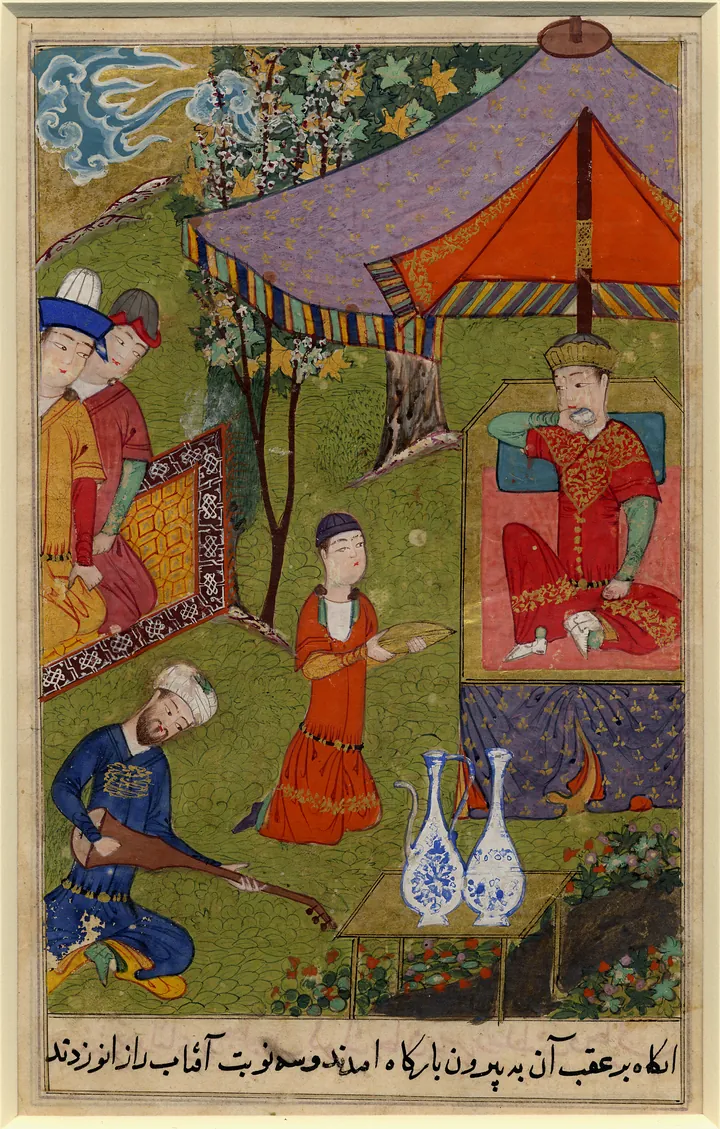

Karakorum, the Mongol capital, was close. But Carpini writes: “we did not see it, but we were within half a day of it.”
Chapter III
The letter: come and submit
November 1246 – 1247
- When
- 11 November 1246 – autumn 1247
- On the map, from the start
- 15,400 kmat least, through the places named
- A detail
- two copies: one in Latin, one in Persian
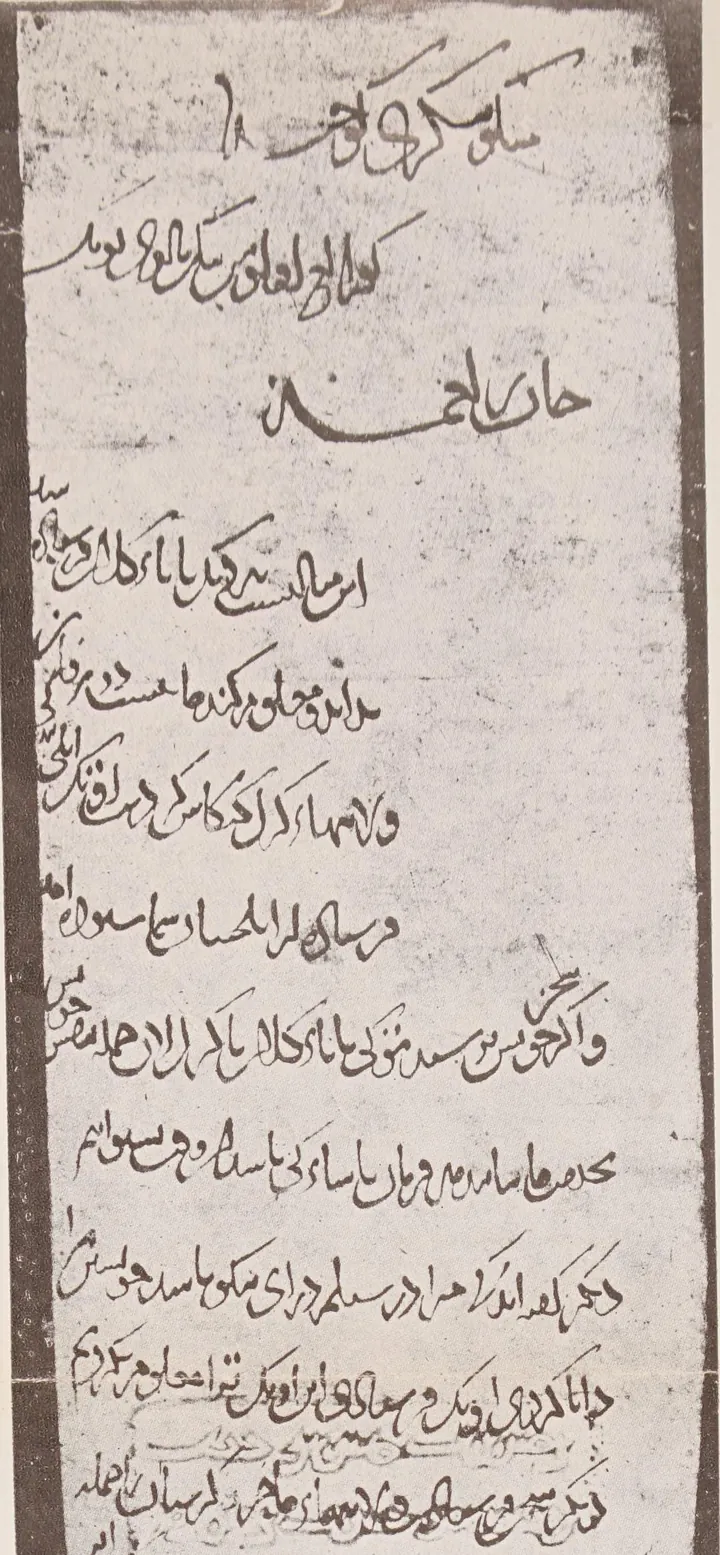
On 11 November 1246 Carpini and Benedict were called to court. The khan's officials translated his reply to them “word for word”, and they wrote it down in Latin. The officials then wrote it out in Persian as well, so that someone in Europe would be able to read it. On 13 November they received the letter, sealed with Güyük's seal, and leave to go.
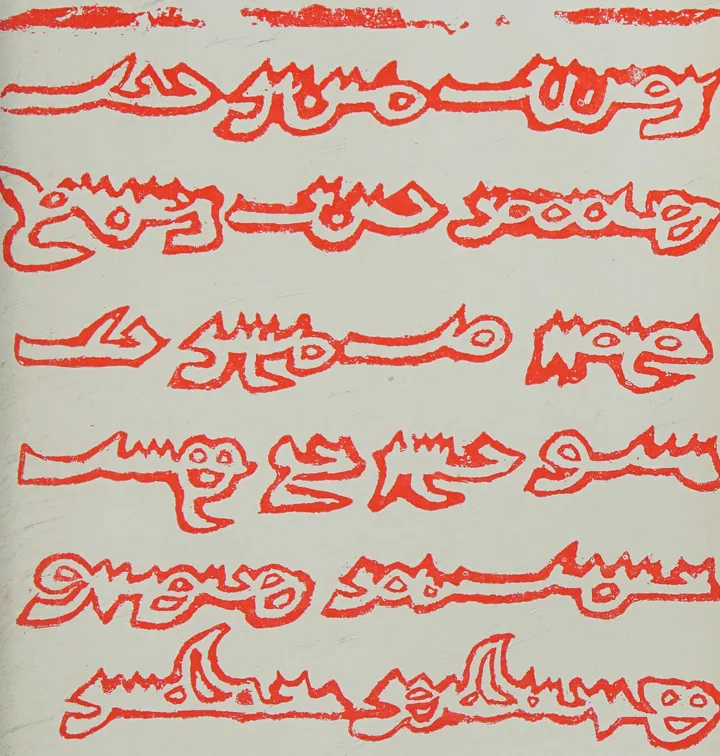
The Persian letter survives. It was found in 1920 in the Vatican archives, labelled on the back, in a 16th-century hand, “n° 80. Arabica”. It is a strip of paper 1.12 metres long and 20 centimetres wide, written in the last days of Jumada al-Thani in the year 644, between 3 and 11 November 1246. The Mongol seal is stamped on it twice in red ink. The French orientalist Paul Pelliot translated it in 1923. This is what Güyük told the Pope:
Their Mongol escorts told them the khan was thinking of sending envoys back with them, and wanted the friars to ask for it. Carpini answered “that it was not for us to ask it, but that if the Emperor of his own will sent them, we would with God's help guide them safely”. He did not want them to come, and gives his reasons: the envoys would see “the dissensions and wars among us” and be encouraged to march on Europe, they were probably spies, and they would be killed, “for our peoples are arrogant and proud”.
“You yourself, at the head of the kings, all together, without exception, come and offer us service and homage. Then we shall know your submission.”
The khan's demand
“You said it would be good if I received baptism […]. This request of yours we have not understood.”
His answer to the call to be baptised
“The people of those lands, it is the eternal God who has killed and destroyed them.”
The Pope had complained that the Mongols took “all the lands of the Hungarians and the Christians”
“How do you know whom God absolves and to whom He grants mercy?”
What follows in the letter after “And if you say: ‘I am a Christian; I worship God’”
They travelled all winter, often sleeping in the snow: “in the morning we would find ourselves completely covered by snow the wind had driven over us”. They reached Batu at Ascension, 9 May 1247, and Kyiv in early June. The people came out to meet them and congratulated them “as if we had risen from the dead”. Through Poland and Cologne they got back to the Pope at Lyon in the autumn of 1247.
Carpini wrote a book about the Mongols, and a friar who met him says he had it read aloud whenever he grew tired of telling the story himself. A whole chapter explains “how they may be met in war”. The Mongols, he writes, intend “to subdue the whole world” and were planning a new campaign westwards, with one army through Hungary and one through Poland. His main advice is that the princes of Europe must unite.
Chapter IV
Rubruck sets out, and not as an envoy
May – December 1253
- When
- 7 May – 27 December 1253
- On the map, from the start
- 6,500 kmat least, through the places named
- A detail
- nearly every day, about as far as Paris to Orléans
Where Möngke's winter camp stood is unknown; Rubruck only says it was ten days from Karakorum.
William of Rubruck was a Franciscan from Flanders who had gone to the Holy Land in the years of King Louis IX's crusade, and had a Bible from the king for the road. But no one sent him as an envoy. On Palm Sunday 1253, 13 April, he preached in Hagia Sophia in Constantinople that he was “not an envoy, neither yours nor anyone's”, but was going among unbelievers under the rule of his order. He did carry a letter from the king to Sartaq, a son of Batu rumoured to be a Christian.
On 7 May 1253 he sailed into the Black Sea, and on 21 May he reached Soldaia in Crimea. There were five of them: William, Friar Bartholomew of Cremona, Gosset who carried the presents, the interpreter Homo Dei and a boy, Nicholas, bought in Constantinople. When he first met the Mongols, he writes, he felt he “had been transported into another world”. He saw a house on a cart drawn by 22 oxen, and at his first taste of cosmos, fermented mare's milk, he “broke out in a sweat with horror”.
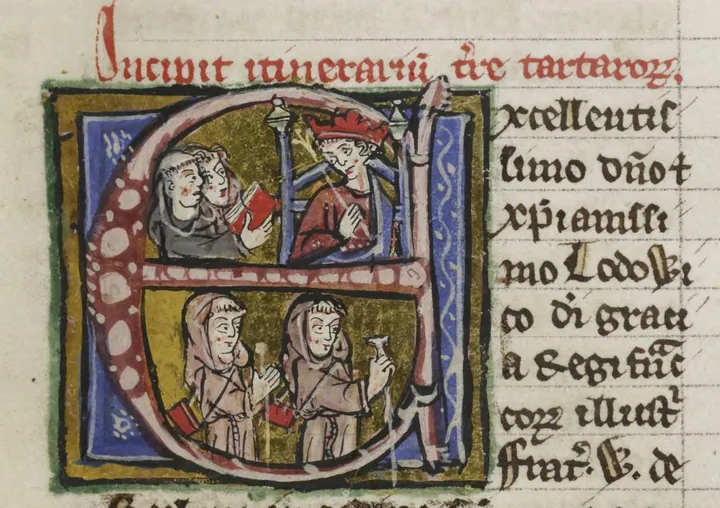

Sartaq did not want to be called a Christian. “You must not say that our lord is a Christian. He is not a Christian, but a Moal,” his men told him. Rubruck was sent on to Batu on the Volga, who made a sign to him to bend both knees, which he did, “not wishing to dispute over it”. Batu could not decide on his own and sent him to the Great Khan, Möngke. The rich Mongol who was to take him there told him: “The journey is a four months one, and it is so cold on it that stones and trees are split by the cold. Think it over whether you can bear it.”
They set out on 16 September in sheepskins. Nearly every day, by Rubruck's reckoning, they covered about the distance from Paris to Orléans, some 110 kilometres, “and sometimes more”, depending on the supply of horses. The interpreter drove him to despair: “when I said one thing, he said a totally different one”, so he decided to keep silent. At Cailac, in today's Kazakhstan, he saw Buddhist temples for the first time.
On 27 December 1253 he reached Möngke's camp, ten days' ride from Karakorum.
Chapter V
Karakorum and the goldsmith from Paris
January – May 1254
- When
- 5 April 1254, Palm Sunday
- On the map, from the start
- 6,700 kmat least, through the places named
- A detail
- “not as big as the village of Saint-Denis”
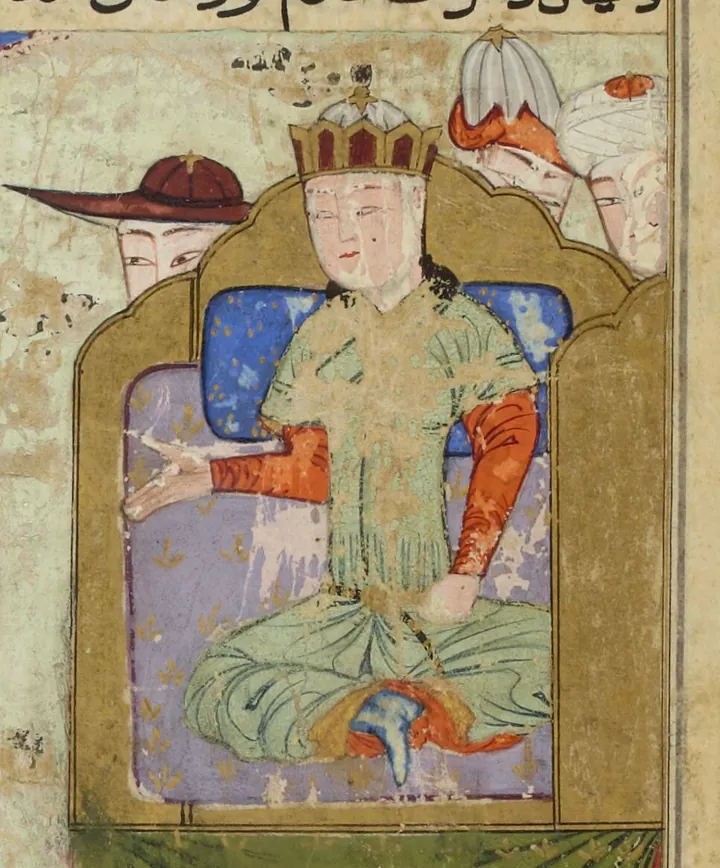
Möngke received Rubruck in early January 1254. He was “a little man, of medium height, aged forty-five years”, and seemed to Rubruck “tipsy”. The interpreter was drunk too. On Palm Sunday, 5 April 1254, Rubruck entered Karakorum “with raised Cross and banner”.
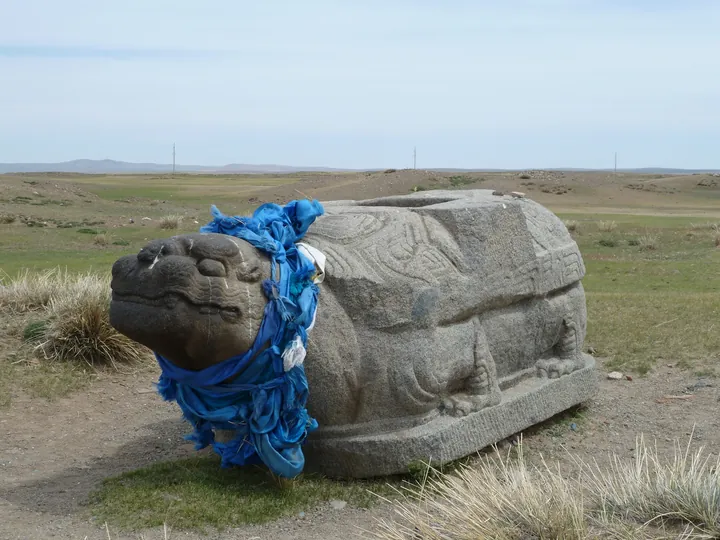
The city disappointed him. Leaving out the khan's palace, he writes, “it is not as big as the village of Saint Denis”, and the monastery of Saint-Denis is “ten times larger than the palace”. It had a Muslim quarter with the markets and a quarter of craftsmen from China, twelve temples of different peoples, two mosques and a single Christian church “in the extreme end of the city”. Its mud wall had four gates: millet was sold at the east gate, sheep and goats at the west, oxen and carts at the south, horses at the north.
Europeans taken captive lived around the khan's court as well. A woman from Metz, Paquette, captured in Hungary, fed them as best she could and told them that “there was in Caracarum a certain master goldsmith, William by name, a native of Paris”, surnamed Buchier, whose brother she believed still lived on the Grand Pont. Guillaume Boucher had been taken at Belgrade, then a town of the Hungarian kingdom, and his wife was “a daughter of Lorraine, but born in Hungary”, who spoke French and Cuman well.
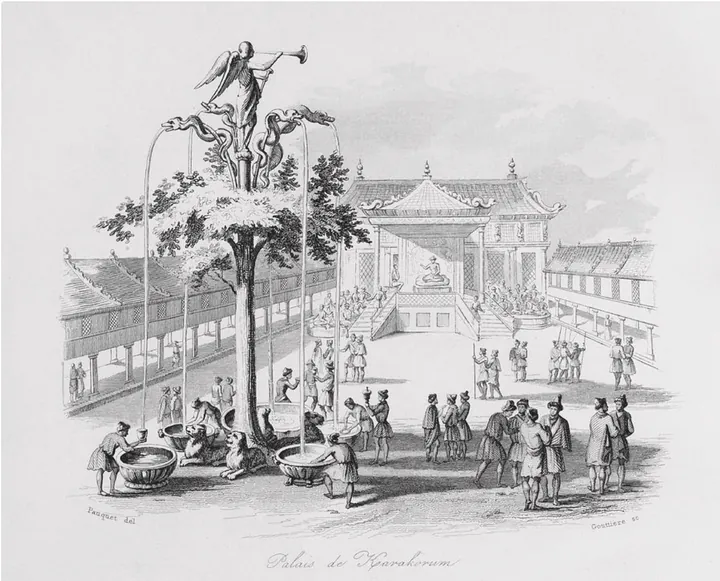

For the khan's palace Boucher had made a great silver tree. At its roots four silver lions poured out mare's milk. Four pipes ran up inside the tree and bent downwards at the top: one flowed with wine, one with clarified cosmos, one with mead, one with rice mead. Between them stood an angel with a trumpet, and under the tree, in a vault, a man sat hidden. When drink was wanted the head butler called to the angel, the man in the vault blew into the pipe that led up to it, the angel sounded its trumpet, and servants in the cellar poured the drinks into the pipes.
Here too Rubruck learned about Cathay, that is China, whose people he took to be the Seres, the silk people of ancient books. He noted that there “the common money is a paper” stamped with a seal, and that people “write with a brush” and make “in one figure” a whole word.
_-_panoramio.jpg)
Chapter VI
A debate on the khan's orders
30 May 1254
- When
- 30 May 1254, eve of Pentecost
- On the map, from the start
- 6,700 kmat least, through the places named
- A detail
- any quarrel or insult punishable by death
The debate is known only from Rubruck's account; he took part in it. No other source mentions it.
At the end of May 1254 Möngke's men came with a message: “You are here Christians, Saracens and Tuins”, Rubruck's word for Buddhist monks, “and each of you says that his doctrine is the best.” The khan wanted them all to meet, compare their beliefs and write them down, so that he could know the truth.
Rubruck agreed a plan beforehand with the Nestorians, the Christians of Asia: he would speak first, against the Buddhists, and they should not attack the Muslims at the start, since they too believe in one God. On 30 May 1254, the eve of Pentecost, they met in the Christians' chapel. Möngke did not come. He sent three secretaries as umpires, a Christian, a Muslim and a Buddhist, with the order that no one should quarrel with or insult another, “on penalty of his head”.
The Buddhists put forward a learned man from China. Rubruck's interpreter was the son of the goldsmith from Paris. The Buddhist wanted to begin with how the world was made, or with what becomes of the soul after death. Rubruck insisted they speak first of God. In the end the Buddhist said that no god was omnipotent, and the Muslims burst out laughing.
When the Nestorians turned to the Muslims, the Muslims declined to argue: “We concede your religion is true […] so we do not want to argue any point with you.” Rubruck records that “no one said: ‘I believe; I want to become a Christian.’” And the ending: the Nestorians and the Muslims sang loudly, the Buddhists kept silent, “and after that they all drank deeply”.
“No one said: ‘I believe; I want to become a Christian.’”
The result
“The Nestorians as well as the Saracens sang with a loud voice, while the Tuins kept silence, and after that they all drank deeply.”
The end of the day
The next day, Pentecost, Möngke called Rubruck in. “We Moal believe that there is only one God,” he said. “But as God gives us the different fingers of the hand, so he gives to men divers ways. God gives you the Scriptures, and you Christians keep them not.” Later he added: “He gave us diviners, we do what they tell us, and we live in peace.” The khan drank four times, Rubruck believes, before he finished.

Chapter VII
The road back, and Möngke's letter
July 1254 – August 1255
- When
- July 1254 – 15 August 1255
- On the map, from the start
- 14,700 kmat least, through the places named
- A detail
- a year and two months on the road back
Möngke gave Rubruck a letter too, for Louis IX. Rubruck took it down “as well as I could understand through an interpreter”. The commandment of God, it begins, is that “in Heaven there is only one eternal God, and on Earth there is only one lord, Chingis Chan”. If the king will obey, he should “send your ambassadors to us”, so the khan may know whether he wants peace or war. And if the French tell themselves “our country is far off, our mountains are strong, our sea is wide” and make war, “you shall find out what we can do”.
Rubruck left in early July 1254. Friar Bartholomew stayed behind in Mongolia with the goldsmith: “we separated with tears”. In two months and ten days on the road to Batu they “never saw a town, nor the trace of any building save tombs, with the exception of one little village”. On 16 September he reached Batu, on the same day of the year he had left him.
He went back by Sarai, the town Batu was building on the Volga, then south along the Caspian through Derbent, “the Iron Gate, which Alexander the Macedonian made”. He spent Christmas at Nakhchivan. On 2 February 1255 he passed through Ani, with its “thousand churches of Hermenians”, then crossed Anatolia and Cyprus to Tripoli, where his order “held our chapter on the Assumption of the Blessed Virgin (15th August)” 1255.
There the head of his order told him to stay at Acre and would not let him go to the king. So he wrote down for Louis everything he had to say. That report is the text we read today. The English philosopher Roger Bacon read it and says he talked with its author, but it was first printed, only in part, around 1600, in England.
Which friar wrote this?
Ten things from the two accounts. For each, guess whether it comes from Carpini, Rubruck or both.
-
1
Watched a Great Khan being enthroned.
Who wrote this?
The answer
Carpini.
He was there on 24 August 1246 when Güyük was set on the throne, and notes that everyone knelt “except us, who were not their subjects”.
-
2
Found a goldsmith from Paris in the Mongol capital.
Who wrote this?
The answer
Rubruck.
He met Guillaume Boucher at Karakorum, who had made the khan a silver tree that poured four drinks.
-
3
Came home with a letter from the Great Khan demanding submission.
Who wrote this?
The answer
Both.
Güyük told the Pope, through Carpini, to come and pay homage; Möngke told Louis IX, through Rubruck, to send envoys so he would know whether the king wanted peace or war.
-
4
Wrote that the Caspian is enclosed by land, not a gulf of the ocean.
Who wrote this?
The answer
Rubruck.
He corrected Isidore of Seville: the sea “nowhere reaches the Ocean, but is everywhere surrounded by land”.
-
5
Would not ask for Mongol envoys to Europe, fearing they would be spies.
Who wrote this?
The answer
Carpini.
He also feared they would see how divided the Christian princes were; had the khan sent them anyway, he says, he would have guided them safely.
-
6
Described paper money in China.
Who wrote this?
The answer
Rubruck.
In Cathay “the common money is a paper” stamped with a seal.
-
7
Found Kyiv reduced to some 200 houses.
Who wrote this?
The answer
Carpini.
In 1246 the city had been “very large and populous”, and now “barely 200 houses remained”.
-
8
Was received by Batu on the Volga.
Who wrote this?
The answer
Both.
Carpini reached Batu in April 1246, Rubruck in August 1253, and both were sent on from there to the Great Khan.
-
9
Complained that his interpreter said something quite different from him.
Who wrote this?
The answer
Rubruck.
About his interpreter, Homo Dei: “when I said one thing, he said a totally different one”, so he decided to keep silent.
-
10
Wrote a chapter on how the Mongols could be stopped in war.
Who wrote this?
The answer
Carpini.
His main advice: the princes of Europe must unite.
Your score appears here after your first answer.
The two journeys, side by side
Eight years apart. Carpini went as the Pope's envoy, Rubruck as a missionary, and each came back with a different letter from a different khan.
| John of Plano Carpini | William of Rubruck | |
|---|---|---|
| Sent by | Pope Innocent IV | No one. He went as a missionary, with a letter from King Louis IX |
| Set out from | Lyon, 16 April 1245 | Constantinople, 7 May 1253 |
| The khan | Güyük, at his enthronement | Möngke, in his camp and at Karakorum |
| Karakorum | Never entered it. He was half a day away | Lived there in the spring of 1254 |
| Brought back | Güyük's letter to the Pope, which survives | Möngke's letter to Louis IX, copied into his report |
| On the map, at least | 15,400 km | 14,700 km |
| How long | More than two and a half years | 27 months, to Tripoli |
| The book | History of the Mongols, copied and read aloud from the 1240s | A report for the king, printed in part only around 1600 |
Together, the two routes measure more than 30,000 kilometres on the map.
What one source cannot settle
We know the debate only from Rubruck.
Rubruck took part, wrote it up for his king, and gives his own arguments at greater length than anyone else's. No Mongol, Muslim or Buddhist source mentions it. The khan was not there: he sent three umpires.
Boucher is known at second hand.
The goldsmith's name, his father's and that of his brother on the Grand Pont came to Rubruck from Paquette, the woman from Metz. The sources read for this page mention Guillaume Boucher in no French document.
The 1241 routes are reconstructed.
Rogerius names Rudana, Oradea, the Siret, “the land of the bishop of the Cumans” and Alba. That Rudana is Rodna, that Alba is Alba Iulia and that the Cumans' bishopric is the one at Milcov are his editors' readings. In Rashid al-Din, the name “Bezerenbam”, which some historians read as “Basarab”, carries a question mark even in his 1834 translator's version.
How many envoys were at Güyük's enthronement?
Carpini writes “more than 4,000”, on the word of the camp's officials. Benedict the Pole, who was there with him, says “about three thousand”.
Sources and method
The chapters rest on the texts of people who were there. Carpini is read in Latin and in the 1598 English translation edited by C. R. Beazley in 1903, Rubruck in W. W. Rockhill's 1900 translation, and the 1241 invasion in Rogerius's Carmen miserabile, in Latin, and in Rashid al-Din's chronicle in C. d'Ohsson's 1834 French translation. Güyük's letter is translated from Paul Pelliot's 1923 French version. Quotations from Latin and French are translated for this page; Rubruck is quoted in Rockhill's English.
The friars date almost everything by church feasts. The dates on this page are worked out in the Julian calendar then in use, from the date of Easter in each year; some of the dates in Rockhill's notes are wrong and were not used. The routes are drawn through the places named in the texts on a Natural Earth map. Distances are measured over the Earth's surface between those points and rounded down to the hundred kilometres.
The 1241 invasion
- Rogerius, Carmen miserabile, in Chronica minora, Budapest, 1885 (Internet Archive, Latin)
- G. Popa-Lisseanu, Izvoarele istoriei românilor, V: Rogerius, Cântecul de jale, Bucharest, 1935 (Internet Archive, Romanian)
- C. d'Ohsson, Histoire des Mongols, vol. II, The Hague, 1834, with Rashid al-Din's passages in translation (Internet Archive, French)
- Encyclopaedia Britannica, Battle of Mohi
Carpini and Güyük's letter
- C. R. Beazley (ed.), The Texts and Versions of John de Plano Carpini and William de Rubruquis, London, 1903: the Latin text and the 1598 English translation (Internet Archive)
- Benedict the Pole's narrative, in W. W. Rockhill, The Journey of William of Rubruck, London, 1900 (Internet Archive)
- P. Pelliot, “Les Mongols et la papauté”, Revue de l'Orient chrétien 23, 1922–1923: Güyük's letter, text and plates (Internet Archive, French)
- Innocent IV, Cum non solum, 13 March 1245 (Wikisource, Latin)
- Salimbene de Adam, Cronica, MGH Scriptores 32, 1905–1913, on meeting Carpini (Internet Archive, Latin)
- Jordan of Giano, Chronica, in Analecta Franciscana I, 1885 (Internet Archive, Latin)
Images
- The Legend of St Hedwig, 1353: J. Paul Getty Museum, Ms. Ludwig XI 7, fol. 12; public domain · Wikimedia Commons
- Matthew Paris, the Council of Lyon: Corpus Christi College, Cambridge, MS 16; public domain · Wikimedia Commons
- The court of Güyük, Shiraz, 1438: British Museum; public domain · Wikimedia Commons
- Güyük's letter to Innocent IV: Plate I in P. Pelliot, Les Mongols et la papauté, 1923; public domain · Wikimedia Commons
- Güyük's seal: Plate II in P. Pelliot, Les Mongols et la papauté, 1923; public domain · Wikimedia Commons
- Rubruck and Louis IX, 14th century: Corpus Christi College, Cambridge, MS 66A, fol. 67r; public domain · Wikimedia Commons
- The silver tree, 1846 engraving: M. R. A. Henrion, Histoire générale des missions catholiques, 1846; public domain · Wikimedia Commons
- The stone turtle at Karakorum: Photo: Gyula Péter, CC BY 3.0 · Wikimedia Commons
- Möngke enthroned, Shiraz, 1438: Bibliothèque nationale de France, Supplément persan 206; public domain · Wikimedia Commons