Marius Comper“Iancu Jianu” Memorial House
Română

“Iancu Jianu” Memorial House

Iancu Jianu’s house in Caracal

In the Caracal house where Iancu Jianu lived are family objects, photographs and documents. Look through the building’s different levels and follow a landowner’s son who became an outlaw, then a captain in the revolution of 1821.

Start the story ↓
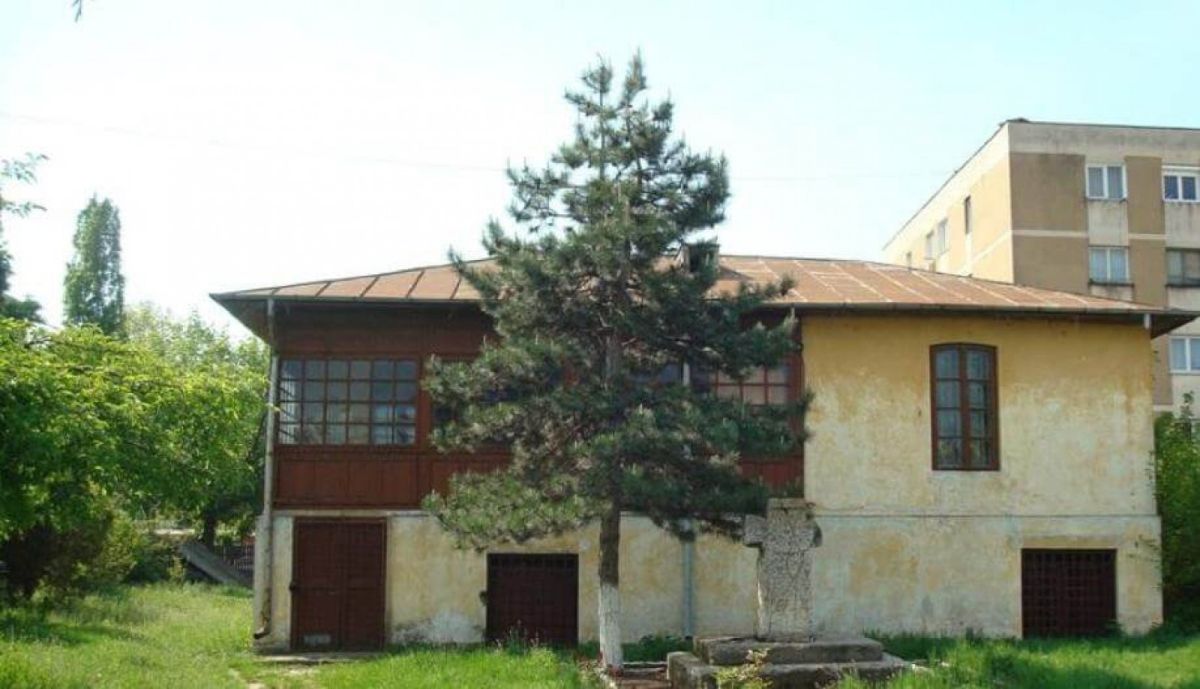
Façade of an old house with an enclosed upper porch, a pine tree in front and a taller building behind it.
The National Heritage Institute’s photograph shows the glazed upper-floor porch. (Photo 1, INP record · National Heritage Institute / cIMeC database, photo 1. · CC BY-SA 4.0)

At the edge of the old centre
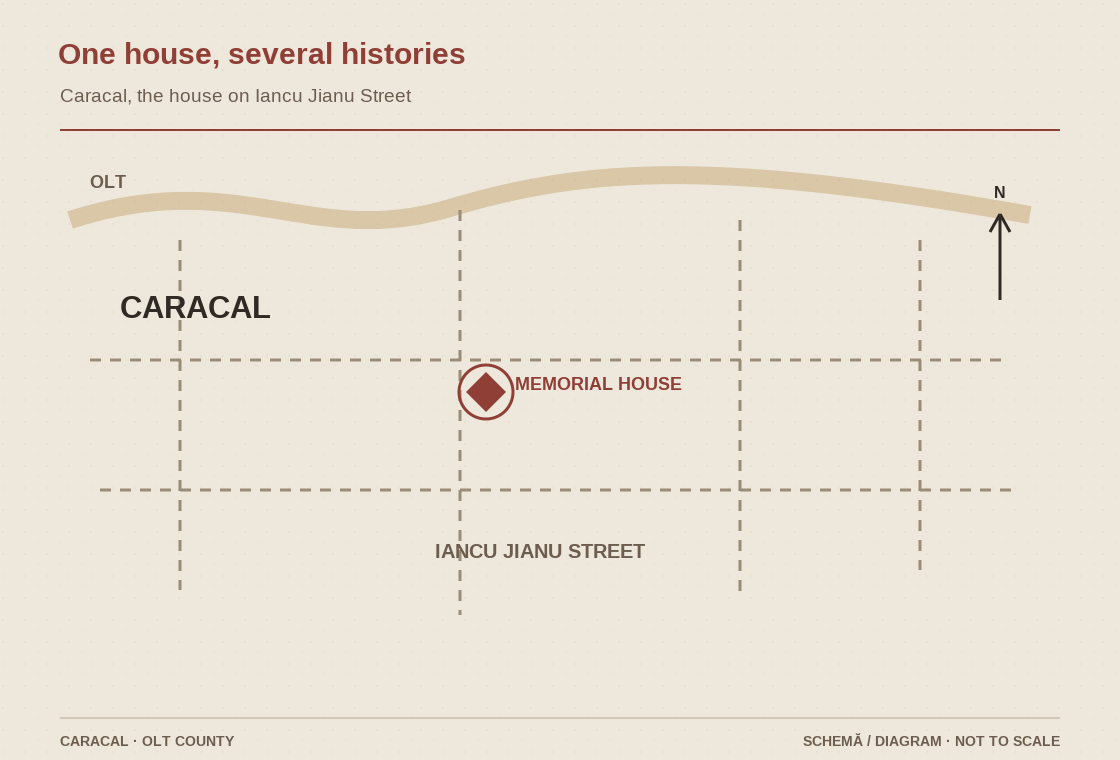
Local orientation diagram showing Olt, Caracal, Iancu Jianu Street and the memorial house marked by a dot.
The marker locates no. 15 Iancu Jianu Street. The street grid is illustrative and not to scale. (Source)

At the edge of the old centre

The house on Iancu Jianu Street

At no. 15 in Caracal, a house with an enclosed porch bears the name of one of its residents. Iancu Jianu was born in town in 1787 and lived here for part of his life. His family belonged to the lesser boyar gentry, and relatives held offices at court and in the county. [1] [4]

The National Heritage Institute names Costache Jianu, Iancu’s father and a court cupbearer, as the likely builder. It tentatively dates the house to the late 18th century. The enclosed upper porch and the main entrance both face north. [1]
Local orientation diagram showing Olt, Caracal, Iancu Jianu Street and the memorial house marked by a dot.
The marker locates no. 15 Iancu Jianu Street. The street grid is illustrative and not to scale. (Source)
Façade of an old house with an enclosed upper porch, a pine tree in front and a taller building behind it.
The National Heritage Institute’s photograph shows the glazed upper-floor porch. (Photo 1, INP record · National Heritage Institute / cIMeC database, photo 1. · CC BY-SA 4.0)

A house described floor by floor

Cellar, ground floor and enclosed porch

The museum record describes a house with a cellar, ground floor and upper floor. The ground floor has three small rooms, thought to have served as a kitchen and food storage; upstairs are three living rooms and a glazed porch facing north. [1] [2]

The oak entrance door has hand-worked iron hinges. The museum record describes narrow openings and small windows in the cellar’s south wall. It suggests they might have helped defend the house in a siege. [1]
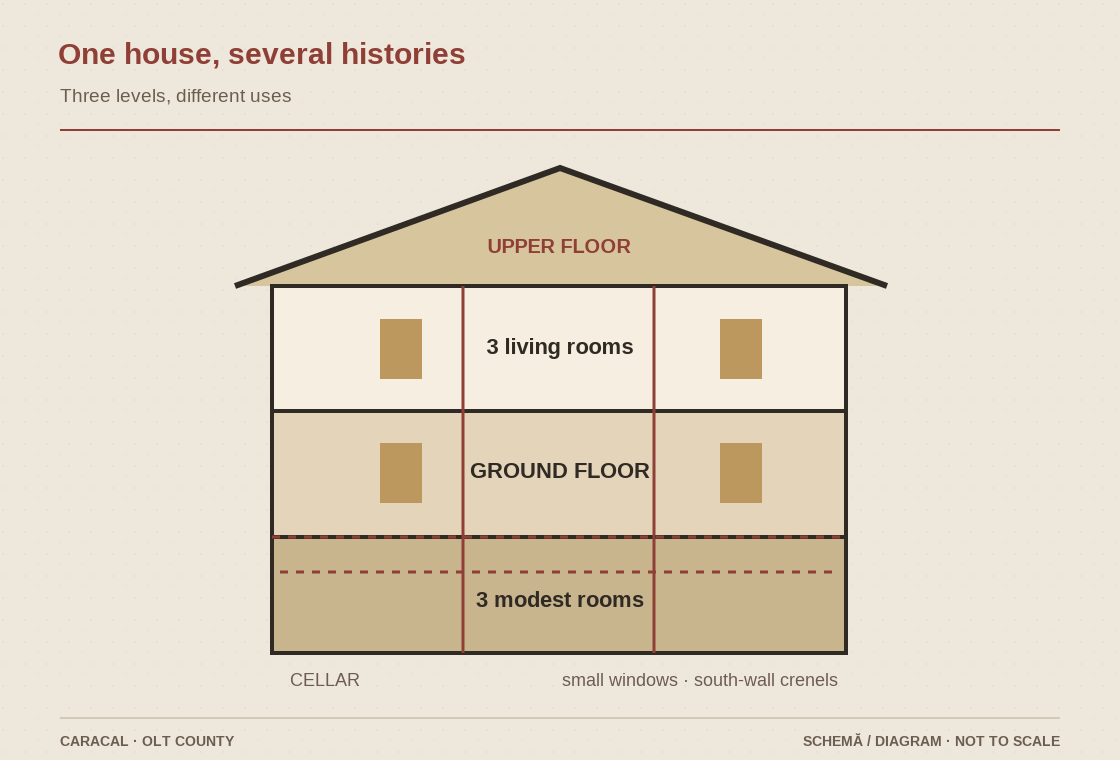
Diagrammatic section through three levels: three upper rooms, three ground-floor rooms, and a cellar with small openings and south-wall crenels.
Room counts follow the INP description. Actual dimensions and layout are not reconstructed. (Source · Editorial diagram based on the documented description; no dimensions inferred.)

Between biography and song

From Oltenia to the revolution of 1821

The National Heritage Institute describes Jianu as an outlaw in Oltenia for seven years. The folk songs that made him famous have kept the memory of that period alive. [1]

The study of Tudor Vladimirescu’s revolution records Jianu in a different setting. In 1821 he was a captain sent on a diplomatic mission to Silistra, a fortress on the Danube. A son of a family of office-holders had become involved in a political movement of his own. [3]
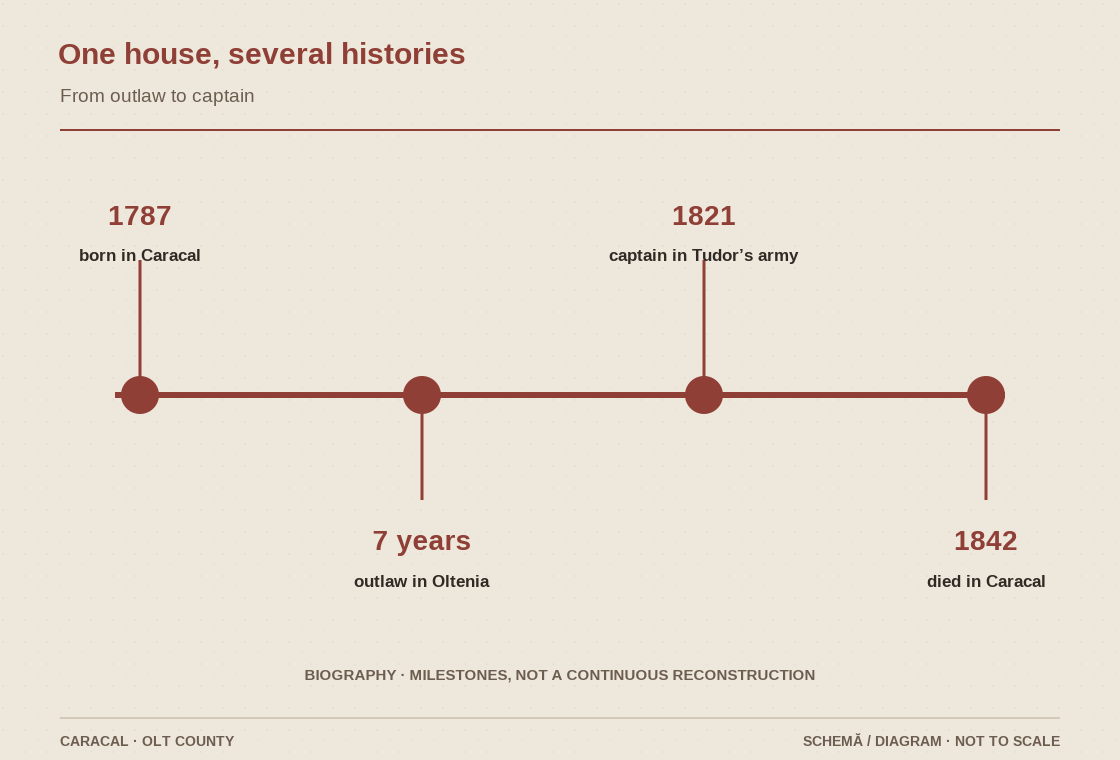
Timeline showing birth in Caracal in 1787, seven years as an outlaw in Oltenia, a captaincy in 1821 and death in 1842.
INP gives a seven-year outlaw period; the study documents his role in 1821. This is not a full chronology. (Source · Editorial diagram based on the documented description; no dimensions inferred.)

What can be checked

What the museum kept from the family

The museum inventory lists an inkwell and brush, flintlock pistols, a shotgun, a broad leather belt, and family photographs and records. Writing equipment and household goods in the same rooms fill out the picture left by songs about the outlaw. [1] [2]

The songs made Jianu a figure people remembered. Family records, photographs and the layout of the house tell us more about how the family lived, with the living rooms upstairs and spaces for household work below. [1]
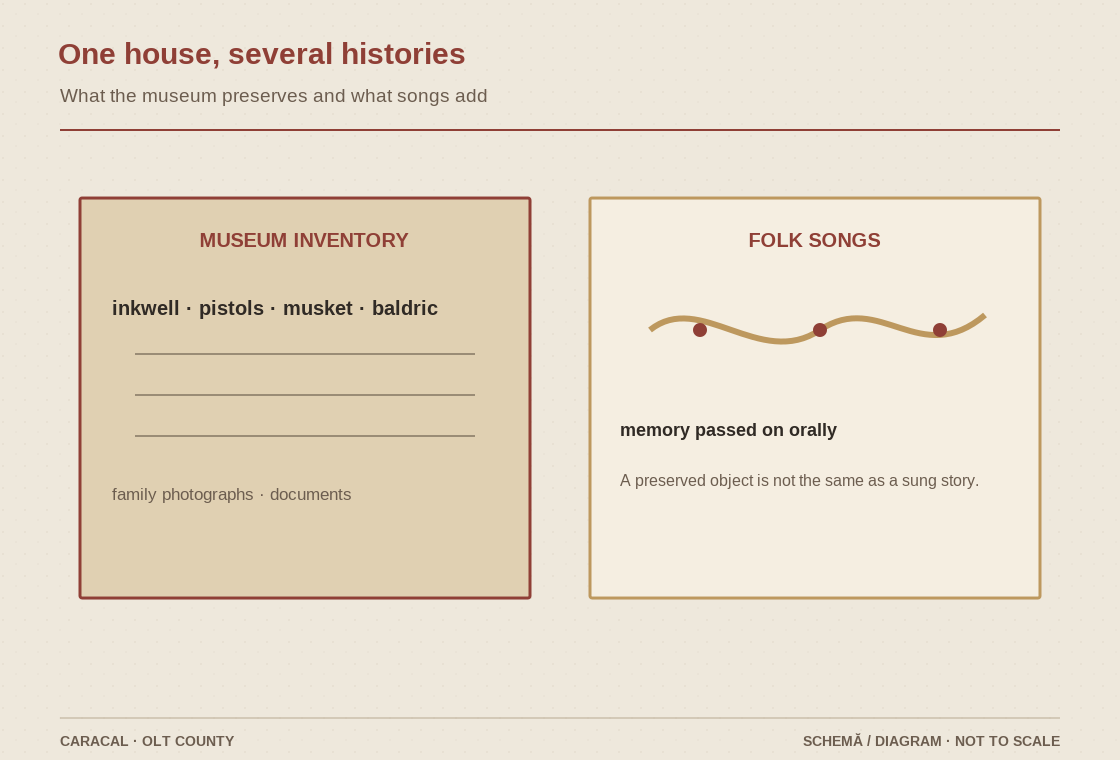
Comparison between a documented museum inventory and memory carried by folk songs.
Inventory condensed from the INP record; it does not claim that an object was used in a specific event. (Source · Editorial diagram based on the documented description; no dimensions inferred.)

The house after Jianu

In 1959 the house became a museum

After reconstruction, the house became part of the Museum of Romanați. It opened on 29 September 1959, more than a century after Jianu’s death in 1842. [1]

From the street you can see the glazed porch. Inside, the three upper-floor rooms belonged to the family’s living quarters. The objects assembled in the museum connect this Caracal house to a life remembered chiefly through the episodes preserved in song. [1] [2]
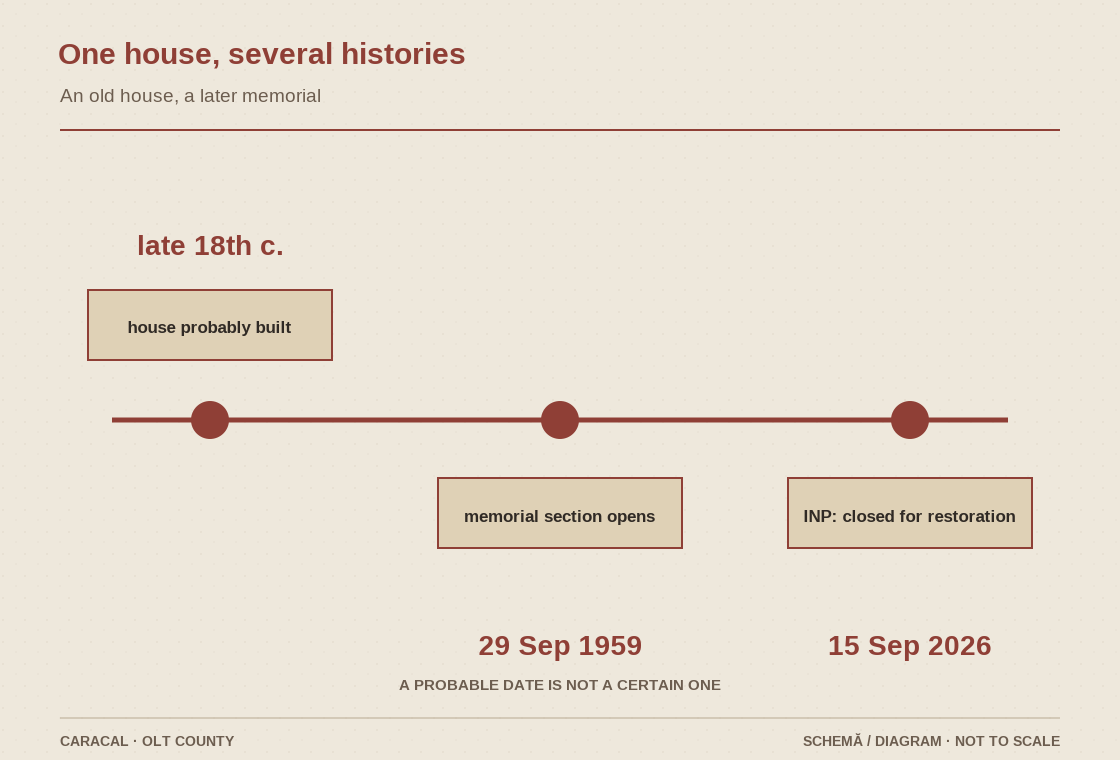
Timeline: probable late eighteenth-century house date, memorial section opening in 1959 and the INP restoration note from 2026.
The house date is probable; the museum opening and record update are explicitly documented. (Source · Editorial diagram based on the documented description; no dimensions inferred.)

Sources

The house shows how a family of lesser landowners lived in Caracal. For what Jianu did in 1821, follow the written accounts and records. The songs tell you how he was remembered.

  1. National Heritage Institute, “Iancu Jianu” Memorial HouseThe record gives the address, cautious house dating (“probably” late eighteenth century), collection, memorial opening date and status displayed on 15 September 2026. The page offers photographs for download under CC BY-SA 4.0.
  2. Caracal Tourist Information Centre, “Iancu Jianu” Memorial HouseDescribes the house by floor and its collection; tunnel stories are explicitly presented by the source as legends, not verified structures.
  3. Petronela-Luminița Tucă, “Captain Iancu Jianu, precursor of Tudor Vladimirescu, in documents and oral histories”A study comparing documents about Jianu’s role in 1821 with later oral memory; it describes him as Tudor Vladimirescu’s captain and diplomatic envoy.
  4. Caracal City Hall, Iancu JianuLinks his birth date to the grave inscription and records his death on 14 December 1842.
  5. Archival photograph of the house, via the INP museum databaseFaçade photograph published in the National Heritage Institute’s museum guide. CC BY-SA 4.0.