In the writer’s home village
In the writer’s home village
A house, a school and a clearing hold different memories
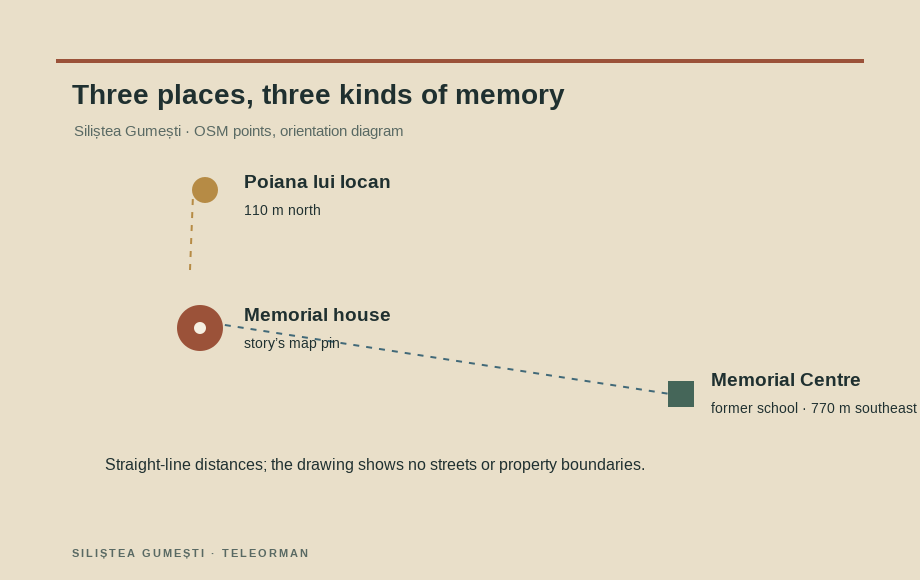
Marin Preda Memorial House is in Siliștea Gumești, the Teleorman village where the writer was born on 5 August 1922. The town hall links this house with his childhood and early life. The Memorial Centre in the former school lies 770 m southeast, while Poiana lui Iocan is 110 m north. These are separate places associated with family, school and fiction. [1] [5] [6] [7]
In the novel villagers gather in Iocan’s Clearing to talk about the world outside the village. In Siliștea Gumești, the clearing is a landmark near the memorial house. The writer’s former school stands at a different address and preserves objects from his school years. [1] [4] [2]
Life and fiction
The novel looks back to village life in the 1930s
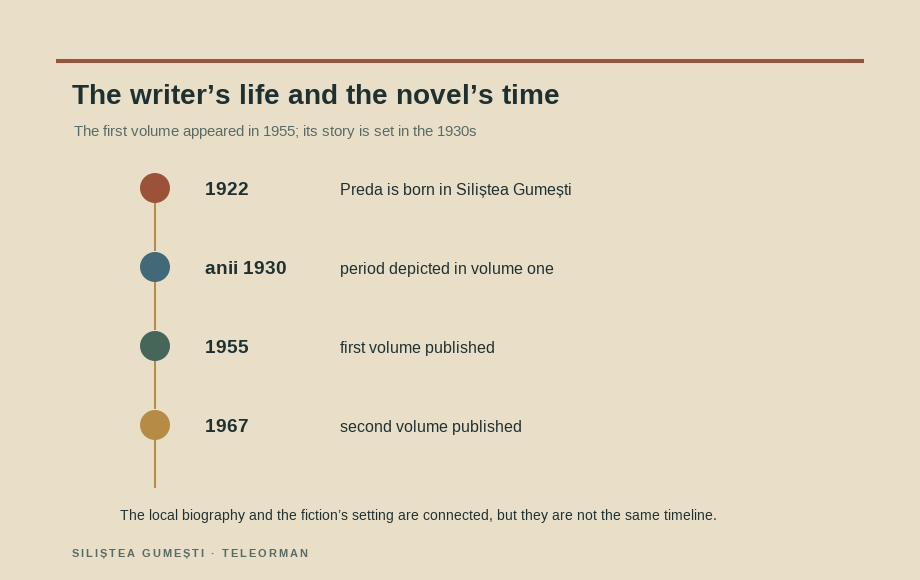
Marin Preda was born in 1922. The Moromete Family follows a peasant family on the Danube plain in the second half of the 1930s, according to scholar Caius Dobrescu. The first volume appeared in 1955 and the second in 1967. The fictional world therefore begins almost two decades before it reached readers as volume one. [1] [4]
That gap changes how we look at the memorial house. The house belongs to Preda’s life; the novel reconstructs a community and its conflicts, rather than serving as an album of addresses. [4] [1]
Society in the novel
The Moromete Family follows people in different social positions
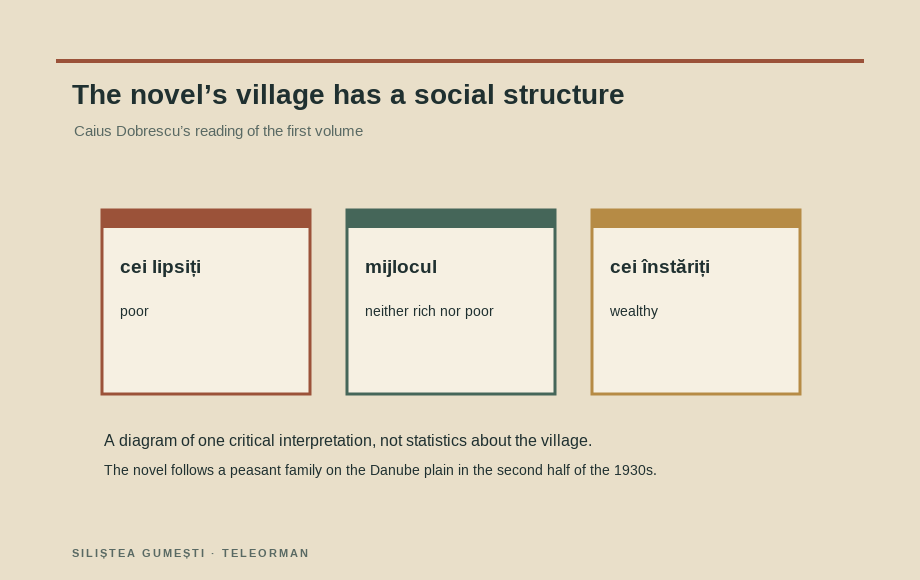
For a reader coming to the novel for the first time, the Moromete family does not live in isolation. In Dobrescu’s reading, the village in volume one has three social positions: people without property, a middle group and the well-off. He follows the tensions between them and how characters negotiate authority, work and freedom. [4]
Poiana lui Iocan is one of the novel’s places where villagers talk about events beyond their community. Dobrescu reads these meetings as a form of rural public life. This interpretation helps explain the novel; it is not a statistical description of Siliștea Gumești in 1935. [4]
Memory in the school
The former school preserves the classroom
The Marin Preda Memorial Centre occupies the former general school, built in 1922. The National Heritage Institute’s record says it displays objects, documents and photographs about the writer, and dates the centre’s establishment to 1982, 60 years after the school was built. The town hall adds that the museum preserves the classroom where Preda studied. [2] [1]
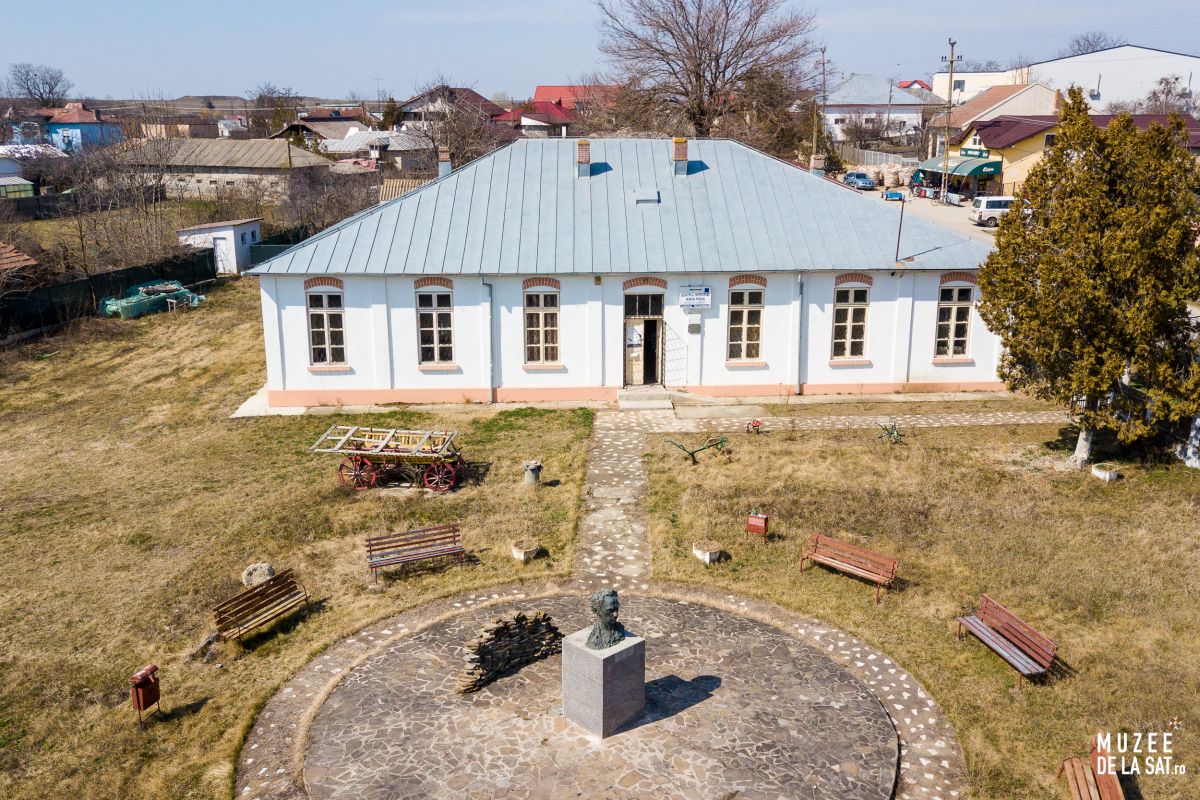
In the courtyard photograph you can see the writer’s bust in front of his former school. The museum record lists photographs, objects and documents. The building preserves a room where Preda studied, a short walk from the memorial house. [2] [1] [6] [5]

Real places, literary memory
Poiana lui Iocan connects the map to fiction
Poiana lui Iocan is a mapped tourist and commemorative landmark north of the memorial house. The town hall describes it as a place associated with The Moromete Family; Dobrescu’s study explains why the clearing matters in the book: characters meet there to discuss politics and life beyond the village. [7] [1] [4]
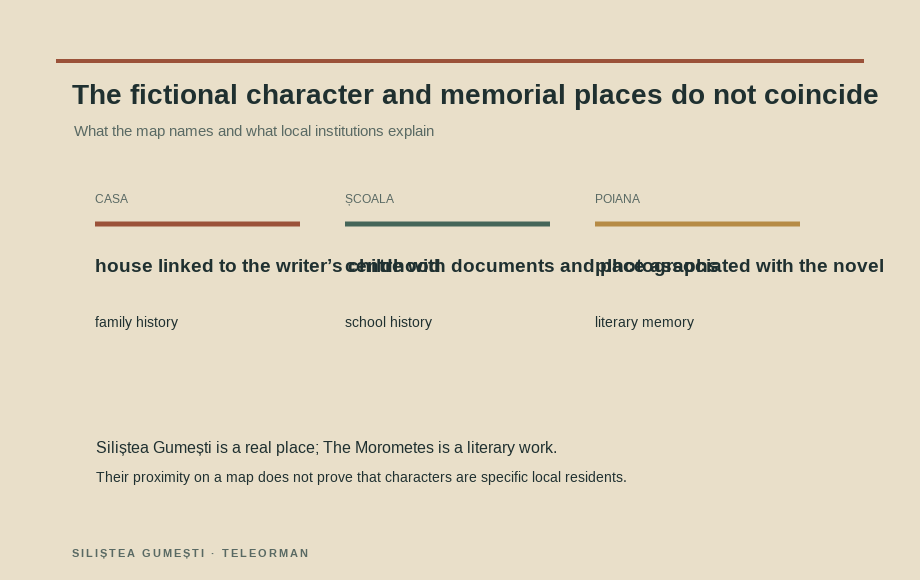
A map point shows where visitors can now find a literary landmark. It does not prove that the novel’s characters correspond directly to people who lived near Preda’s house. Here, the map locates public memory, while the book remains the source for its fiction. [7] [4]
The house as public heritage
What the county approved in February 2023
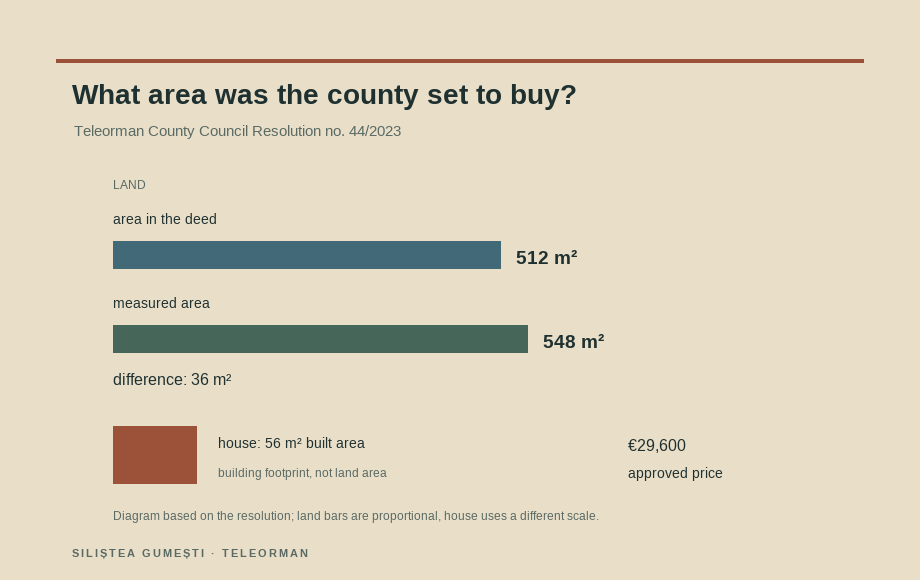
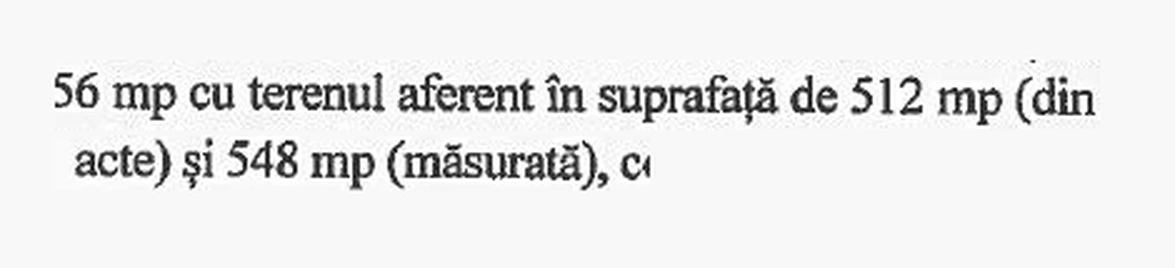
On 27 February 2023 the Teleorman County Council approved the purchase of the house for €29,600. Article 1 records a building footprint of 56 square metres. From the land registry it gives two areas for the same plot, 512 square metres in the deed and 548 measured. [3]
The decision provided for signing a sale contract and handing over the house within 30 days of authentication. In this record the writer’s childhood home appears both as a listed building and as property the county intended to acquire. [3]