Did European rule begin with a conquest?
Yes
A Portuguese fleet took the city from the Marinid sultanate of Fez on 21 August 1415. Historians do not dispute this.2,1
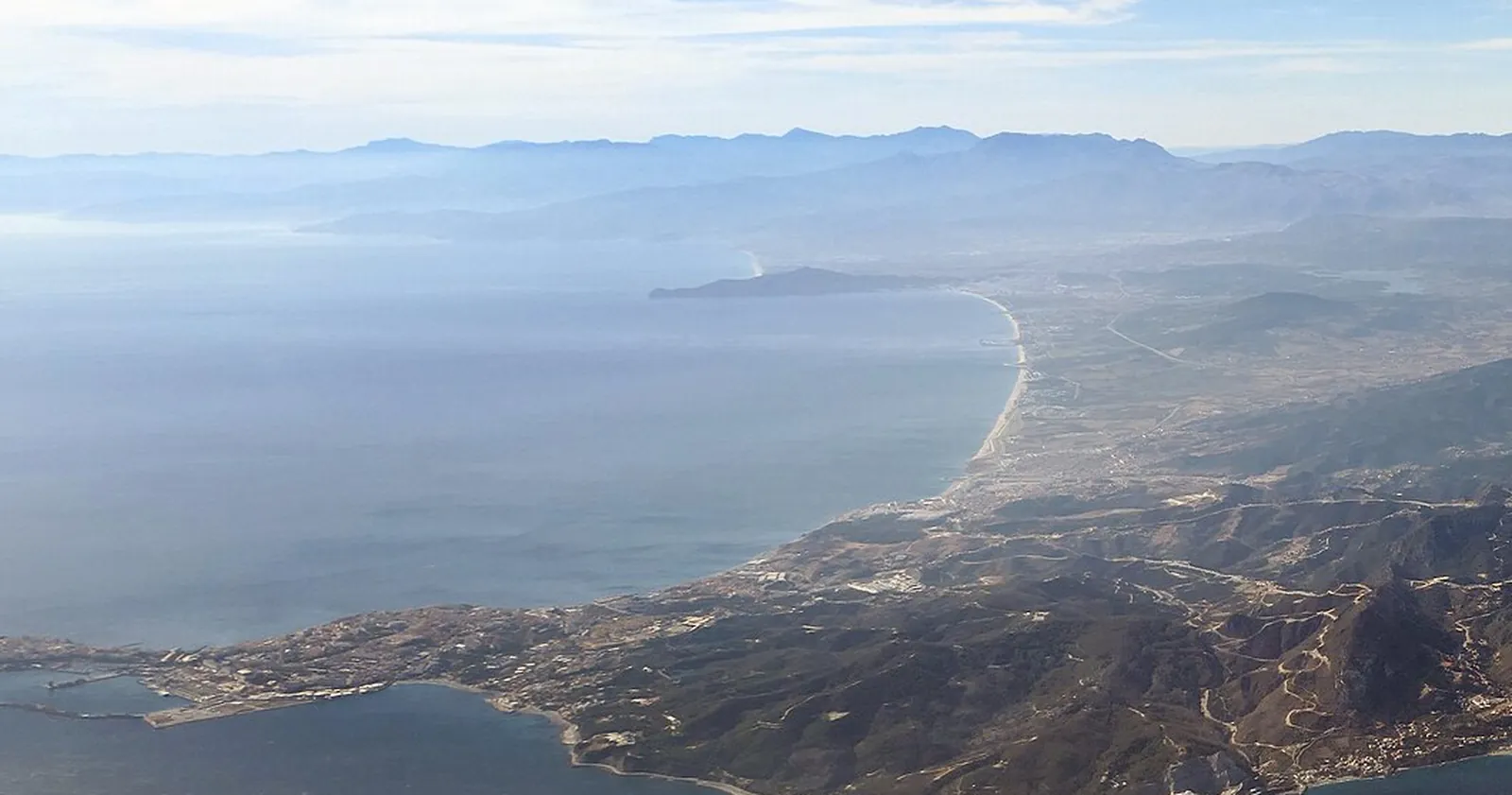
Ceuta · Strait of Gibraltar
Portugal conquered it in 1415. The Spanish crown has held it since 1640. Morocco has claimed it since independence. In the last days of July 2026, more than 70,000 people crossed from Morocco into a city of 83,595 residents. The question is urgent again, and the answer depends on what you mean by “colony”.
People who say “Ceuta is a colony” and people who say “Ceuta is Spain” are usually applying different tests. Pick the meaning you have in mind.
Did European rule begin with a conquest?
Yes
A Portuguese fleet took the city from the Marinid sultanate of Fez on 21 August 1415. Historians do not dispute this.2,1
Are residents governed from afar, without political rights?
No
Since 1995 Ceuta has been an autonomous city of Spain with its own assembly. Residents who hold Spanish citizenship have the same political rights as any other Spaniard and elect one deputy and two senators in Madrid.3,4
Is it on the UN list of territories awaiting decolonisation?
No
The list has 17 territories, including Gibraltar and Western Sahara. Ceuta and Melilla are not on it.5
Does a neighbouring state claim it?
Yes
Morocco calls the city Sebta and has claimed it since independence. Its justice minister restated the claim in August 2026.6,7
The most accurate one-line description: colonial origin, institutions that are not colonial, contested sovereignty. “Obviously illegal” claims more than international law has settled. “Nothing colonial about it” claims more than history allows.
Ceuta has not been “Spanish since 1415”. Portugal conquered it, it came under the same king as Spain, and when the two crowns split, the city’s authorities stayed with Spain.
PortugalShared kingSpanish crown
On 1 December 1640 Portugal proclaims its own king again. Every Portuguese possession goes over to him except Ceuta: the city’s authorities, nobility, clergy and much of the garrison swear loyalty to Philip IV, against their own governor. It was not a plebiscite.2
The Treaty of Lisbon, signed on 13 February 1668, ends the war. Article 2 returns occupied places, with one exception: Ceuta stays with the king of Spain.2
After the Spanish–Moroccan war, the Treaty of Tetuan cedes territory around the city to Spain “in full dominion and sovereignty”.10
Spain gives up its protectorate in northern Morocco but keeps Ceuta, which had never been part of the protectorate. Rabat says decolonisation was left unfinished and takes the question to the UN.11
Organic Law 1/1995 gives Ceuta its own assembly and describes it as an integral part of the Spanish nation.3
On 30 and 31 July more than 70,000 people enter from Morocco. The details are below.12
Ceuta is Spain under the Spanish constitution and for the EU. For customs, Schengen and NATO, though, it has rules of its own, which explain why its border works unlike any other Spanish border.
An autonomous city since 1995, with a local assembly and government. Unlike an autonomous community it cannot pass laws: its assembly makes regulations and can propose laws to parliament. Ceuta elects one deputy and two senators. It had 83,595 registered residents on 1 January 2025.3,4,13
Ceuta is part of the EU but not of its customs territory: the Union Customs Code covers Spain “except Ceuta and Melilla”.14 The first commercial customs post with Morocco opened only in February 2025, with one operation a day in each direction. Over all of 2025 it recorded 49 imports and two exports.15,16
Ceuta is in Schengen under a special regime, set when Spain joined in 1991 and kept by Article 41 of the Schengen Borders Code. Anyone leaving for the mainland by sea or air goes through a check. The Spanish government states plainly that irregular entry into Ceuta gives no right to travel on, to mainland Spain or elsewhere in Europe.17
Article 6 of the North Atlantic Treaty defines where collective defence applies: allies’ territory in Europe and North America, the territory of Turkey, and islands north of the Tropic of Cancer. Ceuta is on the African mainland and fits none of these categories.18
It is not on the list of Non-Self-Governing Territories. The two states have, however, lodged opposing declarations under the UN Convention on the Law of the Sea: Morocco calls Sebta Moroccan territory, Spain asserts full sovereignty.5,6
In two days, almost as many people crossed the city’s border as live in it.
From late June, Moroccan social media carried talk of a mass crossing, and train tickets to the border town of Fnideq were selling out. On 30 July thousands of young people swam around the border breakwaters or walked across, until the next morning. The governments in Madrid and Rabat gave the same explanations: trafficking networks, social-media rumours and the way a Spanish Supreme Court ruling of 29 June had been understood. Under the ruling, people who swim in must be identified individually and go through a return procedure with safeguards; they can no longer be turned back on the spot.22,23
Soraya Aybar, a political scientist and journalist based in Casablanca, spoke with dozens of young people who had crossed: none had heard of the ruling. She noticed something else: Moroccan police, usually very present at this border, were missing for hours.22
There is no single toll. The first counts came separately: Spanish authorities had found 78 bodies in Spanish waters, and the group Caminando Fronteras had counted another 63 in hospitals in northern Morocco, 141 in all.19 The latest official toll, from the authorities in Ceuta and Morocco’s National Human Rights Council, was 96 dead. On 3 September Pedro Sánchez told parliament that 141 people had died; neither his office nor the interior ministry could tell AP how that number was reached.24 Autopsies in Ceuta found many deaths consistent with drowning.25 For comparison, 15 people died at Tarajal in 2014, and at least 23 at Melilla in 2022, by the official count.19
For sovereignty, nothing yet: no treaty, ruling or UN list has changed, and Spain’s request to bring Ceuta into the EU customs union is only a proposal. Politically, two things are clearer. Morocco restates its claim at the highest level. Spain answers more sharply than ever, with a diplomatic summons Albares called unprecedented in Spanish democracy. And the crisis has spread beyond the city: Italy and Austria cite Ceuta in the notifications by which they keep checks at their own borders inside Schengen.20,33
Each side has real arguments. Each argument stops somewhere.
Geography explains why the claim feels intuitive, but it does not create title. If continental continuity were decisive, many islands, enclaves and treaty borders would become unstable.6,38
Morocco has been independent since 1956, but the Moroccan sultanate is older than Spanish rule over the city: the Alawite dynasty, which still reigns, besieged Ceuta from 1694 to 1727. The comparison sets a modern state against an old monarchy.2,11
Conquest explains the origin. Today’s status also depends on later treaties, administration, recognition and the rights of residents.39,3
The residents' will is essential politically and morally. In decolonisation law, though, who counts as the deciding “people” is disputed, and Gibraltar, whose residents want to remain British, is still on the UN list.37,40,5
The UN has issued no ruling on sovereignty. The city’s absence from the decolonisation list is an institutional fact, not a verdict.5
No treaty, law or international list has changed. Spain has only asked for the city to join the EU customs union, which would tie it more closely to the Union. What changed is the diplomatic tone and the checks at the EU’s internal borders.20,33,32
Both have a medieval conquest in their history. The difference is that Greece does not claim Istanbul, and most of Turkey’s borders were fixed by the Treaty of Lausanne in 1923.41
| Case | Like Ceuta | Unlike Ceuta |
|---|---|---|
| Gibraltar | Territory held by a European power at the same strait, claimed by a neighbour. | It is on the UN decolonisation list, and the 1713 Treaty of Utrecht gives Spain first refusal should Britain ever give it up.42,5 |
| Western Sahara | Morocco frames both as territorial integrity. | It is on the UN list, and the International Court of Justice said in 1975 that historical ties do not displace self-determination.37,5 |
| Hong Kong | Long European control that began with unequal arrangements. | Britain and China negotiated a transfer, registered at the UN, for 1997. Spain refuses any talks with Morocco about Ceuta’s sovereignty.43,20 |
| Goa | A centuries-old Portuguese enclave called unfinished decolonisation by its neighbour. | India took it by force in December 1961. Portugal and several Security Council members called this a breach of the UN Charter; India answered that it was ending colonial rule.44,45 |
International law keeps many borders drawn under coercion, yet refuses to legalise new conquests. The tension is deliberate.
An act is judged first by the law of its time. Then later treaties, recognition and administration count. That is why 1415 is central to the history but not the whole legal analysis.39
Since 1945, territory taken by force cannot be recognised as lawful. That makes a medieval conquest and a twenty-first-century one very different legal problems.45,46
Ceuta passed from Portuguese conquest to the Spanish crown through a dynastic union, a separation and a treaty. A claim today cannot skip those steps.2
The hard question is whether today’s residents are the “people” who decide, or whether decolonisation is owed to a larger territorial unit. Different disputes have been answered differently.37,38
Colonial history is not the same thing as colonial status. Ceuta’s origin is colonial. Its institutions today lack the marks of a colony: residents elect their local assembly and their members of the Spanish parliament. Spain rests on treaties and centuries of administration. Morocco has a real and constant claim, which the summer of 2026 brought back to the highest political level. The dispute survives because these truths do not cancel each other out.
Legal texts and institutional documents come first. Reporting on 2026 is current to 27 September 2026.
Encyclopaedia Britannica · rev. 23 Sep 2026 · History
Short history: Portugal from 1415, the Spanish crown from 1580, Franco's 1936 expedition, the 1995 statute.
136 años antes de que naciera Estados Unidos, Ceuta ya era española
Confilegal (Carlos Berbell) · 1 Aug 2026 · History
The conquest of 21 August 1415, the 1640 oath to Philip IV (no plebiscite), the 1694–1727 siege and Article 2 of the Treaty of Lisbon.
Ley Orgánica 1/1995, Estatuto de Autonomía de Ceuta
Boletín Oficial del Estado · 13 Mar 1995 · Status
Autonomous-city statute: its own assembly, self-government, Ceuta an integral part of the Spanish nation.
Constitución Española, artículos 68.2 y 69.4
Boletín Oficial del Estado · 1978 · Status
Ceuta elects one deputy and two senators.
List of Non-Self-Governing Territories
United Nations, Decolonization Unit · consulted 27 Sep 2026 · Status
17 territories, including Western Sahara and Gibraltar. Ceuta and Melilla do not appear.
UNCLOS: declarations by Morocco and Spain on Sebta / Ceuta
UN Treaty Collection · 2007–2008 · Status
Opposing declarations lodged at the UN: Morocco calls Sebta Moroccan territory, Spain asserts full sovereignty.
Infobae · 11 Aug 2026 · 2026
Morocco's justice minister, Abdellatif Ouahbi: the issue is raised at every meeting with Spain.
Encyclopedia of European Expansion, NOVA University Lisbon · reference entry · History
Academic entry: the Portuguese conquest, the Iberian Union and the 1668 settlement.
El asedio de Ceuta (1694–1727)
Ceuta Turismo · reference entry · History
The siege came in phases, with a break between 1720 and 1721.
Debate reproducing the 1860 Treaty of Tetuan
United Nations, General Assembly record A/PV.945 · 1960 · History
The 1860 treaty text in which Morocco cedes territory around Ceuta to Spain.
Moroccan statements on Ceuta, Melilla and decolonisation (A/C.4/SR.1005)
UN General Assembly, Fourth Committee · 1960s · Status
Morocco presents Ceuta and Melilla as unfinished decolonisation.
The Government of Spain steps up coordination of measures to restore normality in Ceuta
La Moncloa · 25 Aug 2026 · 2026
More than 70,000 people in Ceuta on 30 and 31 July; over 90% returned to Morocco; a situation of national-security concern; €25 million for minors.
Padrón: Ceuta, población por sexo (table 2908)
Instituto Nacional de Estadística · 1 Jan 2025 · Status
83,595 registered residents on 1 January 2025.
Customs territory of the Union
EU Regulation 952/2013 (Union Customs Code), Article 4 · 2013 · Status
The EU customs territory covers Spain "except Ceuta and Melilla".
La aduana de Ceuta abre de forma oficial; 49 importaciones y 2 exportaciones en 2025
El Mercantil / El Pueblo de Ceuta · 13 Feb 2025; Jan 2026 · Status
The first commercial customs post with Morocco, opened in February 2025 with one operation a day each way.
La aduana de Ceuta con Marruecos registra 49 importaciones y solo 2 exportaciones en 2025
El Pueblo de Ceuta · Jan 2026 · Status
The first year of the commercial customs post.
Ceuta, Melilla and the integrity of the Schengen Area
Ministerio de Asuntos Exteriores de España · 2026 · Status
The special 1991 regime, kept by Article 41 of the Schengen Borders Code; checks on departure for the mainland.
The North Atlantic Treaty, Article 6
NATO · 4 Apr 1949 · Status
The collective-defence guarantee covers allies' territory "in Europe or North America" and islands north of the Tropic of Cancer.
Ceuta migrant disaster death toll rises to 141
Middle East Eye · 5 Aug 2026 · 2026
78 bodies in Spanish waters (Spanish officials, to Cadena SER), 63 in hospitals in northern Morocco (Caminando Fronteras); Morocco has not confirmed.
Infobae / Europa Press · 22 Sep 2026 · 2026
Spain's foreign minister, in New York; the summons of Morocco's envoy on 21 August.
Around 60,000 migrants cross into Spain's Ceuta exclave from Morocco
France 24 · 31 Jul 2026 · 2026
First estimates, and the comparison with May 2021, when more than 10,000 people reached Ceuta in two days.
What really happened in Ceuta? Why we may never find out
NPR · 16 Aug 2026 · 2026
The 15 August attempt, stopped by Moroccan police; El País's estimate of at least 8,000 people still there.
Consejo General del Poder Judicial · 29 Jun 2026 · 2026
Ruling 814/2026: people who swim in go through an individual return procedure, with safeguards.
Spanish Prime Minister Pedro Sánchez struggles to answer lawmaker questions about Ceuta crisis
Associated Press · 3 Sep 2026 · 2026
Latest official toll: 96 dead in Spain and Morocco; Sánchez's 141, unexplained; the 2 September protests.
España acelera la identificación de los migrantes muertos en Ceuta
Ámbito (Reuters) · 7 Aug 2026 · 2026
Autopsies: many deaths by cardiorespiratory arrest consistent with drowning; forensic teams sent to Ceuta.
Spain installs floating barrier off Ceuta after deadly migrant crossings
Al Jazeera · 1 Aug 2026 · 2026
The floating barrier of about 500 metres on the sea border.
Italy temporarily reintroduces border controls with Spain
Euronews · 31 Jul 2026 · 2026
Italy reintroduces checks on arrivals from Spain; France tightens its land-border checks.
Italy and Denmark put forward letter to EU leaders, signed by 22 Heads of State and Government
Governo Italiano · 1 Aug 2026 · 2026
The letter asks for an extraordinary video conference of interior ministers and names mass regularisation a pull factor.
Results of the informal video conference of Home Affairs Ministers
Irish Presidency of the Council of the EU · 4 Aug 2026 · 2026
The informal video conference of interior ministers: support for Spain, preparing the October European Council.
España traslada a Marruecos su rechazo «tajante» a las pretensiones sobre Ceuta y Melilla
EFE · 22 Aug 2026 · 2026
Ouahbi calls for a dialogue commission; Spain's foreign ministry answers with a categorical rejection.
Spain asks the EU for Frontex support for the migrant screening process in Ceuta
La Moncloa · 28 Aug 2026 · 2026
Spain asks for ten more Frontex officers and support from Europol and the EU Asylum Agency.
Appearance of the President of the Government before the Congress on Ceuta
La Moncloa · 3 Sep 2026 · 2026
Sánchez: about 70,000 entries, no solid evidence of a Moroccan plan, the request for customs-union and outermost-region status.
Temporary reintroduction of border control: current notifications
European Commission, Migration and Home Affairs · consulted 27 Sep 2026 · 2026
Italy: checks at air and sea borders with Spain, 16 September–1 October 2026. Spain: the same with Italy, 23 September–7 October 2026.
Most of Ceuta's 2,000 unaccompanied minors will not return to Morocco, Spain says
Euronews · 21 Sep 2026 · 2026
Minister Sira Rego's statement, not yet confirmed by the interior minister.
La frontera con Ceuta amanece blindada y en calma el día de las elecciones en Marruecos
Infobae / EFE · 23 Sep 2026 · 2026
Morocco's election day: calls for another mass crossing, a calm border.
Marruecos garantiza a España que colaborará para impedir una nueva entrada de migrantes
EFE · 23 Sep 2026 · 2026
Albares on SER radio: Morocco's guarantee and the king's visit to Ceuta "within weeks".
Western Sahara, advisory opinion
International Court of Justice · 16 Oct 1975 · Comparisons
Historical ties do not displace the territory's people's self-determination.
Frontier Dispute (Burkina Faso / Mali)
International Court of Justice · 22 Dec 1986 · Law
Borders inherited from colonial rule are kept at independence (uti possidetis).
UN Reports of International Arbitral Awards · 1928 · Law
Intertemporal law: an act is judged by the law of its time, and title must then be maintained.
Gibraltar: positions on sovereignty and self-determination (A/61/710)
United Nations · 2007 · Comparisons
The positions of the UK, Spain and Gibraltar.
Treaty of Peace with Turkey (Lausanne)
UK Treaties Online · 24 Jul 1923 · Comparisons
The treaty that fixed modern Turkey's borders.
Treaty of Utrecht, Article X (Gibraltar)
Avalon Project, Yale Law School · 1713 · Comparisons
The clause giving Spain first refusal should Britain give up Gibraltar.
Sino-British Joint Declaration on Hong Kong
UN Treaty Series · 19 Dec 1984 · Comparisons
A bilateral, registered transfer, for 1997.
Questions concerning Goa, Damão and Diu
UN Yearbook 1961 · 1961 · Comparisons
India takes the Portuguese enclaves by force in December 1961.
United Nations · 1945 · Law
The ban on force against a state's territorial integrity.
Friendly Relations Declaration, Resolution 2625 (XXV)
UN General Assembly · 24 Oct 1970 · Law
No territorial acquisition by force shall be recognised as legal.