Cizer, Sălaj
Cizer, Sălaj
What connects the church to Horea?
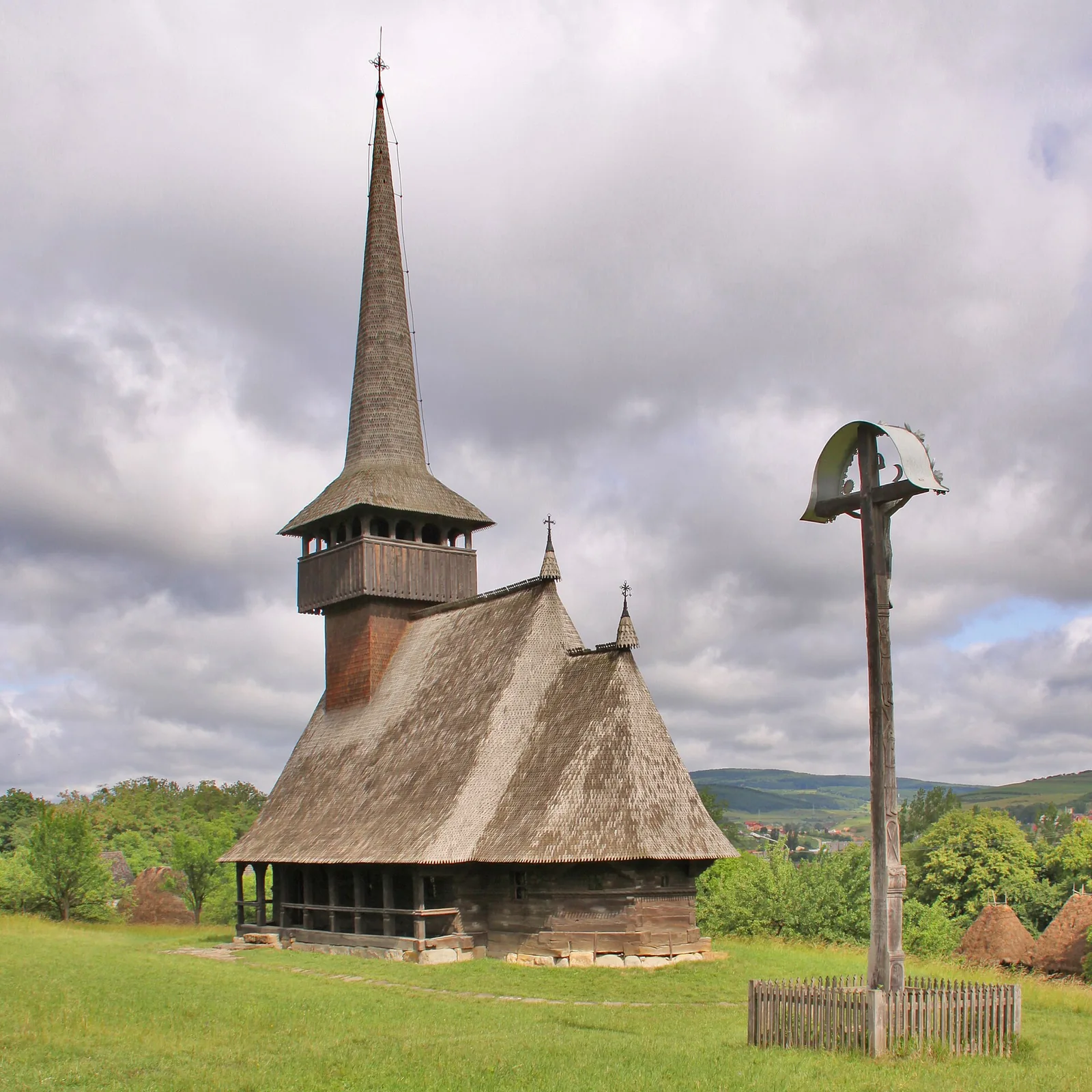
The wooden church was built in Cizer, in today’s Sălaj County. It now stands in the “Romulus Vuia” National Ethnographic Park in Cluj-Napoca; the ETNOMON record gives its transfer date as 1968. The map marks the village of origin, not the building’s present location. [1]
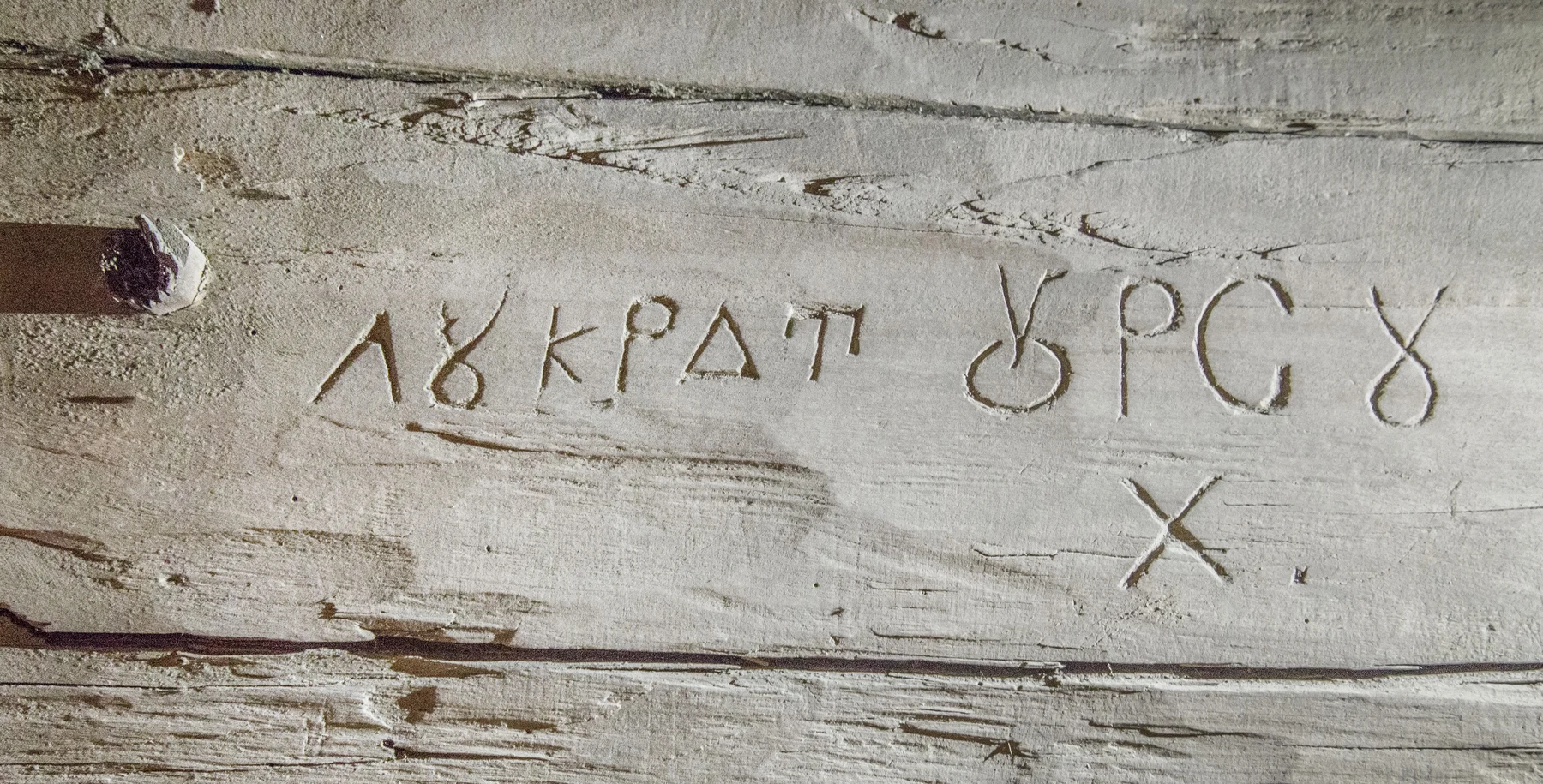
Cluj County Council says Horea built the church and left his signature. Ethnographer Ioan Toșa transcribed the Cyrillic inscription as “Lucrat Ursu H”; the National Heritage Institute gives Horea’s historical name as Vasile Ursu Nicula, while ETNOMON lists the builder as Nicola Ursu. ETNOMON and the national record give the name in a different order, but both retain “Ursu.” [10] [14] [15] [1]
1773
Where the year 1773 comes from
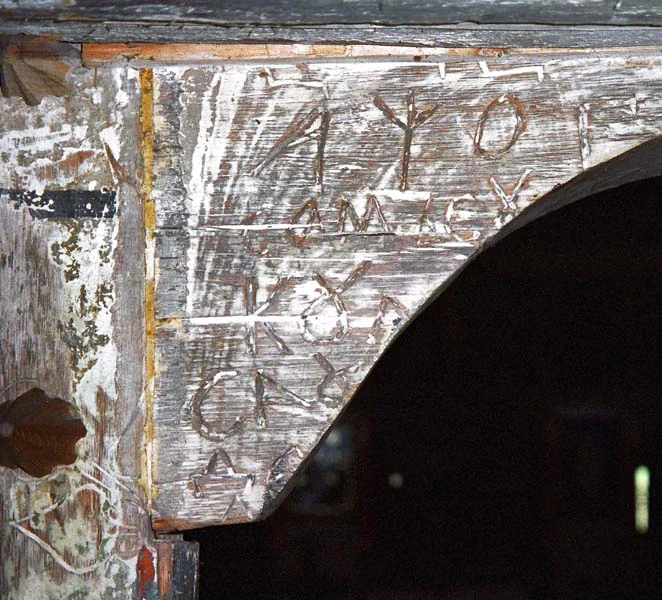
ETNOMON dates the church to 1773. Alexandru Baboș’s 2001 photograph preserves a date inscription in the timber, but the numerals are not fully legible in this frame; the year is documented in the monument record. [1] [2]
In a 2014 interview, Toșa said Horea settled with his family near Ciucea around 1770. The church’s date three years later places it in the same period, before Horea led the 1784 uprising. This context makes the attribution plausible; the signature and records remain the evidence to examine. [14] [15] [1]
Plan and materials
How the church is built
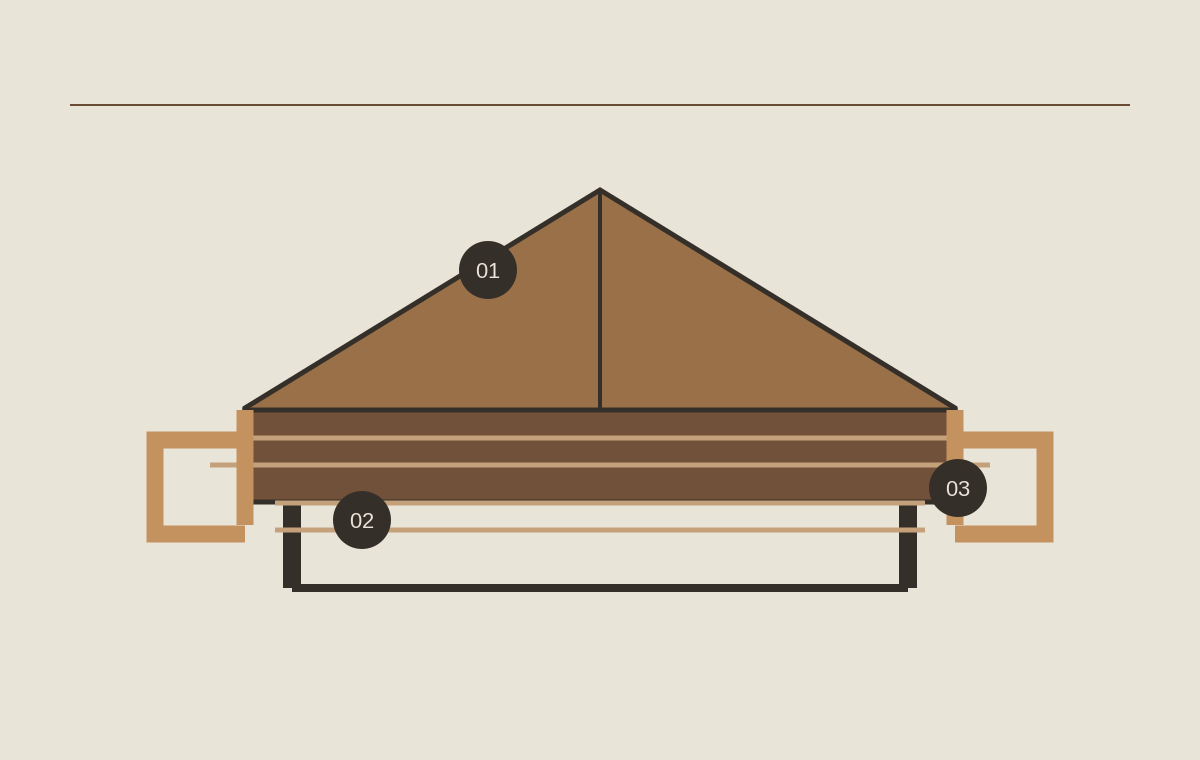
The ETNOMON record describes walls made from oak beams, an open porch on three sides, and a hipped roof covered with fir shingles. These details explain how the church is built and what materials were used; they are not a reconstruction of every repair made over time. [1]
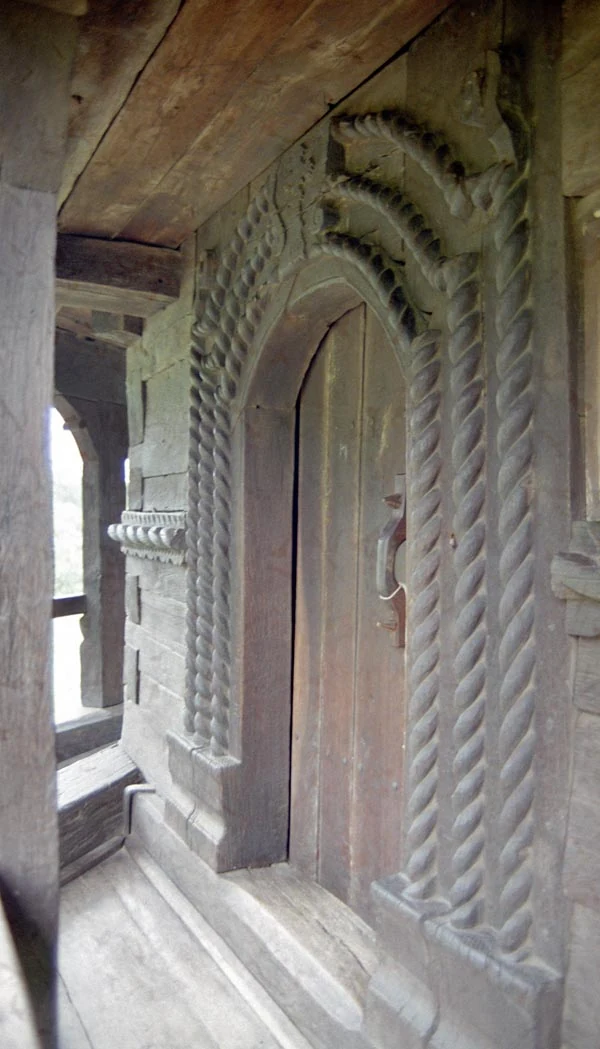
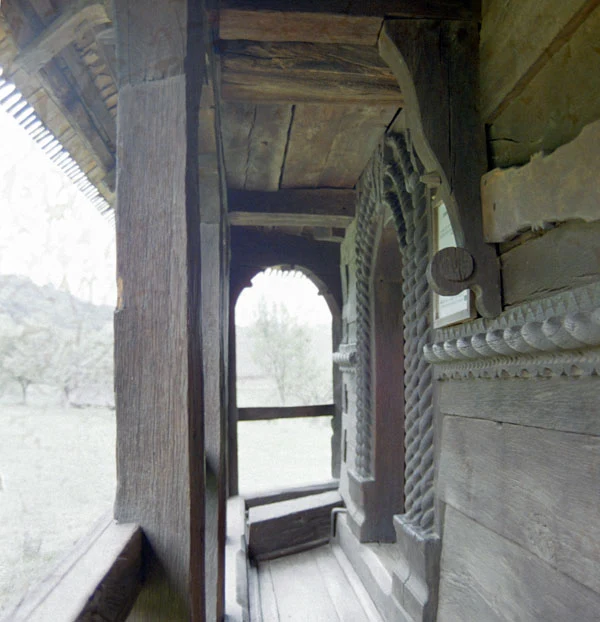
Look at the porch in the photograph: posts, arches and beam ends form a sheltered space before the door. An explanatory diagram summarises the museum record’s terms, but it is not a measured survey or a scale plan. [6] [1]

Traces of use
What was restored after 1997
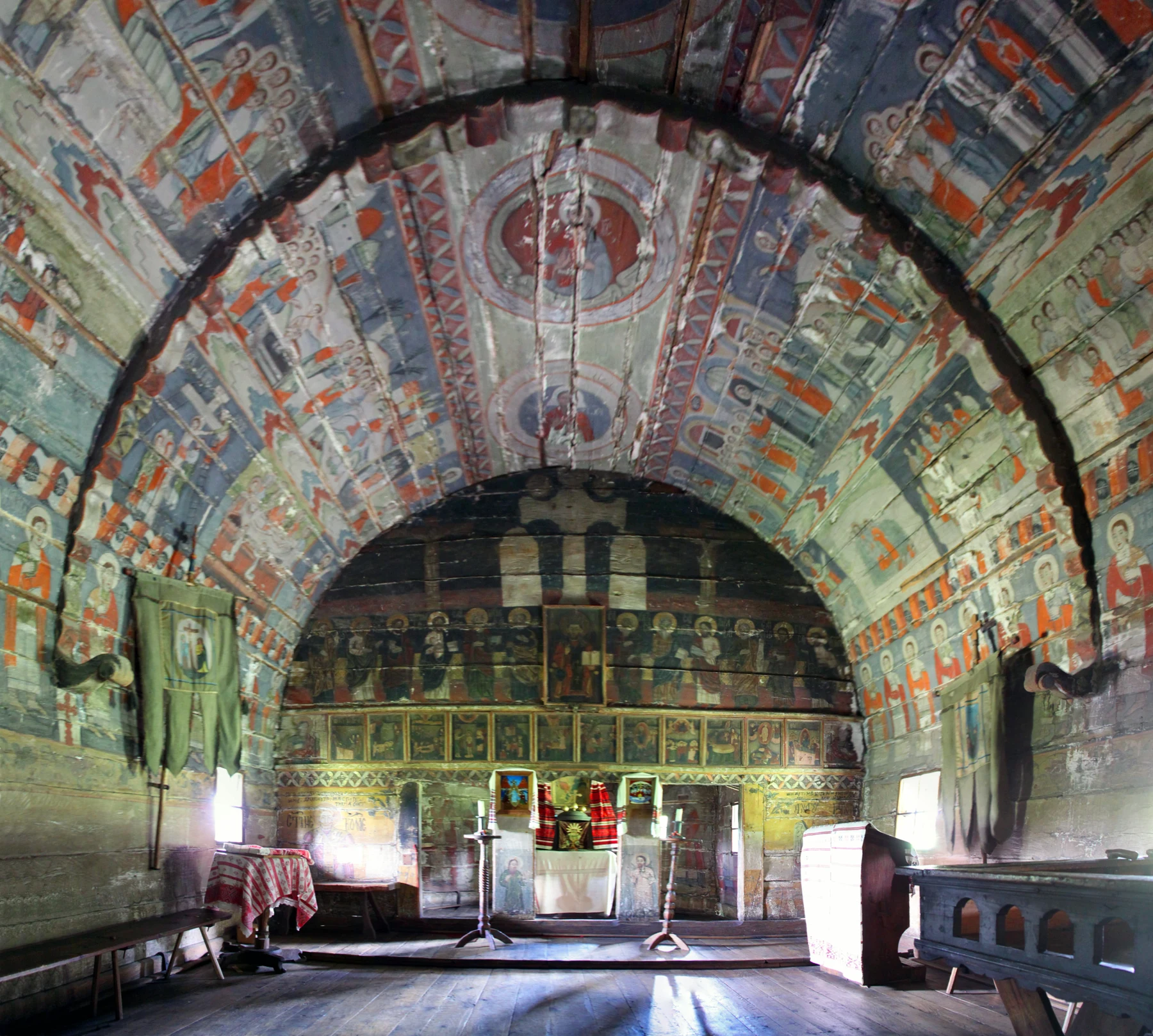
The interior walls and vault are painted; photographs show scenes as well as worn surfaces and breaks in the paint layer. The monument record identifies tempera and decoration on the walls, ceiling and vault. The image documents a fragile object, but cannot by itself date each loss or retouching. [8] [1]
A 1997 condition note recorded deteriorated shingles and painting damaged during transport; at the time, its author said the paintings had not been restored. That changed: the museum yearbook says the 2014–2017 project secured the paint layer and repaired the roof frame. A conservator’s work list records interventions at Cizer in 2015–2016. [1] [11] [12]

1968
From Cizer to the Cluj museum
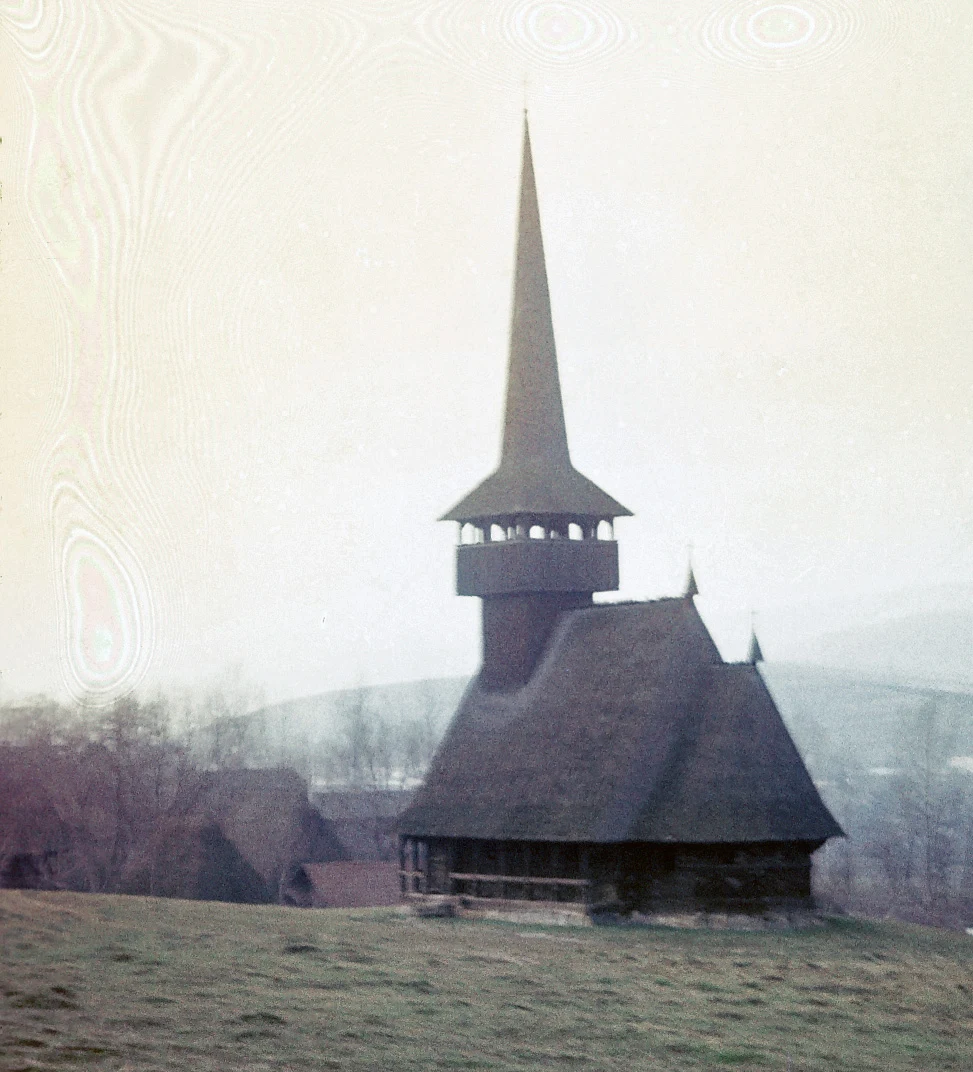
In 1968 the church was transferred to the “Romulus Vuia” National Ethnographic Park in Cluj-Napoca. The monument can now be seen in the open-air museum, away from the village for which it was built. The record gives the year of the move but not a detailed route or a full account of dismantling and reassembly. [1]
The 1988 and 2006 photographs show the building from different angles, before the 2014–2017 restoration. The museum record gives 1968 as the transfer year; the photographs do not show the transport route and cannot serve as a before-and-after comparison of the restoration. The map stays at the village of origin. [4] [5] [1] [11]


2014–2020
After restoration, the museum starts a digital project
Between 2014 and 2017, the museum and county restored the wooden churches at Cizer and Petrindu. The museum yearbook says the paint layer was secured, the roof frames repaired, and the surrounding ground arranged to carry rainwater away. A conservator’s work list records interventions at Cizer in 2015–2016. [10] [11] [12]
In November 2020, the museum announced a project to scan the church for a virtual-reality experience and to restore/conserve 57 associated objects. The announcement came in the project’s eighth month: it described work under way and its first results, not a completed scan. [13]