Marius ComperTeleki Castle in Coltău
Română

Teleki Castle in Coltău

Coltău, an autumn on paper

At Teleki Castle, a honeymoon left traces in two letters and a poem. Follow what each page can tell us.

Start the story ↓
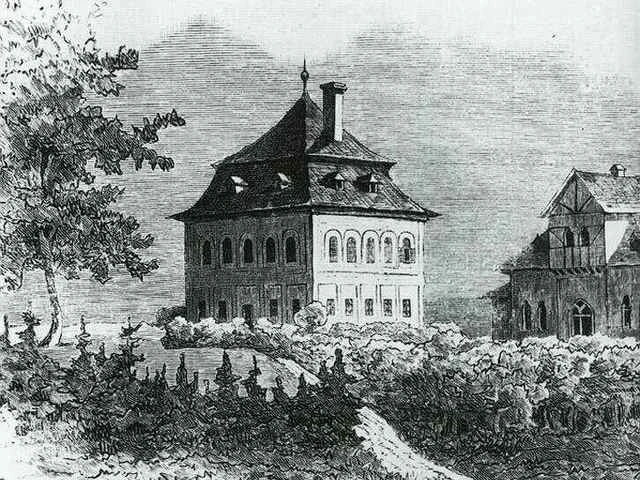
Nineteenth-century drawing of the castle and surrounding land.
Teleki Castle drawn by Mór Jókai around 1876, nearly three decades after the couple’s stay. (Source · Mór Jókai / Wikimedia Commons · Public domain)

The castle

Nineteenth-century drawing of the castle and surrounding land.
Teleki Castle drawn by Mór Jókai around 1876, nearly three decades after the couple’s stay. (Source · Mór Jókai / Wikimedia Commons · Public domain)

The castle

The house lent by a friend

Sándor Petőfi and Júlia Szendrey married on 8 September 1847. They stayed at Coltău in the castle of the poet’s friend Sándor Teleki. The museum preserves the link between the writer and the place. [1] [4]

Mór Jókai’s drawing shows the castle decades later. For the couple’s stay in 1847, look to the letters and writings dated at Coltău. [2] [3] [6]

Nineteenth-century drawing of the castle and surrounding land.
Teleki Castle drawn by Mór Jókai around 1876, nearly three decades after the couple’s stay. (Source · Mór Jókai / Wikimedia Commons · Public domain)

The letters

How do you get a letter to Coltău?

On 7 September János Arany wrote to Petőfi from Salonta. He asked where Coltău was and who would carry his letter from Baia Mare. His question makes the place more concrete than a date in a biography. [2]

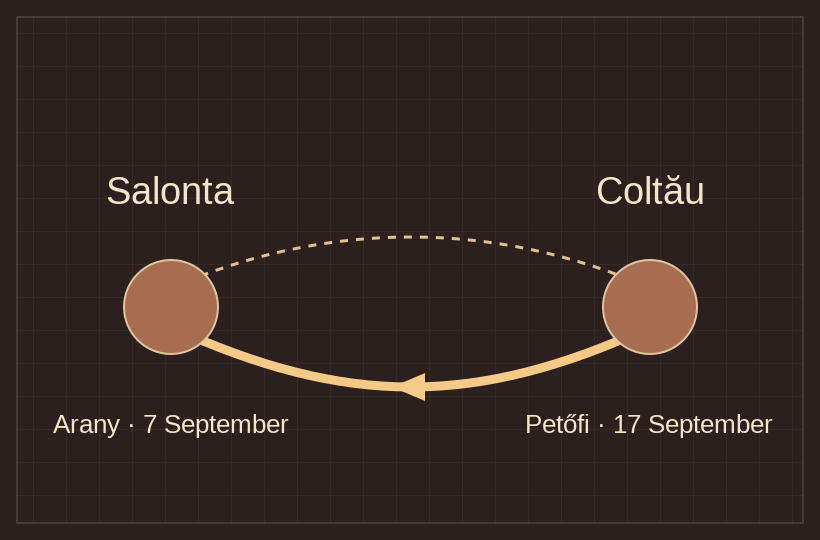
Reverse the direction. The catalogue records a reply Petőfi dated at Coltău on 17 September. Those are the letters’ dates, and the line simply connects the places in the exchange. [3]
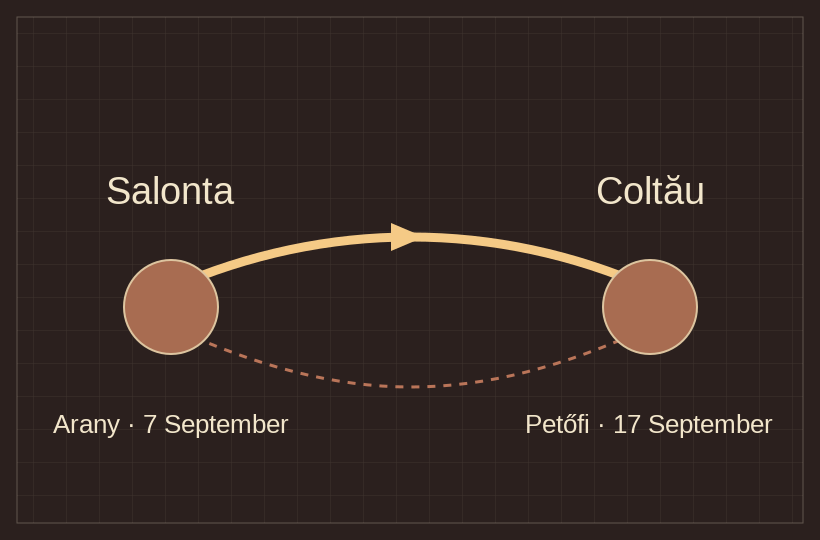
Two places, Salonta and Coltău, connected schematically.
Direction of the letter dated at Salonta on 7 September 1847. The line joins the places named in the correspondence. (Source)
The line returns from Coltău to Salonta.
The reply is dated at Coltău on 17 September. The line shows the direction of the correspondence. (Source)

The manuscript

A leaf at the end of September

The opening of “Szeptember végén” sets flowers still visible in the valley alongside snow on the ridge. The image opens a poem about time and separation. [5]

Zoom into the opening of the leaf. The title and lines are on the page. The manuscript gives no particular window or tree from which the poet was looking. [5]
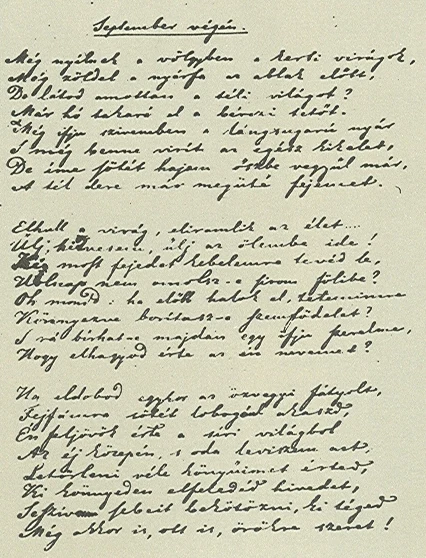
A narrow leaf in handwritten Hungarian.
The handwritten leaf of “Szeptember végén” (“At the end of September”). (Source · Sándor Petőfi / Wikimedia Commons · Public domain)
A narrow leaf in handwritten Hungarian.
On the same leaf, the opening lines move from flowers in the valley to snow on the ridge. (Source · Sándor Petőfi / Wikimedia Commons · Public domain)

Poem and letter

What a place name on the page establishes

The letter supplies a date, a place and a recipient. The poem preserves a landscape in the voice of someone addressing another person. Read together, they give different evidence about the stay and the writing. [2] [3] [5]

Move back from the poem to the route. Coltău was also a place a friend had to find so a letter could reach it. [2]

The line returns from Coltău to Salonta.
The reply is dated at Coltău on 17 September. The line shows the direction of the correspondence. (Source)
A narrow leaf in handwritten Hungarian.
The handwritten leaf of “Szeptember végén” (“At the end of September”). (Source · Sándor Petőfi / Wikimedia Commons · Public domain)

Since then

How the castle became a museum

The exhibition devoted to Petőfi took shape in the twentieth century. The castle’s account traces it from a single memorial room to exhibits across the upper floor. [1] [4]

The sculpture in the grounds is part of the later commemoration. At Coltău you can put it beside the older drawing and the poem through which many readers came to know the place. [4] [5] [6]
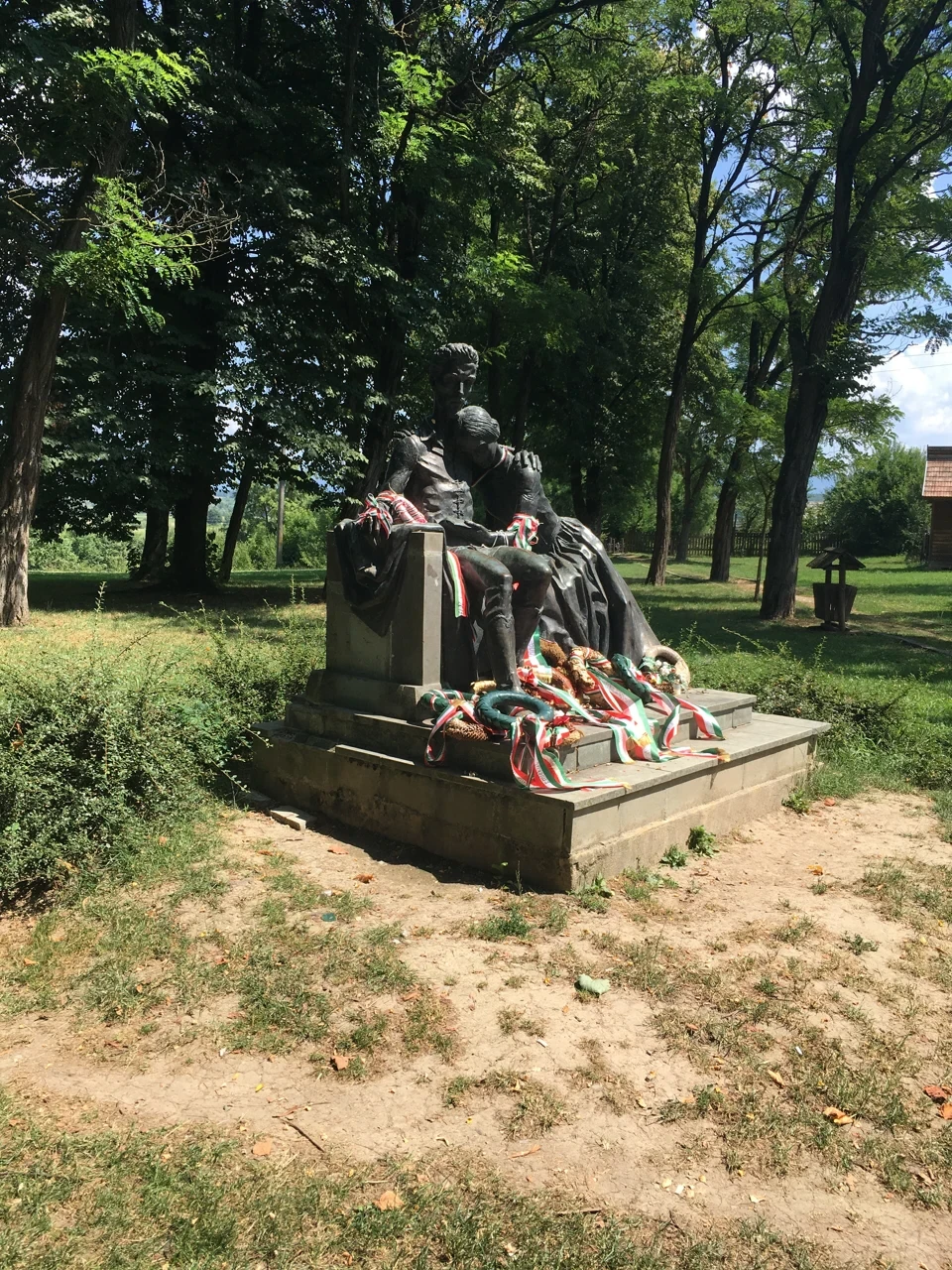
A memorial sculpture on a plinth in the grounds.
The sculpture in the Teleki Castle grounds, photographed in 2019. It belongs to the history of commemoration. (Source · Salome mi / Wikimedia Commons · CC BY-SA 4.0)

Sources

Arany and Petőfi wrote in Hungarian. The links open the letter edition, correspondence catalogue and handwritten leaf.

  1. National Heritage Institute, Petőfi Sándor Memorial MuseumLocates the museum and records the marriage on 8 September 1847.
  2. Arany to Petőfi, 7 September 1847Digital edition of the letter asking where Coltău is.
  3. Hungarian Academy of Sciences, correspondence catalogueRecords the reply dated at Coltău on 17 September.
  4. Teleki Castle, the museumDescribes the museum’s beginnings and the castle restoration.
  5. Manuscript of “Szeptember végén”Image of the handwritten poem. Public domain.
  6. Mór Jókai, drawing of the castleDrawing attributed to Mór Jókai, dating from around 1876.