Lower station
Lower station
Look underneath the load
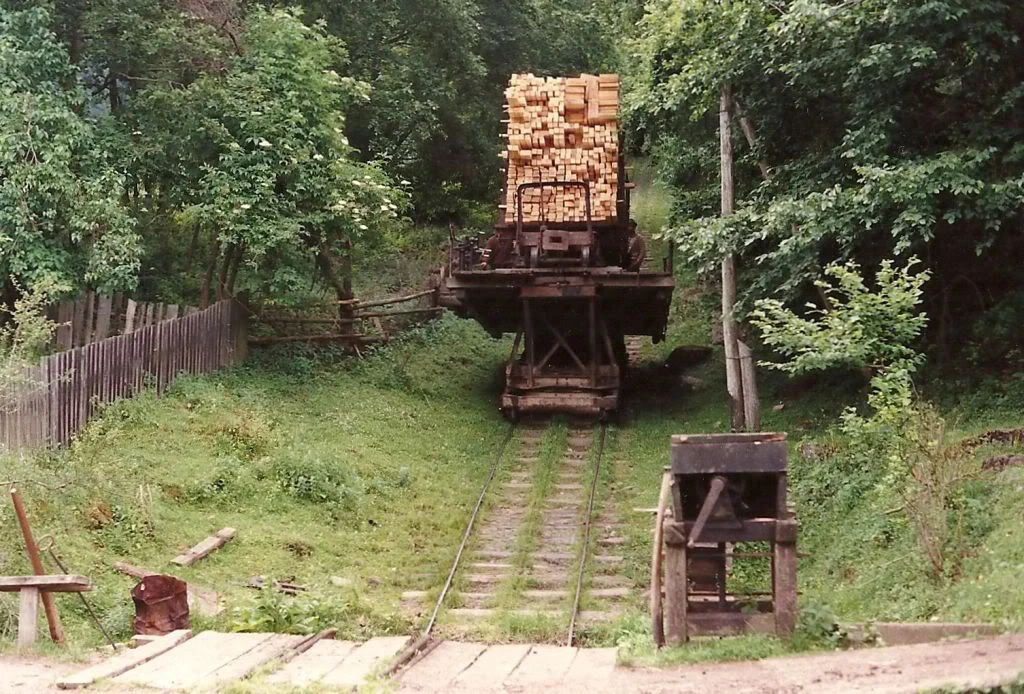
The Valea Zânelor valley begins at the edge of Covasna. Follow the forest railway upstream and you reach the place where the wagons changed how they travelled. Oliver Wileczelek’s photograph from June 1994 shows a wagon loaded with timber. Under its wheels sits a second structure: the platform that held it on the incline. [4] [1]
From Comandău came timber cut in the upper Bâsca basin. At Covasna station it could transfer to the wider railway network. Between the forest lines, the inclined installation moved whole wagons, load and all. [3] [2]
Forest railway
Two lines with an incline between them
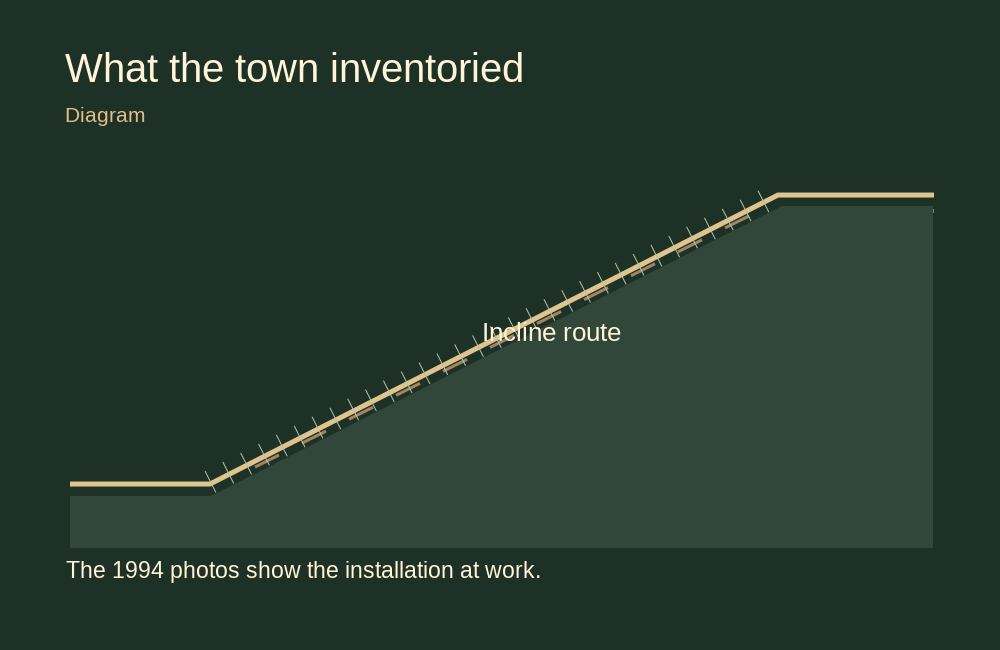
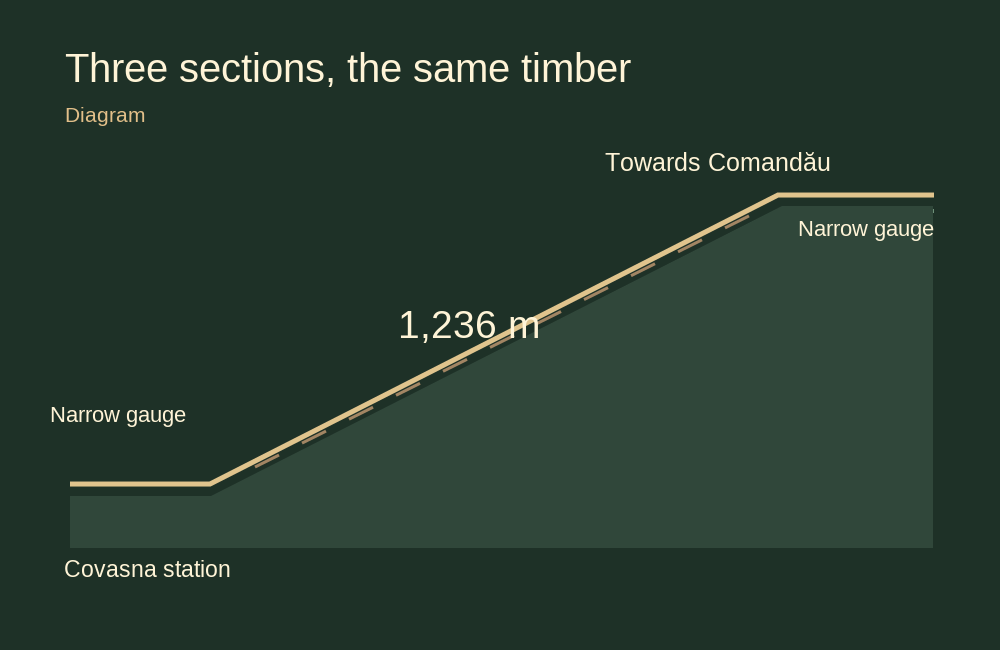
The technical inventory accompanying the 2019 council decision gives the incline as 1,236 m long and identifies three stations. Steam locomotives worked the timber railway on a 760 mm gauge, measured between the inner faces of the rails. The incline platforms ran on their own broader track. [1] [2]
Follow one loaded wagon towards Covasna. It arrives at the upper end by train, rides down on a platform and waits for another locomotive at the bottom. The change happens underneath the wagon. The timber travels down with it. [3]
One cable
Set the pair in motion
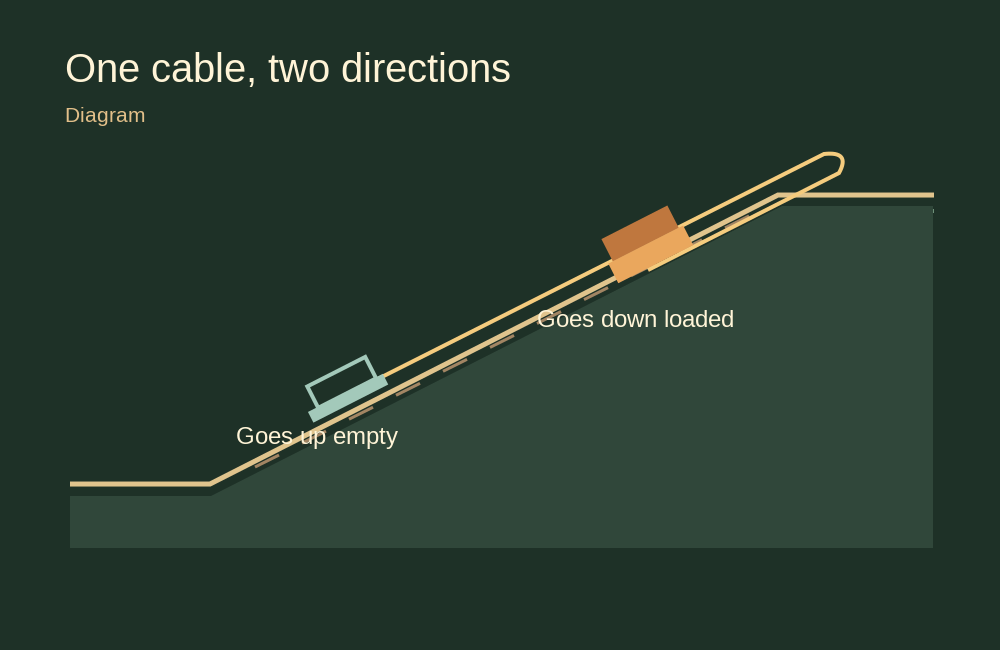
The loaded wagon starts at the top. An empty one waits below. The cable linking their platforms turns at the upper station. As the top platform descends, the bottom one must advance in the opposite direction. Move the control and watch how far the pair travels together. [2] [3]
The difference in weight sets the system in motion. The energy released by the loaded wagon can lift the empty wagon and cover losses to friction and braking. The upper station controlled the speed. The model couples the platforms’ positions without estimating operating speed. [2] [1]
Passing station
Watch them make room
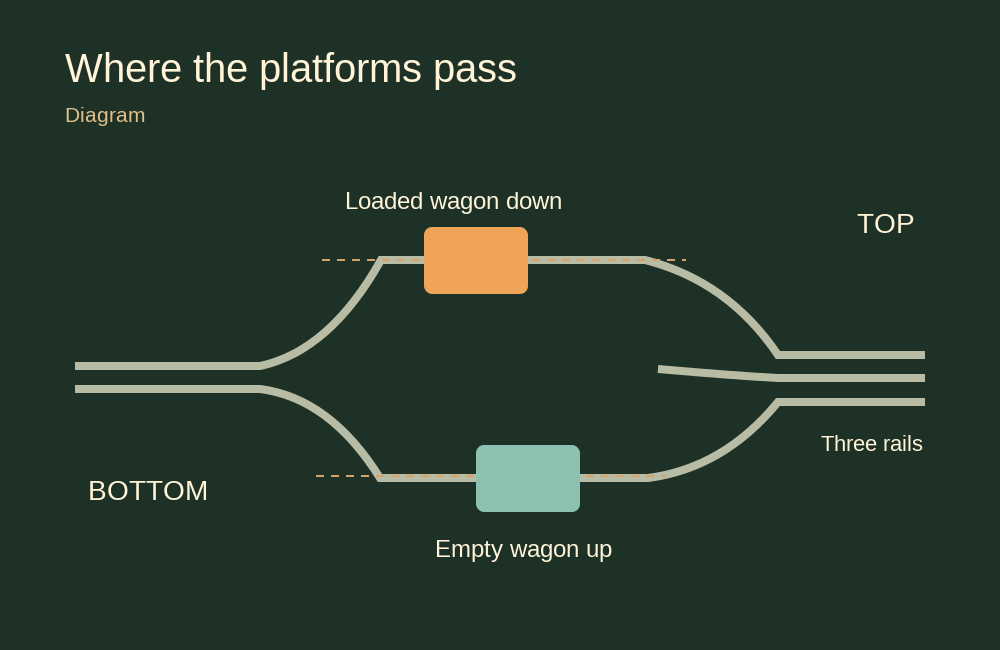
Halfway through the run, the two platforms needed the same stretch of hillside. The 2019 inventory describes two parallel tracks in the middle station. Towards the upper station, after they rejoined, it describes three rails: one was shared. [1]
Stop the slider near the middle. In profile, the platforms have reached almost the same height. In plan, they sit on different tracks. You need both views to read the installation. [1]


Upper station
This is where the horse comes in
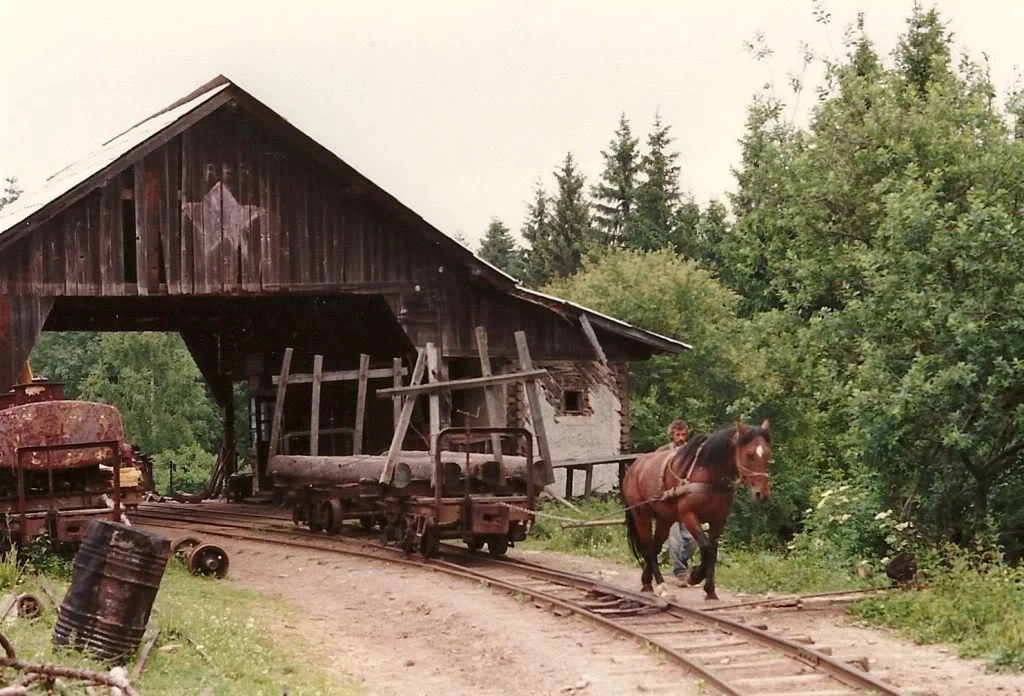
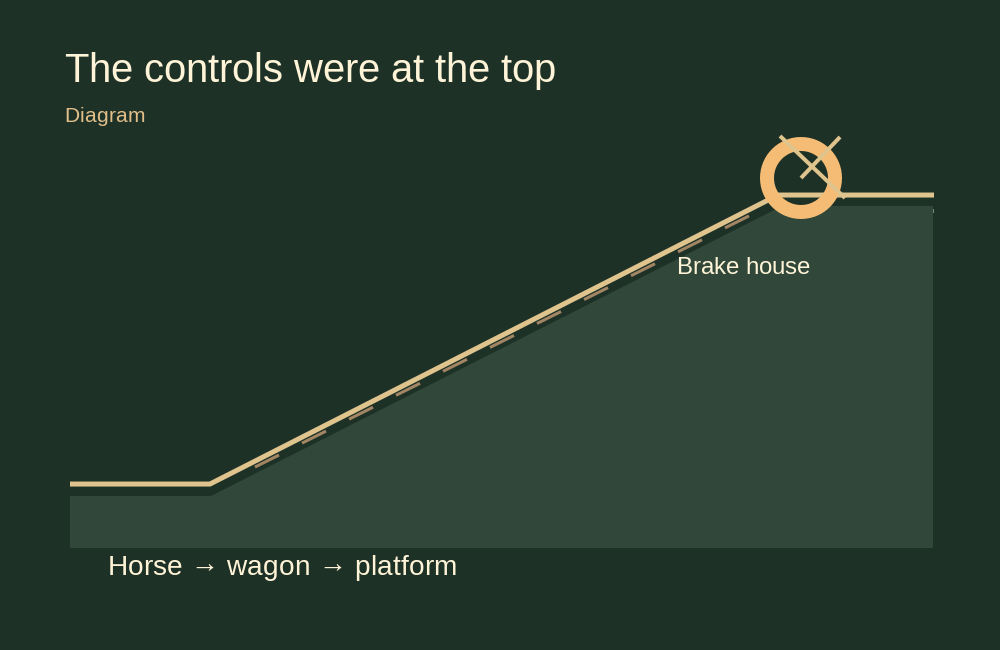
Another photograph from the same day shows a horse by a wagon beside the upper building. The museum describes horse shunting at both ends of the incline. The animals moved wagons short distances between the platforms and the tracks where locomotives took over. [5] [2]
The brake house was also at the upper station. The loaded wagon had enough energy to lift the empty one, and the person at the brake controlled how quickly it happened. A complete cycle depended on work at both stations. [3] [2]
After the last run
What remains on the hillside
The shutdown unfolded in stages. The town hall records damage after the 1995 storm, the brake house fire of 1997 and repairs that allowed a final period of operation. In 1999 the incline was placed in conservation. The 2019 inventory describes the installation as destroyed. [3] [1]
Look again at the photograph from the lower station. The wagon wheels rested on the platform rails, the platform ran along the broader rails, and the cable carried the motion to its partner. The loaded wagon coming down supplied the energy for the empty wagon’s trip up. [4] [2]