Marius ComperCostești · Argeș
Română

Costești, Argeș

Two places that preserve the memory of the Costești fire

A photograph published in 1930 shows Queen Marie’s visit after the Costești church fire. The memorial at the old church records the names of the dead. The town built a new church on a different site.

Start the story ↓
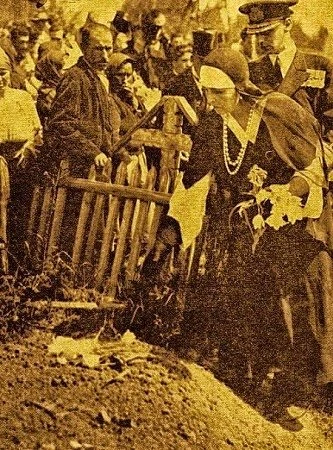
Period photograph of Queen Marie and her companions standing by a grave.
Queen Marie lays flowers at the grave of some of the victims. That is how the 15 May 1930 issue of Realitatea ilustrată identifies the photograph. (Source · Photographer uncredited in the 1930 caption · reproduction via Costești Argeș Online · Public-domain photograph)

Costești, 1930

What the photograph at the grave preserves

In the photograph published in May 1930, Queen Marie bends down beside a grave. The magazine caption says she is laying flowers for victims of the Costești fire. The image records the visit that came afterward. [1] [5]

The town preserves the fire’s memory in two places. A memorial keeps the names of victims near the site of the old church. The new church was built elsewhere in Costești. [2] [3]

Period photograph of Queen Marie and her companions standing by a grave.
Queen Marie lays flowers at the grave of some of the victims. That is how the 15 May 1930 issue of Realitatea ilustrată identifies the photograph. (Source · Photographer uncredited in the 1930 caption · reproduction via Costești Argeș Online · Public-domain photograph)

18 April

The evening service in the wooden church

18 April 1930 was Good Friday. People had gathered in Costești’s old wooden church for the evening service. The town history puts the start of the fire at around six. The church was destroyed. [2]

Most of the dead were children, according to the town account. Later reports give varying details about how the fire began. They agree on the date, the location and the loss of the church. [2] [3] [6]
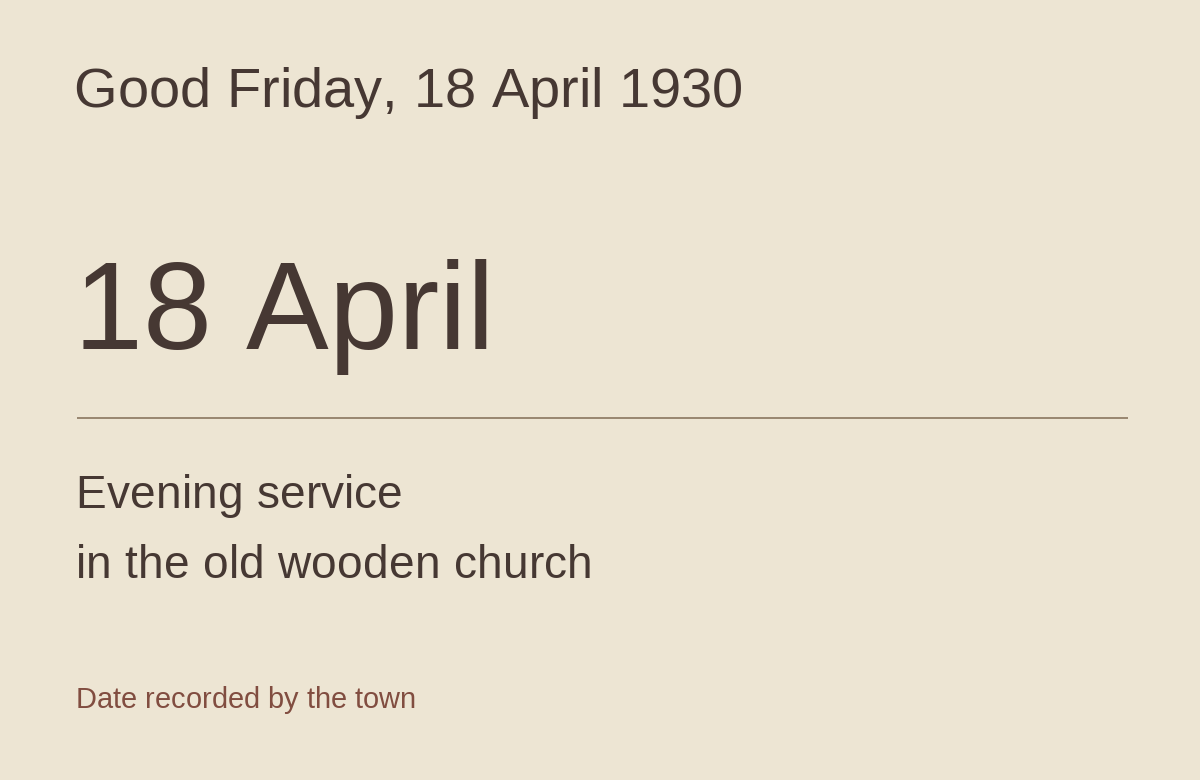
Date and reference to the evening service in the old church.
The municipal history records the evening of 18 April, before Easter in 1930. (Source)

In the magazine

What the fire meant to one school

On the same page as Queen Marie’s visit, Realitatea ilustrată publishes a caption about the local school. It names the priest Dumitru Vișinescu and the teacher Ștefan Ilie and mentions 41 pupils. That is the school’s toll as the magazine presented it. [1]

The magazine gives 41 pupils in its account of the school. The study of the memorial plaques separately records 116 victims by name. [1] [3]
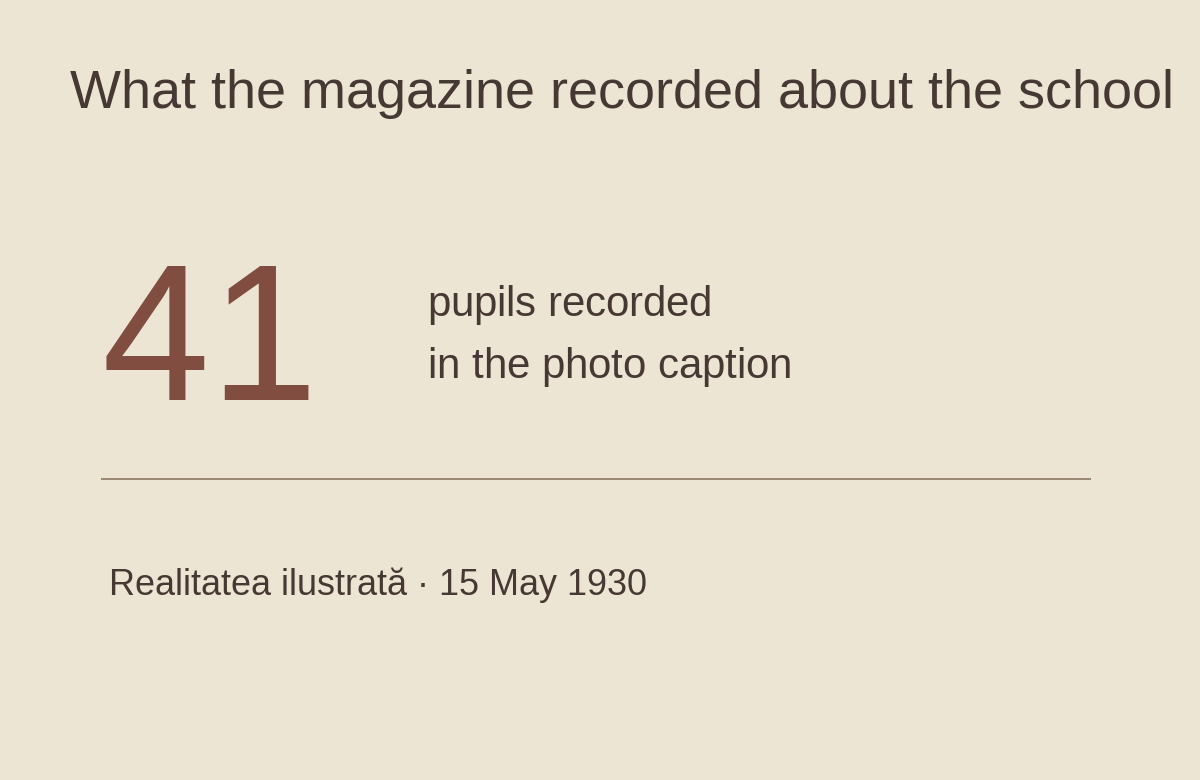
The figure 41 alongside the source and date of the report.
The magazine mentions 41 pupils from the school, the priest Dumitru Vișinescu and the teacher Ștefan Ilie. (Source)

The memorial plaques

How many names were recorded at the old church site

Bibliotheca Septentrionalis documents three marble plaques naming 116 victims. Each mark in the diagram represents one name in the memorial count. The plaques record people, even when accounts shorten the story to a total. [3]

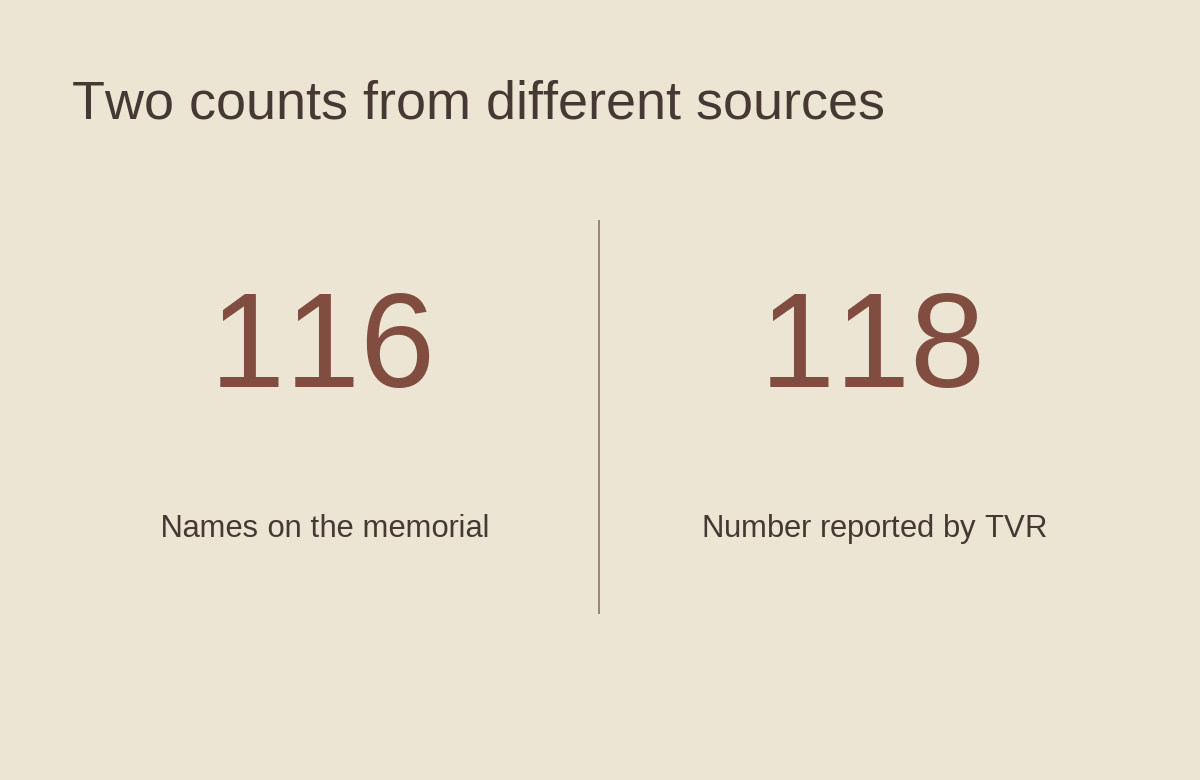
The town’s history also gives 116. A public television report gives 118 victims. The sources leave the difference unexplained. [2] [6]
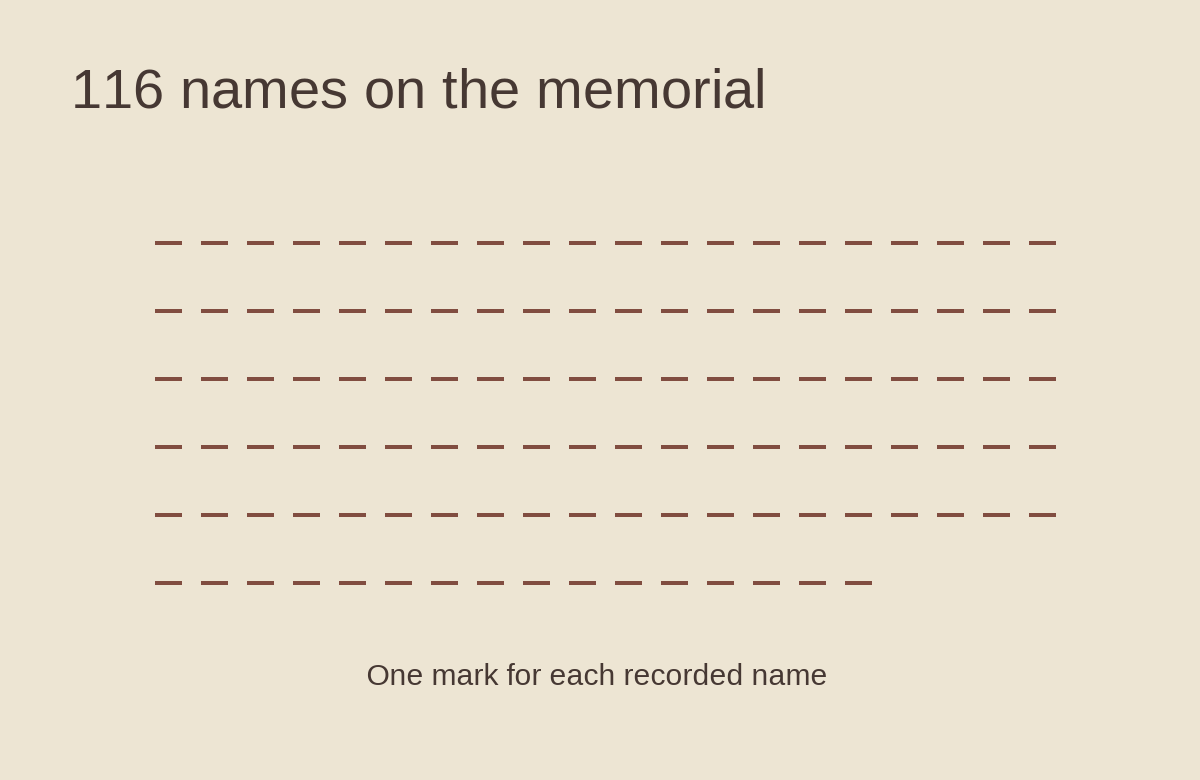
116 equal marks representing the number of names on the memorial.
Each mark represents one name. The arrangement of the marks is schematic. (Source)
The numbers 116 and 118, each with its source.
A historical study records 116 names on the monument. Romanian public television reports 118 victims. (Source)

A different site

Why the memorial and church are separate places

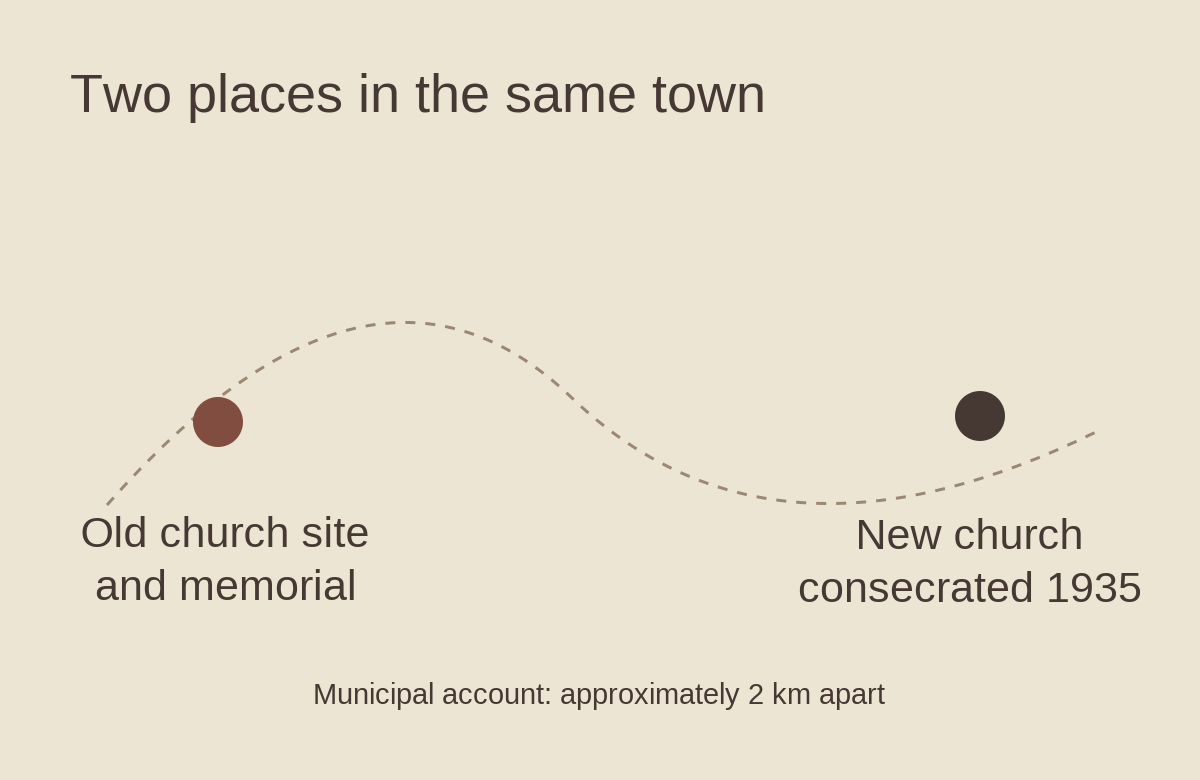
The community raised funds for a church elsewhere in town. The municipal account puts it about two kilometres from the site of the fire. The parish dates the consecration of the new church of Saint Elijah to 21 July 1935. [5] [2] [4]

The new church had a different address. The old site remained a place of remembrance. At Saint Elijah’s church you see one consequence of the fire. The monument marks the other site. [2] [3] [4]
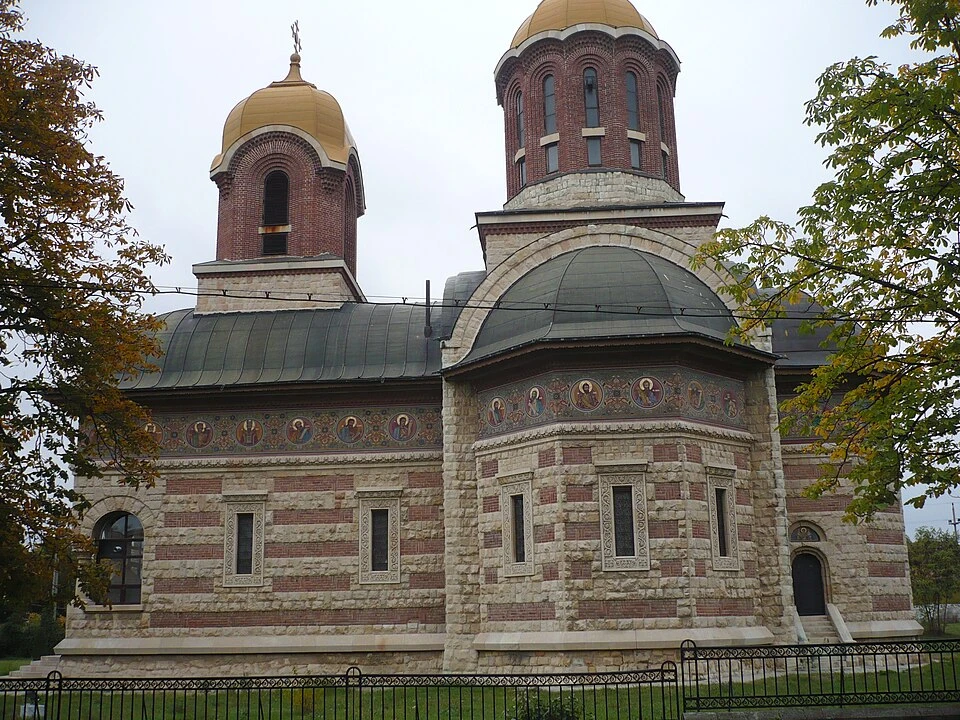
Side photograph of the new church with two towers above the brick walls.
Saint Elijah’s church photographed in 2013. The parish records its consecration in July 1935. (Source · Cristian Vlădescu / Wikimedia Commons · WebP · CC BY-SA 3.0)
Two points marking the old church site and the church consecrated in 1935.
The approximate distance comes from the municipal account. Positions and the route are schematic. (Source)

Year by year

How remembrance continued

After the fire, services and visits appeared in the press. The image of Queen Marie comes from a time when the bereaved and people arriving in Costești stood together. The local archive records remembrance in the years since. [1] [5]

The public television report describes a service on Easter Monday. To understand what Costești has preserved, start from the two places: the church where people worship and the memorial at the old site. [6] [3]
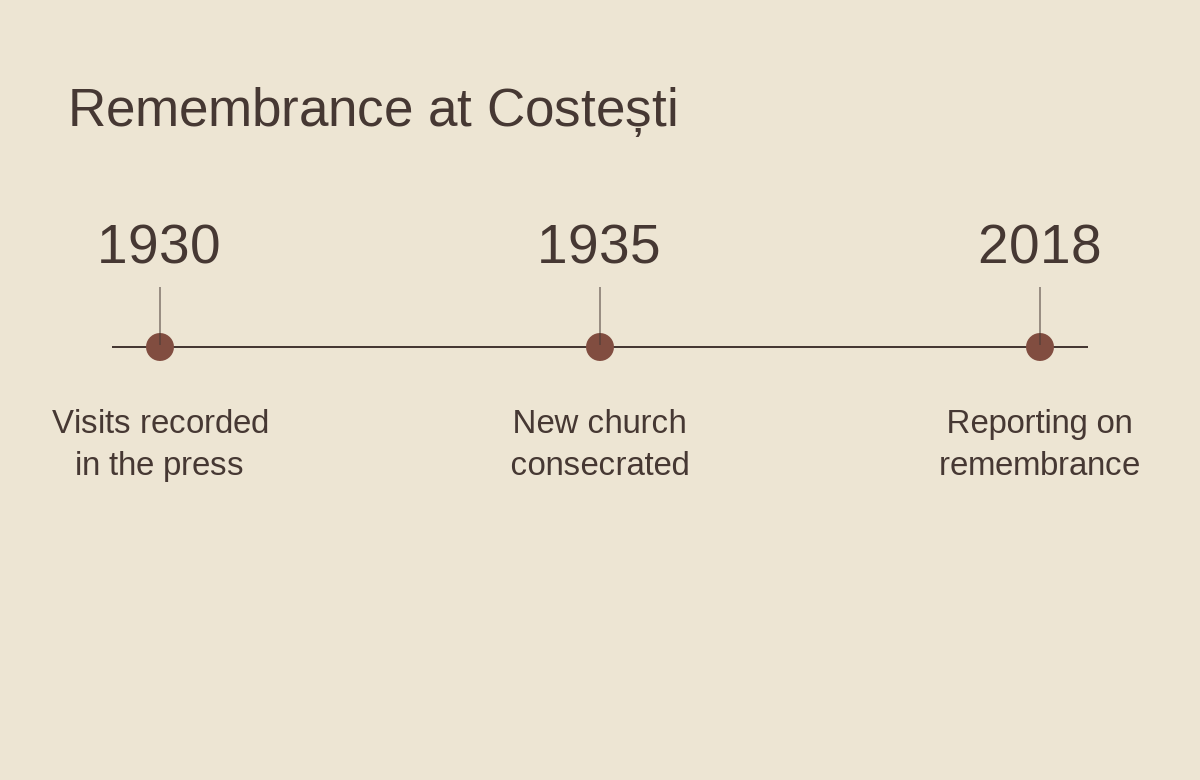
Timeline marking 1930, 1935 and 2018.
The photograph, consecration date and modern report document different moments. (Source)

Sources

The memorial marks the old church site and records the victims’ names. Saint Elijah’s Church, consecrated in 1935, stands about two kilometres from the site of the fire.

  1. Realitatea ilustrată, issue 172, 15 May 1930The photo report identifies Queen Marie’s visit and mentions the town’s pupils and teachers.
  2. Town of Costești, municipal statuteThe local history records the date, the general location of the new church and the town’s death toll.
  3. Bibliotheca Septentrionalis, account of the memorialThe study records 116 names on the memorial plaques and draws on the 1930 press.
  4. Costești parish, cathedral historyThe parish records the new church’s consecration on 21 July 1935.
  5. Costești Argeș Online, photographs and records of the fireThe local archive reproduces the photograph of Queen Marie and describes the public collection and the memorial.
  6. Romanian public television, remembrance report, 2018The report uses a total of 118, which differs from the count of names on the memorial plaques.
  7. Cristian Vlădescu, Costești cathedral in 2013Side view of the new church, CC BY-SA 3.0.