Cotmeana in the 19th century
Cotmeana in the 19th century
A brick church in an Argeș valley
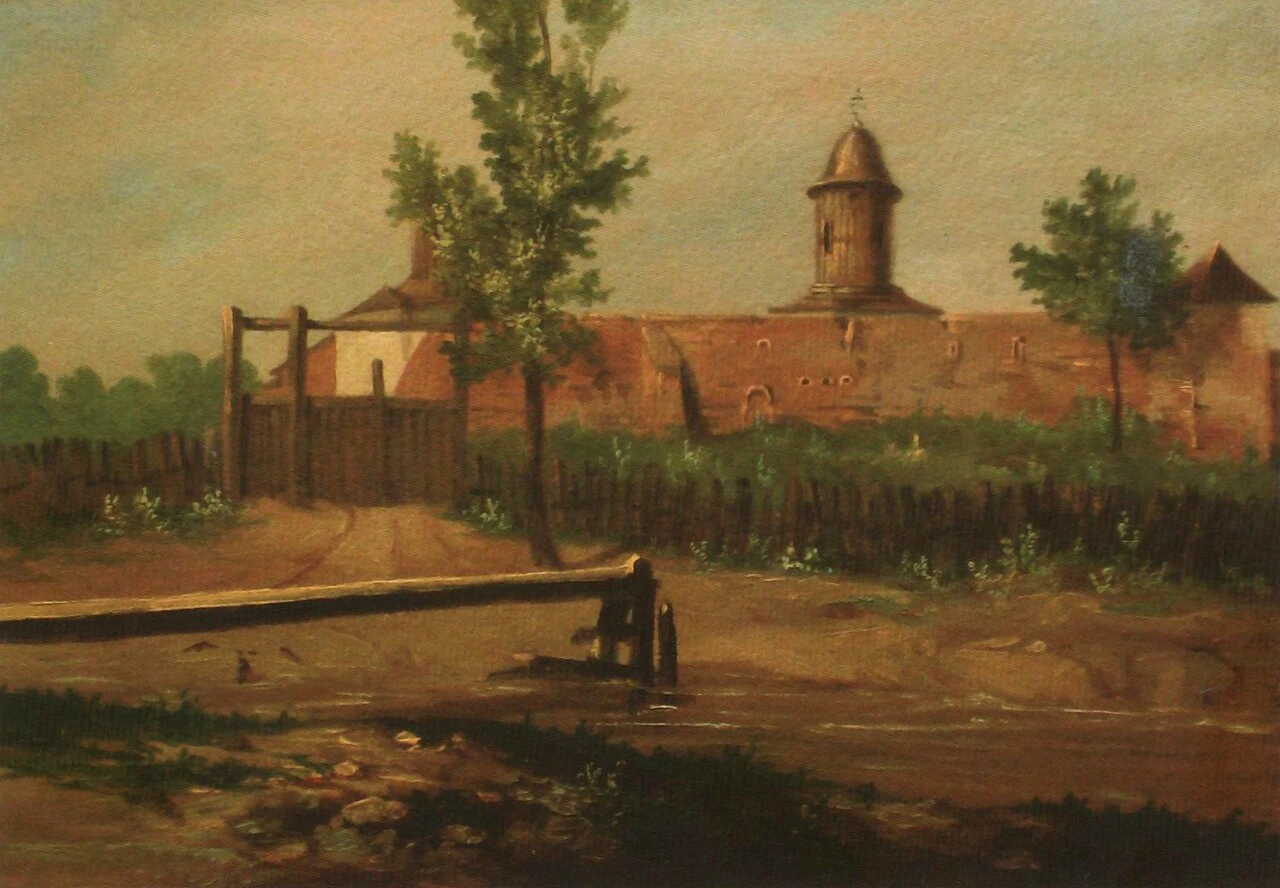
In Henric Trenk’s painting, the church is seen from outside the precinct wall. The painting shows the roofs, the tower and the tight space the monastery occupies in the Cotmeana valley. The Bucharest Municipality Museum catalogues the work under 1861. [7]
The church is dedicated to the Annunciation. It is the surviving part of the old monastery mentioned in a charter of Mircea the Elder dated 20 May 1388. A bell three years older than the charter became central to the question of when the monastery began. [6] [2]
The bell inscription
Why Dragomir’s name was difficult to read
In 1875, B.P. Hasdeu published the inscription from an impression that Alexandru Odobescu had taken from the bell. It names Voivode Ioan Dan and jupan Dragomir, the son of the abbot Dragomir. The year 6893 and the accompanying calendar notation were read as 1385. [2] [1]
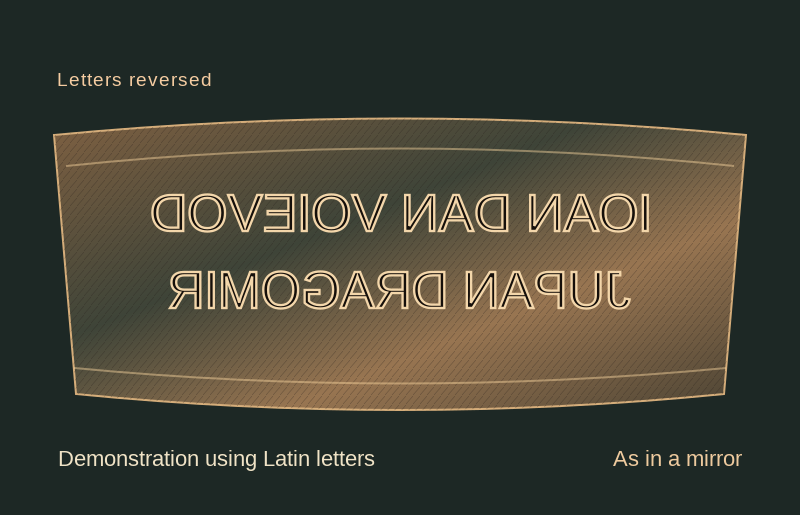
The lettering came out reversed in the casting. Lia and Adrian Bătrîna attribute the error to the way the mould was made. Switch the letter direction to see the effect. The two names use Latin characters here. The Slavonic lettering is on page 16 of their report. [1]

Investigating the bell
The bell restorers thought was missing
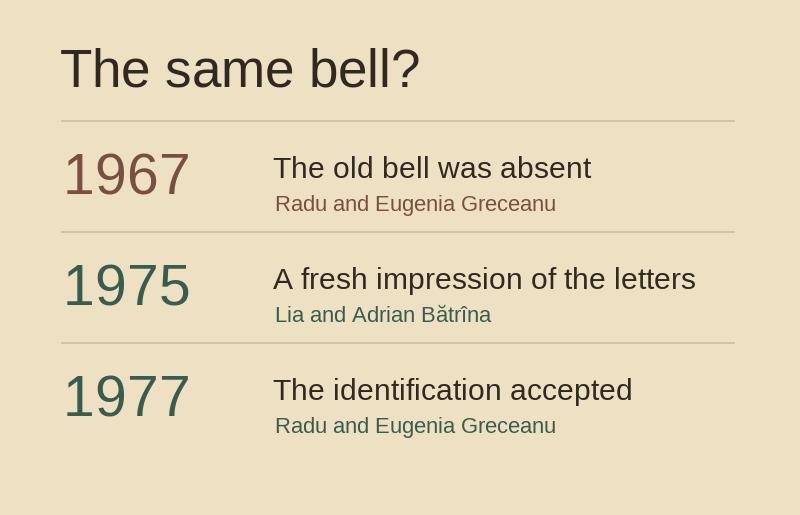
The authors of the 1967 restoration account believed the old bell was no longer at Cotmeana. A bell remained in the tower, they said, with an inscription they could not decipher. Constantin Bobulescu had tried to read it too and wondered whether the earlier bell had gone missing in the First World War. [2]
Lia and Adrian Bătrîna examined the bell in the tower at the north-west corner and took a fresh impression of its inscription. In 1975 they published the drawing and their reading. They identified it as the bell of 1385. In 1977, Radu and Eugenia Greceanu also accepted the identification on the evidence of the fresh impression. [1] [3]
Bell, charter, inscription
Three dates record three events
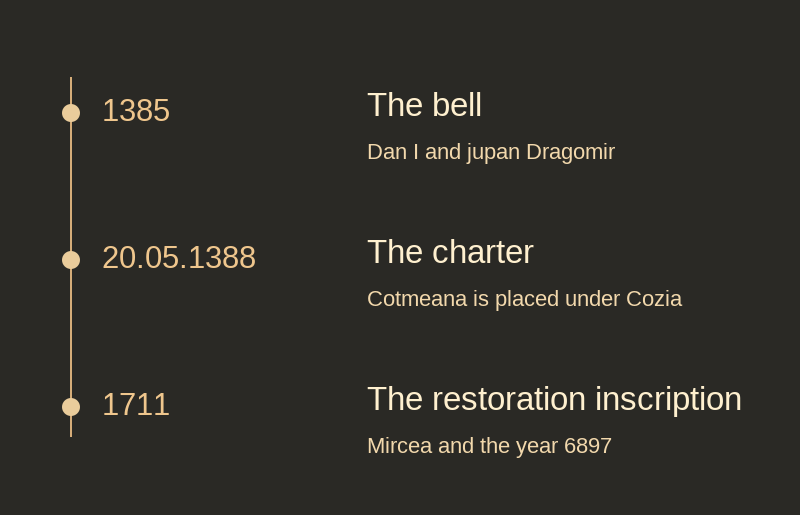
The bell’s date of 6893 is read as 1385. The charter of 20 May 1388 places Cotmeana under Cozia and records holdings the monastery already had. The two sources show that there was a monastery here before the end of the 14th century. [2] [1]
The inscription installed between the narthex and the nave in 1711 names Mircea and gives the year 6897 for the building of the church. Radu and Eugenia Greceanu explain that, in the calendar then used, the year can fall in 1388 or 1389. The date has to be read alongside the charter that already records the monastery in May 1388. [2]
Beneath the floor
Where the old entrance room ended
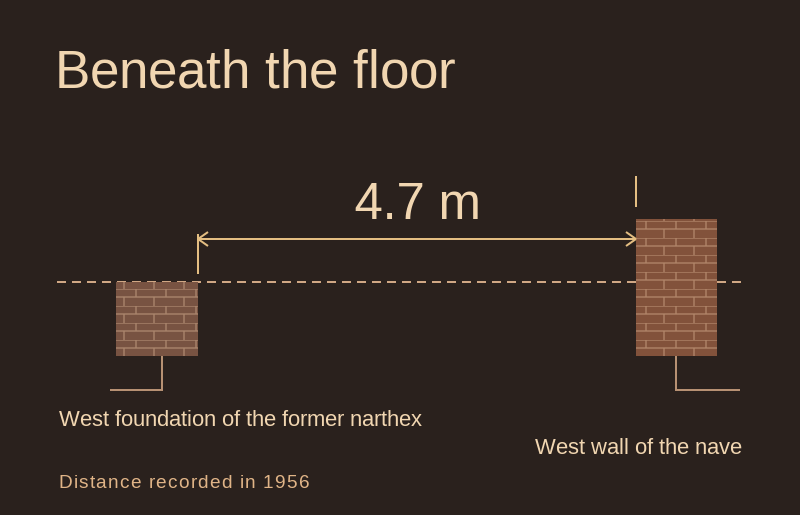
The 1956 excavations exposed a foundation 4.7 m from the west wall of the nave. It bounded the west side of a narthex, the entrance room before the main worship space. The foundation lies inside the present narthex. The drawing follows the two walls from the floor down. [2] [6]
The 1972 investigation took in more of the church and precinct. Lia and Adrian Bătrîna proposed that two masonry churches had stood here in succession. In their interpretation, the bell belonged to the first, and the next church went up under Mircea in the early 15th century. [4]
The brick facade
Where the workmanship is still visible
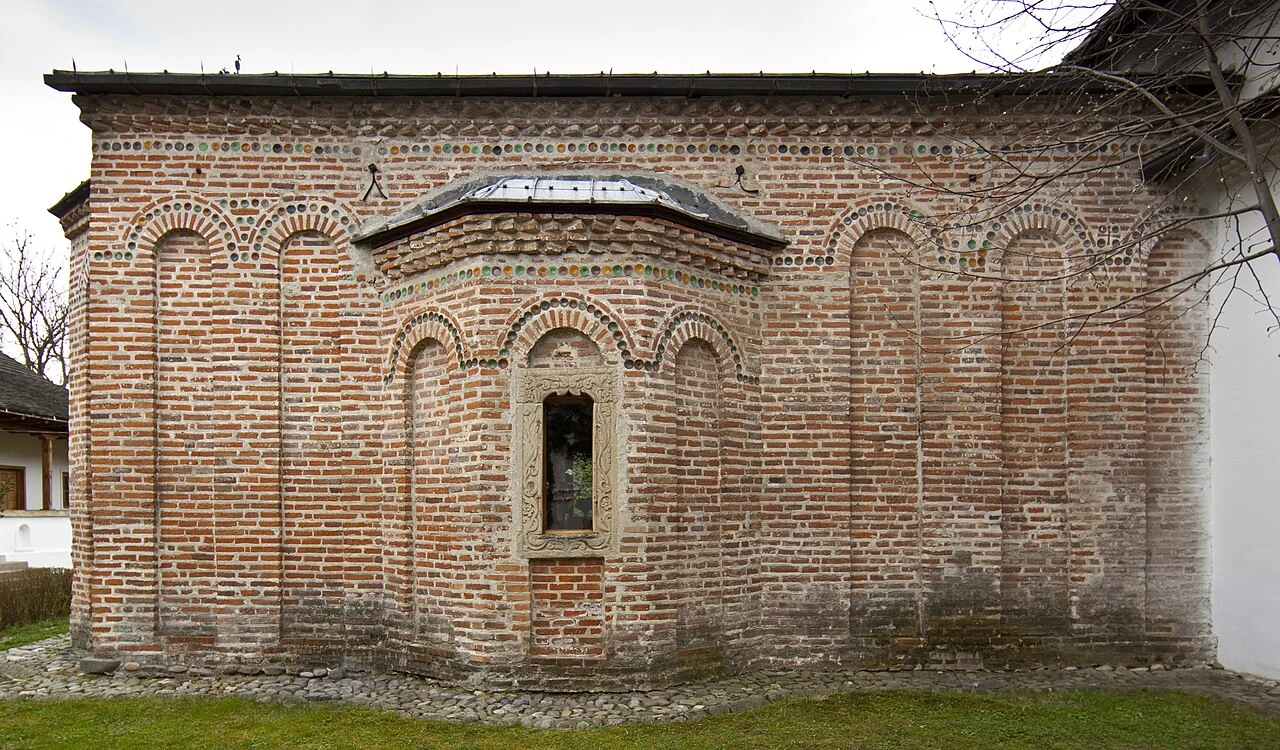
Before the repairs of 1922–24 the facade was limewashed. Nicolae Ghika-Budești describes how the whitewash was removed and damaged brickwork and decoration made good. The 2011 photograph shows the exposed brickwork and the lines of discs on the north facade. [5] [8]
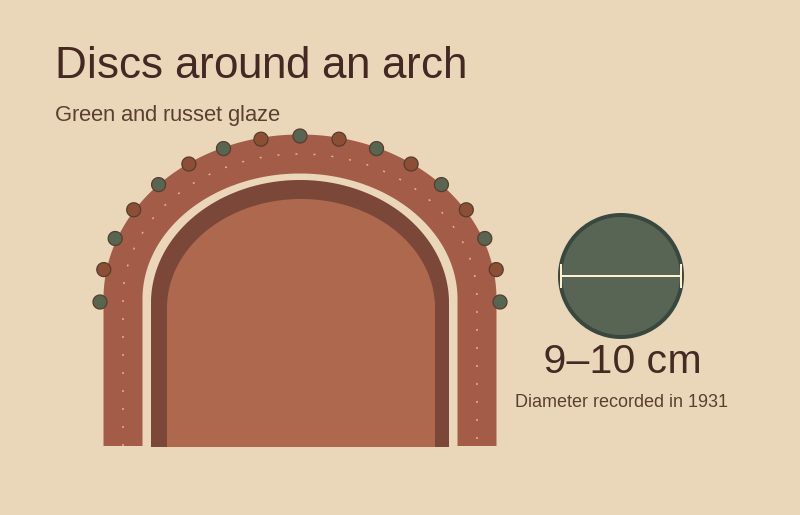
Look for the discs around the arches and below the cornices. Ghika-Budești measured them at nine to ten centimetres across and described green and russet glazes. From the courtyard, the brick edges and the discs show where an arch turns and where the cornice begins. [5] [8]


Cotmeana in Bucharest
The door you can see up close
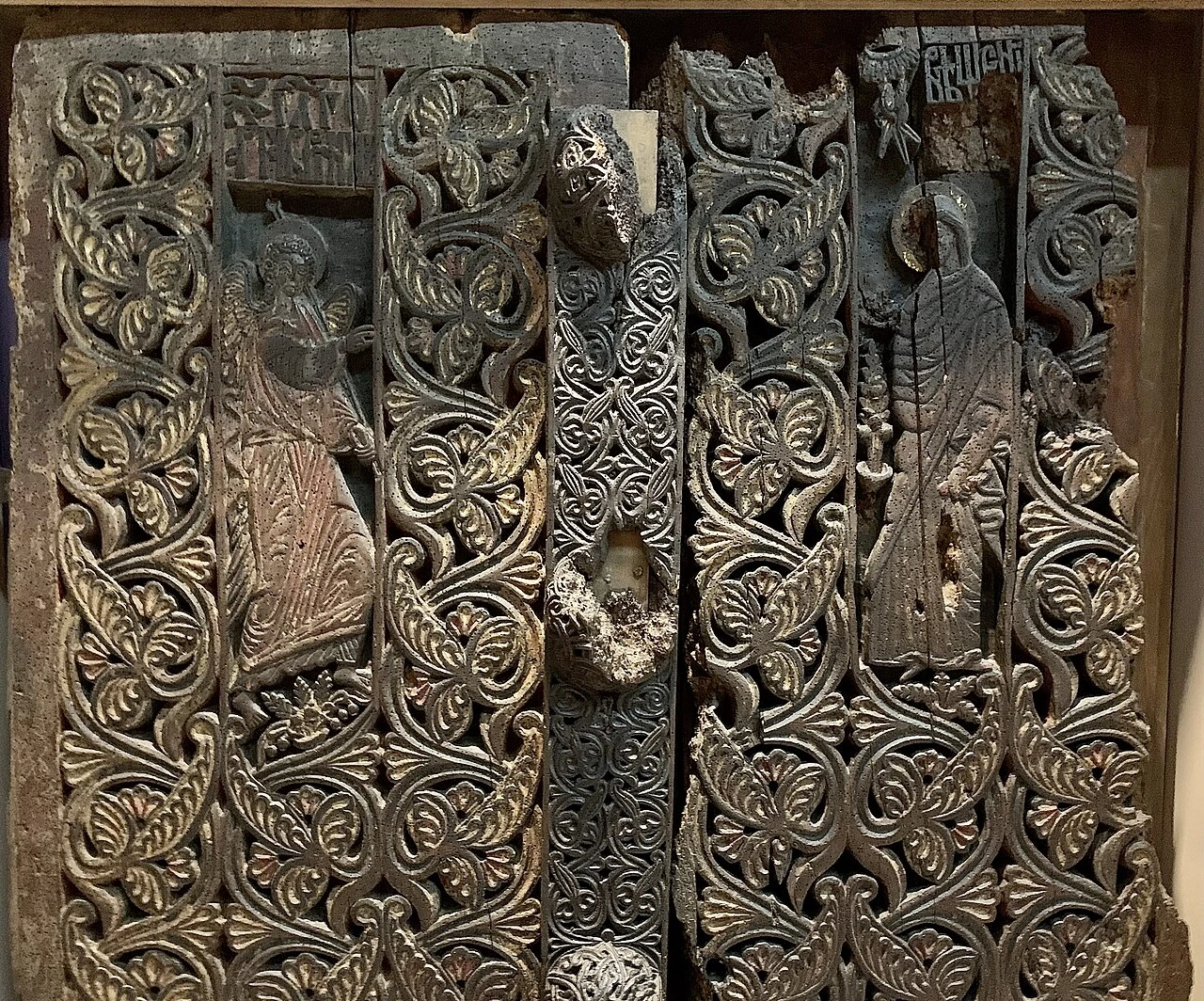
A carved wooden door depicting the Annunciation also comes from Cotmeana. It is in the collection of the National Museum of Art of Romania. The heritage inventory dates it to the first half of the 16th century. Together the two leaves are 190 cm tall and 111 cm wide. Look for the Annunciation at the top, then follow the carved border around both leaves. [9] [10]
The bell inscription can be read through the drawing made from an impression. The photograph of the door shows how its wooden surface was worked. You can follow two objects from the same site through two different kinds of evidence. [1] [10]