An essay with data · From Byzantine purple to October 2026
Luxury beliefs: how opinions became a sign of rank, from Romanian boyars’ fur hats to today
In 2019 Rob Henderson called them “luxury beliefs”: opinions that bring prestige to the well-off at little cost to them, while their consequences land on people with fewer resources. The idea can be traced through the history of status signs, from the fur hats of Romanian boyars to the elegant cigarette, and tested against 75,699 interviews from the General Social Survey (US, 1972–2024) and the European Union’s health survey. Part of the theory survives the test; the part that does not shows more clearly where the luxury really lies.
- Signs of rank travel down the ladder. In the US in 2019 the share of smokers was four times lower among graduates than among those without a high-school diploma.
- In Romania, among women aged 45–64, 21.7% of those with a degree smoke against 12.8% of those without upper secondary school. At 25–34 the order is reversed.
- American graduates are less likely than others to say one parent can raise a child as well as two. The gap is in how they live: 85.8% of parents with a degree are married, against 61.0%.
What Rob Henderson said in 2019#
On 17 August 2019 Rob Henderson, who grew up in Californian foster homes, served in the US Air Force and went on to Yale, published a piece in the New York Post with a title that would travel for years: luxury beliefs are the latest status symbol for rich Americans. His definition was short: ideas and opinions that confer status on the rich at very little cost, while taking a toll on the lower class. Two years later he added the comparison that stuck: like a Birkin bag, these beliefs are expensive, fashionable and give immediate status to whoever displays them.
His best-known examples are the ideas that two-parent families matter little, that the police should get less money and that drugs should be decriminalised; his list also includes monogamy seen as outdated and open borders. In his memoir Troubled, published in February 2024, he ties them to his own childhood: the Yale classmates who held these views were, as he argues, sheltered from consequences he had seen at close range, in unstable families and poor neighbourhoods. When a New Statesman journalist asked him in April 2024 whether there are right-wing luxury beliefs, he gave one example: trickle-down economics.
The phrase caught on because it joins two things economists and sociologists have studied for more than a century: signs of rank, and their price. To see what is new in it, look first at what is old.
Why a sign of rank has to cost something#
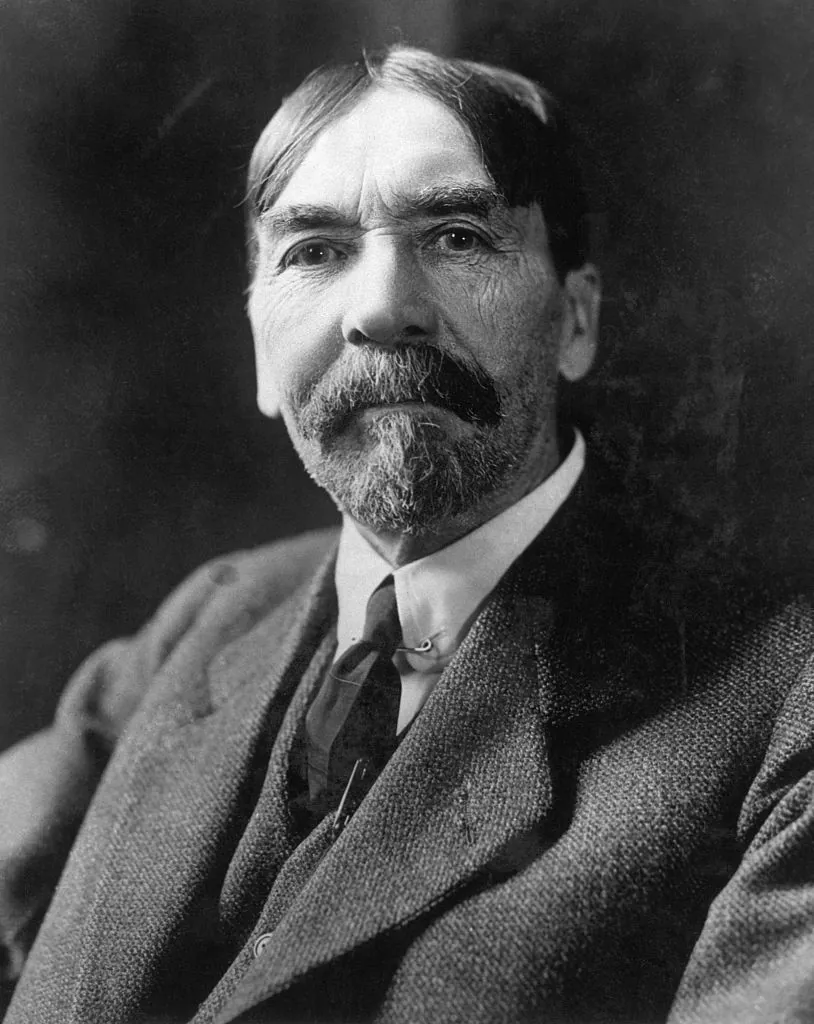
In 1899 the American economist Thorstein Veblen put a name to something everyone knew: conspicuous consumption. In The Theory of the Leisure Class he wrote that “conspicuous consumption of valuable goods is a means of reputability”. His word for this kind of spending was “waste”, used in a technical sense: money and time that serve no purpose except to show you can afford to lose them. Leisure on display, hands that had never worked, servants in livery: all said the same thing.
Biologists reached the same logic by another road. In 1975 Amotz Zahavi proposed the handicap principle: a peacock’s tail is credible precisely because it is a burden. A sick male could not carry it, so he cannot fake it. In 1990 Alan Grafen showed mathematically that honest signals have to be costly. The economist Michael Spence had already published the labour-market version in 1973: a degree tells an employer something because it is hard to obtain. In 2001 he shared the Nobel prize for analysing markets where one side knows more than the other.

One question remained: why do the signs change? The German sociologist Georg Simmel answered it in his essay on fashion, published in English in 1904. Fashion lives on two opposite urges: the wish to imitate those above, and the wish of those above to stand apart. When a style travels down and reaches everyone, the people at the top drop it and move on. A sign that can be copied cheaply stops being a sign.
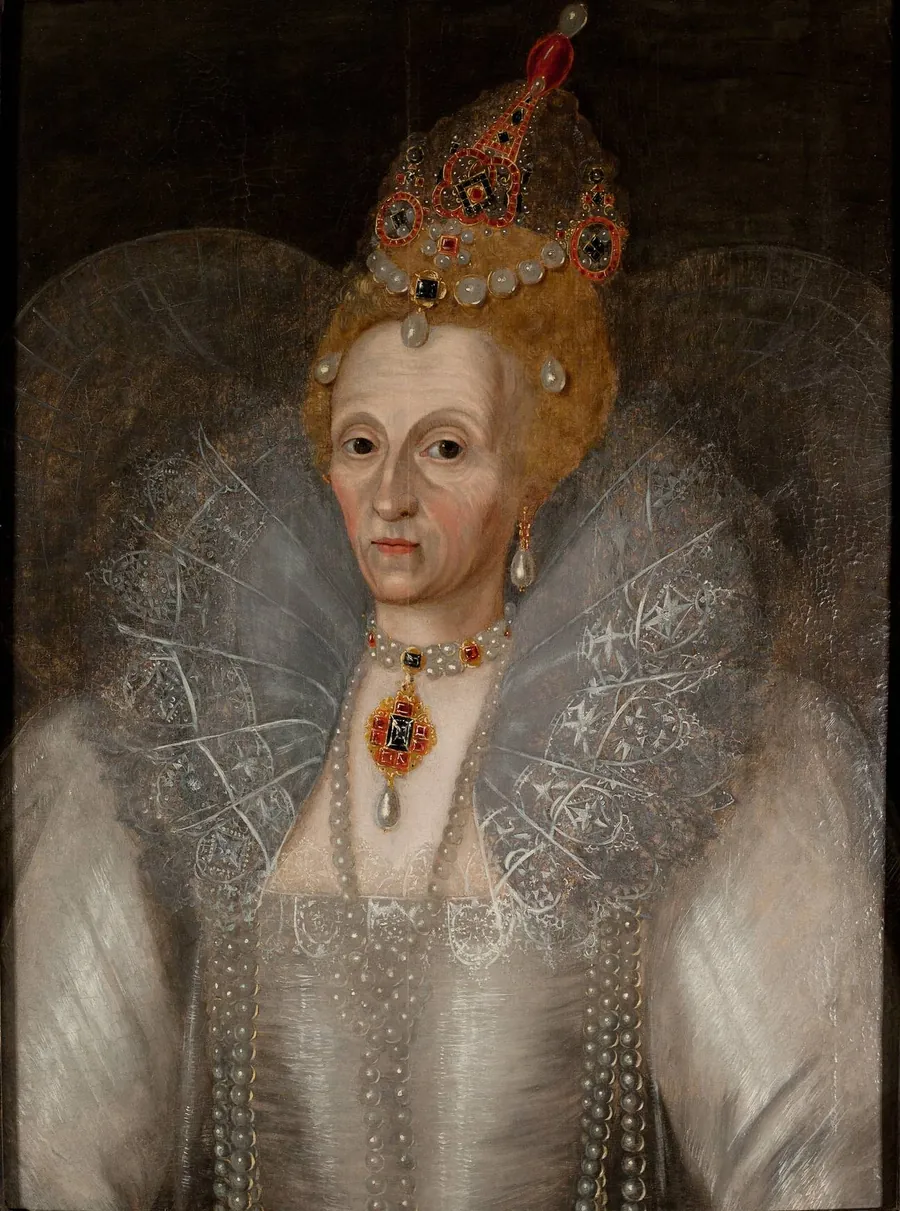
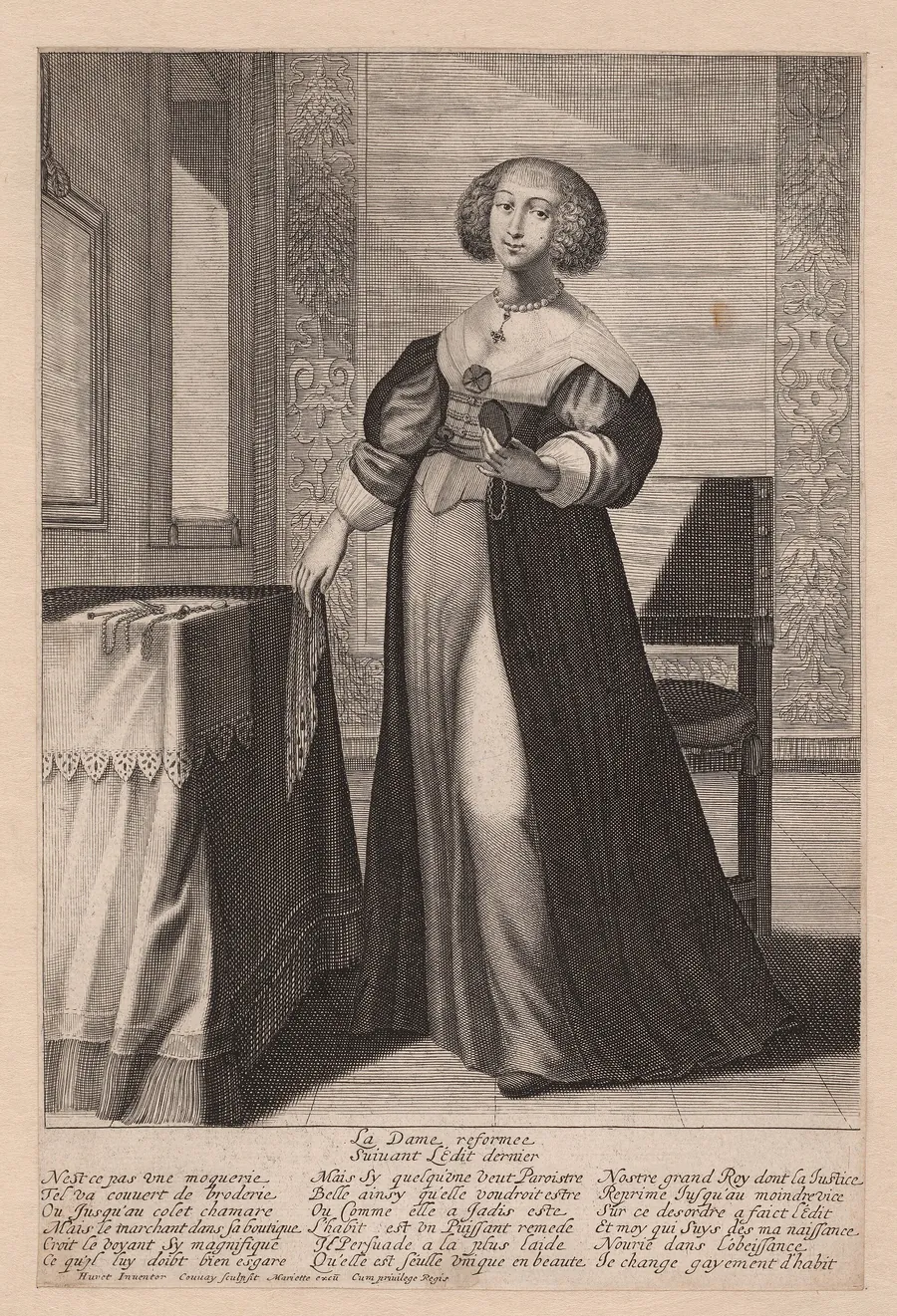
The gallery below follows that path. Each sign was expensive in its day, each was copied, and the elite always moved to something harder to imitate: from a rare dye to labour on display, to a law banning costly ornament, then to taste, to the figure and, finally, to opinion.




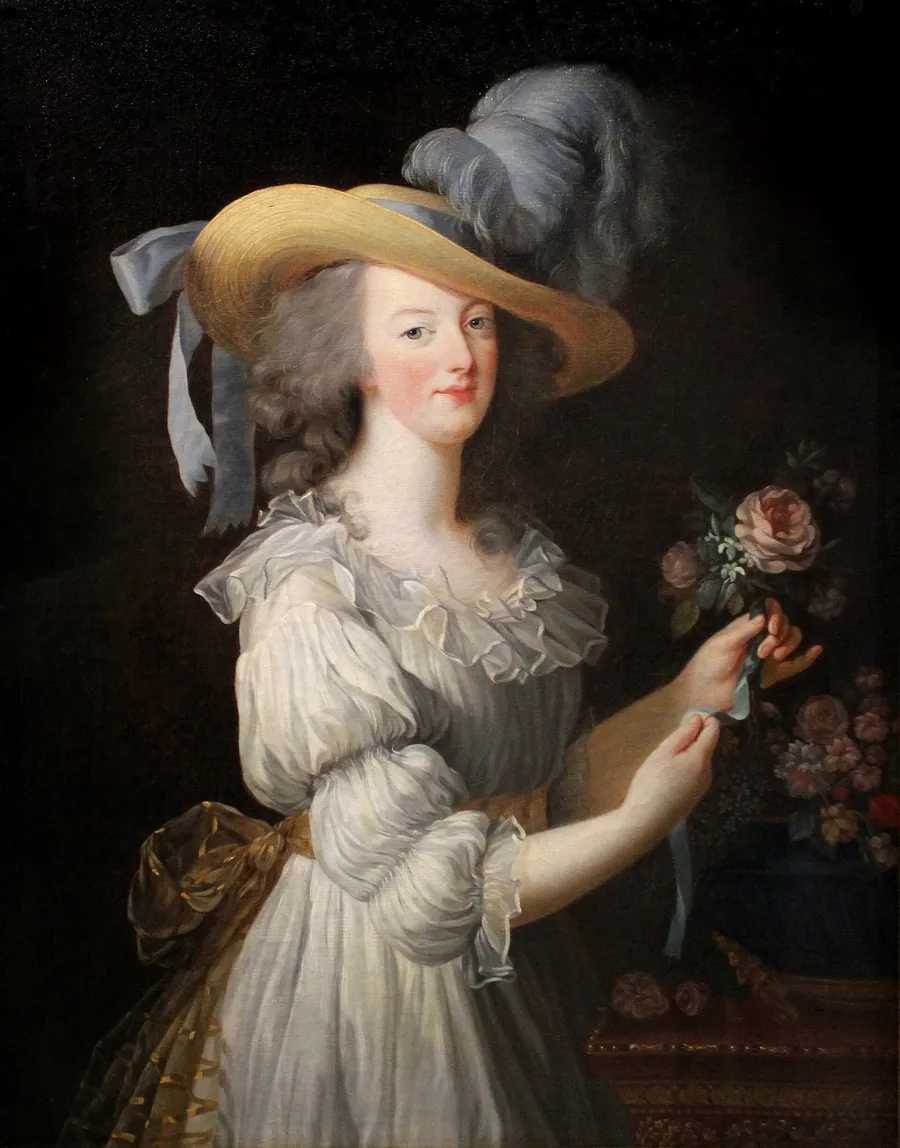

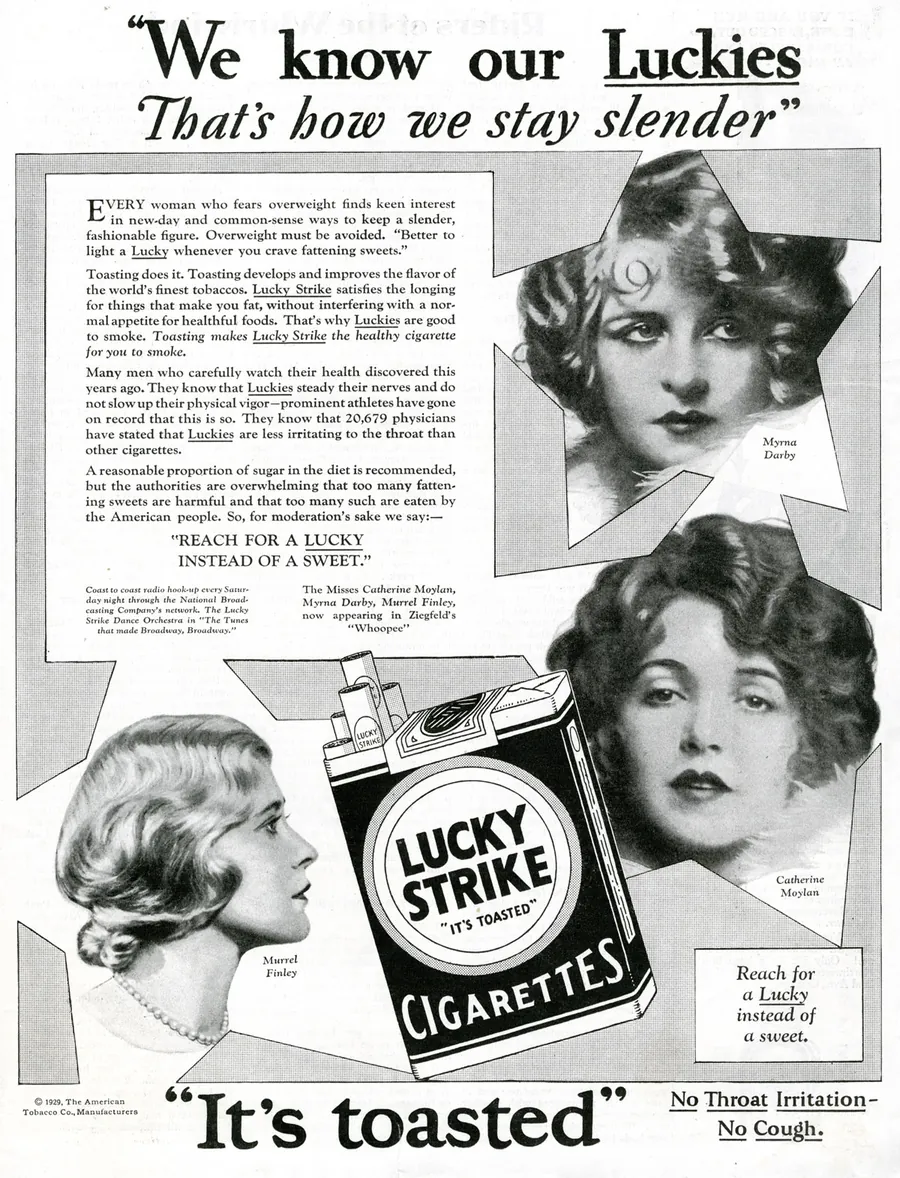

The last frame has no picture. The sign Henderson describes cannot be painted: it is a sentence said at the right moment, in the right circle.
Pierre Bourdieu carried the idea into taste. In Distinction (1979) he wrote that taste classifies, and it classifies the classifier: what you like says where you stand. In 1983 Paul Fussell described, with irony, how each American class defends itself against imitators from below. In 1970 Tom Wolfe described in New York magazine the party Leonard Bernstein gave in his Park Avenue apartment for indicted members of the Black Panthers, and named the phenomenon “radical chic”: radical opinion worn like an evening accessory.
Three decades later David Brooks called them “bobos”, the bourgeois bohemians who spent fortunes on things that looked simple. In 2017 Elizabeth Currid-Halkett measured the shift in The Sum of Small Things: the richest 1% of Americans spend almost 6% of their budget on education, against just over 1% in middle-income families. Money had moved from objects people can see to things that cannot be bought off a shelf: education, health, time, information.
This is where Henderson comes in. If designer clothes are copied in weeks and a good phone is within anyone’s reach, one sign remains that money alone cannot buy: knowing which opinion is being worn right now. It takes an expensive education, a circle of people who share it and constant attention, because it changes often. And it has a property purple never had: its cost can fall on someone else.
Fur hats, “bonjourists” and form without substance#
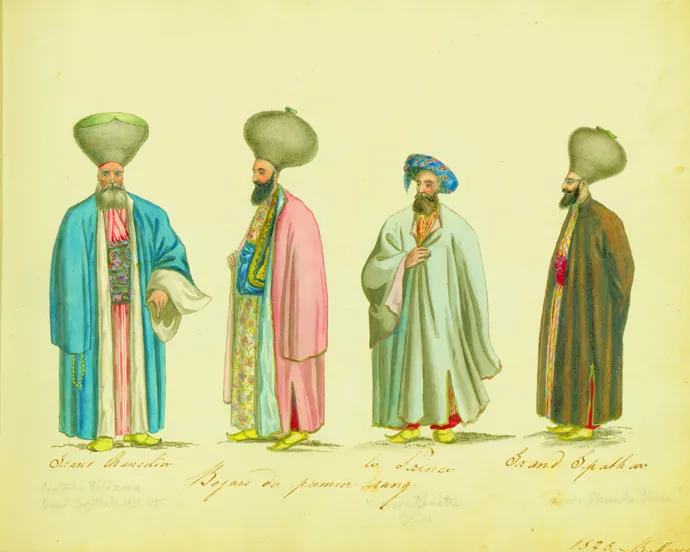
The Romanian principalities went through every stage of this story, sometimes faster than the West. Around 1820 a boyar’s rank could be read from across a street. The historian Adrian-Silvan Ionescu has gathered what foreign travellers saw: each rank had its colours and fabrics, and the rules were strictly kept. White was reserved for the ruling prince and his family. Only first-rank boyars could wear long beards, bright colours, costly furs and the huge pumpkin-shaped fur hat, the ișlic; the second and third ranks wore dark colours and only a moustache. A British officer, James Edward Alexander, noted in 1826 that the size of the hat was limited by rule to so many “Turkish inches”.
Then the signs changed from one generation to the next, with the women first. Neagu Djuvara cites two witnesses: in 1806, in Moldavia, Count Langeron saw old men and officials keep their beards and ankle-length robes while the young already wore frock coats, and Saint-Marc Girardin saw a father and son dressed as if in two different worlds. Between 1818 and 1827, according to the travellers Ionescu gathered, the ladies of Bucharest and Iași dressed after the fashions of Paris and Vienna while their husbands still wore Oriental robes: the women were at least a generation ahead of the men.
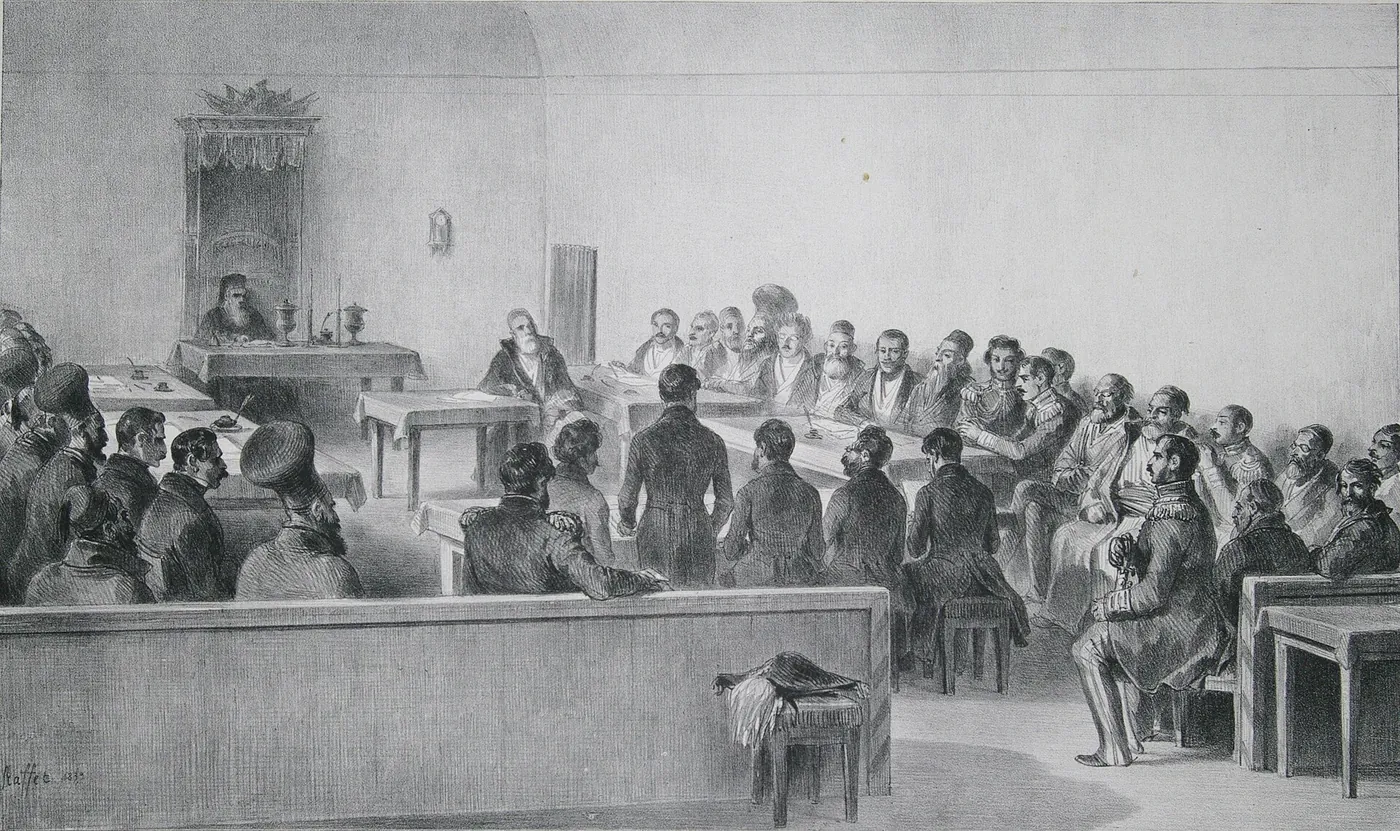
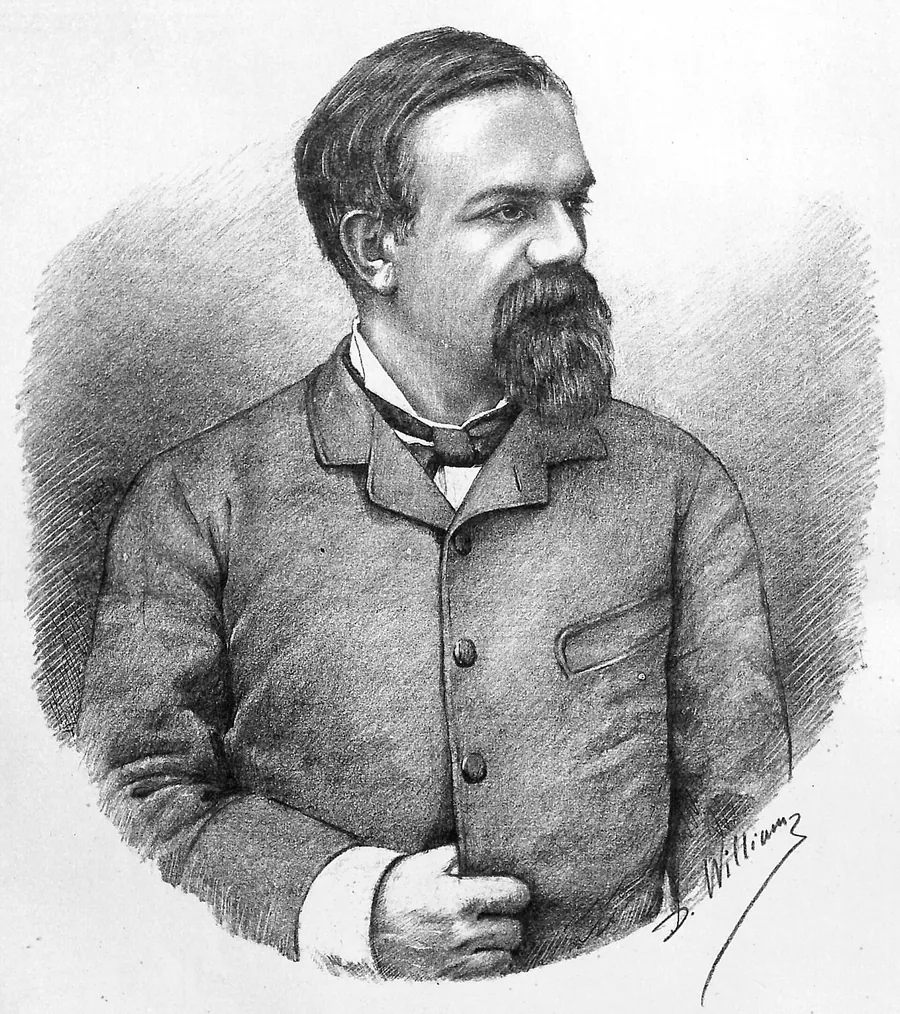
The sons who came back from study in France earned a nickname that says it all: bonjuriști, “bonjourists”, after the French greeting they used in place of the Romanian one. Dictionaries describe them as the progressive young men of the 1830s and 1840s, and the writer Ion Creangă lists them in one mocking breath: “bonjourists, duellists, trouser-wearers”. The trousers and the liberal idea arrived together, and both said where you belonged.
In 1868 the critic Titu Maiorescu wrote the essay that named the phenomenon. Romanians, he argued, had imported forms without the substance to fill them: “Before having capable teachers, we opened gymnasia and universities”. His verdict was harsh: form without substance brings no benefit at all, and he thought it did harm. Maiorescu was not writing about status. Read today, though, the essay describes a related mechanism: institutions and ideas adopted partly for what they say about whoever adopts them.
A century later communism wiped out both fur hat and frock coat, and created new signs. In the 1980s Amigo coffee and Kent cigarettes, bought for hard currency in the special “shops”, worked as money and as bribes: a 50-gram tin of Amigo cost at least 100 lei, the same as a pack of Kent. Status was measured in access, and access was called “pile”, connections.

Today the gap between rungs shows up in how people see the same policy. In an IRES poll from April 2026, 82% of Romanians with a university degree had a good opinion of the European Union, against 61% of those with little schooling. Asked about the downsides of membership, 71% of those with little schooling named high prices, against 37% of graduates. The same rule carries a different price for people on different rungs. The question of who pays that price is Henderson’s own question.
The same path for a habit and for an opinion#
Simmel’s idea can be measured. The clearest case is smoking. In the early twentieth century the cigarette stood for modernity and elegance, and advertisements tied it to actresses and slim figures. Then it spread downwards, and the first to give it up were again those at the top. In 1994 the epidemiologists Alan Lopez, Neil Collishaw and Tapani Piha described the smoking epidemic in four stages, in which men start and quit first and women follow later.
The chart below puts three series on one ladder: how common a habit or an opinion is among university graduates and among those on the lower rungs. The first is smoking in the United States, the second is smoking among Romanian women by generation, the third is an opinion: that marijuana should be legal.
Share of adults over 25 who smoke, age-adjusted. Graduates quit much faster, and the gap widens.
Share of women who smoke, by age group, from oldest to youngest. The lines cross between the 45–54 and the 35–44 generation.
Share who think marijuana should be legal. Graduates start far ahead; the gap almost closes in 1994, reopens, and flips in 2024, so far in a single year.
In the United States in 1974, 27.2% of adults with a degree smoked, against 43.7% of those without a high-school diploma. By 2019 the share had fallen to 5.8% among graduates and only to 23.9% among those without a diploma, four times higher. A habit that had been elegant had become a mark of the lower rungs.
The opinion about marijuana followed a similar path, with detours. In 1978, 53.5% of graduates wanted it legal, against 27.8% of everyone else: an idea of the degree-holding elite. In the 1980s, the years of the “war on drugs”, support fell in both groups. By 1994 the gap had almost gone (24.0% against 23.4%), then it reopened: in 1998, 37.4% against 26.6%. Since 2014 the idea has had a majority in both groups. In 2024 graduates were clearly less in favour than the rest: 63.2% against 68.3%; the only earlier dip below the rest, in 2002, was under one point. That is a single year, with only 230 graduates asked, so it does not prove a reversal. The series still resembles the path of a fashion: an opinion starts at the top, moves down, and once a majority holds it, it no longer sets anyone apart.
Where Romania stands on the smoking curve#
The European health survey of 2019 shows Romania going through the change of rung right now. Among women aged 45–64, 21.7% of those with a university degree smoke, against 12.8% of those who did not finish upper secondary school: a share 1.7 times higher. Among women aged 25–34 the order is reversed: 21.0% against 31.0%. This is a snapshot of a single year, in which the effect of age mixes with that of generation; in 2014, among women aged 25–34, the two groups were almost level (21.3% against 22.4%).
Of 27 EU countries, only in Portugal, Romania and Cyprus do women aged 45–64 with a degree smoke more than those without upper secondary school. Only in Portugal and Romania does the order flip in the younger generation. In Sweden, at the other end of the curve, the gap is old and wide at every age: among women aged 25–34, 7.0% of graduates smoke and 29.4% of those with the least schooling. Among men the reversal was already visible in 2014 among the young: at 25–34, 36.1% of graduates smoked against 59.8% of those without upper secondary school, while at 45–64 the two groups were close (40.8% against 43.6%).
On the chart Romania sits about a generation behind Sweden. On Simmel’s ladder, that means a sign which cost something in the mothers’ day now costs only health; a plausible explanation, which these data cannot prove, is that those who learn first what the studies say and can afford help to quit are also the first to quit.
What graduates say about family, and what they do#
Henderson’s favourite example is the family. Elites, he says, declare that family structure does not matter, while raising their own children in stable marriages; those who take them at their word pay the price. It is a claim in two halves, and both can be checked.
The General Social Survey asked the same question in 1994, 2002 and 2012: can one parent bring up a child as well as two parents together? Graduates’ answers can be set beside what they do: how many parents aged 25–50 are married.
Say: one parent can raise a child as well as two
Do: parents aged 25–50 who are married
The half about behaviour is amply confirmed. In 2012, 85.8% of parents with a degree were married, against 61.0% of the rest. The US Census shows the same gap in 2023: of women who had given birth in the past year, 11.4% of those with a degree were unmarried, against 48.9% of those without a high-school diploma. Melissa Kearney shows in The Two-Parent Privilege (2023) that 84% of children of mothers with a degree lived with married parents in 2019, against 57% of children whose mothers had not finished high school.
The half about words is not confirmed. In every year of the survey, graduates were less willing than others to say one parent does as well as two: 27.3% against 39.3% in 1994, 44.8% against 49.8% in 2012. Pew Research found a similar pattern in 2019 on a related question: 54% of graduates thought cohabiting couples raise children as well as married ones, against 61% of others. And Margaret Samahita’s experimental study, published in 2026 on a representative sample of 715 Americans, concludes that agreement with “luxury beliefs” is not associated with higher education or income.
The gap lies in how people live. Charles Murray, who described in 2012 the split between rich and working-class neighbourhoods of white America, put the reproach more precisely than Henderson: “I want the new upper class to start preaching what it practices.” Elites stay quiet about their own model of family. One detail does point Henderson’s way: between 1994 and 2012 acceptance of single parenthood rose by 17.5 percentage points among graduates and by 10.5 among the rest. The opinions of those at the top change faster than the way they live.
Police, drugs and who bears the consequences#
Henderson’s second example is policing. In 2021, after the protests of summer 2020, the General Social Survey asked whether some police funding should be moved to social services. 47.6% of graduates agreed, against 39.1% of everyone else; among those with a master’s or doctorate, 52.5%.
Move some police funding to social services, US 2021
The gap is explained almost entirely by political camp. Among self-described liberals a degree changes little (72.5% against 69.7%), among moderates somewhat more (40.2% against 34.4%), and among conservatives graduates are even more hostile to the idea (12.1% against 21.3%). The economist Kristian Niemietz found something similar in US data, with income in place of education: political orientation predicts support far better than income.
The part about consequences is firmer. The US victimisation survey shows that in 2024 people in households earning under $25,000 suffered violent crime at a rate of 38.3 per thousand people aged 12 and over, against 22.1 in households earning over $200,000; excluding simple assault, 23.4 against 8.0. People in the poorest households are victims of violence more often, so they are also the first exposed to the consequences of a policing policy.
On drugs, the experiment took place. In November 2020, 58% of Oregon voters backed Measure 110, which made possession of small amounts of drugs a civil violation. On 1 April 2024 Governor Tina Kotek signed the law that made it a crime again, in force from September 2024. How much of the rise in overdose deaths the measure caused remains disputed. Who dies is known: a 2023 study in JAMA Health Forum found that between 2018 and 2021 the overdose death rate rose by 35.4 per 100,000 among Americans aged 25 and over without a high-school diploma and by 1.5 per 100,000 among those with a degree.
Where the theory breaks down#
Henderson’s critics have serious arguments. The most direct test, by Margaret Samahita, finds little evidence that people use these opinions to display rank, though she allows that signalling may happen within narrower elite settings; only 39% of participants had heard the phrase. Ruxandra Teslo points out that opinions are not scarce, so they signal belonging to a group more than status. The economist Bryan Caplan notes that a vote costs the voter almost nothing and almost never changes the outcome, so the “luxury” of a political opinion is hard to measure. Noah Smith objects that the label lumps very different things together, and Yascha Mounk, who defends it, concedes that it is unclear how well these beliefs work as a signal of status.
The theory also has a symmetry problem. Henderson himself named one right-wing luxury belief, and Veronique de Rugy, in the libertarian magazine Reason, added protectionism: tariffs praised by commentators whose high incomes shelter them from most of the higher prices. Thomas Piketty, Amory Gethin and Clara Martínez-Toledano showed, across more than 300 elections in 21 democracies, that educated voters moved left while the rich stayed right. So there are two elites, one of the diploma and one of money, with different signs of rank.
The sociologist Musa al-Gharbi describes in We Have Never Been Woke (2024) the “symbolic capitalists”, people who live off words, ideas and data, and shows how their egalitarian convictions help them rise, often at the expense of the disadvantaged. Contempt for elites is not exempt either: in a circle where everyone is “against the system”, the same sentence earns applause. Jillian Jordan and David Rand showed in experiments that people behave as if their reputation were at stake even when no one is watching.
What remains after these objections is smaller and sturdier than the 2019 formula: signs of rank move towards what is hard to copy, and some opinions travel, with detours, from the top down. Where the costs can be traced, they fall hardest on those with the least cushion. Hence the conclusion, supported by the data but not proved by them: the real luxury is the safety net beneath the person who holds the opinion.
The display case, October 2026#
The mechanism is visible in this month’s news. Each case below is dated and sourced; the link to signs of rank is the author’s own.
2 October 2026
Bucharest plans to phase old cars out of the city
Mayor Ciprian Ciucu proposes restrictions from 1 November 2027, spreading from the centre to the whole city and reaching Euro 5 cars in the centre and Euro 3 citywide by 2032. Of about 2.9 million vehicles registered in Bucharest and Ilfov, nearly 1.3 million are old and highly polluting; a separate scheme would help about 15,000 households replace their heating. Clean air benefits everyone. Henderson’s test only asks who pays for the change and who gets help.
12 October 2026
The label has become a weapon
The British magazine spiked accuses the actor Cate Blanchett, a goodwill ambassador for the UN refugee agency, of “luxury beliefs” on migration after an appearance on BBC Newsnight. Henderson’s phrase is often used as a retort, as here, which strengthens the critics who say it can be pinned on anyone.
12 October 2026
Handbags down, jewellery up
In the third quarter LVMH’s fashion and leather goods sales fell 5% on an organic basis, while watches and jewellery rose 6%. LVMH blames slower demand in China; a shift towards more discreet goods is at most one possible reading, and one quarter is too little for a conclusion.
13 October 2026
A privilege that is not an opinion
The average special pension of Romanian magistrates was 25,682 lei in September, against an average pension of 2,821 lei; only 7,617 lei of it is contributory, by the calculation the paper cites. It is a useful contrast: here the difference in rank is paid straight from the budget, with no belief involved.
20 October 2026
Australia moves to sue platforms over the under-16 ban
Communications minister Anika Wells announced plans to sue Facebook, Instagram, TikTok, Snapchat and YouTube; a July report found most minors had kept or recreated their accounts. In Romania, the MP Raluca Turcan asked in September for phones to be banned in schools for the whole day. Tech executives have long shown the same caution at home: Bill Gates, for one, gave his children no phone until they were 14.
Four questions for any opinion, including yours#
A test inspired by Henderson can be applied to any opinion, from any camp. Your answers are not sent anywhere or saved.
Sources and method#
The American series come from the General Social Survey cumulative file 1972–2024 (NORC at the University of Chicago), 75,699 interviews, weighted with NORC’s recommended weights. “Graduates” means a bachelor’s degree or higher; “everyone else” means all those without one. The European series come from the European Health Interview Survey (Eurostat table hlth_ehis_sk1e, 2014 and 2019): current smokers, daily or occasional, by education level ISCED 0–2 (below upper secondary) and 5–8 (tertiary), compared within the same age group, because an average over all ages mixes generations with different habits. A country with missing data is left out, with no estimated values. US smoking comes from the SmokEduc table of the National Center for Health Statistics (NCHS), age-adjusted. The numbers in the charts are computed from these files; the rest come from the sources below. Romanian quotations are translated by the author.
Bibliography
- Rob Henderson, “Luxury beliefs are the latest status symbol for rich Americans”, New York Post, 17 August 2019 (definition as quoted at the time). patheos.com
- Rob Henderson, “America’s lost boys and me”, The Free Press, 4 November 2021. thefp.com
- Rob Henderson, Troubled: A Memoir of Foster Care, Family, and Social Class, Gallery Books, 2024 (Deseret News review). deseret.com
- Sophie McBain, interview with Rob Henderson, New Statesman, 10 April 2024. newstatesman.com
- Thorstein Veblen, The Theory of the Leisure Class, 1899 (Project Gutenberg). gutenberg.org
- Amotz Zahavi, “Mate selection: a selection for a handicap”, Journal of Theoretical Biology 53, 1975. doi.org
- Alan Grafen, “Biological signals as handicaps”, Journal of Theoretical Biology 144, 1990. doi.org
- Michael Spence, “Job market signaling”, Quarterly Journal of Economics 87, 1973. doi.org
- Georg Simmel, “Fashion”, International Quarterly, 1904; reprinted in American Journal of Sociology 62, 1957. doi.org
- Pierre Bourdieu, Distinction: A Social Critique of the Judgement of Taste, Harvard University Press, 1984 (original 1979), p. 6. sites.ualberta.ca
- Tom Wolfe, “Radical chic: that party at Lenny’s”, New York, 8 June 1970. en.wikipedia.org
- Elizabeth Currid-Halkett, “Conspicuous consumption is over. It’s all about intangibles now”, Aeon, 2017; The Sum of Small Things, Princeton University Press, 2017. aeon.co
- Adrian-Silvan Ionescu, “West meets East: the 19th century Romanian urban society and its fashions as observed by European travellers”, Historical Yearbook IV, 2007. historicalyearbook.ro
- Adrian Majuru, “Nineteenth-century Bucharest between the Orient and the temptation of modernity”, e-antropolog, 2010 (after Neagu Djuvara, Between Orient and Occident). e-antropolog.ro
- Bonjurist, in the DEX and DLRLC dictionaries, dexonline. dexonline.ro
- Titu Maiorescu, “Against the present direction of Romanian culture”, Convorbiri literare, 1868 (Wikisource). ro.wikisource.org
- Eduard Niculescu, “What a tin of Amigo coffee cost under Ceaușescu”, Newsweek România, 23 January 2025. newsweek.ro
- IRES poll on the European Union, April 2026, as reported by Edupedu, 9 May 2026. edupedu.ro
- General Social Survey 1972–2024 cumulative file, NORC at the University of Chicago. gss.norc.org
- Eurostat, European Health Interview Survey: smoking by sex, age and educational attainment (hlth_ehis_sk1e). ec.europa.eu
- National Center for Health Statistics, Health, United States 2020–2021, table SmokEduc: smoking by education, adults aged 25 and over, 1974–2019. cdc.gov
- Alan Lopez, Neil Collishaw, Tapani Piha, “A descriptive model of the cigarette epidemic in developed countries”, Tobacco Control 3, 1994. doi.org
- Pew Research Center, Marriage and Cohabitation in the U.S., 2019. pewresearch.org
- U.S. Census Bureau, Social and Economic Characteristics of Currently Unmarried Women With a Recent Birth: 2023 (ACS-62), 2026. www2.census.gov
- Melissa Kearney, The Two-Parent Privilege, University of Chicago Press, 2023 (The 74 interview). the74million.org
- Charles Murray, NPR interview on Coming Apart, 6 February 2012. npr.org
- Margaret Samahita, “Luxury beliefs: signaling through ideology?”, Journal of Behavioral and Experimental Economics 121, 2026. ideas.repec.org
- Margaret Samahita, Ciara O’Donnell, “Luxury beliefs, distributional fairness and public policy in Ireland”, June 2026. publicpolicy.ie
- Bureau of Justice Statistics, Criminal Victimization, 2024, table 3. bjs.ojp.gov
- Measure 110 (Oregon, 2020): vote result, 58.46% in favour. en.wikipedia.org
- Oregon Measure 110 and HB 4002, signed on 1 April 2024 (KLCC). klcc.org
- David Powell, “Educational attainment and US drug overdose deaths”, JAMA Health Forum, 2023. pmc.ncbi.nlm.nih.gov
- Kristian Niemietz, “High-status opinions vs luxury beliefs”, Institute of Economic Affairs, 26 August 2025. iea.org.uk
- Ruxandra Teslo, “Shut up about luxury beliefs”, 9 April 2024. writingruxandrabio.com
- Bryan Caplan, “What’s really wrong with luxury beliefs”, 20 May 2024. betonit.ai
- Noah Smith, “Are luxury beliefs a real thing?”, 19 March 2024. noahpinion.blog
- Yascha Mounk, “Luxury beliefs are real”, 25 July 2024. writing.yaschamounk.com
- Veronique de Rugy, “The political right has luxury beliefs too”, Reason, 20 March 2024. reason.com
- Amory Gethin, Clara Martínez-Toledano, Thomas Piketty, “Brahmin left versus merchant right”, Quarterly Journal of Economics 137, 2022. doi.org
- Musa al-Gharbi, We Have Never Been Woke, Princeton University Press, 2024. press.princeton.edu
- Jillian Jordan, David Rand, “Signaling when no one is watching”, Journal of Personality and Social Psychology 118, 2020. doi.org
- Fortune, “Tech leaders are shielding their children from the products that made them rich”, 21 February 2026. fortune.com
- Capital, on MP Raluca Turcan’s proposal on phones in schools, 7 September 2026. capital.ro
- Metropolitan Museum of Art, Vigée Le Brun exhibition catalogue (on the 1783 portrait withdrawn from the Salon). resources.metmuseum.org
Pictures
- Chevalier Auguste de Henikstein, 1825 · Wikimedia Commons, public domain
- Auguste Raffet, 1837-07-15 · Wikimedia Commons, public domain
- Unknown Byzantine mosaicists, c. 547 · Wikimedia Commons, public domain
- Marcus Gheeraerts the Younger / Follower of Marcus Gheeraerts the Younger, 1595 · Wikimedia Commons, public domain
- Abraham Bosse (print); Rijksmuseum, between 1633 and 1657 · Wikimedia Commons, CC0
- Élisabeth Louise Vigée Le Brun (painting); photograph by Kaho Mitsuki, 1783 · Wikimedia Commons, public domain
- American Tobacco Co., circa 1928 · Wikimedia Commons, public domain
- Rohit Sharma (some additional editing by Cart ), 2024-04-14 07:01:27 · Wikimedia Commons, CC BY 4.0
- Unknown photographer, undated (early 20th century) · Wikimedia Commons, public domain
- D. William, 1881 · Wikimedia Commons, public domain
- Scott Edelman, 01-05-1986 · Wikimedia Commons, public domain
- Julius Cornelius Schaarwächter, circa 1901 · Wikimedia Commons, public domain


