Nine colours from the history of painting
The old masters painted with stones, insects, arsenic and mummies
Vermeer's blue was lapis brought from Afghanistan. A red was made from insects farmed on cactuses in Mexico, a yellow from cow urine, a green from arsenic and a brown from ground Egyptian mummies. Nine colours, with their stories, prices and dangers. And you can paint with them yourself.
Paint with themLead, vinegar and dung
White was lead eaten by vinegar and buried in dung
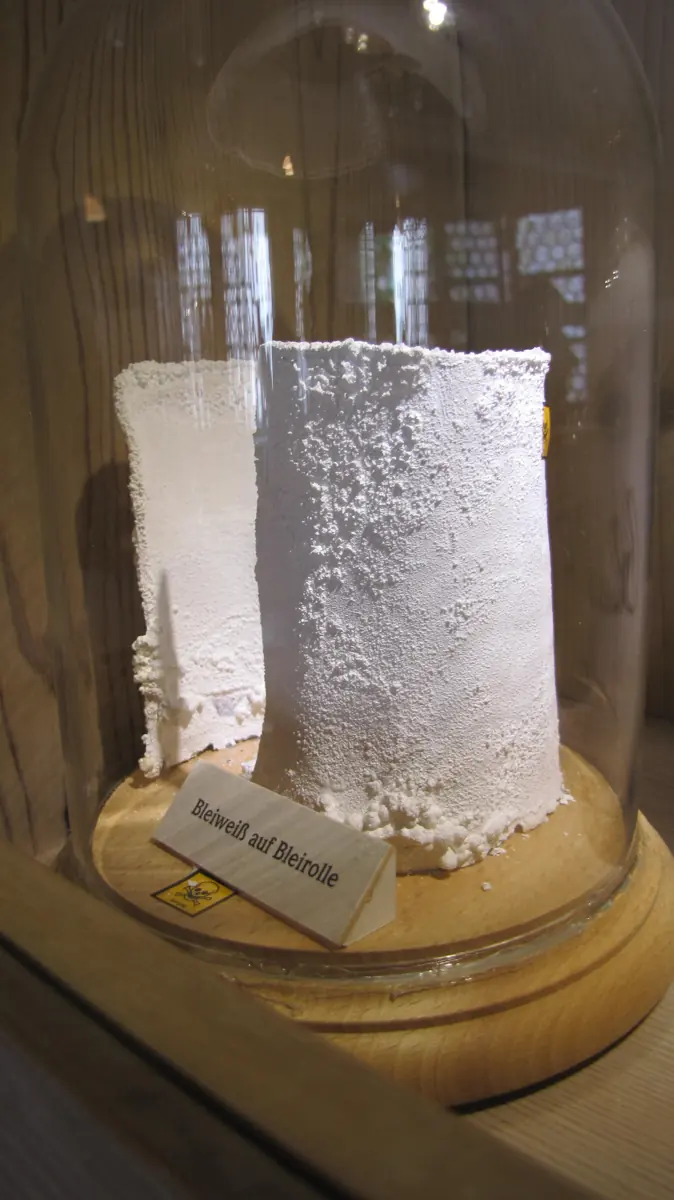
For centuries almost all the white in European painting was lead carbonate. It was made like this: strips of lead went into clay pots above a layer of vinegar, and the pots were buried in fermenting dung. The heat and carbon dioxide from the dung, with the vinegar vapour, turned the metal within a few months into a white crust that was scraped off and ground.
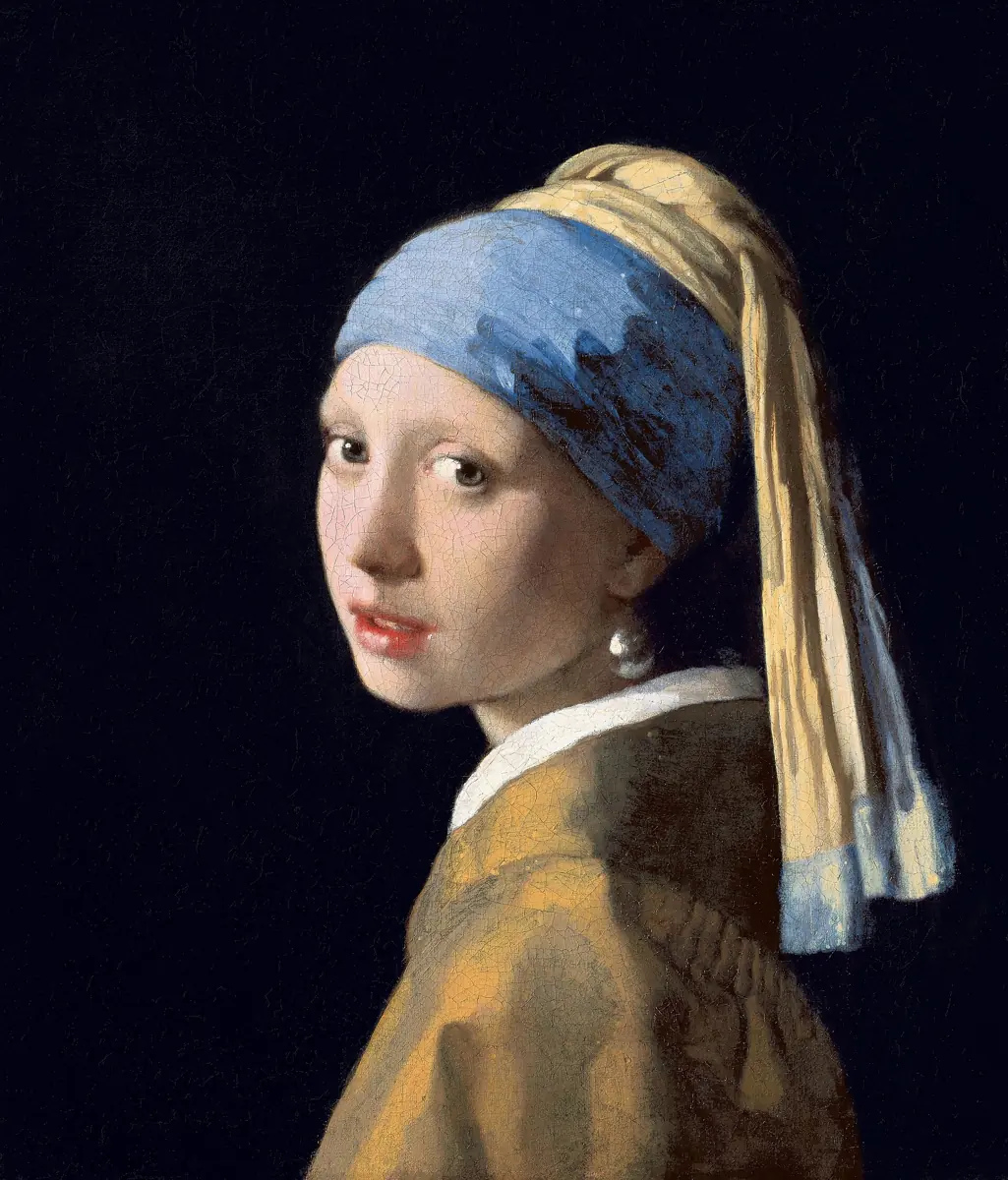
In 17th-century Holland the method was so common it was called the “Dutch stack process”. Vermeer used two kinds of lead white in Girl with a Pearl Earring, chosen for how they spread and reflected light. The lead in them came, the Mauritshuis analyses show, from England.
Painters loved it because it is thick, covers well and dries quickly in oil. It is still poisonous: ColourLex warns that nobody untrained in handling it should use it. In the 20th century zinc white and titanium white took its place.
- Made of
- basic lead carbonate
- Hazard
- lead, toxic
- See it in
- the ruff and cap of Rembrandt's Portrait of Aechje Claesdr, 1634


Mercury and sulphur
The brightest red was mercury, and it can turn black
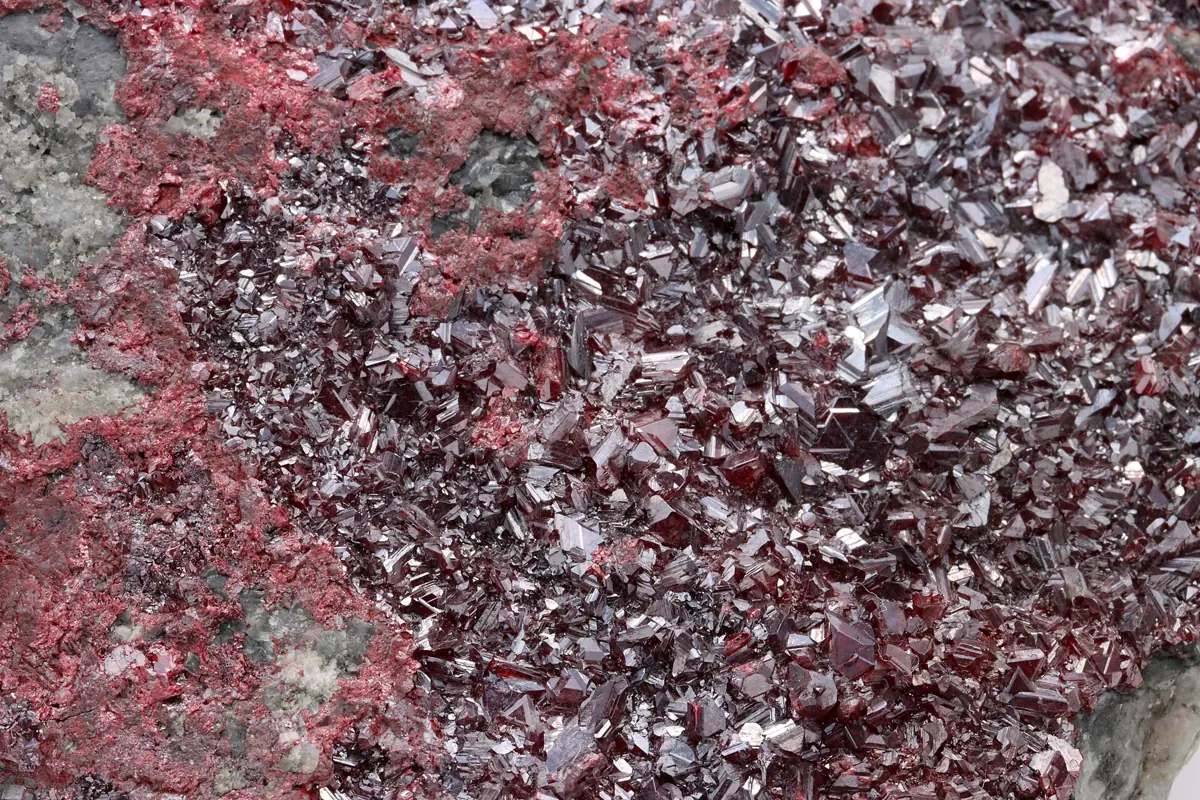
Vermilion is mercury sulphide. It occurs in nature as cinnabar, a red mineral, but European painters mostly used it manufactured: mercury and sulphur combine into a black powder which, heated until it sublimes, turns red. Recipes for it appear in European craft books between the 9th and 12th centuries.
It is the red of the lips of Vermeer's girl. But it has a flaw the National Gallery in London has studied: in ten paintings, the vermilion had darkened or turned a lilac grey. Chlorine, probably from dirt, and light slowly transform it. Where the painter laid a transparent glaze over it, the red survived.
Genuine vermilion is still made today, mostly in China.
- Made of
- mercury sulphide
- Hazard
- mercury
- See it in
- the lips in Girl with a Pearl Earring

Lapis lazuli from Afghanistan
The best blue cost as much as gold, weight for weight, or more
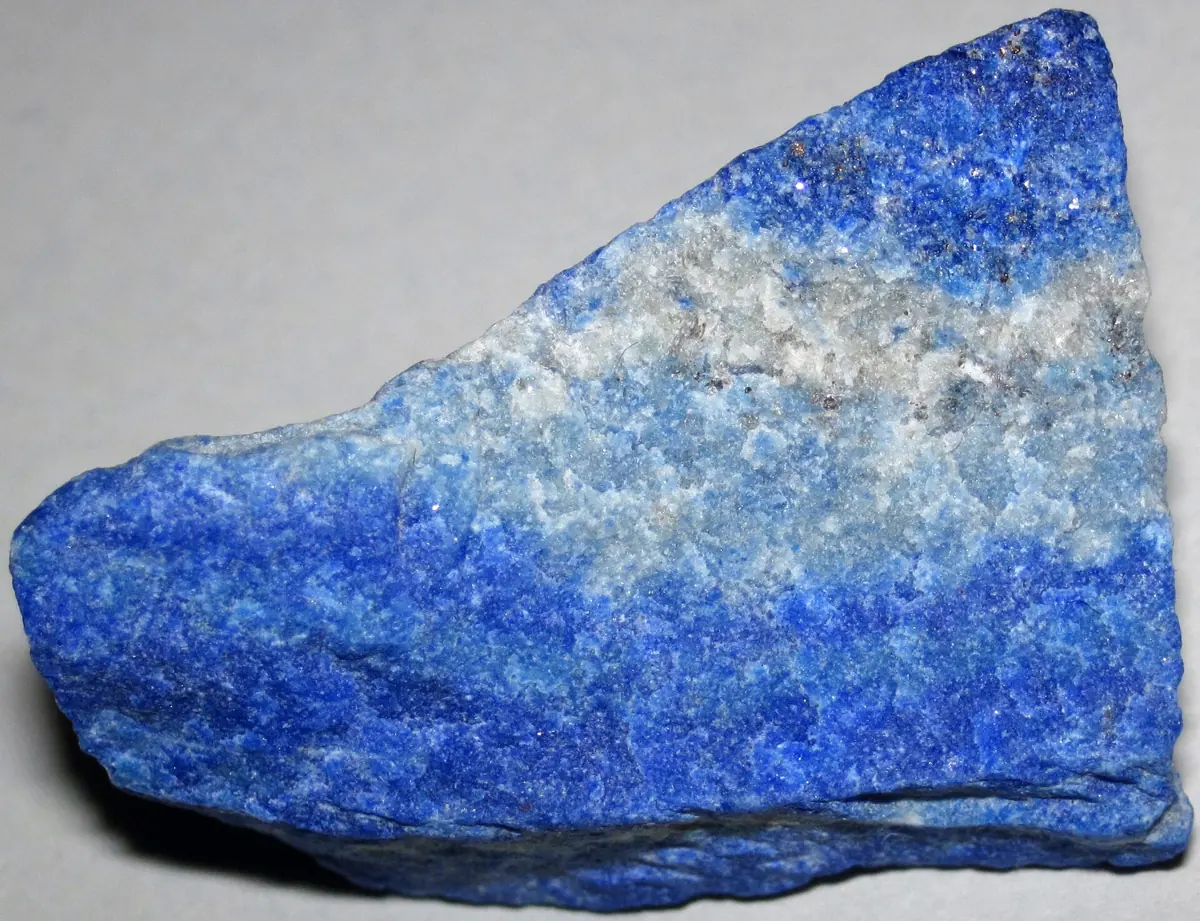
Natural ultramarine was extracted from lapis lazuli, a stone brought to Europe from Badakhshan, in today's Afghanistan. Grinding it was not enough: crushed stone gives a greyish blue. Around 1400 Cennino Cennini described how the powder was mixed into a paste of pine resin, mastic and wax, then kneaded in lye so that the blue ran out of it. The first extractions were the best.
“A colour noble, beautiful, and perfect beyond all other colours.”
Cennino Cennini, The Book of the Art, ch. 62
Cennini gives the price too: 8 ducats an ounce for the best. In 1508 Dürer wrote to his client that he could not buy a good ounce for less than 10 or 12 ducats. A ducat held about 3.5 grams of gold and an ounce weighed around 30 grams: at Cennini's price the best blue cost about its weight in gold, at Dürer's more. Ordinary grades were cheaper: Ghirlandaio's 1485 contract asks for ultramarine “of the value of about four florins the ounce”.
In 1824 a French society offered 6,000 francs to whoever invented a cheap synthetic ultramarine. Jean-Baptiste Guimet won it in 1828. After that, blue from stone became a rarity.
- Made of
- lazurite, the blue mineral in lapis lazuli
- From
- Badakhshan, Afghanistan
- See it in
- the turban in Girl with a Pearl Earring
_(Sar-e-Sang_Deposit,_Sakhi_Formation,_Precambrian,_2.4-2.7_Ga_(%3F);_Sar-e-Sang_Mining_District,_Hindu-Kush_Mountains,_Afghanistan)_16.jpg)
Copper ore
The cheap blue was copper, and it sometimes turned green
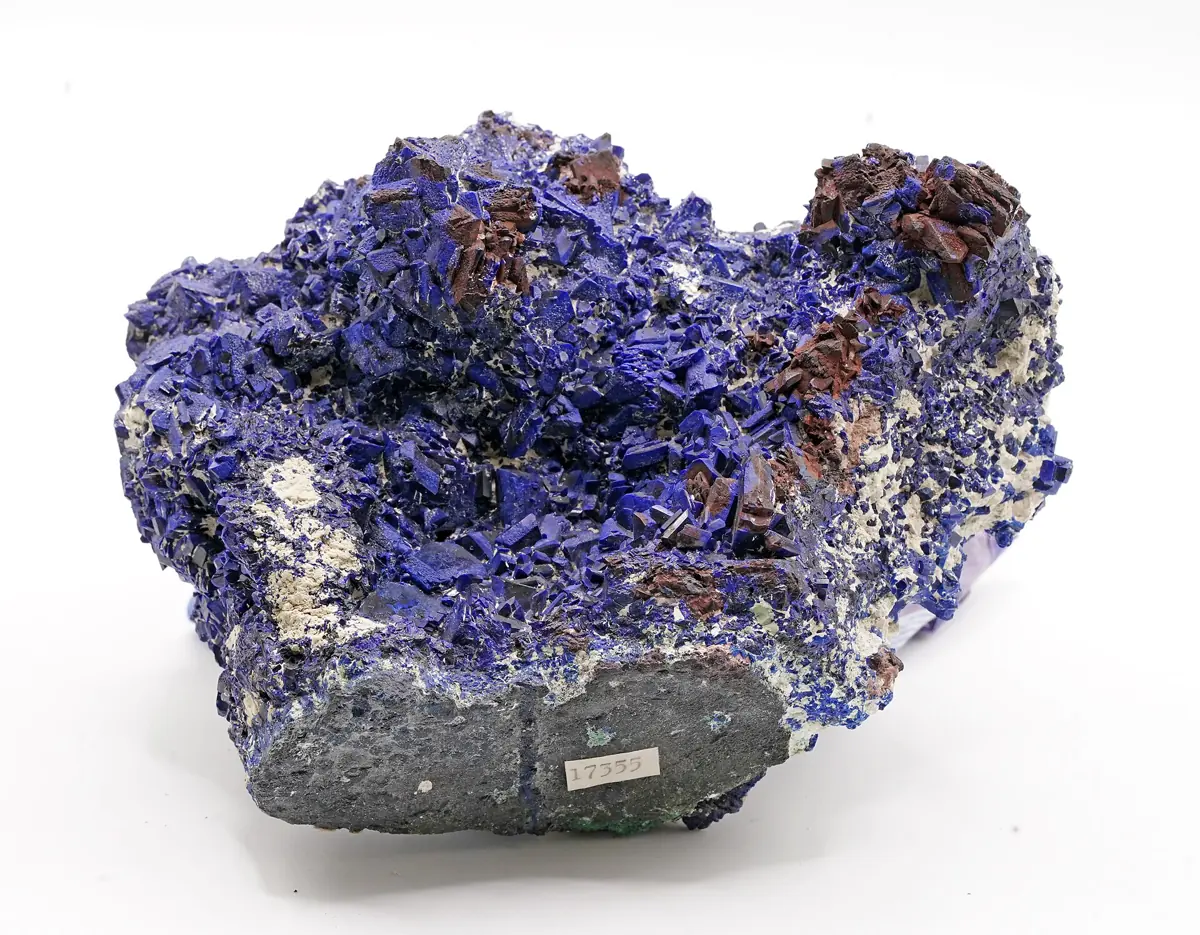
For large areas, painters used azurite, a copper carbonate far cheaper than ultramarine. The price difference shows in the paintings: Titian painted the Virgin's robe in the Aldobrandini Madonna in ultramarine and the sky in azurite, and in The Procession to Calvary Raphael put azurite on Christ's robe and ultramarine on the coat of the figure behind him.
Azurite has a flaw: it can change into malachite, which is green. It stayed in use until the early 18th century, when synthetic blues arrived.
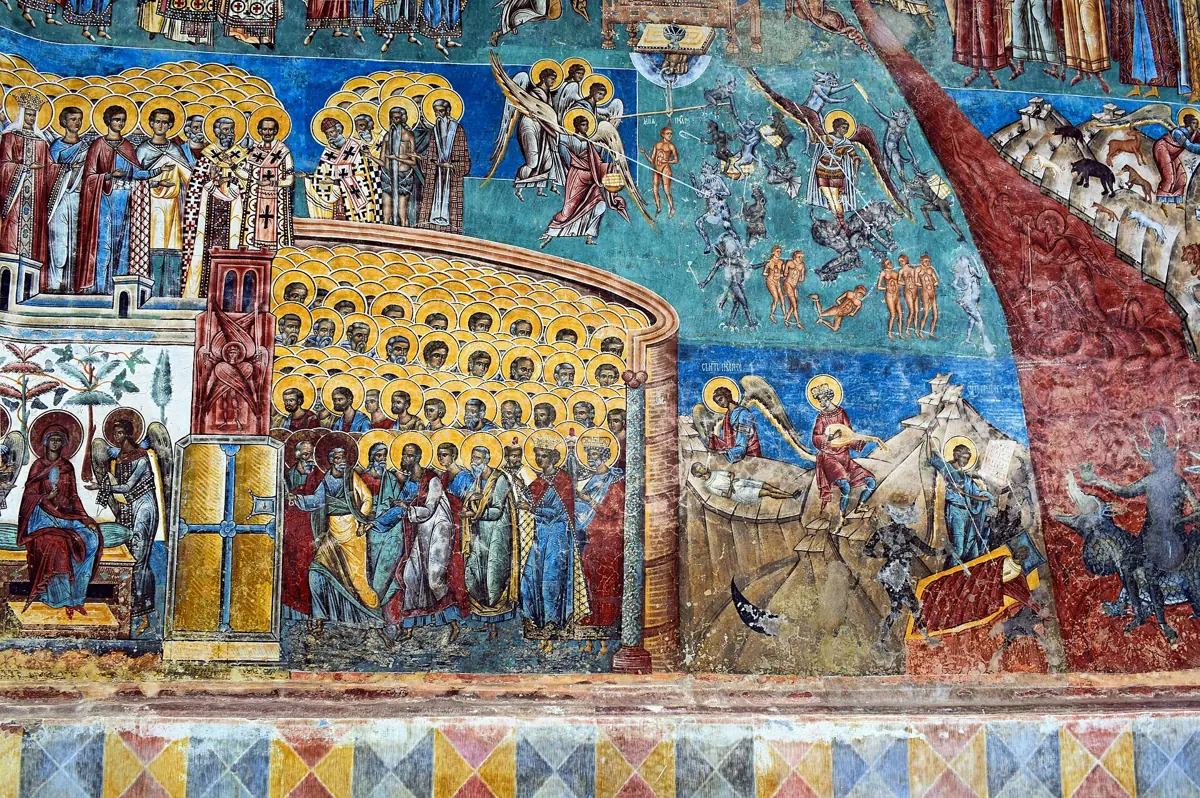
The blue of Voroneț in Romania, painted on the monastery's outer walls in 1547, is often presented as an unsolved secret. Raman analyses made on the walls by researchers from Alexandru Ioan Cuza University of Iași, published in 2014, found in the blue either lazurite, the mineral in lapis, or azurite mixed with a little smalt, a pigment made of cobalt glass.
- Made of
- basic copper carbonate
- Can turn into
- malachite, green
- See it in
- the sky of Titian's Aldobrandini Madonna
.jpg)

Insects from cactuses
A red came from insects, and Spain guarded it like silver
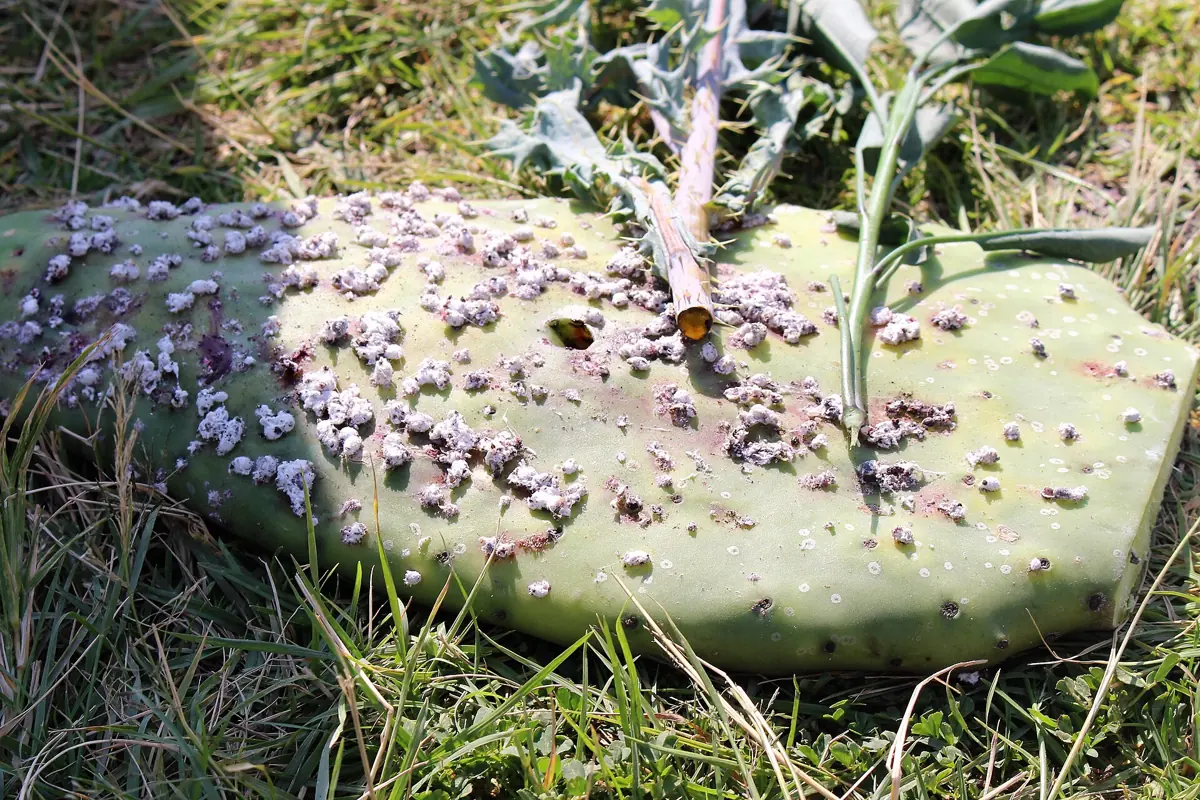
Cochineal (Dactylopius coccus) is a small insect that lives on the prickly-pear cactus. Dried and boiled, it gives an intense red from which carmine is made, a transparent pigment that painters laid in thin layers over other colours. The first small shipments reached Spain from Mexico in the 1520s; within two decades it was sold across Europe.
Spain kept the monopoly for more than two centuries. Apart from precious metals, cochineal was one of the most valuable goods brought from its colonies. Only in 1777 did the Frenchman Nicolas-Joseph Thiéry de Menonville smuggle a few live insects out of Mexico; his colony in Saint-Domingue did not outlive him.
A kilogram of dye took tens of thousands of insects; sources give the same number, 70,000, some per pound and some per kilogram. Rembrandt put a layer of carmine over vermilion on the dress in The Jewish Bride. But carmine has a serious flaw: it fades in light, even the light of a bulb.
- Made of
- carminic acid from the cochineal insect
- From
- Mexico and the Peruvian Andes
- Can change
- fades in light
- See it in
- Joachim Beuckelaer's The Four Elements: Air, 1570, at the National Gallery

Berlin, around 1706
A new blue came out of a mistake with animal blood
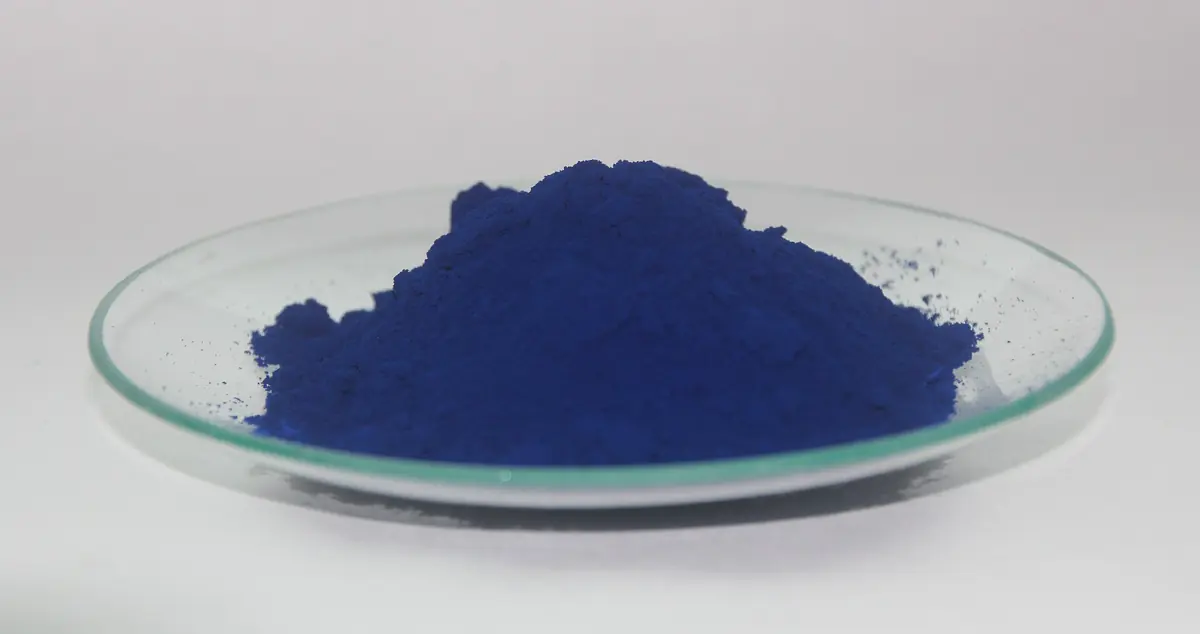
Around 1706 in Berlin, a colour-maker named Diesbach was trying to make a red from cochineal. He borrowed potash from the laboratory of the alchemist Dippel, and instead of red he got blue. The potash had been used to distil an “animal oil” from blood. The story is told by the chemist Stahl in 1731, a quarter of a century after the event.
The new colour was intense and far cheaper than ultramarine. In 1710 the Berlin Society's journal announced it, without a recipe; the recipe was only published in 1724, in London. The earliest dated painting in which it has been identified is Pieter van der Werff's Entombment of 1709. It is considered the first modern synthetic pigment; manufactured pigments are much older, though: Egyptian blue was made some 4,500 years ago, possibly earlier.
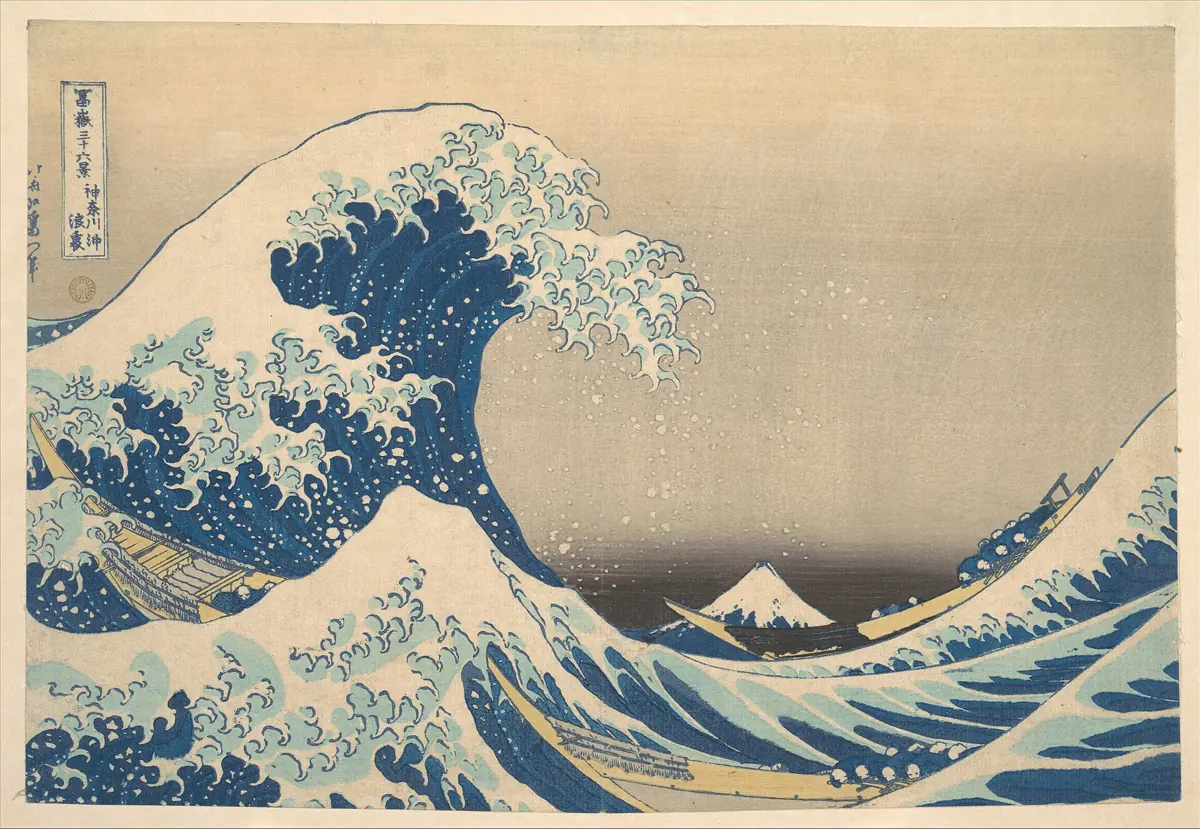
Dutch traders brought it to Japan within a few decades, but it only became cheap enough for prints around 1830. Hokusai used it in The Great Wave off Kanagawa, pure in the hollow of the wave and mixed with indigo in the dark outlines, as analyses at the Metropolitan Museum in New York show.
- Made of
- ferric ferrocyanide, an iron compound
- Hazard
- low: the cyanide is tightly bound; it is even given as an antidote to thallium poisoning
- See it in
- The Great Wave off Kanagawa, Hokusai, c. 1831

,_also_known_as_The_Great_Wave,_from_the_series_Thirty-six_Views_of_Mount_Fuji_(Fugaku_sanj%C5%ABrokkei)_MET_DP141063.jpg)
Copper and arsenic
The brightest green was arsenic, and it poisoned whole households
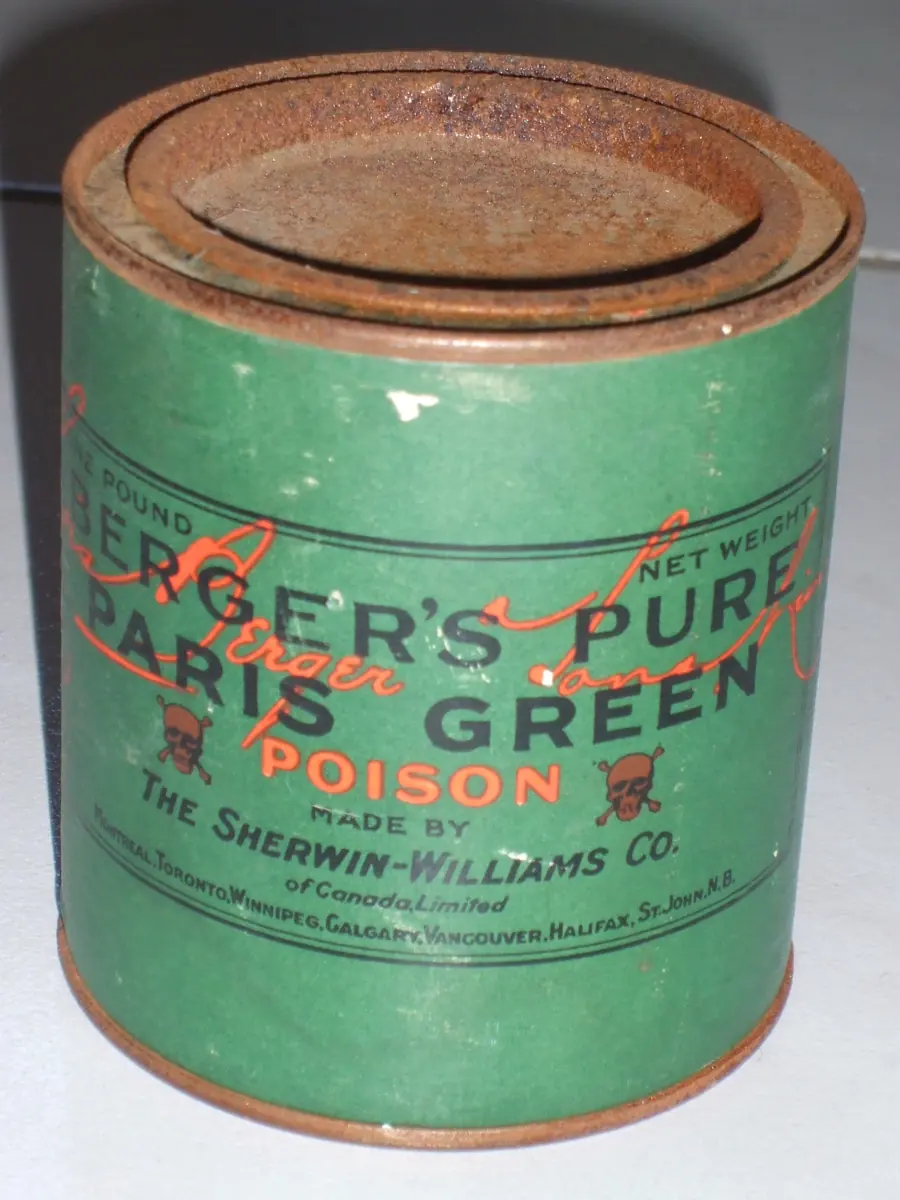
In 1775 the Swedish chemist Carl Wilhelm Scheele made a green from copper and arsenic. In 1814, in Schweinfurt, a more stable version was made, emerald green, also sold as “Paris green”. Van Gogh used it: in Field with Irises near Arles analyses found two kinds of emerald green.
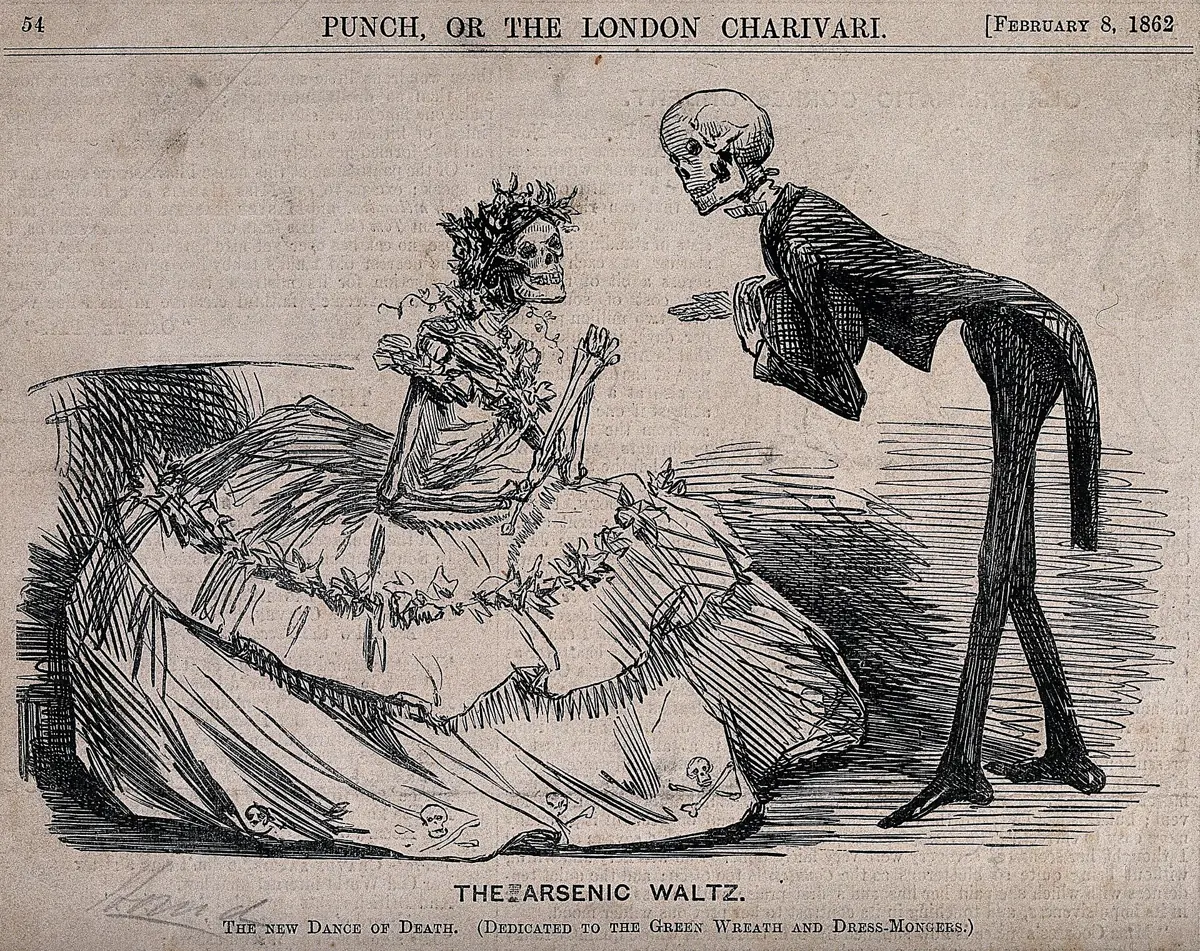
The same green coloured wallpapers, artificial flowers and dresses. In 1862, in Limehouse in London, four children of the Turner family died after sleeping in a room papered in Scheele's green; the jury nevertheless found they had died of natural causes. William Morris used arsenical colours in his early wallpapers and was a shareholder in an arsenic mine. Britain never banned arsenic in wallpaper by law.
The wallpaper in the house where Napoleon died, on St Helena, also contained arsenic: 0.12 grams per square metre, measured in 1982 by the chemist David Jones and Ken Ledingham's laboratory at Glasgow University. Jones also wrote that the wallpaper might have hastened his death “by a day or so”. The autopsy points to stomach cancer.
- Made of
- copper acetoarsenite
- Hazard
- arsenic
- See it in
- Field with Irises near Arles, Van Gogh, 1888
.JPG)

Cow urine, in all likelihood
The cow-urine story sounded like a legend. Chemistry proved it right
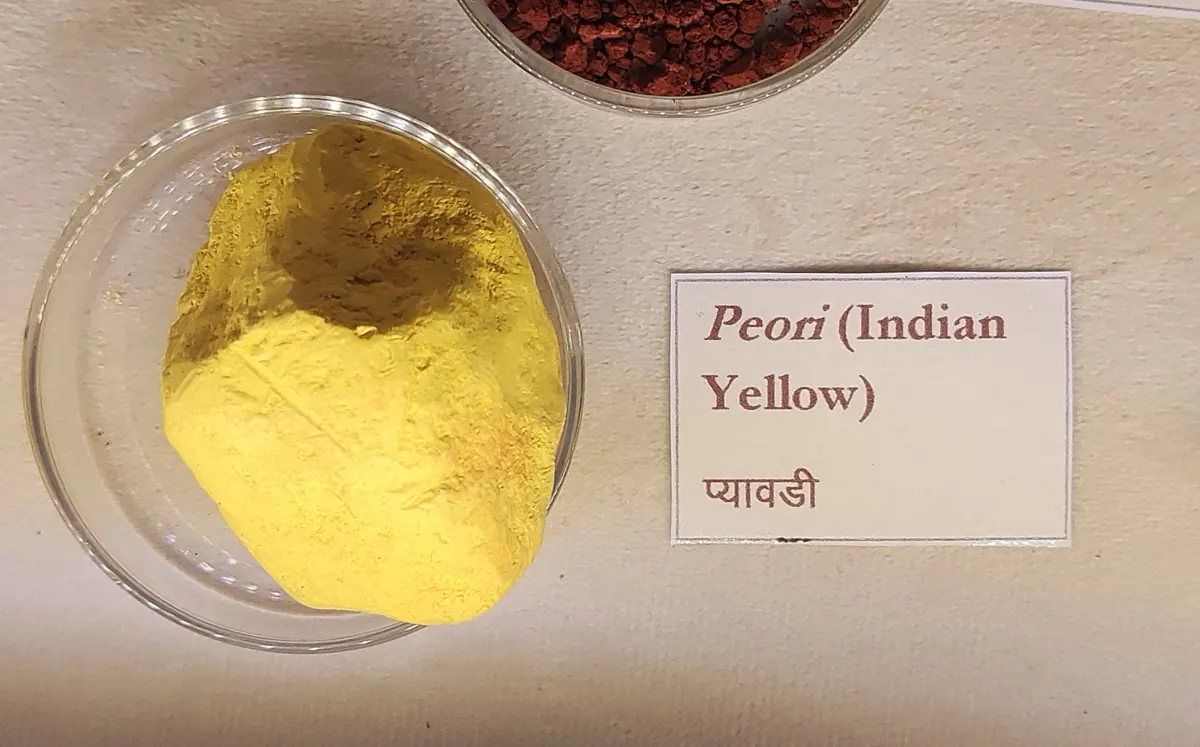
Indian yellow reached Europe as hard, foul-smelling balls called purree. In 1883, at the request of Joseph Hooker, director of the botanic garden at Kew, T. N. Mukharji described how it was made: at Monghyr, in Bihar, cows were fed only mango leaves and water, and the pigment was obtained from their urine.
For a long time the story was met with suspicion. Around 2000 the writer Victoria Finlay found nobody in the area who remembered the practice. Then, between 2016 and 2019, researchers found at Kew the very samples Mukharji had sent. In some they found hippuric acid, a substance found in the urine of ruminants: the first solid chemical link to the story.
It is often said that production was banned in 1908 because the cows suffered. But nobody has found a law that proves it. We only know that the pigment disappeared from the market around 1921.
- Made of
- magnesium and calcium salts of euxanthic acid
- From
- Monghyr, Bihar, India
- Not known
- whether the 1908 ban existed

Ground Egyptian mummies
A brown was made from Egyptian mummies, until there were none left
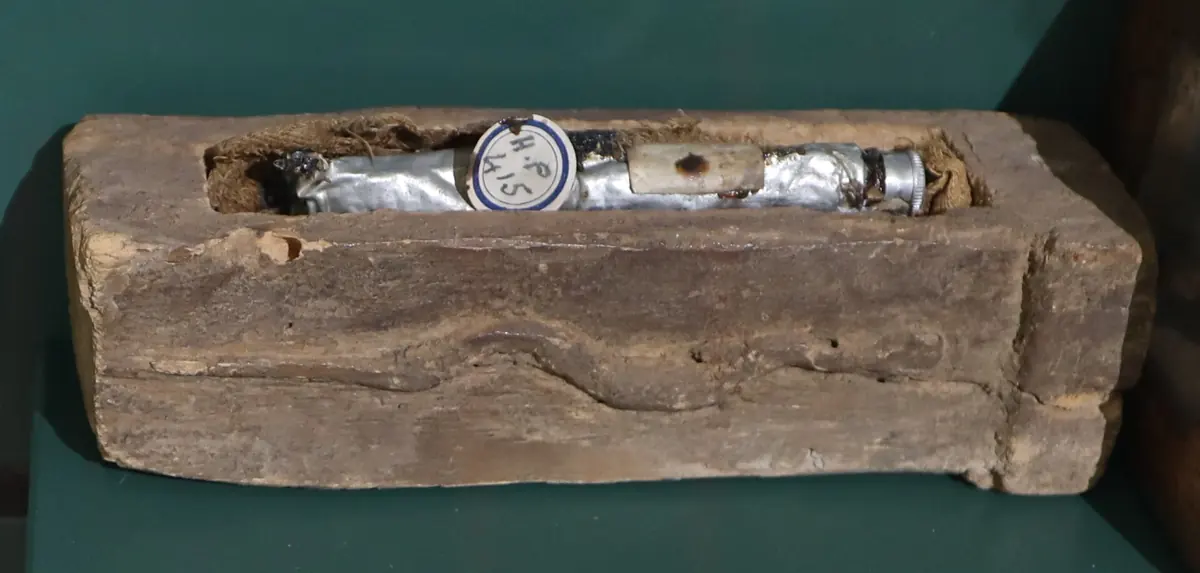
Mummy brown was made, as the name says, from ground Egyptian mummies mixed with white pitch and myrrh. It was used from the 16th to the 19th century, and in 1849 it was described as “quite in vogue”. A sample is kept in the Forbes pigment collection of the Harvard museums.
The painter Edward Burne-Jones did not know what it was made of. When he found out, in the early 1880s, he took his only tube and buried it in the garden. Both his wife and his nephew, Rudyard Kipling, tell the scene, with different details: Kipling writes that the painter had discovered the paint was made “of dead Pharaohs” and that it must be buried accordingly.
In 1964 the London colourman C. Roberson told Time magazine it could no longer make it: “We might have a few odd limbs lying around somewhere, but not enough to make any more paint.” Certain famous paintings are often said to contain mummy brown; no published technical analysis supports it for any particular one.
- Made of
- ground mummies, white pitch, myrrh
- From
- Egypt
- Not known
- which painting contains it

Paint with them
Pick a colour and drag across the canvas. Each pigment behaves as it did in the studio: lead white is thick and stands in relief, carmine, Indian yellow and mummy brown are transparent glazes, ultramarine and azurite carry grains of stone. Then let the painting age.
- Lead white. lead and vinegar toxic: lead
- Vermilion. mercury and sulphur toxic: mercury
- Ultramarine. lapis lazuli from Afghanistan
- Azurite. copper ore
- Carmine. insects from Mexico
- Prussian blue. iron and potash
- Emerald green. copper and arsenic toxic: arsenic
- Indian yellow. urine of cows fed mango leaves
- Mummy brown. ground Egyptian mummies
Palette
Brush
Vermilion can darken, carmine fades in light and azurite can turn green. The others stay as you laid them.
What your painting contains
Nothing yet. Lay the first stroke.
- Lead whitelead and vinegar toxic: lead
- Vermilionmercury and sulphur toxic: mercury
- Ultramarinelapis lazuli from Afghanistan
- Azuritecopper ore
- Carmineinsects from Mexico
- Prussian blueiron and potash
- Emerald greencopper and arsenic toxic: arsenic
- Indian yellowurine of cows fed mango leaves
- Mummy brownground Egyptian mummies
Who came and who went
Each stroke covers the years in which European painters had the colour to hand. Prussian blue and synthetic ultramarine changed everything: what had cost as much as gold became cheap.
For Indian yellow, the timeline shows the years it was bought in Europe; in India it was used earlier.
Colour left the studio in a tube
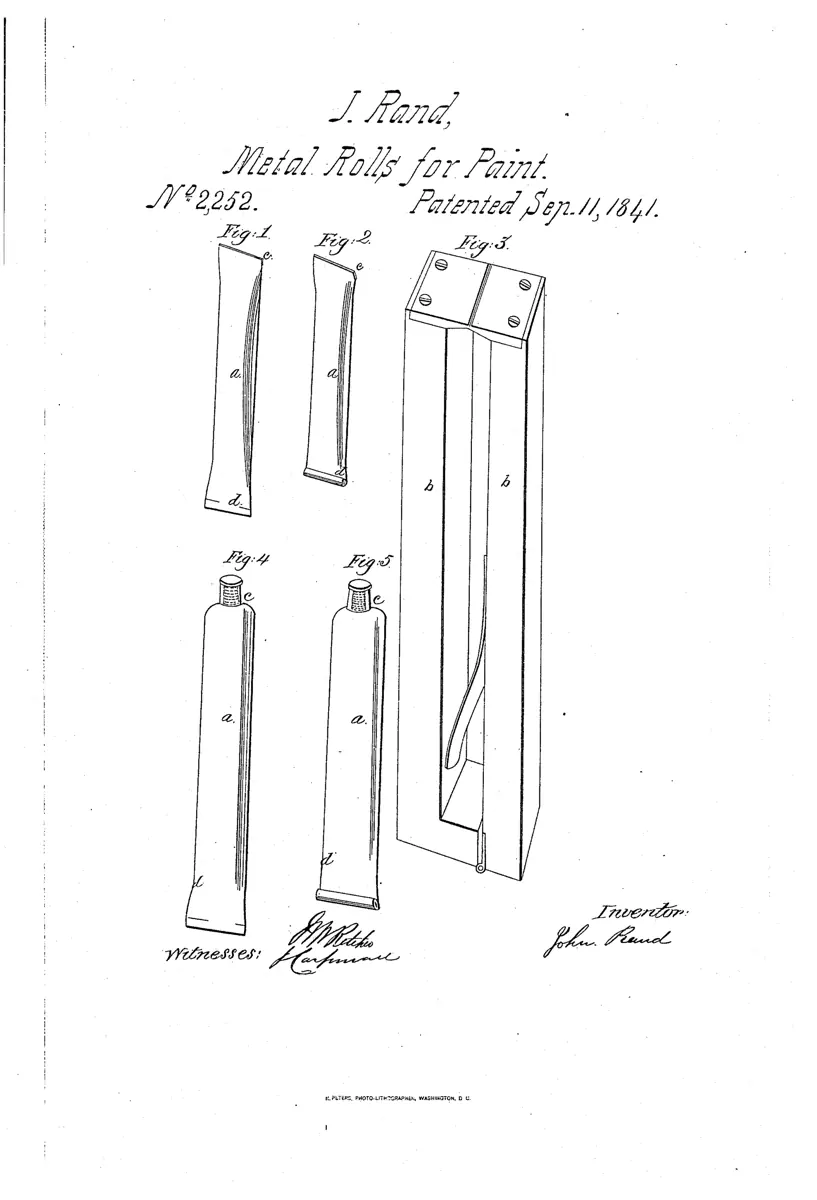
Until the middle of the 19th century, painters prepared their colours in the studio or bought them in pig's bladders, which dried out quickly. On 11 September 1841 the American portrait painter John Goffe Rand, working in London, was granted a patent for a metal tube that collapses as you empty it.
Renoir's son Jean recalled in 1962 what his father used to say: without paints in tubes there would have been no Cézanne, no Monet, no Sisley or Pissarro, nothing of what the journalists were later to call Impressionism. Art historians such as Anthea Callen say the tube alone does not explain Impressionism, but it let painters work outdoors.

True or false?
Six things people say about old colours. Choose, then see what the sources say.
All ultramarine was more expensive than gold.
False. Only the best: in Cennini, 8 ducats an ounce, about its weight in gold; in Dürer, 10–12, which is more. Ordinary grades were far cheaper: Ghirlandaio paid about 4 florins an ounce.
Cennino Cennini, The Book of the Art, trad. Christiana J. Herringham, cap. 62
Nobody knows what the blue of Voroneț is made of.
False. Raman analyses in 2014 found lazurite, the mineral in lapis lazuli, or azurite mixed with a little smalt.
Napoleon was killed by his green arsenic wallpaper.
False. The wallpaper contained arsenic, but the chemist who measured it thought it might have hastened his death “by a day or so”. The autopsy points to stomach cancer.
Indian yellow was made from the urine of cows fed on mango leaves.
True. The samples sent to Kew in 1883 contain hippuric acid, a substance in ruminant urine. Mukharji's account is, in all likelihood, true.
Just Paint (Golden Artist Colors), „Meeting a Ghost: A Sample of Genuine Indian Yellow”
Prussian blue was the first man-made pigment.
False. Egyptian blue was manufactured some 4,500 years ago, possibly earlier. Prussian blue is considered the first modern synthetic pigment.
Egyptian mummies were ground up to make paint.
True. Mummy brown was made that way from the 16th to the 19th century. In 1964 the London maker C. Roberson said it had run out of mummies.
Time, „Techniques: The Passing of Mummy Brown”, 2 octombrie 1964
Sources
The colours on screen approximate how each pigment looks in oil: no screen reproduces a pigment exactly. The changes in the studio (darkening, fading, turning green) show what can happen under the conditions described in the chapters, not what certainly happens in any given painting.
- ColourLex, Lead white. colourlex.com/project/lead-white/
- ColourLex, Vermilion. colourlex.com/project/vermilion/
- ColourLex, Ultramarine. colourlex.com/project/ultramarine/
- ColourLex, Azurite. colourlex.com/project/azurite/
- ColourLex, Carmine cochineal. colourlex.com/project/carmine-cochineal/
- ColourLex, Indian yellow. colourlex.com/project/indian-yellow/
- Marika Spring, Rachel Grout, „The Blackening of Vermilion”, National Gallery Technical Bulletin 23 (2002). www.nationalgallery.org.uk/research/publications/technical-bulletin/the-blackening-of-vermilion-an-analytical-study-of-the-process-in-paintings
- Jo Kirby, Marika Spring, Catherine Higgitt, „The Technology of Eighteenth- and Nineteenth-Century Red Lake Pigments”, National Gallery Technical Bulletin 28 (2007). www.nationalgallery.org.uk/media/15525/kirby_spring_higgitt2007.pdf
- Kathryn Dooley, Annelies van Loon, Abbie Vandivere et al., „Mapping the pigment distribution of Vermeer's Girl with a Pearl Earring”, npj Heritage Science 8 (2020). www.nature.com/articles/s40494-019-0348-9
- Mauritshuis, „Closer to Vermeer and the Girl” (2020). web.archive.org/web/2024/https://www.mauritshuis.nl/en/press-releases/closer-to-vermeer-and-the-girl
- Cennino Cennini, The Book of the Art, trad. Christiana J. Herringham, cap. 62. archive.org/details/bookofartofcenni00cenn
- Contractul lui Domenico Ghirlandaio pentru Adorația magilor, 1485, trad. Michael Baxandall. employees.oneonta.edu/farberas/arth/arth200/artist/artist_contracts.htm
- Albrecht Dürer, scrisoare către Jakob Heller, 1508, trad. W. M. Conway. employees.oneonta.edu/farberas/arth/arth200/artist/durer_primary_docs.html
- Hamerton et al., „A Systematic Examination of Colour Development in Synthetic Ultramarine”, PLOS ONE (2013). journals.plos.org/plosone/article?id=10.1371%2Fjournal.pone.0050364
- Nicolae Buzgar, Andrei Buzatu, Andrei Apopei, Vasile Cotiugă, „In situ Raman spectroscopy at the Voroneţ Monastery”, Vibrational Spectroscopy 72 (2014). www.sciencedirect.com/science/article/abs/pii/S092420311400068X
- Smithsonian Magazine, „The Bug That Had the World Seeing Red” (2017). web.archive.org/web/2024/https://www.smithsonianmag.com/innovation/bug-had-world-seeing-red-180961590/
- Harvard Museums of Science & Culture, Cochineal. hmsc.harvard.edu/online-exhibits/cochineal1/product-nature/
- Alexander Kraft, „On the Discovery and History of Prussian Blue”, Bulletin for the History of Chemistry 33 (2008). www.ideals.illinois.edu/items/134786/bitstreams/443301/data.pdf
- Marco Leona, „The Great Wave: Anatomy of an Icon”, The Metropolitan Museum of Art (2020). web.archive.org/web/2024/https://www.metmuseum.org/essays/hokusai-great-wave
- „Reconstructing Van Gogh's palette”, npj Heritage Science (2018). www.nature.com/articles/s40494-018-0181-6
- „Hidden in plain sight: Scheele's green”, npj Heritage Science (2024). www.nature.com/articles/s40494-024-01192-7
- Journal of Victorian Culture Online, „Arsenic and Old Wallpapers” (2023). jvc.oup.com/2023/12/14/arsenic-and-old-wallpapers/
- Victorian Web, recenzie la Lucinda Hawksley, Bitten by Witch Fever (2016). victorianweb.org/victorian/art/design/wallpaper/hawksley.html
- David Jones, „Napoleon's wallpaper”, Chemistry World (2011). www.chemistryworld.com/opinion/napoleons-wallpaper/3005618.article
- Mari, Bertol, Fineschi, Karch, „Channelling the Emperor: what really killed Napoleon?”, Journal of the Royal Society of Medicine (2004). pmc.ncbi.nlm.nih.gov/articles/PMC1079564/
- Just Paint (Golden Artist Colors), „Meeting a Ghost: A Sample of Genuine Indian Yellow”. justpaint.org/meeting-a-ghost-a-sample-of-genuine-indian-yellow/
- Rebecca Ploeger, Aaron Shugar et al., „Late 19th century accounts of Indian yellow: The analysis of samples from the Royal Botanic Gardens, Kew”, Dyes and Pigments 160 (2019). www.sciencedirect.com/science/article/abs/pii/S0143720818314177
- Harvard Art Museums, „A Pigment from the Depths”. harvardartmuseums.org/article/a-pigment-from-the-depths
- Rudyard Kipling, Something of Myself (1937), cap. 1. www.kiplingsociety.co.uk/tale/something-of-myself-1.htm
- Georgiana Burne-Jones, Memorials of Edward Burne-Jones, vol. 2 (1904). archive.org/details/memorialsofedwar02burn
- Time, „Techniques: The Passing of Mummy Brown”, 2 octombrie 1964. time.com/archive/6873636/techniques-the-passing-of-mummy-brown/
- John G. Rand, brevetul american nr. 2.252 (1841), și Jean Renoir, Renoir, My Father (1962), citate în Wikipedia. en.wikipedia.org/wiki/John_G._Rand
- Wikipedia, Egyptian blue. en.wikipedia.org/wiki/Egyptian_blue
Images
- Concord · Wikimedia Commons · CC BY-SA 3.0
- Miguel Calvo · Wikimedia Commons · CC BY 4.0
- James St. John · Wikimedia Commons · CC BY 2.0
- Holger Krause · Wikimedia Commons · CC BY-SA 4.0
- Emőke Dénes · Wikimedia Commons · CC BY-SA 4.0
- Saalebaer · Wikimedia Commons · CC0
- Katsushika Hokusai, The Metropolitan Museum of Art · Wikimedia Commons · CC0
- Chris Goulet · Wikimedia Commons · CC BY-SA 3.0
- Punch, 1862; Wellcome Collection · Wikimedia Commons · CC BY 4.0
- Shyamal L. · Wikimedia Commons · CC BY 4.0
- Geni · Wikimedia Commons · CC BY-SA 4.0
- John Goffe Rand · Wikimedia Commons · public domain
- Johannes Vermeer, Mauritshuis · Wikimedia Commons · public domain
- Jocelyn Erskine-Kellie · Wikimedia Commons · CC BY-SA 4.0