“Însemnare a călătorii mele” (A record of my journey), Buda, 1826
In 1826 a Wallachian boyar printed what he had seen in Europe, and confessed what he had taken from the peasants at home
Dinicu Golescu, a landowning noble in Wallachia, saw lanterns burning all night in Vienna, a king walking through the crowd in Munich and Swiss peasants reading newspapers. Beside each sight he set what went on in Wallachia, then under Ottoman overlordship: men held in the sun with a beam across their bellies over tax money, offices bought and sold, schools wrecked on purpose. And he wrote that in every office he held, he had taken money from the people unlawfully.
Who he was, and where he started from
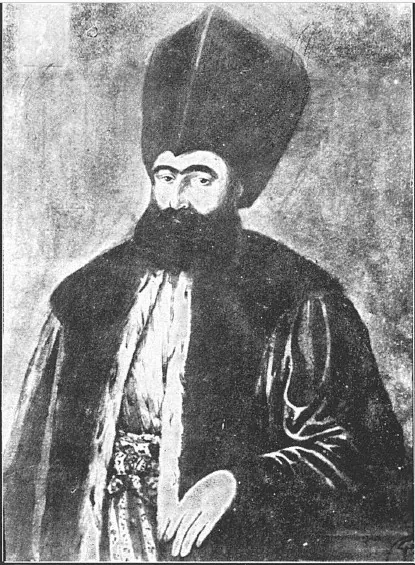

Wallachia, the southern half of today's Romania, was a principality under Ottoman overlordship. For about a century before 1821 its princes were appointed from Constantinople, most of them from Greek families of the city's Phanar district. Power ran through the boyars, landowning families whose members held the state's offices; Golescu writes that the offices changed hands every year and were bought. Peasants owed their lords labour and paid heavy taxes, and Roma were held as slaves by boyars and monasteries until the 1850s.
Constantin Golescu, known as Dinicu, was born in 1777 into one of the great boyar families, whose estate was at Golești, near Pitești, about 100 km north-west of Bucharest. He rose to grand logothete, the head of the prince's chancery and one of the highest offices in the country. Like every Wallachian boyar of his day he wore Ottoman-style dress, and his beard marked his rank in the prince's council, the Divan.
In 1821 two revolts broke out at once: Tudor Vladimirescu led an armed movement of Wallachians against the rule of the Greek-appointed princes, and the Greek secret society Filiki Etaireia launched its own uprising against the Ottomans in the principalities. Golescu went to Brașov, just across the Habsburg border in Transylvania, escorting the family of Prince Alexandru Suțu, who had died shortly before. Each time he sets out from Brașov, though the 1825 journey is described only from Vienna onward. Golescu writes that in 24 years the boyars had four times abandoned their houses and fled abroad, and each time came back to find everything destroyed.
In 1822 the Ottomans appointed a native prince again, Grigore Ghica. In his preface Golescu takes this as a sign that “the time has come for us to wake up”.
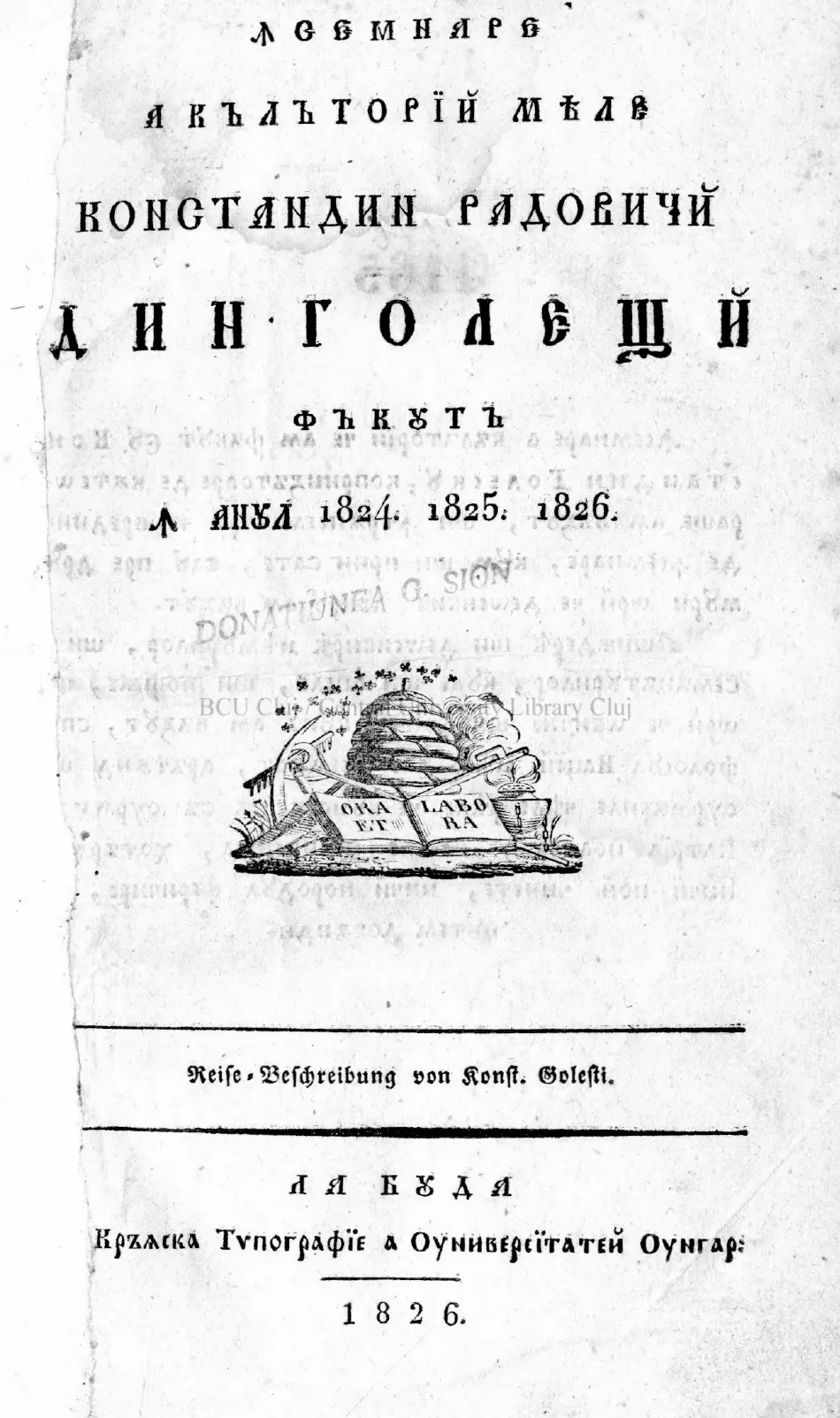
The book came out at Buda, at the university press, with 1826 on the title page: 240 pages in Cyrillic type, the alphabet Romanian was then printed in. Golescu describes towns, roads and post stations, and every so often he stops, under the heading “Cuvântări deosebite” (separate reflections), to say what happens at home. The quotations here are translated from his Romanian; beside the key ones you can see the 1826 page and the same text in modern Romanian spelling.
He wrote it, he says, “driven more by shame”: in Europe's libraries, he writes, you could load carts with travel books, and “with us” not one had appeared. And:
But how could I, having eyes, not see; seeing, not take note; taking note, not compare; comparing, not judge what is good, and not wish to make it known to my countrymen?
In the 1826 editionpreface, “To the reader”
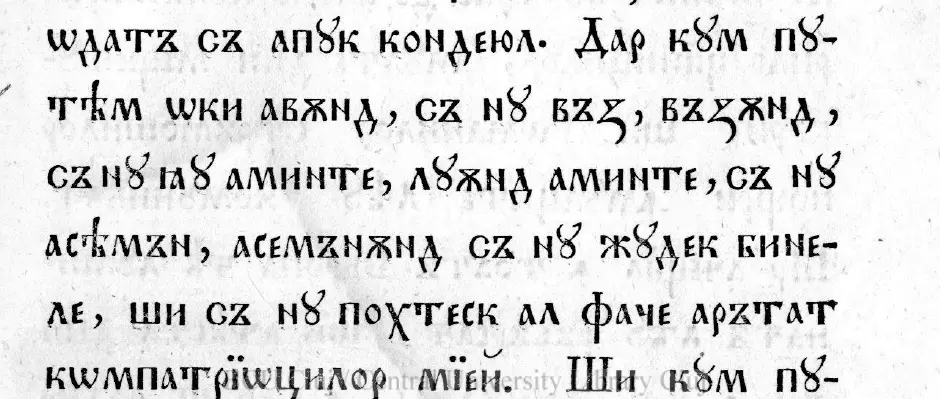
The Romanian, in modern spelling Dar cum puteam, ochi având, să nu văd, văzând, să nu iau aminte, luând aminte, să nu asemăn, asemănând să nu judec binele, și să nu poftesc a-l face arătat compatrioților mei?
road described in the bookstretch not described
Three journeys, 1824–1826
The map follows the routes as you read. Lines run through the towns and post stations Golescu names; a dotted line marks a stretch the book does not describe. Distances are calculated along the line through the places named, so the real journeys were longer.
The book is not a day-by-day diary. Golescu wrote it in 1826, largely from memory: describing a double-headed eagle in Vienna made entirely of weapons, he says the wing feathers were swords “as far as I remember”.
Chapter I
Brașov: villages where every child learns to read
To Vienna · 1824
The descriptions begin with Brașov and the Saxon villages of the Bârsa country, German-speaking settlements in Transylvania since the Middle Ages. He begins with a right of appeal: anyone unhappy with the magistrate's decision can take the case to Sibiu, then to Cluj, then to Vienna.
The Saxon villages have stone houses with three or four rooms, glass in the windows, painted furniture and clocks. Nobody goes barefoot. Every child must learn to read, write and do three sums, “addition, multiplication and subtraction”, and every Sunday afternoon the priest talks to the young people, from the age of ten until they marry, about their duties.
From Brașov too he began to note down what he saw. His fellow travellers each wrote in their own language; within days he switched to Greek, the language of learning among Wallachian boyars, and when they asked, he explained that where he came from the sons of the nobility mostly wrote in Greek.
Leaving Brașov, I began to write down what I saw in the national language, and not after many days but after a few I was forced to write in Greek, because I very often came upon sights of things for which we have no names in the national language, such as the fountain, the statue, cascades and others.
In the 1826 editionp. 107
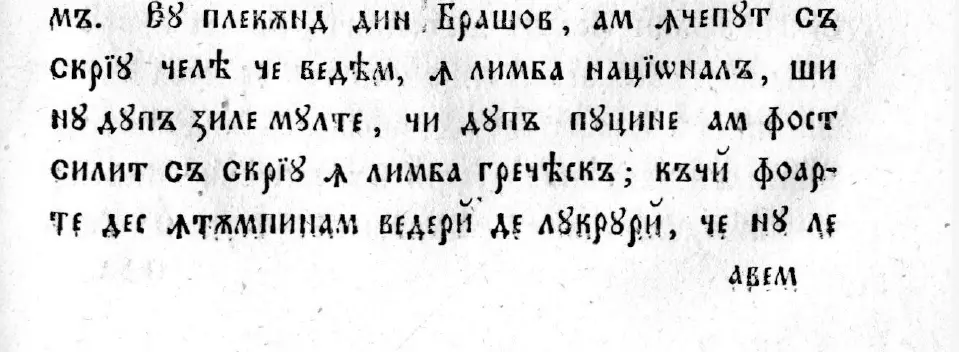
The Romanian, in modern spelling Eu, plecând din Brașov, am început să scriu cele ce vedeam în limba națională, și nu după zile multe, ci după puține, am fost silit să scriu în limba grecească; căci foarte des întâmpinam vederi de lucruri ce nu le avem numite în limba națională, cum: șadârvanul, statuie, cascade și altele.
The printed book is in Romanian. Words his readers would not know he explained in footnotes; some are collected below the map.
Chapter II
Pest: schools “our people have not seen even in a dream”
To Vienna · 1824
In Pest he sees school buildings where anyone may attend “the whole course” of studies, medicine included, with anatomical models in wax. The schools' endowment, he writes, brings in nearly 400,000 florins a year, all of it spent on teaching. (A florin was 60 kreuzers; the charcoal-burner below saved 20,000 florins in a working life.) Pest, he points out, was only a county town; the seat of the Kingdom of Hungary was Buda. He measures it against Craiova, the chief town of western Wallachia.
This Pest cannot be ranked even with Craiova, in revenue or in anything else, and it has so large an income for learning that not only have our people never seen it even in a dream, but the rulers have many times wrecked even those small schools, on purpose: so that the people should not wake up…
In the 1826 editionp. 25
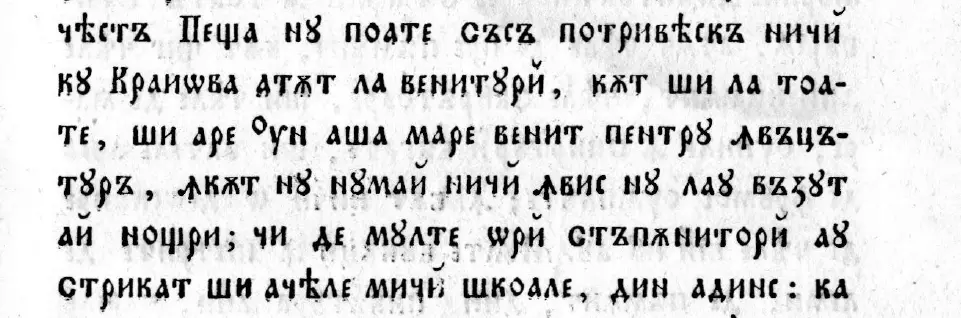
The Romanian, in modern spelling Această Pesta nu poate să se potrivească nici cu Craiova, atât la venituri, cât și la toate, și are un așa mare venit pentru învățătură, încât nu numai nici în vis nu l-au văzut ai noștri, ci de multe ori stăpânitorii au stricat și acele mici școli, dinadins: ca să nu se deștepte norodul…
On the road across the Hungarian plain he does a sum. Hungarian peasants, he writes, work 104 days a year for their lord, those in Transylvania 198, on top of days spent on the state's roads. Our peasants, he says, work only 12 days a year for the lord, and yet the Hungarians are better off, because from birth to death the Wallachian peasant hears one phrase: “give money!”. The numbers are his.
Chapter III
Pressburg, 25 September 1825: a crowd shouting “Long live”
To Vienna · 1825
At Pressburg, today's Bratislava, he watched Empress Caroline Augusta crowned queen of Hungary. What moved him more than the pomp, he writes, was the crowd shouting “Long live our empress!” from the streets, the windows and houses whose roofs had been stripped to make room for spectators. Although a foreigner, he could not hold back his tears.
Then comes the comparison: “with us, at this kind of parade, some curse, others spit and the women swear”. The empress answered the crowd by bowing her head on every side, while at home, he writes, when a small man bows to a great one, the great one replies “only with a glance from the corner of his eye”.
Chapter IV
Vienna: lanterns until daybreak and a post three times a day
To Vienna · 1824–1825
He stayed a month in Vienna, the Habsburg capital. What he found most worth recording was “the order of government”: supply carts come and go before dawn, and by the time townspeople are out the streets have been watered and swept. Two townsmen quarrelling in the street are taken off by the police, reprimanded first for shaming the city and only then asked what the quarrel was about.
He lists what he watched for:
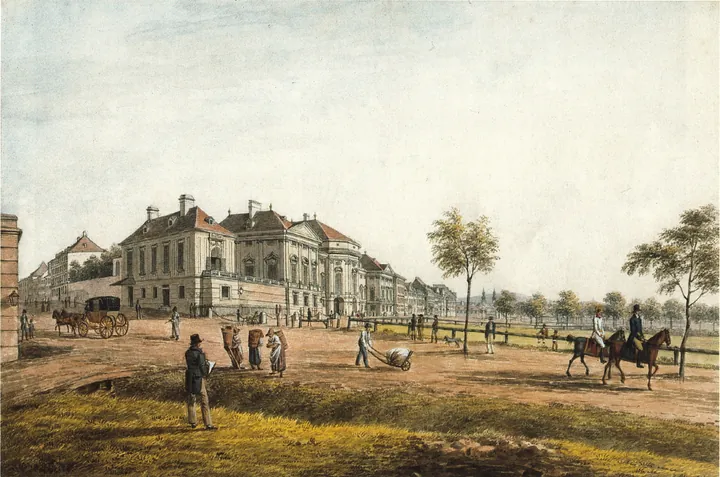

…such as the care taken over making the roads; then the ceaseless watering and sweeping; the lanterns that shine from nightfall until daybreak all over Vienna, in every street outside the walls and in the whole garden that runs around the city.
In the 1826 editionp. 49
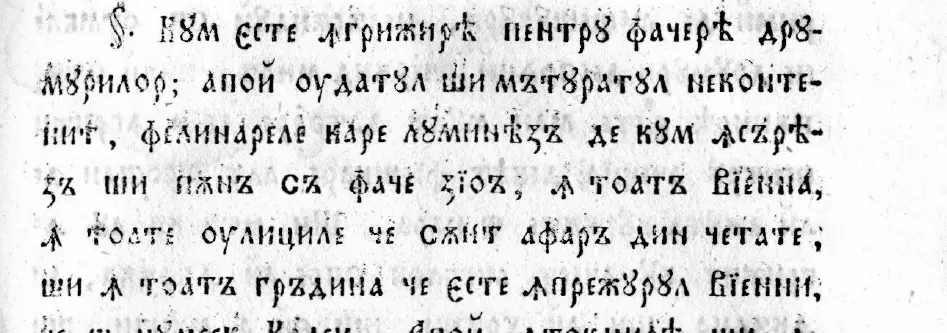
The Romanian, in modern spelling …cum este îngrijirea pentru facerea drumurilor; apoi udatul și măturatul necontenit, felinarele care luminează de cum se înserează și până se face ziuă, în toată Viena, în toate ulițele ce sunt afară din cetate; și în toată grădina ce este împrejurul Vienei…
The city post collects letters three times a day and brings the answer within hours, for four kreuzers. At home, he writes, a man waiting for an answer stands trembling in halls and corridors, comes back “twenty times for one matter” and is told “come back tomorrow”, and when he does, the boyar has long since left.
He counts 12 hospitals and 16 schools, from one for the deaf and dumb to one for diseases of cattle. He describes at length the hospital where a woman may give birth without giving her name, wearing a mask. She pays 90 kreuzers a day and leaves a sealed letter naming her relatives, which is returned to her if she survives. If she wants to leave the child there, she pays 40 florins and the child is fed, clothed and taught to read.
At the asylum they would not let him in. The doctor apologised: the patients would have been upset by the sight of a man in Turkish dress.
At Schönbrunn a boyar told him he would sooner be a gardener there than ban — the governor of Craiova and western Wallachia, the senior office below the prince — in “wretched Wallachia”. “How much I liked that!”, Golescu notes.
Chapter V
Baden: a charcoal-burner's 20,000 florins, and men with a beam on their bellies
To Vienna · 1824–1825
At Baden, near Vienna, a doctor Golescu knew was lodging with a charcoal-burner. The man invited him to his garden, where he had a stone house with five or six rooms downstairs and as many upstairs, and a mill. Asked how he had put all that together selling charcoal, the charcoal-burner, aged 65, said he had worked for 40 years and paid the emperor regularly, no more than his property called for. A few days earlier he had counted out 20,000 florins to buy a property for his eldest son.
From there Golescu turns to the Wallachian taxpayer. The mind shudders, he writes, to remember it; what follows is the hardest passage in the book:
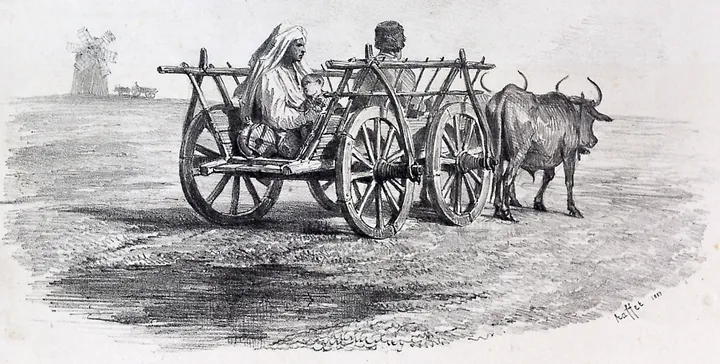

…the creatures of God, human beings, our brothers, were laid out on the ground ten at a time with their eyes to the sun, and a great heavy beam placed on their bellies, so that, bitten by flies and mosquitoes, they could not even shield themselves.
In the 1826 editionp. 95
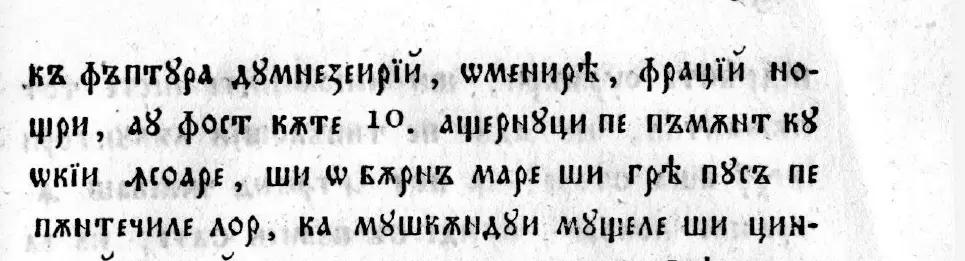
The Romanian, in modern spelling …făptura dumnezeirii, omenirea, frații noștri, au fost câte 10 așternuți pe pământ cu ochii în soare, și o bârnă mare și grea pusă pe pântecele lor, ca mușcându-i muștele și țânțarii, nici să poată a se feri.
Others, he writes, were hung upside down or shut in cattle pens and smoked out; anyone who wants to know when and by whom should question the officials beyond the Olt, in western Wallachia. In those villages there is no church, no fence, no cart. People live in bordeie, dugouts in the ground with a second exit behind the stove through which a man escapes when he senses someone at the door, since it can only be someone come for money.
His explanation is that offices were sold. Whoever bought a district governorship or a police captaincy got his money back from the people, twice or three times over. Then he turns to himself:
Oh, how I remember, and how I am forced to confess that I have done great wrong. For not only did I do my country no good, however small, in thanks for its having fed, enriched and honoured my parents, grandparents and forefathers; but from my first office to my last I never stopped taking unlawful exactions from this people, who do not have even their food for the day.
In the 1826 editionp. 104
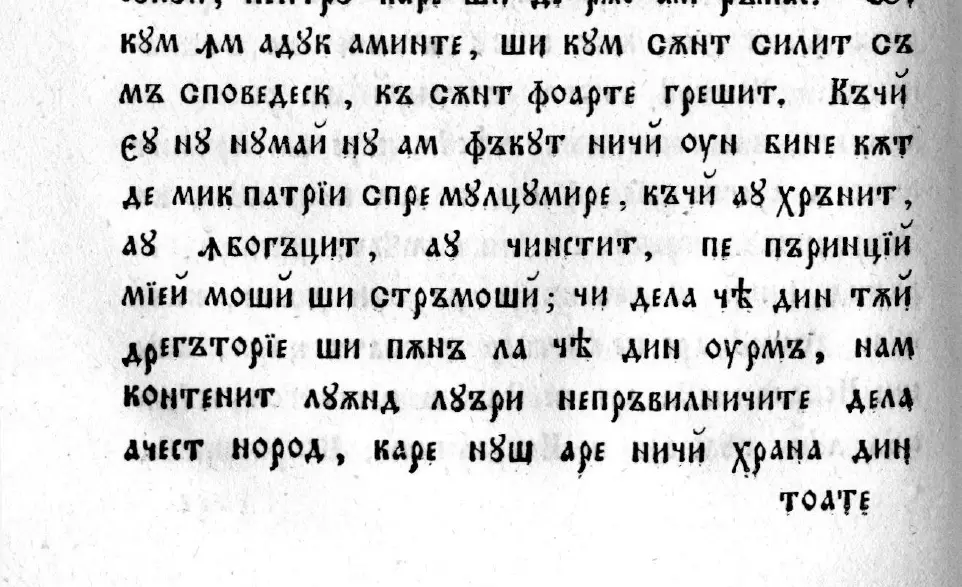
The Romanian, in modern spelling O! cum îmi aduc aminte, și cum sunt silit să mă spovedesc că sunt foarte greșit. Căci eu nu numai nu am făcut niciun bine cât de mic patriei, spre mulțumire, căci a hrănit, a îmbogățit, a cinstit pe părinții mei, moși și strămoși; ci de la cea dintâi dregătorie și până la cea din urmă, nu am contenit luând luări nepravilnicite de la acest norod, care nu-și are nici hrana din toate zilele.
When he was first appointed district governor, he recalls, the clerks came “with their shirt-fronts full of papers” for him to judge and sign, “and a trembling seized me”: he realised a district governor needed a great deal of knowledge, which he did not have.
Chapter VI
To Trieste: a coach with rules and a boat driven by fire
To Italy · 1825
He travelled to Trieste, the Habsburg port on the Adriatic, by post coach, the Eilwagen, which he spells “ailvaghen”. It runs day and night and stops only at fixed times: half an hour in the morning for coffee, an hour at midday, an hour in the evening. The coffee is on the table the moment the passengers step down.
On a three-day run it stops four hours on the second night for sleep. Each passenger is handed printed rules: anyone who smokes without a break must cut down if the others object, and seats rotate so that “all alike should be content or suffer”, whether the passenger is of high rank or low, since the fare is the same.
On the way back there were seven nations in the coach: “English, Germans, French, Italians, Moldavians, a Greek and I the Romanian”. Golescu liked best to sit up beside the conductor and calls himself “the one who took notice”, the least learned of them all.
From Trieste to Venice he took the steamboat. No one was allowed into the engine room, but he watched as much as he could and explains it for his readers: the fire boils water as in a still for spirits, and the steam turns the wheels. On the return he tried a sailing ship: 40 hours at sea, without eating or sleeping, “I only vomited and cried like a small child”.
Chapter VII
Vicenza: three full theatres, and an Englishman who asked about Romanian
To Italy · 1825
The roads amaze him first in Italy: level as a table, with running water in the ditches and avenues of trees along the sides, and fields laid out in squares, watered by closing a sluice. In Italy, he writes, you should travel on foot, not by post coach.
Vicenza has three theatres, and a play is often given ten times, because even the poorest townsman goes, with his wife and children. At home:
This order is not followed as it is with us, where there is one theatre in the whole of Wallachia, in the city of Bucharest, the seat of government, which has perhaps more than a hundred thousand people, and many times in this one and only theatre there are barely 100 people.
In the 1826 editionp. 145
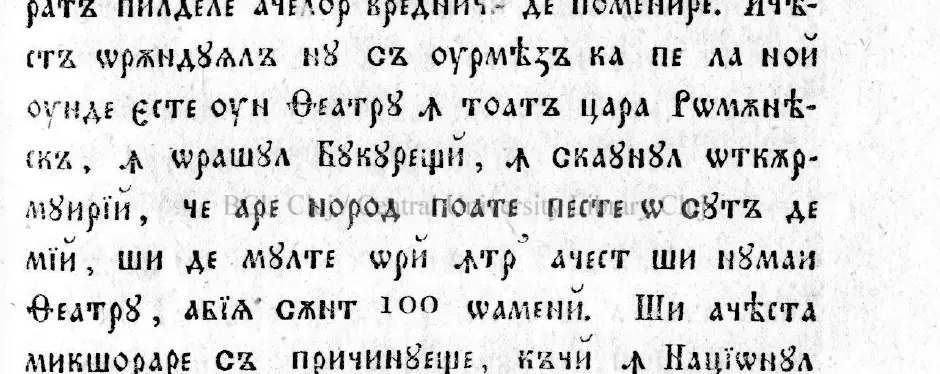
The Romanian, in modern spelling Această orânduială nu se urmează ca pe la noi, unde este un teatru în toată Țara Românească, în orașul București, în scaunul ocârmuirii, ce are norod poate peste o sută de mii, și de multe ori într-acest și numai teatru, abia sunt 100 de oameni.
His explanation is that the Bucharest theatre played in German. In Vienna, an Englishman who had passed through Bucharest recognised him by his clothes and told the whole company how he had hurried to the theatre there to hear the language of the country and found Germans. He was told that barely a tenth of the audience could follow the German. Then he asked whether this nation had a language and a script of its own. “Let everyone judge now how hard pressed I was to answer.”
He went on as far as Milan, “the new Paris”, where he spent a day and a half, and Mantua. Seeing that Milanese nobles spent the summer on their estates, he thinks of the Wallachian boyars who “are only born and rot in the town”, waiting years for an office.
Chapter VIII
Munich: a king on foot and a trial railway
To Switzerland · 1826
In 1826 he set out again from Brașov, through Timișoara, Pest and Vienna, for Bavaria and Switzerland. Just over the Bavarian border he notes that people take off their hats to one another whatever their rank, and answer questions “boldly, but without insolence”.
At home, he writes, the peasants he met on the road did not take off their caps or make way, although they could tell from his beard that he was a boyar of the Divan. When he had been a young district governor with servants around him, the same men fell to the ground bareheaded “like men condemned to death”.
King Ludwig I walks about the city, the gardens and the theatre dressed like any townsman. At a 15-day festival in October outside the city he gives prizes to the farmers with the finest cattle, to people who have invented a useful tool and to the winner of the horse race; that year the winner was a boy of about 14. The description matches the Oktoberfest of the time.
In the park at Nymphenburg the Bavarians were testing “iron roads” on which two horses could easily pull a load that 16 could barely move. Golescu moved four linked carts loaded with boulders, pulling with one hand, and writes that had he pulled with all his strength he would have had to run after them to stop them. It was the trial line of the engineer Joseph von Baader, approved by the king in 1825.
Munich was also where two of his sons were at school:
The school they call the Institute, where I also left two sons, Radu and Alexandru.
In the 1826 editionp. 195

The Romanian, in modern spelling Școala ce-i zic Institutul, unde mi-am și lăsat 2 fii, pe Radu și Alexandru.
Chapter IX
Switzerland: the ploughman who read newspapers
To Switzerland · 1826
He entered Switzerland at Constance and crossed nine of the 22 cantons. There, he notes, all are “brother citizens”, with no nobles and commoners, and every man is a soldier when needed. At the entrance and exit of every village a post shows where each road goes; every hour along the way another post gives the hours left to the next town; and where the road drops steeply, a post with a wheel painted on it tells the driver to put the brake on.
In a small village a peasant who came into the inn one evening spoke French, German and Italian to the travellers, then recited Xenophon and Homer. Every village, he told them, has a school in the language of the country, and anyone who wants more goes to the schools in town. The innkeeper's daughter, about ten, played the clavier for them.
At Altstetten, near Zürich, a man at the inn asked whether the Brașov he came from was the one in Transylvania, on the border with Wallachia. The innkeeper told him the man was a ploughman who had come for “newspaper day”; in the common room three or four more peasants were reading the papers. Golescu then remembers a letter:
Oh, what a sad memory! For in the year 1824, going to Cluj, Pest and Mehadia with my fellow boyar the logothete Manolache Băleanu, Băleanu received a letter from the honourable chancery of the grand logothete on which the address was: “To ——— at Mehadia, in the province of Transylvania.”
In the 1826 editionp. 211
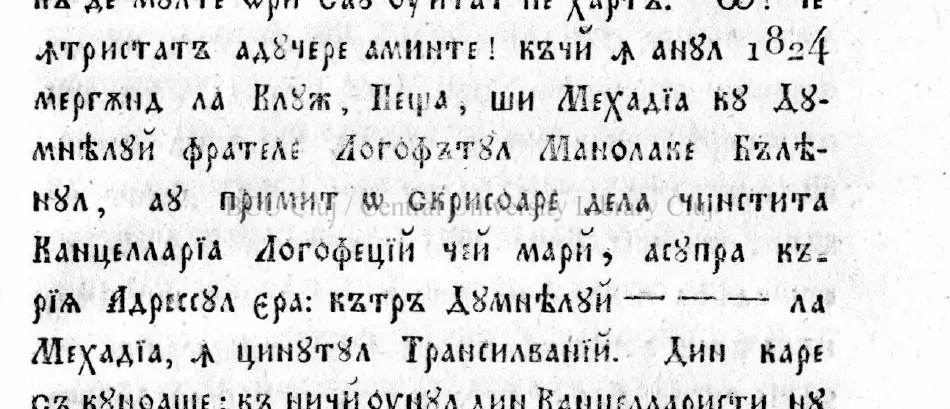
The Romanian, in modern spelling O! ce întristată aducere aminte! Căci în anul 1824 mergând la Cluj, Pesta, și Mehadia cu dumnealui fratele logofătul Manolache Băleanu, a primit o scrisoare de la cinstita cancelarie a logofeției celei mari, asupra căreia adresul era: «Către dumnealui ——— la Mehadia, în ținutul Transilvaniei».
Mehadia was a Habsburg garrison district south-west of Transylvania, not in Transylvania at all. “And the Swiss ploughman, four empires away,” he writes, “knew what lies where.”
Chapter X
Geneva: two sons left at school, and the way back
To Switzerland · 1826
In Geneva he left Ștefan and Nicolae. Their application to the Academy of Geneva is dated 17 October 1826, according to the historian Nicolae Iorga, who found it in the archive.
He writes that that year he travelled “for this purpose alone”, and gives parents advice: do not send children abroad at 20 or 22 with a paid minder, as was the custom, but at eight, to institutes where a prince's son and a poor man's son are taught alike, fed alike and dressed alike. He was ashamed, he says, to see children of eight or nine who knew “what mine did not know at 20”: how to speak three languages.
The plan did not work out as he hoped. In March 1829 the boys' cousin Constantin Brăiloiu wrote that Dinicu Golescu had called them home because, “knowing only Greek and French on arrival”, they had learned nothing. Radu and Alexandru had meanwhile been moved from Munich to Geneva, to Rodolphe Töpffer's school, according to George Fotino.
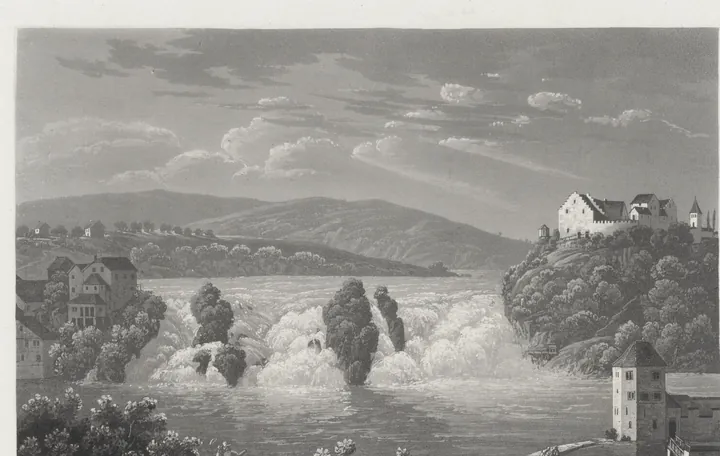
On the way back he stopped at the Rhine Falls, which he describes at sunset and by moonlight, and reached Vienna, where he records being on 20 November. He had been ill “from Geneva until I got home”.
Vienna or home?
Eight things described in the book. Some Golescu saw in Vienna, others he knew from Wallachia. Guess which.
-
The capital's only theatre plays in a language that, as a foreign visitor was told there, barely a tenth of the audience understands.
The answer
Home, in Bucharest. Plays were given in German, and the Englishman was told there that only a tenth of the house understood; often barely 100 people were in it.
-
Lanterns lit from nightfall until daybreak in every street outside the walls and in the garden that runs around the city.
The answer
Vienna. The lit garden was the glacis, which Golescu calls “Clasi”.
-
A city post that collects letters three times a day and brings the answer within hours, for four kreuzers.
The answer
Vienna, the “little post”. A letter to somewhere two hours out of town cost six kreuzers.
-
A man waiting for an answer stands trembling in halls and corridors, comes back twenty times for the same matter and is told “come back tomorrow”.
The answer
Home. By the time he comes back, Golescu writes, the boyar has long since left.
-
The palace courtyard has four gates that anyone may walk through, even at midnight, as if it were a market square.
The answer
Vienna, at the emperor's palace. If the people do not love a ruler, Golescu writes, locks are no better than “knots of ribbon”.
-
Priests in taverns, in nothing but a shirt and peasant sandals, taking carts to market, selling timber and carrying sand and bricks.
The answer
Home. Golescu wants monastery revenues to pay for schools for priests.
-
Villages of stone houses with theatres, doctors, surgeons, apothecaries, schools and “priests worthy of the priesthood”.
The answer
The villages around Vienna. Peasants' houses there are of stone, he writes, “just like the boyars' houses in our towns”.
-
The small man bows until his head touches the ground and is content if the great man looks at him even “from the corner of his eye”.
The answer
Home. Europe's rulers, Golescu notes, go about hat in hand, greeting the crowd until their necks ache.
Your score appears here after the first answer.
The words he had to explain
Golescu writes that for many of the things he saw his Romanian had no names. He used the words anyway and explained them in footnotes. Here are ten, with his definitions translated.
-
statue
note on p. 19
A human body made either of marble, or of copper, or of any other metal.
-
avenue
printed in 1826 as: aleenote on p. 17
An avenue is what they call a road with trees planted on both sides, close together or further apart, short or taller.
-
architect
printed in 1826 as: arhitectonnote on p. 15
The architect is the head over the master builders, whom we call mimarbașa. But trained at an academy and with knowledge of all these things.
-
observatory
printed in 1826 as: casă de observație astronomiceascănote on p. 31
A professor's dwelling, with every kind of telescope, which watches the movements of comets and planets.
-
waterfall
printed in 1826 as: cataract
A body of water that falls from a high place down with great speed.
-
fountain basin
printed in 1826 as: havuz cu șadârvan
A very small pond, walled round with stone or brick, from which by a device the water is thrown upward.
-
square
printed in 1826 as: piață
A wide place where no one is allowed to put up any building, being for the use of all townspeople, where they sell bread, fruit, greens, vegetables and such things.
-
mummy
printed in 1826 as: mumie
A human body, whole, intact: the flesh and the skin black and dry on the bones.
-
stage
printed in 1826 as: sțena
The place in which the comedians stand and show the stories or plays they mean to perform.
-
deputies
printed in 1826 as: deputați
Agents whom the towns send, on behalf of the people, to the seat of government.
What he did back home, 1826–1830
He is often said to have come back from Europe and begun to change things. The order was different: the Golești school was announced before he came home and before the book appeared.
1 May 1826
While still abroad he announces the reopening of the school at Golești that his father had run until the upheavals of 1821. It charges no fees and takes anyone's children: “merchant, or boyar, or taxpayer, or even slave”. The slaves were Roma owned by boyars and monasteries. The subjects are Romanian, German, Greek, Latin and Italian. From 1826 to 1830 the director was Florian Aaron, a teacher from Transylvania.
1826
At Buda he prints Însemnare a călătorii mele and Adunare de pilde bisericești și filosofești, a 416-page collection of moral examples translated from Greek.
1827
In Bucharest he publishes Elementuri de filosofie morală, a translation from Neophytos Vamvas. With Ion Heliade Rădulescu he sets up a Literary Society that meets at his house on Podul Mogoșoaiei, Bucharest's main street.
1829
Heliade Rădulescu launches Curierul Românesc, a Romanian-language newspaper, in Bucharest, then under Russian occupation. Golescu's biographers, Gheorghe Bengescu and Gheorghe Popp, write that Golescu obtained the permit from the Russian administration; Nicolae Iorga's history of the press does not mention him.
March 1830
A public examination at the Golești school, announced in Curierul Românesc.
October 1830
Curierul Românesc reports his death at 53, and Heliade writes him a funeral tribute. The sources consulted do not say what he died of.
1848
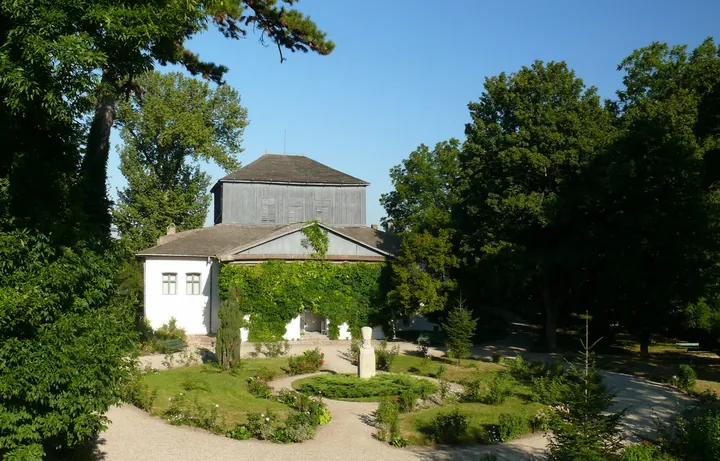
His sons are among the men of the revolution in Wallachia. Nicolae becomes minister of the interior in the summer of 1848, and Ștefan and Radu are sent to join Christian Tell at the camp at Islaz, where the revolution was proclaimed.

What the legend adds
“A conversion on the road to Damascus”
The historian Nicolae Iorga and the critic Perpessicius described Golescu as a man suddenly struck by the light of the West. The dates tell a different story. Golescu had been in Brașov since 1821 and had already made the journeys of 1824 and 1825, the Golești school had already been announced, and the book is written as an argument, not as a diary of the road.
“He wrote it on the spot, in Romanian”
He began his notes in Romanian and switched to Greek within days. The Romanian text was written in 1826.
“He freed his slaves”
No source consulted says this of Dinicu Golescu. His school admitted slaves' children. In 1840 his widow, Zoe Golescu, asked the authorities to return “20 families of Gypsy slaves” to her.
What he did not see
In Trieste he notes, without comment, that the merchants' club admits everyone “except Jews and Turks”, although some of the city's Jews were worth “two and three millions”. He calls ordinary Italians “ill-mannered, rather beggarly”. He repeats what he is told: that Mantua is 430 years older than Rome, or that three rivers flow through Zürich, when there are two.
Sources and method
The text is the edition printed at Buda in 1826 in Cyrillic type, digitised by the Central University Library in Cluj. I read it in George Pienescu's transcription and checked every quotation shown beside an 1826 page against the scan. Page numbers are those printed in the 1826 edition. The 1826 title page spells the book „Însemnare a călătorii mele”; the form „călătoriii”, with three i's, comes from modern editions.
Translations from Romanian are mine. In the modern Romanian shown beside them, spelling and old word forms are modernised, and „de” is added where today's grammar requires it; vocabulary, word order and punctuation are those of the book.
The maps run through the towns and post stations the book names for each journey. The book does not say which road he took from Timișoara to Pest in 1826, so that stretch is dotted. What he did at home comes from studies of the Golescu family, not from documents of 1826–1830, which I have not seen.
The book
- Constandin Radovici din Golești (the name Dinicu Golescu printed on the title page), Însemnare a călătorii mele…, Buda, Royal University Press, 1826, 240 pp., Cyrillic type. Scan: Lucian Blaga Central University Library, Cluj-Napoca, public domain.
- Dinicu Golescu, Însemnare a călătoriii mele, edited by G. Pienescu (1963), afterword by Mircea Iorgulescu, Bucharest, Minerva, 1977: the transcription used as a reading text.
Life at home
- Adunare de pilde bisericești și filosofești…, translated by Constantin din Golești, Buda, 1826 (BCU Cluj).
- Neophytos Vamvas, Elementuri de filosofie morală, translated by Constantin Golescu, Bucharest, 1827 (BCU Cluj).
- George Fotino, Din vremea renașterii naționale a Țării Românești: Boierii Golești, vol. I, 1939 (quotes the 1826 notice for the Golești school from Hodoș's 1910 edition).
- Nicolae Iorga, Goleștii și alți elevi ai lui Töpffer în Geneva, Romanian Academy, 1925.
- Nicolae Iorga, Istoria presei românești (history of the Romanian press), 1922.
- Gheorghe Bengescu, Despre activitatea literară a unor membri ai familiei Golescu, Romanian Academy, 1923.
- Gheorghe Adamescu, Istoria literaturii române (Wikisource).
- Gheorghe Popp, Dinicu Golescu, 1983: the March 1830 examination, the death notice in Curierul Românesc (5 October 1830), the school's teachers.
- Ion Ghica, Letters to Vasile Alecsandri: “Nicu Bălcescu” (Ștefan and Radu Golescu in 1848).
Images
- Pages of 1826: Lucian Blaga Central University Library, Cluj-Napoca, public domain. · BCU Cluj
- Unknown artist, public domain · Wikimedia Commons
- Jakob Alt, 1814, public domain · Wikimedia Commons
- Auguste Raffet, 1837, public domain · Wikimedia Commons
- Jakob Suter, Swiss National Library, public domain · Wikimedia Commons
- Photo: Dora Domsa, CC BY-SA 3.0 ro · Wikimedia Commons