dwarf sauropod (long-necked dinosaur)
Magyarosaurus dacus
The smallest adult sauropod known. Its close relatives are among the heaviest animals ever to walk on land.
Hațeg Island, 70 million years ago
A fully grown long-necked dinosaur there weighed less than a tonne. Above them flew a reptile whose wings measured 10–12 metres from tip to tip. Stand next to them, to scale, and see where their bones came out of the ground.
Go down through timeToday
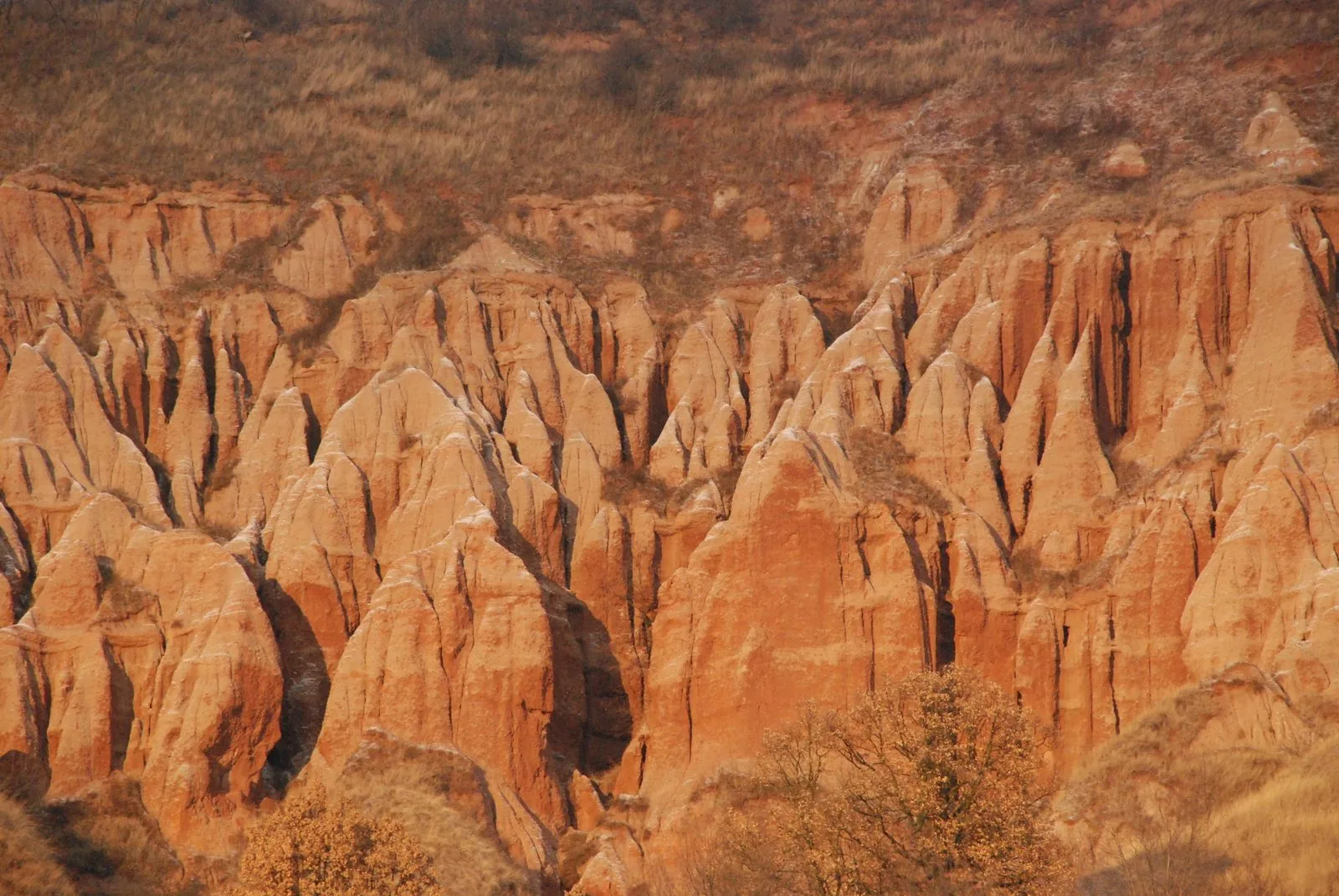
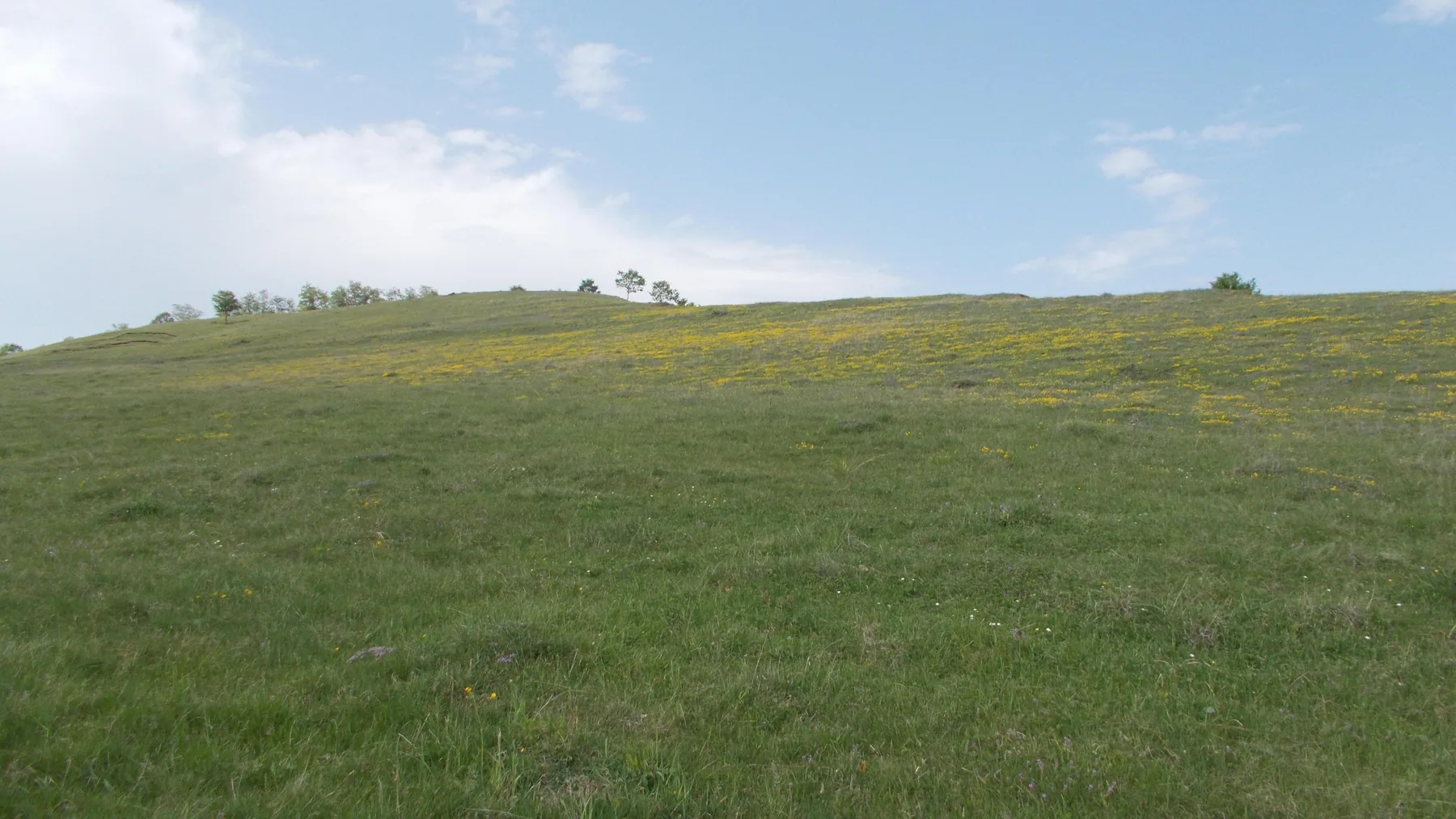
The village of Sânpetru, Hunedoara county, Romania, in the valley of the Sibișel stream. Bones come out of the valley sides.
131 years ago
In 1895 Ilona Nopcsa finds the first fossil bones here, on the family estate. Her brother Franz, still at school, starts searching too.
66 million years ago
The Cretaceous ends and the dinosaurs that did not fly disappear. In the rocks of Transylvania their fossils stay abundant and varied until at least a million years before the end.
70 million years ago
Layers of volcanic ash in the north-west of Hațeg Country have been dated to 69.8 and 71.3 million years. The place was then on an island.
70 million years ago
Sea covered most of the continent. The land where Transylvania lies today stood above the water at about 27–28° north, roughly the latitude of today's Canary Islands, at least 200–300 kilometres from the nearest shore.
How big was the island? The working estimate is about 80,000 km², roughly the size of Hispaniola, the island shared by Haiti and the Dominican Republic. Other reconstructions go up to 200,000 km². The climate was subtropical, with a rainy and a dry season and an average temperature of 20–25 °C.
On an island, food and room are scarce. Over many generations large animals often end up smaller than their mainland relatives: it happened, much later, to the elephants and hippos of the Mediterranean. In 1912, in Vienna, Franz Nopcsa said the same had happened to the dinosaurs of Transylvania. He had noticed that the turtles and crocodiles here reached their normal size while the dinosaurs almost always stayed below it.
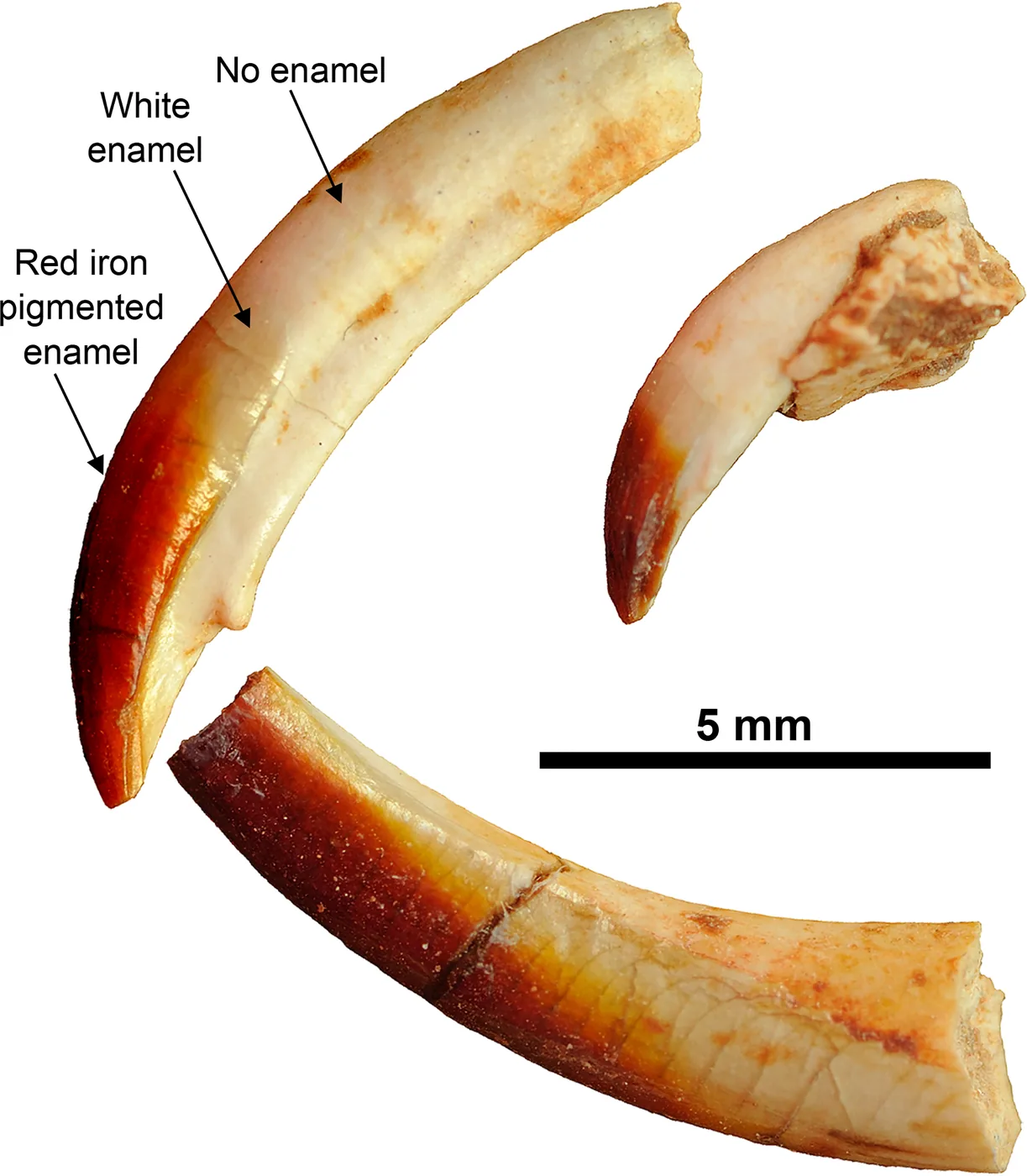
The dinosaurs had company. Among them lived the crocodile Allodaposuchus, the turtle Kallokibotion, frogs, lizards, a snake found at Tuștea, and a family of small mammals that, in the Cretaceous, lived only here: the kogaionids. One of them, Barbatodon, had teeth reddened by iron in the enamel. Another, Litovoi, had one of the smallest brains for its body size known in any mammal.
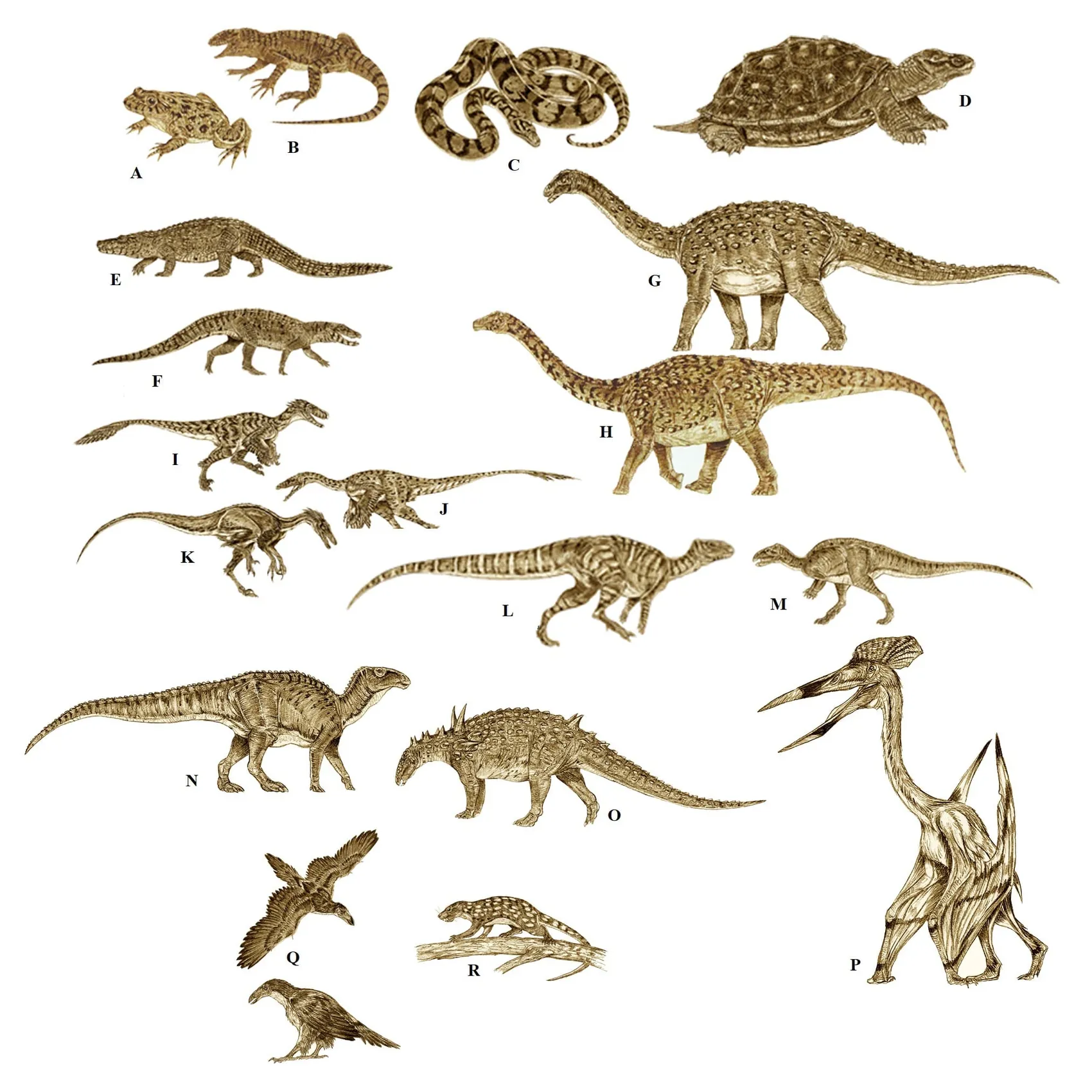
Stand next to them
Pick a dinosaur, set your height and look. Then bring in a relative.
Magyarosaurus dacus
The name means “Magyar lizard”; dacus comes from Dacia.
Snout to tail tip it was under 3 metres: about two ten-year-olds lying head to toe.
Silhouettes are scaled to the published length, snout to tail tip. Posture is approximate, and for species with no silhouette of their own a close relative stands in.
Four of these five animals are smaller than their relatives elsewhere in the world. For Magyarosaurus the proof that it was adult comes from the bone, and you can see it below; researchers reached the same conclusion for Telmatosaurus. For Zalmoxes and Struthiosaurus some researchers think otherwise: that their ancestors were already small and the island merely kept them that way.
The fifth breaks the rule. Uriash kadici, named in 2025, weighed 5–8 tonnes. Its name comes from the giants of Romanian fairy tales. So the island had large titanosaurs too. A few big bones, which had led some to think the small bones belonged to youngsters, have been assigned to it.
dwarf sauropod (long-necked dinosaur)
The smallest adult sauropod known. Its close relatives are among the heaviest animals ever to walk on land.
hadrosauroid, a relative of the duck-billed dinosaurs
A dinosaur with a broad beak and rows of small teeth for grinding plants. Its mainland relatives were twice as long.
stocky plant-eater
Short, sturdy, beaked. The genus's second species, Z. shqiperorum, was reclassified in 2026 as an early relative of Triceratops, under the name Ferenceratops.
armoured dinosaur
A small plant-eater protected by an armour of bony plates.
large titanosaur (a sauropod)
Proof that not every dinosaur on the island was a dwarf.
The flier
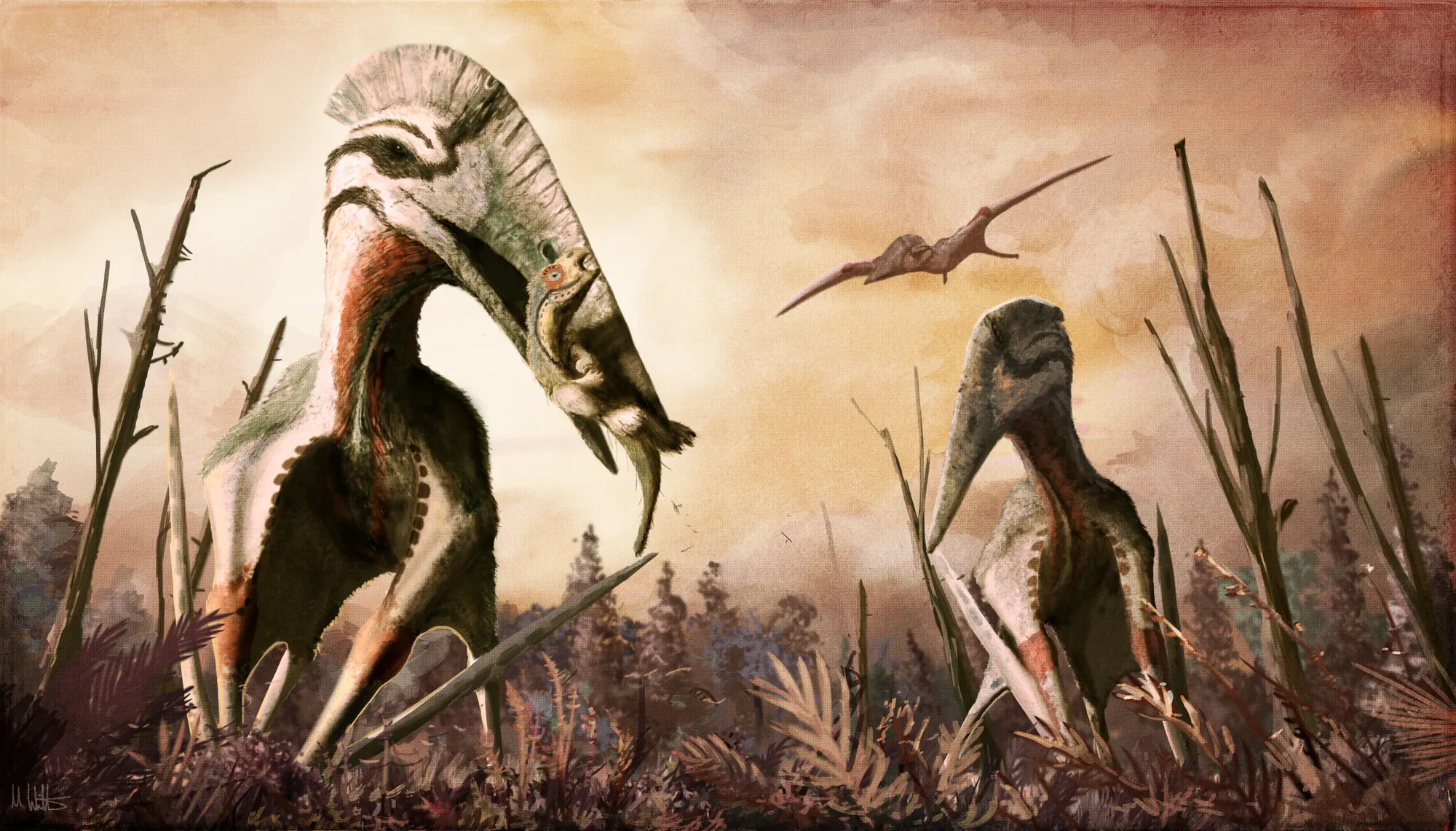
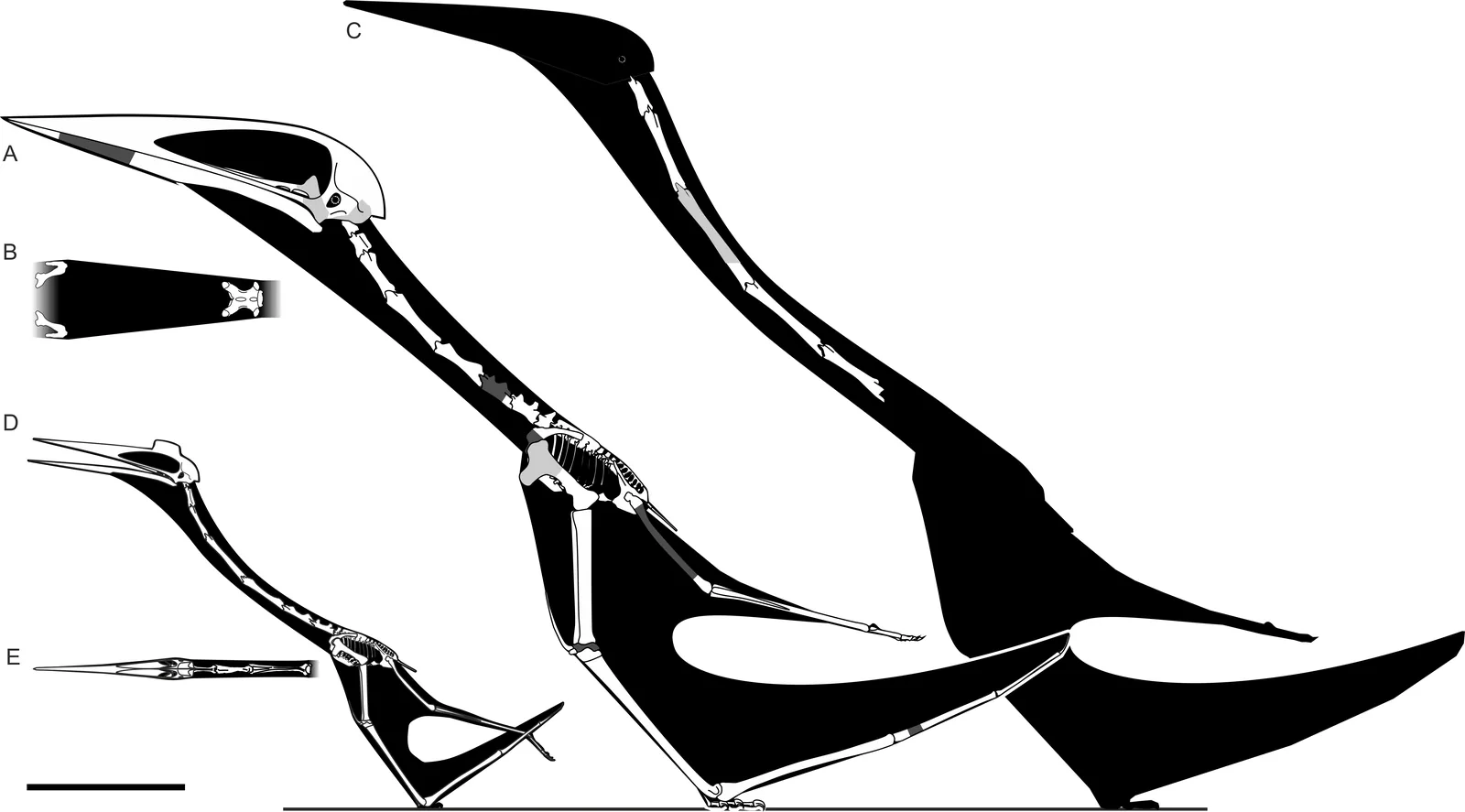
Hatzegopteryx, “the Hațeg wing”, was a pterosaur: a relative of the dinosaurs without being one of them. Scroll and let its wings open.
10 m
of a wingspan of 10–12 metres
It takes eight children 1.35 m tall, lying head to toe, to cover 10 metres.
Its wingspan is estimated at 10–12 metres. The jaw alone was half a metre wide, and the whole skull between one and a half and two metres long. The first bones came out at Vălioara and were described in 2002.
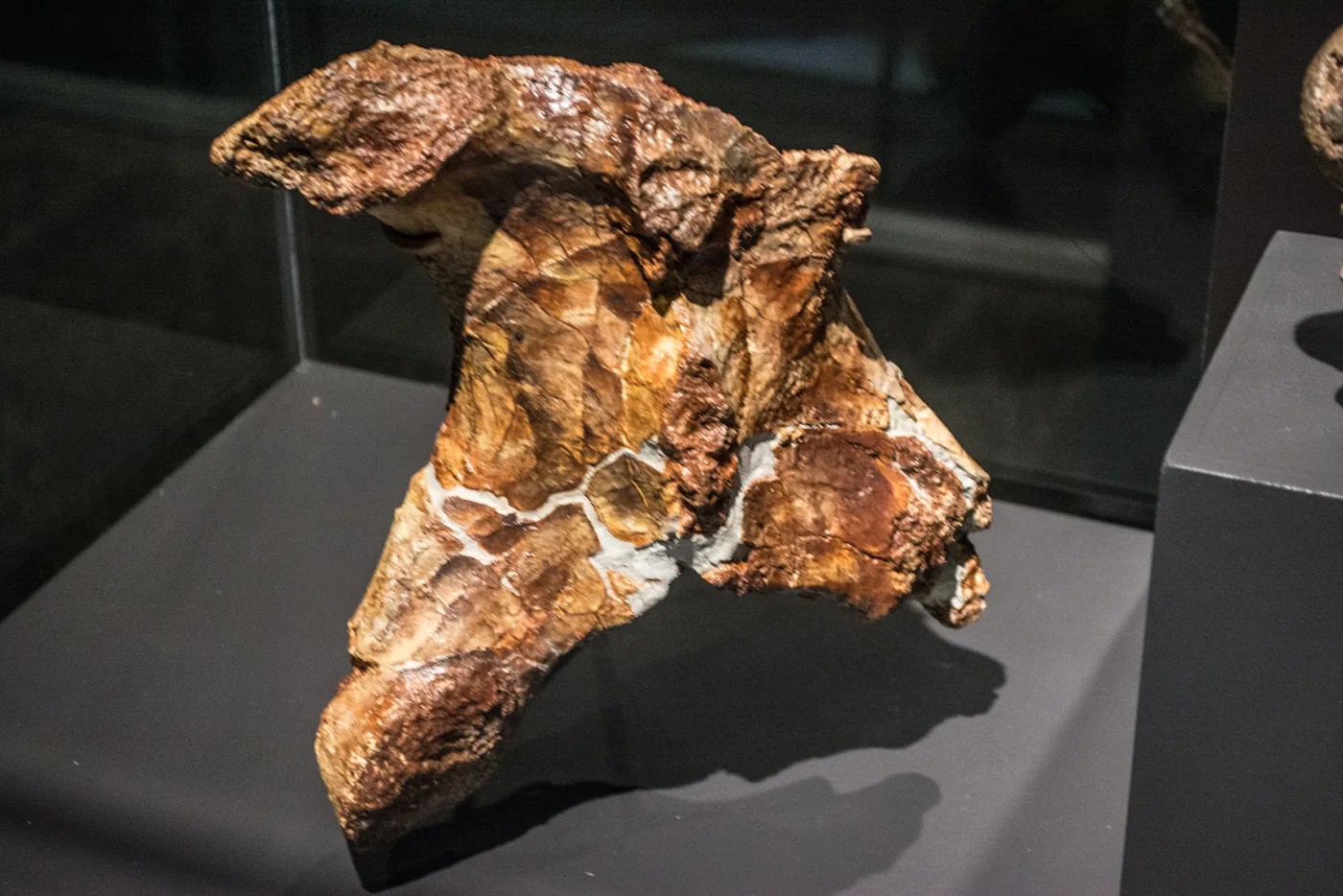
No large meat-eating dinosaur has been found on the island. The place of the big hunter stood empty, and two researchers, Darren Naish and Mark Witton, think Hatzegopteryx filled it. They studied a huge neck vertebra found at Râpa Roșie, near Sebeș: it is short and very robust, fit for a short, powerful neck. Arambourgiania, another giant pterosaur, had a long, thin neck.
It is a hypothesis resting on a few bones. No complete Hatzegopteryx skeleton has been found, and the wingspan is worked out by comparison with better-known relatives. That is why you will meet 10, 11 or 12 metres, depending on who did the sum.
Balaur bondoc
In September 2009 Mátyás Vremir pulled from the red clay at Sebeș Glod, two and a half kilometres from the town of Sebeș, half a skeleton unlike anything seen before.
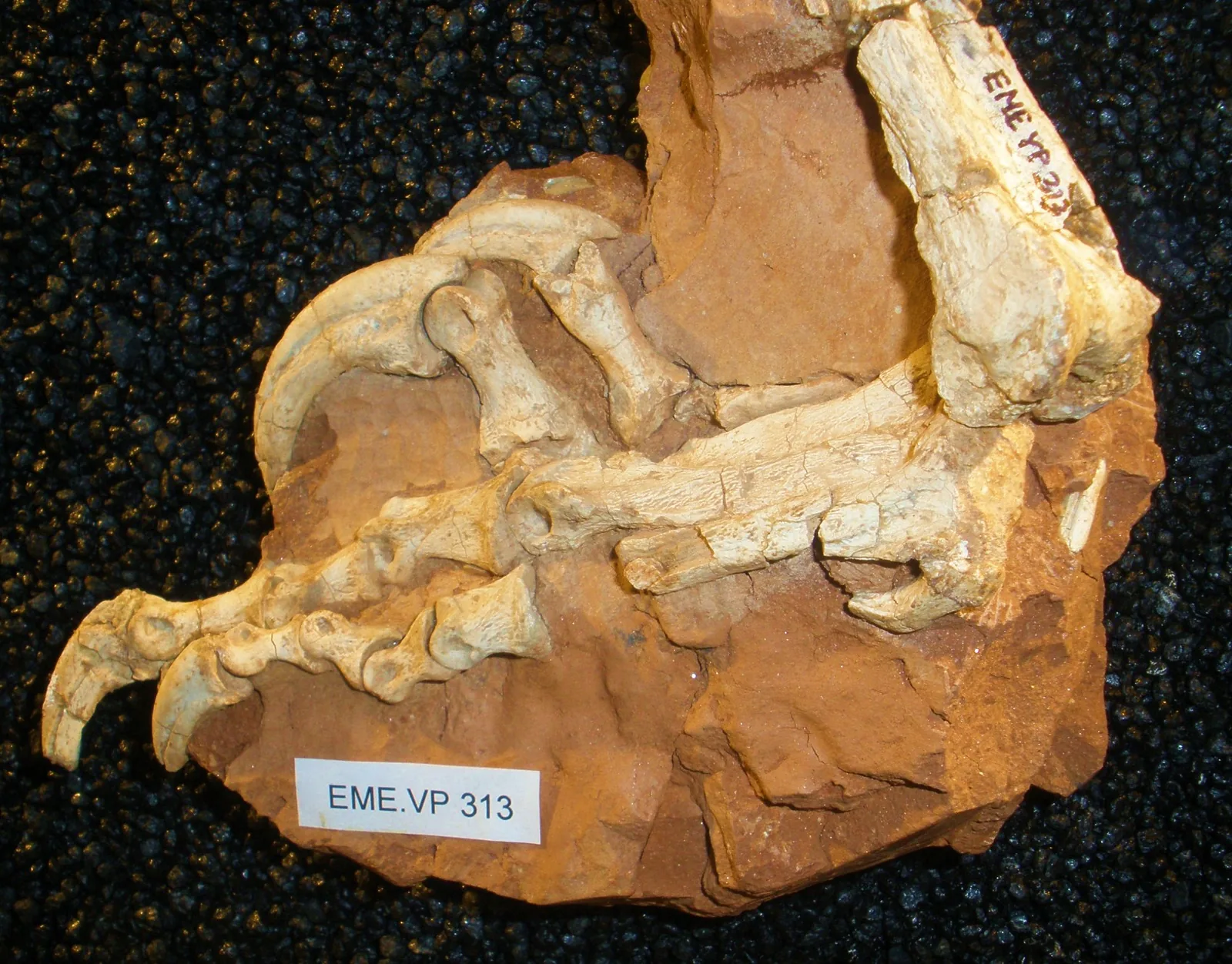
The researchers who described it in 2010 chose the name: balaur, the old Romanian word for dragon, and bondoc, meaning stocky. Its hand bones were fused and its build was stocky. The first toe, small in other dinosaurs of its kind, had grown almost as large as the second and carried a big claw of its own. How long the whole animal was, the studies do not say: the skeleton is incomplete.
There are two views on what kind of animal it was. Read them in turn.
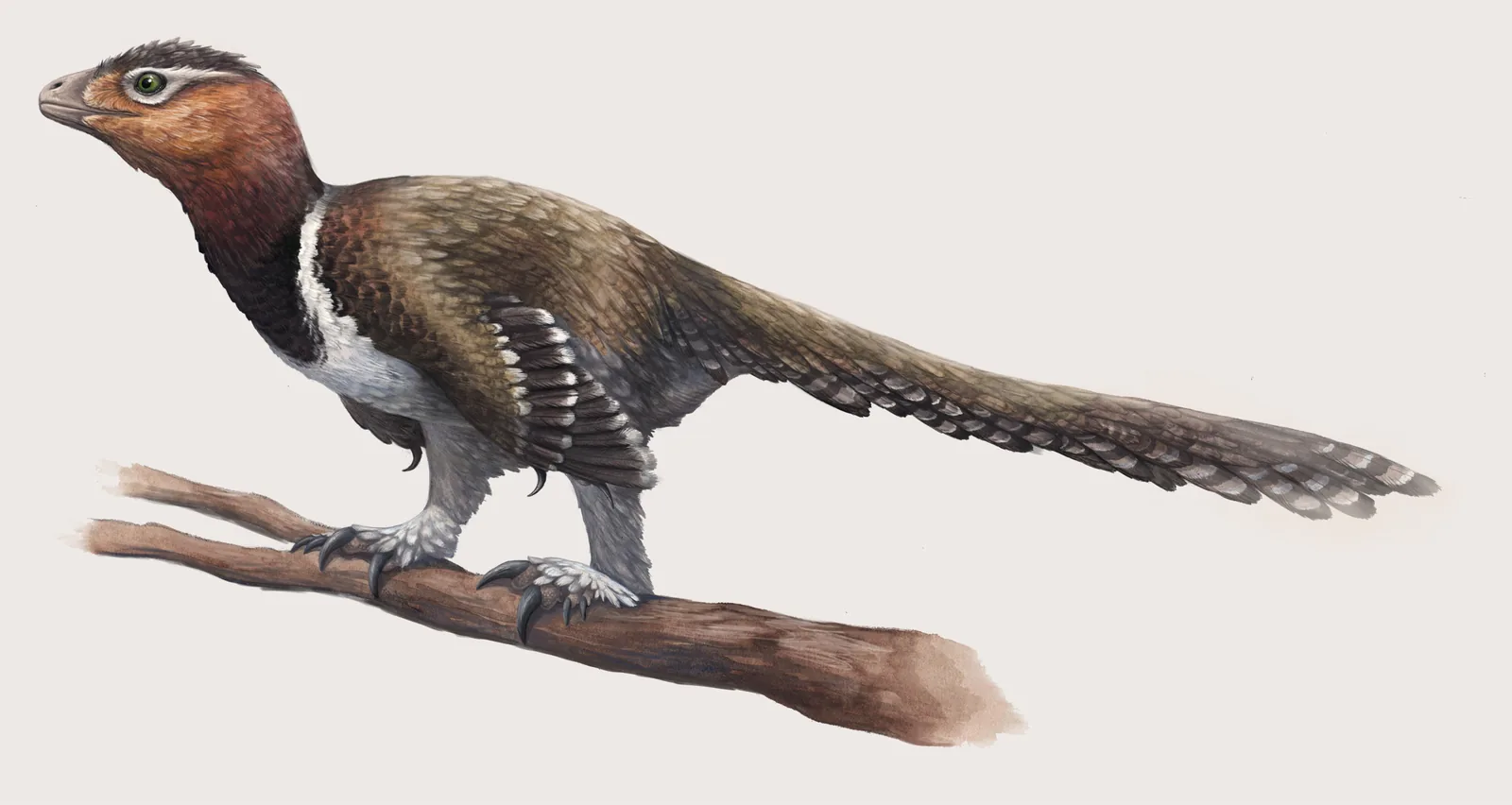
The describers placed it beside Velociraptor, in the dromaeosaurid family. The two pairs of claws would have served to grasp or slash prey. On this reading Balaur was the island's small predator.
It was not a dwarf. Its closest relatives, from Asia and North America, were about the same size.
In 2015 Andrea Cau, Tom Brougham and Darren Naish reran the analysis and found it closer to living birds than Archaeopteryx is. The fused hand would be a reduced wing. Its food? Plants, or a bit of everything, they say; not a predator.
The authors concede the raptor option cannot be ruled out either. A 2021 paper co-written by one of the describers still calls it a predator. The dispute is open.
The proof
For a long time the objection was that the small Hațeg bones might belong to youngsters. A fine saw and a microscope settle it.
Here are two slices of bone, drawn as diagrams. Which one looks like Magyarosaurus bone?
A: many wide channels for blood vessels, the sign of fast-growing bone. B: small, crowded rings, the traces of bone that has been rebuilt many times.
Slice B. Young bone grows fast and is threaded with channels for blood vessels. As the animal ages, the bone is eaten away and rebuilt piece by piece, and the cross-section fills with small rings crowded into one another.
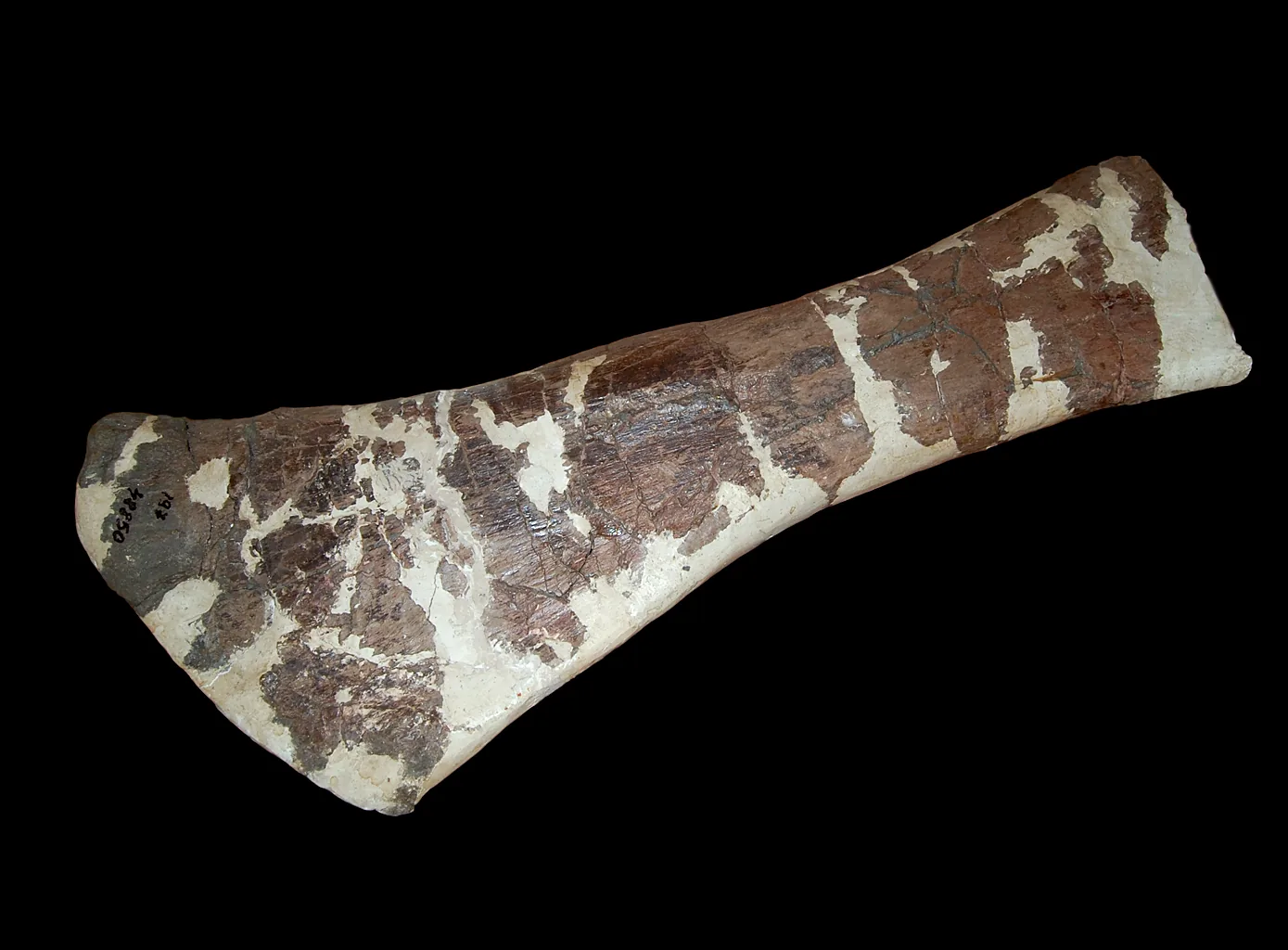
In 2010 a team led by Koen Stein cut Magyarosaurus bones of different sizes. All of them, including the smallest humerus (upper arm bone), a quarter the length of the large humerus it was compared with, had tissue rebuilt almost throughout. They were adults.
The study has a limit, and the authors state it: the classic sign that growth has stopped, a thin dense layer at the edge of the bone, appears in none of the specimens. The conclusion rests on how thoroughly the bone had been rebuilt.
The large bone used for comparison, which had led some to think Magyarosaurus grew much bigger, was assigned in 2025 to another animal: Uriash kadici.
The map
Each point is a place from which at least one bone, tooth, egg or footprint of a dinosaur or pterosaur has been collected and then described in a study. Tap a point to see what was found there.
85 sites, 283 recorded fossils across the country
The red points date from the last few million years of the Cretaceous. The green ones are far older.
52 sites, 182 recorded fossils
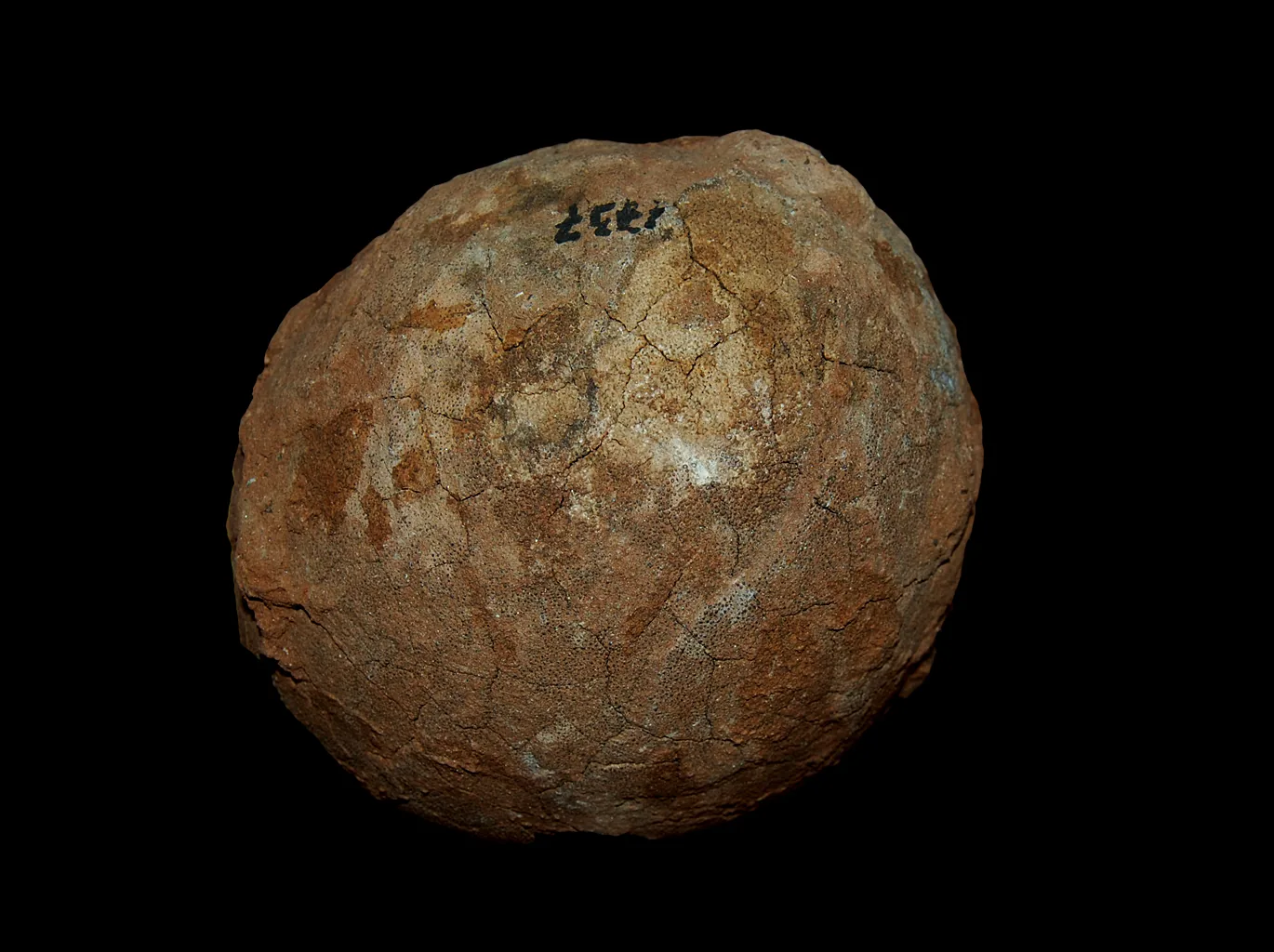
The first bones were found here, at Sânpetru, in the Sibișel valley. Vălioara gave Hatzegopteryx and Uriash. At Tuștea a landslide in the late 1980s uncovered the first nests of dinosaur eggs in Central and Eastern Europe. At Totești 11 clutches of a dwarf titanosaur were found, with eggs about 12 centimetres across. The red-toothed mammals lived at Pui.
27 sites, 73 recorded fossils
Sebeș Glod gave Balaur and the pterosaur Eurazhdarcho, with a wingspan of about 3 metres. Râpa Roșie gave the giant pterosaur bones. The skull of the crocodile Allodaposuchus was found at Oarda de Jos. Petrești has the oldest layers, from the end of the Campanian.
one site, 22 recorded fossils
In July 1978 a blast in a bauxite mine in the Pădurea Craiului hills opened a pocket full of bones. The Țara Crișurilor Museum in Oradea took thousands of bones out of it, mostly of plant-eating dinosaurs from the start of the Cretaceous. This place too had been an island, and the iguanodont here was a quarter to a third the size of those in western Europe. Whether they were adults has not yet been checked in the bone.
one site, one recorded fossil
In a quarry at Colonia Cehă, according to a 2009 study by Grzegorz Pieńkowski, Mihai Popa and Artur Kędzior, sauropod footprints were found from the Hettangian, at the start of the Jurassic.
one site, one recorded fossil
A tooth found more than a century ago in southern Dobrogea was re-examined in 2016. It belongs to a carcharodontosaurid, a large meat-eater, from the Valanginian, early in the Cretaceous: the oldest known from the Cretaceous when the study appeared. So at least one large predator lived on the broad dry land of Dobrogea.
Jibou in Sălaj, Iara in Cluj and Borod in Bihor have one or two recorded fossils each. The map shows where people have searched and published; dinosaurs also lived in places where the right rocks never reached the surface.
The points come from the Paleobiology Database, downloaded on 19 September 2026. Two groups of points had wrong coordinates in the database and were moved to the village they name: Petrești, near Sebeș, and Oarda de Jos.
1895
The Nopcsa family had their castle at Săcel and land at Sânpetru. In 1895 Ilona, the younger sister, found a few fossil bones there. Franz was 17 or 18.
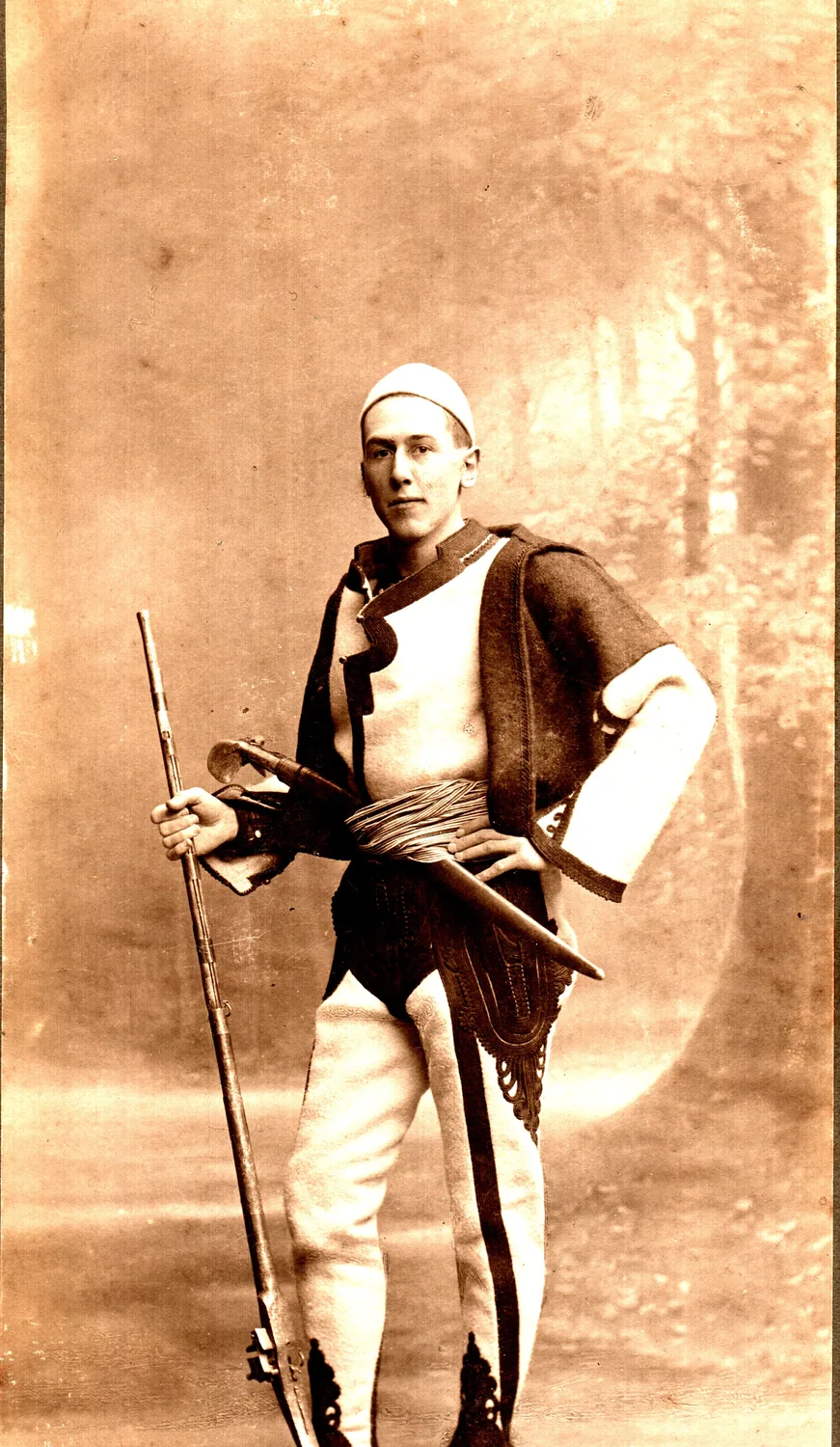
Franz searched the place that same summer and found a skull. He enrolled at the University of Vienna, and at 20 he published his first note on the bones from home. In June 1899 he presented the skull to the Vienna Academy under the name Limnosaurus. The name already belonged to another animal, so in 1903 he changed it to Telmatosaurus.
By 1929 he had published five monographs and described ten Hațeg animals, among them Struthiosaurus, the sauropod that became Magyarosaurus, and the turtle Kallokibotion. He cared about how dinosaurs lived: he wrote, for instance, about how males might differ from females. His second passion was Albania, on which he published more than 40 works.
Under the layer of clay is the skull Franz found in 1895, as it appears in his 1900 paper. Rub the clay away until it shows.

After Nopcsa, who died in 1933, research stopped for more than four decades. It was restarted in 1977 by Dan Grigorescu of the University of Bucharest, with a small group of students, again in the Sibișel valley. Pui, Vălioara and Tuștea followed.
Tuștea has left a question unanswered. The eggshell is of the type that, everywhere else in the world, titanosaurs lay. Yet the hatchlings found among the eggs are certainly hadrosauroid, and the hadrosauroid known from the island is Telmatosaurus. Who laid the eggs?
Game
Eight statements about the island. Some sound like fairy tales and are true.
The eight statements and their answers:
Go and see them
The area has been a UNESCO geopark since 2015, run by the University of Bucharest. It has several visitor houses, each with its own subject.
Opening hours and prices change with the season; check them on the geopark's website before you travel. The site of the Tuștea nests is now abandoned and overgrown.
Sources
Measurements and dates come from published studies; where only the abstract could be read, or the article could not be opened, the list below says so. Where sources give different values, the range is printed. The length of Magyarosaurus is the most important case: 6 metres in Nopcsa and in a 2021 paper, under 3 metres in the 2025 revision, which is followed here.
Three things you will meet elsewhere are absent here because no primary source for them was found: the length of Balaur, Ilona Nopcsa's age in 1895, and the standing height of Hatzegopteryx.


